
Evaluate CBT and medication for depression through symptoms, everyday functioning, treatment burden and the care you have actually received. A small real-world task can make a difficulty easier to explain, but it cannot identify which treatment caused a change. Start with a safe activity that already matters to you, rather than another diary or recovery score.
| What changed? | What it may mean | What to do with that information |
|---|---|---|
| You can start a task, but it still takes great effort | Function and subjective effort can improve at different rates. | Describe the action and the remaining effort separately. |
| You feel less distressed, but sleepiness disrupts activities | Benefit and burden need separate attention. | Raise the affected activity with the prescriber. |
| A task became possible only after someone prepared everything | Support changed the task conditions. | Include the help when discussing what changed. |
| Nothing improves, or symptoms worsen | Timing, treatment delivery and other causes need review. | Arrange reassessment; worsening may need earlier care. |
This article addresses adult outpatient treatment review, rather than diagnosis or medicine selection. Keep taking medication as prescribed while discussing concerns; do not skip, stop or alter it to compare treatments. If dizziness, marked drowsiness, pain or another symptom makes an activity unsafe, leave the activity and seek appropriate clinical advice instead of pushing through it.
What does progress with CBT and medication actually look like?
Progress can include less persistent low mood, more interest, easier participation in daily life or greater ability to use a therapy skill. Those changes do not always arrive together, and completing an activity does not establish remission. The useful question is whether the overall treatment is helping you function with an acceptable burden.
CBT develops ways of responding to patterns of thought and behavior, while antidepressants affect chemical signaling involved in mood and stress. Combined care can help some people more than either approach alone, although individual needs and preferences matter. Research comparing psychotherapy, medication and their combination supports an average benefit from combining treatments; it pooled different psychotherapies and cannot predict your result.

Treatment exposure matters as well as time on the calendar. Waiting for CBT, missing sessions or not understanding an agreed task is different from receiving a workable course of therapy. The separate guide to cognitive behavioural therapy for depression explains the treatment itself; here the focus is how to judge its place within a combined plan.
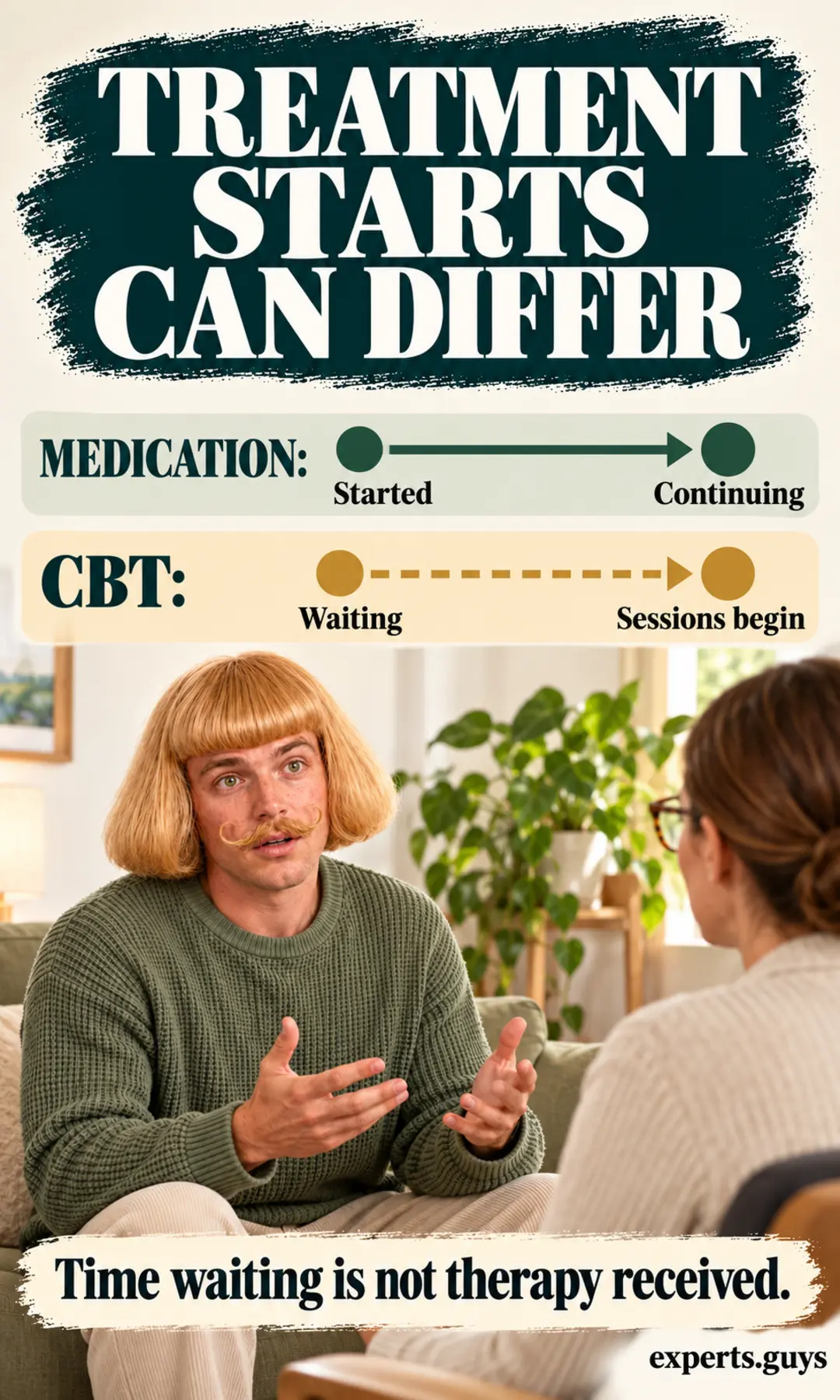
Antidepressant benefit often develops over several weeks, and sleep or concentration may change before mood. The NIMH depression guide describes a usual 4–8-week time frame, alongside the need for individual care. That time frame is neither a guaranteed outcome nor a reason to wait through worsening symptoms or troublesome side effects.
How can a real task make your review more useful?
Use one safe, meaningful task to make a practical difficulty visible, especially if your therapist has already agreed it as practice. The example below is preparing a borrowed book for return: put the book in a light bag and leave it in a safe place for your next planned outing. It illustrates task participation, not a test of memory, strength, medication effectiveness or your willingness to recover.
Prepare one borrowed item for return
Choose a small item you genuinely need to return, rather than creating a chore simply to assess yourself. A lightweight book is suitable only if handling it is comfortable and the item is within easy reach. The ordinary task is complete when the book is packed and safely staged; travelling to the library is a separate activity that you can leave for another time.

- Set the book and an open, empty bag on a stable table within comfortable reach. Sit if that is easier, and keep the floor and walking route clear.
- Put the book into the bag using a comfortable grip. If the bag collapses, set it flat with its opening facing you instead of repeatedly holding it up.
- Leave the packed bag on a stable side surface for your next planned outing, away from a doorway or walking route. Stop there; the return trip does not have to happen now.

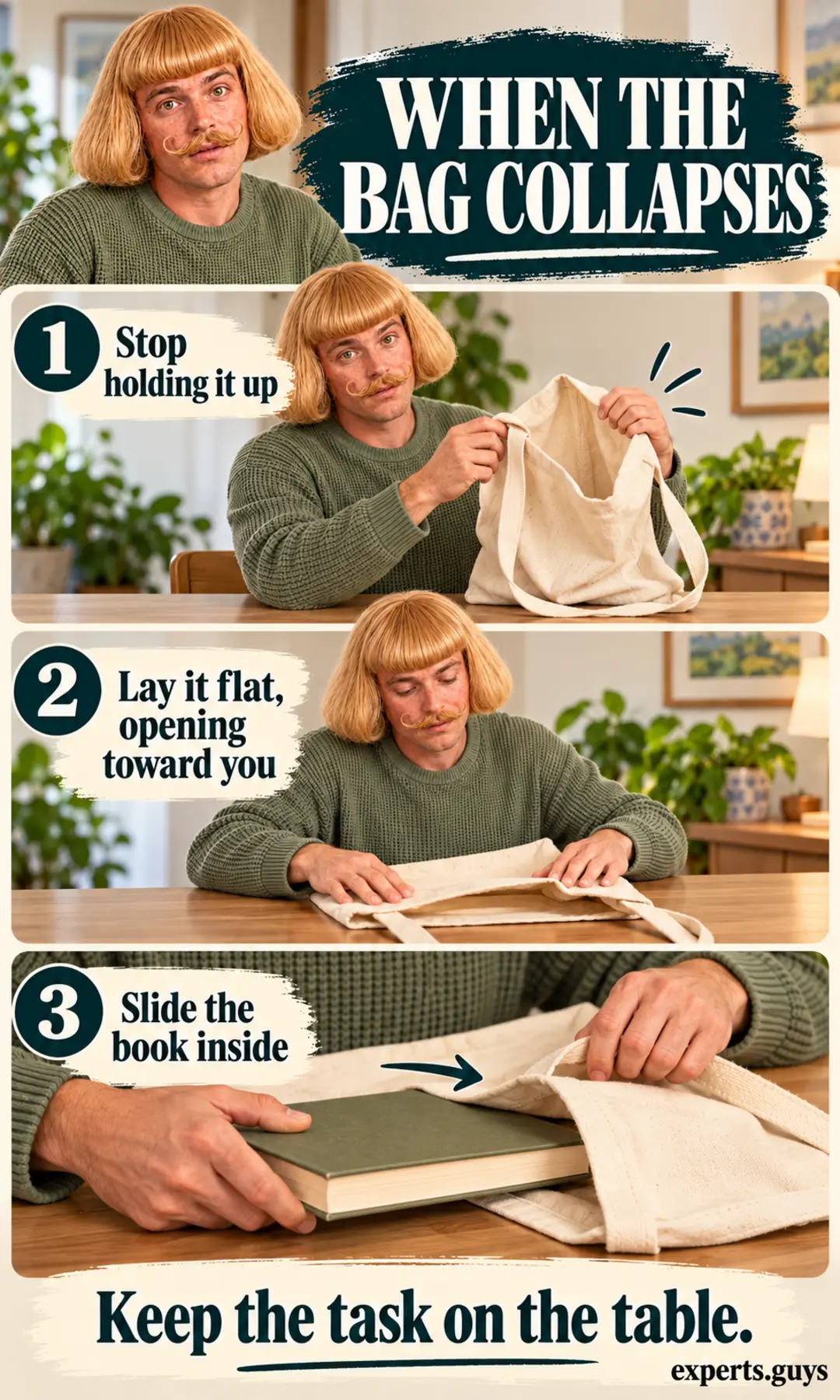
Notice the actual sticking point while doing the task, without rating yourself. Perhaps finding the book was easy, opening the bag was frustrating, or the final move felt too much. That concrete difference gives the therapist something to adapt and gives the prescriber context if a symptom such as sleepiness is interfering.
Use a smaller endpoint when the full sequence is too much
A smaller endpoint should reduce the demand of the same task, rather than turn it into a new exercise. Leave the bag beside the book on the table, or ask someone to place both within reach before you put the book inside. Help with setup changes the task conditions, so include that detail when discussing what you managed.
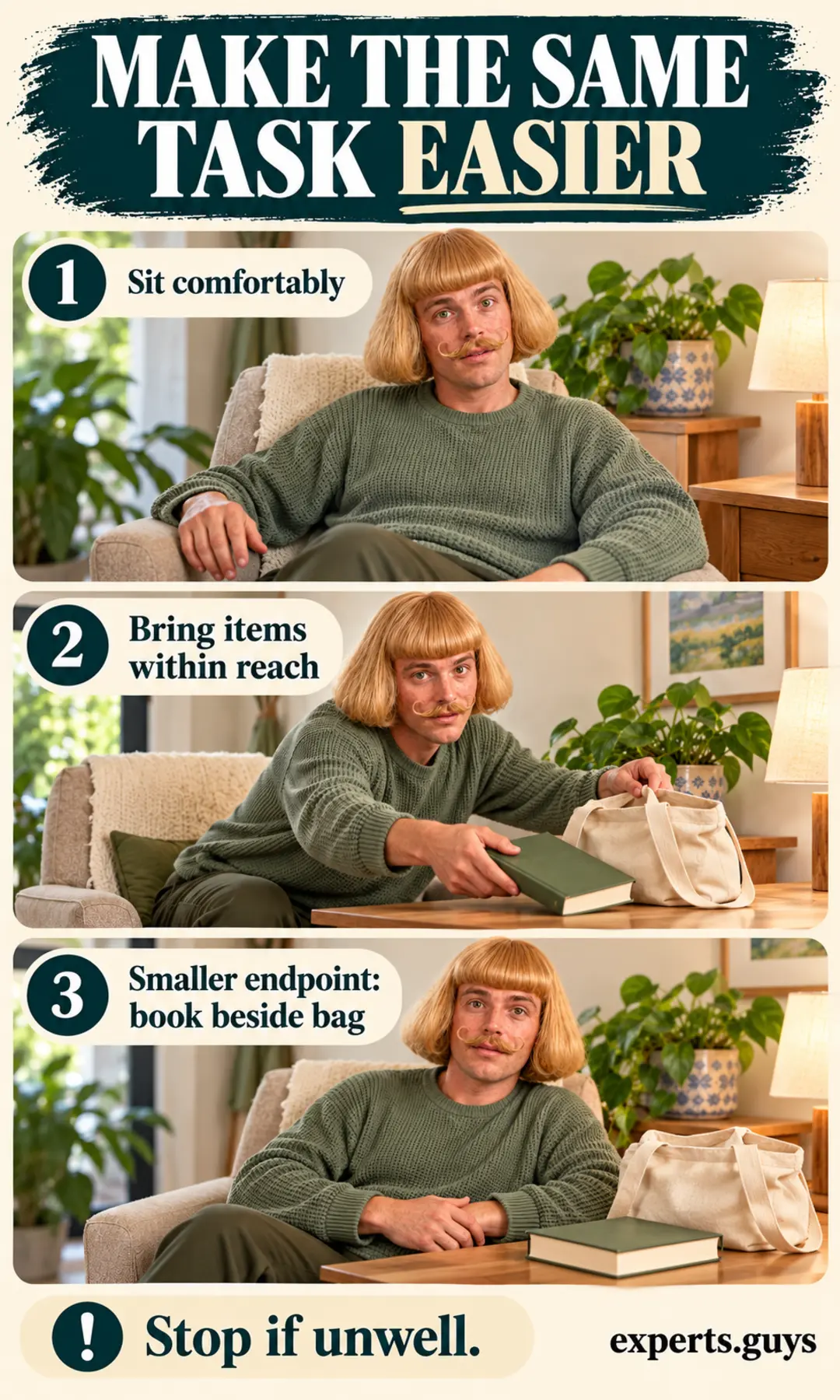
Do not repeat the activity until you get a more encouraging result, or remove help to create a fairer test. This is ordinary participation with an observable endpoint, not an experiment that isolates treatment effects. If the task is irrelevant to your life, use an already agreed, similarly safe therapy task and keep its own instructions rather than treating this example as a compulsory routine.
Manageable activity is consistent with behavioral approaches that help people re-engage with daily life. The NHS guidance on low mood supports increasing helpful activity and starting with easier actions. The borrowed-book sequence is an everyday adaptation, not an independently validated treatment or a replacement for CBT.
What if the task is easier but you still feel depressed?
An easier action can be useful progress while depression still needs treatment. It is equally possible to complete the task through substantial effort or extra support, which should remain visible in the review. Avoid making the task a pass-or-fail judgment about your health.
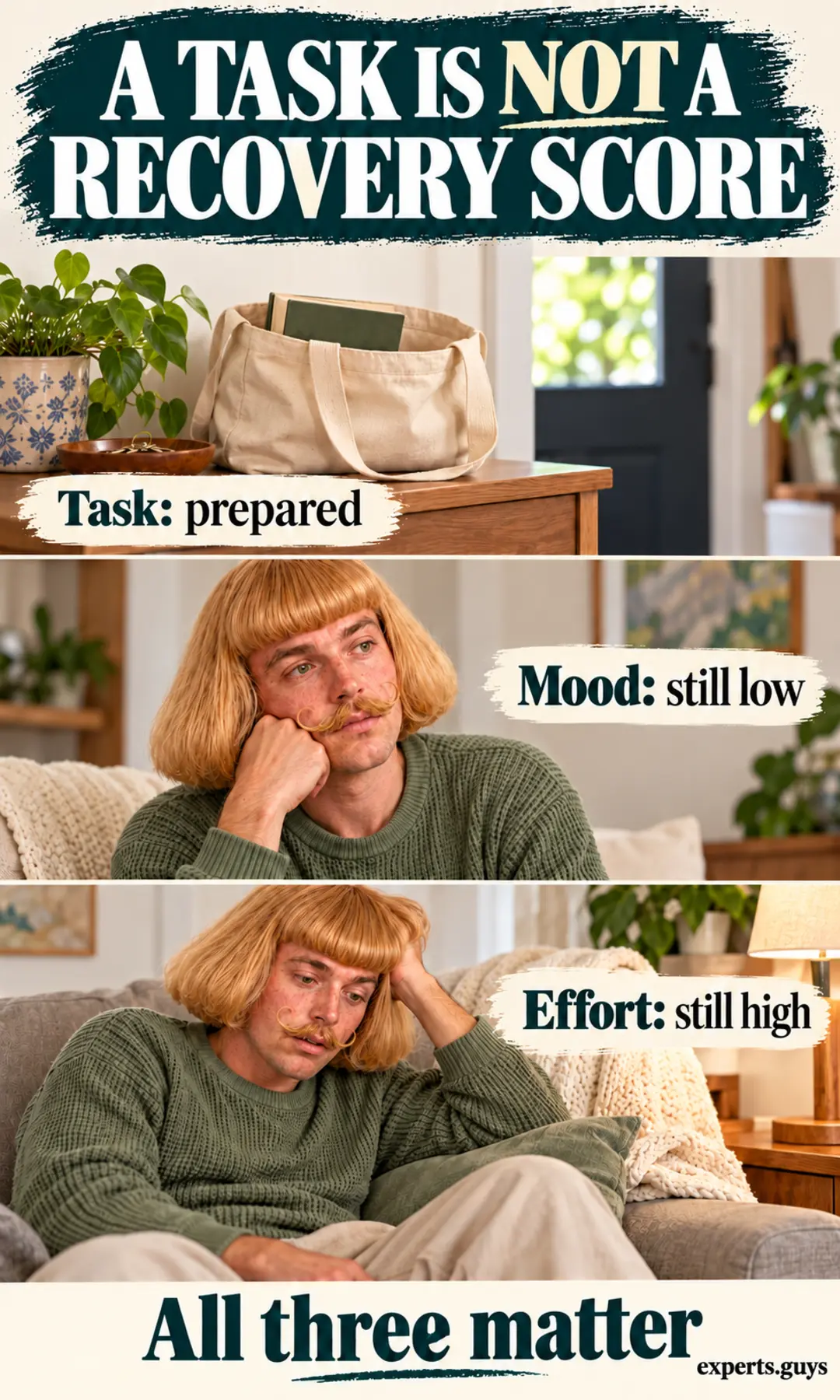
| Finding in the actual activity | Useful interpretation | Avoid concluding |
|---|---|---|
| You began without a long delay | Starting this particular task was more accessible. | All depression symptoms have improved. |
| You finished after help with setup | The support made participation possible. | You can now manage the whole routine independently. |
| The action is easier, but low mood persists | Function and mood tell different parts of the story. | You no longer need treatment. |
| Sleepiness or dizziness interfered | A specific symptom needs assessment in context. | You should change the medicine yourself. |
A clinician may use a validated symptom questionnaire as part of a broader assessment. Its score adds information but does not replace a conversation about functioning, safety, side effects and what matters to you. The explanation of depression assessment in clinical trials covers measurement concepts; an everyday task is not a substitute for those measures.
When should a burden take priority over another attempt?
If new nausea, drowsiness, dizziness or another difficulty is disrupting ordinary activities, raise that specific problem with the prescriber. When it began can help the assessment, but timing alone does not prove what caused it. Severe reactions, inability to keep fluids down or a situation in which you cannot stay safe require urgent help rather than another activity attempt.
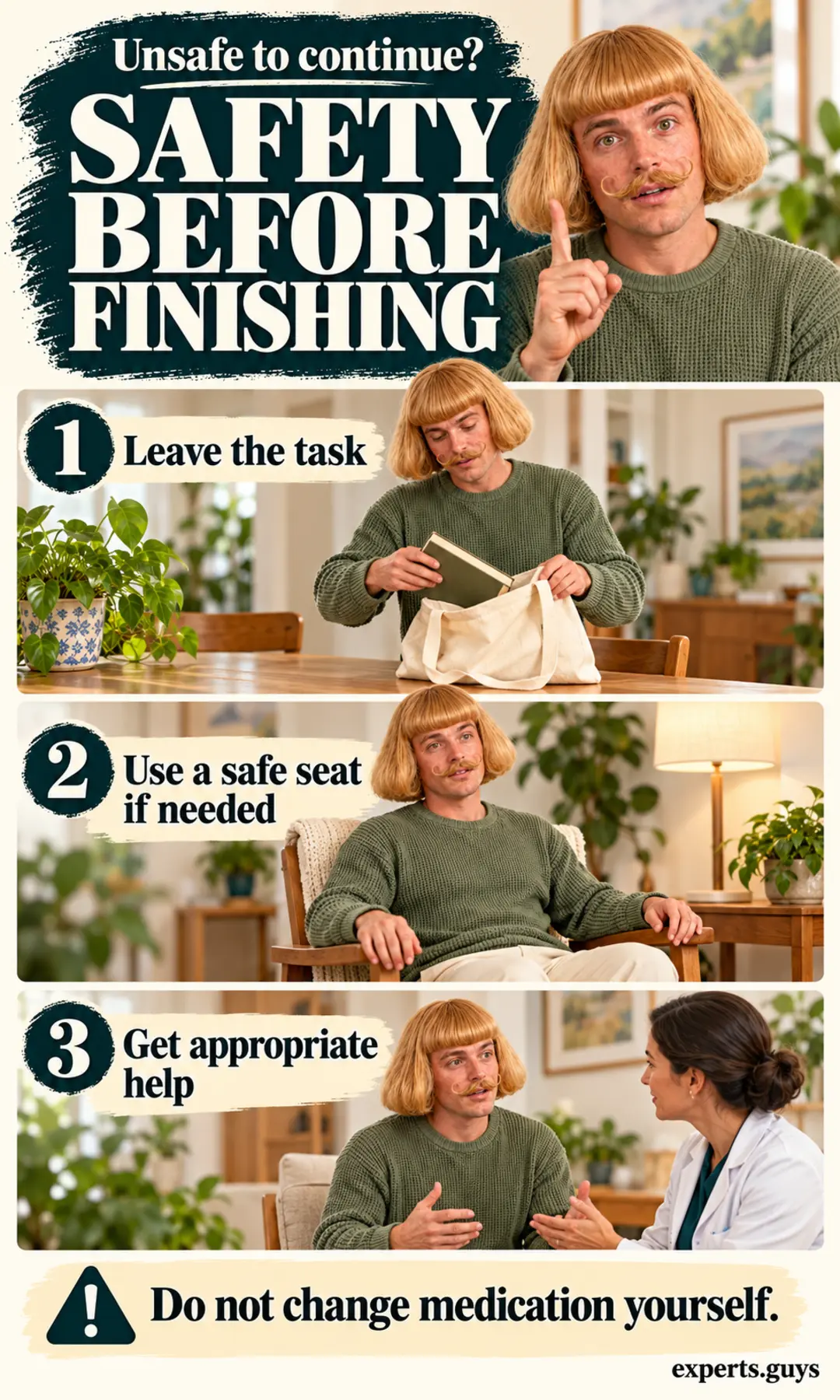
Sometimes the barrier is the task design rather than a treatment side effect. A bag that will not stay open, an item kept beyond reach or an instruction that was unclear each requires a different adjustment. Describing the actual obstacle helps the therapist address the right problem without assuming that more effort is the answer.
How do you turn the experience into a treatment decision?
At the review, explain what you attempted, what happened and what made it easier or harder. You can say this aloud; a record, screenshot or completed form is unnecessary. The goal is an agreed decision about care, not a report card on the activity.

- Explain the concrete result: “I put the book in the bag, but needed help bringing it within reach.” Include persistent symptoms and any important treatment burden.
- Ask one question that fits the finding: “Can we adapt the task?” or “Can we review the sleepiness that interrupted it?” The therapist and prescriber may need the same context, shared with your consent.
- Confirm the agreed next action, who will arrange it and when the review will happen. Ask whom to contact sooner if symptoms worsen; routine messages may not be read urgently.
An early review can address safety, side effects and whether the plan is workable before full benefit is apparent. UK NICE guidance uses early antidepressant follow-up and reassessment after an appropriate initial trial, with timing adjusted to clinical needs. A review date is not a deadline to recover, and a packed bag cannot determine whether to continue, add or change treatment.
Choose a practical next step
The Everyday Progress Check below helps you select the relevant part of the demonstrated task. It gives a smaller option and an observable stopping point, without collecting a written account or calculating a health score. Read the instructions, then put the screen aside while carrying out the activity if it suits your situation.
Everyday Progress Check
Choose the part of the borrowed-book task that fits. Read the steps, then put the screen aside.

Use only a light item and a comfortable, safe setup. If a symptom makes the task unsafe, stop. If you may act on suicidal thoughts or cannot stay safe, seek emergency help now. This activity does not assess medication effectiveness or recovery.
Manual option: place the book and an open light bag within reach, put the book inside, then leave the packed bag on a stable side surface away from the walking route. A smaller endpoint is the book beside the bag. Stop there; no trip or written record is required.
Frequently asked questions
Can one activity tell me whether medication is working?
No. The activity can make a particular functional difficulty clearer, but it cannot separate medication effects from CBT, support or changing circumstances. Treatment decisions need the broader clinical picture.
Does doing a task mean I am no longer depressed?
No. You can complete an action while low mood, loss of interest or considerable effort persists. Explain both the observable result and the difficulties that remain.
Should I stop medication if I think CBT is helping?
Discuss that preference with the prescriber rather than stopping or skipping doses. Continuing treatment and stopping treatment each involve clinical considerations, including relapse and withdrawal. This activity does not determine a stopping plan.
What if I do not have a borrowed book?
The example is optional. If you already have a safe everyday task agreed with your therapist, use its own instructions and bring a concrete account of what happened to the review. You do not need to invent a chore or buy equipment.
What if even the smaller version feels impossible?
You can stop and explain the barrier at your review without completing the activity. That may lead to a more suitable task or assessment of symptoms, treatment burden or access needs. Worsening symptoms or safety concerns deserve earlier contact.
Judge the whole plan, using real-life detail
A useful review distinguishes what you can do, what effort it takes and what treatment burden remains. One meaningful activity can make that conversation concrete without turning daily life into an assessment. The outcome is an appropriate next care decision, with no requirement to prove improvement by completing a task.