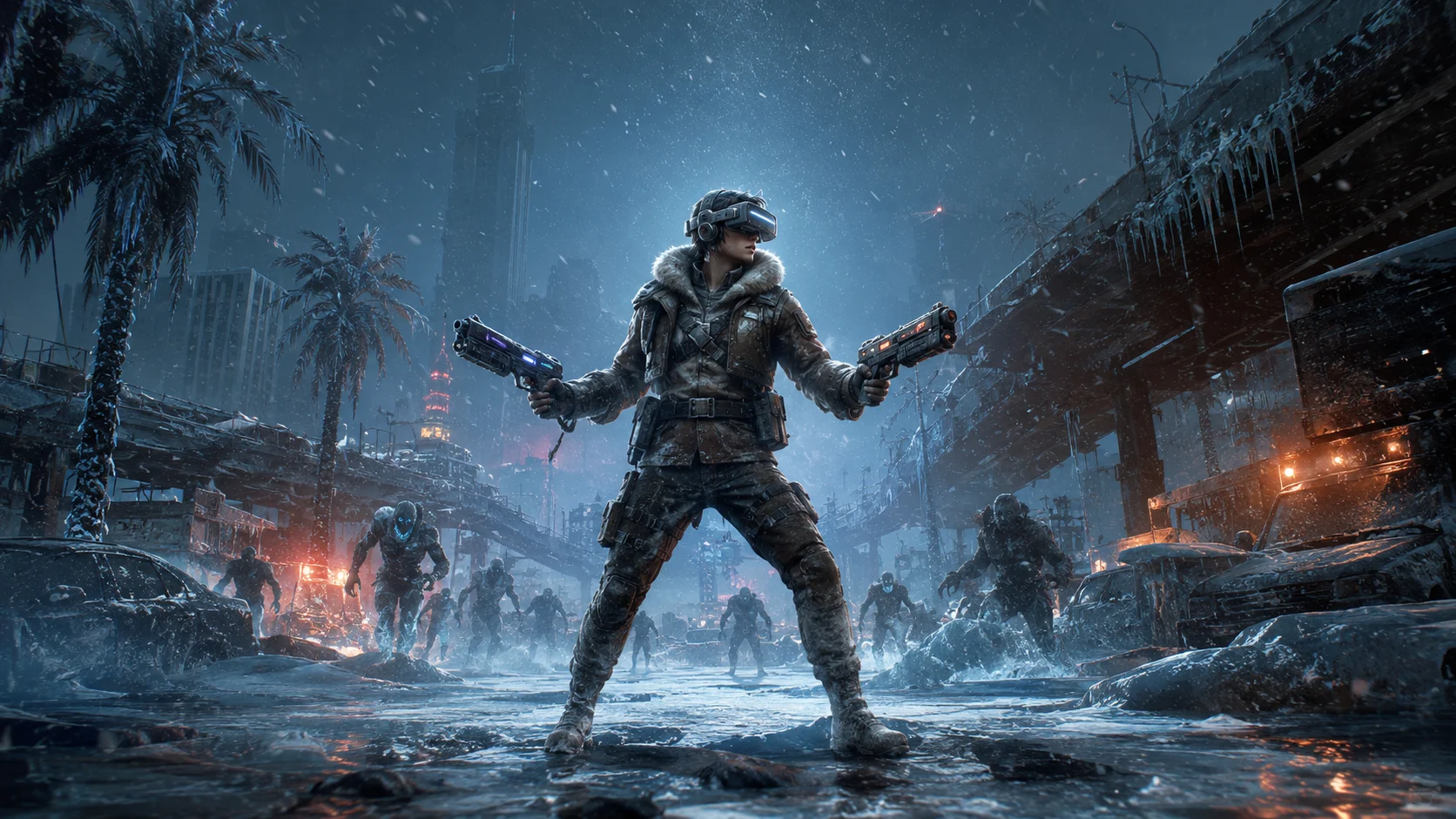

If you have found an After the Fall: Frontrunner Edition box in a store, marketplace or second-hand listing, the most important thing to understand is that you are looking at an older PlayStation VR physical edition rather than the version currently marketed on PlayStation as the Complete Edition. The Frontrunner Edition was created around the game’s first major post-launch content season and bundled several digital extras with the physical PSVR release. It still represents the same core VR co-op shooter, although the surrounding edition structure has changed considerably since its original release.
The original package included the base game, access to the Frontrunner Season, a PlayStation VR exclusive Ultimate Buster skin, PS4 theme and avatars, the official digital soundtrack and a digital artbook. Vertigo Games documented those contents when it announced the After the Fall Frontrunner Edition, which makes that announcement particularly useful when checking second-hand listings that no longer explain exactly what the box originally represented.
There is a more important question for someone buying it now: Do you actually need the Frontrunner Edition? In most cases, probably not if your goal is simply to play the fullest current version of After the Fall. PlayStation currently lists After the Fall – Complete Edition, and its current PlayStation Store description says it includes the Frontrunner Season along with the later Reclamation and Descension updates. That turns the old Frontrunner box into something closer to a particular physical release and collector-oriented package than the obvious route to obtaining the broadest content package today.
There is also a hardware complication that can completely change the buying decision. The official Descension Update compatibility information states that the Frontrunner Edition disc version is not directly compatible with PSVR2 because of a platform technical issue, while the current PS5 version is designed for PlayStation VR2. Anyone buying an old Frontrunner disc specifically for a modern PSVR2 setup therefore needs to pay much closer attention than somebody buying it for the original PlayStation VR hardware.
That does not make the Frontrunner Edition meaningless. A physical copy can still appeal to collectors, players building a PSVR library or someone who specifically wants that historical release. The value simply needs to be judged differently in 2026 because the edition name no longer represents the latest content tier.
What Is After the Fall: Frontrunner Edition?
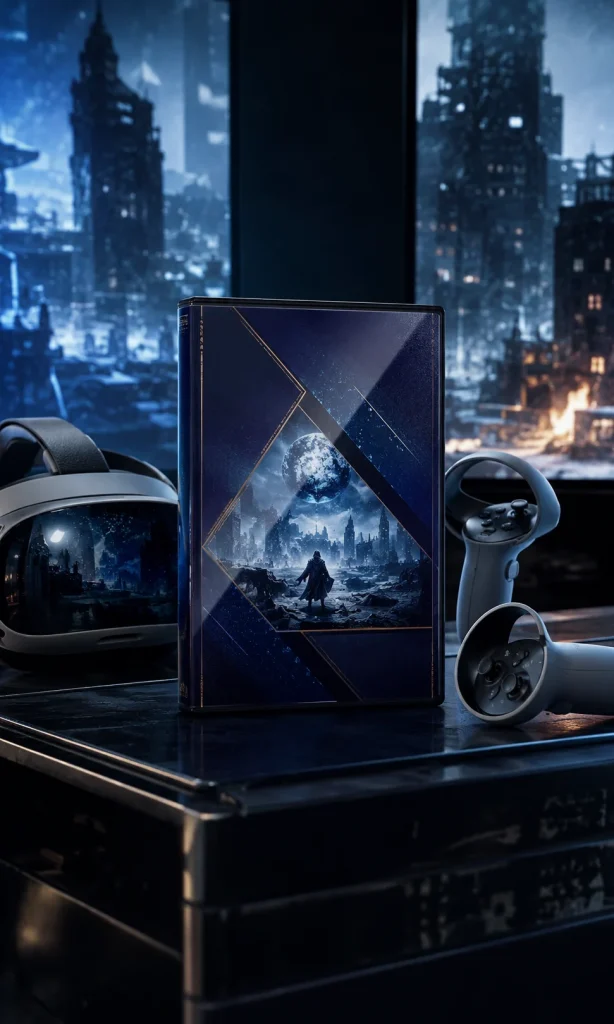
After the Fall: Frontrunner Edition was a physical PlayStation VR edition of Vertigo Games’ cooperative virtual-reality shooter. It arrived after the initial digital release and was tied closely to the game’s Frontrunner Season, the first substantial period of post-launch expansion. Instead of functioning as a completely separate game, the edition packaged access to that evolving content together with a collection of PlayStation-specific and digital extras.
The underlying game remains After the Fall. Players become Harvest Runners operating from a survivor settlement before venturing into a frozen, alternate version of Los Angeles overrun by mutated creatures known as Snowbreed. Missions revolve around fighting through hostile areas, collecting resources, obtaining weapons and progressively improving equipment before returning for more difficult runs.
The design is heavily oriented toward cooperative VR. According to the official After the Fall PlayStation overview, the game supports solo play as well as cross-platform four-player co-op, while competitive play exists through the Tundradome. That structure makes it quite different from a conventional story-heavy single-player shooter because repetition, equipment progression and coordination are central to its long-term appeal.
This distinction matters when evaluating an old boxed edition. Someone expecting a linear campaign that is completed once may find the structure repetitive, while players who enjoy returning to missions with different equipment, difficulties and teammates are much closer to the audience After the Fall was designed around.
What Did the Frontrunner Edition Include?
The original Frontrunner package was more substantial than a simple physical copy, although several of its selling points need to be interpreted in the context of the era in which it was released.
| Included Item | What It Meant | How Important Is It Now? |
|---|---|---|
| After the Fall base game | The complete core VR shooter and its original mission/progression system. | Essential, although newer editions also contain the base game. |
| Frontrunner Season access | Access to the first major wave of additional maps, modes, weapons and related content. | Historically important, but the current Complete Edition already incorporates the Frontrunner Season. |
| Ultimate Buster skin | A PlayStation VR exclusive cosmetic item. | Primarily collector or cosmetic value. |
| PS4 theme and avatars | PlayStation 4 system customization extras associated with the release. | Mostly historical value for current buyers. |
| Official digital soundtrack | Digital access to music from the game. | Useful mainly to enthusiasts and collectors. |
| Digital artbook | Concept art and production imagery covering the frozen post-apocalyptic setting. | A worthwhile extra if behind-the-scenes art matters to you. |
The critical detail is that the season access was never intended to create a permanently isolated version of the game. Vertigo Games described the Frontrunner content as an expanding season delivered to players across relevant editions, so the physical release was essentially a package built around that moment in After the Fall’s development rather than a unique campaign unavailable everywhere else.
This distinction becomes increasingly important as physical copies age. A marketplace seller may emphasize “Frontrunner Edition” as though it represents a superior modern edition, yet the name by itself does not tell you that. What it tells you is which historical package the disc belongs to.
What Was Added During the Frontrunner Season?
The Frontrunner Season was more meaningful than its cosmetics because it expanded the playable structure of the game. Among its additions were Horde mode content, the Boulevard Harvest Run, new weapons, additional player customization and competitive content.
Vertigo Games’ official Boulevard Update explanation describes Boulevard as a new Harvest Run through frozen Hollywood streets and introduced the Skimmer enemy together with an LMG. This kind of addition mattered because After the Fall depends heavily on repeated combat runs, so extra maps and enemies directly affect the variety players experience rather than merely changing menus or cosmetics.
Later in the season, the Shock & Awe update added more equipment and a free-for-all PvP mode. By that stage, the Frontrunner Season had already delivered additional Horde mode maps, weapons, Boulevard and expanded customization.
That history explains why the edition once had clear practical value. It was arriving while the game was actively broadening beyond its original launch package. In 2026, however, those additions should be viewed as part of the game’s accumulated content history rather than as a reason to assume an old Frontrunner copy contains more current content than the Complete Edition.
Frontrunner Edition vs Complete Edition
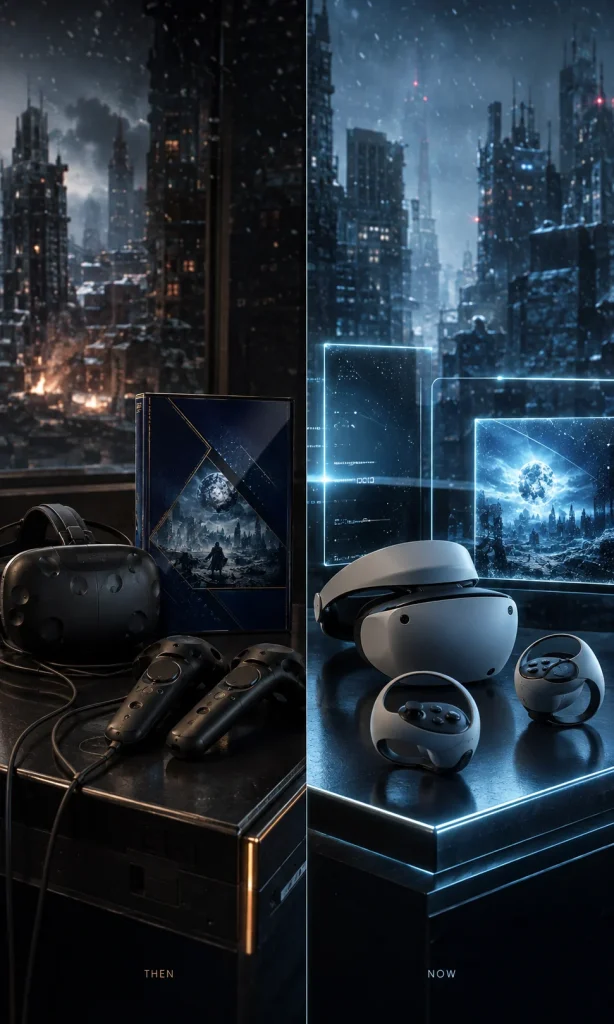
The most useful comparison today is no longer Frontrunner Edition versus the original Launch Edition. It is Frontrunner Edition versus Complete Edition, because that is the comparison a buyer is likely to encounter when an old physical copy appears beside the current digital listing.
| Question | Frontrunner Edition | Complete Edition |
|---|---|---|
| What is it? | Original physical PSVR edition built around the Frontrunner Season. | Current broader version incorporating later free content updates. |
| Frontrunner Season | Included. | Included. |
| Reclamation Update | Not what originally defined the boxed edition. | Listed as part of the Complete Edition package. |
| Descension Update | Arrived later in the game’s lifecycle. | Listed as part of the Complete Edition package. |
| Physical disc | Yes, this was a major reason the edition existed. | Current PlayStation listing is primarily a digital purchase decision. |
| PSVR2 decision | Disc-specific compatibility caveat requires attention. | PS5 version supports PlayStation VR2. |
| Best reason to buy now | Physical collection, original PSVR ownership or an unusually attractive price. | Simplest route for most players who want the accumulated game content. |
The Complete Edition therefore changes what “value” means. When the Frontrunner box was new, season access was a central reason to choose it. Once that season and later updates became bundled into a current edition, the old box became less about obtaining exclusive playable content and more about physical ownership and its historical extras.
The PSVR2 Problem You Should Know Before Buying
This is the part of the buying decision that deserves more attention than the soundtrack, artbook or cosmetic skin.
Vertigo’s official Descension documentation states that the Frontrunner Edition disc version is not compatible with PSVR2 because of technical issues on the platform. The developer previously offered an upgrade process for eligible owners who could provide proof of purchase, but someone acquiring a used copy years later should not assume that an old disc will automatically provide the same straightforward PSVR2 path as buying the current PS5 version.
At the same time, the current PlayStation edition explicitly requires PlayStation VR2 for its PS5 version and supports PSVR2 Sense controllers. That means two boxes carrying the same game name can represent very different practical experiences depending on the headset connected to the console.
If you own original PlayStation VR
A Frontrunner Edition copy can make much more sense because that is the hardware generation for which the physical release was designed. Its collector value and physical ownership advantage are easier to appreciate when the hardware matches the edition.
If you own PlayStation VR2
The current Complete Edition is the cleaner starting point. Unless you specifically collect physical PSVR games, introducing a legacy disc and an old upgrade issue into the purchase adds complexity without providing an obvious content advantage.
If you are buying a used copy
Treat any unused digital bonuses cautiously. Codes, account-linked extras and historical upgrade arrangements should never be assumed to remain available simply because they are printed on the original packaging. The physical disc itself is the reliable object you are purchasing; digital entitlements should be verified separately before they influence how much you are willing to pay.
What After the Fall Actually Plays Like
After the edition question is resolved, the more important issue becomes whether you would enjoy the game underneath it.
After the Fall is fundamentally a VR co-op action shooter built around repeatable missions and equipment progression. You travel into frozen sections of Los Angeles, fight Snowbreed, recover resources and weapons, then return to the social hub before preparing for another run. Higher difficulty settings and improved equipment give the loop its longer-term structure.
Gun handling is one of the places where VR meaningfully changes the experience. Weapons are operated through physical controller movements rather than functioning like flat-screen first-person shooter inputs transplanted directly into a headset. Reloading, aiming and reacting when enemies close distance can produce pressure that would feel much more ordinary with a mouse or conventional controller.
Hordes also make cooperative positioning more important. One player becoming overwhelmed affects everyone because enemies can approach rapidly from several directions. Communication is especially useful when a special enemy appears or a teammate needs space to reload and recover.
Players who enjoy zombie combat but do not want VR may be better served by a conventional action title such as Dying Light 2, while Zombie Army 4: Dead War offers another very different interpretation of cooperative undead shooting. After the Fall’s distinguishing feature is that weapon operation, spatial awareness and enemy pressure happen inside VR rather than through a standard screen.
Solo Play Works, but Co-op Is Where the Design Makes More Sense
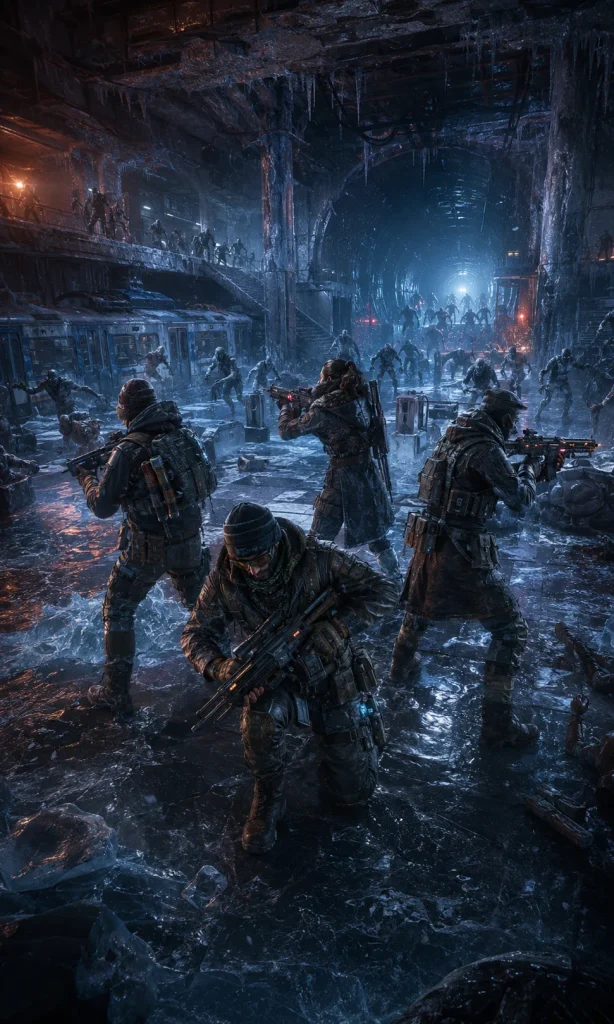
After the Fall can be played solo, which matters for anyone worried about buying a multiplayer-focused VR title without a permanent group of friends. The fact that solo play exists, however, should not be interpreted as evidence that the two experiences are interchangeable.
The encounters become more interesting when several people are responding to the same pressure. A horde coming through a doorway, a dangerous special appearing during a reload or one player becoming isolated creates communication problems that simply cannot be reproduced in exactly the same way by AI-controlled assistance.
Co-op also helps repetitive missions remain more variable. Human players improvise, make mistakes, choose different weapons and move differently, so a familiar map can create a less predictable run depending on the group. That variation matters in a game whose long-term structure expects locations and combat systems to be revisited.
For somebody buying purely for solo campaign storytelling, this should reduce the recommendation. After the Fall does contain a setting, mission progression and recognizable worldbuilding, although its strongest design argument remains the shared VR combat loop.
Does the Frozen Los Angeles Setting Still Stand Out?
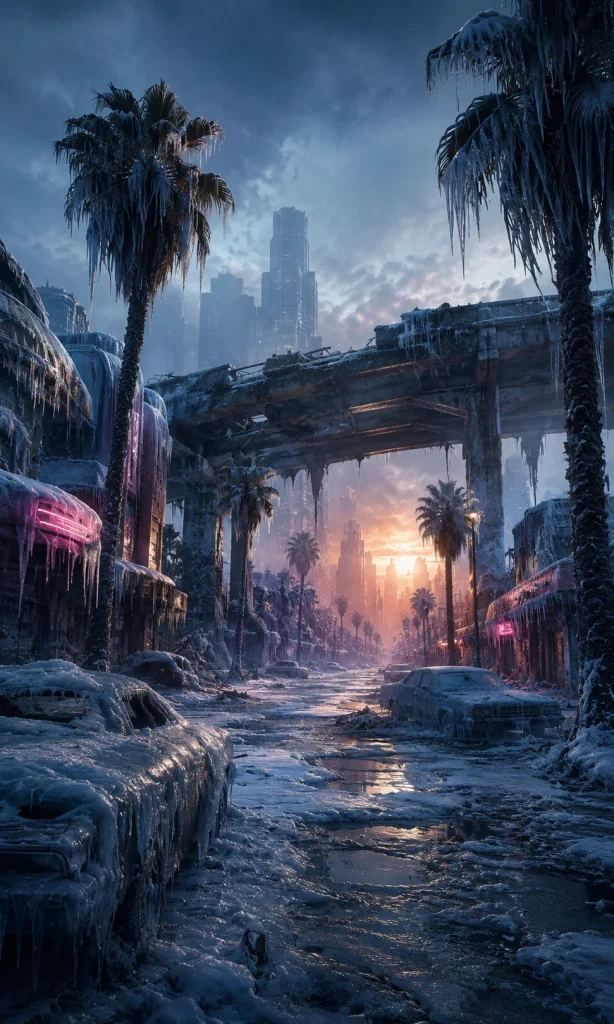
The setting remains one of the game’s clearer visual identities. After the Fall uses a version of Los Angeles buried under ice and snow rather than defaulting to the ruined brown streets and overgrown suburbs commonly associated with zombie fiction. Neon remnants, frozen buildings, underground spaces and 1980s influence give the environments a distinct visual language even when the mission structure becomes familiar.
VR strengthens that atmosphere because scale is harder to ignore inside a headset. Large enemies feel physically imposing, narrow underground environments can create genuine spatial tension, and a mass of Snowbreed occupying the same room has an immediacy that screenshots do not communicate particularly well.
The later Descension material pushed the game farther underground with locations such as Subway Station and Hospital. The official Descension Update overview shows how those areas were used to create more enclosed encounters while also introducing the PSVR2 version.
This is an example of post-launch content helping the whole package rather than merely making a checklist longer. New environments matter because they alter sightlines, movement pressure and the directions from which enemies can reach a group.
Where the Game Can Become Repetitive
The same structure that makes After the Fall suitable for cooperative replay can also become its largest weakness. Harvest Runs are designed to be repeated, equipment is part of the progression loop, and greater difficulty encourages players to return to environments they have already learned.
A player who enjoys mastery may see this as the point. Repetition lets weapon familiarity, team coordination and risk management become more important over time. Someone primarily motivated by continuously discovering new locations may instead begin noticing the structure much sooner.
The decision therefore depends less on the raw number of maps than on your tolerance for replay-driven design. A large content package does not automatically solve repetition when the underlying activity remains entering missions, fighting enemies, collecting resources and improving equipment.
This is why judging the Frontrunner Edition only by how many items appear in its package misses the more important question. The edition can supply content, while the underlying gameplay loop determines whether that content remains interesting to you.
Is After the Fall Scary?
After the Fall contains horror imagery, sudden enemy pressure and the discomfort that can come from being physically surrounded in VR, but its dominant personality is closer to an action-heavy cooperative shooter than a slow survival-horror experience.
The difference becomes apparent once combat begins. Players are expected to shoot large numbers of enemies, acquire increasingly useful weapons and handle intense encounters rather than spend long periods avoiding a single almost unbeatable threat. The fear comes from pressure, proximity and being overrun rather than from sustained helplessness.
VR can still make it considerably more intense than an equivalent flat-screen shooter. Hearing movement behind you and physically turning to discover enemies already occupying your personal space can trigger a much stronger reaction than seeing the same scene framed safely inside a television.
Players who dislike horror because of prolonged dread may therefore find After the Fall more approachable than its frozen undead imagery initially suggests. Players uncomfortable with sudden close-range enemies inside VR should take that aspect more seriously.
Is the Frontrunner Edition Rare or Collectible?
A physical VR release can become interesting to collectors without necessarily becoming financially valuable. Those concepts should be separated.
The Frontrunner Edition represents a specific stage in the history of After the Fall: the original PSVR generation, the game’s early post-launch season and an era in which the publisher was still packaging PS4 themes, avatars, a soundtrack and artbook around a physical VR release. That gives the box historical specificity that the current digital Complete Edition does not reproduce in exactly the same form.
Whether that translates into meaningful resale value depends on actual market supply, condition, region and buyer demand. A sealed copy with all original material is a different collectible from a used disc in a replacement case, and an asking price on a marketplace does not establish what copies genuinely sell for.
For that reason, I would not recommend paying a large premium merely because a seller uses words such as “rare.” Buy it as a collectible when you personally value the physical release or when completed-sale evidence supports the asking price.
Should You Buy After the Fall Frontrunner Edition in 2026?
Buy it if you collect physical PSVR games
This is the strongest modern reason for choosing the Frontrunner Edition over a current digital copy. It represents a specific physical release, carries historically interesting extras and belongs naturally in an original PlayStation VR collection.
Condition becomes important under this use case. Original packaging, inserts and any surviving materials may matter more than whether the package is the easiest way to play the game today.
Consider it if you still use original PSVR
The compatibility picture is much simpler when you use the hardware the edition was originally designed around. If the physical copy is inexpensive and you want After the Fall, the old edition can still provide a sensible route into the game.
The decision should still compare the actual purchase price against other available versions rather than assuming the named edition is automatically superior.
Skip it as your default PSVR2 purchase
For a player entering After the Fall on PSVR2, the modern Complete Edition provides the cleaner route. It is built around the current PlayStation version and bundles the major accumulated content updates without requiring the buyer to investigate the Frontrunner disc’s legacy compatibility situation.
The old physical edition can still be worth owning alongside it if collecting matters, but that becomes a separate decision from simply wanting to play.
Do not pay extra solely for the word “Frontrunner”
The name once described a meaningful content package. In the current ecosystem, the Frontrunner Season is already part of the Complete Edition.
A premium therefore needs another justification: physical scarcity, excellent condition, sealed packaging, collector interest or unusual regional significance. The edition name itself does not create additional modern gameplay content beyond what newer packages have absorbed.
What Should You Check Before Buying a Used Copy?
Start with the headset you intend to use, because a bargain becomes irrelevant if the edition introduces a compatibility problem with your setup. Confirm whether you are buying for original PSVR or PSVR2 before comparing anything else.
Next, inspect exactly what is included. A complete collector copy and a loose disc answer different buying needs, while digital codes printed on an old insert should be treated as uncertain until they are verified.
Then compare the price against the Complete Edition rather than against the Frontrunner Edition’s original launch price. Historical retail pricing can make a used copy look inexpensive even when the modern alternative gives a new player more practical value.
Finally, decide whether you are buying a game to play or an edition to own. That one distinction resolves most of the confusion around the Frontrunner Edition today.
Frequently Asked Questions About After the Fall: Frontrunner Edition
What is included in After the Fall Frontrunner Edition?
The original After the Fall Frontrunner Edition included the base game, full access to the Frontrunner Season, a PlayStation VR exclusive Ultimate Buster skin, PS4 theme and avatars, the official digital soundtrack and a digital artbook. It was released as a physical PlayStation VR edition during the game’s early post-launch expansion.
Is After the Fall Frontrunner Edition the Complete Edition?
No. Frontrunner Edition is an older physical PSVR package associated with the Frontrunner Season. The current Complete Edition incorporates the Frontrunner Season together with later major content such as the Reclamation and Descension updates, so the edition names describe different stages of the game’s lifecycle.
Does After the Fall Frontrunner Edition work on PSVR2?
The original Frontrunner Edition disc has a specific PSVR2 compatibility issue. Vertigo Games states in its Descension Update documentation that the Frontrunner disc version is not compatible with PSVR2 because of a platform technical issue. Buyers using PSVR2 should therefore check the current PlayStation version rather than assuming an old physical disc will provide the same experience.
Can you play After the Fall alone?
Yes. After the Fall supports solo play, although its combat and replay structure are strongly suited to cooperative sessions. Teams of up to four players can tackle missions together, and the unpredictability of human teammates often gives repeated runs more variety than playing entirely alone.
Is After the Fall a zombie game?
After the Fall is a VR action shooter centered on mutated undead creatures called Snowbreed. Its structure emphasizes combat, cooperative missions, weapons and progression more heavily than traditional slow survival horror, although fighting large groups at close range can become intense inside VR.
Is After the Fall Frontrunner Edition still worth buying?
It can still make sense for original PSVR owners, physical-game collectors or buyers who find a complete copy at an attractive price. For someone primarily interested in playing After the Fall on PSVR2, the current Complete Edition is generally the more straightforward choice because the old Frontrunner disc has a documented PSVR2 compatibility complication.
Final Verdict
After the Fall: Frontrunner Edition was a worthwhile package when it arrived because it combined the physical PSVR release with access to the game’s first major content season and several digital extras. It belongs to a period when After the Fall was rapidly expanding through Horde mode, Boulevard, additional weapons, competitive modes and other Frontrunner content.
Its role is different now. The current Complete Edition already includes the Frontrunner Season together with subsequent major updates, so somebody who simply wants the broadest straightforward version of After the Fall does not need to hunt down the old box.
The strongest remaining argument for Frontrunner Edition is physical ownership. It is an identifiable piece of the original PSVR era, and that can make it worthwhile for collectors or players who continue using that hardware. The physical disc’s PSVR2 compatibility complication makes it substantially less attractive as an uncomplicated purchase for the newer headset.
For most new PSVR2 players, choose the current Complete Edition. For an original PSVR owner who finds the Frontrunner Edition cheaply, it can still be a practical purchase. For a collector, judge it by condition, completeness and actual market pricing rather than assuming the edition name alone makes it rare. That distinction gives the Frontrunner Edition a much clearer place in 2026 than treating an old release as though the game’s edition structure never changed.