



Teenage depression is a persistent change in mood or enjoyment that can interfere with school, relationships and everyday life. Stress, loss, bullying and other pressures may contribute to an episode, but there is rarely one cause and sometimes no obvious trigger. The useful starting point is to distinguish what happened from what has changed in the teen’s life, then match support to the seriousness of those changes.
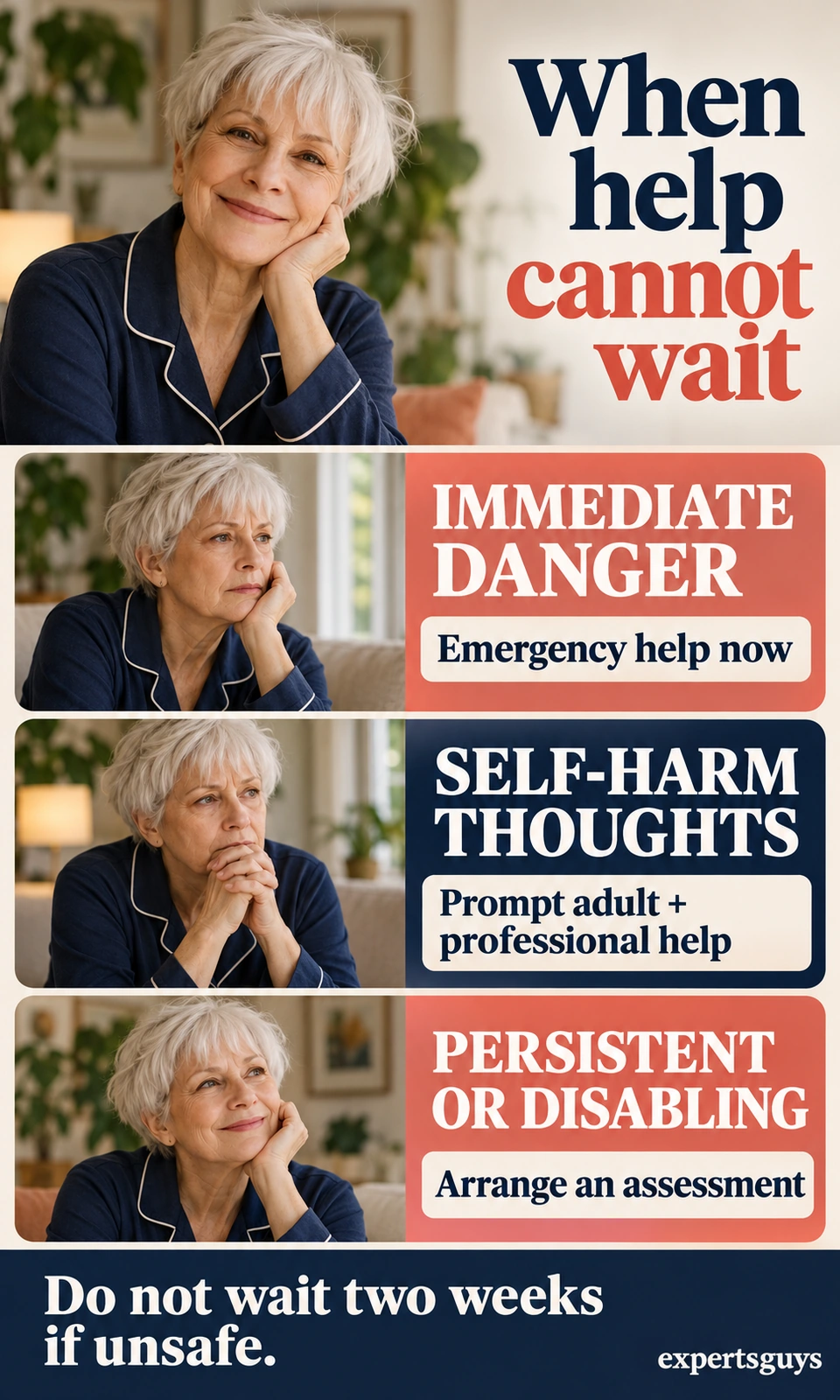
If a teen may act on suicidal thoughts, cannot stay safe, has taken an overdose or has a serious injury, seek local emergency help now. Stay with them if it is safe to do so and involve a responsible adult; do not wait to identify a trigger or complete a self-help exercise.
- Look at the change: loss of interest, persistent irritability, disrupted sleep or falling participation deserve attention even when grades remain good.
- Look at the context: pressure at school, home or online may matter, but context alone does not establish a diagnosis.
- Change the adult response: in a safe, non-urgent moment, pause repeated questioning and offer a choice about talking. Persistent or disabling changes also need assessment.
What can trigger teenage depression?
A trigger is an event or pressure that may help explain when symptoms began. A risk factor is a background condition that increases vulnerability, while a symptom is part of the experience itself. These categories can overlap, so a change in sleep or school performance should not automatically be treated as the cause.
The broader explanation involves biological, psychological and social influences. The NIMH depression overview describes that interaction and the need to consider other health conditions. For the general framework beyond adolescence, see how depression risk factors can work together.
On a small screen, swipe horizontally to compare all columns.
| Term | Example | What it tells you |
|---|---|---|
| Possible trigger | A friendship breakup | Something changed before the difficult period. |
| Risk factor | A family history of depression | Vulnerability may be higher, without making an episode inevitable. |
| Symptom | Little enjoyment in previously valued activities | A current change deserves attention. |
| Ongoing pressure | Repeated harassment | The situation may continue to add distress and needs addressing. |
For example, a teen might lose a friendship, begin sleeping badly and then stop attending a club. The friendship loss is possible context; poor sleep and withdrawal are changes to assess. Calling all three “triggers” collapses the illness, its background and its possible starting point into the same thing.

1. Family vulnerability and previous difficulties
Family history can increase vulnerability, but it is not a prediction that a teenager will become depressed. Previous mental-health difficulties also belong in an assessment. Neither background factor explains every episode, and the absence of a family diagnosis does not rule depression out.
This distinction matters in a family conversation: “It runs in our family, so this is inevitable” removes hope, while “Nobody in our family has it” can shut down a valid concern. Family history is useful context for a clinician, not a verdict about the teen’s future.
2. School pressure and a mismatch between demands and capacity
School difficulties may contribute to distress, and depression can itself make concentration, attendance and assignments harder. The direction is not always obvious: falling marks may follow symptoms rather than trigger them. A high-achieving student can also be struggling while maintaining results at considerable personal cost.
An illustrative example is a student who still submits every assignment but has stopped enjoying anything outside school and dreads each morning. The grade alone misses the change. Understanding whether the difficulty is overload, a learning barrier, peer harm or a broader mood change is more useful than simply increasing supervision.
3. Bullying and repeated humiliation
Bullying involves a power imbalance and aggressive behavior that is repeated or could recur. It is different from an ordinary disagreement. Harassment can make school or online spaces feel persistently unsafe. The relevant problem is the harm being done, not a supposed failure to be resilient.
A caregiver should not assume that the teen must repair the relationship or become friendlier to stop the problem. Threats and ongoing bullying need protective adult involvement through the school or another appropriate service. A calming exercise does not transfer responsibility for keeping the young person safe.

4. Too little sleep and disrupted sleep patterns
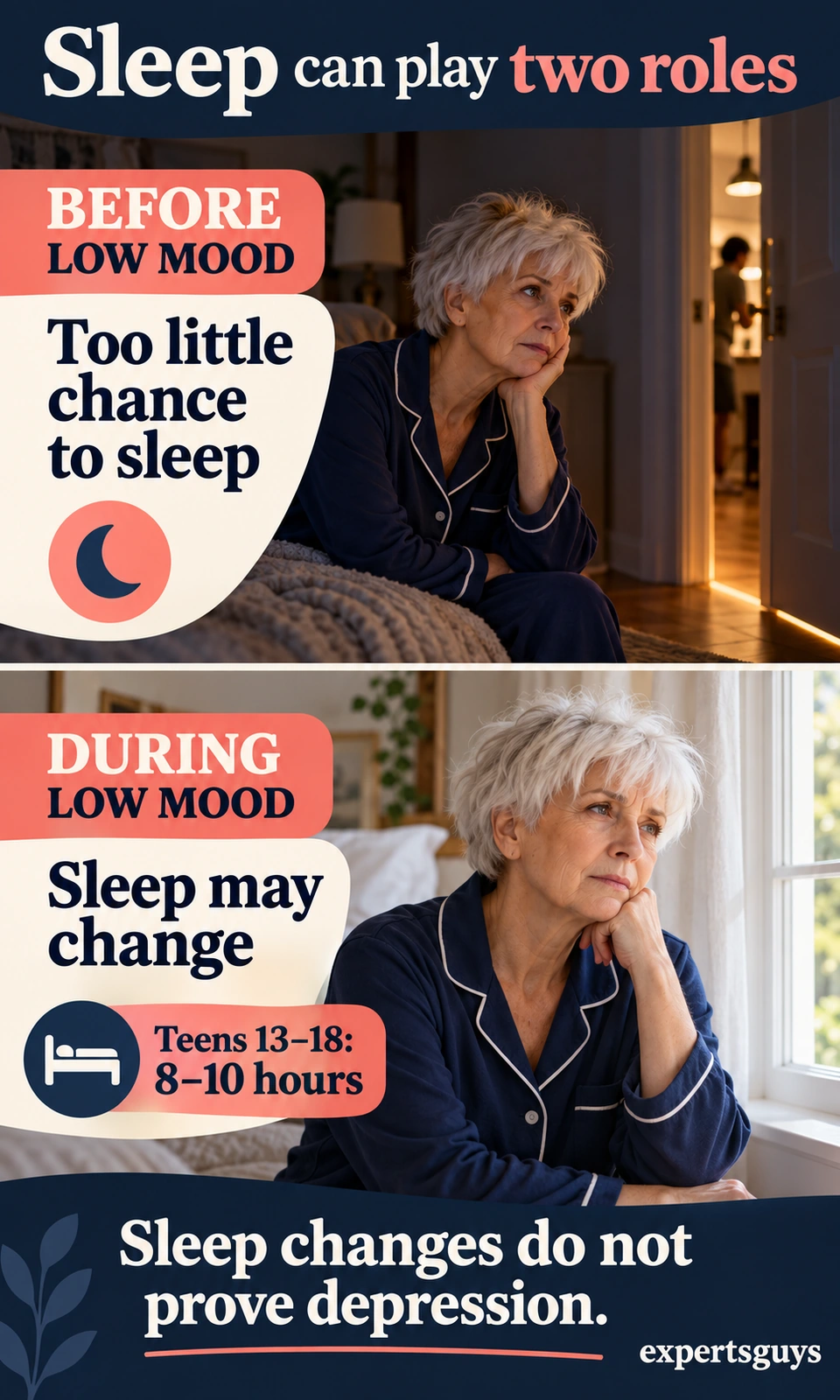
Sleep is both a possible contributor to difficulty and something that can change during depression. A teenager may have too little opportunity to sleep because of school timing, commitments or a noisy home; another may have enough time in bed but struggle to sleep or feel excessively sleepy. These situations call for different questions.
The sleep recommendation for ages 13–18 is 8–10 hours per 24 hours. It is a general health range, not a depression test or a guarantee of recovery. An illustrative contrast is a teen with only six hours between finishing responsibilities and leaving for school versus a teen with a suitable sleep opportunity who still cannot sleep; the first has a schedule constraint, while the second needs attention to why sleep itself has become difficult.
5. Bereavement, separation and relationship loss
The death of someone important, parental separation or a relationship ending can precede a depressive episode. Grief is not automatically depression, and a painful reaction does not become a disorder merely because adults find it uncomfortable. Equally, recognizing a loss does not rule out a coexisting illness.
Grief can arrive in waves connected with reminders; depression may involve a wider, persistent loss of interest, hopelessness or difficulty functioning. That is a useful distinction to discuss, not a home diagnostic test. The event’s apparent size to someone else should not decide how seriously the distress is taken or what help is needed.

6. Ongoing family conflict or instability
Conflict, separation and an unpredictable home environment may add pressure. Financial hardship can also affect daily security and access to support. The adolescent mental-health guidance identifies family, peer and wider social conditions as relevant influences, rather than reducing the problem to a teenager’s attitude.
7. Loneliness and loss of belonging
Being around people is not the same as feeling connected. A teen can attend school and participate in group chats while feeling excluded or unable to be themselves. Withdrawal may also be a symptom, creating a situation in which reduced contact leaves fewer opportunities for support.
The interpretation changes the response. A young person avoiding a hostile group needs protection from that setting; someone withdrawing from previously safe friendships may need help with the mood change. “Go out more” cannot resolve both situations.
8. Discrimination and pressure to hide identity
Rejection, discrimination and fear of being exposed or humiliated can add substantial stress. A person’s identity is not the illness. The relevant risks include hostile treatment, exclusion and barriers to safe support; this distinction avoids blaming the teenager for the environment around them.
9. Abuse, violence or other traumatic experiences
Traumatic experiences may increase vulnerability to depression and other mental-health problems, but there is no single inevitable response. A caregiver does not need a detailed retelling before taking safety seriously. Ongoing abuse requires protection; a coping suggestion is not an adequate response to continued danger.
Questions about an event should not become pressure to disclose everything to relatives. The teen may need a qualified professional and a setting where they can speak safely. Do not assume the nearest family member is necessarily the safest adult.
10. Physical illness, substance use and medication-related changes
Long-term illness, pain, alcohol or drug use, and some medication effects may contribute to or complicate mood symptoms. Some medical conditions can also resemble depression. The timing matters, but symptoms appearing after a medicine change do not by themselves establish that the medicine caused them.
These possibilities belong in a healthcare assessment alongside the emotional and social context. Do not stop or change prescribed treatment on your own. The practical distinction is between reporting a possible relationship and deciding on a treatment change, which requires the prescriber’s advice.
Which changes suggest more than a reaction to stress?
Look for a sustained change from the teen’s usual life, especially reduced enjoyment, persistent sadness or irritability, and difficulty participating in ordinary activities. The teen depression symptom guide includes withdrawal, sleep or eating changes, fatigue and difficulties at school. No single behavior confirms depression.
- Enjoyment: a valued activity feels empty or is repeatedly abandoned.
- Function: getting to school, eating, basic care or ordinary decisions have become harder.
- Reach: the difficulty extends beyond one argument, subject or disappointing afternoon.
- Persistence and severity: symptoms continue, worsen or cause substantial distress; do not require every sign to be present before taking concern seriously.
For a major depressive episode, clinicians consider a symptom pattern lasting at least two weeks, alongside its effects and other diagnostic requirements. That timeframe is not an instruction to wait. Severe distress, rapidly worsening function or any safety concern can justify help sooner; a checklist cannot settle the diagnosis.
An occasional laugh, a good grade or a pleasant evening does not cancel out difficulties elsewhere. The opposite mistake is treating every preference for privacy as illness. Ask how daily life has changed rather than judging by a single visible moment. The distinction between everyday wording and diagnosis is explained further in clinical depression versus feeling depressed.
| Concern | Response |
|---|---|
| Immediate danger, likely action on suicidal thoughts, overdose or serious injury | Local emergency help now; stay with the teen if safe. |
| Suicidal or self-harm thoughts without immediate danger | Prompt support from a safe adult and a qualified professional; escalate if safety is uncertain. |
| Persistent, worsening or disabling symptoms | Arrange a healthcare assessment; do not wait for a clear trigger. |
| A brief upset with daily life largely intact | Offer support and remain attentive to persistence, worsening or safety concerns. |
A teen may also need evaluation for anxiety, an eating disorder, a physical condition or another problem with overlapping symptoms. Unusually elevated or markedly irritable mood with much less need for sleep and increased activity is different from simply staying up late. Describe those changes promptly rather than assuming every mood problem is unipolar depression.
What can a caregiver change without adding more pressure?
In a safe, non-urgent moment, the caregiver can stop adding demands to an already difficult exchange. The purpose is to make a conversation more accessible, not to diagnose or treat depression. This pressure pause is a practical adaptation of supportive communication guidance, with a clear physical change: stop cornering the teen with repeated questions and leave space.
Use it when a conversation about grades, withdrawal or sleep has turned into a lecture and nobody is in immediate danger. No equipment or written record is needed. Choose a place where the teen can move freely, with a comfortable seat available if wanted; this is not a reason to leave a teen alone when safety is in doubt.
- Stop the extra questioning. End the lecture rather than adding one final criticism. Try: “I am turning this into another demand. I will stop.”
- Step back and leave space. Keep the doorway clear and avoid following the teen from room to room. If movement is difficult, remain seated and reduce the intensity of the exchange.
- Offer a real choice. Ask whether they would prefer to talk here, later, or with another safe adult. Accept a pause while making clear that support remains available.
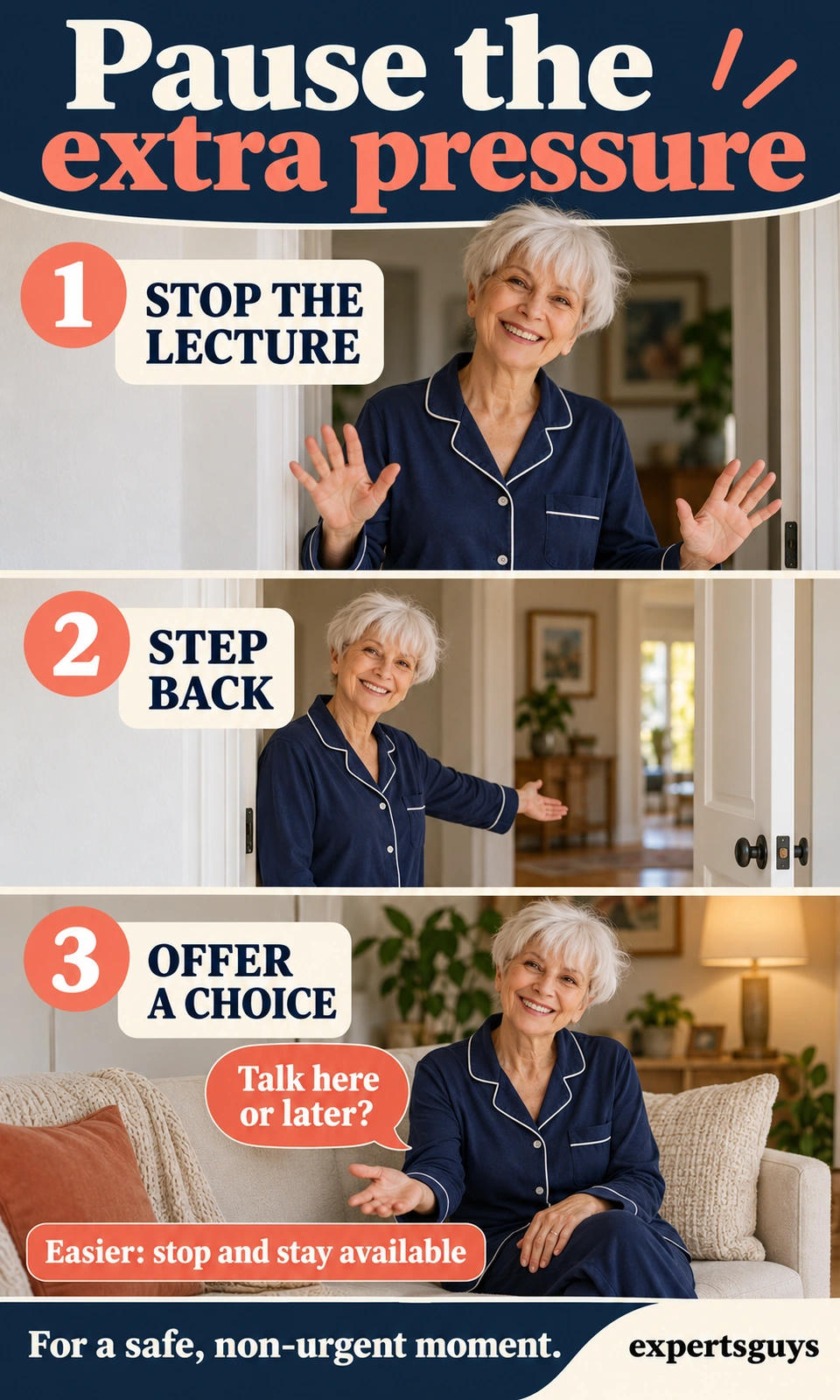
Illustrative example: A grandparent has asked about an unfinished assignment several times. She stops speaking, moves away from the doorway and offers, “We can talk here or later. Would you rather speak with someone else?” The immediate outcome is a less pressured invitation; the assignment and any health concern still need an appropriate response.
Common mistake: disguising an ultimatum as a choice, such as “Talk now or lose your phone,” keeps the pressure in place. Correct it by offering options you can actually respect. If a full conversation is too much, the easier version is simply to stop repeated questioning and stay available.
Completion means the adult changed their approach and the teen has a workable route to support. It does not require a disclosure, an apology or an immediate improvement in mood. If conversation repeatedly stalls while function worsens, arrange assessment rather than repeating the same invitation indefinitely.
The guidance for parents concerned about depression supports taking concerns seriously and allowing another trusted person to help. For separate skills a teen may choose for school or friendship stress, use the existing teen coping-skills guide; those skills do not replace protection or treatment.
How do you prepare for an assessment without keeping a diary?
Bring a few concrete observations and the teen’s own account, rather than trying to prove a cause. A spoken handoff can explain what changed, how daily life is affected and what needs to happen next. Its purpose is to make the appointment useful, not to turn the caregiver into the diagnostician.
A primary-care clinician, pediatrician or appropriate youth mental-health service can be a starting point, depending on local access. Tell the service about urgency when arranging care. If explaining everything feels difficult, one clear example is enough to begin; a perfect timeline is not a prerequisite.
- Explain what changed. Use an observation such as “You used to enjoy weekend practice and have stopped going,” and say roughly when you noticed it. Separate what you saw from what you think it means.
- Explain what is harder. Describe the effect on sleep, eating, school, relationships or basic care. Mention relevant health problems, medicines and substance use honestly, without changing treatment yourself.
- Agree on the next step. Give the teen room to speak, including privately with the clinician when appropriate. Before leaving, clarify the follow-up arrangement and what deterioration should prompt earlier or urgent help.
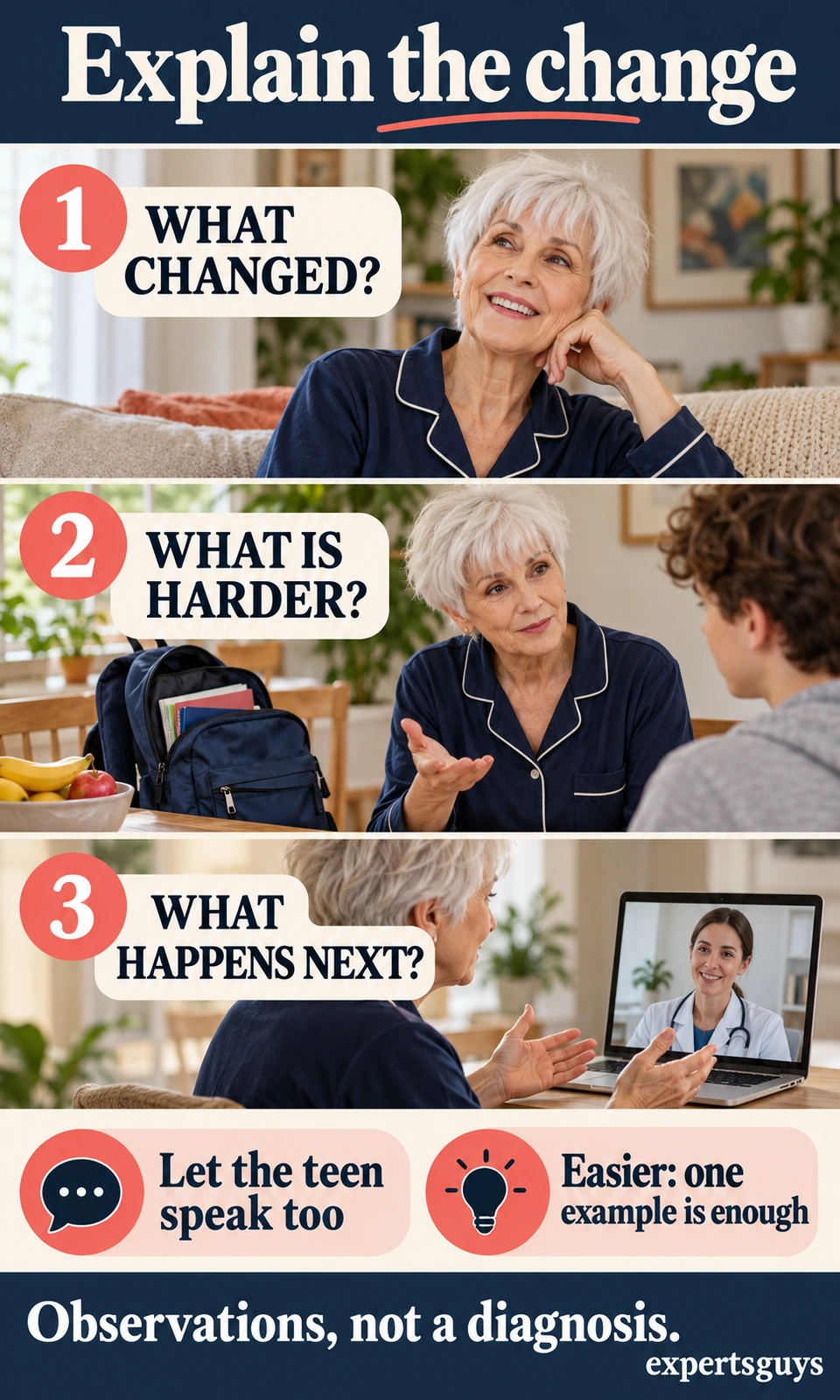
Illustrative example: “For several weeks, getting to school has become much harder and meals are often missed. I noticed it after the friendship changed, but I do not know whether that explains it.” This gives timing, function and uncertainty without assigning blame. The teen may describe a different starting point, and that account deserves space.
Common mistake: presenting an interpretation as a fact: “The phone caused this” or “They are refusing to try.” Replace it with an observable change and let the assessment explore explanations. If a caregiver’s presence makes speaking difficult, another safe adult or an agreed private part of the appointment may help; confidentiality and its safety limits depend on age, circumstances and local rules.
The clinician may ask about duration, safety, family and medical history, and possible alternative explanations. Treatment can involve psychological therapy, medication or both, selected for the young person’s needs. The useful endpoint of this first handoff is a clear care plan or next appointment, not a final answer about every contributing factor.
Frequently asked questions
Can a teen be depressed without an obvious reason?
Yes. An identifiable event is not required. A teen’s distress and loss of functioning deserve attention even when home or school appears stable; support should not depend on producing a convincing explanation.
Does taking away social media solve the problem?
Not reliably. Online experiences may involve harassment, comparison or disrupted sleep, but they can also provide connection. Address the actual problem and preserve safe support; removing a device does not establish or treat the cause of depression.
Is it a parent’s fault if a teenager becomes depressed?
Depression has multiple influences, so a diagnosis does not by itself assign blame. Harmful behavior and unsafe conditions still need to change. A caregiver can take responsibility for their response without claiming responsibility for every aspect of an illness.
What if the first adult dismisses the concern?
Try another safe, responsible adult or an appropriate healthcare service. A young person does not need unanimous agreement before receiving help. If danger is immediate, use emergency help rather than waiting for a routine conversation.
Your next-step checklist
- Separate the possible trigger from the symptoms and their effect on daily life.
- For a safe conversation, use the caregiver pressure pause instead of repeated questioning.
- Arrange assessment for persistent, worsening or disabling changes; bring one concrete example if that is all you can manage.
- Use urgent help when safety is uncertain or danger is immediate. A clear cause can wait; safety cannot.









