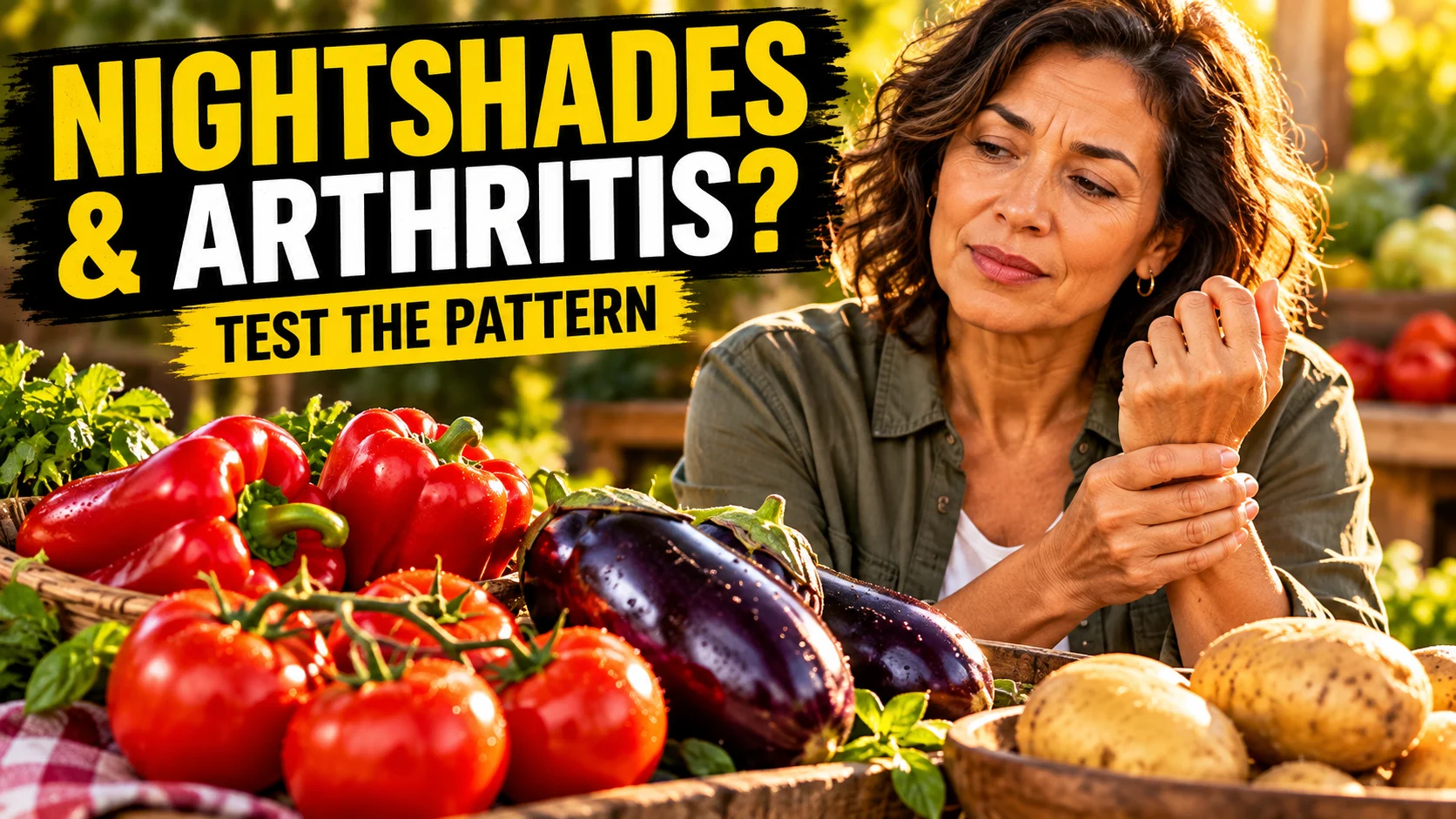

There is no convincing evidence that tomatoes, potatoes, peppers, or eggplant worsen arthritis for most people. If you repeatedly notice symptoms after a particular food, a short, structured trial may help you decide what to eat, but a meal-to-flare coincidence does not establish a cause. Keep treatment decisions with your clinician while you test the food question.
Which foods count as nightshades?
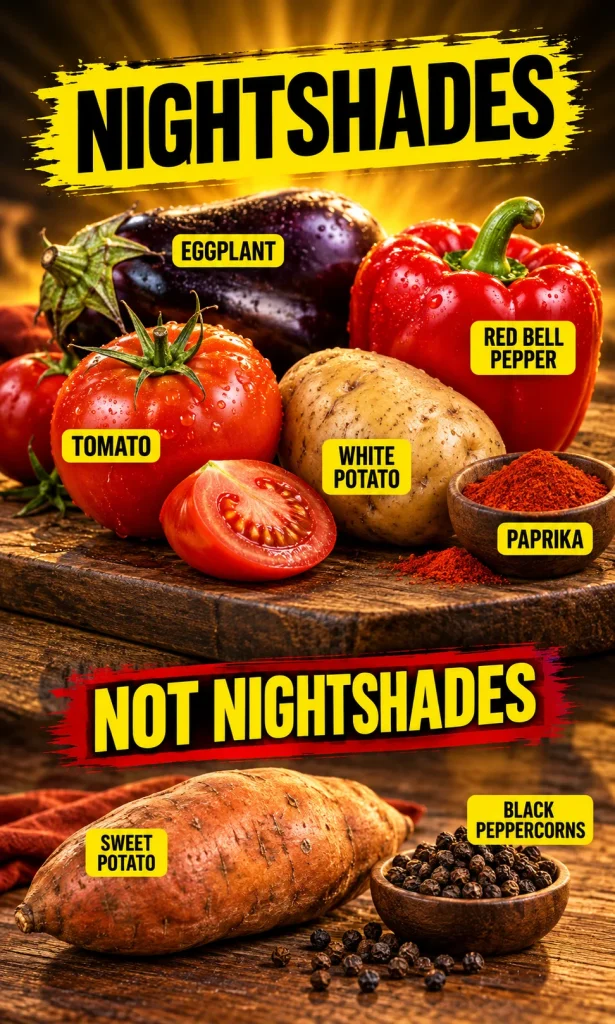
Nightshades are members of the Solanaceae plant family. The everyday foods are tomatoes, white potatoes, eggplant, bell peppers, and hot peppers; paprika and cayenne come from peppers, and goji berries are another edible member. Sweet potatoes are a different plant family. Black pepper is not a nightshade either, so a pepper-free meal can still be seasoned with it if you enjoy the flavor.
These plants contain naturally occurring compounds, including different alkaloids. Potato glycoalkaloids such as solanine are especially relevant when potatoes are green, damaged, or sprouting. That food-safety issue is separate from the unproven claim that normal portions of ripe nightshade foods inflame human joints. Do not eat potatoes that are green beneath the skin or spoiled; remove and discard sprouts. MedlinePlus explains green-potato and sprout poisoning.
Do nightshades cause arthritis flares? What the evidence says
The central question has a disappointing but useful answer: human research has not established that nightshade vegetables cause arthritis flares. The Arthritis Foundation describes limited evidence and recognizes that people can still notice a personal association. Cleveland Clinic similarly says the proposed connection lacks convincing proof. That leaves room to investigate an individual experience without telling every person with arthritis to avoid a nutritious food group.
Claims about solanine often jump from plant chemistry or laboratory findings to a recommendation for people with rheumatoid arthritis (RA) or osteoarthritis (OA). Those are different questions. A compound’s effects in a laboratory do not tell us whether a normal serving of cooked potato or tomato sauce causes a clinical flare. There is no validated blood test that can identify a nightshade-related arthritis flare, and an elimination diary is an exploratory exercise, not a diagnosis.
Tomatoes provide vitamin C and lycopene; peppers offer vitamin C; potatoes can supply potassium and fiber when eaten with the skin; eggplant adds fiber. These benefits do not mean any individual food treats arthritis. Likewise, research into particular tomato compounds or purple potato varieties cannot establish that eating those foods relieves joint pain. The practical point is that routine exclusion has a nutritional and everyday-meal cost, so the suspected benefit should be clear enough to justify it. See the Arthritis Foundation’s vegetable guidance.
Arthritis type matters. RA is an immune-mediated inflammatory disease, OA involves the whole joint and often mechanical as well as inflammatory factors, and gout is driven by urate crystals. A generic list of ‘arthritis foods’ can obscure these differences. A nightshade trial cannot replace RA medication or the urate-lowering plan used for some people with gout; dietary priorities for gout are different. For the larger food picture, read what foods make arthritis worse, while recognizing that the existing broad page needs its own evidence and medical-review update.
Why might someone feel worse after a tomato or potato meal?
Start with the whole meal. French fries commonly travel with a large restaurant meal, alcohol, soda, or a late night; pizza brings tomato sauce together with cheese, refined flour, salt, and perhaps processed meat. Those combinations make it hard to assign the next day’s symptoms to one vegetable. A plain baked potato and fried potatoes are different tests. A fresh tomato and a highly seasoned sauce are different tests too.
Digestive discomfort after a food can be real without demonstrating increased joint inflammation. Spicy peppers, acidic tomato dishes, food intolerance, allergy, or another ingredient may explain a reaction in some people. Symptoms also fluctuate with sleep, activity, stress, infections, medication changes, and the underlying disease. Expectation can influence how intensely a symptom is experienced; that possibility should never be used to dismiss someone’s pain. A repeatable pattern under comparable conditions carries more weight than a single memorable meal.
New, marked swelling or warmth in a joint warrants medical assessment, particularly when the joint is red, extremely painful, or accompanied by fever. Do not wait through a food experiment to seek care for a possible infection or a significant inflammatory flare. If eating produces hives, throat tightness, or breathing trouble, follow urgent allergy guidance instead of doing a home reintroduction.
How to test whether nightshades affect your symptoms
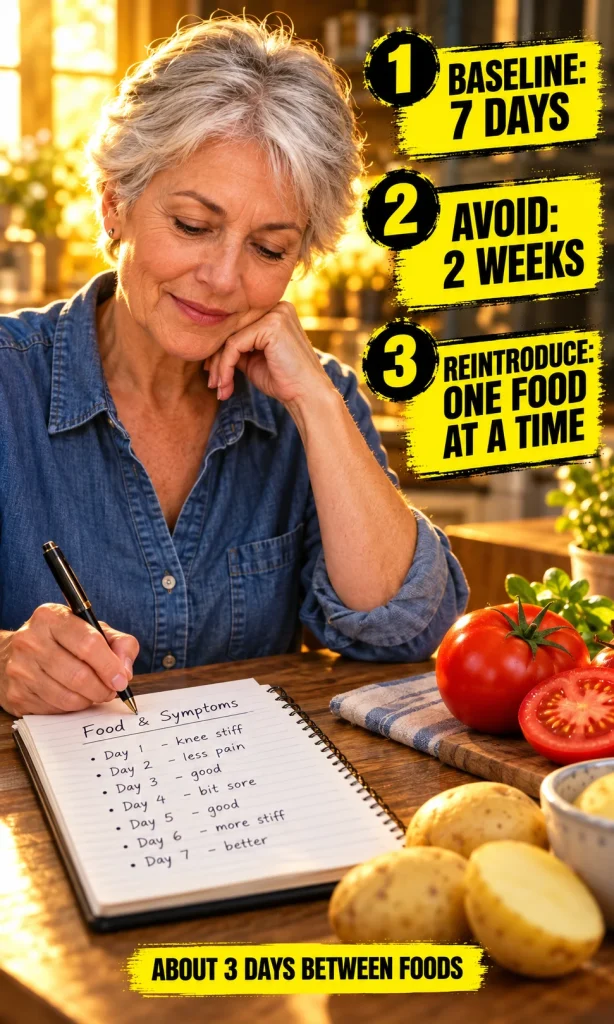
A short elimination and reintroduction trial is a way to organize observations, not a clinically validated challenge with a guaranteed answer. The Arthritis Foundation suggests avoiding suspected nightshades for about two weeks and allowing roughly three days between individual reintroductions. Make the trial manageable and discuss it first with your clinician or registered dietitian if you have complex nutrition needs, diabetes, a history of disordered eating, substantial weight loss, or active disease. Do not change prescribed treatment to make the diary look cleaner.
1. Record a baseline for seven days
Write down meals and a consistent daily symptom snapshot: pain from 0 to 10, morning stiffness in minutes, any visible swelling, and the joints affected. Note medication changes, sleep, exercise, illness, and menstrual or other relevant patterns. The same measurement time each day matters more than recording every sensation in the moment. A baseline helps reveal whether a difficult day was already occurring before the food in question.
2. Remove the suspected group for about two weeks
Replace tomatoes, white potatoes, eggplant, peppers, paprika, and cayenne with other foods while keeping the rest of your meals as similar as practical. Check obvious ingredients in sauces, spice blends, and prepared dishes. Potato starch may appear in packaged foods, but chasing trace amounts can make the trial unnecessarily restrictive; discuss that level of avoidance with a dietitian if it matters to your situation. Continue the symptom diary and record any important changes to routine.
3. Reintroduce one food at a time
Try a normal portion of one simple food, such as a plain tomato with lunch, then leave about three days before testing the next one. Record what you ate and how it was prepared. If you want to test potato, use a normally stored potato prepared simply, never a green or spoiled one. Skip foods that have caused a serious allergic reaction, and seek individual medical advice rather than challenging them at home.
4. Decide whether the pattern is useful
Compare the test day and following days with your baseline and the elimination period. Was a similar symptom change seen on more than one exposure to the same food? Did it appear when activity, medication, and other meals were reasonably similar? A day or two of improvement during elimination or one bad day after reintroduction may reflect normal variation. There is no established ’24-to-72-hour rule’ that proves a nightshade caused a flare.
If a pattern seems consistent, consider limiting only the implicated food and finding a suitable replacement. Tell your treating clinician about changes in swelling, stiffness, or function, especially with RA. If the diary remains ambiguous, it is reasonable to stop testing and keep a varied diet rather than prolonging a restrictive plan. The companion Nightshade Pattern Check can organize a diary; it does not score inflammation or diagnose a food trigger.
Nightshade Pattern Check
Compare your baseline, brief food trial, and one-at-a-time reintroduction without pretending a diary can diagnose inflammation.
Private on this browser No scoreThis is an observation aid, not a diagnosis or medical treatment. Keep prescribed medication unchanged unless your clinician advises otherwise. Seek care for a hot, red, severely painful joint, fever, or worsening function.
Record a day
Use the pattern carefully
- Log your usual meals and symptoms for about seven days.
- If appropriate, replace nightshades for about two weeks without changing other parts of your routine on purpose.
- Reintroduce one simple food in a normal portion, leaving about three days before the next.
- Compare repeated observations, not one bad day. Discuss persistent symptoms with a clinician.
Do not reintroduce a food that has caused a serious allergic reaction. A lower pain number during avoidance does not prove the food caused inflammation.
| Date | Phase | Food | Pain | Stiffness | Swelling | Notes |
|---|
Saved only in this browser's local storage. Clear browser data or use “Erase diary” to remove it. On a shared device, someone else using the same browser may see entries. Export a copy before clearing if you want to discuss it with your clinician.
Everyday swaps that preserve variety
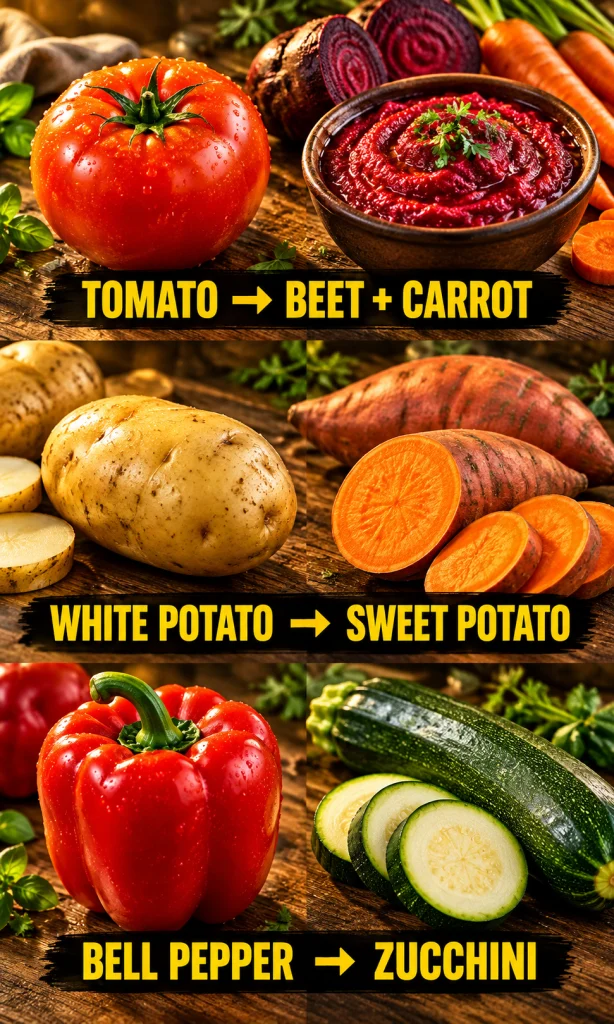
Food substitutions are most useful when they keep the role of the original ingredient in the meal. For pasta sauce, roasted beets or carrots with herbs and a little lemon can provide color and body; roasted red pepper is itself a nightshade, so it is not a suitable swap during a full nightshade trial. Sweet potato is not a nightshade, although its sweetness and cooking behavior differ from white potato. Choose options that work for your nutrition needs and medications.
| Nightshade food | Common concern | What it contributes | Practical swap during a trial |
|---|---|---|---|
| Tomatoes and tomato sauce | Suspected joint symptoms after a dish | Vitamin C and lycopene | Roasted beet-and-carrot sauce; add citrus or herbs as needed |
| White potatoes | Confusing fried meals with potato itself | Potassium; fiber with skin | Sweet potato, cauliflower mash, or turnips |
| Bell and hot peppers | Sensitivity to spice or a mixed meal | Vitamin C and flavor | Zucchini, cucumber, or carrots; ginger for warmth |
| Eggplant | Suspected symptoms after a casserole | Fiber and a substantial texture | Mushrooms or zucchini in a baked dish |
| Paprika and cayenne | Hidden peppers in seasoning blends | Color and heat | Cumin, ginger, garlic, or black pepper if tolerated |
Use ordinary supermarket foods and compare like with like. A vegetable-heavy home-cooked dinner may feel different from takeout for several reasons besides the absence of nightshades. If you remove a substantial food group, deliberately replace its nutrients and the meals you actually enjoy; a plan that you cannot maintain will tell you little about the long term.
What matters more than a blanket nightshade ban?
For most readers, a consistent overall eating pattern deserves more attention than one botanical family. The Arthritis Foundation favors a varied pattern with vegetables, fruit, whole grains, beans, nuts, fish, and unsaturated fats, while limiting heavily processed foods and excess saturated fat. This is a direction for food choices, not a promise that avoiding sugar or fried food will prevent every flare. Someone with gout, kidney disease, diabetes, or another condition may need a different plan.
If excess body weight is adding load to painful joints, a sustainable weight-management plan may help some people with OA; it should be individualized, and it does not define anyone’s worth or explain every symptom. More urgent than any pantry edit is appropriate diagnosis and treatment of persistent swelling or declining function. Keep your prescribed arthritis treatment and use food observations to inform a discussion with your care team, not to replace it.
What to take away
Tomatoes, potatoes, peppers, and eggplant are not established arthritis triggers for the general population. A personal association is worth examining when it recurs, preferably with a brief baseline, a short trial, and careful reintroduction of one food at a time. If no clear pattern emerges, there is no evidence-based reason to keep all nightshades off the menu. If one food seems consistently troublesome, limit that food while preserving nutrition and bring the finding to your clinician.
Frequently asked questions
Do tomatoes make arthritis worse?
No good evidence shows that tomatoes worsen arthritis for most people. If you notice a repeated association, compare a plain tomato with a mixed meal such as pizza or pasta sauce. A short diary and careful reintroduction can help you discuss that pattern with a clinician.
Are white potatoes bad for arthritis?
A properly stored and prepared white potato is not an established arthritis trigger. Fried potato dishes contain other variables, so they are poor tests of the potato itself. Green or spoiled potatoes are a separate food-safety concern and should not be eaten.
Should I avoid nightshades if I have rheumatoid arthritis?
Routine avoidance is not supported by strong human evidence. If you suspect a specific food, ask your care team whether a brief, nutritionally adequate trial makes sense for you. Keep taking prescribed RA medicines and seek assessment for persistent or worsening joint inflammation.
Can nightshades cause inflammation?
Normal servings have not been shown to cause arthritis-related inflammation in most people. Claims about plant alkaloids do not establish what happens in a human joint after a meal. Individual reactions may occur, but symptoms alone cannot identify their mechanism.
What can I eat instead of nightshades?
Try sweet potatoes or turnips for white potatoes, zucchini or cucumber for peppers, and a roasted beet-and-carrot sauce for tomatoes. Roasted red peppers are also nightshades and should stay out of a full nightshade trial. Choose varied replacements so the experiment does not unnecessarily narrow your diet.