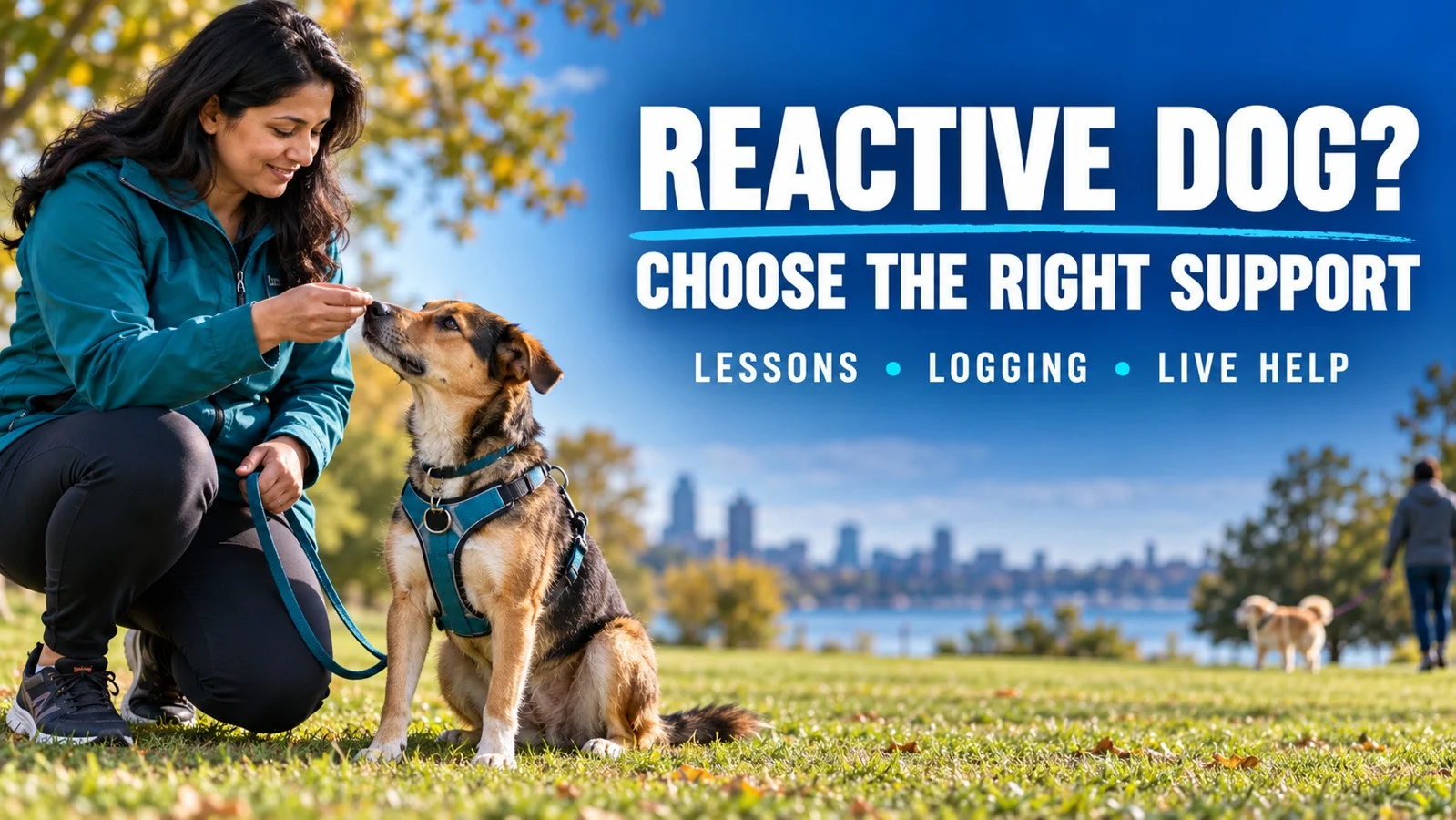
For a reactive dog, choose an app around the support you need: a usable walk log, foundational lessons, or feedback from a qualified person. Pupford is a practical free starting point for basic skills, while dedicated logging products deserve a closer look when your main difficulty is understanding patterns. A bite history, loss of control, or sudden behavior change calls for professional assessment before an app-led plan.
There is no single best dog training app for every reactive dog. Barking at another dog, chasing bikes, and freezing around strangers can require different management and training decisions. The useful question is what the app adds to a safe, individualized plan, rather than how many exercises it contains.
What a reactivity app should help you do
A useful app makes your observations and practice easier to repeat. It should help you recognize manageable situations, record what happened, and understand the next step without distracting you during a difficult encounter. An app that mainly teaches tricks can still support engagement, but its lesson count tells you little about its suitability for fear, frustration, or bite risk.
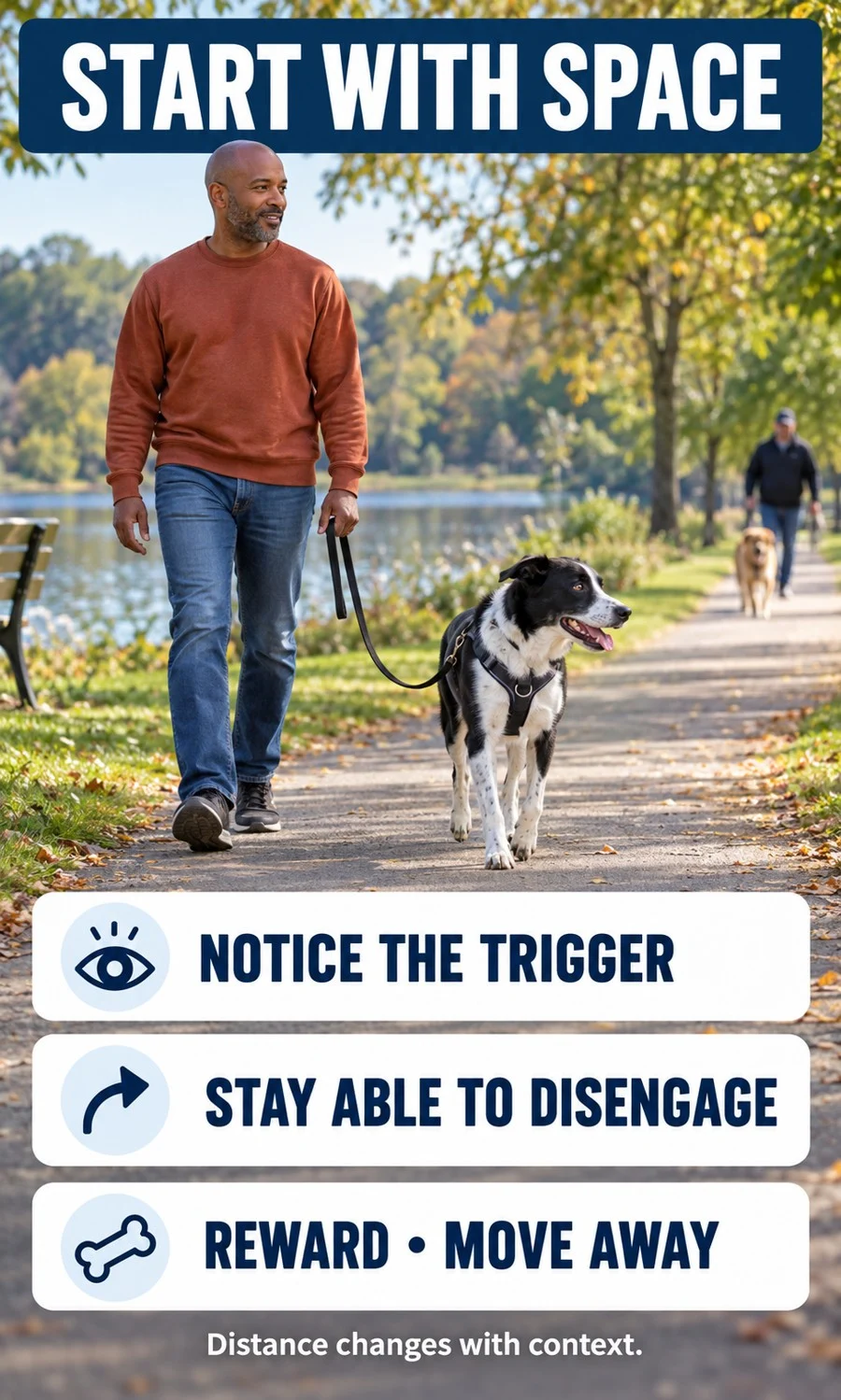
Reactivity describes an outsized response to a trigger; it does not explain the cause by itself. A dog may be fearful, frustrated, uncomfortable, or responding to several pressures at once. Quiet behavior also needs interpretation: a dog that freezes or becomes rigid may be struggling even without barking.
Quick comparison: five apps to investigate
This is a documentation-based comparison of advertised features, rather than hands-on product testing or a clinical effectiveness ranking. Feature lists can identify a promising fit, but they cannot establish that an app will improve your dog’s behavior. Confirm the current offer in your country and device store before paying, especially where trainer access or automatic renewal is involved.
| Option and useful role | What is documented | Boundary and cost check |
|---|---|---|
| Mellow — specialized features | Advertises trigger logs, threshold-distance tracking, and guided BAT/LAT sessions. | Publisher lists $79.99/year; confirm currency and checkout. Live individual assessment not established. |
| CalmDogs — observation records | iPhone walk log for triggers, distance, reaction, and recovery. | No free tier or trial advertised. Regional amount shown at checkout; logging does not supply treatment. |
| Dogo — foundations and video feedback | Store description advertises lessons and trainer feedback on submitted training videos. | Confirm paid access, response scope, and case acceptance. Exercise feedback is not a bite-risk assessment. |
| Pupford — free foundation course | 30 Day Perfect Pup is advertised as free, with no credit card required. | The free course is distinct from paid products and programs. It does not provide an individualized reactivity plan. |
| PawChamp — structured behavior content | Public materials advertise behavior lessons and expert support; terms also describe AI-supported chat. | Confirm who answers your questions, included support, local subscription price, renewal, and cancellation. |
Mellow: investigate when specialized records matter
Mellow’s product page describes functions that are more closely aligned with reactivity work than a general trick library. Its threshold records and guided protocols make it a candidate for owners already working with an appropriate plan. These are publisher claims, however, and the page does not establish individualized live assessment or independent outcome evidence.
Before subscribing, ask how the program chooses session difficulty and what it tells you to do when your dog becomes uncomfortable. BAT and LAT refer to behavior approaches that require attention to context and execution; having a protocol player is not the same as knowing a protocol suits your dog. Have your professional review the exercises if you are unsure how to apply them safely.
CalmDogs: a candidate for walk logging
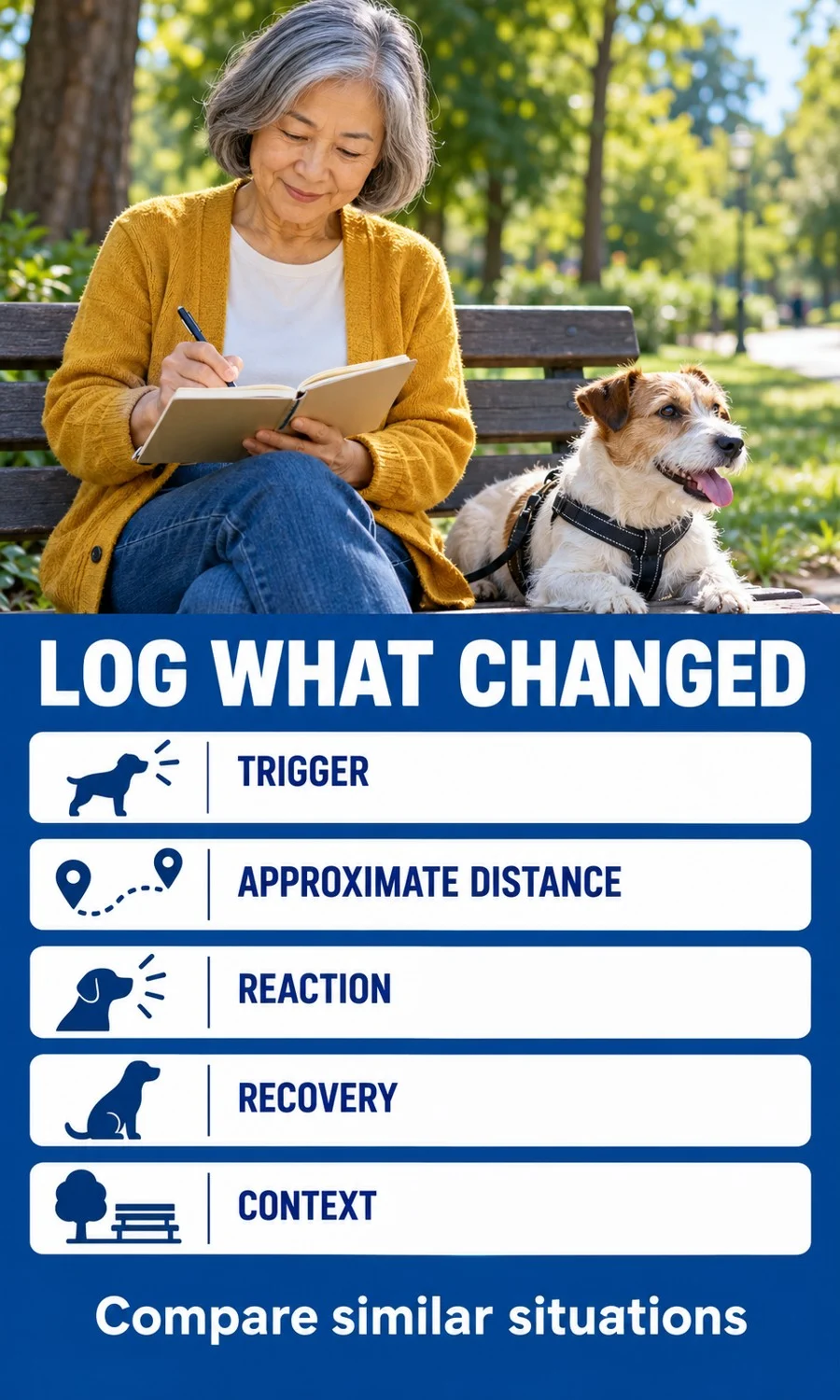
CalmDogs focuses on recording encounters rather than selling a large lesson library. That narrower job can be useful when you need to discuss patterns with a trainer: what appeared, approximately how far away it was, what your dog did, and how recovery looked afterward. Its public page identifies iPhone use and no free tier, so Android owners should verify availability rather than assume parity.
The value of a log depends on the quality of the comparison. A distant dog across an open field is not equivalent to a dog appearing suddenly in a narrow passage, even if the distance estimate is similar. Notes about visibility, confinement, recent stressful events, and possible discomfort help prevent a neat-looking record from producing a misleading conclusion.
Dogo: useful for practicing and checking basic skills
Dogo’s official store description advertises training-video feedback alongside its lessons. That can help with observable skills such as reward timing or carrying out an exercise. Ask whether the service accepts reactivity cases, what information the reviewer receives, and whether you are buying exercise feedback or an individual behavior consultation.
A clip cannot show everything relevant to a reactive encounter. Events before filming, pain, the other dog’s behavior, and what happened after the clip may change its interpretation. Film only when another person can do so safely; never stage a closer encounter to create a more dramatic video submission.
Pupford: the clearest free foundation starting point
Pupford’s 30 Day Perfect Pup course is advertised as free, with no credit card required, and is presented as suitable for dogs of different ages. It is a reasonable place to start learning everyday reward-based skills while maintaining a simple observation log. The course name describes its lesson format, not a deadline for resolving reactivity.
Free course access does not mean every Pupford feature, product, or specialist program is free. Keep the foundation offer separate from paid upgrades when comparing costs. If budget is limited, a notebook plus free lessons may be more useful than several overlapping subscriptions, particularly while you save for advice that addresses your actual case.
PawChamp: verify the support behind the promise
PawChamp’s public materials describe structured behavior content and expert support, while its terms also allow AI-powered chat features. Those descriptions make it a candidate to investigate, but they do not tell you that every answer comes from a human specialist. Ask which channel you receive, who handles complex cases, and how escalation works before relying on chat for reactivity decisions.
The subscription terms matter as much as the introductory price. Read the amount and currency, billing interval, renewal price, cancellation route, and any refund conditions at the checkout you actually use. Deleting an app is not a dependable cancellation method; keep the cancellation confirmation and check the account through which you paid.
What about GoodPup, Puppr, and puppy-focused apps?
GoodPup appears in older comparisons as a video-training subscription, but its public URL currently routes to Rover’s trainer search. That does not prove every legacy service has ended, but it means an older weekly quote is insufficient evidence for recommending a current standalone offer. Verify the actual service and availability rather than treating an old review as a booking page.
A trick-focused or puppy-focused app can be helpful for enrichment and foundational practice. It falls short when the reader expects those lessons to assess a reactive dog or create a case-specific behavior plan. GPS tracking is another separate job: locating a dog does not make a product a training or reactivity service.
How to compare an app before subscribing
- Match the job: decide whether you need lessons, record keeping, or individual advice.
- Check methods: reject guidance built around pain, intimidation, forced exposure, or guaranteed quick cures.
- Check support: distinguish automated answers, exercise-video feedback, live coaching, and veterinary assessment.
- Check ownership: find out whether you can export records and how uploaded videos are handled.
- Check the offer: verify regional availability, device compatibility, renewal price, and cancellation.
Adult, rescue, and senior dogs need more than an age label on a program. Exercise difficulty should reflect the dog’s comfort, mobility, sensory changes, and current environment. New or worsening reactions in an older dog merit veterinary attention rather than simply advancing to a harder lesson.
Why distance and recovery matter more than a streak
Desensitization uses exposure at a level the dog can manage, while counterconditioning aims to change the emotional association with a trigger. An app can organize practice, but the dog’s behavior determines whether a situation is manageable. The American Veterinary Society of Animal Behavior’s training guidance supports reward-based methods and opposes aversive methods for training and behavioral treatment.
Food acceptance is one observation, not a complete comfort test. Look at body tension, fixation, willingness to disengage, and the ease of moving away as well. If your dog is barking, lunging, or unable to respond comfortably, create space rather than staying close to finish a lesson or protect a daily streak.
Progress can mean easier disengagement or faster settling in comparable situations, even when you have not reduced distance. Fewer reactions may also reflect a quieter route rather than a change in the underlying response. Record the conditions so that you and your professional can distinguish better management from greater comfort around the trigger.
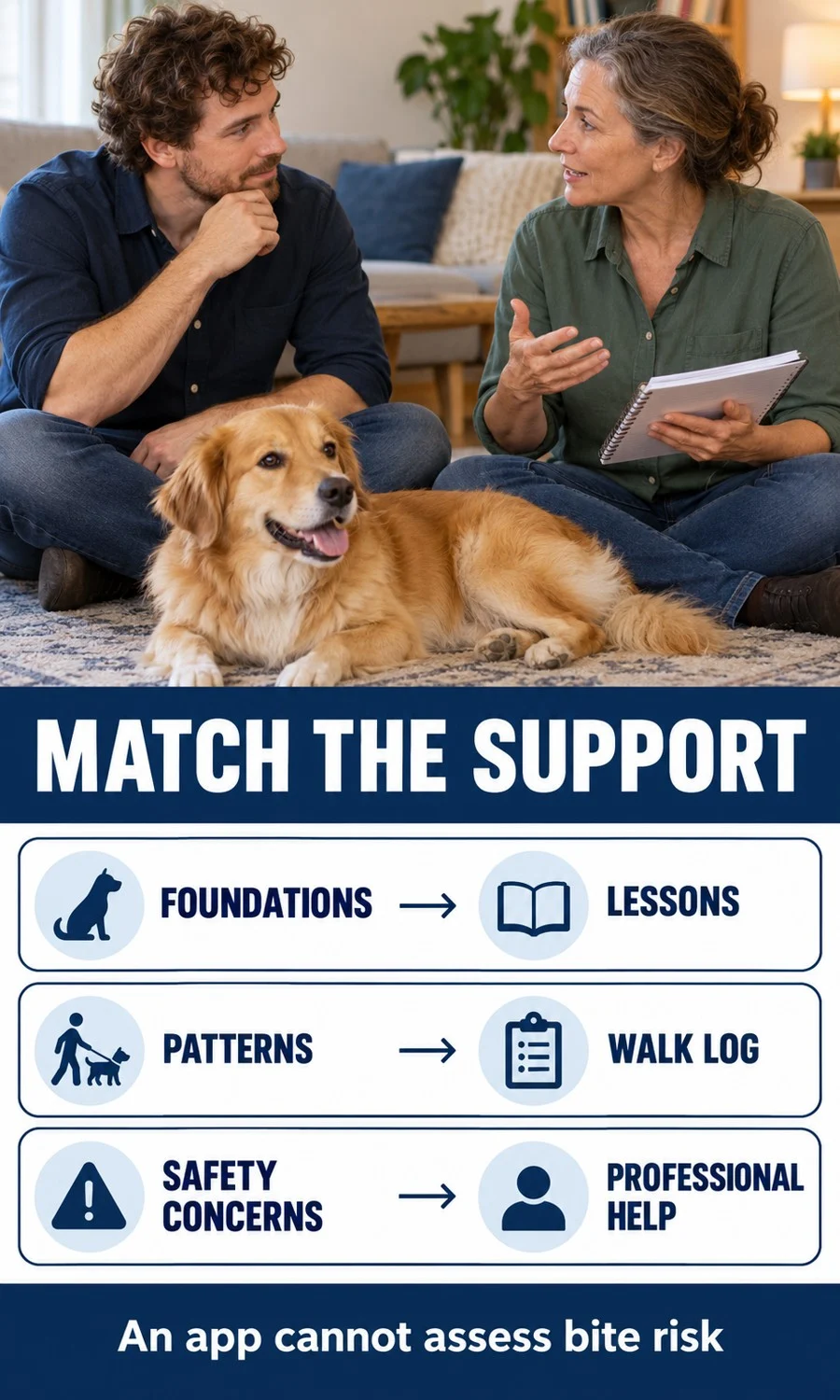
Choose support for your next walk
Use Calm Walk Studio to organize the choice before buying another subscription. It compares support categories and gives you a compact observation report to bring to a professional. It does not assign a severity score, choose a treatment protocol, or predict how many days improvement will take.

Calm Walk Studio
Compare support that fits your situation, then take a useful observation sheet to your trainer.
NO SCORES · NO CURE CLAIMS · NO SIGN-UPThis experience helps you choose what to compare. It cannot assess bite risk, diagnose a behavior disorder, or replace a veterinarian or qualified behavior professional.
One walk observation
Record after reaching a safe place. Fields are optional; unknown is better than a guessed measurement. Nothing is sent to this site or stored after reload.
Find qualified support
Worldwide search input. Search results are leads; verify credentials, methods, and case suitability. No provider ranking is generated.
No analytics or external requests run automatically. Search and official app links open external websites only when you choose them.
When professional help should come first
A bite or near bite, redirected behavior toward the handler, difficulty maintaining control, or risk to children requires a safety plan with qualified help. Sudden change, possible pain, or new reactions in a senior dog warrants a veterinary check. An app should not reassure you that these cases are safe to manage alone.
For ongoing reactivity, look for a reward-based professional with relevant case experience and a clear referral process. Ask how they evaluate the dog, measure progress, adapt management, and recognize cases needing veterinary behavior care. If you are uncertain about the cause or risk, say so directly instead of selecting a mild label to fit an app’s onboarding.
Related reading can help with adjacent decisions: understanding your pet’s body language supports better observation, while planning a veterinary visit addresses the health-care side. Distress when left alone belongs to a separate assessment; a leash-reactivity log should not be treated as a separation-anxiety program. Keep each problem’s plan and professional advice distinct.
Frequently asked questions
Can a dog training app fix reactivity?
An app can support practice, records, and access to advice, but cannot guarantee that reactivity will resolve. Suitability depends on the cause, risk, environment, and quality of the plan. A qualified professional is needed when safety or case complexity exceeds self-guided support.
How long does improvement take?
There is no reliable app-based deadline for an individual dog. Compare comfort, disengagement, and recovery in similar situations over time. A professional can help decide whether a lack of progress reflects the plan, environment, health, or another factor.
Are free apps enough for reactive dogs?
Free lessons can help with foundations, and a notebook can provide useful records. They do not replace individualized assessment when that is needed. Pupford’s free course is a starting resource rather than evidence that every reactivity case can be managed at no cost.
Should I use an app with an in-person trainer?
An app or simple log can help organize the homework your trainer recommends. Ask the trainer to review exercises before mixing programs with different instructions. Share context as well as reaction counts so the records support sound decisions.
Which app is best for reactions to dogs, people, or bikes?
The trigger alone does not identify the best app. Choose between foundations, logging, and personal guidance according to what is missing from your plan. For safety concerns or uncertain risk, seek professional assessment before selecting self-guided exercises.
Is AI chat the same as a behavior professional?
AI chat can help organize general questions, but it does not provide an examination or a reliable bite-risk assessment. Confirm whether an app’s expert support is human, automated, or a mixture. Escalate individual safety, health, and treatment questions to an appropriately qualified person.
Before you spend money
- Choose one missing function rather than the largest app library.
- Confirm human support, device access, billing, and export options.
- Keep walks manageable and log only after reaching safety.
- Bring health, control, or bite concerns to a qualified professional.