

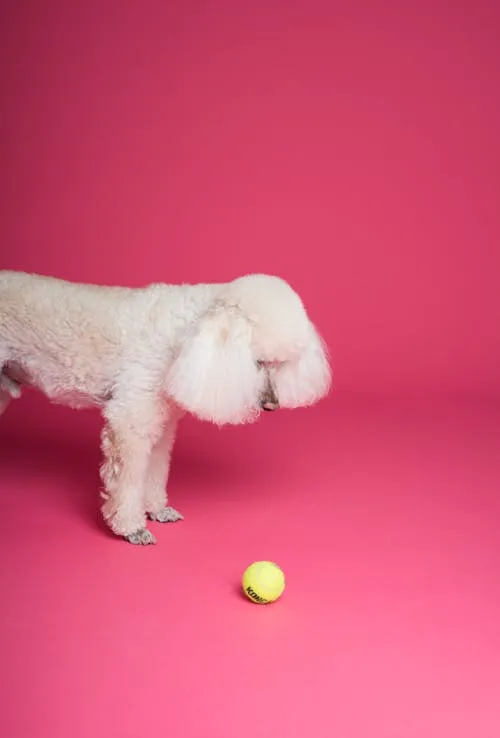

If your 6 month old puppy is jumping and biting on walks, you can take it outside for some exercise. Use a fetch toy or a flirt pole to redirect your puppy’s attention from jumping and biting on everything. If the jumping doesn’t stop, bring treats and a trainer along for the walk. Try not to punish your puppy physically – it’s not the answer. Instead, focus on teaching it that biting isn’t appropriate.
Redirect your puppy to a fetch toy
Using a fetch toy can be a great way to de-escalate an arousal-induced behavior. The tug-like toy can be easily carried around and taught to your puppy. You can also scatter treats around the house to distract him while he’s concentrating on the toy. If your puppy is prone to biting, this is a great way to de-escalate the situation.
It can take several tries to train a puppy to stop chewing on your fingers. Keep the time between fetching sessions short, and be sure to use a treat to reward the behavior. Puppy chewies are great, but toys are better. If you let your puppy chew on your fingers, it will likely jump on your hand. Once your puppy has mastered this trick, you can move on to teaching the puppy to play fetch with his toy.
If you have a 6 month-old puppy that is constantly biting and jumping on things, you can help prevent this behavior by redirecting him to a fun toy. You can also use a yelp to redirect your puppy’s energy to something that he can use as a fetch toy. If your puppy’s biting is a result of too much energy, you can try redirecting him to a fetch toy to calm down.
Redirect to a flirt pole
Redirect to a flirt pole for a 6 month old puppy’s jumping and biting on walks is a proven technique for calming a dog with a high prey drive. A flirt pole consists of two pieces: a tug-of-war rope and a string-attached dog toy. By placing your puppy in a “puppy zone” with the flirt pole, you’ll be able to calm down even the most over-stimulated pup.
A flirt pole is made from a light wood or plastic with a rope attached to the end, and a lure at the other end. The lure depends on the goal of your exercise. Flirt poles are typically 3 to 5 feet long, and the rope is the same length as the pole. The construction of the flirt pole and lure is similar to that of a fishing pole.
The lure used on a flirt pole is often a moving toy or a stuffed animal. It encourages your puppy to chase, pounce, bite, and chew toys. It is a perfect substitute for a ball or a chew toy, which will help you get a calm puppy. If your puppy is still nipping or jumping on the sidewalk, redirect to a flirt pole.
Teach your puppy not to bite everything
A common dog behavior problem is that your puppy will bite everything it comes in contact with. This is understandable as puppies are curious and need to explore their world. Although it may be entertaining to watch, the result is often irritating to the receiver. So, you need to teach your puppy not to bite everything on walks. Here are some tips to follow. If you have young children in the house, you might want to start by teaching your puppy not to bite anything on walks.
Reinforce the correct choice by clicking and treating your puppy when he waits and does not nip. When your puppy nips, you may want to stop the exercise and place the object out of sight. Once your puppy is calm, start again from a more distant place. If your puppy persists in biting, repeat the exercise. If it becomes habitual, repeat daily. It takes a few days, but the reward will be worthwhile.
Reward your puppy whenever he behaves properly on a walk. Use treats and toys to reward the behavior. Often, tug toys are more effective than treats, because they are what your puppy wants at the moment. Play tug-of-war with your puppy if he has too much energy to chew on everything. It burns off energy and helps you bond with your puppy. Try to play tug-of-war with anything your puppy is interested in, such as a tennis ball, a stuffed animal, a shoe, or a toy.
Avoid physical punishment
The first thing to remember is that your six month old puppy is still a pup. Rather than punishing him physically, try to redirect his attention. Instead of giving him a treat, you can say “leave it” and reward him with another treat if he leaves it. You can begin by working on leaving the treat in front of him and then rewarding him when he drops it.
If your puppy continues to show signs of aggression, try giving him a timeout. Give yourself a few minutes to cool off. If you find that he is overexcited, try offering to play a different game. It will probably be difficult to resist a physical game. Avoid rubbing your hands over his tummy, pushing him around with your arms, and teasing him with toys near his face.
While your six month old puppy may still display signs of aggression, he’s not likely to be violent. Instead, you should focus on interrupting unwanted behavior when it happens. Puppy bites can be harmful and can result in ripped clothes and tears. Using an interrupter can help you prevent this behavior. Another way to reward calm behavior is to put your child on a leash and let him run.
Identify the exact antecedent that ignites the behavior
To understand why your 6 month old puppy is jumping and biting on walks, you must first understand the antecedent. A dog is motivated to perform a particular behavior based on a specific antecedent, such as a situation or stimulus. This antecedent, or stimulus, can either be a positive or negative one, depending on your pup’s behavior.
If the antecedent of your puppy’s behavior is not obvious, try ignoring it. When a dog starts to bite, he will bark or whine. If the behavior continues, try separating the two. If necessary, remove your puppy from the situation by stepping over a baby gate. Another solution is to take him out of the room. If this does not work, take him with you and redirect him to another area.
Using a tug toy while walking can help redirect a dog from its problematic behavior. Toys made of plastic or floppy material should be placed in pockets for your 6 month old puppy. To reinforce this behavior, teach your puppy to drop the tug toy on cue and play with it at home. During walks, practice the trick by playing tug with the toy when you see people.
If your puppy continues to jump and bite during your walk, you may need to take him out of the environment to calm him down. It is common for a young puppy to use their teeth to express frustration or anger. Sometimes, they misunderstand their behavior as a way to communicate their feelings. As a result, the behavior may be mistaken for obnoxious behavior.
Praise your puppy for good behavior
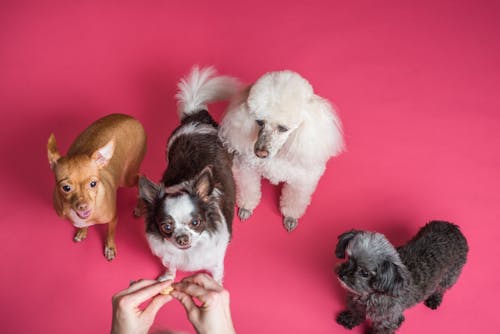
One of the best ways to teach your puppy to be calm on walks is to reward him for following your command. If he follows your command for a few seconds, he is likely to learn that it is a treat. Once your puppy can ignore the reward, you can gradually remove the treat from his life. Instead, use other rewards, such as treats and opportunities to sniff and enjoy the walk.
If your puppy isn’t following you while walking, he may be afraid. Instead of trying to escape, be proactive and wait until your puppy returns. When you see him approaching your side, praise him and give him a food treat. Then, continue the walk and take your puppy for another walk. Make sure that he stays in the same position and doesn’t run around in circles.
To begin leash training, use a long rope, preferably not retractable. Be sure that your puppy wears a harness or a collar. As your puppy learns to stay near you while walking, reward it with a treat every time it approaches you. Try offering small pieces of cheese or meat and reward it with a treat. Decide whether your dog walks better on his left or right side. Feed your dog a treat near the thigh of his chosen side. He will quickly learn to stay by your side when you give him a treat.