
SURGE Staffing connects job seekers with employers, and preparing for an assignment means getting the job match, onboarding requirements and first-shift arrangements clear. Start by confirming your local branch and the stage you have reached; an application or interview alone does not establish a confirmed start.
What should you confirm before visiting a SURGE branch?
Treat the branch visit as a matching conversation. You need to explain what you can reliably do and learn whether a particular opportunity fits your circumstances. The most useful preparation is resolving the details that could prevent you from attending or completing the assignment, rather than memorizing impressive interview answers.
This guide concerns the U.S. staffing company SURGE Staffing. The phrase “surge staffing” can also mean temporarily increasing a workforce during a demand spike. Those are different subjects: hospital emergency-capacity plans, public-health deployments and other similarly named businesses do not establish this company’s hiring requirements.
The official application guide allows online applications and branch visits, with an interview used to explore fit. It also tells applicants to call their branch after applying. You can therefore take a useful next step without treating a completed online form as an offer.
Keep the branch interview separate from any client interview, onboarding appointment or worksite orientation mentioned later. These may involve different people and addresses. Ask what the particular appointment is for before arranging transport or assuming you should arrive dressed for production work.
Your immediate goal is to identify the next unresolved stage. A recruiter may be discussing a possible opening while still waiting for client approval, screening or a start date. The following distinctions help you ask a precise question without assuming that every branch follows an identical timetable.
| Stage | What it establishes | Question to resolve |
|---|---|---|
| Application submitted | Your information has been sent for consideration. | What is the next branch step? |
| Interview arranged | A conversation has a time and purpose. | Which location and appointment type? |
| Assignment proposed | A particular role is being discussed. | What terms and conditions remain? |
| Start confirmed | You have explicit reporting instructions for the agreed assignment. | Where, when and to whom do I report? |
Verify the contact before sharing sensitive information
Use a contact route you find independently through the company’s official website. When an unexpected message offers a job, confirm the recruiter’s identity and the opportunity through that route before sending identification or payment information. A familiar company name, photo or logo can be copied into a fraudulent message.
The company’s recruitment fraud warning says applicants do not pay to apply and should not send sensitive information through insecure texts, email or social media. It identifies official recruitment email accounts as ending in @surgestaffing.com. A plausible address is a useful check, but independent confirmation matters when a request is unusual.
Here is a practical sequence: inspect the actual sender details, open the official website separately, and use the listed branch contact to confirm who contacted you and what role is being discussed. Do not let the suspicious message supply the only number you call to authenticate it. Complete legitimate onboarding through the verified process provided afterward.
For example, suppose a message says a warehouse start is reserved if you buy a gift card immediately. Do not negotiate the amount or send a small payment to test it. Stop the transaction and verify the claimed opening independently. This is an illustrative warning scenario, not a report about an actual SURGE recruiter.
The common mistake is checking only whether a website looks professional. Appearance cannot tell you whether a particular person is authorized to collect your information. The useful checkpoint is a verified connection between the person, the branch, the role and the requested next step.
If you cannot confidently inspect links or sender details, a branch visit can be a simpler route. You can ask staff to explain the application and document process in person. That alternative reduces dependence on your ability to recognize a convincing imitation message; it does not require you to complete a fraud-detection exercise first.
You have completed this check when you know which verified channel to use and what it is asking you to do. If a request remains inconsistent, pause it rather than forwarding more personal information. Verification protects the application process; it does not guarantee that a vacancy is available or that you will be selected.

How do you show that an assignment genuinely fits?
Make your availability and task experience specific enough to match against a real job. “I can do anything” leaves the recruiter guessing about hours, duties and training needs. A narrower, accurate answer can reveal a workable assignment sooner, even if it rules out an unsuitable opening.
Two different kinds of fit matter. Attendance fit concerns whether you can arrive, remain for the required hours and return for the next scheduled shift. Task fit concerns whether your experience, capabilities and required training align with what the employer actually expects you to do.
Avoid interpreting enthusiasm as evidence of either kind. Willingness to learn does not establish equipment competence, and a free morning does not establish availability for a rotating schedule. Explain the constraint that changes the answer so the recruiter can assess the actual match.
The broader guide to how staffing agencies work covers agency arrangements and hiring models. Here, the narrower question is whether the proposed hours and duties can be delivered reliably by you. That is the decision to resolve before considering a fast start.
- Firm availability: the days and start/end times you can consistently cover.
- Conditional availability: overtime, weekends or a different shift that requires another arrangement first.
- Relevant experience: tasks you have actually performed and the checks you used.
- Training needs: work you have observed or studied but are not yet prepared or authorized to perform independently.
Test the whole shift against your real availability
Begin with the proposed start and finish, then consider the journey in both directions and any fixed commitments around them. For an overnight shift, ask which calendar day the shift begins and which day it ends. This is a conversation about an actual schedule, not a request to create a diary or fill a worksheet.
Consider an illustrative 6:00 a.m.–2:30 p.m. assignment. A bus that reaches the area at 5:55 a.m. may still leave too little time to reach the entrance and complete check-in. A later return service may also make the journey home much longer than the outward journey. Check the full arrangement before calling it workable.
Ask whether the hours remain fixed, whether overtime can extend the end time, and whether weekends or rotation form part of the role. State a firm limit plainly: “I can cover the weekday shift, but I need to confirm any overtime before agreeing.” Do not present a possible arrangement as one you already have.
If transport or caring responsibilities narrow the options, offer the workable alternative rather than promising unlimited flexibility. You might be available for a later start, a different site or specific weekdays. These alternatives help only if suitable openings exist; none creates a right to a customized assignment.
The checkpoint is simple: you can explain the proposed shift and your actual availability without contradicting yourself. If the job requires a condition you cannot meet, ask about a different assignment before accepting. Discovering the mismatch early is a useful result, even when it means declining that particular opportunity.

Explain one task through its method and quality check
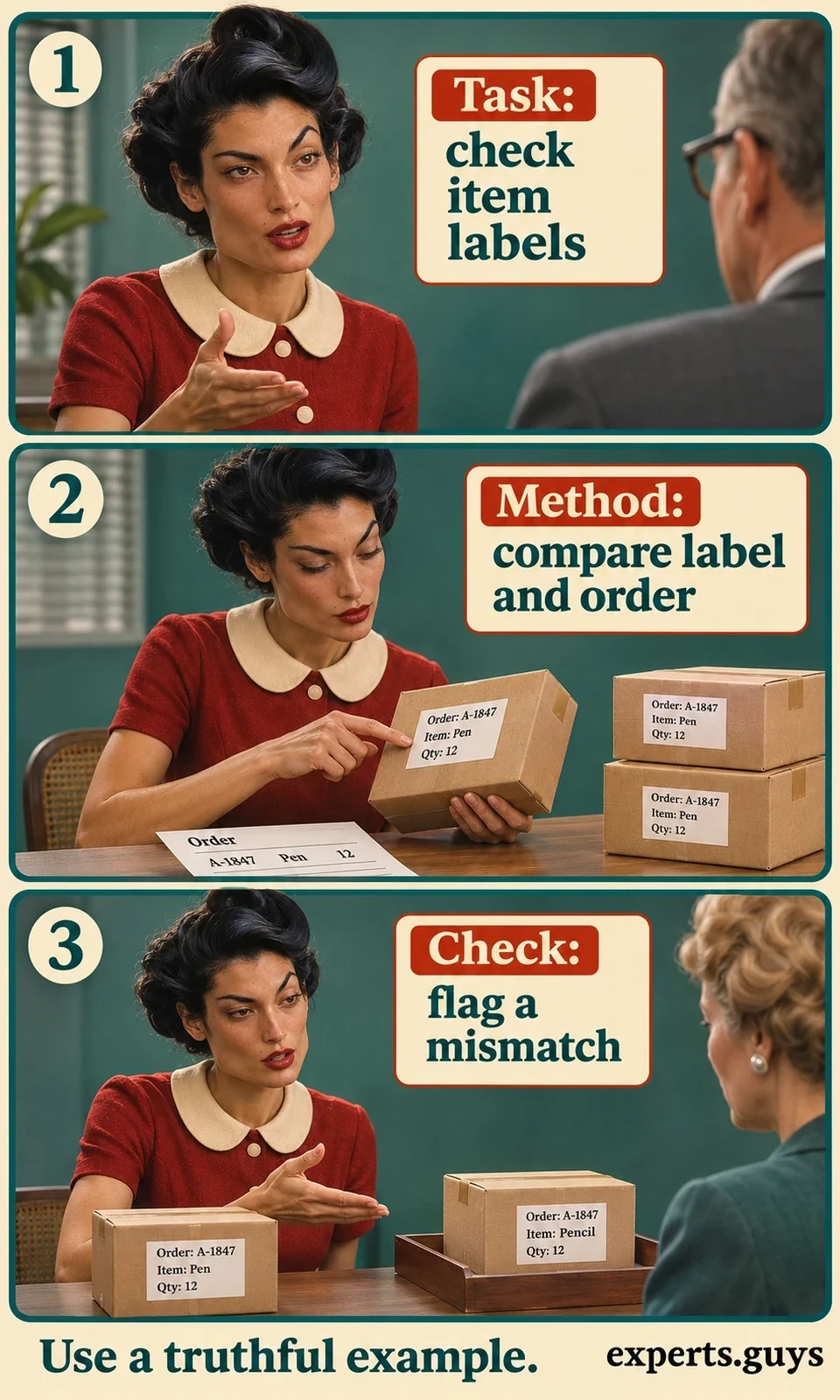
Choose a real task that resembles the vacancy and explain what you did, how you did it, and how you recognized a correct result. This gives the recruiter more useful information than unsupported labels such as “hardworking” or “detail-oriented.” The aim is clarity, not a polished story with an invented achievement.
For an illustrative packing example, the task might be checking item labels. The method is comparing the item and quantity against the order; the check is noticing a mismatch and raising it through the proper process. The example demonstrates how to explain experience. It does not imply that this exact task is part of a current SURGE vacancy.
A truthful answer might be: “I checked item labels against the order, kept mismatched items separate and asked the supervisor before they went forward.” Use that wording only if it describes your experience. If you have never done the task, explain the closest genuine experience and identify what you would need to learn.
You can use appropriate volunteer, study or other practical experience when it genuinely demonstrates a relevant ability. The guide to employability skills explains broader communication and teamwork abilities; here, connect one ability to the actual task you can describe. Explain the setting so the recruiter does not mistake it for paid industrial experience. Keep any private information about former customers or employers out of the example, and do not bring confidential work samples.
A common error is inflating a small task into responsibility for a whole process. Helping someone use a machine is different from being trained and authorized to operate it independently. Keep those boundaries visible, especially for equipment, regulated duties and work with significant safety consequences.
If speaking under pressure is difficult, start with a shorter answer: task, method, check. Let the recruiter ask for detail. You have finished preparing when you can explain one relevant example accurately and name the training boundary; you do not need to memorize an entire interview script or perform a task demonstration without an appropriate safe setting.
Discuss the actual work conditions behind the job title
Ask what a shift involves rather than inferring duties from “warehouse,” “production” or “general labor.” Those labels can cover different environments and demands. Relevant questions include whether work is mainly seated or standing, the pace, the working environment, any lifting requirement and whether tasks change during the shift.
Ask for task-specific information when a description is vague. A stated lifting weight, for example, does not explain frequency, reach, carrying distance, available assistance or the equipment used. Do not test yourself by lifting something heavy at home to prove suitability. Discuss the actual job demands and any adjustment you may need through the appropriate process.
Experience from another workplace can help explain your background, but it does not establish readiness for unfamiliar equipment or procedures. The safest useful answer separates transferable experience from site-specific training. The branch needs enough information to investigate fit; a confident promise to manage every possible task does not provide it.
The practical judgment is to prioritize a sustainable match over the earliest suggested start. A quicker opening is useful only if you can attend and perform the agreed work with the necessary preparation. This is an editorial recommendation based on the consequences of a mismatch, not a prediction of which candidate SURGE will select.
What documents and assignment details should be ready?
Prepare information for the stage you have reached, then obtain clear assignment terms before treating a start as confirmed. Interview preparation, employment verification and payroll setup serve different purposes. Keeping them separate helps you supply what is necessary without scattering sensitive documents across unverified channels.
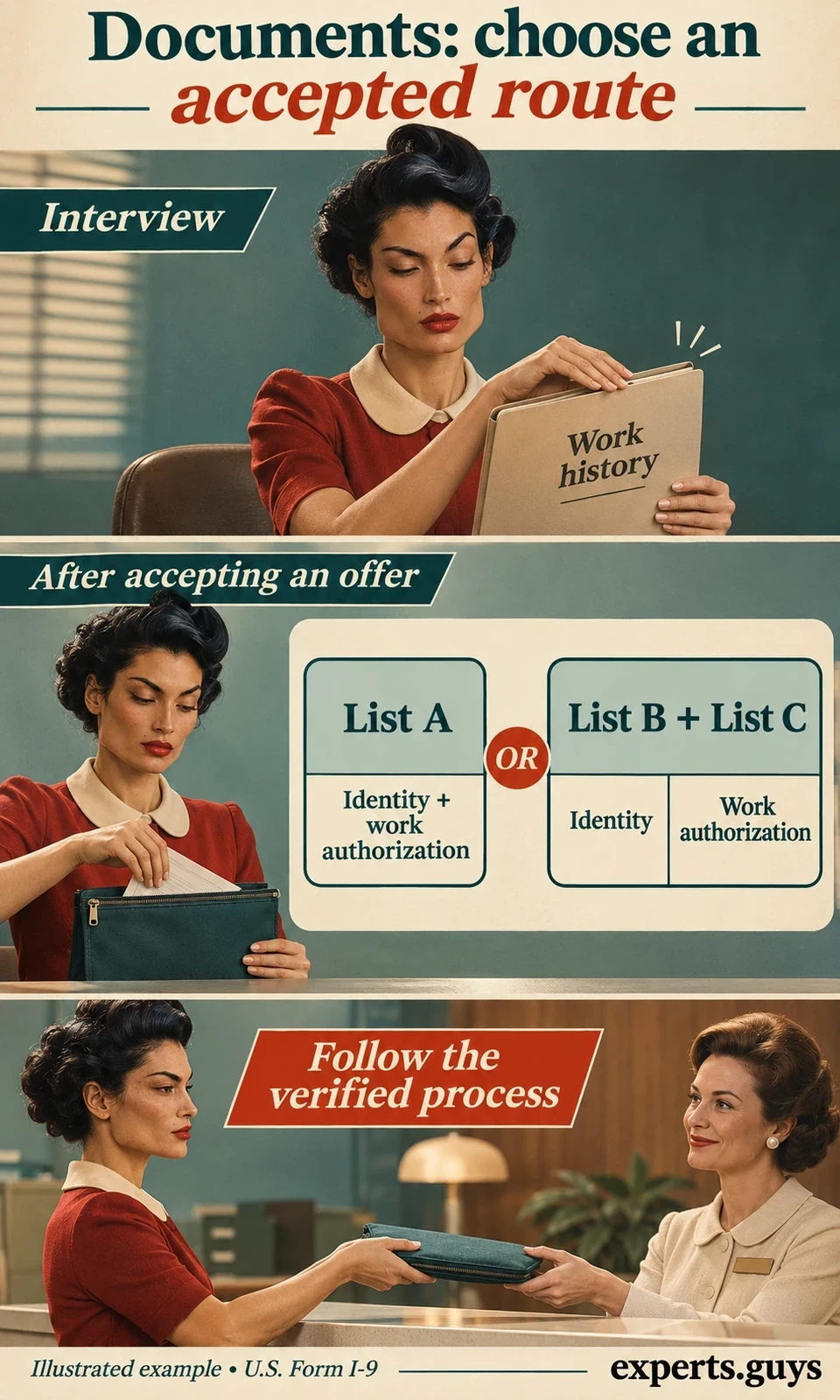
For an interview, be ready to explain your work history, relevant experience and availability. Ask the branch what to bring for that particular appointment, including whether a resume or requested qualification is useful. Do not assume every applicant needs a printed resume, the same certificates or a particular set of documents before any conversation can occur.
Prepare documents through the verified onboarding process
After accepting a U.S. job offer, follow the employer’s employment-verification instructions and the current Form I-9 guidance. Employees choose acceptable documentation: a List A selection, or a List B selection together with a List C selection. An employer cannot require a specific acceptable document merely because that is its preferred combination.
The official Form I-9 and acceptable-document lists explain the alternatives and timing. Some List A options require a document combination, and rules can cover receipts or extensions. Check your specific documents against the official instructions rather than treating a driver’s license and Social Security card as the only possible route.
For the practical preparation, identify an acceptable route, locate the documents you intend to present and keep them together securely for the verified appointment or authorized process. Ask how document examination will occur. Do not assume an ordinary photograph sent through a text message completes employment verification.
The common mistake is collecting extra identity documents “just in case” and sending them to every person involved. More disclosure does not necessarily make onboarding more complete. Resolve which process you are completing and who is authorized to receive the information before submitting it.
If a document is missing, expired or subject to an extension, raise that specific issue promptly through the verified process. Do not improvise a substitute or assume that a screenshot will be accepted. The official rules and your circumstances determine what can be used; a recruiter or article should not invent an exception.
The checkpoint is that you understand the requested stage and the acceptable-document route you intend to use. An interview folder can hold work-history material while identity documents remain secured until needed. The illustration summarizes that distinction; it is not a replacement for the official lists or an individualized immigration determination.
Read back the assignment before agreeing to start
Once a particular role is proposed, review the supplied terms and repeat the essentials aloud to the recruiter. Confirm the work, pay basis and rate, scheduled hours, worksite and reporting contact. Then ask whether the start is confirmed and which conditions, if any, remain outstanding.
For example: “I understand this is a packing assignment at the client site, on the stated weekday shift, at the rate you have provided. Is the start confirmed, and is anything still pending before I travel?” This is an illustrative conversation structure. Replace every detail with the actual information you receive rather than treating the example as an offer.
Ask who employs and pays you for the proposed arrangement, who supervises the daily work and who handles attendance changes. A client workplace name does not by itself answer all three questions. Request the terms in the employer’s normal written format so you can refer to the actual assignment information without reconstructing it from memory.
Pay clarity includes the rate, any stated differential, the pay period and how hours are submitted or approved. A posted range is not confirmation of your individual rate. Benefits, deductions, overtime treatment and other consequential terms depend on the arrangement and applicable rules; clarify the relevant details rather than assuming every placement is identical.
Ask about the assignment’s expected duration and whether temporary-to-hire is part of the stated arrangement. A possible future client job is different from a guaranteed conversion date or permanent offer. Evaluate the confirmed assignment on its own terms while treating later possibilities as conditional.
A useful correction for conflicting information is to name the conflict: “The message says a different shift from the one we discussed. Which applies to this assignment?” Get the discrepancy resolved before relying on it. If you cannot reach the original recruiter, use the verified branch contact rather than accepting an unexplained change from a new sender.
You have completed the readback when both sides understand the same assignment and you know the remaining condition or confirmed next step. If a critical detail is unresolved, the useful next action is resolving that detail. Buying equipment or traveling to the site does not convert an uncertain proposal into a confirmed start.

| Detail | Get this clear | Do not assume |
|---|---|---|
| Work and supervision | Actual duties, supervisor and task-training arrangements. | A broad title authorizes every site task. |
| Pay and hours | Individual rate, schedule and timekeeping process. | A posted range is your confirmed rate. |
| Location and reporting | Worksite entrance, contact and instructed arrival time. | The interview branch is the workplace. |
| Duration and employment | Employment arrangement, expected term and any conditional future option. | Temp-to-hire guarantees conversion. |
| Pending requirements | The remaining step and who confirms completion. | An interview means the start is final. |
Treat screening as a pending step, not a predicted outcome
SURGE’s published FAQ describes screening in its hiring information. Ask which steps apply to the proposed assignment, how to complete them through the verified process and whether anything remains pending. A general description does not establish the exact test, timing or decision for every applicant and client.
Follow the instructions you actually receive for a legitimate appointment. Do not buy a preparation product, change prescribed medication or rely on internet advice about defeating a screening process. Questions about a particular screening request belong with the verified administrator, especially where instructions are unclear or a personal circumstance affects the process.
Avoid making irreversible arrangements based on a hoped-for outcome. A positive interview, available transport and completed forms can all coexist with a pending decision. Continue to distinguish what you have done from what the employer has confirmed; that distinction is more useful than a guessed number of days until hiring.
How do you arrive ready for the first shift?
Use the confirmed assignment instructions to reach the correct entrance, meet the responsible person and understand the initial training and timekeeping process. Arrival preparation is complete when you can join the agreed handoff safely. It does not mean you should begin unfamiliar work simply because the building is busy.
Follow the route to the correct entrance and contact
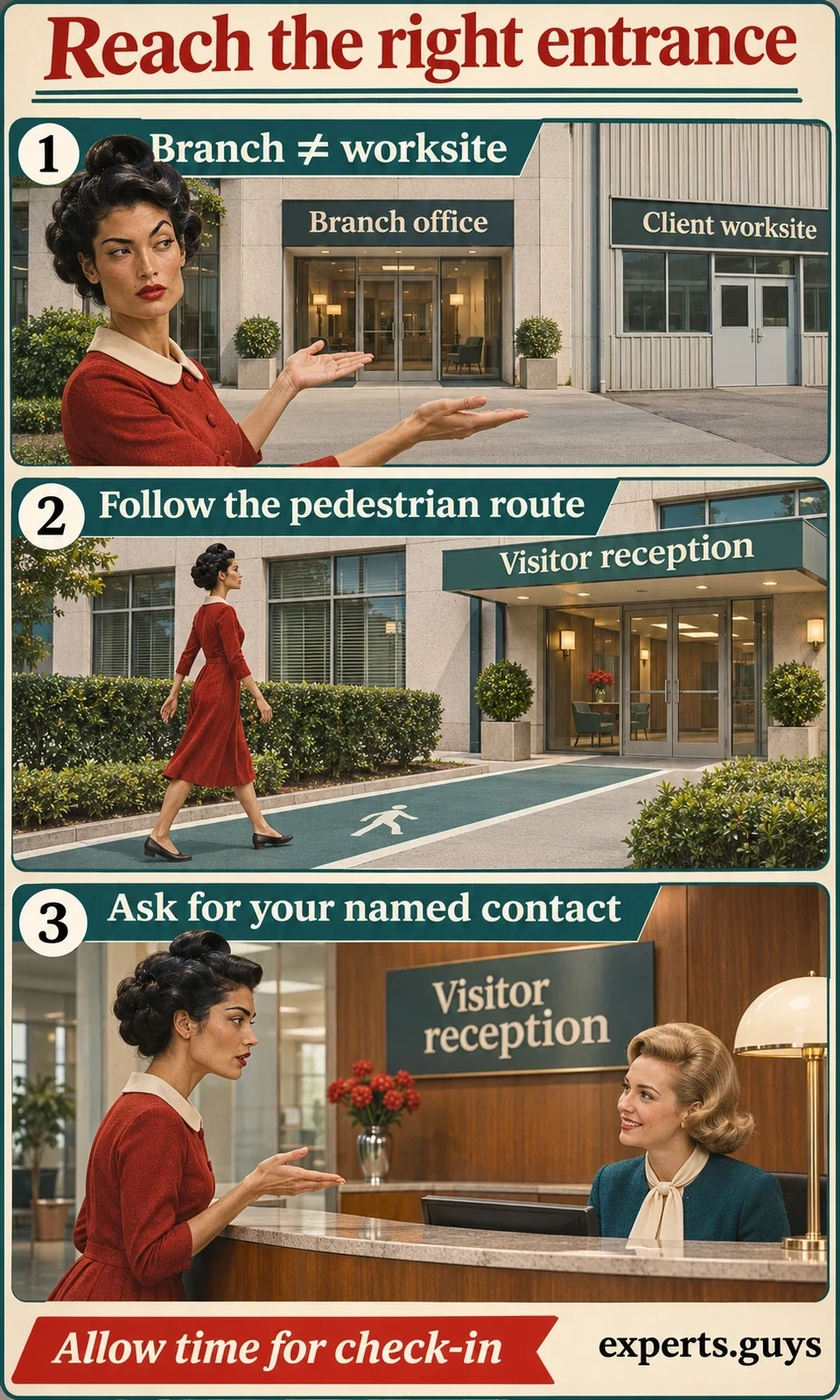
Check whether you are traveling to the staffing branch, a screening provider, an orientation location or the client worksite. Confirm the full address, entrance and person to ask for. Large sites can have separate visitor, employee and delivery entrances, so the street address alone may not resolve the last part of the journey.
Use the route and transport option that match the confirmed appointment time. Allow for the walk from parking or public transport and the site’s check-in procedure. Follow the instructed arrival time; do not confuse a personal travel buffer with a requirement to perform unpaid work before your scheduled hours.
At the site, follow signs and authorized pedestrian routes to reception or the designated check-in point. Do not follow vehicles through a loading entrance or enter a restricted work area because it looks like a shortcut. If you cannot find the named contact, ask reception to help rather than wandering through the facility.
For an illustrative example, the recruitment branch may be downtown while the assignment is at an industrial site outside town. Arriving at the branch on the first workday will not place you at the client entrance. The correction is confirming the destination against the assignment instructions, not merely searching the company’s name again.
If access arrangements, mobility needs or language make arrival difficult, ask about an accessible entrance or supported check-in before traveling where possible. Explain the specific obstacle so the response can address it. A familiar entrance photograph or landmark may help when the verified site provides one, but do not substitute an unrelated map image for current instructions.
You have completed arrival when you reach the authorized check-in point and connect with the responsible person. If transport fails or a delay becomes likely, use the agreed attendance contact promptly, explain the issue and ask how to proceed. Do not assume that telling an unrelated person updates both the branch and the client.
Get a clear supervisor, training and timekeeping handoff
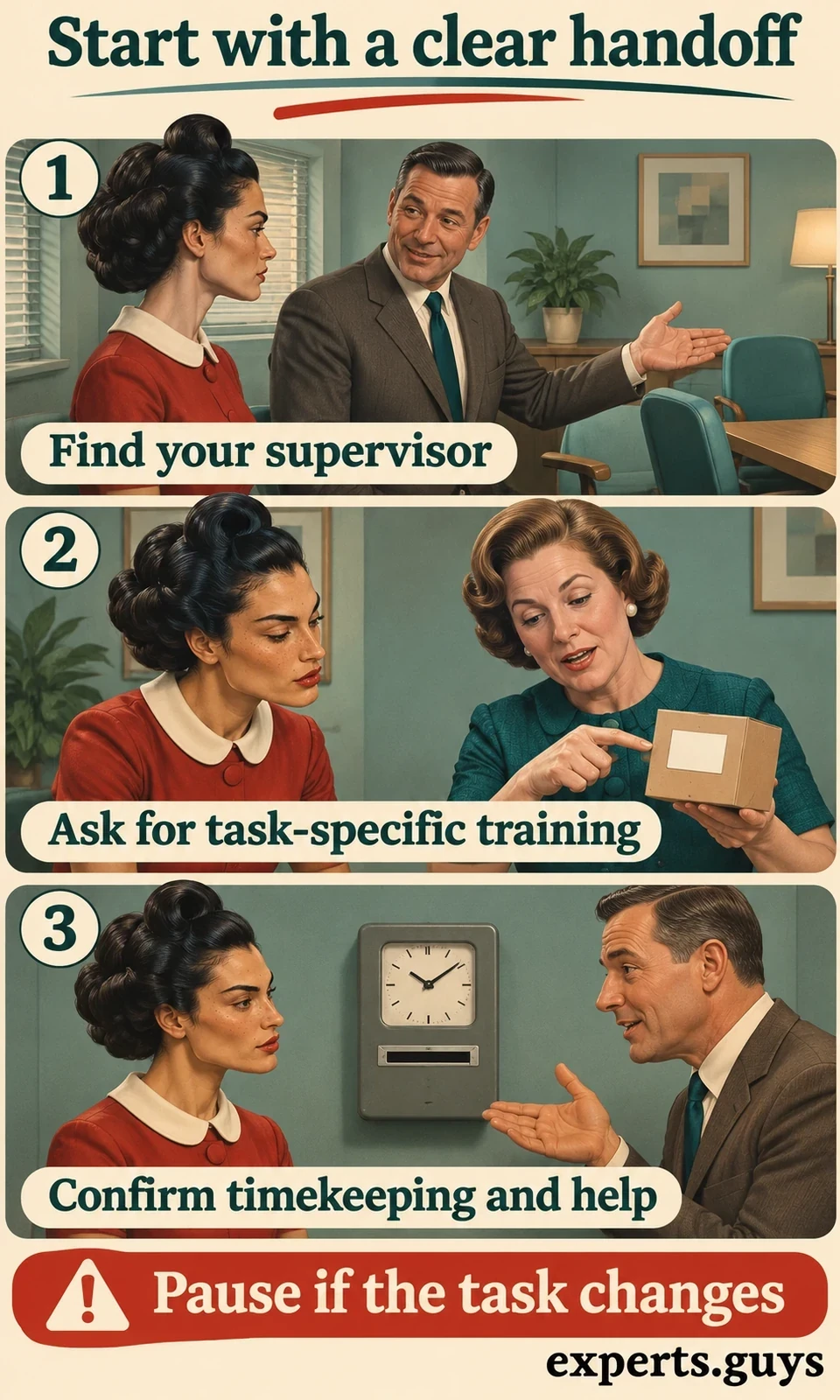
At check-in, identify your supervisor and ask what happens before the first task begins. Establish who explains the work, where you are authorized to go and how to request help. A general welcome is useful, but it is different from instruction for a particular task or piece of equipment.
For U.S. temporary workers, OSHA explains the shared safety responsibilities of staffing agencies and host employers. General agency training does not automatically cover the specific equipment and hazards at a client site. The practical consequence is to ask for the relevant site and task instruction before starting unfamiliar work.
A useful verbal check is: “Who will show me the task, and whom should I ask if something is different from the instructions?” Listen to the demonstration and ask for clarification where necessary. Do not copy another worker’s movements as a substitute for the training or authorization the task requires.
Confirm the timekeeping method, who approves hours and what to do if the system does not recognize you. Follow the actual process for working time and breaks. If an entry fails or the instructions conflict, raise the specific issue through the named route rather than assuming the missing time will correct itself.
Keep the two support relationships clear. The site supervisor can usually explain the immediate work arrangement, while the branch needs to know about assignment problems that affect your placement. Ask how incidents, absence and changes in duties should be communicated, including whether the process requires notifying both parties.
If someone asks you to operate unfamiliar equipment or perform a materially different task, pause and explain the gap before proceeding. Request the necessary instruction and confirmation that the change is appropriate for your assignment. This is especially relevant when the proposed task introduces hazards that were not part of the original discussion.
An easier first step, when several instructions arrive at once, is asking the supervisor to explain the first task and its help route before moving to the next. The result you need is an understood starting task, not instant mastery of the whole workplace. A brief clarification can prevent you from carrying an incorrect assumption into the shift.
Match clothing and equipment to the appointment
For a branch interview, choose clean, practical clothing suited to a professional conversation. For the worksite, follow the actual clothing and protective-equipment instructions. The period-style clothing in the illustrations is visual styling; it is not a recommended uniform or protection for industrial work.
Ask what is required, what is provided and whether any item must meet a particular specification before buying it. Ordinary shoes, gloves or glasses may not satisfy a site’s requirements. Keep purchases separate from any demand to pay an application fee, and resolve confusing requests through the verified branch.
Bring only what the assignment permits and genuinely needs. Site rules may govern bags, food, personal devices and storage, so a generic “first-day essentials” list cannot replace the instructions. If an item is necessary for an access or health need, clarify the appropriate arrangement instead of assuming it can be used anywhere on site.
Frequently asked questions
Can I visit a branch if I have not applied online?
SURGE’s application guide allows branch visits before or after an online application. Check the particular branch’s hours and appointment arrangements through its official contact route before making the journey.
Do I need to install an app to discuss an opening?
The official guide provides online and branch routes as well as the mySurge app. Ask which route serves your next step if you cannot use the app; do not assume app installation itself is a hiring requirement for every conversation.
What if I cannot find an advertised opening again?
Openings can change. Ask the verified branch whether the specific opportunity is still available and whether another role fits your stated availability. Do not rely on an old listing as confirmation that a start remains reserved.
Should I resign from another job after a branch interview?
An interview alone is not a confirmed replacement job. Before making that decision, understand the actual offer, outstanding conditions and reporting arrangements, together with any obligations to your existing employer. This preparation guide cannot determine the right resignation timing for your circumstances.
Does this guide cover working inside a SURGE branch?
It focuses on applicants preparing for a placement with a client employer. A recruiter or other internal SURGE position has its own vacancy requirements and hiring process; follow the specific internal job description rather than treating client-assignment guidance as its interview specification.
What if I need an adjustment to take part in the interview?
Explain the access barrier through the verified branch contact and ask about an appropriate arrangement for that appointment. Describe what would help you participate without sending unnecessary medical detail through an insecure channel. Requirements and available arrangements depend on the situation.
Your next step
Choose the action that matches your stage: establish the verified branch contact, explain a workable match, resolve the proposed assignment or complete the confirmed arrival handoff. Keep the actual assignment terms central. A successful preparation conversation leaves you knowing what has been agreed and what still has to happen before work begins.