
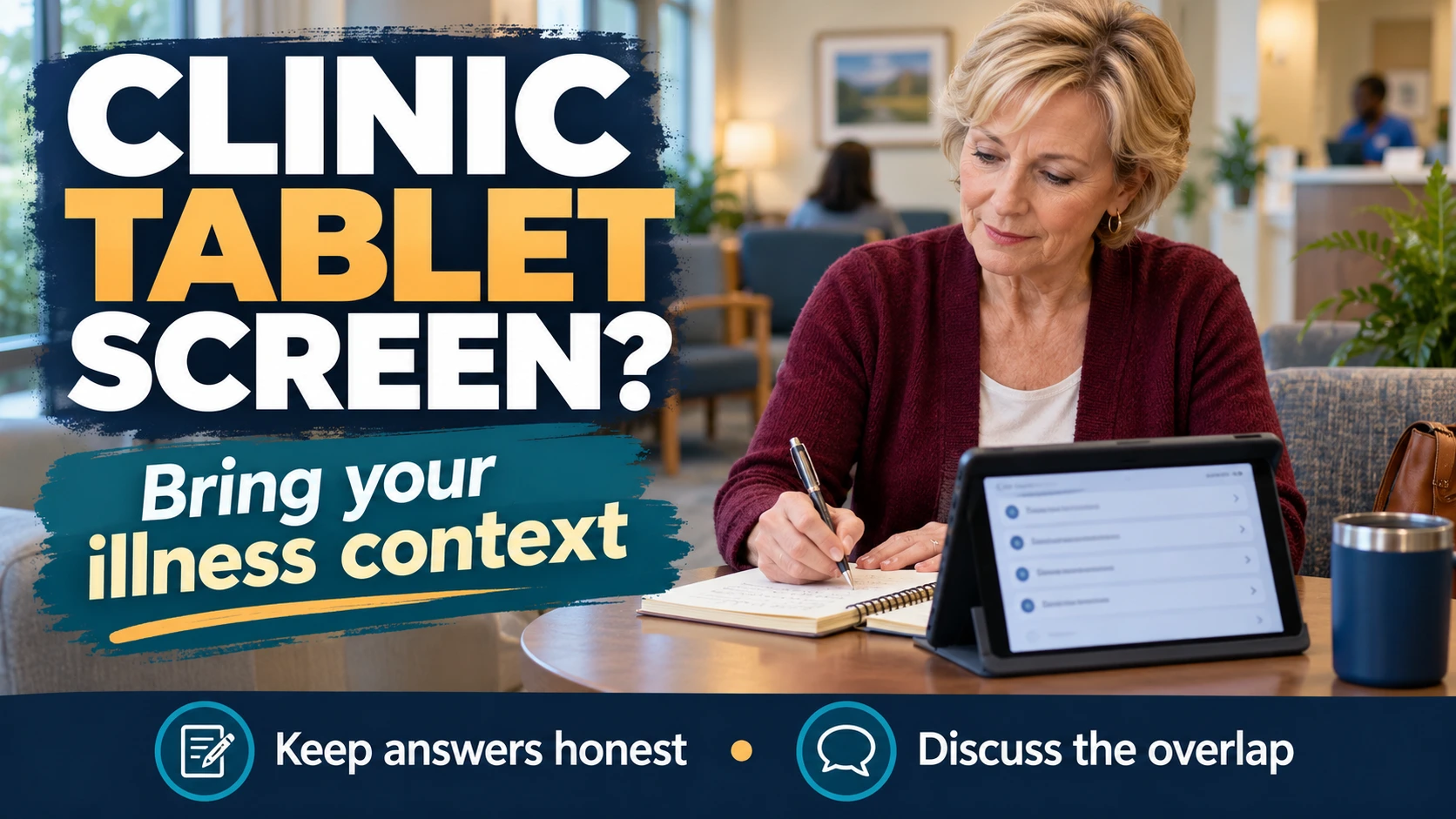
Before a clinic tablet depression questionnaire, write a separate note describing your usual illness symptoms and what changed over the past two weeks. Keep your questionnaire answers faithful to its instructions, even when fatigue, sleep, appetite, or concentration problems seem related to your condition. Bring the note to the clinician so that context can be discussed alongside the answers.
This method is for an adult with a known chronic condition preparing for a booked, non-urgent appointment. It does not identify the cause of a symptom, diagnose or exclude depression, interpret a score, or recommend treatment. You can write the same note on paper if you prefer to keep health details off a website.
What this note is for
A frequency answer can be accurate while leaving out an explanation you want the clinician to hear. For example, tiredness may have been present on your ordinary illness days as well as during a recent flare. A side note preserves that observation without turning it into proof that mood played no part.
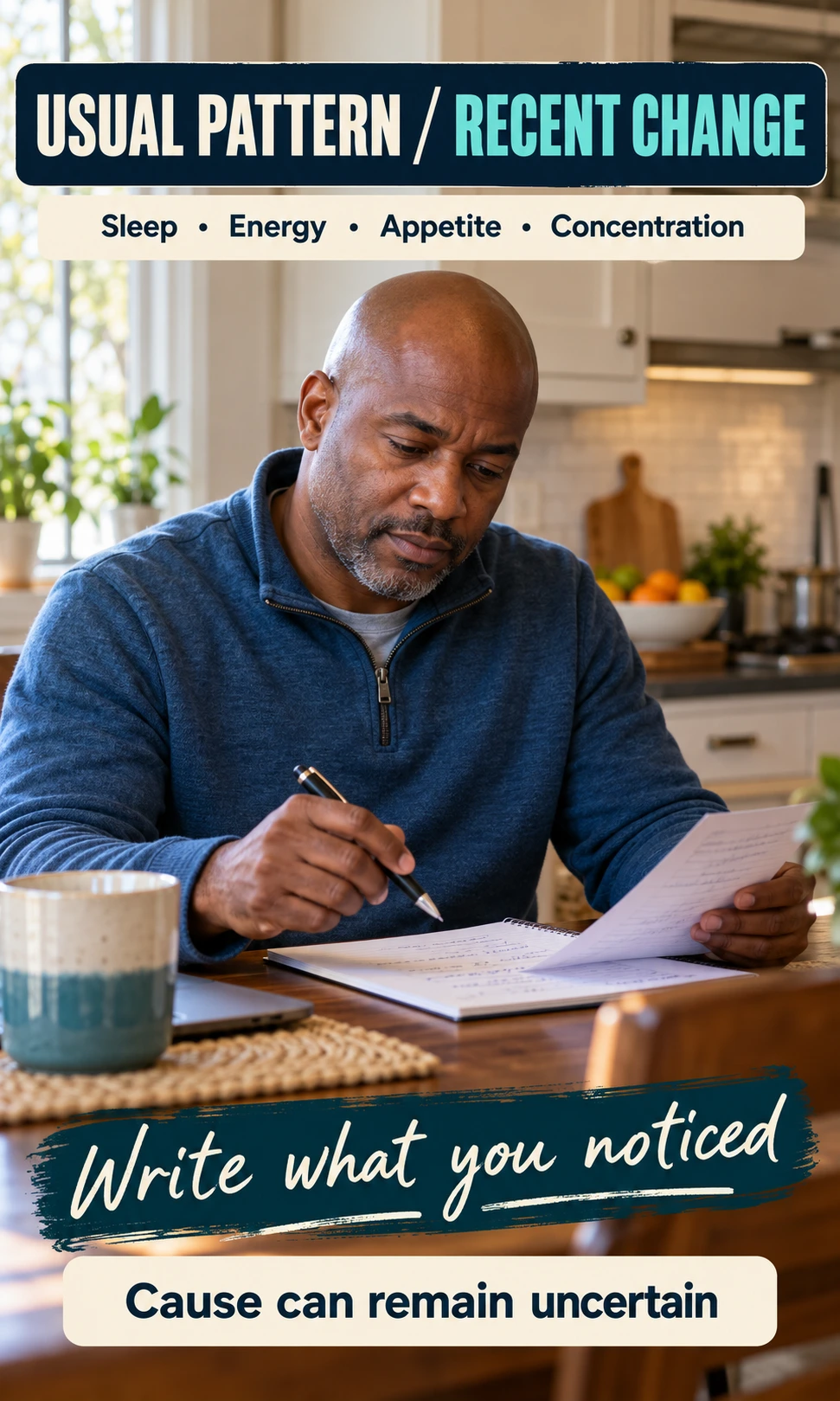
The NIMH explanation of chronic disease and depression describes how these problems can occur together. Sleep, energy, appetite, and concentration are useful areas to describe because changes can be relevant to more than one part of your health. Record the pattern you noticed and leave the clinical explanation open.
How to note which waiting-room depression tablet answers may overlap with illness
Write the illness baseline before you are called
Start with what sleep, energy, eating, and concentration usually look like when your condition is relatively settled. A useful baseline might say, “I usually rest after lunch, but I can still finish a short shopping trip.” Avoid writing “normal for me” without an example, because it gives the clinician little to compare.
- Write the time period you are describing, rather than mixing this fortnight with an older flare.
- Describe a usual week and one recent change in concrete everyday language.
- Bring both the questionnaire answers and your separate context to the appointment.
Then describe what happened recently: a flare, broken sleep, a change in routine, or a difficulty doing something familiar. Note when it began and whether it was different from your usual pattern. If there is no clear baseline, write that instead of constructing one from guesswork.
Separate your observation from your explanation
You can label your impression as illness, mood, both, or uncertain, provided it remains a question for discussion. “I suspect my flare contributed” is more useful than claiming the flare explains every symptom. A symptom that matches an established illness pattern still deserves an honest answer on the clinic form.
Do not use these labels to sort every questionnaire item into a cause category. In particular, thoughts of death or self-harm need direct discussion with staff and are outside this note method. There is no requirement to settle the cause before asking for help.
Keep the tablet answer as the form asks it
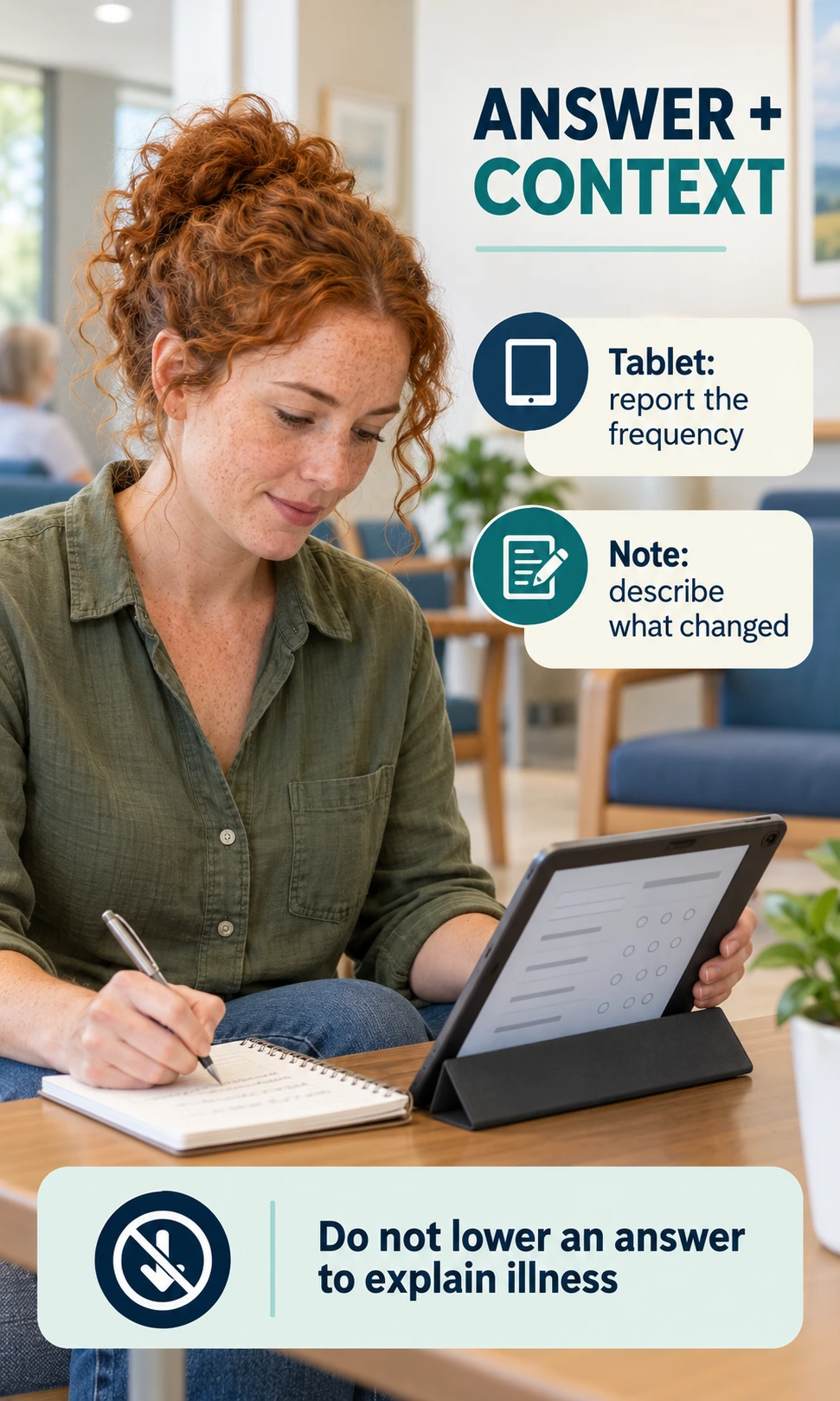
The public PHQ-9 form asks about a two-week period and uses four frequency choices: “Not at all,” “Several days,” “More than half the days,” and “Nearly every day.” Those choices describe frequency rather than assigning the cause. Do not lower an answer or remove a problem because you think your illness contributed; ask clinic staff if the instructions are unclear.
The questionnaire covers reduced enjoyment, low mood, sleep difficulty, low energy, eating changes, negative feelings about yourself, concentration difficulty, slowed or restless behavior, and thoughts of death or self-harm. This page focuses only on adding context for sleep, energy, appetite, and concentration; it is not a replacement questionnaire. If another answer worries you, tell the clinician directly rather than trying to fit it into these four rows.
A worked example: a usual week and a flare week
Consider an illustrative person with a known arthritis condition who recalls the last fortnight as one usual week followed by a flare week. Their sleep was disrupted on two nights in the first week and six nights in the second, while tiredness was present throughout. These are invented observations for explaining the note method, not data from a patient or a clinic.
Swipe horizontally to compare on a small screen.
| Area | Usual week | Flare week / visit note |
|---|---|---|
| Sleep | Pain disturbed sleep on two nights. | Pain disturbed sleep on six nights. Ask about this change. |
| Energy | Tired daily; could still prepare lunch. | Tired daily; needed help preparing lunch. The form answer was “Nearly every day”; cause remains unconfirmed. |
| Appetite | Eating pattern unchanged. | Eating pattern unchanged. No context added for this row. |
| Concentration | Could read a short chapter. | Lost track while reading after poor sleep. Discuss the observation without deciding the cause. |
The useful detail is not a revised total. It is the difference between feeling tired frequently and having more difficulty functioning during the flare. The note lets the clinician see that distinction while retaining the answer entered on the form.
Create your clinic context note
Use the visit-note experience below to record your baseline and up to four symptom observations. You can leave a row unused, record a frequency already entered on the clinic form, and keep an explanation uncertain. Review the completed text before printing it and handing it to staff; it does not send anything to your clinic.

BRING THE MISSING CONTEXT
Clinic Context Note
Describe your usual illness pattern and recent changes, alongside your clinic form.
For a booked, non-urgent adult appointment. This is a personal note, not a screening test, diagnosis, score interpretation, or treatment recommendation. Nothing is sent to your clinic.
Interactive controls are loading. If they stay unavailable, write your usual pattern, recent changes, and question on paper and bring it to staff. Do not change the clinic answers.
Your note for discussion
Review every detail. Your impressions are not confirmed causes. This note leaves the clinic answers unchanged.
Printing or downloading creates a health document on your device. Use a private printer and keep the document secure.
Next: hand the note to staff and ask how it will be reviewed alongside your questionnaire.
Privacy: entries stay in this page’s memory, with no cookies, browser storage, network submission, or health-answer analytics from this experience. Refreshing or clearing removes them. Your site's other services have their own behavior.
What the tablet may not store
In Ingle and colleagues’ 2017 medicine-outpatient study, a Hindi PHQ-9 was administered on tablets to 100 patients with chronic medical disorders. The study reported a median completion time of four minutes. That historical finding describes one study setting, not how long your clinic visit will take or how its current software behaves.
Some interfaces give you frequency choices without a useful place for extra context. Other clinics may offer comments, staff assistance, or a different workflow, so check the screen rather than assuming its limitations. If you cannot add your explanation, ask where to hand in your note and whether the clinician will see it.
If the tablet stops you from continuing, tell staff what happened. Do not choose an answer you do not understand just to unlock the next screen. You can ask for language, reading, vision, or touch-screen assistance and explain what help you received.
What to hand the clinician
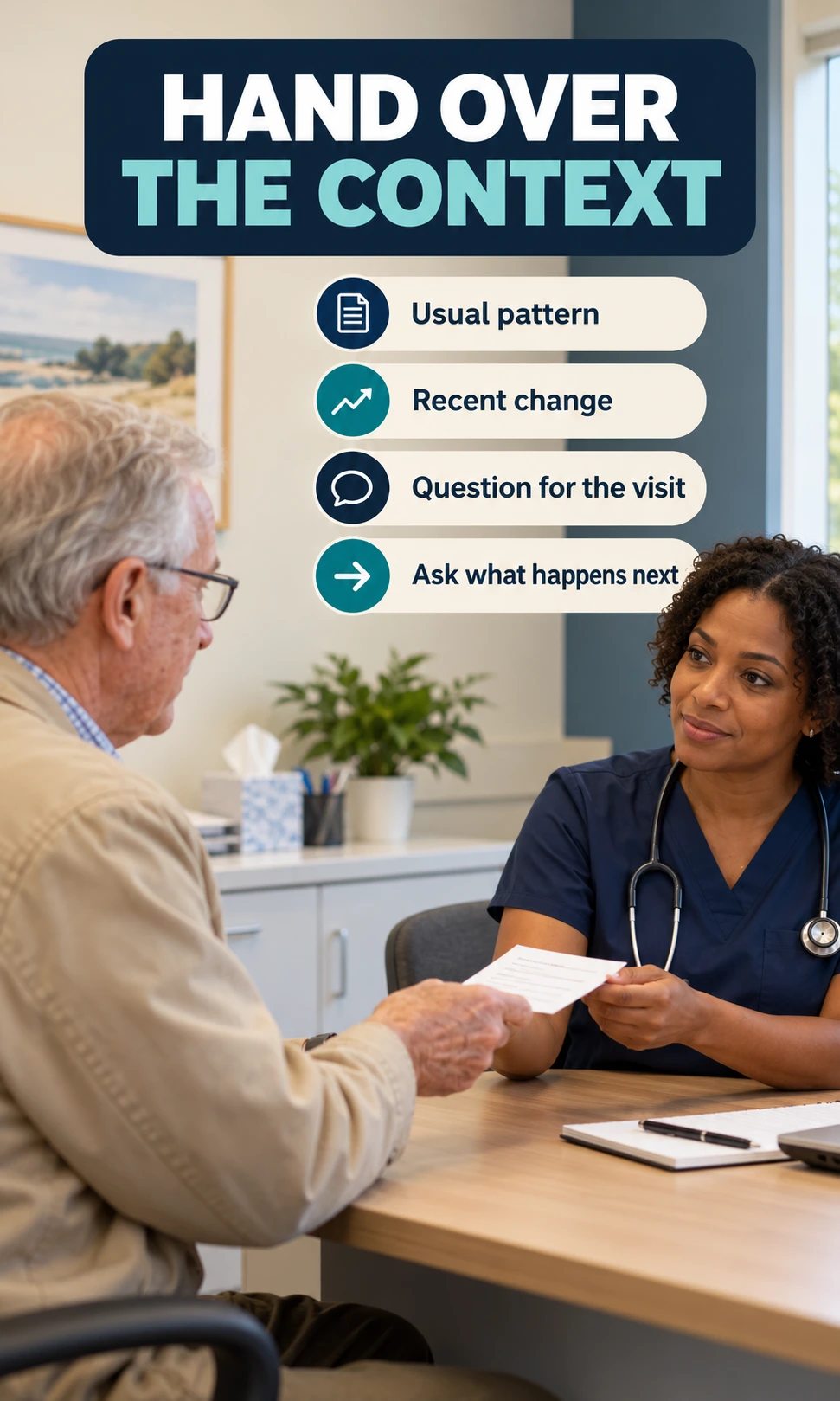
Keep your handover brief enough to read during the appointment. Name the symptom, repeat the frequency you actually entered if you remember it, and describe the observation you want considered. Finish with a question rather than asking the clinician to discard the questionnaire result.
- “My usual illness pattern is: …”
- “On the form I entered … for …; if I do not remember, I have marked that.”
- “Over this two-week period I noticed …, including this change in everyday functioning: …”
- “Could we discuss the illness and mood context together, and agree what happens next?”
Bring your current medication list and any existing symptom record that is relevant, without making changes to treatment yourself. The NIMH appointment-preparation guidance supports preparing questions and being open about concerns. A companion can help you remember the discussion if you want someone there.
What the note cannot change
A personal note cannot recalculate a clinic score, remove an answer from the record, or establish that depression is absent. Under the USPSTF adult depression screening recommendation, a positive screen needs further evaluation for diagnosis and appropriate care. Your role here is to supply observations that can inform that conversation, not decide the outcome in advance.
A note also cannot tell you whether medication should be started, stopped, or changed. The clinician may need to discuss symptoms, their effects on daily life, other health conditions, and the support you need. Ask how you will hear about the assessment and whom to contact if your concerns worsen before follow-up.
Different records for different appointment questions
If your main problem is missed meals, the skipped meal log is a different record for discussing eating difficulties. If appetite loss seems to follow anxiety episodes, the anxiety appetite loss log records that particular sequence. Neither record interprets a depression score or decides the cause of symptoms.
For a broader question about illness and mood, the article on anemia and depression covers a separate health topic. Do not infer anemia from tiredness or use a linked article as a substitute for the appointment. Choose the record that addresses your actual concern rather than completing several overlapping diaries.
When to stop using the note
If thoughts of death or self-harm are current, tell clinic staff now rather than waiting to finish this page. In the US, call or text 988 for crisis support and call 911 for a life-threatening emergency; elsewhere, use local services. A reassuring impression about illness symptoms does not cancel the need for help.
New confusion or a sudden severe change in your condition also needs prompt medical attention, not a completed note first. If the booked visit has been canceled or you cannot get there, contact the clinic to arrange another way to discuss your concerns. This experience creates a personal document only, so no member of staff knows you have completed it.
Questions about the clinic tablet and your note
Is the waiting-room depression tablet a diagnosis?
No. A questionnaire records symptoms and can identify a need for further assessment. A clinician needs to review the result and your wider circumstances before making a diagnosis, and the side note helps you bring context to that discussion.
Should I count fatigue from my illness on the form?
Follow the instructions on the clinic form and report what you experienced. Do not lower the frequency solely because you suspect your illness contributed. Add that concern to a separate note and ask the clinician to discuss it.
What if the tablet will not let me explain an answer?
Keep the answer faithful to the form and write your explanation separately. Tell staff you have a context note and ask how the clinician can receive it. Do not assume that writing it here adds anything to your clinic record.
Does a high score mean the clinic will start an antidepressant?
A screening result alone does not determine treatment. It can lead to a fuller assessment and a conversation about your needs. This page cannot predict the decision or advise you to accept, reject, or change medication.
How long does the tablet screen usually take?
The 2017 study reported a median of four minutes in its own sample. Your clinic’s form, language support, and assistance needs may differ. Ask staff if you need extra time instead of rushing an answer.
What if I could not finish it without help?
Tell staff what assistance you needed and whether any question remains unclear. Ask them to check that your own answers were recorded. Needing help with language, reading, vision, or the device is useful context for the visit, not something to hide.
Your next step at the appointment
Bring the original answers, your illness baseline, and one clear question about the overlap. If you cannot tell whether a recent change relates to illness, mood, both, or something else, say so. The useful outcome is a discussion and an agreed next step, not a cleaner score or a conclusion you must reach alone.