

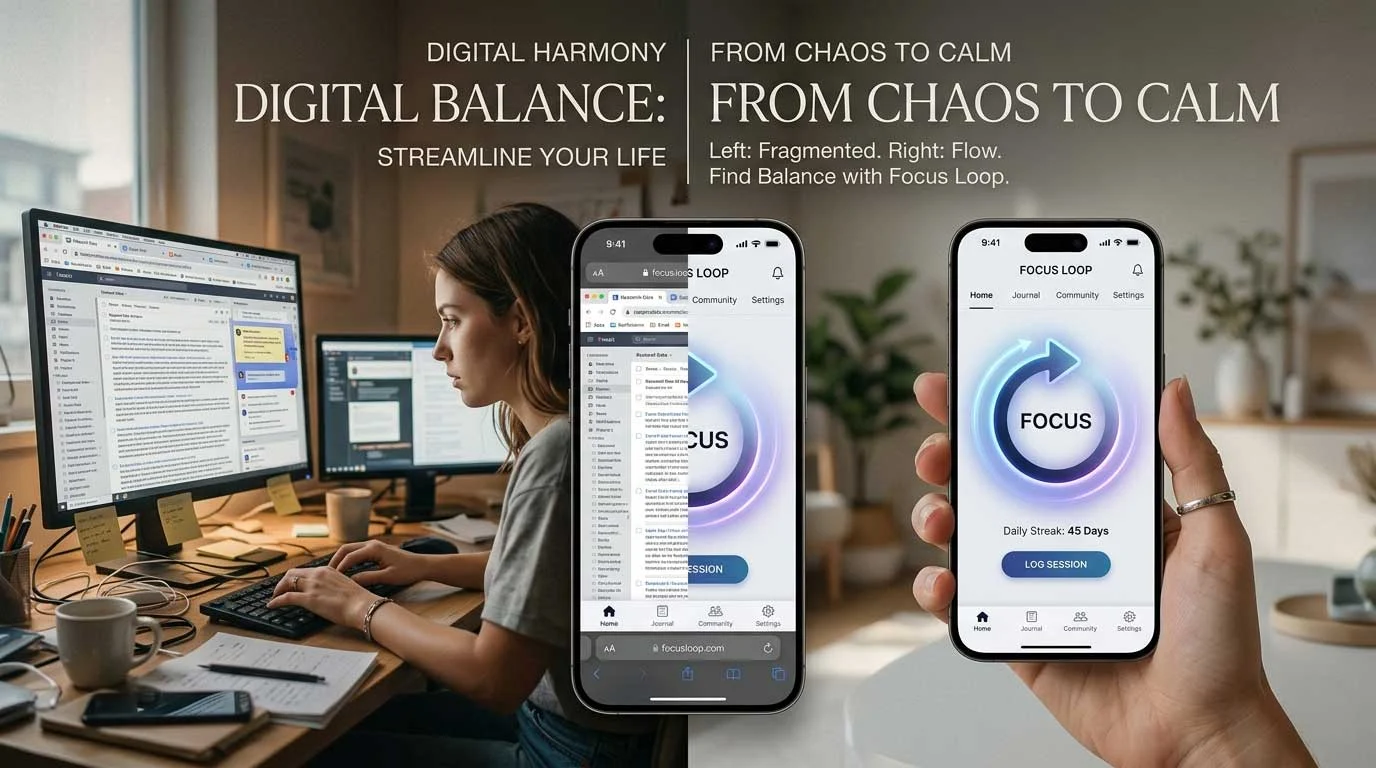

The Question That Sounds Simple – But Isn’t
Most businesses eventually ask the same question.
Should we build an app, or is a website enough?
At first glance, it feels like a straightforward comparison.
Two platforms.
Two options.
One decision.
But the question itself is misleading.
Because it assumes both platforms serve the same purpose.
They don’t.
Why This Comparison Is Often Misunderstood
A website and a mobile app are not competing tools.
They operate at different stages of the user journey.
A website is designed to be found.
A mobile app is designed to be returned to.
This distinction is subtle.
But it changes everything that follows.
Discovery vs Retention – The Structural Divide
A website lives in a discovery-driven environment.
Users arrive through:
- search queries
- ads
- external links
Every visit starts with intent.
And ends when that intent is satisfied.
The Nature of Website Interaction
On a website, attention is temporary.
Users:
- open
- browse
- leave
Each session is isolated.
There is no built-in mechanism ensuring they return.
So every visit must be earned again.
The Nature of App Interaction
A mobile app behaves differently.
It does not wait to be rediscovered.
It remains present.
On the home screen.
Inside notifications.
Within daily routines.
This persistent presence transforms how users interact.
The Real Difference Appears After the First Visit
At the beginning, both platforms perform similarly.
Users discover.
Users interact.
There is no obvious gap.
The difference begins after the session ends.
What Happens After a Website Session Ends
When a user leaves a website:
- the session disappears
- the connection weakens
- the memory fades
Returning requires effort.
And effort reduces probability.
What Happens After an App Session Ends
When a user leaves an app:
- the icon remains visible
- the entry point stays accessible
- the system can trigger return
The relationship does not reset.
It continues.
The Environment Shapes Behavior More Than Features
Many businesses focus on features when comparing platforms.
Speed.
Design.
Functionality.
These matter.
But they are not the defining factor.
Environment is.
Open vs Controlled Environments
Websites operate in an open environment.
Users can:
- switch tabs
- compare competitors
- leave instantly
Apps operate in a more controlled space.
Distractions are reduced.
Navigation is contained.
Focus is stronger.
Why This Affects Conversion
In an open environment, decisions are unstable.
In a controlled environment, decisions become easier.
This is why apps often show higher conversion rates.
Not because they are better.
But because the environment supports completion.
The Friction Gap Most Comparisons Ignore
Friction is rarely visible.
But it shapes behavior at every step.
Website Interaction Path
A typical web interaction involves:
- opening browser
- searching or typing URL
- waiting for load
- navigating to the right section
Each step adds resistance.
App Interaction Path
An app reduces this path to:
Tap → Enter → Act
Fewer steps.
Less delay.
Lower resistance.
Why This Matters Over Time
One extra step does not seem important.
But repeated over dozens of interactions, it changes behavior.
Users return less often.
Engagement weakens.
Opportunities are lost quietly.
The Role Each Platform Actually Plays
The comparison should not be framed as replacement.
It should be framed as function.
Websites Attract
Websites are essential for:
- discovery
- visibility
- first interaction
They bring users into the system.
Apps Retain
Apps are designed for:
- repeated interaction
- habit formation
- long-term engagement
They keep users inside the system.
Final Perspective – Why This Is Not a Binary Choice
The real question is not:
App or website?
The real question is:
Where does your system begin, and where does it continue?
To understand why retention becomes the deciding factor over time, see Why Businesses Quietly Lose Users Without Apps, where the behavioral system is explained in depth.
Conversion Is Not Just About What Users Want – It’s About Where They Decide
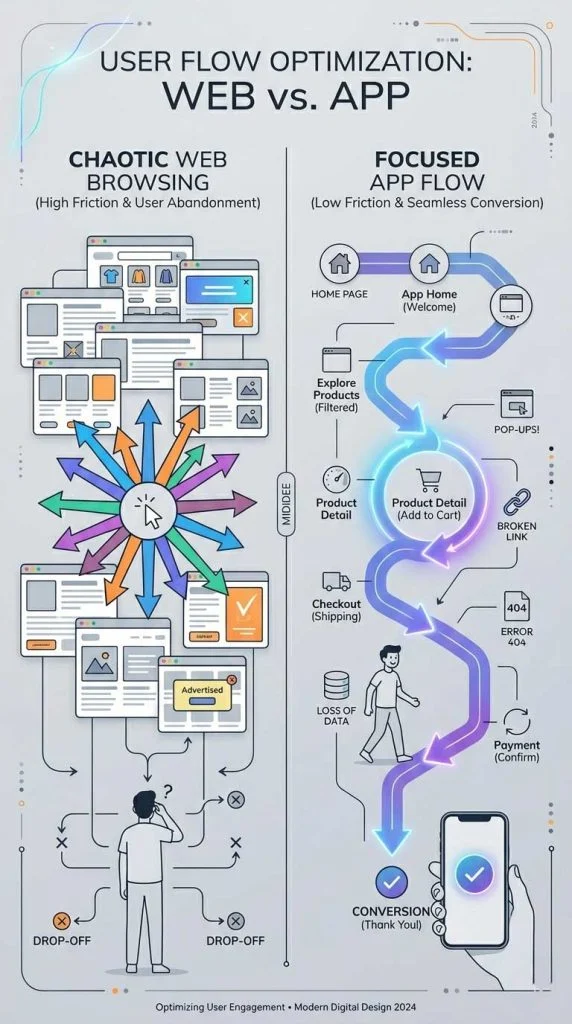
Most discussions around conversion focus on intent.
What the user wants.
What they are looking for.
What they are ready to do.
But intent alone does not determine outcomes.
Environment does.
Because the same user can behave differently depending on where the decision happens.
Why Intent Breaks Down in Open Environments
On a website, even a high-intent user faces multiple exits.
They can:
- open another tab
- compare prices
- delay the decision
- abandon the session
Nothing forces completion.
Even strong intent can dissolve under small interruptions.
Why Apps Reduce Decision Friction
Inside an app, the decision environment changes.
There are fewer visible alternatives.
Navigation is simplified.
The path forward is clearer.
The user is not pushed.
But they are not distracted either.
This subtle difference increases completion probability.
The Hidden Revenue Driver – Interaction Frequency
Revenue is often measured per transaction.
But it is built through frequency.
How often users return.
How often they engage.
How often they act.
This is where apps begin to separate from websites.
Why Websites Depend on Re-Acquisition
Every time a user leaves a website, the cycle resets.
To return, they must:
- remember
- search
- click
This makes each visit a new acquisition event.
Even for existing users.
Why Apps Compound Value Over Time
Apps remove this reset.
Once installed:
- entry becomes immediate
- return becomes easier
- interaction becomes more frequent
Each session builds on the previous one.
Instead of restarting, the system accumulates behavior.
The Lifetime Value Difference
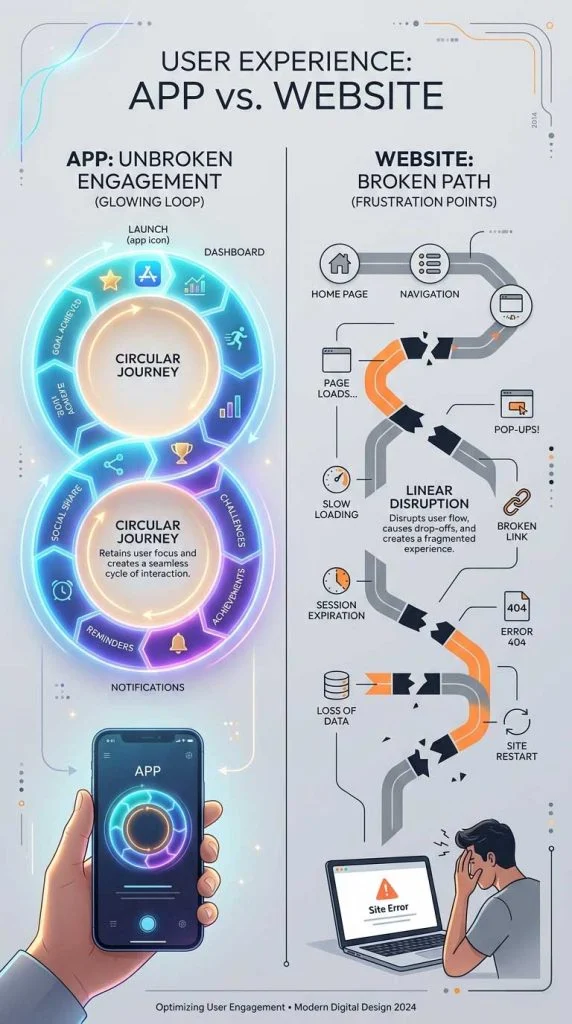
Lifetime value is not created in a single moment.
It grows through repeated interactions.
And those interactions depend on how easy it is to return.
Website-Based Lifetime Value
On websites, lifetime value depends heavily on:
- remarketing
- repeated discovery
This introduces variability.
Some users return.
Many do not.
App-Based Lifetime Value
On apps, lifetime value builds more consistently.
Because:
- access is always available
- return is simplified
- engagement is more frequent
The system supports continuity.
On apps, lifetime value builds more consistently. This is closely tied to how retention systems operate at a behavioral level, which is explored in How Mobile Apps Increase Customer Retention, where the interaction loops are explained in detail.
The Behavioral Shift – From Searching to Opening
One of the most important differences between websites and apps is how users initiate interaction.
Website Behavior – Search First
With websites, interaction begins with search.
Users must:
- recall the need
- search for a solution
- choose among options
Each step introduces friction and competition.
App Behavior – Open First
With apps, interaction begins with opening.
The user:
- taps the icon
- enters directly
- continues from where they left
No search.
No comparison.
No delay.
Why This Shift Matters
This shift reduces:
- decision fatigue
- cognitive effort
- time to action
And these reductions increase engagement consistency.
Where Websites Still Hold Strong Advantage
Despite the strengths of apps, websites remain essential.
They are not replaced.
They are repositioned.
Discovery and Visibility
Websites dominate in:
- search engine presence
- content discovery
- first-time interaction
They are the entry layer of the system.
Accessibility Without Commitment
Websites allow users to:
- explore without installing
- access instantly
- compare freely
This lowers entry barriers.
The Combined System – Why High-Performing Businesses Use Both
The most effective systems do not choose one platform.
They integrate both.
The Flow That Works
A common structure:
- Website attracts users
- App retains users
- System builds continuity
Each platform performs a specific role.
Together, they create a complete system.
Why This Structure Scales
Because it aligns with user behavior:
- discovery happens externally
- engagement happens internally
This reduces friction at every stage.
The Final Difference Most Comparisons Miss
The comparison between mobile apps and websites is often framed as a feature discussion.
Speed.
Design.
Technology.
But these are surface-level factors.
The deeper difference is structural.
One Platform Resets – The Other Continues
A website session ends.
And with it, the relationship weakens.
The next interaction must be rebuilt.
An app session ends.
But the relationship remains.
The entry point stays visible.
The connection stays active.
The system stays ready.
Why Continuity Changes Everything
Continuity reduces:
- effort
- hesitation
- decision fatigue
It increases:
- familiarity
- frequency
- stability
And these changes compound over time.
The Strategic Shift – From Channels to Systems
Businesses often think in channels.
Website.
Social media.
Ads.
But high-performing systems are not built on channels.
They are built on interaction structures.
The Website as Entry
Websites bring users in.
They are the point of discovery.
Without them, visibility declines.
The App as Continuity
Apps keep users inside.
They reduce reliance on external platforms.
They increase control over interaction.
Why This Combination Wins
When both are used correctly:
- acquisition becomes efficient
- retention becomes stable
- revenue becomes more predictable
This is not optimization.
It is system design.
Final Synthesis – What This Means for Real Decisions
The question is not which platform is better.
The question is what role each platform plays.
A website answers:
“How do users find us?”
An app answers:
“Why do they come back?”
When both questions are answered together, the system becomes complete.
To understand why retention ultimately determines long-term performance, see Why Businesses Quietly Lose Users Without Apps, where the behavioral mechanism is explained first.
Frequently Asked Questions
Is a mobile app better than a website for business?
A mobile app and a website serve different roles. Websites are effective for discovery and attracting new users, while mobile apps are designed for retention and repeated engagement.
Why do mobile apps convert better than websites?
Mobile apps often convert better because they operate in a more controlled environment with fewer distractions and lower friction, making it easier for users to complete actions.
When should a business build a mobile app?
A business should consider building a mobile app when users are expected to return frequently and when repeated interaction plays a key role in engagement and revenue.
Can a website replace a mobile app?
A website cannot fully replace a mobile app because it lacks persistent presence, push notification capability, and low-friction return mechanisms that apps provide.