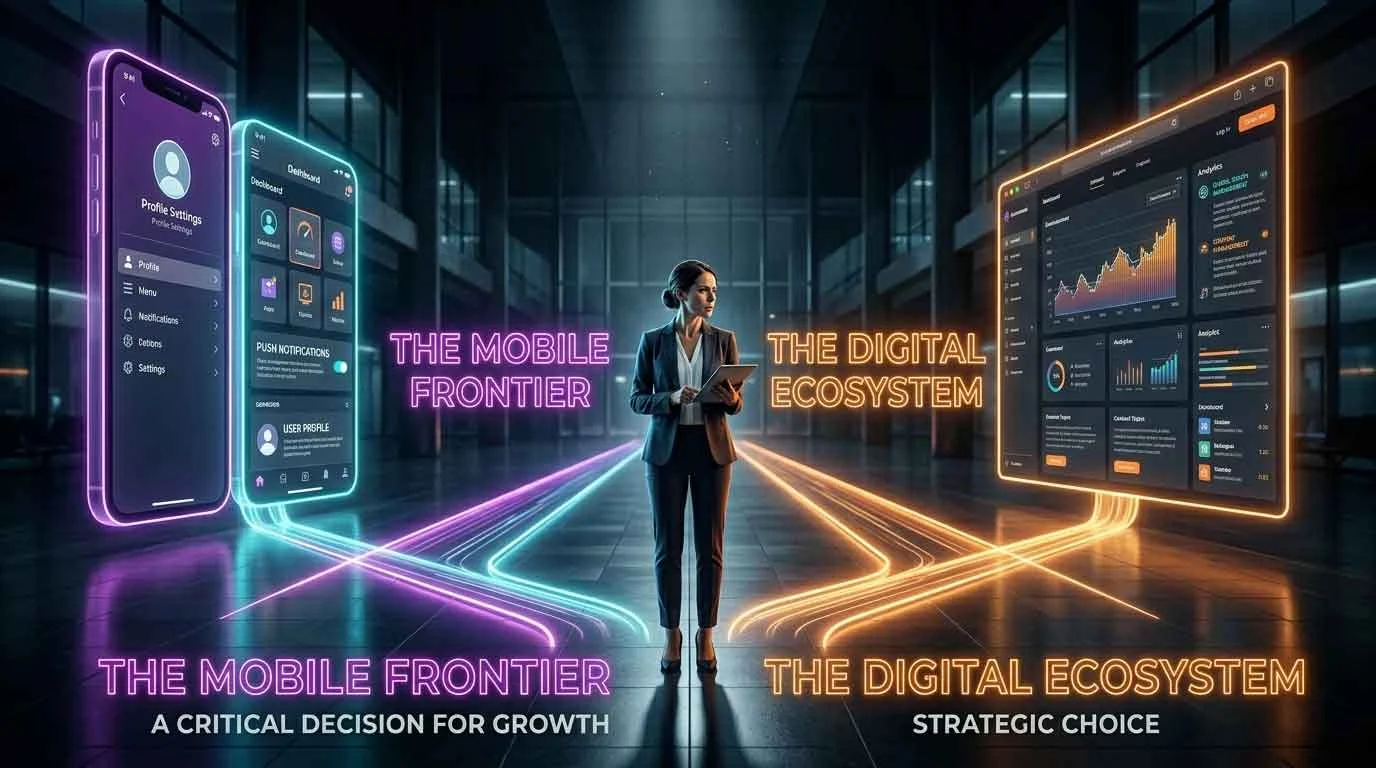

Why This Topic Keeps Appearing in Business Feeds
The idea that every business needs a mobile app is repeated across startup discussions, case studies, and digital strategy content.
It is reinforced by visible success stories.
But these stories show outcomes, not structure.
And when structure is ignored, replication fails.
The Decision That Looks Right – But Often Isn’t
For many businesses, building a mobile app feels like the next logical step.
Growth creates pressure to expand.
Expansion creates pressure to adopt new platforms.
And in that process, the mobile app becomes an almost automatic decision.
But what looks like progress can quietly reduce efficiency.
Not because apps are ineffective.
But because they only work under specific conditions that many systems do not meet.
The logic appears simple.
If large companies rely on apps, smaller businesses should follow the same path.
If users spend time on apps, building one should increase engagement.
If apps create retention, then having one should improve performance.
But beneath this surface logic lies a more complex reality.
The app is not the advantage. The system is.
Why This Question Is Often Framed Incorrectly
The question is usually asked in the wrong way.
“Should we build an app?”
This framing assumes that an app is a universal upgrade.
A natural evolution.
A step forward.
But not all systems move forward in the same direction.
Some systems scale through reach.
Others scale through repetition.
And the difference between those two determines whether an app strengthens the system or weakens it.
The Hidden Structure Behind App Success
What makes a mobile app successful is rarely visible from the outside.
Users see:
- seamless interfaces
- fast interactions
- continuous engagement
Businesses see:
- higher retention
- more frequent usage
- increased lifetime value
But these outcomes are not created by the app itself.
They emerge from an underlying structure, which is explored in Why Businesses Quietly Lose Users Without Apps, where the behavioral patterns behind app-driven performance are explained.
The Three Conditions That Define App Effectiveness
A mobile app performs well only when three conditions exist:
- Users return frequently
- Interaction is repeated
- Value is continuously refreshed
Without these conditions, the app has nothing to amplify.
When These Conditions Exist
When systems naturally support repetition:
- users open the app regularly
- interaction becomes routine
- engagement compounds over time
In these cases, the app enhances behavior.
When These Conditions Do Not Exist
When systems lack repetition:
- users do not return often
- notifications feel irrelevant
- engagement declines
In these cases, the app introduces friction instead of removing it.
What a Mobile App Actually Does in a Business System
A mobile app is often described as a digital product.
But in practice, it behaves as a structural layer inside a system.
And that distinction changes everything.
Not a Tool – But a Behavioral Layer
An app does not simply provide access.
It changes how users interact.
It reduces:
- friction
- decision-making steps
- time between intent and action
This shift alters behavior.
The Shift From Search to Direct Access
On a website, users search.
On an app, users open.
This difference may seem small.
But over time, it changes:
- how often users return
- how quickly they act
- how consistently they engage
The Role of Apps in the Full Business System
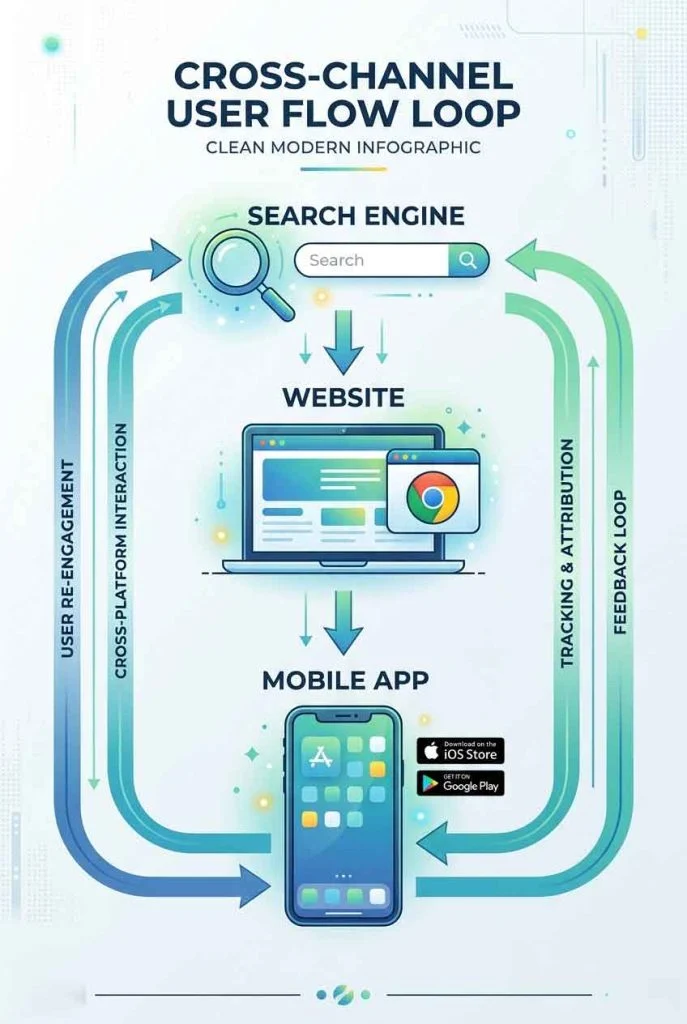
To understand where apps fit, it helps to break the system into layers.
Layer 1 – Discovery (Website Dominance)
Websites perform best in:
- search visibility
- first-time access
- exploration
They bring users into the system.
Layer 2 – Retention (App Dominance)
Apps perform best in:
- repeated interaction
- habit formation
- ongoing engagement
They keep users inside the system.
Layer 3 – Decision Flow (Combined System)
In high-performing systems:
- users discover through web
- return through app
- engage repeatedly
This creates continuity, which becomes clearer when comparing how apps and websites structure interaction, as explained in Mobile App vs Website for Business, where the differences in engagement flow are analyzed.
Why Some Businesses Grow Faster With Apps – And Others Don’t
At a surface level, the effect of a mobile app looks inconsistent.
Some businesses:
- see rapid engagement growth
- experience higher return rates
- build stable user behavior
Others:
- struggle with low downloads
- see minimal usage
- abandon the app over time
The difference is not random.
It is structural.
The Core Mechanism Behind App-Driven Growth
A mobile app changes how users return.
Not by forcing them.
But by making the return easier.
The Friction Reduction Effect
Every interaction has friction.
Opening a browser.
Searching for a page.
Logging in.
Navigating to the right section.
Each step introduces delay.
Apps compress this process.
Tap → Open → Continue
The reduction is small per interaction.
But over time, it compounds.
The Persistence Layer
Unlike websites, apps remain visible.
They exist on:
- home screens
- notification panels
- daily routines
This persistent presence reduces the effort required to re-engage.
The Trigger System
Apps can reconnect with users through triggers.
These include:
- notifications
- reminders
- behavior-based prompts
These triggers are not inherently effective.
They only work when aligned with user intent.
The Retention Loop That Drives Long-Term Growth
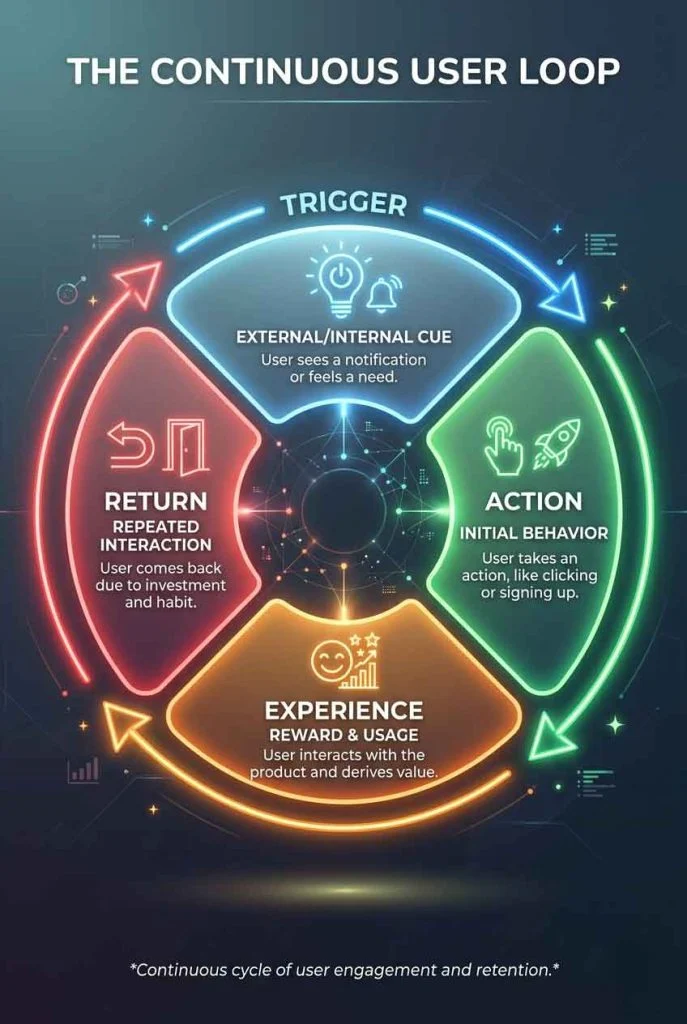
Retention is not a single event. It is a structured behavioral loop, which is explained in How Mobile Apps Increase Customer Retention, where the mechanism behind repeated usage is explored in depth.
It is a loop.
The Four-Stage Retention Cycle
A simplified model:
- Trigger
- Action
- Experience
- Return
Each stage reinforces the next.
Stage 1 – Trigger
A signal reconnects the user.
This may be:
- a notification
- a reminder
- a habit cue
Stage 2 – Action
The user responds.
Opens the app.
Engages with content.
Completes an interaction.
Stage 3 – Experience
The system delivers value.
If the experience meets expectations, the loop continues.
Stage 4 – Return
The user comes back.
Either:
- intentionally
- or automatically
Over time, this becomes routine.
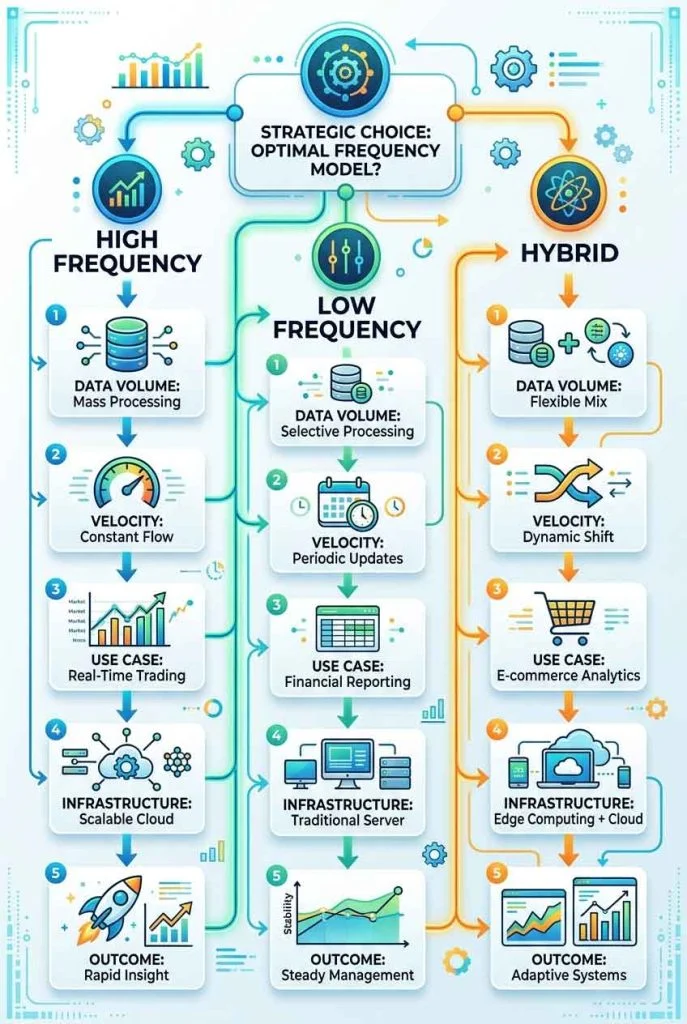
Why Frequency Determines Whether an App Works
Frequency is the most important variable in this system.
Not features.
Not design.
Not even price.
High-Frequency Systems
These include:
- content platforms
- communication tools
- financial dashboards
- delivery services
Users return often.
Apps perform well.
Low-Frequency Systems
These include:
- home renovation
- legal services
- healthcare appointments
- large one-time purchases
Users return rarely.
Apps struggle.
Why Frequency Cannot Be Forced
Attempts to artificially increase frequency often fail.
Notifications become noise.
Users disengage.
The system weakens.
The Behavioral Shift From Intent to Habit
The most powerful effect of an app is not immediate.
It emerges over time.
From Decision-Based Use to Automatic Use
Initially, users choose to engage.
Later, engagement becomes automatic.
Tap → Open → Continue
No evaluation.
No comparison.
Why Habit Is More Powerful Than Satisfaction
Satisfaction explains why users like a product.
Habit explains why they keep using it.
Apps create conditions for habit.
But only when repetition exists.
Where This Mechanism Breaks Down
Not all systems support this loop.
When Interaction Is Too Infrequent
If users return:
- once a month
- once every few months
The loop cannot stabilize.
When Value Is Not Reinforced
If each interaction does not deliver clear value:
- users lose interest
- triggers become ineffective
- repetition declines
When Friction Reappears
If apps introduce:
- complexity
- slow navigation
- unnecessary steps
The advantage disappears.
When a Mobile App Becomes the Wrong Decision
The benefits of mobile apps are widely discussed.
But the limitations are often overlooked.
This creates an imbalance, which is explored in When a Mobile App Becomes a Bad Decision, where the structural limitations and trade-offs are explained in detail.
Businesses see the upside.
But underestimate the conditions required to achieve it.
The Most Common Misalignment
The most frequent issue is not poor execution.
It is structural mismatch.
Between:
- user behavior
- interaction frequency
- system design
When these do not align, the app underperforms.
The Illusion of Platform Expansion
Expanding into a mobile app feels like progress.
It signals growth.
It suggests modernization.
But expansion without alignment increases complexity.
Not performance.
The Cost Structure That Changes the Equation
A mobile app introduces a different cost model.
Fixed Cost vs Variable Usage
Apps require:
- continuous maintenance
- regular updates
- multi-device compatibility
These costs exist regardless of usage.
When Usage Does Not Justify Cost
If users interact infrequently:
- the app is underutilized
- resources are consumed without return
- efficiency declines
The Silent ROI Collapse
Unlike visible failure, this decline is gradual.
The app continues to exist.
But its value does not scale.
Over time, the gap widens.
The Decision Framework – When an App Makes Sense
Instead of asking whether an app is “good,” the better question is:
When does it fit?
Condition 1 – High Interaction Frequency
Apps perform best when users:
- return frequently
- engage repeatedly
- rely on the system regularly
Condition 2 – Continuous Value Delivery
Each interaction must provide value.
Without reinforcement, repetition declines.
Condition 3 – Low Friction Pathways
The app must reduce effort.
Not introduce it.
When All Conditions Align
When frequency, value, and friction align:
- retention stabilizes
- engagement compounds
- performance improves
When Conditions Do Not Align
When these conditions are missing:
- apps remain unused
- users disengage
- systems become inefficient
The Balanced Model – Combining Website and App
The strongest systems do not rely on a single platform.
They combine both.
More platforms do not always mean more growth.
Website for Reach
Websites:
- attract users
- enable discovery
- support first interaction
App for Retention
Apps:
- retain users
- reduce friction
- support repeated engagement
The Integrated Flow
In effective systems:
- users discover through web
- transition to app
- remain within app ecosystem
Final Synthesis – The Right Question to Ask
The decision is not:
“Should we build an app?”
It is:
“What behavior does our system support?”
If Behavior Supports Repetition
An app strengthens the system.
If Behavior Does Not Support Repetition
An app introduces inefficiency.
Why This Question Changes Everything
Because it shifts the focus:
From tools → to structure
From features → to behavior
From trends → to alignment
Efficiency is often reduced before it is improved.
Frequently Asked Questions
Should every business build a mobile app?
No. Mobile apps are most effective when users interact frequently and repeatedly. In low-frequency systems, websites often provide better efficiency.
Why do some mobile apps fail?
Apps fail when user behavior does not support repeated interaction, making it difficult to build retention or habit formation.
Apps can outperform websites in retention and repeated engagement, while websites remain stronger for discovery and accessibility.