


Kelly is a real staffing company, but a job offer using its name still needs independent verification. The safe starting point is an official listing or a verified company contact, followed by the actual role’s location, shift and hiring conditions. A legitimate company, a genuine vacancy and a suitable job are three different questions.
This guide focuses on the applicant’s route, particularly when a role is advertised as remote. It does not promise current vacancies, a universal pay rate or the freedom to choose any schedule. Those details belong to the particular opportunity and its written terms, rather than an older article or a broad statement about working from home.
Before responding to an offer, use a short check that separates the company from the message. A convincing logo or a recruiter profile may be copied. If you reached the opportunity through an unsolicited contact, establish the route independently before supplying information or rearranging your plans.
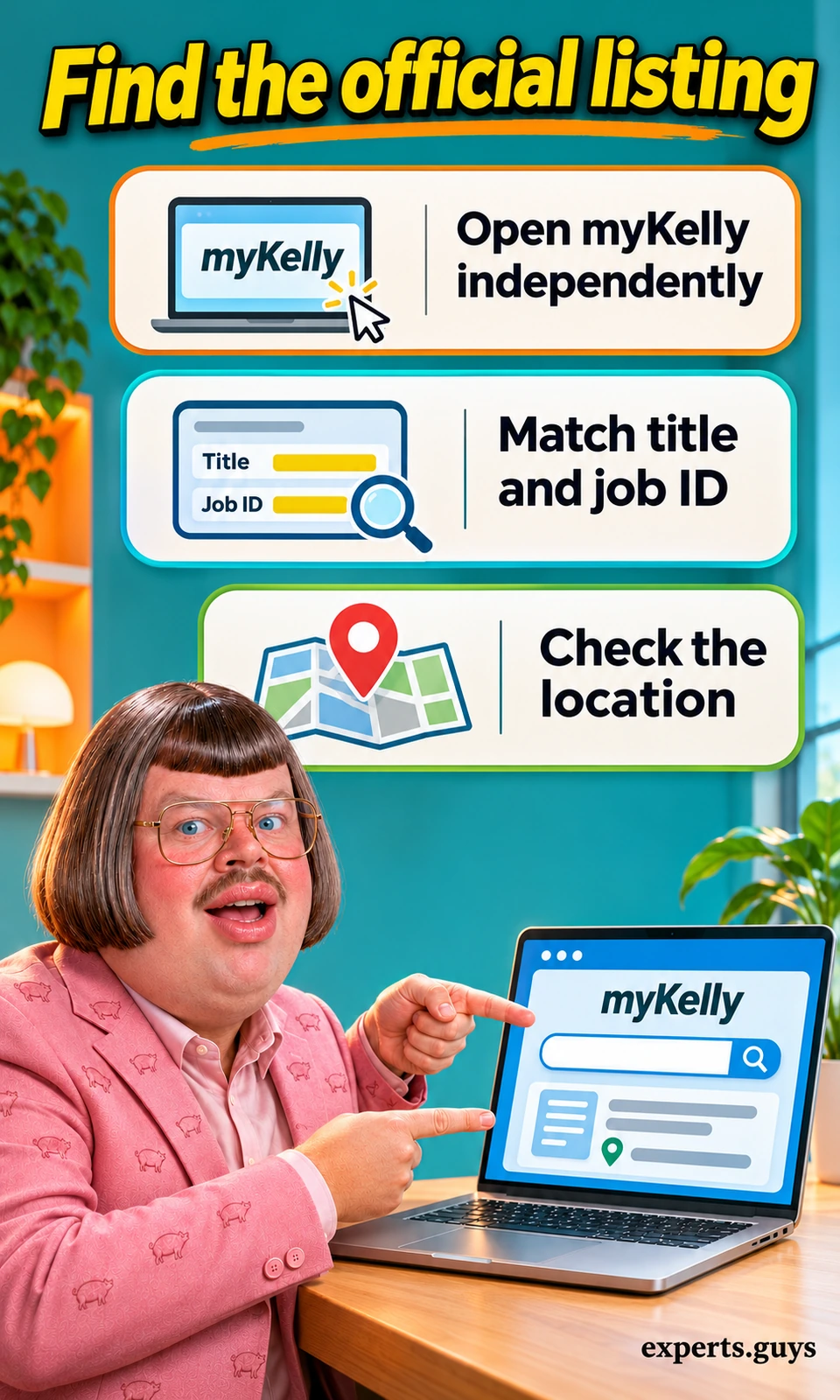
- Open myKelly or Kelly’s official company route independently.
- Match the role title, job ID and location where a listing is available.
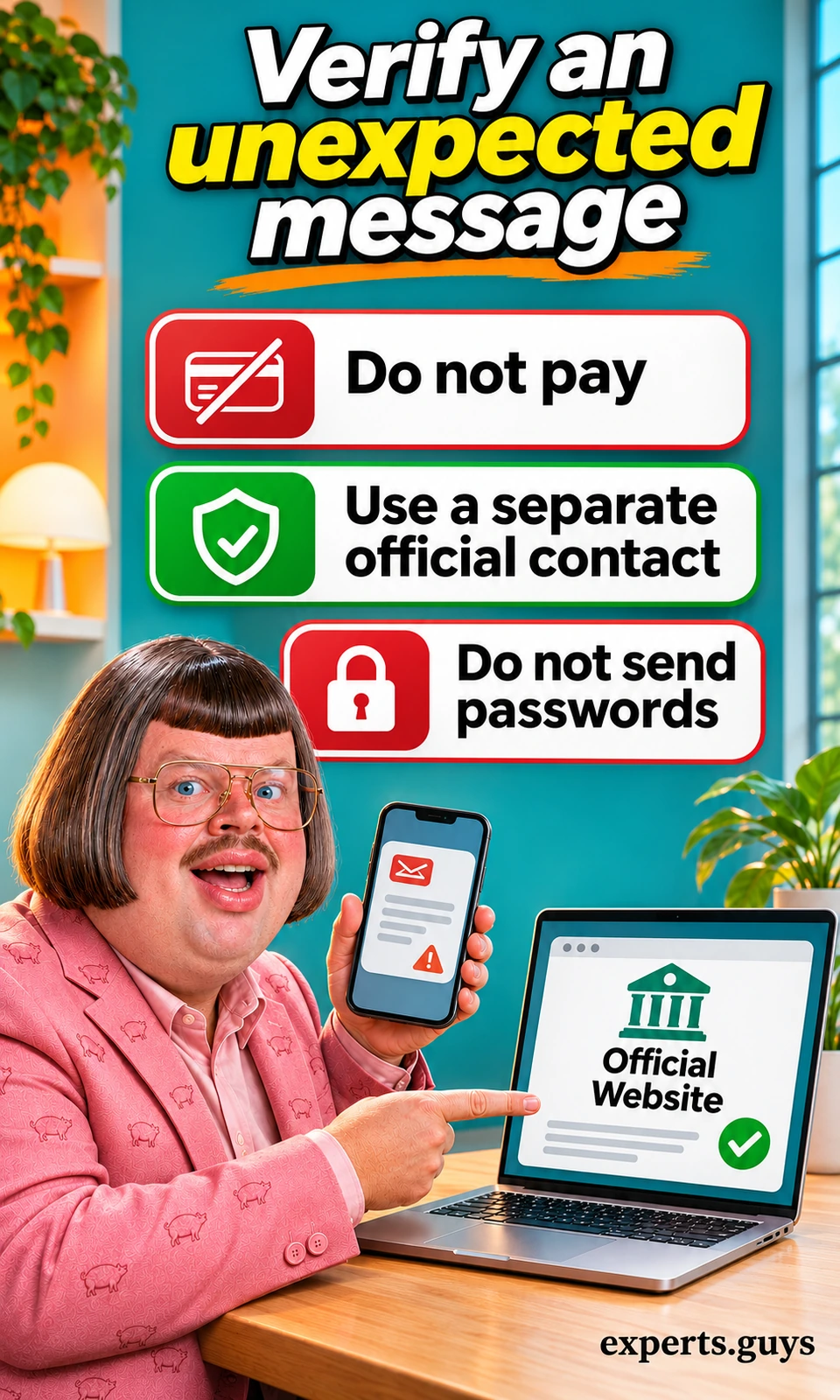
- Verify an unexpected contact through a separate official contact channel.
- Do not pay to obtain the job or move money on the sender’s behalf.
Remote is a location arrangement, not a complete offer
A remote job can still have a defined country, state, local travel requirement or training arrangement. Those conditions can make a role unsuitable even when the work is performed at home. Read the location and attendance wording before investing time in a full application, and ask about any condition that is not clear.
For example, an official Kelly customer-service listing checked during research described remote work while also requiring candidates to live near a particular Ohio location and attend occasional in-person sessions. That is an example of why the details matter, not a claim that the vacancy remains open or that its terms apply to other roles.
Do not confuse a corporate flexible-work policy with the terms of a client assignment. A statement about how a company’s own employees work does not automatically extend to everyone recruited for its customers. Likewise, a label such as KellyConnect identifies a business context; the individual vacancy still has duties and conditions to examine.
Start with the role you can actually identify
Kelly’s job-search help emphasises the job ID when asking about a particular vacancy. Keep that identifier with the listing link so a recruiter can identify the same role. A title such as customer-service representative may appear in several locations with different terms.
The official contact-centre page describes onsite, hybrid and remote opportunities. It also distinguishes roles requiring experience from some entry-level opportunities. Use it as a route into current listings, rather than treating its general descriptions of training or benefits as a personal offer.
| Question | Useful evidence | What is insufficient |
|---|---|---|
| Is this the company’s real recruiting route? | An independently opened official site and verified contact | A logo, social profile or professional-looking message |
| Is this vacancy real and current? | Matching title, job ID, location and company confirmation where needed | A forwarded screenshot or an old article |
| Does the role fit my circumstances? | The vacancy’s actual location, shift, training and equipment terms | The word remote on its own |
| What stage have I reached? | A stated next step and remaining conditions | Profile registration or an interview invitation treated as a job offer |
Make an application that matches the vacancy
Begin with the duties and requirements, then explain the experience relevant to them. For a support role, an example of resolving a customer problem or explaining a technical step may be more useful than a generic statement that you work hard. Keep the example accurate and avoid disclosing a former employer’s confidential information.
If you submit credentials to a talent pool without a specific vacancy, recognise that as a different action. It can make your background available for consideration, but it is not the same as an application accepted for a particular job. Continue a suitable wider search rather than assuming the profile itself puts a start date in motion.
A recruiter conversation should clarify the work as well as evaluate you. Ask which duties are central, whether the role involves calls or other channels, and which requirements are essential. If the shift, location or task mix is incompatible with your circumstances, identify that early instead of waiting for the final stage.
Kelly’s getting-hired guide explains that the process can vary by role and industry. Some opportunities involve different interview or screening steps. Treat a general outline as preparation, not a timetable guaranteeing that every applicant will receive the same sequence or response.
For an illustrative preparation exercise, choose one requirement and one relevant example from your experience. If the listing requires explaining a process, prepare a brief account of how you checked someone’s understanding. If you lack a required qualification, do not imply otherwise; ask whether the opportunity allows training or whether a different vacancy is a better fit.
A useful digital brief is short: the job ID, your relevant background, availability and the question that could affect your decision. It should make a conversation easier, not duplicate every line of your resume. Never include passwords, bank credentials or private identity documents in this initial note.
Check the practical conditions of home-based work
Compare the required shift with the hours you can reliably cover, including training. “Flexible” may mean a choice among offered shifts rather than the ability to log in whenever you wish. Ask whether the schedule is fixed, how changes are handled and whether evenings or weekends are part of the role.
Equipment needs are also role-specific. Confirm what is supplied, what you must already have and how approved setup is arranged. A vague promise that a cheque will cover a purchase is not a substitute for a verified onboarding process. Do not buy equipment through an unverified sender or forward money to someone described as a preferred vendor.

If a requirement is difficult to interpret, ask a focused question through the official route. For example: “The listing says remote but also names this location; what attendance is required?” That is more useful than asking whether Kelly generally allows remote work. The answer needs to describe the opportunity you are considering.
Treat an unexpected message as a verification task
Kelly’s recruitment-fraud guidance identifies impersonation, payment demands and misleading messages as concerns. It advises independent verification and states that candidates are not charged placement fees. Use that policy as a check on a claimed offer, not as a reason to assume every message carrying the name is safe.
A domain check can reveal a misspelling, but it is only one part of verification. A familiar-looking sender name or an apparent company address does not establish the entire transaction. When a request is unexpected, use a separately obtained official contact rather than relying on the sender’s own “verification” link or number.
The FTC’s warning about recruiter text scams describes offers that lead to fake-cheque or task-payment schemes. Do not deposit money to release supposed earnings or send a portion of a cheque onward. Stop engaging with a suspicious sender and use the relevant official reporting route if needed.
If information or money has already been shared, respond to the actual exposure promptly. Contact the relevant bank or account provider through its known route, secure affected accounts and follow the FTC’s reporting guidance. Do not send another payment to someone promising to recover the first one.
Know which stage you have reached
Registration means your details have been submitted; an interview means the opportunity is being discussed; an offer may still contain conditions. Ask what is complete, what remains and who will confirm the start. This avoids treating a promising conversation as income that is already certain.
Compare any offer with the listing and your conversations. The employer, duties, location, pay basis, expected hours and outstanding conditions should be clear enough to understand. If a detail changed, ask for the current terms rather than assuming the most favourable version still controls.

Verified onboarding can involve identity, employment and payment arrangements. Ask which secure system is used and why a particular item is required, and reach it through the confirmed process. This is different from sending sensitive information to someone who has merely claimed to be a recruiter in a message.
The site’s US recruitment-agency guide helps compare broader hiring routes. The separate Kelly contact article concerns finding assistance, but current contact and process details should always be taken from the official company source. This page stays focused on verifying and evaluating the actual opportunity.
Frequently asked questions
Is Kelly a legitimate company?
Kelly is an established staffing company with official recruiting channels. That does not establish that every person using its name is affiliated with it or that every advertised offer is genuine.
Are all Kelly jobs remote?
No. The official contact-centre page describes onsite, hybrid and remote roles. Other job categories have their own requirements; use the actual vacancy.
Does remote mean I can work from any country?
No. Remote roles can restrict country, state, distance from a site or attendance for particular activities. Check the listing and verify unclear conditions before applying.
Will Kelly charge me to get a placement?
Kelly’s fraud-protection page states that it does not charge candidates job-placement fees. A demand to pay to unlock a role should be independently verified through the official company route.
Does an application or interview guarantee a start?
No. Registration, screening, interviews, an offer and completed onboarding are different stages. Ask which conditions remain and who confirms the actual start.
Can I send bank details to a recruiter who uses the right logo?
A logo does not verify the recipient or process. Kelly describes secure onboarding arrangements; do not send passwords or banking information to an unverified message contact.
Action checklist
- Identify the official listing or verify the opportunity through an independently obtained company contact.
- Check the job ID, location, shift, equipment and training conditions.
- Prepare a concise relevant application without private credentials.
- Clarify the hiring stage and every remaining offer condition.
- Use the verified onboarding route and wait for confirmed start instructions.