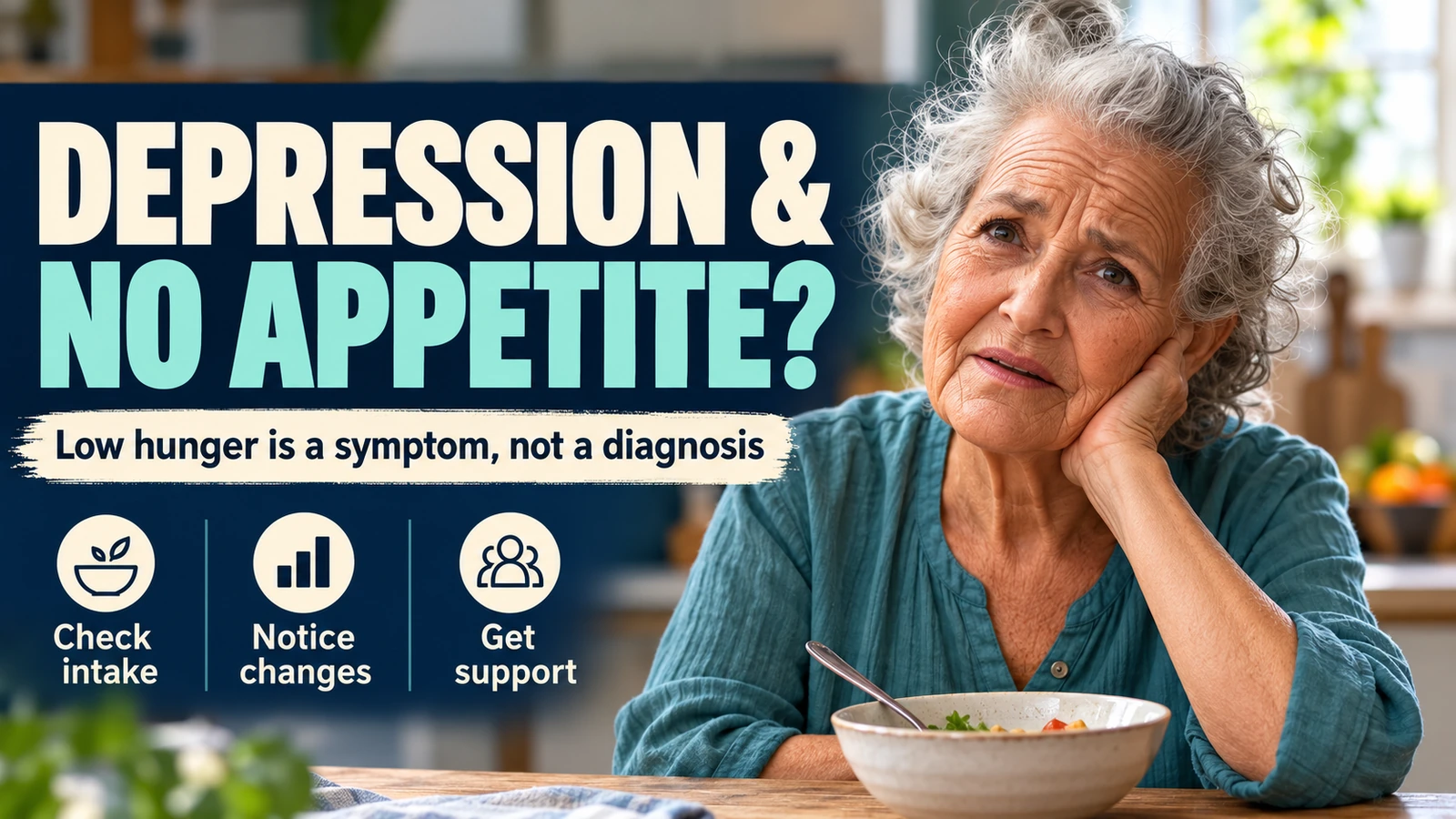
Depression can reduce your appetite, make food less appealing, and leave you without the energy to prepare a meal. But a loss of appetite does not prove depression is the cause, especially if it is new, persistent, or accompanied by weight loss. Start with a manageable eating step while checking whether you need medical help.
This guide is for adults who are eating less than usual, whether depression is diagnosed or only suspected. It offers daily-life support rather than a diagnosis or a personalized nutrition prescription. Children, pregnancy, frailty, and existing medical diets need advice suited to the person.
| What is happening | Useful next action |
|---|---|
| Food seems uninteresting, but eating and drinking are still possible | Try a familiar small meal; arrange assessment if the change persists. |
| You want food but preparation feels overwhelming | Use a ready-to-eat option or ask someone to bring a meal. |
| You feel full after a few bites, have pain, or struggle to swallow | Describe the physical symptom to a clinician; do not assume it is depression. |
| You cannot keep fluids down, pass very little urine, or remain dizzy on standing | Seek urgent medical advice; confusion, collapse or severe breathing difficulty needs emergency help. |
Why can depression reduce appetite even when your body needs food?
Appetite is the desire to eat; it is not a reliable measure of whether your body needs nourishment. Depression may affect interest, energy, sleep, and daily routines, so food can become harder to notice, choose, or prepare. Some people eat more during depression, while others eat less or notice little change.
Reduced pleasure can make a favorite meal seem unrewarding, while fatigue can turn shopping or cooking into an exhausting sequence of decisions. These barriers can coexist: someone may have food available and still struggle to start eating. Depression symptoms and treatment guidance includes appetite changes, but appetite loss alone cannot establish a diagnosis.
Brain research offers clues rather than an individual explanation. A small food-image brain-imaging study compared unmedicated depressed adults with increased appetite, depressed adults with decreased appetite, and healthy controls. Differences involved reward-related responses and regions involved in sensing internal body states; group associations do not establish cause, explain every person, or provide a diagnostic scan.
Eating less can then add another difficulty: inadequate nourishment may contribute to weakness and fatigue. That can make the next shopping trip or meal harder, even when low mood started the disruption. The practical aim is to support intake and address the underlying problem together, rather than waiting for motivation to return first.
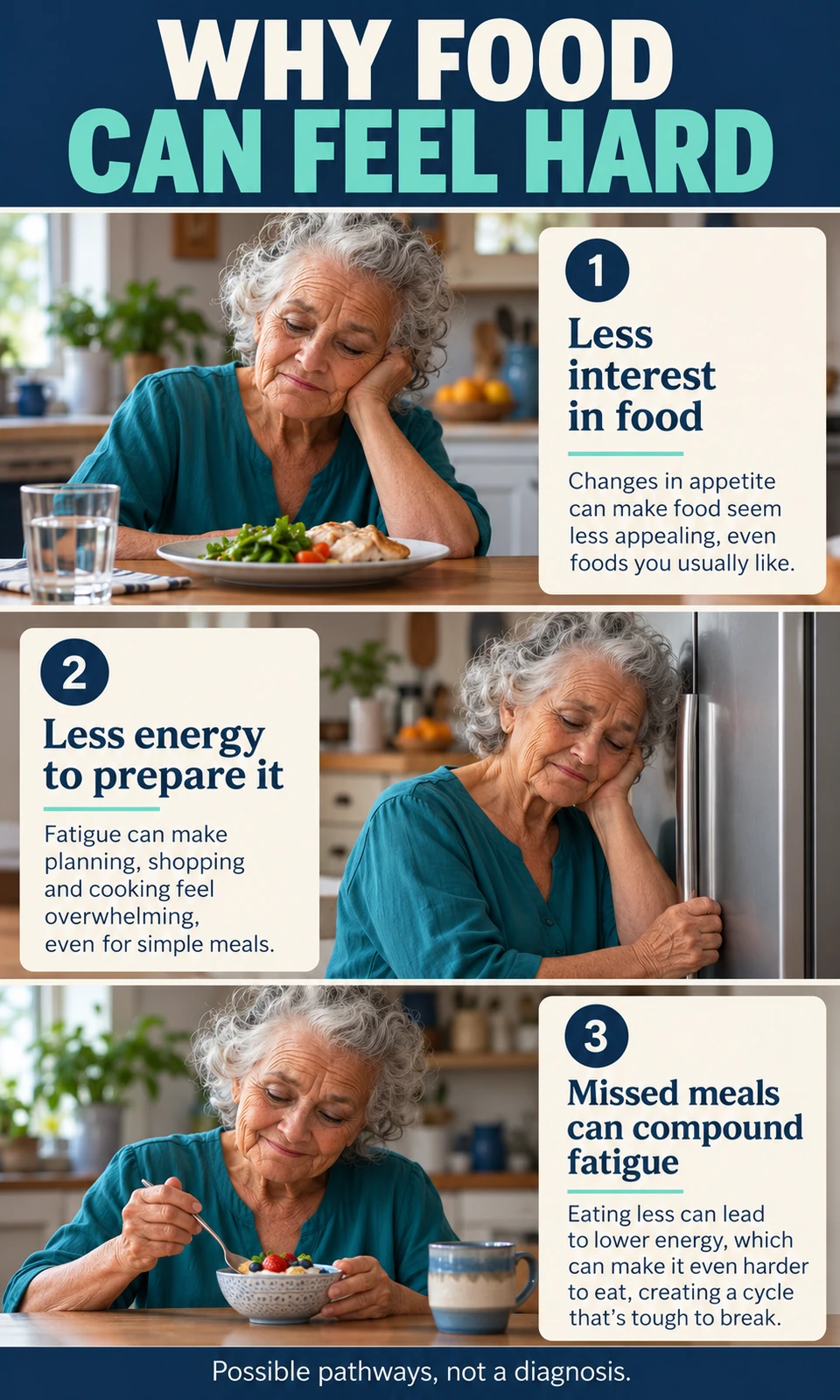
The useful distinction is between appetite and the ability to eat. “Nothing sounds appealing” is different from “I am hungry but cannot face cooking,” and both differ from “I start eating but feel sick or full.” Use those ordinary descriptions when asking for help; they point to different questions without assigning yourself a diagnosis.
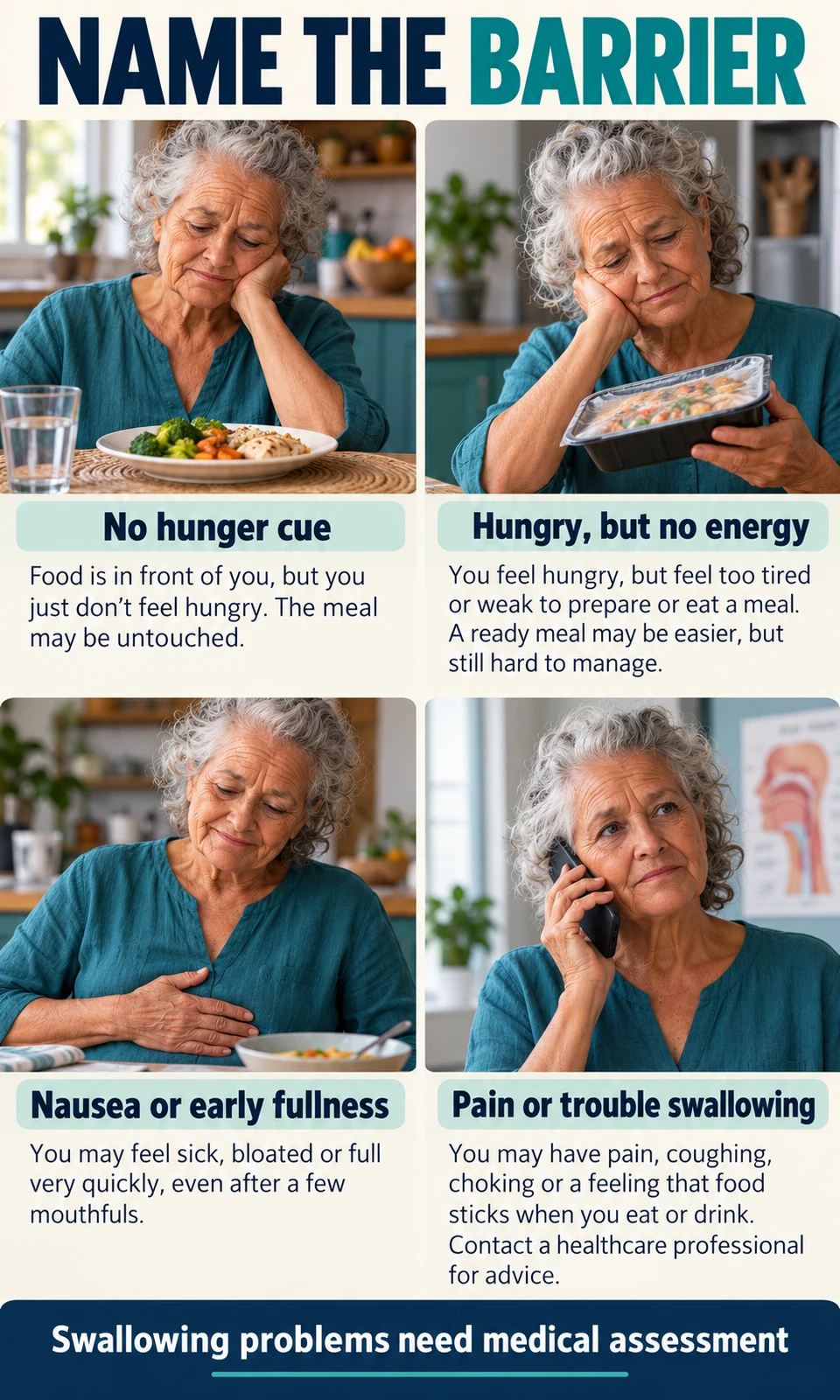
The wider depression symptoms guide explains how eating changes can sit alongside changes in sleep, interest, concentration, and mood. A pattern can inform a conversation, but it does not prove which condition caused it. The immediate takeaway is to name the barrier accurately enough to choose support.
Could something besides depression be causing the appetite loss?
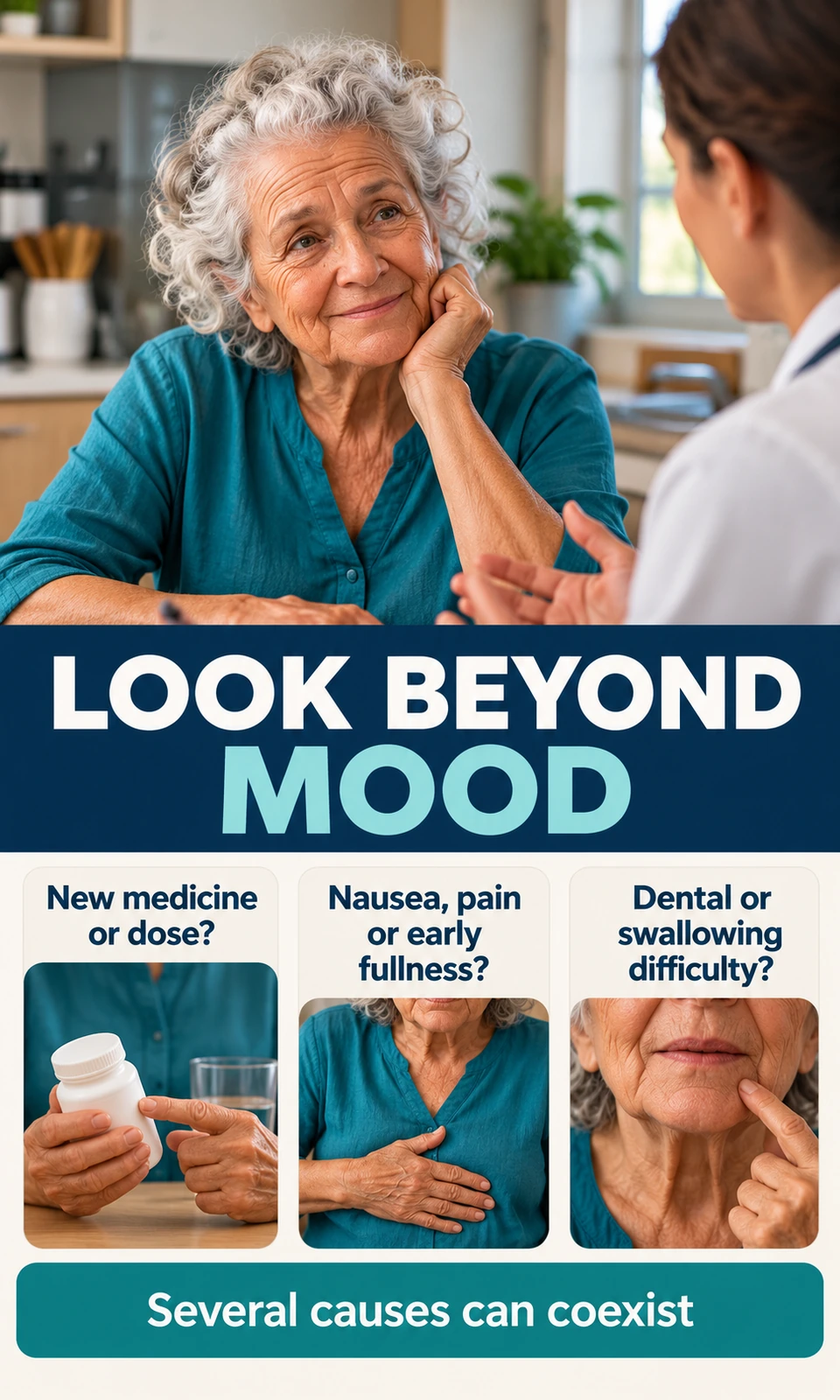
Yes: medicines, illness, digestive symptoms, and problems with chewing or swallowing can interfere with eating. Depression can exist alongside those difficulties, so having a diagnosis should not close the investigation. Medical guidance on decreased appetite treats it as a symptom with several possible causes.
A medicine review is especially useful when the change followed a new prescription or dose adjustment. Bring the actual medicine names, including supplements and nonprescription products, instead of guessing which one is responsible. Do not stop or change a prescription to test the theory; a prescriber or pharmacist can review timing and alternatives safely.
| What you notice | What to tell the clinician | Why it matters |
|---|---|---|
| Less desire to eat | Whether favorite foods also seem unappealing and how mood has changed | Interest and appetite may change together, but other causes remain possible. |
| Full after a few bites | When fullness starts and whether it is recurring | Early fullness is a physical eating barrier worth assessing. |
| Nausea or pain | Where it occurs and whether eating triggers it | The symptom may need its own investigation. |
| Food sticking, coughing or choking | Whether it happens with food, fluids, or both | Swallowing problems need prompt assessment; active choking is an emergency. |
Loss of appetite is also different from deliberately restricting food, fearing weight gain, or avoiding eating because of distress about body shape. Tell a healthcare professional if any of those are present, even if you do not look underweight. The appropriate support depends on what is preventing nourishment, not on appearance alone.
If anxiety is prominent around meals, the anxiety appetite loss guide explains how to describe timing and physical sensations before a visit. Those observations help explain what happens without proving that anxiety caused it. Keep the focus on the symptom and its effect on intake while a clinician considers the possible causes.
What can you do today when eating feels too difficult?
Choose one small food task that removes the main obstacle, rather than trying to redesign your whole diet. A manageable portion, a familiar routine, or help obtaining food can be a useful starting point when you can swallow safely and have no urgent warning signs. The explanation of why depression makes simple tasks feel hard offers broader context for preparation barriers. These examples support daily functioning; they do not establish that your intake is adequate or treat depression on their own.
Build one manageable small meal
When a full plate feels overwhelming, start with something familiar and add nourishment without creating a cooking project. Food-first dietetic advice supports small eating opportunities and adding energy or protein when appetite is poor. The sequence below is an editorial adaptation, not a prescribed meal plan.
- Choose a familiar food. Take out something you can manage now, such as toast and yogurt. Use ready-to-eat food if preparation is the barrier.
- Add easy protein. For example, spread peanut butter on the toast if it is safe for your allergies and care needs. Yogurt already contributes protein; this is an example combination, not a compulsory list.
- Serve a small portion. Put the toast, yogurt, and a few banana slices on a plate. Begin with what feels manageable; you can return for more.
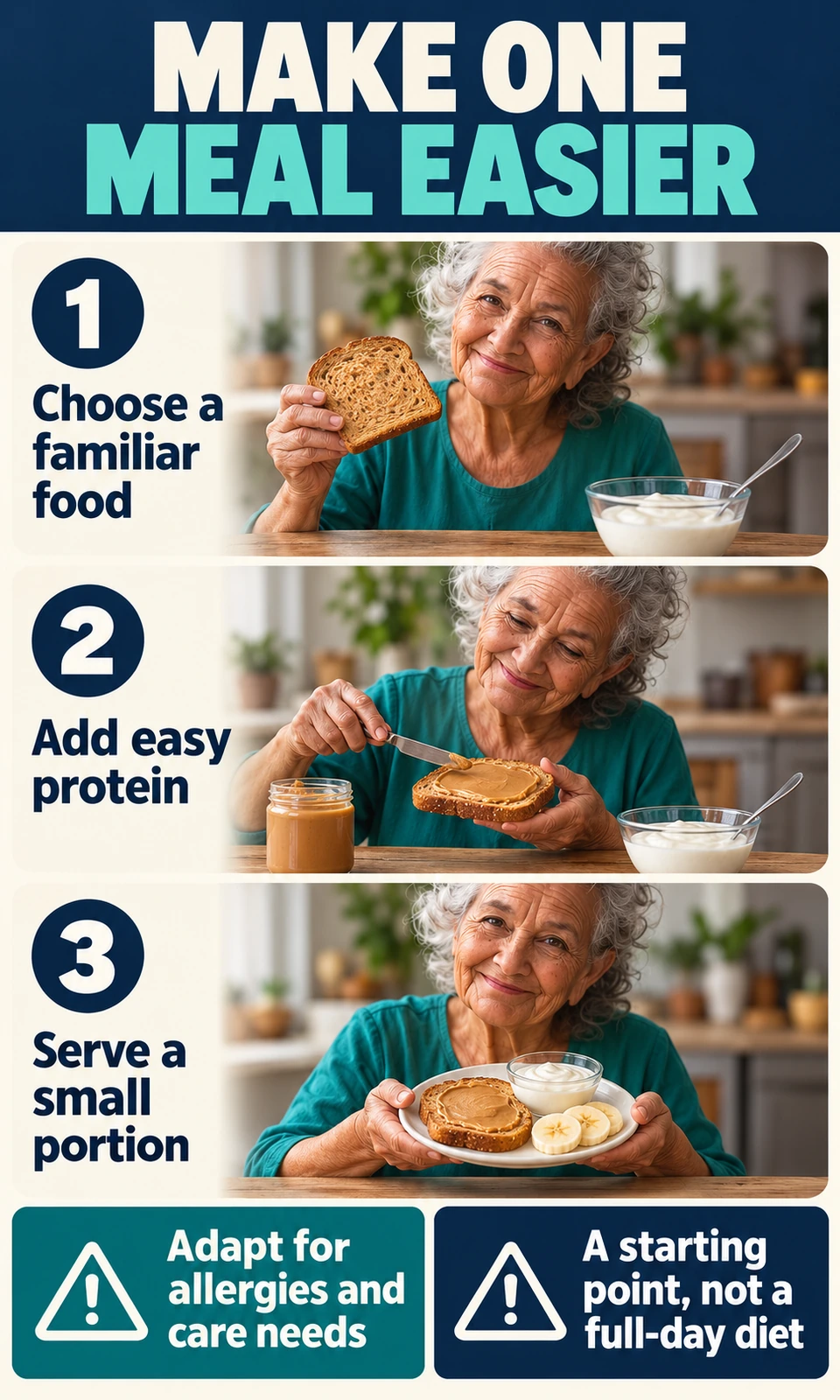
Illustrative example: someone opens the fridge, takes out yogurt, and makes toast with peanut butter instead of abandoning lunch because cooking feels impossible. The easier version is simply opening the yogurt and sitting down with it. Completion means making that eating opportunity possible, not finishing a prescribed amount; if intake stays poor, the next step is professional support rather than calling the tiny portion sufficient.
Use a cue instead of waiting for strong hunger
A weak hunger cue can make waiting unhelpful, particularly when the day has lost its usual structure. Regular eating opportunities can reduce reliance on motivation, although a reminder cannot solve nausea or lack of access to food. Dietetic advice for a poor appetite supports smaller, more frequent intake; the reminder method is a practical adaptation.
- Pick an existing routine. Choose an event you already notice, such as your morning drink or returning home.
- Set one gentle reminder. Label it “Meal break” and use it as a prompt to try a small meal or snack, rather than waiting for strong hunger.
- Keep an easy backup. Store a suitable ready-to-eat option safely, with refrigerated foods kept chilled. Use that option when preparation feels too hard.
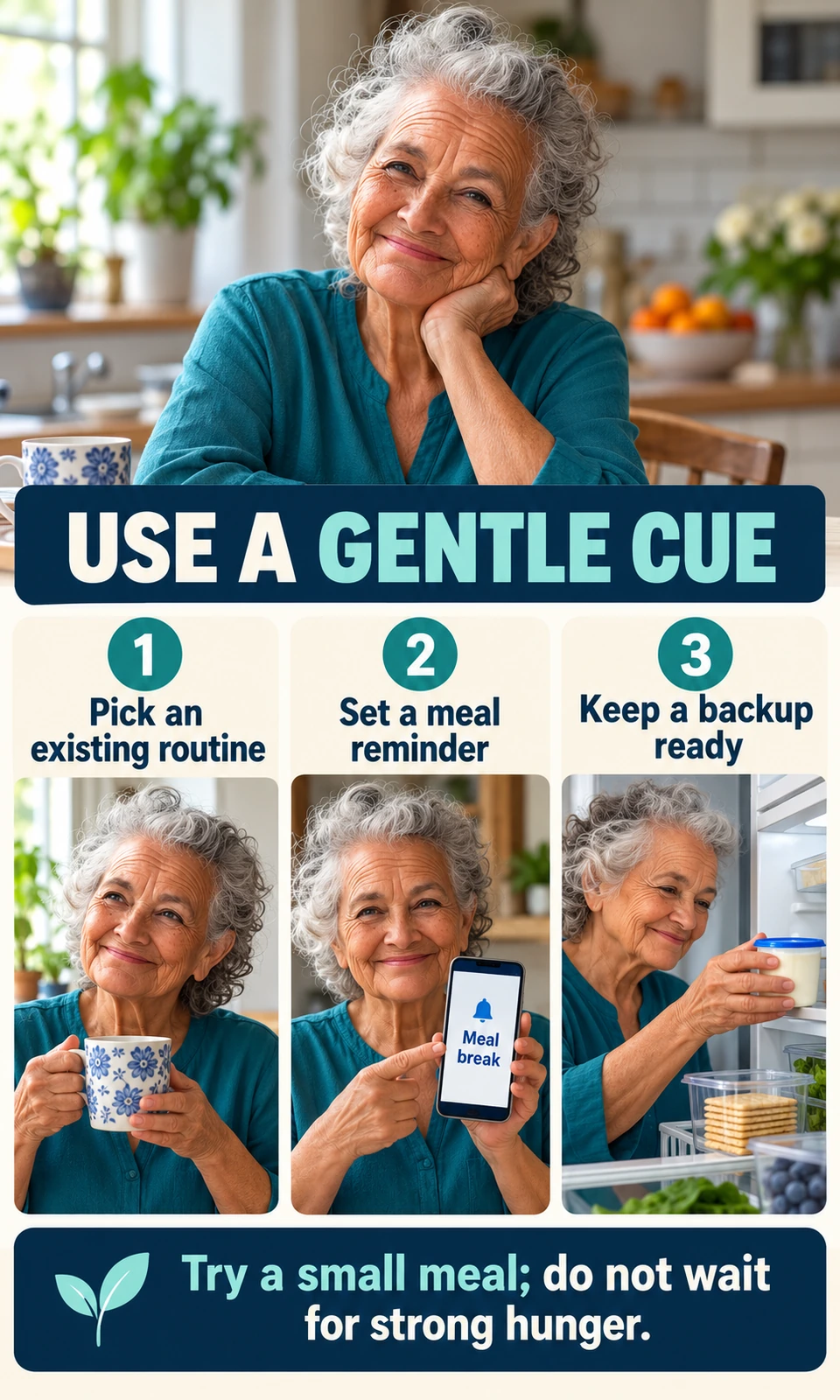
For example, the morning drink becomes a cue to take yogurt from the fridge and sit down with food. If setting an alarm feels like another task, put a simple reminder where you normally prepare the drink. Completing this step means trying the planned opportunity; if reminders repeatedly go unanswered because you cannot eat, ask for help instead of adding more alarms.
Make fluids easier to manage
Keep a drink within reach and take small sips if nausea makes drinking difficult. If a large drink makes you too full to eat, try taking more of your fluids between meals instead. Water supports hydration, while milk or a suitable nourishing alternative may also contribute nutrition; they serve different jobs and neither guarantees adequate daily intake.
- Make the drink accessible. Sit upright with a glass or cup nearby, choosing a drink you tolerate.
- Start with small sips if nauseated. Increase gradually as tolerated. Do not force fluids through pain or swallowing difficulty.
- Adjust timing if fullness is the barrier. Try a nourishing drink between meals, while continuing needed hydration and following any prescribed fluid restriction.
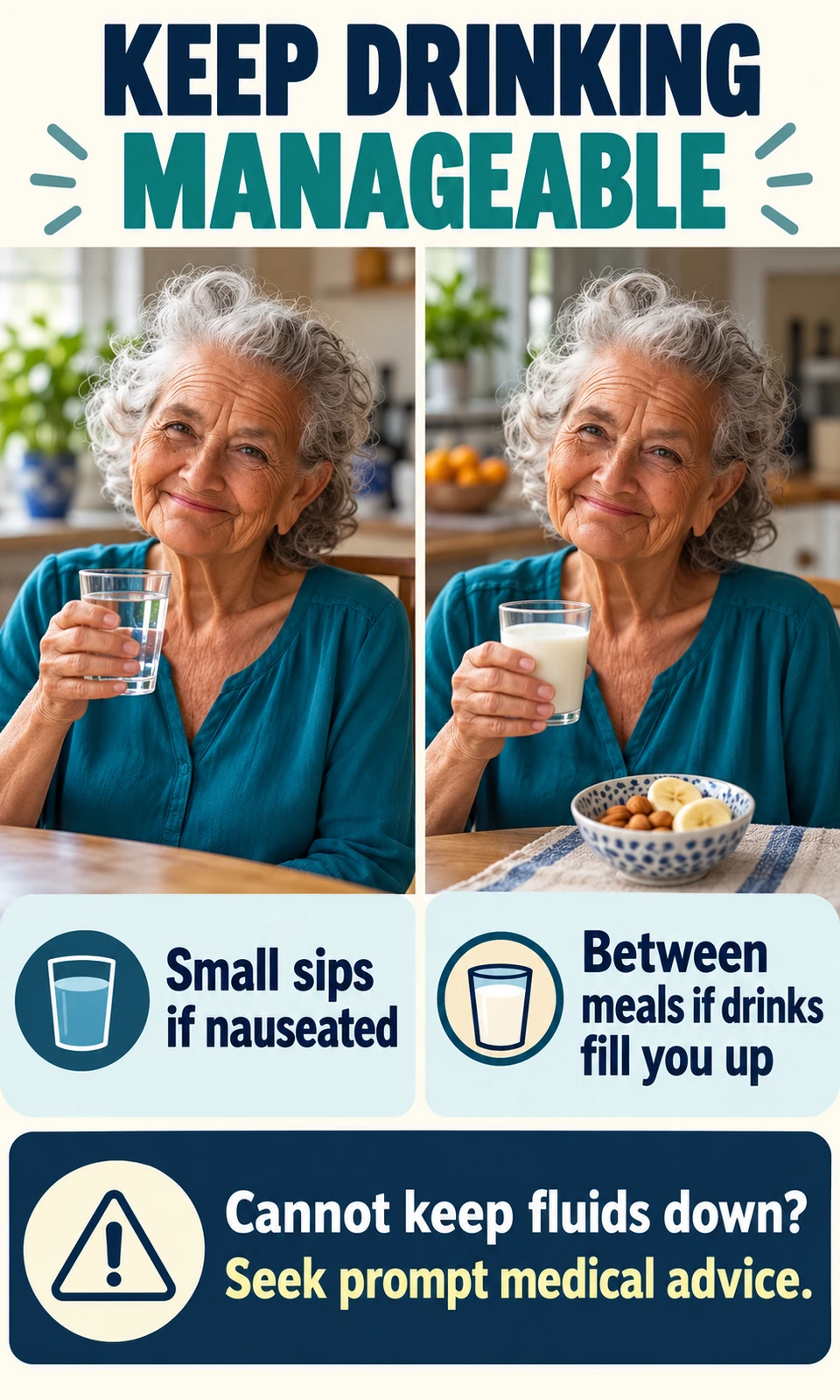
An illustrative lower-effort start is taking a few comfortable sips from a cup already beside you. Completion is making drinking easier to begin, not reaching a universal volume target; kidney or heart conditions and other care needs can change the advice. If fluids will not stay down, or you develop signs of dehydration, seek care instead of continuing the experiment.
Ask for one concrete kind of help
Food support is often more useful when the request names a task someone can actually do. Help with shopping, preparing food, or getting meals delivered can remove a practical barrier, as reflected in nutrition care and support options. Company can make the task less isolating, but it should not become pressure to eat.
- Choose one task. Decide whether you need groceries, a prepared meal, or someone to sit with you.
- Make a specific request. For example: “Could you bring soup and sit with me?” Adapt the food to your needs.
- Agree a simple time. Choose when the help is useful and explain that encouragement helps more than comments about portions or weight.
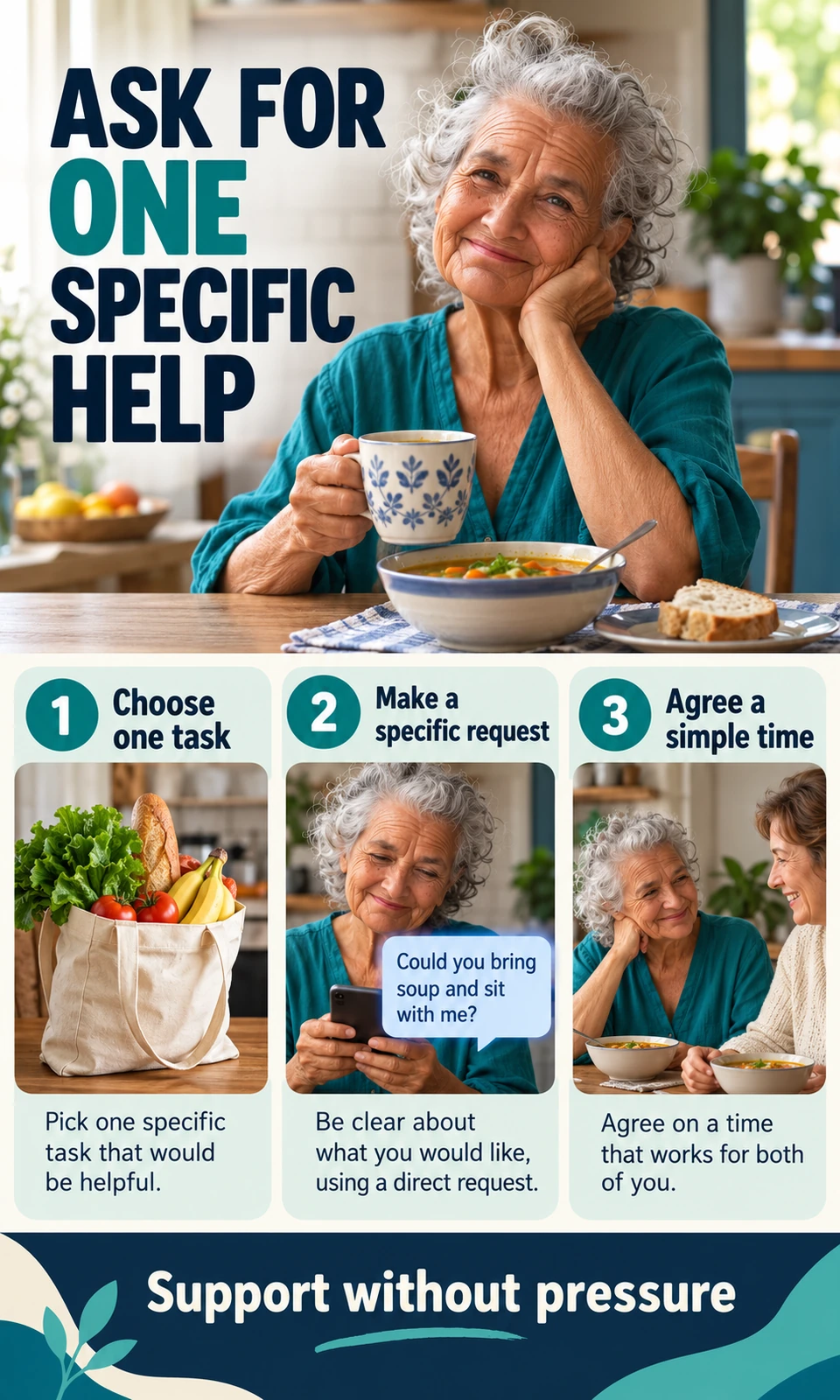
If a message feels too demanding, the easier version is asking a trusted person to choose between two tasks: bringing food or arranging delivery. Completion is agreeing on practical help, not producing an immediate improvement in appetite. If nobody is available, ask your healthcare team about local food access or home support; a lack of support is a care need, not a personal failure.
When does appetite loss need medical help?
Seek assessment when appetite loss persists, worsens, causes unplanned weight loss, or makes it difficult to meet everyday needs. You do not need to wait until you are visibly underweight. If low mood or loss of interest is also persistent or disabling, discuss both the eating difficulty and mental health with a healthcare professional.
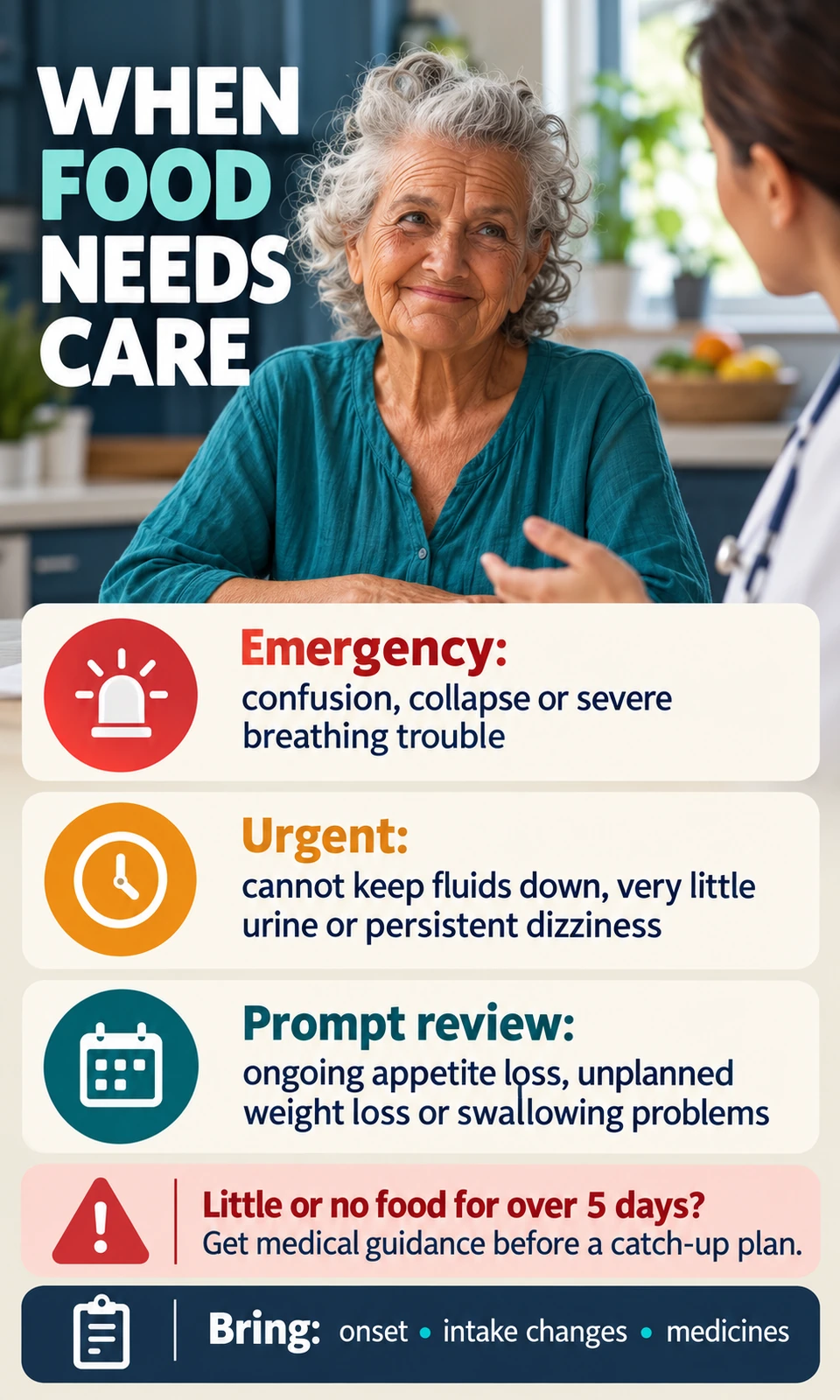
- Emergency help now: confusion, collapse, severe breathing difficulty, active choking, or immediate danger of self-harm. Use local emergency services.
- Urgent medical advice: inability to keep fluids down, very little urine, or dizziness on standing that does not settle. Dehydration warning signs should not be put down to mood.
- Prompt assessment: ongoing poor intake, unexplained weight loss, recurring early fullness or pain, or swallowing problems. Inability to swallow fluids needs urgent help.
- Prolonged very low intake: little or no food for more than five days needs medical guidance before a catch-up diet. Nutrition-support guidance recognizes the need for cautious reintroduction and monitoring.
For the appointment, bring a short description of when the change began, what you can currently eat and drink, and any medicine changes. Add weight change if known and any pain, nausea, fullness, or swallowing difficulty; exact calorie counting is unnecessary. An example is, “My appetite changed after a dose adjustment, and I am stopping after a few bites”; an easier version is asking someone to explain this with you.
The completed task is getting the problem communicated, not proving the cause in advance. The depression and not eating guide provides a separate appointment-preparation approach when that would help. Treatment may involve addressing a physical illness, reviewing medication, mental-health care, nutrition support, or a combination. There is no single recovery deadline, and an improvement in appetite does not by itself show that depression has resolved.
Frequently asked questions
Can appetite loss happen before I recognize low mood?
Yes, an eating change may be noticed before someone identifies a broader change in mood or interest. That timing does not establish depression as its cause. Tell a clinician about the sequence and other symptoms rather than using appetite alone as a test.
Should I use an appetite stimulant or supplement?
Do not select a medicine or high-dose supplement from an online list to treat unexplained appetite loss. The cause and your medical circumstances determine what is appropriate. Nutrition supplements may be recommended when needed, with advice from a healthcare professional.
Does loss of appetite mean anorexia nervosa?
No. Reduced appetite is a symptom, while anorexia nervosa is an eating disorder with a different clinical assessment. Deliberate restriction, fear of weight gain, or distress around eating deserves professional attention even when you are unsure which label applies.
How long until my appetite comes back?
There is no reliable timetable that applies to everyone. The course depends on the cause, treatment, and nutritional situation, so keep the care team informed if intake remains poor. Do not wait for mood to improve before reporting difficulty eating or drinking.
Summary
Depression can change appetite, food enjoyment, and the energy available for eating, but it should not be assumed to explain every new symptom. Start with one suitable small meal, an easier drinking setup, or a concrete request for help. Persistent poor intake, weight loss, physical eating problems, and dehydration need assessment alongside mental-health support.