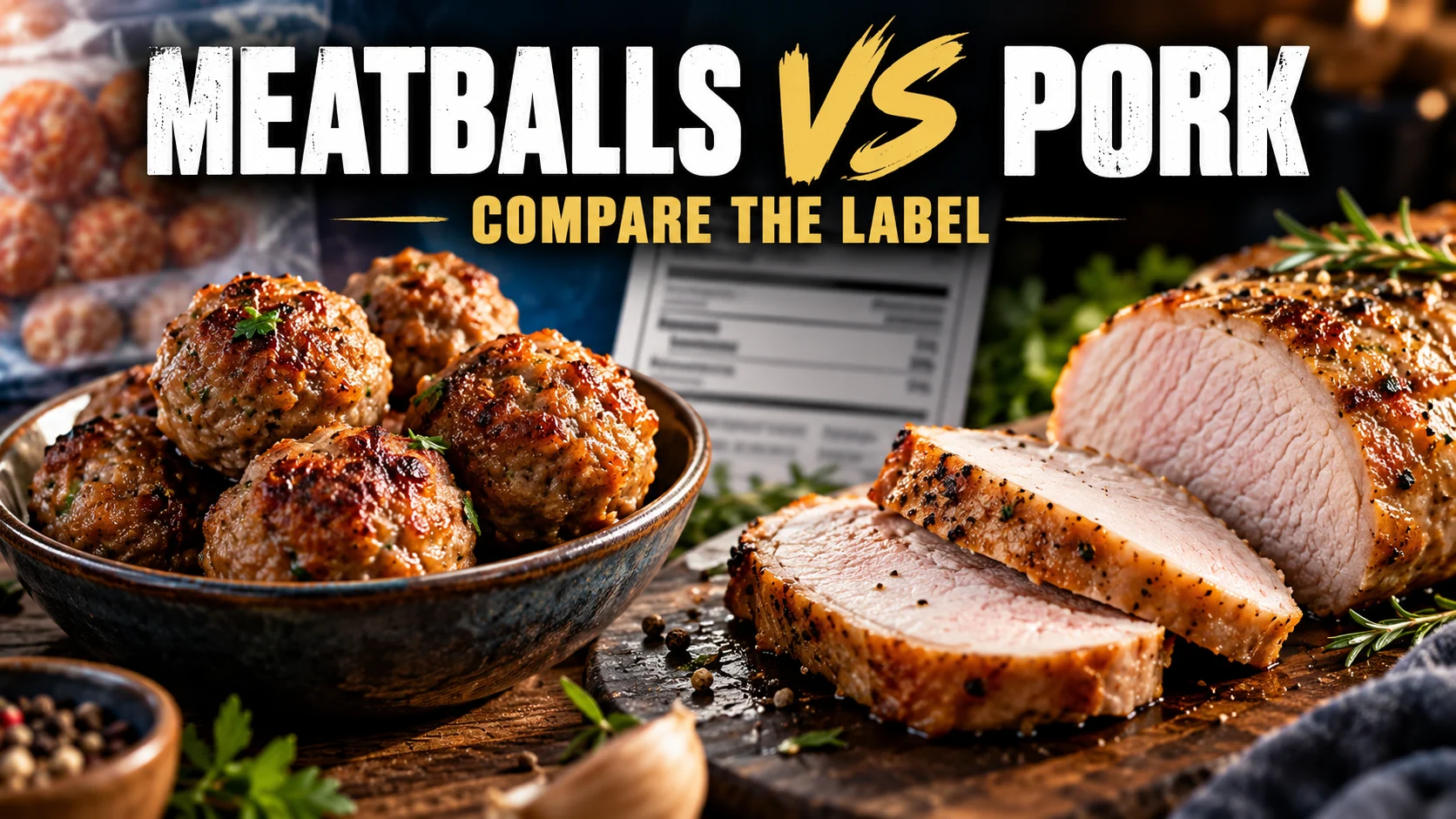

Frozen meatballs are not automatically better than pork: a meatball is a prepared food that may itself contain pork, while “pork” can mean a lean loin cut, a fatty cut, or ground meat. If you want an everyday choice with fewer added ingredients and control over seasoning, lean unseasoned pork often gives you more control; a well-chosen frozen meatball can save time. Compare equal edible portions and check the specific package before deciding.
The useful comparison is frozen meatballs versus a named cut
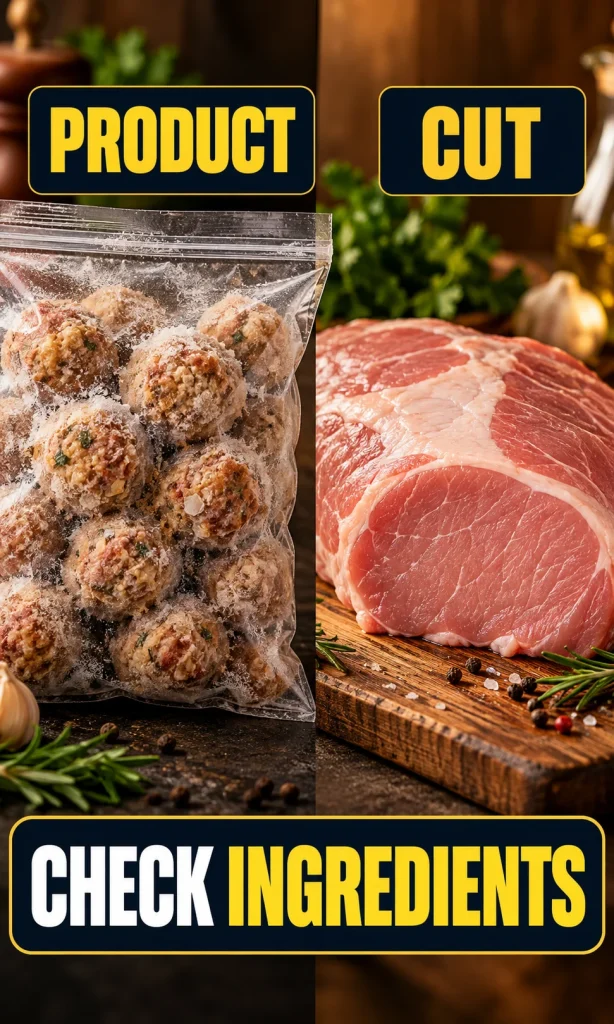
The original question mixes two categories. A bag of frozen meatballs may contain pork, beef, poultry, binders, seasonings and salt; a fresh pork loin is an unseasoned cut until you prepare it. Freezing alone does not establish whether the meatballs are healthier, safer or more nutritious. The recipe and the portion you eat are what change the result.
A useful shopping comparison begins with one particular meatball package and one particular pork cut. Check whether the label describes meatballs as raw or fully cooked. Then compare protein, sodium and saturated fat for a similar amount of food, including any sauce you plan to serve.
What changes the nutrition result?
| Check | Frozen meatballs | Plain pork cut |
|---|---|---|
| Protein | Depends on meat content, binders and portion | Depends on cut, trimming and cooked portion |
| Sodium | Often added in seasoning; read the label | You control added salt when cooking unseasoned pork |
| Saturated fat | Depends on meat blend and added ingredients | Varies substantially between lean and fatty cuts |
| Time | Convenient; follow package directions | Requires preparation and a thermometer |
| Ingredients | Read ingredient list and allergen information | Plain cut has a simpler starting point |
Do not assume all processed foods have the same nutrition profile or that a high protein number makes a product better by itself. A meatball with a generous serving size may show more protein simply because the serving is larger. The companion article on reasons to eat processed food explains why convenience can be a legitimate part of a practical diet.
Compare a fair portion, not two misleading label servings
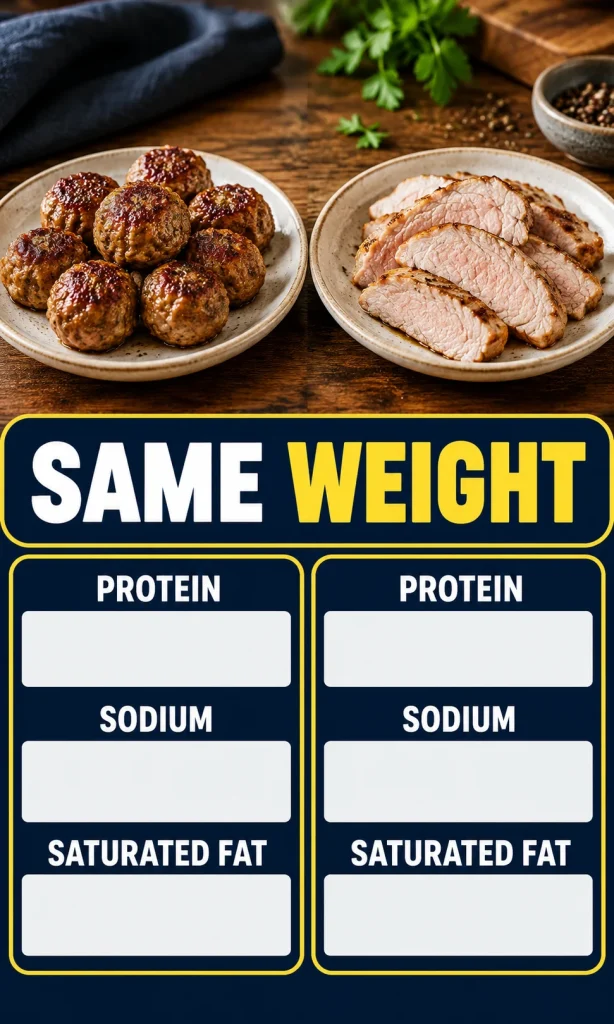
Choose a reference amount, such as 100 g, and convert both products from the nutrition panel’s stated serving weight. Divide each nutrient by the serving weight in grams, then multiply by 100. If you are comparing a raw pork label with a cooked meatball label, account for cooking weight changes before treating the two numbers as directly equivalent.
The companion guide to foods low in sodium can help if sodium is your main constraint. Sauces, cheese and bread can also change the meal more than a modest difference between two plain protein portions. To make the comparison meaningful, look at the whole plate and your usual frequency, not one isolated number.
Practical check: If the frozen package is convenient and its sodium and saturated fat fit your needs, use it with vegetables and a suitable side. If you want to control salt and ingredients closely, start with a lean plain pork cut or make and freeze your own meatballs. Neither choice is universally superior.
Cook each product according to what it actually is

A fresh whole cut of pork and raw ground pork do not share the same minimum cooking temperature. USDA guidance gives 145°F (63°C) plus a three-minute rest for whole cuts of pork, and 160°F (71°C) for raw ground pork. Meatballs containing ground poultry need 165°F (74°C); use a thermometer in the center rather than relying on color or a fixed oven time.
Fully cooked frozen meatballs should be handled and reheated according to their package directions. Do not treat a package marked raw as ready to eat, and do not assume the package photo reveals its cooking status. Separate raw meat from foods that are ready to serve, and refrigerate leftovers promptly.
Meatball & Pork Reality Check
Enter two real labels. Compare equal weights before choosing dinner.
Real label values · No invented ranking · Private in your browserUse grams from the same cooked or raw state for a fair comparison. Never use this comparison to decide whether raw meat is safely cooked.
Your label comparison
Enter both serving weights and at least one matching nutrient pair to see the comparison.
This is label arithmetic, not a health diagnosis. Ingredients, cooking weight, sauces and your dietary needs can change the decision.
When each choice makes sense
Pick a plain lean pork cut when the meal calls for slices, you have time to cook it, and controlling seasoning matters. Pick frozen meatballs when speed, repeatable portions and a prepared texture matter more, provided the label and ingredients suit you. If a bag has a less favorable label than another, compare alternatives within the meatball shelf before deciding that all meatballs are alike.
Frequently asked questions
Are frozen meatballs made of pork?
Some are, while others contain beef, poultry, mixed meats or meatless ingredients. Read the ingredient list; the word “meatball” does not identify its meat source. Check allergens and preparation status on that specific package too.
Does freezing make meatballs less nutritious than fresh pork?
Freezing alone does not settle the comparison. Meat blend, seasonings, portion and cooking all matter. Compare the nutrition label with the particular pork cut you would otherwise eat.
Can I use the same cooking temperature for pork loin and meatballs?
No. USDA recommends 145°F with a three-minute rest for a whole pork cut, 160°F for raw ground pork, and 165°F for ground poultry. Follow the product label and confirm the center with a thermometer.
Next step
Take one meatball package and one named pork cut, compare equivalent portions, and decide which fits the meal you actually plan to make. If the package lacks a clear serving weight or cooking status, choose another product with clearer information. The better choice is the one that meets your needs and can be prepared safely.
Sources: USDA FoodData Central; USDA FSIS food safety basics; USDA FSIS fresh pork guidance.