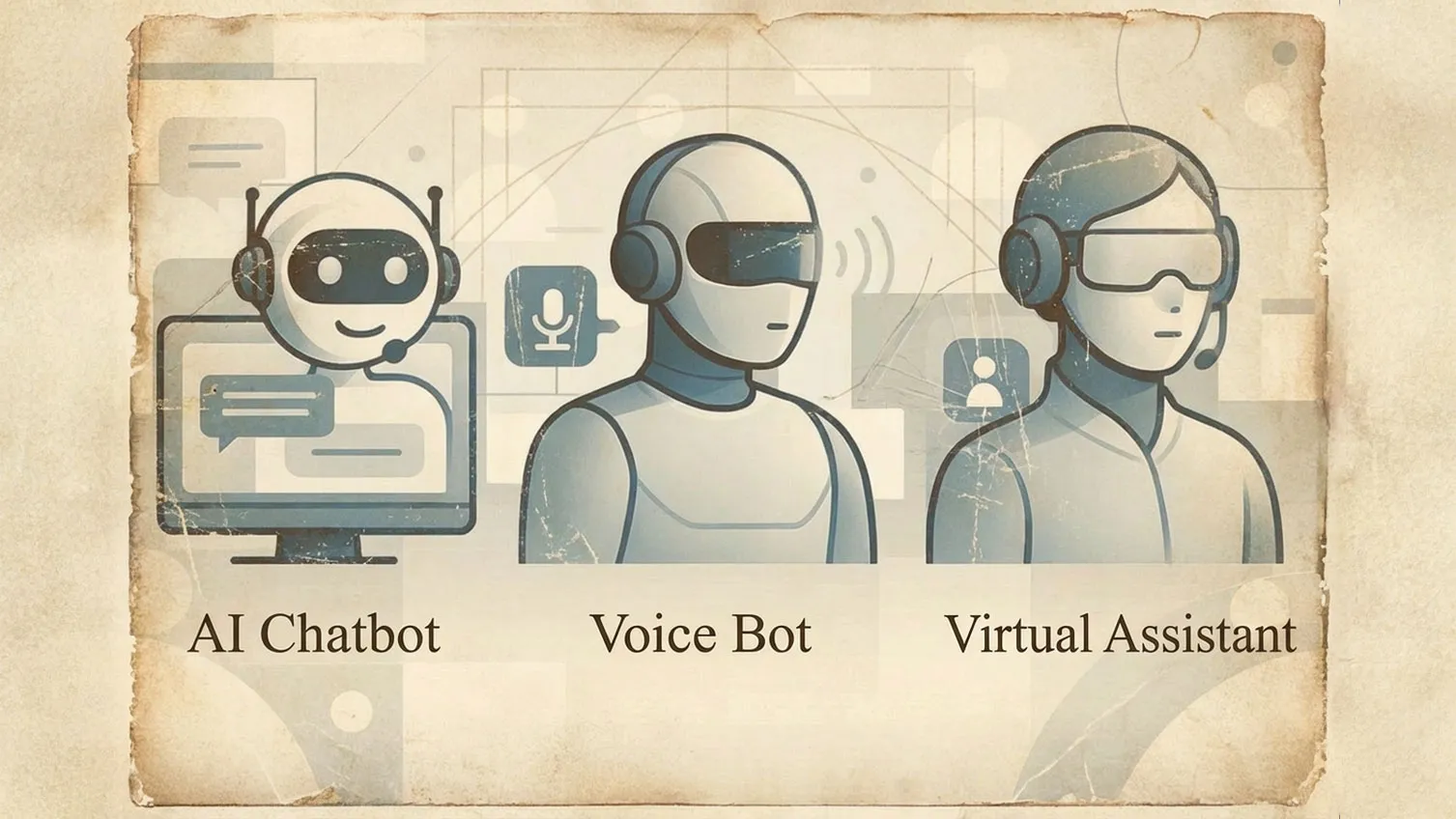

AI-powered customer service tools are now widely used across digital businesses. From website chat windows to automated phone systems, customers increasingly interact with machines before speaking to a human agent.
To understand how these tools fit into the broader ecosystem, it helps to start with our overview of AI basics.
However, many people use terms like AI chatbot, voice bot, and virtual assistant interchangeably – despite the fact that they serve very different purposes.
This confusion leads to poor implementation decisions, unrealistic expectations, and frustrated customers.
Chatbots, voice bots, and virtual assistants represent only a subset of modern AI use cases that demonstrate how artificial intelligence is applied in everyday systems.
In this guide, we clearly explain the real differences between AI chatbots, voice bots, and virtual assistants, using plain language and practical examples. By the end, you will understand which tool fits which role – and why no single solution works for every business.
What Are AI Chatbots?
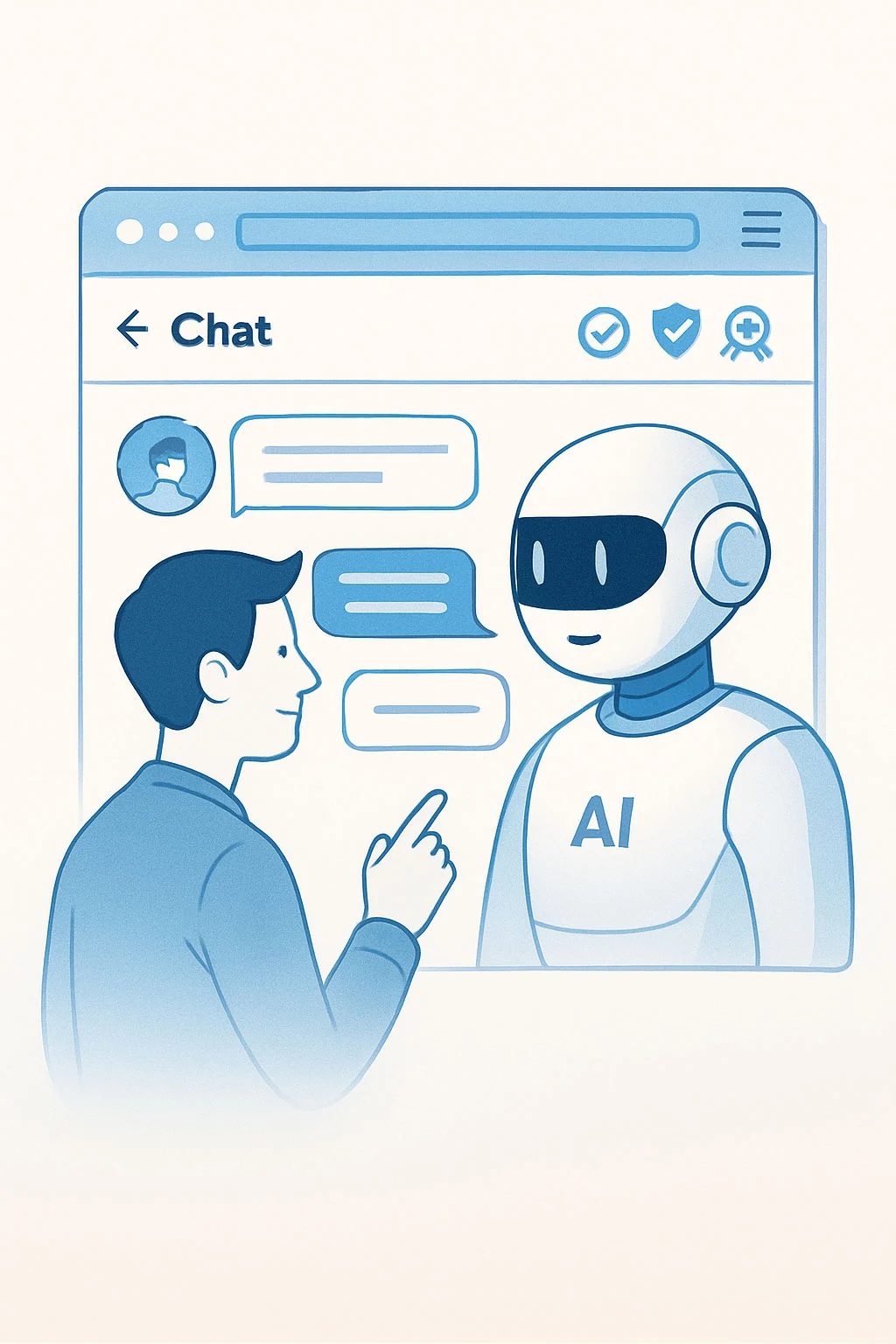
AI chatbots are text-based automated systems designed to communicate with users through written conversation.
They commonly appear in:
- Website live chat widgets
- Messaging apps such as WhatsApp or Messenger
- Ecommerce support chat windows
- In-app help centers
AI chatbots respond to typed questions and provide instant answers, often without human involvement.
How AI chatbots work (simple view)
AI chatbots rely on:
- Natural language processing (NLP)
- Pre-trained language models
- Knowledge bases (FAQs, help articles)
- Intent detection
When a user types a question, the chatbot identifies intent and retrieves the most relevant response.
Common Use Cases for AI Chatbots
AI chatbots are most effective for:
- Answering frequently asked questions
- Order status checks
- Shipping and return policies
- Product information
- Account-related inquiries
These systems are designed to reduce response time and free human agents from repetitive tasks.
These systems are designed to reduce friction before a customer reaches checkout.
This directly supports conversion-focused strategies such as AI-driven ecommerce optimization.
Strengths of AI Chatbots
- Instant responses
- Scalable support (handle thousands of chats)
- Lower operational cost
- 24/7 availability
- Consistent answers
For many businesses, chatbots act as the first layer of customer support.
What Are Voice Bots?
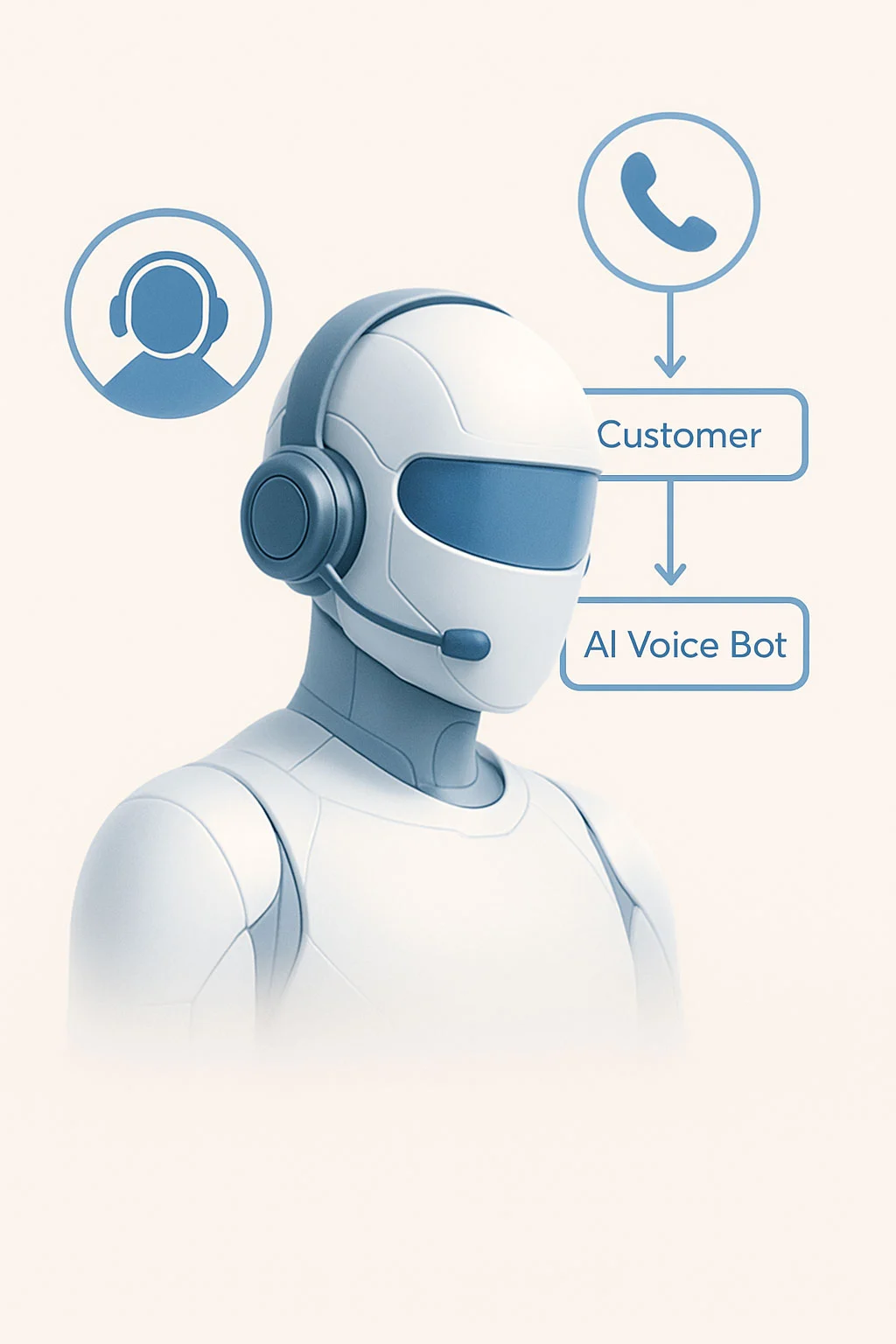
Voice bots are AI-powered systems designed to communicate with customers through spoken conversation, usually over phone calls or voice-enabled devices.
Unlike chatbots, which rely on text, voice bots:
- Listen to spoken input
- Convert speech to text
- Analyze intent
- Generate spoken responses
They are commonly used in:
- Call centers
- Customer support hotlines
- Appointment booking systems
- Banking and telecom services
Voice bots aim to automate voice-based customer service, where typing is not practical or expected.
How Voice Bots Work (Simple Explanation)
Voice bots rely on several AI components working together:
- Speech Recognition
Converts spoken words into text. - Natural Language Understanding (NLU)
Interprets the meaning and intent behind the words. - Dialogue Management
Decides how the system should respond. - Text-to-Speech (TTS)
Converts the response back into natural-sounding speech.
To the customer, this process feels like talking to an automated agent, even though multiple AI layers are operating behind the scenes.
Common Use Cases for Voice Bots
Voice bots are particularly effective for:
- Call routing (“Press 1 for billing…”)
- Balance inquiries
- Appointment scheduling
- Simple troubleshooting
- Identity verification
- High-volume inbound calls
In industries where phone calls remain the primary support channel, voice bots reduce wait times and operational costs significantly.
Strengths of Voice Bots
Voice bots offer several advantages over traditional call centers:
- Handle large call volumes simultaneously
- Reduce hold times
- Operate 24/7
- Lower staffing costs
- Provide consistent responses
For repetitive, structured conversations, voice bots outperform human agents in speed and availability.
Limitations of Voice Bots
Despite their efficiency, automated systems still have clear boundaries.
Understanding the limitations of artificial intelligence is essential before fully relying on automated customer support.
Common challenges include:
- Difficulty understanding accents or dialects
- Misinterpreting complex sentences
- Struggling with emotional or frustrated callers
- Poor performance in noisy environments
- Limited flexibility outside predefined flows
When conversations become emotional or ambiguous, voice bots often need to transfer the call to a human agent.
Voice Bots vs Human Call Centers
Voice bots are not meant to fully replace human agents.
Instead, they act as filters and accelerators.
Where voice bots perform well:
- High-volume, repetitive requests
- Simple decision trees
- After-hours support
Where humans are still essential:
- Complaints and disputes
- Emotional conversations
- Complex problem-solving
- Sensitive personal issues
The most effective customer service models combine voice bots for efficiency and humans for empathy.
What Are Virtual Assistants?
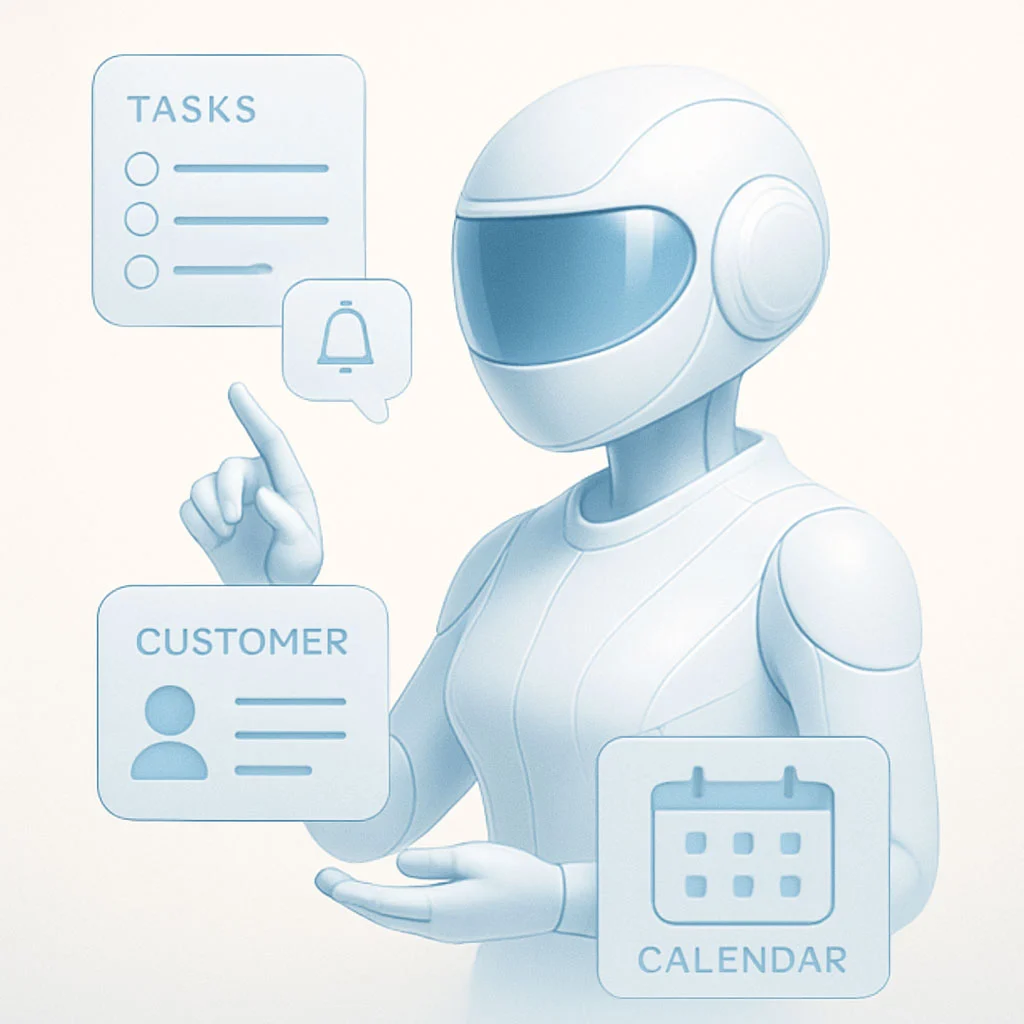
Virtual assistants are the most advanced category among the three.
Unlike chatbots or voice bots, virtual assistants are designed to:
- Perform multiple tasks
- Access different systems
- Remember context across interactions
- Act proactively, not just reactively
Well-known examples include:
- Siri
- Alexa
- Google Assistant
In business environments, virtual assistants are often customized to handle internal workflows and customer-facing tasks.
How Virtual Assistants Differ From Chatbots and Voice Bots
Virtual assistants are not limited to a single channel.
They can:
- Respond via text or voice
- Trigger actions (send emails, update records)
- Integrate with CRM systems
- Manage schedules and reminders
- Retrieve and analyze data
Instead of answering questions only, virtual assistants execute tasks.
Common Use Cases for Virtual Assistants
Virtual assistants are used for:
- Managing customer accounts
- Scheduling follow-ups
- Coordinating service requests
- Accessing order history
- Assisting employees internally
- Supporting omnichannel customer journeys
They are often embedded deeply into business systems.
Strengths of Virtual Assistants
- Multi-task capability
- Context awareness
- System integration
- Cross-channel communication
- Higher perceived intelligence
Virtual assistants represent a shift from support automation to workflow automation.
Key Differences Between AI Chatbots, Voice Bots, and Virtual Assistants
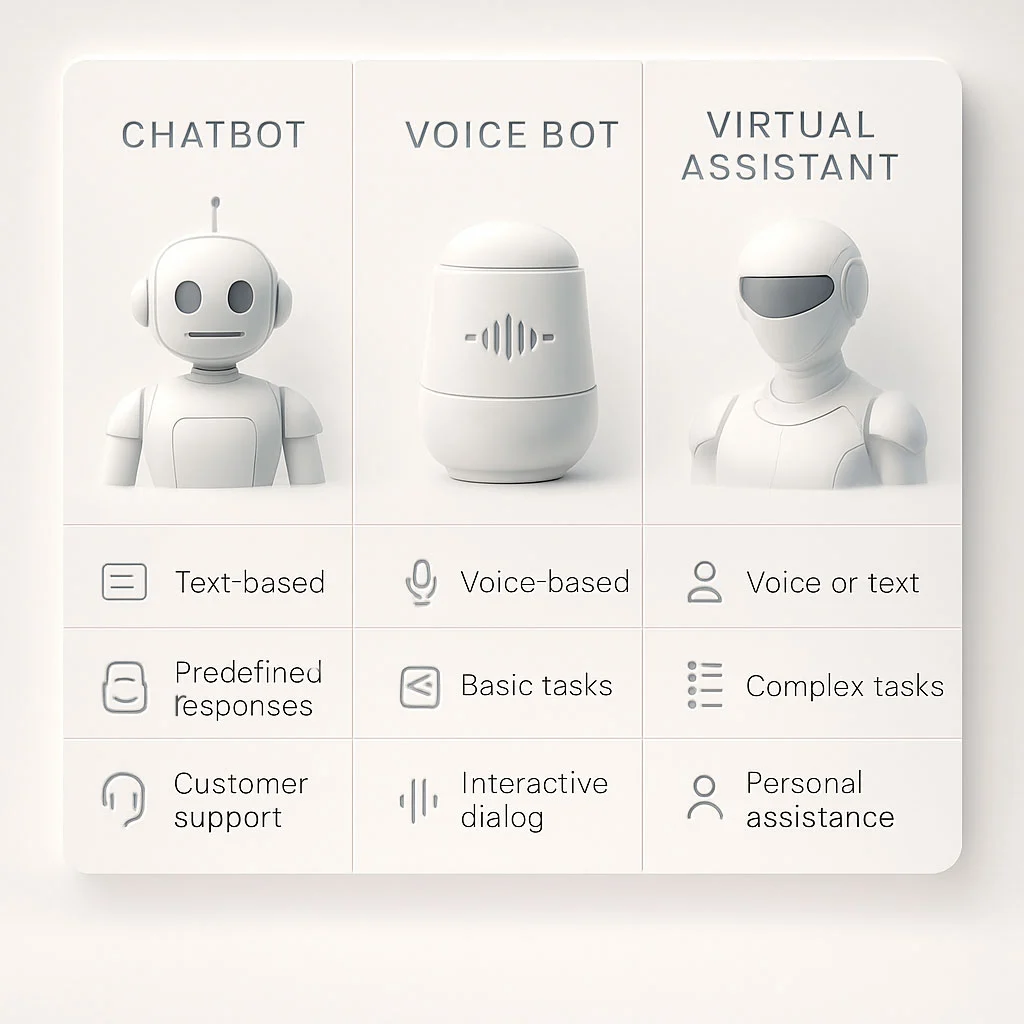
Although these tools are often grouped together, their roles in customer service are fundamentally different.
Below is a conceptual comparison, explained in plain language.
AI Chatbots
- Primary channel: text
- Best for: FAQs, simple inquiries, product info
- Strength: speed and scalability
- Limitation: limited context and emotional understanding
Chatbots act as first-line responders in digital environments.
Voice Bots
- Primary channel: voice
- Best for: call routing, repetitive phone tasks
- Strength: handling large call volumes
- Limitation: struggles with complex or emotional conversations
Voice bots act as filters before human call agents step in.
Virtual Assistants
- Primary channel: text and voice
- Best for: task execution, system integration
- Strength: context awareness and multi-step workflows
- Limitation: higher setup complexity
Virtual assistants act as coordinators, not just responders.
When Should Businesses Use Each Tool?
Choosing the right AI tool depends on:
- Customer channel preference
- Conversation complexity
- Business scale
- Data availability
Use AI Chatbots when:
- Customers type more than they call
- Questions are repetitive
- Speed matters more than personalization
- You need low-cost automation
Use Voice Bots when:
- Phone calls dominate support volume
- Call wait times are long
- Requests follow predictable flows
- You want to reduce call center load
Use Virtual Assistants when:
- Tasks involve multiple systems
- Context must persist across interactions
- Automation extends beyond support
- You want proactive customer engagement
Risks of Over-Automating Customer Service
Automation improves efficiency – but too much automation can damage trust.
Common risks include:
- Customers feeling ignored or misunderstood
- Escalation paths becoming unclear
- Errors going unnoticed
- Reduced accountability
Human oversight remains critical in complex or sensitive customer interactions.
As automation expands, demand for AI-related jobs and skills continues to grow in customer experience roles.
Best Practices for Combining AI and Human Support
The most effective customer service systems are hybrid models.
Best practices:
- Use AI for speed, humans for empathy
- Clearly signal when a user is interacting with AI
- Provide easy escalation to human agents
- Monitor AI performance continuously
- Train staff to work alongside AI tools
AI should support humans, not replace them entirely.
The Future of AI in Customer Service
AI customer service will continue evolving.
Expected trends:
- More natural conversational flow
- Better emotion detection
- Deeper CRM integration
- AI agents managing full customer journeys
- Greater regulatory oversight
As these systems mature, businesses must balance efficiency with trust.
Final Summary
AI chatbots, voice bots, and virtual assistants serve distinct roles in modern customer service.
- Chatbots handle text-based interactions
- Voice bots manage phone-based automation
- Virtual assistants coordinate tasks and workflows
Understanding these differences helps businesses:
- Choose the right tool
- Avoid poor implementation
- Improve customer satisfaction
- Scale support responsibly
Automation improves speed, but trust in customer service is still built on clarity, empathy, and accountability.
Conclusion
AI is transforming customer service – but not all AI tools are the same.
Confusing chatbots, voice bots, and virtual assistants leads to inefficient systems and frustrated customers.
When implemented thoughtfully, each tool enhances customer experience in its own way.
The key is not choosing one solution, but designing a balanced system where AI and humans work together.
FAQ
What is the difference between AI chatbots and voice bots?
AI chatbots manage text-based interactions through websites, apps, or messaging platforms, while voice bots handle spoken conversations through phone systems or voice-enabled devices.
Are virtual assistants the same as chatbots?
No. Virtual assistants typically perform broader task automation such as scheduling, reminders, data retrieval, and workflow management, whereas chatbots are usually focused on conversational interactions.
Which AI bot is best for customer service?
The best option depends on the communication channel. Chatbots are well suited for website and messaging support, while voice bots are more appropriate for call centers and phone-based customer interactions.
Can small businesses use AI customer service bots?
Yes. Many platforms offer ready-to-deploy AI customer service solutions designed for small and medium-sized businesses, often requiring minimal technical setup.
What are the risks of AI customer service automation?
Risks include misunderstanding user intent, limited emotional nuance, incorrect automated responses, and over-automation without accessible human escalation paths.