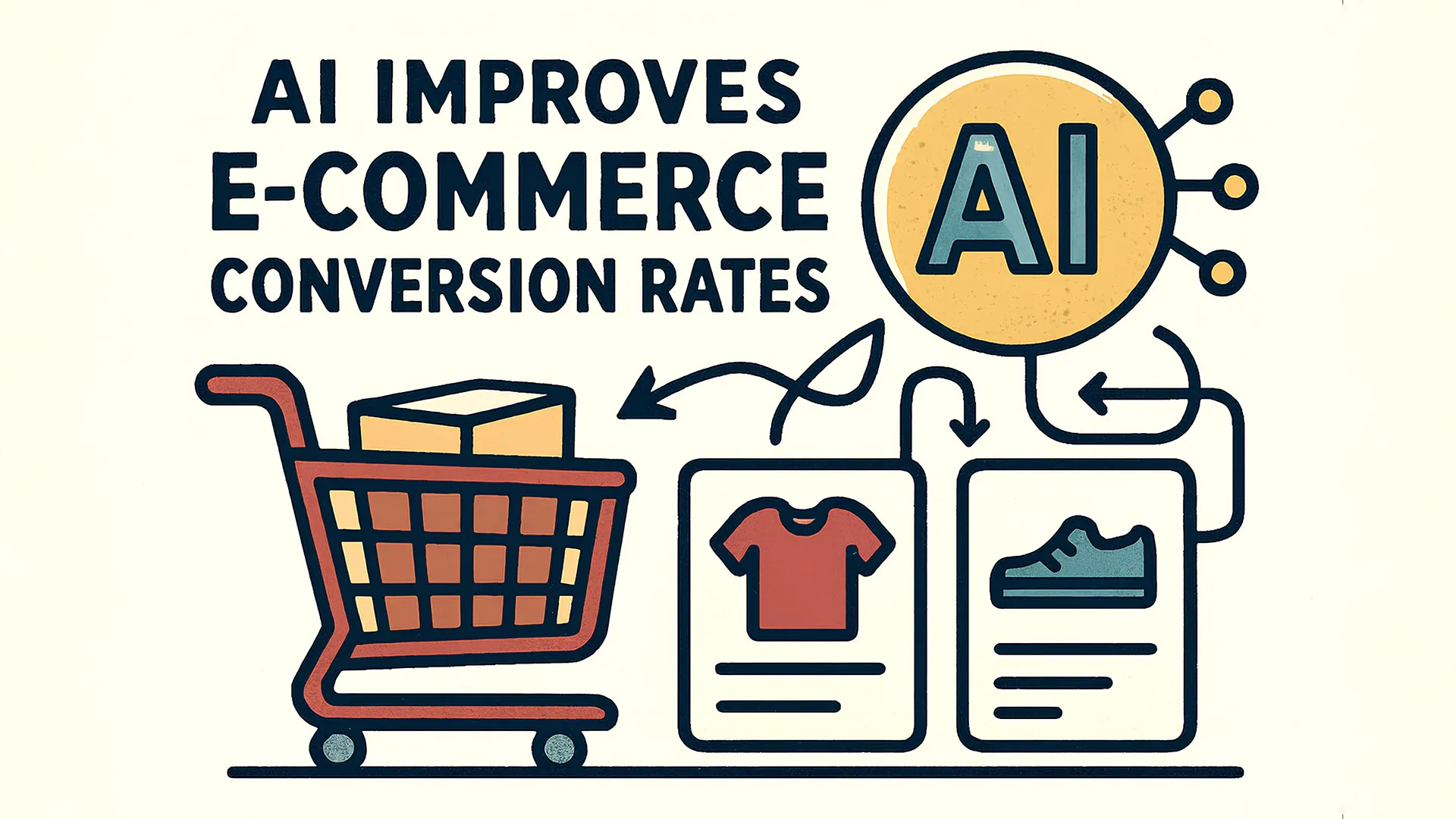

Artificial Intelligence has become one of the most powerful growth tools in ecommerce.
To understand the fundamentals behind these systems, start with our guide on AI basics. Behind almost every successful online store today, there is some form of AI quietly working to increase conversion rates, reduce friction, and guide customers toward buying decisions.
From personalized product recommendations to dynamic pricing and predictive inventory management, AI is no longer a “nice to have.” It is a competitive advantage.
This article explains how AI boosts ecommerce conversion rates, using clear examples and real strategies already used by major brands. No coding knowledge is required to understand these concepts.
By the end of this guide, you will understand:
- What ecommerce conversion rate really means
- Why AI improves conversions better than humans alone
- The most effective AI strategies used today
- How AI reduces drop-offs and abandoned carts
- Which AI techniques are suitable for small businesses
What Is Ecommerce Conversion Rate? (Simple Explanation)
Ecommerce conversion rate refers to the percentage of visitors who complete a desired action on your website.
Most commonly, this action is:
- Making a purchase
But conversions can also include:
- Adding a product to cart
- Signing up for email updates
- Clicking a product page
- Completing checkout
Simple example:
If 1,000 people visit your store and 30 people buy something,
your conversion rate is 3%.
Even small improvements matter.
Increasing conversion from 3% to 4% can mean 33% more revenue – without spending more on ads.
Why AI Is So Effective at Improving Conversion Rates
Traditional ecommerce optimization relies heavily on:
- Human intuition
- Static rules
- Manual A/B testing
AI works differently.
AI analyzes thousands (or millions) of data points that humans cannot process efficiently.
It looks at:
- Browsing behavior
- Click patterns
- Scroll depth
- Time spent on pages
- Past purchases
- Similar user profiles
From this data, AI predicts what each customer is most likely to do next.
This predictive ability is the key reason AI outperforms traditional methods.
Understanding the limitations and risks of AI helps businesses avoid over-automation and trust issues.
Strategy 1 – Personalized Product Recommendations
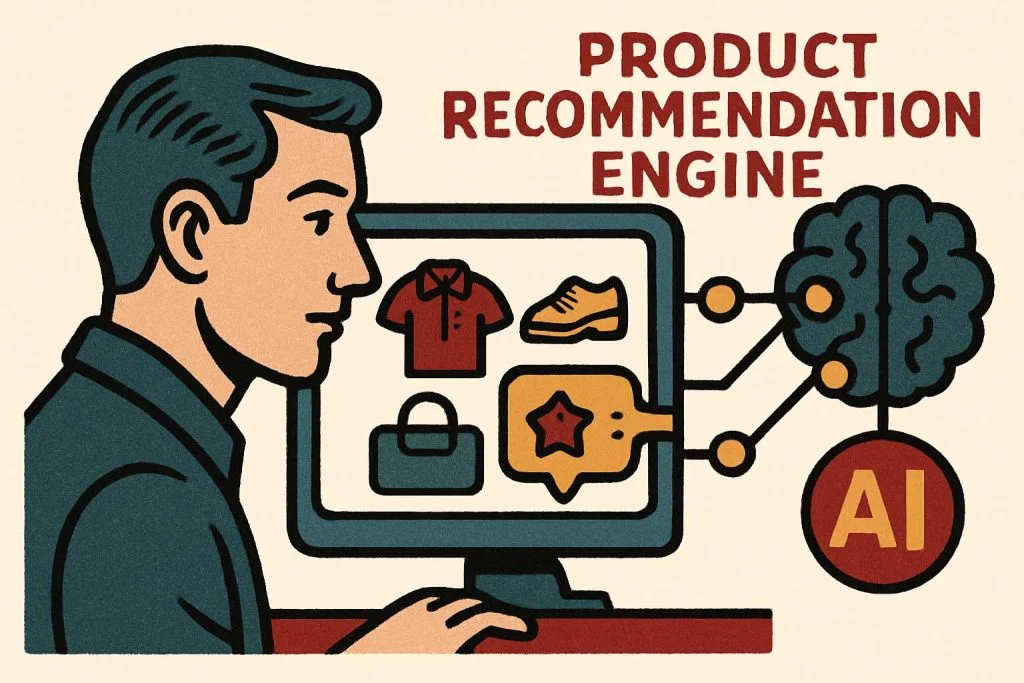
Personalized recommendations are one of the highest-impact AI tools in ecommerce.
Instead of showing the same products to every visitor, AI customizes product suggestions for each individual.
How it works:
AI analyzes:
- Products viewed
- Products purchased
- Time spent on product pages
- Items added to cart
- Behavior of similar users
Then it displays:
- “Recommended for you”
- “Customers also bought”
- “You may like”
Why it boosts conversions:
- Reduces decision fatigue
- Helps users discover relevant products faster
- Increases average order value
- Builds a feeling of personalization
Major platforms like Amazon attribute a significant portion of revenue growth to AI-driven recommendations.
Strategy 2 – AI-Driven Search and Product Discovery
Many ecommerce visitors already know what they want – they just struggle to find it.
AI-powered search improves:
- Search accuracy
- Typo correction
- Synonym matching
- Intent understanding
Example:
If a customer types:
“comfortable shoes for standing all day”
AI understands intent, not just keywords, and surfaces:
- Work shoes
- Cushioned soles
- Orthopedic options
This dramatically reduces bounce rates and increases conversion likelihood.
Strategy 3 – Dynamic Pricing Optimization
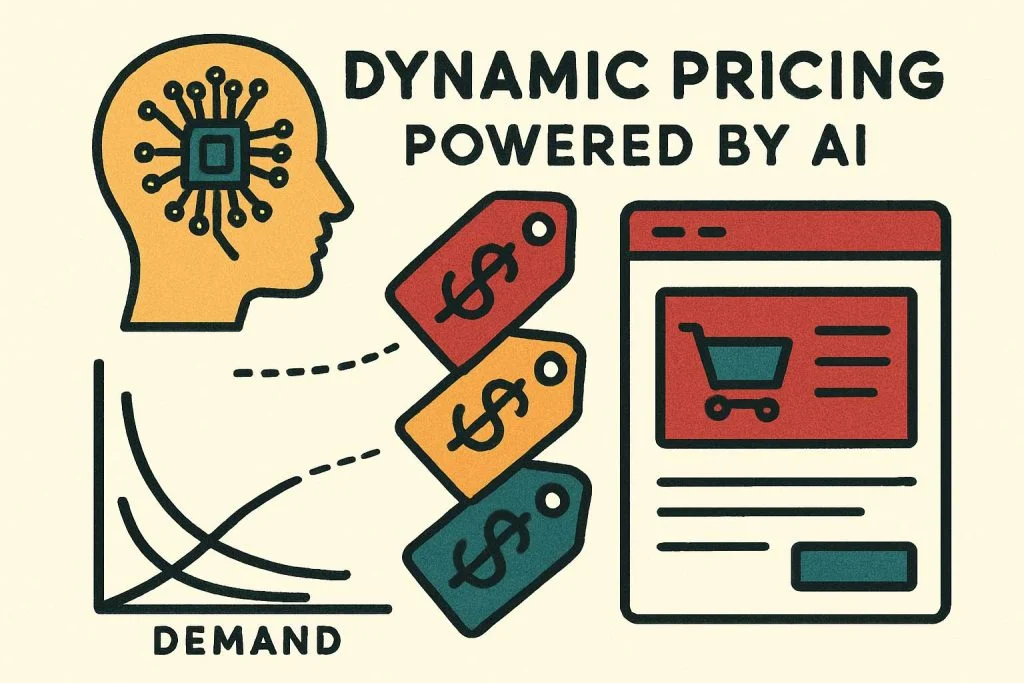
AI allows ecommerce platforms to adjust prices dynamically based on:
- Demand
- Inventory levels
- Competitor pricing
- Time of day
- Customer behavior
Instead of one fixed price, AI determines the optimal price point that maximizes conversion and profit.
Why it works:
- Price-sensitive users see competitive pricing
- Premium buyers are less likely to be discounted unnecessarily
- Overstocked items convert faster
- Seasonal demand is managed efficiently
This strategy is widely used by airlines, ride-hailing apps, and large online retailers.
Strategy 4 – AI-Powered Cart Abandonment Recovery
Cart abandonment is one of the biggest problems in ecommerce.
Common reasons include:
- Unexpected shipping costs
- Complicated checkout
- Lack of trust
- Price hesitation
- Distractions
AI helps by predicting why a user abandoned their cart and responding accordingly.
AI recovery actions include:
- Personalized reminder emails
- Timed discount offers
- Product-specific nudges
- Optimized follow-up timing
Instead of sending the same email to everyone, AI tailors recovery messages to individual behavior.
Strategy 5 – Smart Product Page Optimization
AI analyzes which elements on a product page influence conversions the most, such as:
- Image placement
- CTA wording
- Reviews visibility
- Price presentation
- Product description length
Then it continuously tests variations automatically.
This removes the need for manual A/B testing and speeds up optimization cycles significantly.
Strategy 6 – AI-Powered Reviews & Social Proof Optimization
Customer reviews are one of the strongest conversion drivers in ecommerce.
However, not all reviews influence buyers equally.
AI helps by analyzing review sentiment, relevance, and timing to present the most persuasive social proof to each user.
How AI optimizes reviews:
- Highlights reviews mentioning specific product benefits
- Matches reviews to user intent (price, quality, durability, speed, comfort)
- Filters out low-value or repetitive feedback
- Surfaces recent reviews for hesitant buyers
Example:
A customer browsing running shoes may see reviews focused on:
- Comfort during long runs
- Foot support
- Breathability
While another user may see reviews about:
- Value for money
- Durability
- Everyday usage
This personalized social proof increases trust and reduces uncertainty.
Strategy 7 – AI Chat Assistants for Pre-Purchase Guidance
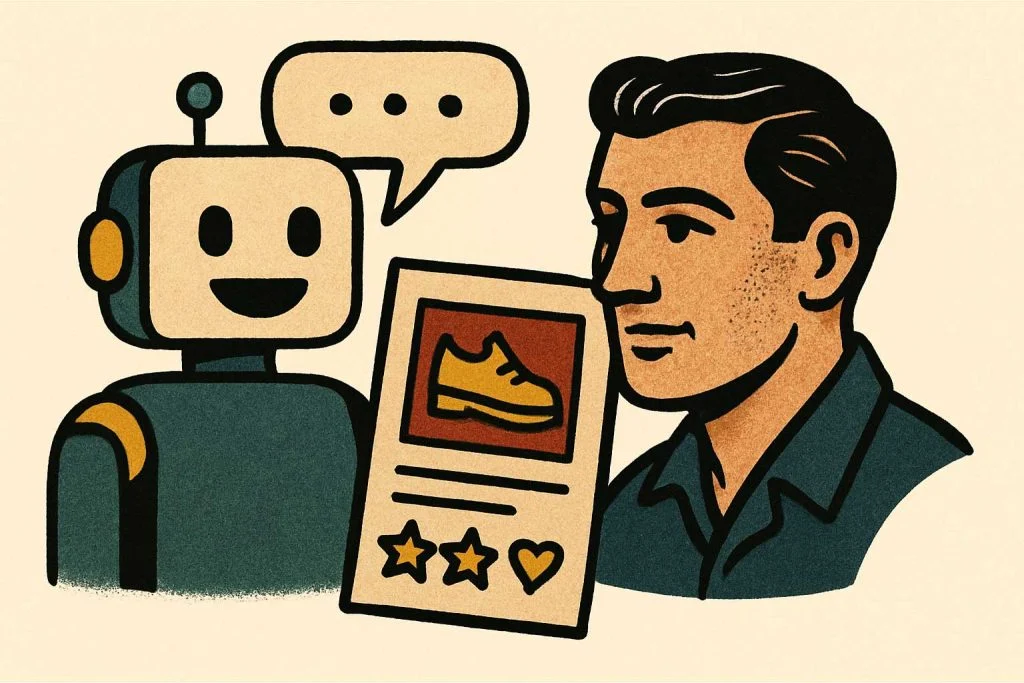
Many ecommerce visitors abandon pages simply because they have unanswered questions.
AI chat assistants help by:
- Answering product questions instantly
- Suggesting alternatives
- Explaining sizing, compatibility, or usage
- Reducing friction before checkout
Why this improves conversion:
- Buyers feel supported, not rushed
- Questions are answered at the moment of intent
- Customers stay on-site instead of leaving to search elsewhere
Unlike human chat agents, AI assistants are available 24/7, handle unlimited queries, and respond instantly.
These tools are part of a broader shift toward AI customer service solutions that improve both pre-sales and post-sales experiences.
Strategy 8 – Predictive Inventory & Stock Availability
Few things hurt conversion rates more than:
- Out-of-stock messages
- Unclear delivery timelines
- Unexpected backorders
AI helps by predicting:
- Which products will sell fast
- When inventory will run low
- Where demand is rising
Conversion impact:
- Popular items remain available
- “Only X left in stock” messages are accurate
- Urgency signals feel authentic, not manipulative
- Customers trust delivery promises
Predictive inventory also prevents wasted ad spend on products that cannot be fulfilled.
Strategy 9 – AI-Driven UX & Layout Personalization
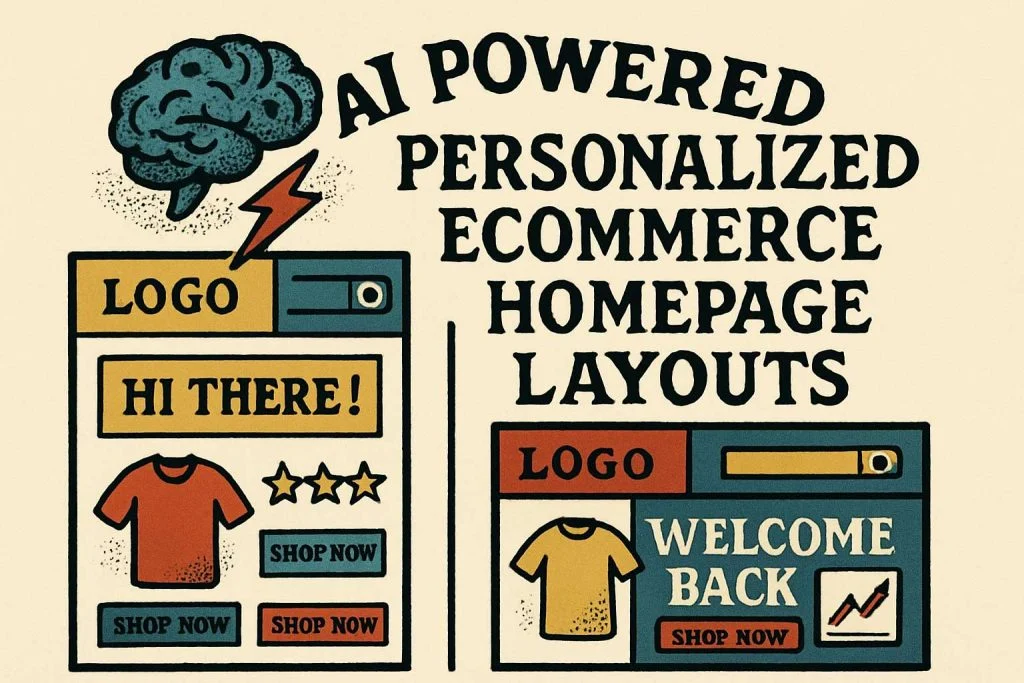
AI can personalize the entire shopping experience, not just products.
It adapts:
- Homepage layout
- Category ordering
- Banner placement
- Navigation menus
- Call-to-action buttons
Example:
A returning customer might see:
- Previously browsed categories at the top
- Faster access to favorite brands
- Shorter checkout paths
A first-time visitor may see:
- Bestsellers
- Trust badges
- Educational content
This adaptive experience reduces cognitive load and guides users smoothly toward conversion.
Strategy 10 – Smart Discounts & Incentive Timing
Instead of offering blanket discounts, AI predicts who actually needs an incentive to convert.
AI evaluates:
- Price sensitivity
- Browsing duration
- Cart hesitation
- Past discount usage
Smarter incentive strategies:
- Show discounts only to hesitant users
- Delay discounts for high-intent buyers
- Offer free shipping instead of price cuts
- Customize incentives by user profile
This protects profit margins while still increasing conversion rates.
Strategy 11 – Fraud Prevention & Trust Optimization
Trust is essential in ecommerce.
If customers feel unsafe, they won’t convert – no matter how good the product is.
AI enhances trust by:
- Detecting suspicious behavior
- Preventing payment fraud
- Flagging fake reviews
- Reducing false declines
Conversion benefit:
- Fewer checkout failures
- More successful payments
- Higher customer confidence
- Reduced cart abandonment at payment stage
A smooth, secure checkout experience directly improves conversion rates.
Common Conversion Problems AI Helps Solve
AI doesn’t just boost conversions – it fixes structural problems that humans often miss.
Problems AI reduces:
- Decision paralysis
- Information overload
- Poor product discovery
- Irrelevant messaging
- Inefficient checkout flows
- Mismatched pricing expectations
By responding dynamically to user behavior, AI creates smoother buying journeys.
Can Small Businesses Use These AI Strategies?
Yes – and this is a critical point.
You do not need:
- A large data science team
- Custom AI development
- Enterprise budgets
Many platforms already include AI features:
- Ecommerce platforms
- Marketing tools
- Email automation systems
- Chat assistants
- Analytics dashboards
SMEs can adopt AI incrementally, starting with:
- Recommendations
- Chat assistants
- Email personalization
- Inventory insights
How to Implement AI in Ecommerce (Step-by-Step for Non-Technical Teams)
You don’t need to overhaul your entire store to benefit from AI.
The most successful ecommerce brands adopt AI gradually and strategically.
Step 1: Identify Your Biggest Conversion Bottleneck
Start by answering:
- Where do users drop off most?
- Product pages?
- Cart page?
- Checkout page?
Focus AI on one problem at a time.
Step 2: Start With High-Impact, Low-Complexity Tools
Begin with tools that require minimal setup:
- Product recommendation widgets
- AI-powered search
- Email personalization
- Chat assistants
These deliver quick wins without technical burden.
Step 3: Feed AI Clean, Relevant Data
AI performance depends on data quality.
Best practices:
- Clean duplicate customer records
- Remove outdated products
- Ensure accurate pricing and inventory
- Label conversion events correctly
Garbage data leads to poor predictions.
Step 4: Monitor, Test, and Adjust
AI systems are not “set and forget.”
Track:
- Conversion rate changes
- Average order value
- Bounce rate
- Cart abandonment rate
Use results to refine AI settings continuously.
Common Mistakes Businesses Make With AI Conversion Tools
Even powerful AI can fail if used incorrectly.
Mistake 1: Over-Automation
Replacing every human touchpoint can reduce trust.
AI should assist – not eliminate – human decision-making.
Mistake 2: Showing Discounts Too Early
Offering discounts immediately trains users to wait.
AI should delay incentives for high-intent buyers.
Mistake 3: Ignoring Transparency
Customers should know when AI is involved.
Clear explanations build trust and reduce confusion.
Mistake 4: Treating All Users the Same
One-size-fits-all automation defeats AI’s purpose.
Personalization must be meaningful, not superficial.
Mistake 5: Chasing AI Trends Without Strategy
Not every AI feature suits every business.
Always align AI use with your conversion goals.
Ethical Use of AI in Ecommerce
Responsible AI use is essential for long-term success.
Key ethical principles:
- Respect customer privacy
- Avoid manipulative dark patterns
- Ensure pricing fairness
- Provide opt-out options
- Protect sensitive data
Ethical AI strengthens brand reputation and customer loyalty.
How AI Will Shape Ecommerce Conversions in the Future
AI conversion optimization will continue evolving.
Future trends include:
- AI agents managing entire purchase journeys
- Voice-based shopping assistants
- Hyper-personalized storefronts
- Predictive fulfillment
- Emotion-aware UX design
Brands that adapt early will gain long-term advantages.
Final Summary – Why AI Is a Conversion Multiplier
AI boosts ecommerce conversion rates because it:
- Understands customer behavior deeply
- Responds instantly to intent signals
- Personalizes experiences at scale
- Reduces friction throughout the journey
- Optimizes decisions humans can’t manage manually
From recommendations and pricing to trust and UX,
AI transforms ecommerce from a static store into a dynamic, intelligent experience.
This shift is increasing demand for new AI-related jobs and skills focused on strategy, data interpretation, and oversight.
Conclusion
Ecommerce success today is no longer just about traffic – it’s about conversion efficiency.
AI gives businesses the tools to understand customers better, serve them faster, and guide them toward confident purchasing decisions.
Whether you’re a global brand or a small online store, AI is no longer optional.
Used wisely, it becomes a sustainable growth engine that improves conversions without sacrificing customer trust.
FAQ
How does AI improve ecommerce conversion rates?
AI improves ecommerce conversion rates by personalizing product recommendations, optimizing dynamic pricing, enhancing search relevance, reducing checkout friction, and predicting customer intent based on behavior patterns.
Can small ecommerce businesses use AI?
Yes. Many modern ecommerce platforms include built-in AI features such as recommendation engines, automated email targeting, and predictive analytics that small businesses can use without advanced technical expertise.
What is the most effective AI strategy for ecommerce?
Personalized product recommendations and AI-powered search optimization often deliver the fastest improvements in conversion rates, as they directly influence purchase decisions during browsing.
Is AI expensive to implement in ecommerce?
Not necessarily. Many ecommerce platforms and marketing tools now include AI capabilities as part of standard subscription plans, making implementation accessible for businesses of various sizes.
Are there risks in using AI for conversion optimization?
Yes. Risks include poor data quality, lack of transparency in automated decisions, over-automation that reduces human oversight, and potential erosion of customer trust if personalization feels intrusive.