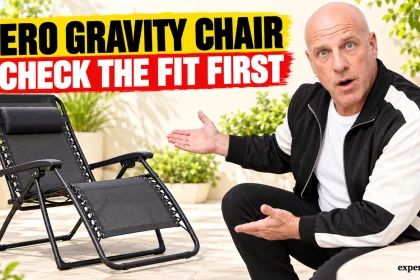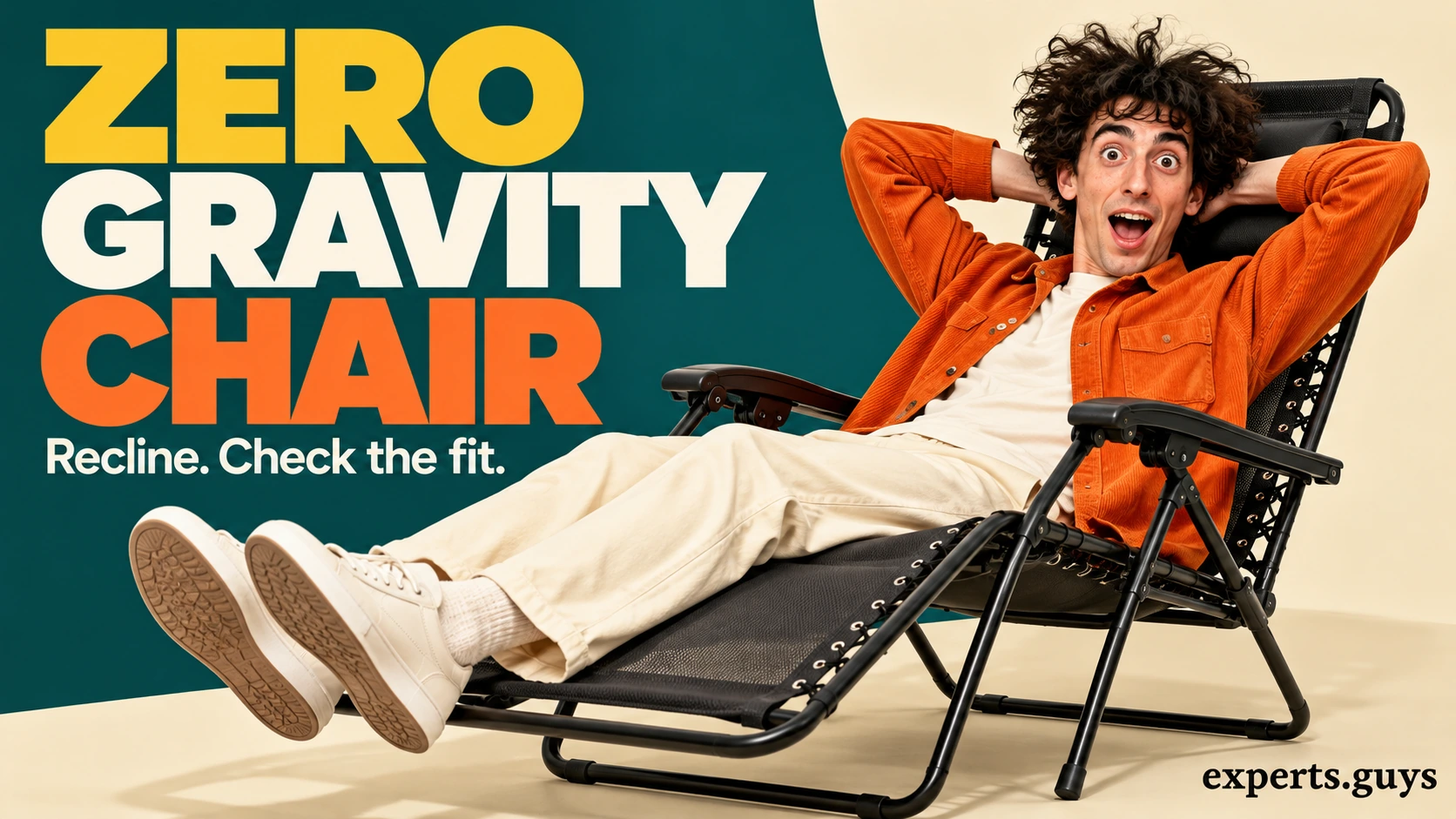
A zero gravity chair is a recliner that tilts your torso back while supporting and raising your legs, often placing them near or above heart level in its deepest position. It does not remove gravity; before choosing one, check whether it fits your body, its fully reclined footprint fits your space, and you can get out comfortably.
The useful difference is how the chair supports you through a change of position. A linked seat and leg support can make reclining feel more balanced than simply leaning back in a fixed chair. That feeling depends on the design and your proportions, so the label alone is not a promise of comfort.
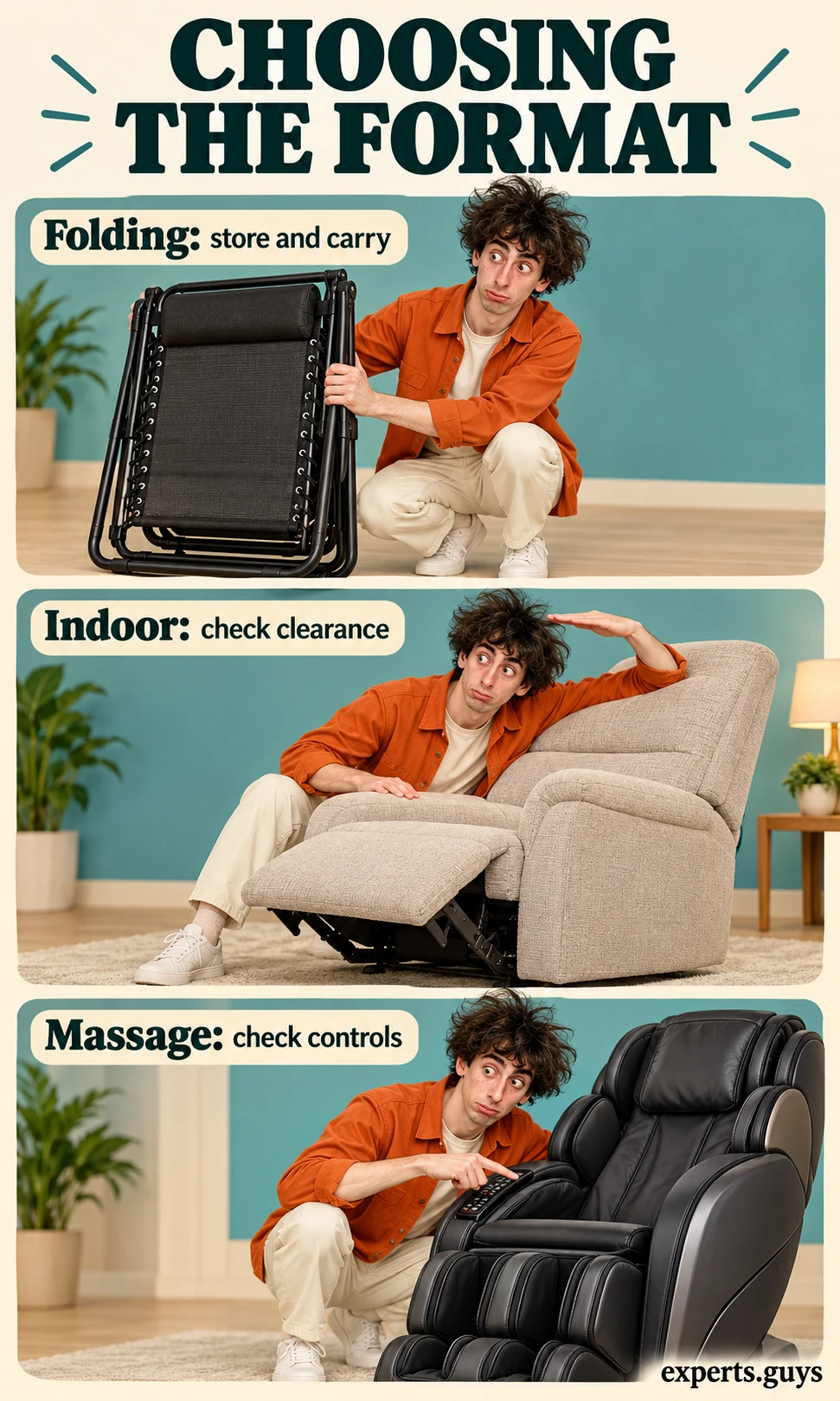
Start with the job you want the chair to do: occasional patio lounging, everyday indoor relaxation or powered positioning. These are different buying decisions even when the products share the same name. The table below separates the main formats before you compare padding, colour or accessories.
| Format | What you are choosing | What can rule it out |
|---|---|---|
| Folding zero gravity recliner | A portable frame with a supported sling and linked reclining movement. | Too little reclining space, difficult entry or an unsuitable weight rating. |
| Indoor zero gravity recliner | An upholstered seat with manual or powered reclining. | A large footprint, awkward controls or a seat that is too deep. |
| Massage chair with a zero gravity setting | A powered chair that combines positioning with separate massage functions. | Buying unwanted massage features or overlooking access and maintenance needs. |
| Conventional recliner or chaise | Another way to rest with support; mechanisms and leg elevation vary. | Assuming a similar appearance guarantees the same body position. |
How does a zero gravity chair actually work?
Many folding versions connect the back, seat and leg support through pivoting parts. As you recline, the chair changes where your weight is supported while the base stays on the ground. A powered indoor model may achieve a similar position using motors rather than your body movement.
The name draws on the idea of a relaxed, bent-knee posture in microgravity. NASA’s neutral-body-posture research influenced seat design, but that does not mean NASA made or approved every consumer chair sold with this label. A chair on your patio still supports your full weight under Earth’s gravity.
There is no single angle that proves a chair will fit you. A quoted angle may describe the opening between the seat and back rather than the backrest’s angle to the floor. Compare the actual seated position and the manufacturer’s illustration instead of treating an angle in an advertisement as a universal target.
Which type of zero gravity chair suits your space?
Choose the format around the place it will live and how often you need to move it. A folding frame can suit a temporary reading corner, while an upholstered recliner may suit a permanent lounge position. A powered massage chair is a separate purchase decision, with more functions and more components to evaluate.
Bring the model listing and manual up on your phone before a showroom visit. Compare the maximum user weight, dimensions and operating method for the exact model, not another chair in the same range. If a seller cannot provide those basics, you do not yet have enough information to judge the chair.
- Moving it frequently? Check folded dimensions, product weight and whether you can carry it comfortably.
- Leaving it in one room? Prioritise reclining clearance, entry and exit over portability.
- Considering a powered model? Check control reach, power requirements and what happens if power is unavailable.
- Buying online? Read the return terms, including opened-item conditions and collection costs.
For example, a chair that folds neatly may still be a poor choice if it is awkward to lift through your doorway. A powered recliner can remove the effort of leaning back but does not necessarily help you stand; a lift function is a different feature. When two formats meet your needs, the simpler one with a comfortable trial and clear return terms is a reasonable starting point.
How can you check whether the chair fits?
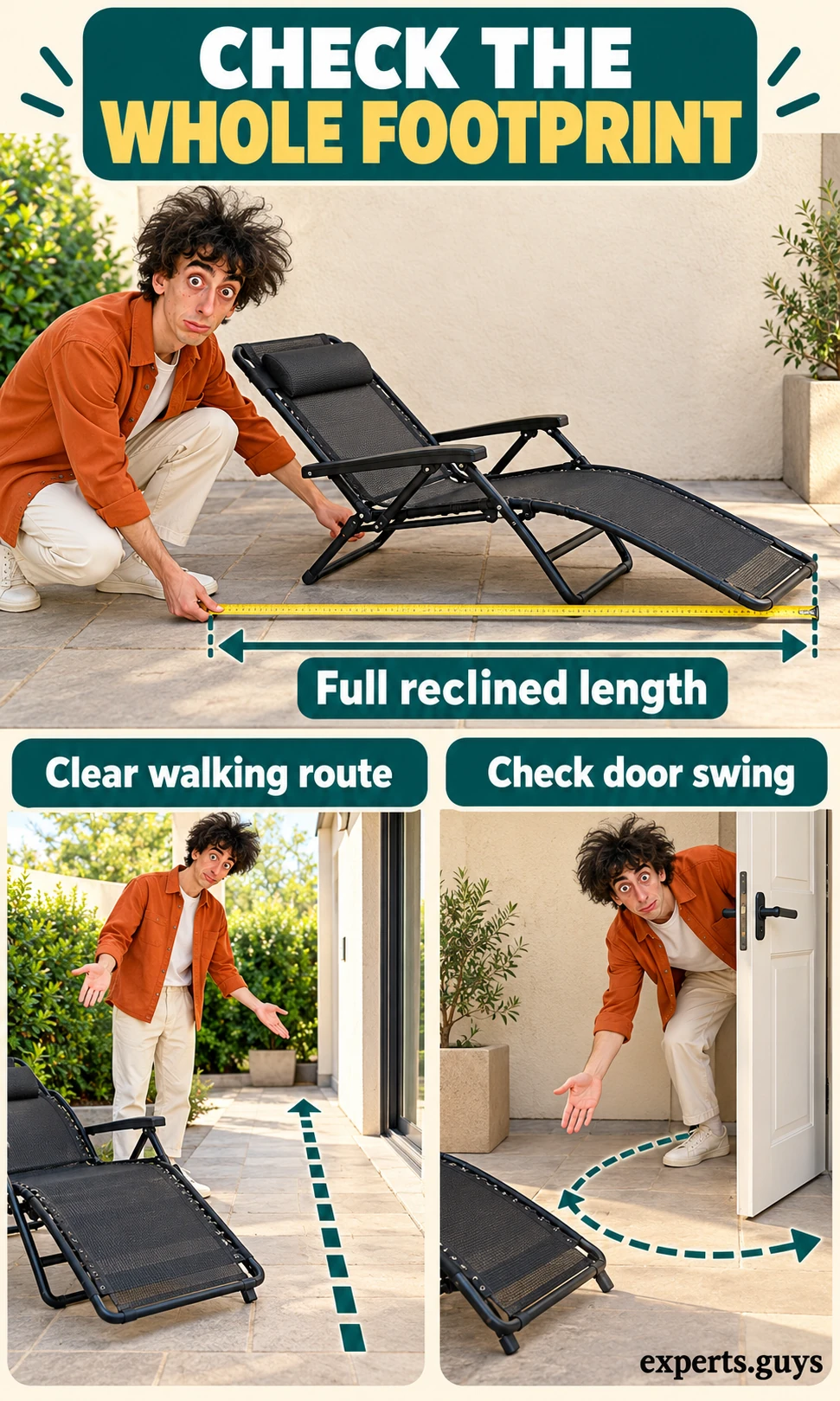
Check the full reclining footprint
Use a tape measure and the manufacturer’s fully reclined dimensions to check the intended location. Measure the usable depth and width after allowing for the door swing, furniture and the route people actually walk through. A chair can physically fit in a corner yet make that corner unusable when someone reclines.
- Find the maximum reclined length or depth and width for the exact model.
- Measure the available area, keeping the walking route separate.
- Compare any stated rear or front clearance with the remaining space.
- If the dimensions are ambiguous, ask the seller for a full-recline diagram before ordering.
As a hypothetical example, a 170 cm reclined chair in a 200 cm usable depth leaves 30 cm in total, not 30 cm at each end. That subtraction does not establish safe clearance or an adequate walkway. If the layout is tight, choose a different position or smaller format rather than planning to block access whenever you recline.
Check where your body meets the chair
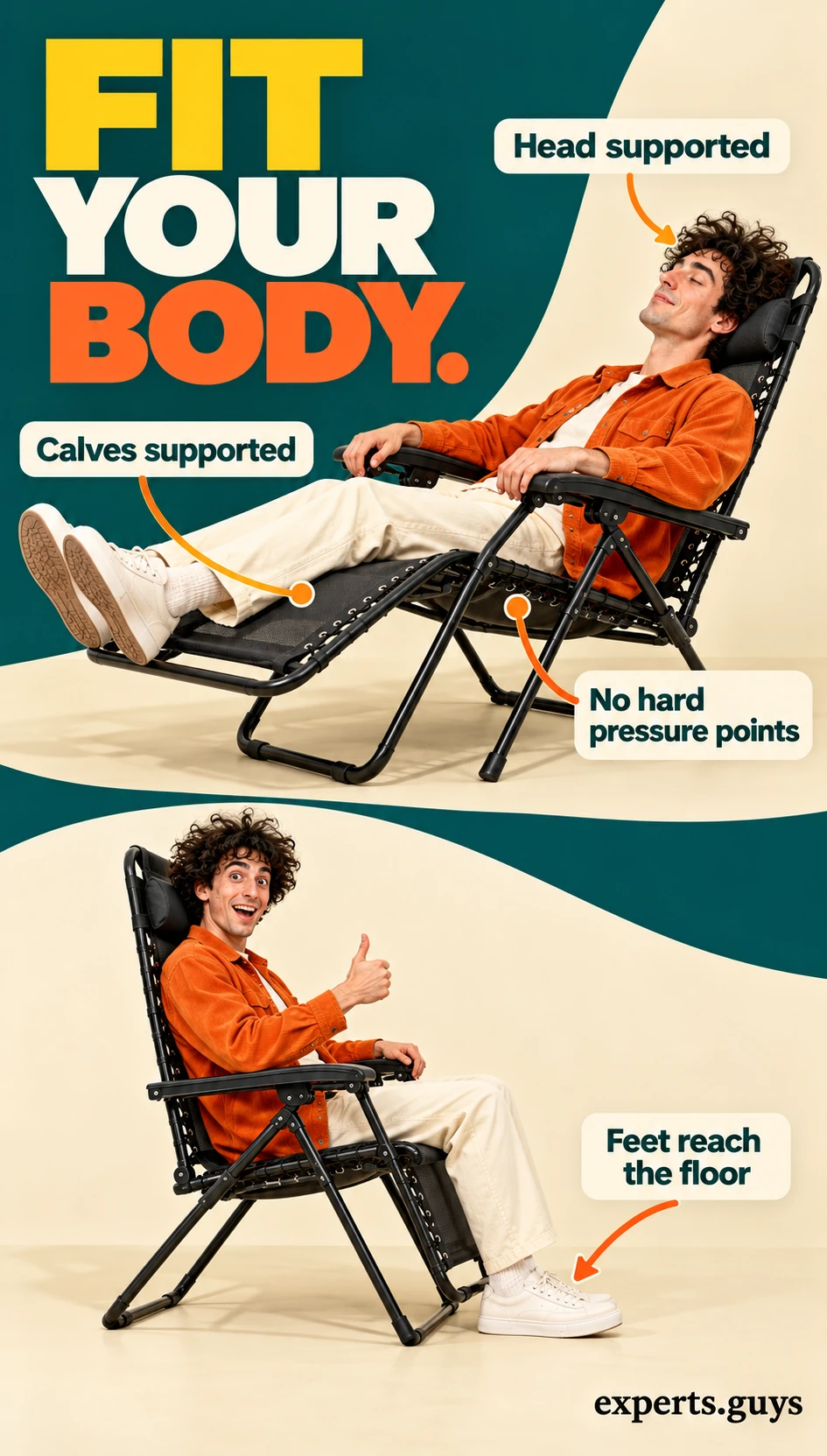
Try the upright position first, then a comfortable reclining position with the controls used correctly. Your hips should sit back without forcing your shoulders forward, and the head support should meet your head without pushing your chin down. Check for a hard edge pressing behind the knees, against the calves or beneath the heels.
- Move an adjustable headrest to suit your height, following the manual.
- Notice whether the leg support carries your lower legs comfortably.
- Check that you can reach the controls without twisting or reaching underneath moving parts.
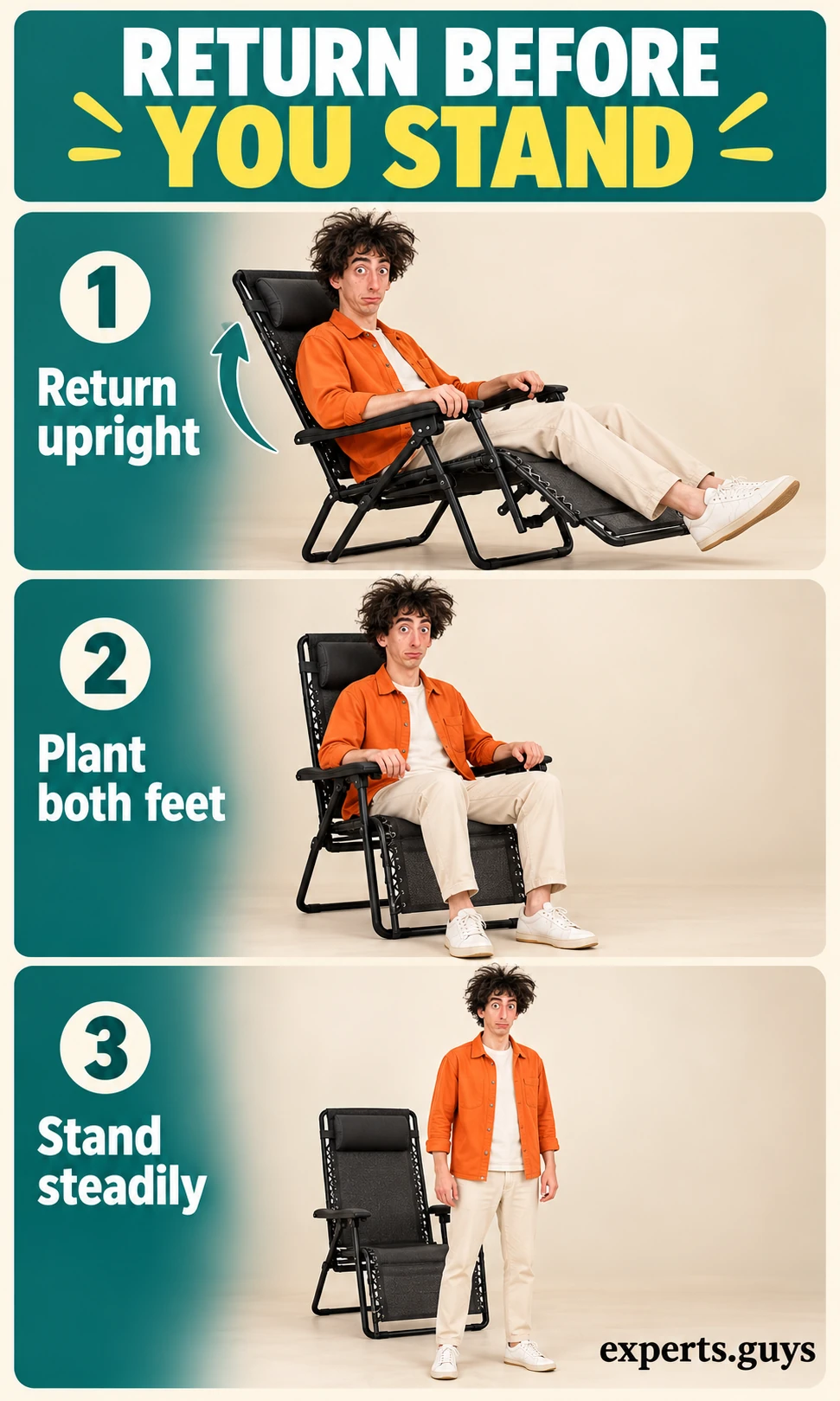
- Return upright and check whether both feet can meet the floor for a stable exit.
A taller user may find the headrest too low or the foot bar intrusive even when the maximum weight rating is adequate. Try the available adjustment once; if it cannot resolve the pressure point, compare a different size or shape. Extra cushions are not a reliable fix for a fundamentally unsuitable frame, and should not obstruct controls or movement.
How do you use a zero gravity chair safely?
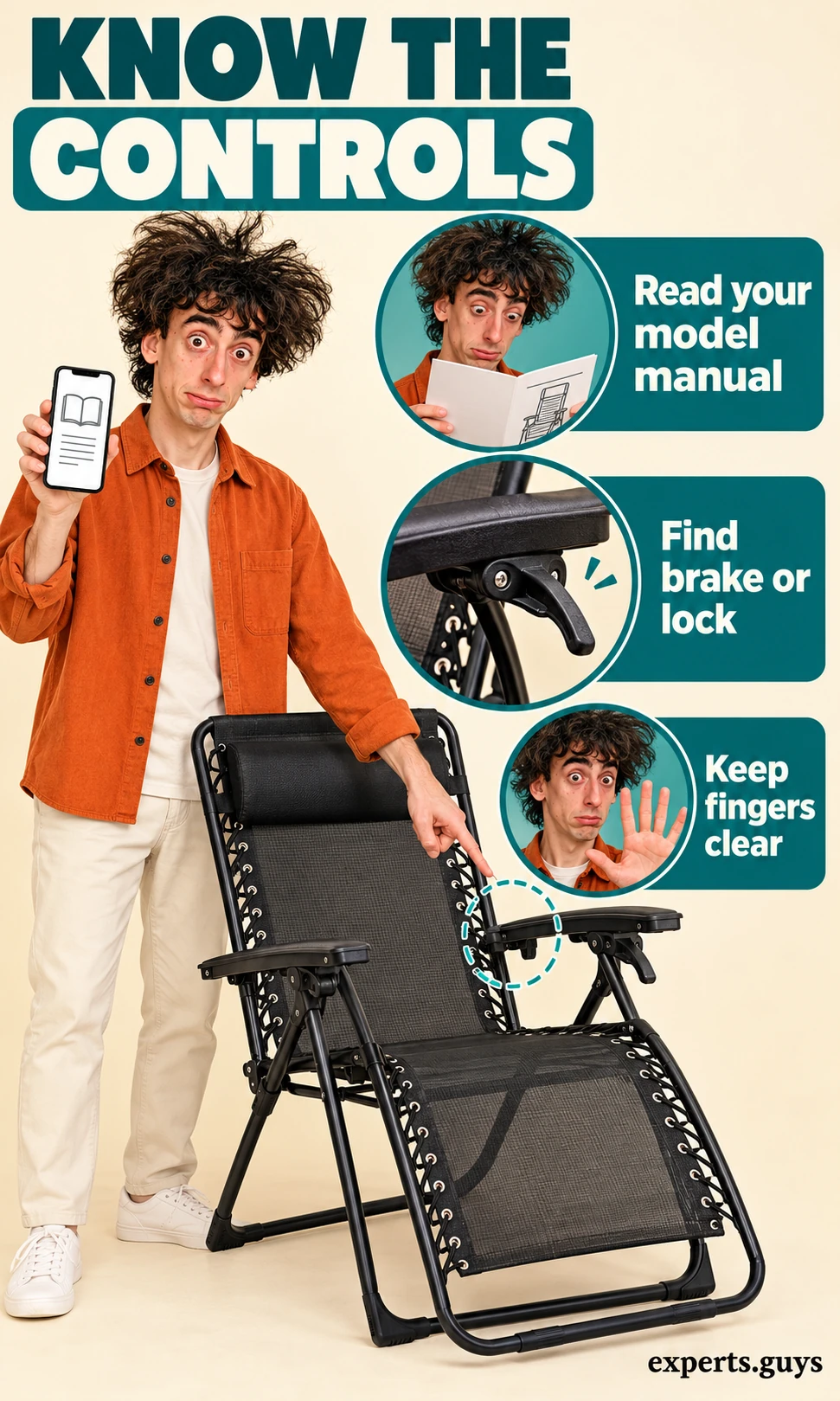
The following checks describe the reader’s decisions, not a substitute mechanism for every brand. Start with a sound chair, a firm level surface and the correct model instructions. Keep children, pets, loose clothing and fingers away from moving linkages; the CPSC’s recliner warning explains why the space beneath and around a moving leg rest matters.
Identify the controls before you sit
Locate the brake, lock or stabiliser and check when the manufacturer says to release or apply it. Similar-looking controls can operate differently, and a friction device should not be assumed to make a moving chair rigid under every load. Keep the manual open on your phone rather than guessing a lever direction from a different chair.
If a control is stiff, do not force the recline against it. Return to the instructions and confirm that the chair is fully opened and the correct control is released. If the mechanism still behaves unexpectedly, stop using it until the seller or manufacturer identifies the problem; do not improvise a clamp or repair.
Try the reclining motion gradually
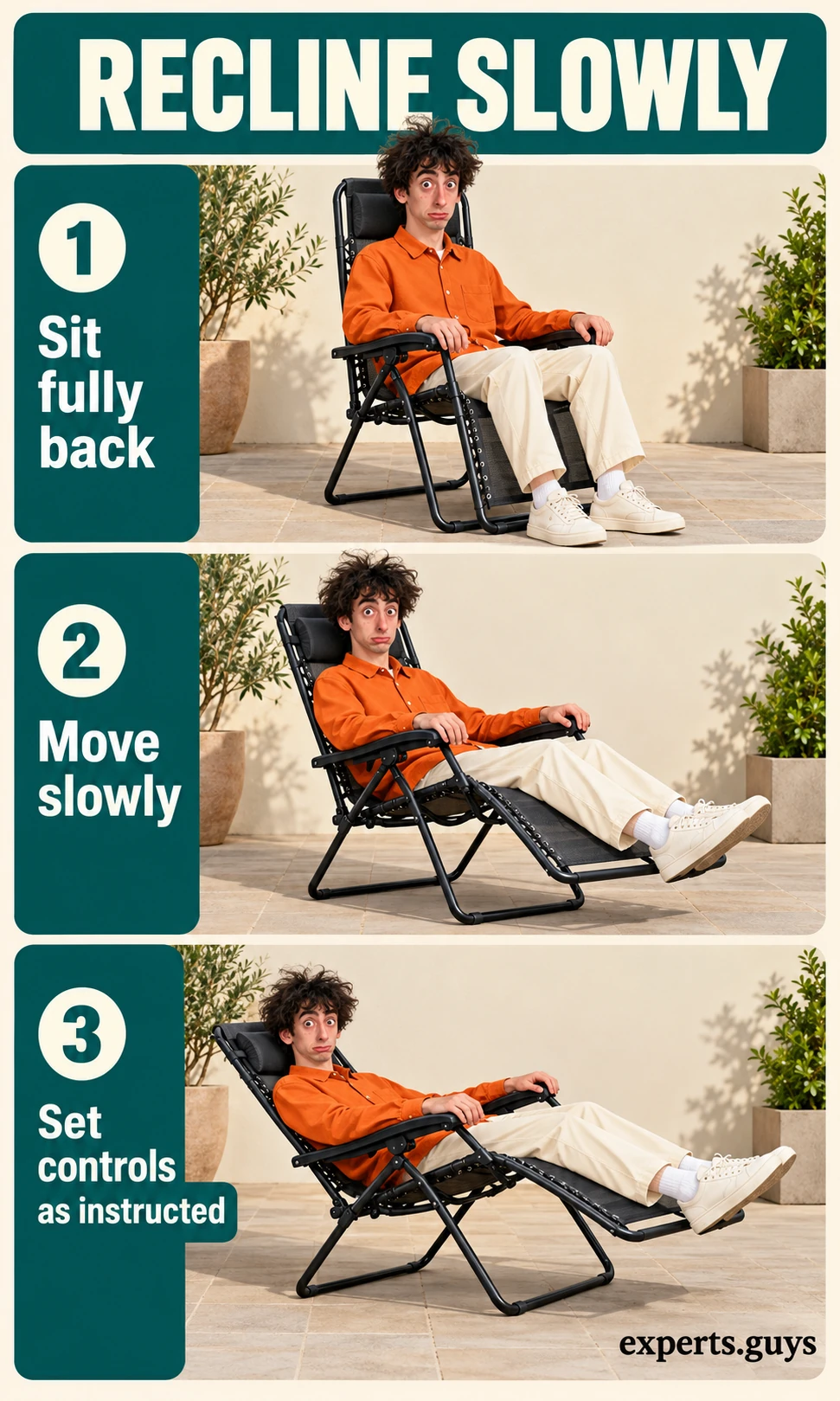
Use the normal seated position with the chair completely opened as its instructions specify. Sit down gently, settle fully back and keep your hands on the intended supports, clear of pivots. Change position slowly using the model’s stated method, then set its controls as instructed once you reach a comfortable position.
- Start upright with the area around the chair clear.
- Release or operate the specified controls before moving.
- Recline gradually while your body stays supported by the seat.
- Stop at a comfortable position; deeper reclining is not a goal in itself.
For a first trial, a small change of angle is enough to understand the motion. If the chair lurches, will not hold the intended position or requires force, return safely upright and reassess rather than trying a larger movement. Where balance or strength makes a manual chair difficult, a supervised showroom demonstration can help you compare a different design before buying.
Test getting up, not just lying back
A chair that feels comfortable when reclined can still be unsuitable if leaving it is awkward. Return to the manufacturer’s upright entry-and-exit position before shifting your weight to stand. Place both feet on the floor, pause until steady and use only the supports intended for getting up.
- Return the chair upright using its specified control sequence.
- Bring both feet firmly onto the ground.
- Stand steadily without stepping on the footrest or pulling on moving parts.
Treat repeated difficulty rising as a fit issue, not something to overcome by momentum. A seat that is too low or deep may require another size or a different type of chair. If you feel dizzy or unsteady, remain seated safely and get assistance rather than continuing the trial alone.
Inspect the support system before use
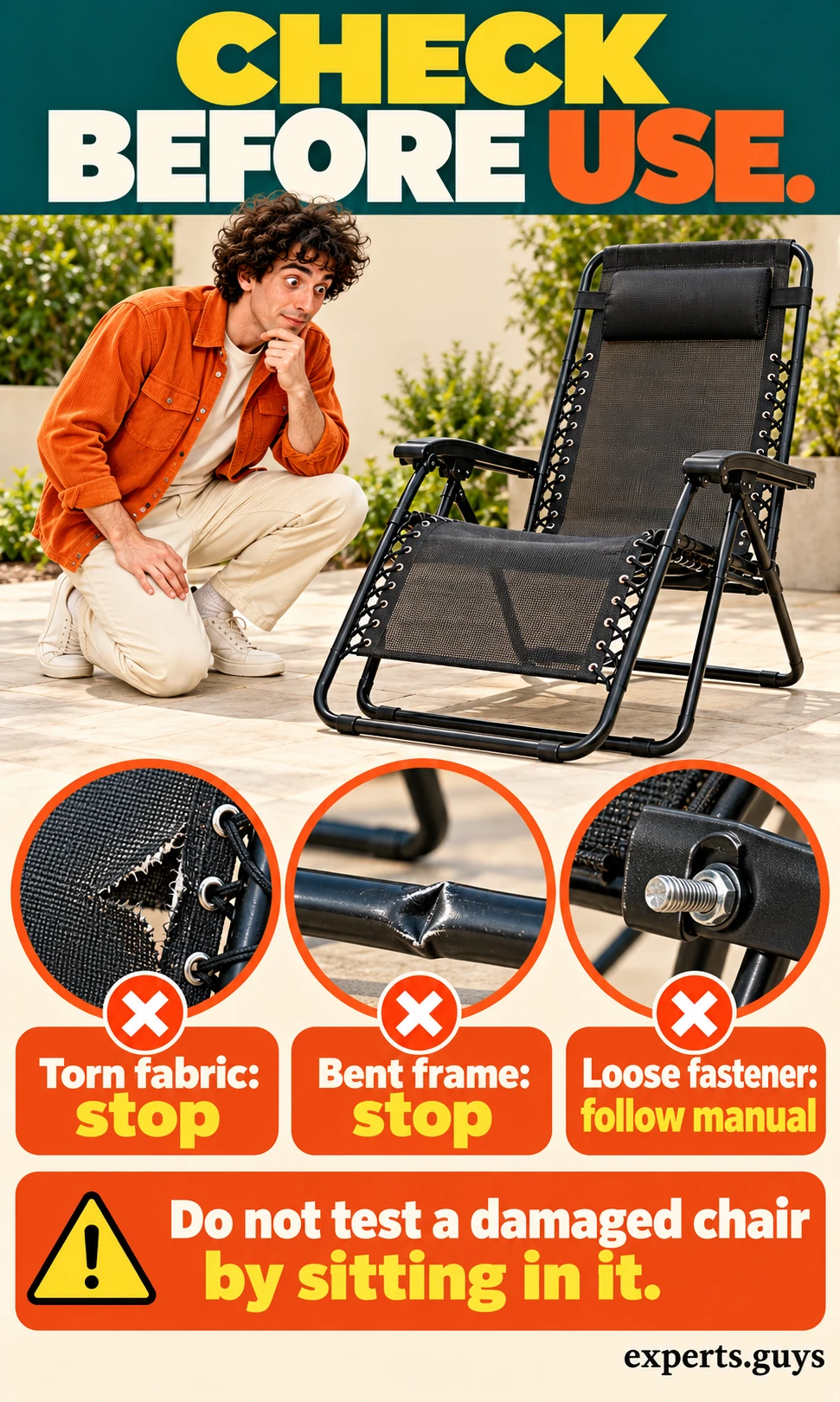
Look at the empty chair before sitting, particularly after storage or when considering a used purchase. Check the fabric, seams, suspension attachments, frame and visible fasteners for damage or missing parts. Confirm the model identification and its user-weight limit; appearance is not evidence of load capacity.
- Torn sling, damaged suspension or bent frame: stop using the chair.
- Missing or loose fastener: follow the exact manufacturer’s service instructions before further use.
- Unknown replacement parts: verify model compatibility instead of assuming universal fit.
- Unclear history or unreadable model label: seek specifications before committing to the purchase.
Do not assess a suspect frame by sitting in it and bouncing. Keep a photo of the model label and the problem on your phone so the supplier can identify compatible parts. A replaceable sling may make one model serviceable, but that does not make a cracked or bent frame suitable for a home repair.
What are the benefits and disadvantages?
The practical benefit is adjustable supported rest: you can raise your legs and change the relationship between your torso, seat and leg support. Some people find that more comfortable than a fixed seat, while others dislike the sling shape or reclining motion. The disadvantages are largely about fit, floor space, moving parts and how easily you can get in and out.
| What you notice | Likely decision issue | What to do next |
|---|---|---|
| Comfortable reclined, awkward upright | Seat height or depth does not suit entry and exit. | Compare another size or a more suitable chair type. |
| Head pushed forward | Pillow position or back shape does not suit you. | Use the permitted headrest adjustment; reject a persistent mismatch. |
| Pressure from the foot bar | Leg-support length or shape does not suit your proportions. | Try another size instead of chasing a deeper angle. |
| Chair moves unexpectedly | Controls, setup or condition need checking. | Stop and follow the model instructions; resolve the fault before reuse. |
| Walkway disappears when reclined | The room fits the upright chair but not its use. | Change the location or select a smaller format. |
A relaxing position should not be sold as treatment for sleep apnoea, high blood pressure or a spinal condition. This article does not establish those benefits, and the chair’s name does not supply clinical evidence. Equally, the muscle and bone changes associated with spaceflight are not a sensible explanation of ordinary recliner disadvantages: this furniture does not create microgravity.
Keep the buying decision focused
Judge value by whether the chair solves your actual seating problem at an acceptable total cost. Compare delivery, return costs, replacement-part availability and warranty terms alongside the purchase price. A cheaper chair you cannot exit comfortably is not a useful saving, and a costly massage system is unnecessary if all you want is supported reclining.
For outdoor-specific selection, continue to zero gravity outdoor chair coverage once the body-fit and space checks pass. For the material-specific branch, see steel mesh zero gravity chair. This page concentrates on the mechanism and first-use decisions rather than repeating a full outdoor-material buying guide.
Sources and illustration notes
The Lafuma reclining-chair instructions provide a manufacturer example of full opening, careful movement and model-specific maintenance. They apply to the models covered by that manual, not every zero gravity chair. Images on this page are AI-generated instructional illustrations, not photographs of a hands-on product test.
Compare Local Home Specialists Near You
Tell us what kind of help you need, then compare nearby businesses by location, Google rating, review volume and contact options.
HomeFix Local Match
Turn a home problem into a practical local hiring decision. Check the clues, see the specialist types that fit, open focused surrounding-location searches, then compare the strongest three before you call.
 YOUR PROBLEM
YOUR AREA
COMPARE 3
✓ Ready to compare
What is happening?
Choose the closest problem type, then check every clue that applies. Your selections change the specialist order.
Where should the search focus?
Use Google’s “near me” context or enter the area you actually want a specialist to serve.
Simple local search: open nearby Google results, choose the businesses that look suitable, then compare your best three here before you call.
Problem snapshot
Who should you call first?
These are the specialist types most likely to fit the clues you selected.
Search around your location
Compare your top three
Use the same factors for each option so a high star rating does not hide a weak scope, poor diagnosis, missing credentials or unclear aftercare.
Comparison result
Your result combines the Google signals you entered with the practical hiring checks you completed.
Questions to ask every finalist
Use the same questions with each shortlisted business so the comparison stays consistent.
Frequently asked questions
Is a zero gravity chair the same as a massage chair?
No. Zero gravity describes a reclining position, while massage is a separate feature. A folding patio chair can provide supported reclining without any massage system.
Do your legs have to be above your heart?
Many models describe that position at full recline, but the exact relationship depends on the chair and your proportions. Do not force a deeper position just to match a marketing illustration. Use the model within its instructions and choose a position that feels comfortable.
Can you sleep overnight in a zero gravity chair?
Do not assume a relaxation chair is intended for overnight sleeping. Check its stated purpose and whether you can change position and get up easily. A chair should not replace prescribed care for sleep or breathing problems.
Does a higher weight rating mean the chair will fit better?
No. A user-weight limit concerns the model’s permitted load, while fit also depends on seat width, depth, height and leg support. Check the rating and then try the actual position.
Is a zero gravity chair suitable for working at a desk?
Usually it is a poor match for a conventional desk because reclining moves you away from the keyboard and work surface. Choose seating around the work task and reach requirements. A relaxation position is a different job from sustained computer work.
Can every zero gravity chair stay outside?
No. Intended exposure and storage requirements depend on the exact model, fabric, frame and powered components. Check its outdoor-use and storage instructions rather than relying on the product name.
Before you choose: a short action checklist
- Open the exact model’s manual and dimensions on your phone.
- Check its full reclining footprint and preserve the walking route.
- Try body fit, control reach and a steady return to standing.
- Reject unresolved damage or an unsuitable weight limit.
- Save the model details and return terms digitally before ordering.