

To log overeating days before a depression appointment, record when you ate, what changed from your usual pattern, and whether you felt unable to stop. Include skipped meals and uncertain days too, so the note shows both directions of appetite change. Use ordinary words rather than calories, and bring whatever you have without delaying care to finish a diary.
What this note is for, and what it cannot decide
This guide is for an adult preparing to discuss eating changes at an appointment. Its job is to make a difficult conversation easier to start. A useful note describes what happened, when it began, and what worries you; it does not need a disorder label.
Appetite and unplanned weight changes are symptoms worth mentioning when discussing depression. They do not establish the cause of the change, and one eating pattern cannot diagnose depression. The clinician needs the wider picture, including other symptoms, medicines, physical health and the effect on daily life.
A fortnight is a convenient space for observations, not a validated test or a requirement for getting help. If your appointment is tomorrow, one clear example may be more useful than a hurried reconstruction of two weeks. Tell the clinician when the change first began, even if that was months before this record.
How to log overeating days before a depression appointment
Choose a brief description that makes sense against your own usual routine. “A second plate after dinner” or “snacked for an hour although I felt full” is easier to discuss than “ate badly.” If the amount is uncertain, write that rather than estimating a number.
Record eating past fullness and feeling unable to stop separately. You might notice one without the other, and neither entry establishes an eating-disorder diagnosis. “Unsure” is a useful answer when you cannot confidently describe the experience.

The six fields that earn their space
Keep the entry short enough that recording it does not become another demanding task. The fields below are an editorial template for appointment preparation, not a clinical questionnaire. Use only the details you can comfortably record.
| Field | Useful wording |
|---|---|
| Date and time | “Tuesday, around 9 pm.” Approximate timing is fine. |
| Amount or change | “Second plate” or “more than usual.” No weighing needed. |
| Experience while eating | Past fullness: yes/no/unsure. Unable to stop: yes/no/unsure. Keep these separate. |
| Mood or distress | “Flat,” “anxious,” “tired” or another ordinary word. |
| Context | “After a long shift” or “missed lunch.” Describe context without claiming it caused the change. |
| Weight or clothing, if known | Dates and direction of a change already noticed. This can be one summary line, not a daily measurement. |
Some people find that detailed food records increase guilt, restriction or preoccupation. If that happens, stop recording food amounts and ask your clinician whether a simpler note would be appropriate. Timing, distress and the concern you want to raise may be enough to start the conversation.
A marked day is different from an unknown day
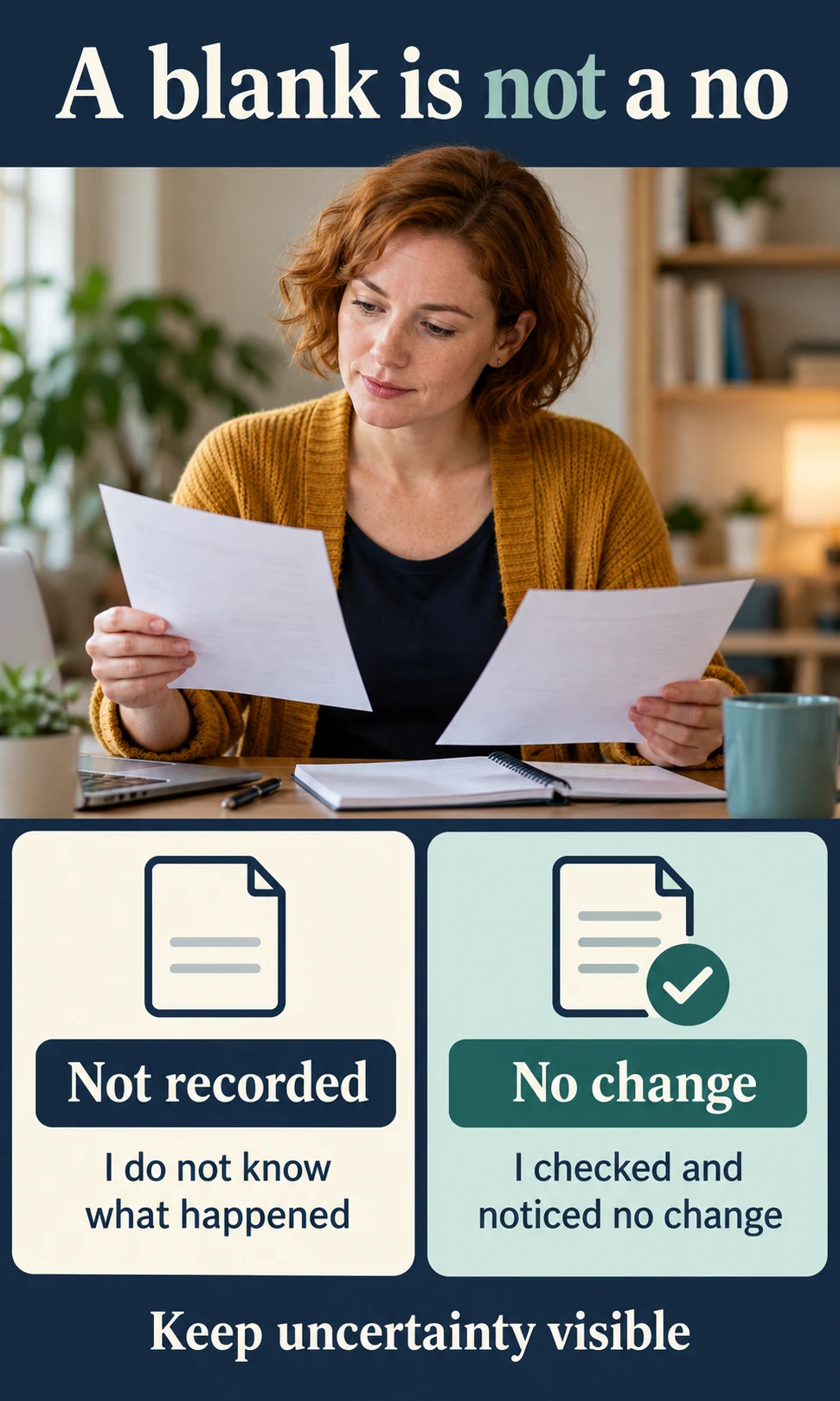
“No change” means you looked back and noticed no change from your usual eating. “Not recorded” means you do not know what happened or did not make an entry. Keeping those meanings separate prevents an incomplete record from appearing more certain than it is.
For example, “breakfast at 8 am” does not describe the whole day. If there was overeating in the evening, a breakfast-only entry can make the record look like reduced intake. Write “morning recorded; evening uncertain” when that is all you know, rather than filling the gap with an assumption.
Why a skipped-meal-only log fails
The following two views use the same invented fortnight. The left column records only missed meals; the right column also records eating more and mixed days. These examples explain a documentation problem and are not patient records, research findings or a recommended eating schedule.
| Day | Skipped meals only | Both directions recorded |
|---|---|---|
| 1 | No skipped meal marked | No change |
| 2 | Lunch missed | Less; lunch missed |
| 3 | Nothing entered | More; second plate after dinner |
| 4 | Lunch missed | Both; lunch missed, then ate past fullness |
| 5 | No skipped meal marked | No change |
| 6 | Nothing entered | Not recorded |
| 7 | Nothing entered | More; felt unable to stop |
| 8 | No skipped meal marked | No change |
| 9 | Lunch missed | Less; lunch missed |
| 10 | Lunch missed | Both; lunch missed, then second plate |
| 11 | No skipped meal marked | No change |
| 12 | Nothing entered | More; second plate after dinner |
| 13 | Nothing entered | Not recorded |
| 14 | No skipped meal marked | No change |
The fuller record has 12 recorded days and two unknown days. It shows three more-eating days, two less-eating days, two mixed days and five no-change days. Those are counts of the illustration, not thresholds, severity bands or evidence that depression caused the eating changes.
What to write when the fortnight goes both ways
A mixed pattern can fit into one sentence: “Over the days I recorded, I sometimes missed lunch and later ate more than usual; on one evening I felt unable to stop.” This preserves both experiences without assigning two diagnoses. Add the onset and the effect on your routine if you know them.
If your concern is mainly reduced intake, the separate depression and not eating article addresses that direction. Here, keep overeating and mixed days visible rather than turning the note into another skipped-meal-only diary. Bring any concern about food, control or distress to the appointment even when the pattern seems inconsistent.
Build a short appointment note
Appetite Visit Note organizes up to 14 days and keeps uncertain answers visible. Choose the lighter recording mode if food amounts are uncomfortable to record, and clear the illustrative sample before entering your own observations. Download or print your note before leaving because entries are not saved after reloading the page.

Appetite Visit Note
Keep more, less and mixed days visible for your appointment.
No calories · No diagnosis scoreThis is a note template for adults, not a diagnosis or treatment. You do not need 14 days of entries before seeking care. Stop if recording increases restriction, guilt or distress.
If you may act on thoughts of self-harm, cannot stay safe, collapse or become confused, seek emergency help now. In the US, call or text 988 for a suicide crisis. Elsewhere contact your local crisis service. Repeated vomiting, inability to keep fluids down or very little urine need urgent medical advice.
Loading the entry fields. If they do not appear, use the paper method above: date, pattern, timing, mood and concern.
Your appointment note
Bring this note and mention when the change started, its effect on daily life, and any medication changes. Counts describe recorded days only.
This experience sends no entries, analytics events or health answers. Your host, browser extensions and surrounding page scripts remain outside this component's control.
The weight line, without a target
If a weight change is already known, write the measurements, units and dates, and say whether you were intentionally trying to change weight. If you have no measurements, “clothes feel looser; noticed over the past few weeks” can communicate the observation. You do not need to start weighing yourself to complete this note.
A public DSM-5 criteria table gives a change of more than 5% of body weight in a month as one example of significant weight change. It is not a threshold for seeking help or a way to diagnose yourself, and it does not mean a smaller change is unimportant. Report the change you have noticed and let the clinician interpret it alongside appetite and other symptoms.
What not to bring into the record
- Calorie targets, weighed portions or “good food/bad food” judgments added just for this note.
- A diagnosis inferred from the number of more-eating days or a loss-of-control entry.
- A claim that one food caused depression, or that a supplement will treat it.
- A medication change made to correct appetite without speaking with the prescriber.
Useful appointment preparation includes a medicines list and questions you want answered. Mention changes in sleep, mood, energy or daily functioning that accompanied the eating change. Keep those observations separate from conclusions about why they happened.
When to stop the log and get help
Do not finish a diary before getting help if you may act on thoughts of self-harm or cannot stay safe. Contact emergency services for immediate danger, collapse or confusion. In the United States, call or text 988 for a suicide crisis; elsewhere use your local crisis service or emergency number.
Repeated vomiting, inability to keep fluids down or signs of dehydration need urgent medical advice. Very little urine or dizziness on standing that does not settle are reasons to seek urgent help rather than wait for a routine appointment. Stop detailed logging and contact your clinician if it intensifies restriction, compulsive checking, guilt or distress.

Frequently asked questions
What if I skip meals some days and overeat on others?
Record both experiences, including days when they happen together. A mixed-day entry preserves information that a skipped-meal-only diary would miss. You do not need to explain the cause before discussing it.
Does eating more count as a depression symptom to mention?
Yes, an appetite change is worth discussing, including eating more than usual. It does not establish depression or an eating disorder. Mention onset, frequency, distress and the effect on daily life.
How many days should the note cover?
Use whatever days you can comfortably record; this template provides space for 14. That length is a convenience, not a validated assessment period or a prerequisite for care. A partial note is fine for an appointment.
Should I write calories or weigh the food?
You do not need calories or weighed portions for this appointment note. Ordinary descriptions such as “a second plate” communicate the observation. If your clinician has given you a specific recording method, discuss how this note fits with it.
What if I cannot remember the amount?
Write “amount uncertain,” describe the part you remember, or leave the day Not recorded. Do not reconstruct a precise portion from a vague memory. Uncertainty is useful information for the clinician.
When is appetite change urgent rather than something to log?
Immediate danger from self-harm, collapse or confusion needs emergency help. Repeated vomiting, inability to keep fluids down or serious dehydration signs need urgent medical advice. Do not wait to complete a fortnight of entries.
Bring the note, then ask for the next step
Start with the change that concerns you most, even if you have only a few entries. Ask what should be assessed and whether a different way of recording would be helpful. The point of the note is to support a conversation, not to earn a diagnosis or prove that you logged enough.
This article is an informational appointment-preparation guide, not medical advice, diagnosis, treatment or a prescription. Its fortnight is an illustration and the interactive experience is a note template. For medical symptoms or concerns, consult an appropriately qualified health professional.
References
- NIMH: Depression — appetite changes and the wider clinical assessment.
- NIMH: Tips for talking with a health care provider — preparing symptoms and questions.
- Beat: Going to the doctor — discussing eating concerns and preparing for a visit.
- NCBI Bookshelf: Public DSM-5 major depressive episode criteria table — the weight-change example, not a help-seeking threshold.
- NHS: Dehydration — signs requiring urgent or emergency help.