




Chronic pain and depression can reinforce each other: pain can disrupt sleep and valued activities, while depression can make pain harder to manage. Both deserve attention, and new physical symptoms should not be dismissed as “just depression.” Start by separating what hurts from what pain is preventing you from doing.
A useful first step: choose one affected activity and name its main barrier: physical discomfort, loss of interest, poor sleep, or a mixture. Use that distinction to make one practical adjustment and explain the problem clearly at your next review. You do not need to prove which condition started first before asking for help with both.
| What is happening? | Useful direction |
|---|---|
| A familiar task triggers overdoing and a difficult recovery | Use the pacing and task-setup methods below within your existing care advice. |
| Enjoyment has faded even when an activity is physically possible | Raise mood and loss of interest explicitly; changing the physical task alone may not address this. |
| Pain has changed, or new symptoms have appeared | Use a clinical reassessment route rather than assuming a routine flare. |
| Treatment helps one problem but creates another | Review benefits and unwanted effects together with the prescriber or pharmacist. |
Why can chronic pain and depression reinforce each other?
Pain, mood, sleep and daily function can interact without one being the sole cause of the others. Persistent pain may narrow work, relationships and enjoyable activity; depression can add hopelessness and make planning or engaging with care harder. NIMH’s overview of chronic illness and depression explains why both physical and mental health belong in the same care conversation.
Chronic pain generally means pain persisting or recurring for more than three months. Some pain is associated with an identifiable condition, such as arthritis or nerve injury; chronic primary pain is a clinical category in which another diagnosis does not adequately explain the pain or its impact. These categories are not a home test, and primary and secondary pain can coexist.
A normal scan does not make pain imaginary, and a depression diagnosis does not explain every new ache. Pain involves nervous-system processing as well as physical and emotional context, so pain intensity and tissue findings do not always track neatly. The broader range of physical symptoms of depression belongs on its own page; here the focus is what persistent pain interrupts and how to respond.
Separate intensity from interference
Use this check when a single pain rating fails to explain why your day is difficult. Open a private phone note, use voice input, or simply say the answers aloud; this is a brief decision aid, not a diary or diagnostic score. Its purpose is to identify a barrier that an adjustment or care discussion can actually address.
- Name one specific task, such as preparing dinner, rather than “everything is difficult.”
- Separate the barriers: does movement hurt, does the task feel emotionally unrewarding, did poor sleep reduce your capacity, or do several apply?
- Choose one response matched to that barrier: change the physical setup, discuss persistent loss of interest, or bring disrupted sleep into the care review.
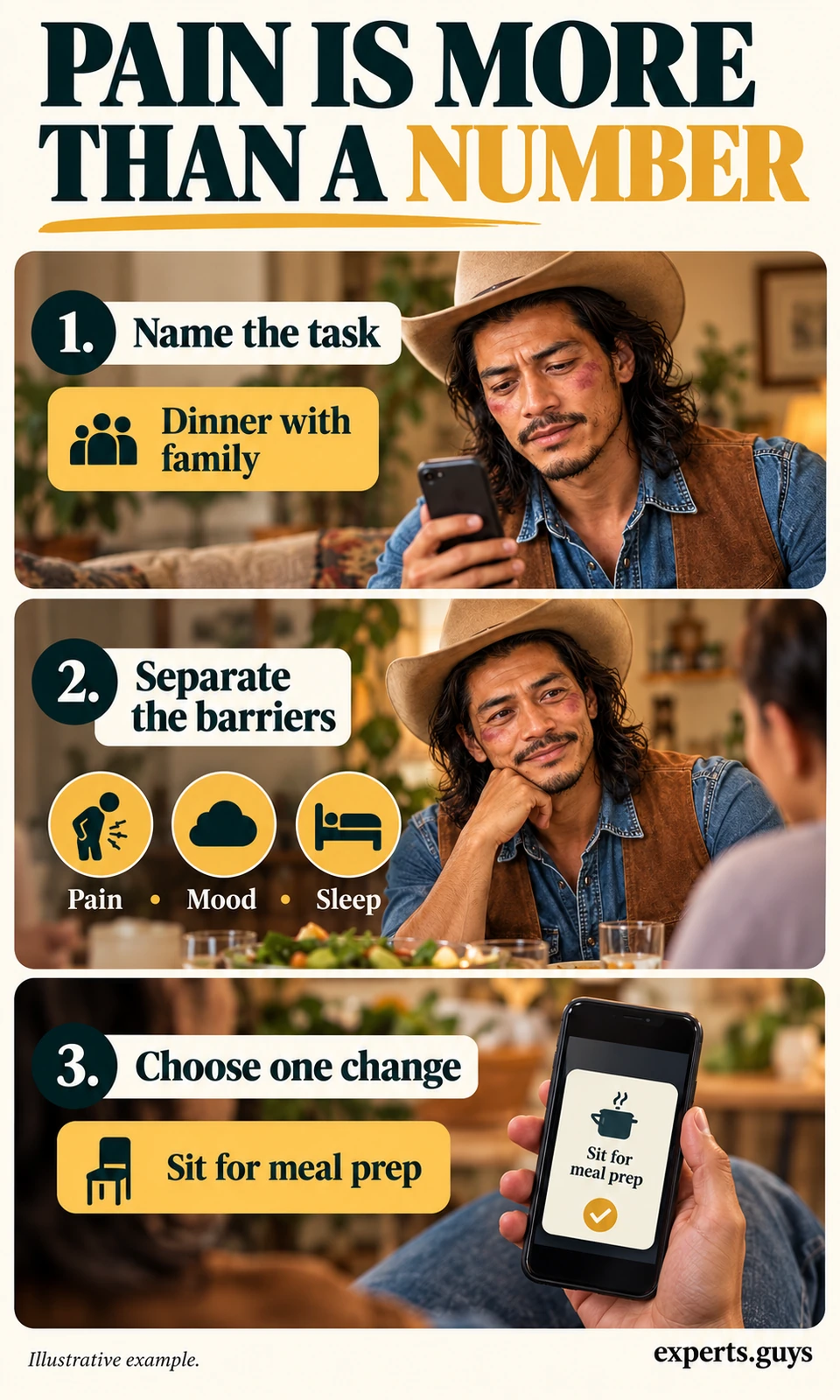
Illustrative example: “I want dinner with my family, but standing to prepare it is difficult” points toward seated preparation or help with the physical work. “I can sit with them, but nothing feels enjoyable” raises a different concern to discuss alongside pain. If explaining both is too demanding, bring one sentence; the common mistake is treating a high pain number as a complete description of your needs.
When does a pain flare need a different response?
A flare is an increase in an established pain problem, but the word should not be used to explain away unfamiliar symptoms. Compare the change with your own usual pattern and with any flare guidance your clinician has already provided. Reassessment is especially useful when the location, character, associated symptoms or effect on daily life has changed.
Compare the change before choosing a response
Use this method before treating a worsening day as routine. Keep your existing care instructions accessible on your phone and check the urgent signs above first. This comparison prepares a clear conversation; it cannot rule out an emergency or confirm that pain is harmless.
- Describe the difference in ordinary words: new location, different sensation, sudden onset, new weakness, fever, or a new difficulty with an everyday function.
- If there are urgent warning signs, seek urgent or emergency care directly. Do not wait to complete a note or finish a self-help exercise.
- For non-emergency uncertainty or a changed pattern, contact your usual clinician or local urgent advice service. For a familiar flare, follow your individual plan and seek review if it is not settling as expected.
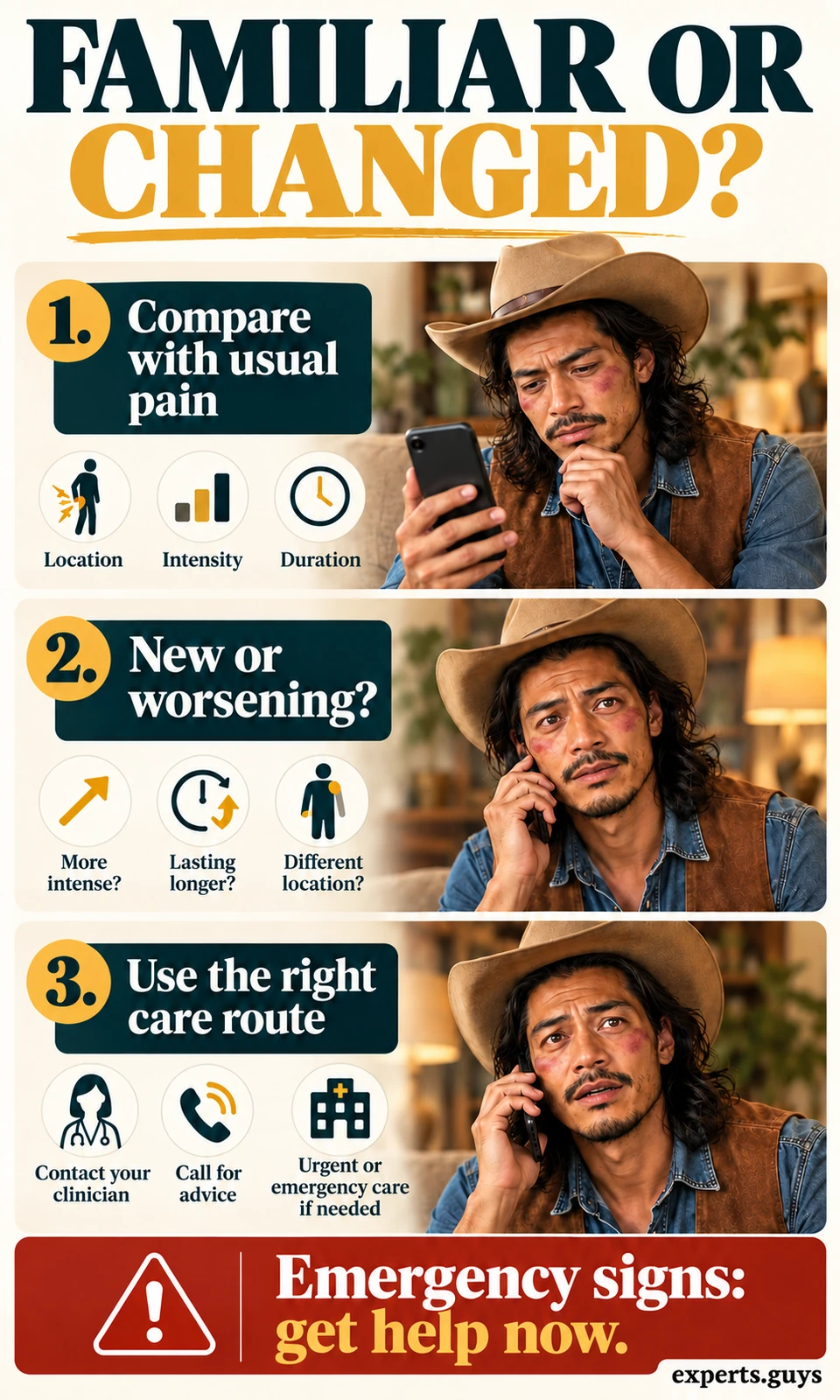
Illustrative example: a familiar ache after a demanding day and new leg weakness are different messages to give a clinician. If describing the change is difficult, ask someone to help you make the call rather than trying to produce a perfect symptom history. The checkpoint is a suitable care route, not a reassuring result from this page; do not turn a checklist into permission to ignore worsening symptoms.
| Question for the review | Why it changes the discussion | What it cannot establish |
|---|---|---|
| Has the pain pattern changed? | May call for a fresh physical assessment. | The cause cannot be determined from timing alone. |
| Is low mood or loss of interest persisting? | Mental health may need care alongside pain. | Fatigue alone does not diagnose depression. |
| Did a treatment change come first? | Helps the clinician consider adverse effects and interactions. | A sequence does not prove a medicine caused the symptom. |
Persistent low mood or loss of interest, especially when daily life is affected, is a reason to arrange assessment. A pattern lasting around two weeks is an important signal in depression assessment, but severe distress or deterioration deserves earlier help. Sleep disturbance can complicate the picture; the guide to depression and sleep problems explains those patterns without making sleep alone a diagnosis.
How can you reduce daily friction without pushing through pain?
For an assessed, familiar pain problem, change the demands of the activity before trying to increase your output. The aim is a repeatable, tolerable way to do something meaningful, not proving endurance. These examples are practical adaptations; follow injury, surgery and condition-specific restrictions, and do not apply automatic activity increases if you have post-exertional symptom worsening or a separate energy-management plan.
Plan a pause before overload
Pacing fits a pattern of doing too much on a better day and then struggling afterward. Cambridge University Hospitals’ pacing guidance describes planning manageable activity and reminders instead of waiting until symptoms force a stop. No universal timer or progression schedule suits every condition.
- Choose an amount of a familiar, light task that is within your current tolerances and care advice. Decide where you will pause before starting.
- Use a phone reminder if useful; at the planned pause, stop or change to a comfortable lower-demand position or activity. Do not use the reminder as a command to keep going through worsening symptoms.
- Before repeating, consider how you felt during the task and later. Reduce the amount or seek tailored advice if the pattern repeatedly makes you worse.

Illustrative example: fold a small portion of laundry, take the planned break, and leave the rest for another suitable time. If that is too much, someone can bring you one garment or handle the task entirely. The common mistake is using an unusually good day to clear the whole backlog; completion means following a manageable plan, not finishing every item.
Change the setup, not just the duration
A short task can still be demanding if it involves awkward reaching or moving a heavy load. Changing height, distance or support can reduce unnecessary effort, although no single posture is best for every pain condition. Choose a familiar activity and arrange help with any lifting that is already difficult or restricted.
- Identify the demanding part: reaching to the floor, carrying a basket, standing for the whole task, or working far from your body.
- Bring light work within comfortable reach, or ask someone to do it. Use stable seating or another supported position only if it suits you and the task.
- Try the easier setup with a small amount and compare the effort. Stop or change approach if it increases symptoms; ask an occupational therapist or physiotherapist for tailored alternatives when needed.

Illustrative example: have light laundry placed on a table so you can fold a shirt seated, rather than repeatedly reaching into a floor basket. The easier option is to leave the folding to someone else while you choose what needs doing first. The mistake to avoid is creating a new hazard, such as a rolling chair or an unstable work surface; the useful result is a workable setup, not a perfect-looking posture.
Keep the purpose of an activity while changing its format
Pain can make a familiar activity inaccessible even when its purpose still matters. Keeping the social or enjoyable element while changing the format offers an alternative to an all-or-nothing decision. This is an activity adaptation, not a substitute for depression treatment and not a promise that enjoyment will immediately return.
- Name what matters about the activity: companionship, music, time outdoors, or a sense of participation.
- Choose a lower-demand format that preserves that purpose, such as a short call instead of a long outing. Agree a comfortable stopping point in advance.
- Try the chosen version without judging success by an instant mood change. Repeat or simplify only if it fits your limits; discuss persistent loss of interest as a symptom in its own right.

Illustrative example: “I cannot manage the outing, but I would like a short call” keeps the connection without committing to travel and prolonged standing. If a call is too demanding, ask your friend to send a voice message that you can hear when ready. The common mistake is using the easier version as a test of whether you are “trying hard enough”; completion is participating in the chosen way, not feeling cheerful afterward.
What should coordinated treatment and follow-up look like?
Treatment should address the pain condition and depression together while recognising that their responses may differ. Pain rehabilitation, psychological treatment and medicines serve different purposes; the appropriate combination depends on the diagnosis, preferences, risks and access. A treatment offered for pain does not automatically provide adequate treatment for depression, or vice versa.
| Care component | What to clarify | Important limit |
|---|---|---|
| Pain-focused psychological care | Whether CBT or ACT for pain fits the problem and who is trained to provide it. | It is not a claim that pain is imaginary. |
| Physical or occupational rehabilitation | What activity adaptations and limits fit your diagnosis and daily tasks. | A general exercise schedule is not appropriate for every condition. |
| Medication review | Which symptom the medicine targets and how benefit and harm will be reviewed. | Do not assume all antidepressants treat all pain conditions. |
| Depression care | How mood, loss of interest and daily function will be assessed and treated. | Pain relief alone may not resolve depression. |
For chronic primary pain, the UK’s NICE guidance includes consideration of pain-focused CBT or ACT and, for adults, an antidepressant after discussion of benefits and risks. That guidance is not a universal medication rule for every cause of pain, and local prescribing practice differs. If counseling is an option, the guide to mental health counseling can help with practical access and fit questions.
Check the benefit and burden of each medicine
Use a medication review when the intended benefit is unclear, side effects interfere with life, or several professionals prescribe treatment. Keep the full list in your phone or patient portal, including non-prescription medicines and supplements. NHS antidepressant information explains why interactions and withdrawal matter; do not stop suddenly or change doses yourself.
- Check the names and current instructions against your prescription labels or portal; if uncertain, show the packaging to the pharmacist. Include products you take occasionally.
- Ask: “What is this treating, what benefit should I look for, which unwanted effects need a call, and can it interact with my other medicines?”
- Agree when and with whom to review it. Contact the prescriber sooner if significant unwanted effects appear; emergency symptoms require immediate help.

Illustrative example: “My pain is a little easier, but I am too drowsy to manage my usual activities” describes a trade-off worth reviewing. If preparing a list is too much, bring the medicine containers and ask the pharmacist to reconcile them. The mistake is calling reduced pain an unqualified success while ignoring function; the completed step is a shared monitoring plan, not a self-selected dose change.
Close the gap between pain care and mood care
When several services are involved, a referral alone does not tell you who will act on new concerns. A concrete handoff makes responsibility and the next contact visible to you. Use your patient portal, phone contacts or a trusted support person to keep the agreed details accessible.
- Ask which clinician or service coordinates the overall plan and which handles pain treatment or depression treatment. Confirm how to contact each.
- Ask how changes will be shared, including what you should send and whether the teams communicate directly. Use the service’s secure route for health details.
- Confirm the next appointment or contact, what happens while you wait, and which changes should prompt an earlier call. If a referral has no response, follow up with the referring service.

Illustrative example: a pain clinic may advise on rehabilitation while primary care reviews mood and medicines. Ask both services who receives a report if sedation or worsening mood interrupts the rehabilitation plan. If managing contacts feels overwhelming, ask a trusted person to help with your permission; the checkpoint is knowing the next responsible contact, not collecting more referral names.
Review progress without demanding zero pain
A useful review asks whether life is becoming more manageable and whether treatment is creating new problems. Choose a meaningful activity plus relevant mood or sleep changes, and compare them with a clearly remembered starting point. This is an editorial conversation framework, not a validated outcome scale or proof that a treatment caused the change.
- Choose one concrete activity, such as preparing a simple meal, and the mood or sleep concern that matters most to you. Agree appropriate review timing with your care team.
- At the review, describe what is easier, unchanged or worse, including unwanted effects. A short voice note or portal message is enough; repeated daily scoring is not required.
- Ask whether to continue, adapt or reconsider the plan. Worsening symptoms or new safety concerns should be raised earlier rather than saved for the planned review.
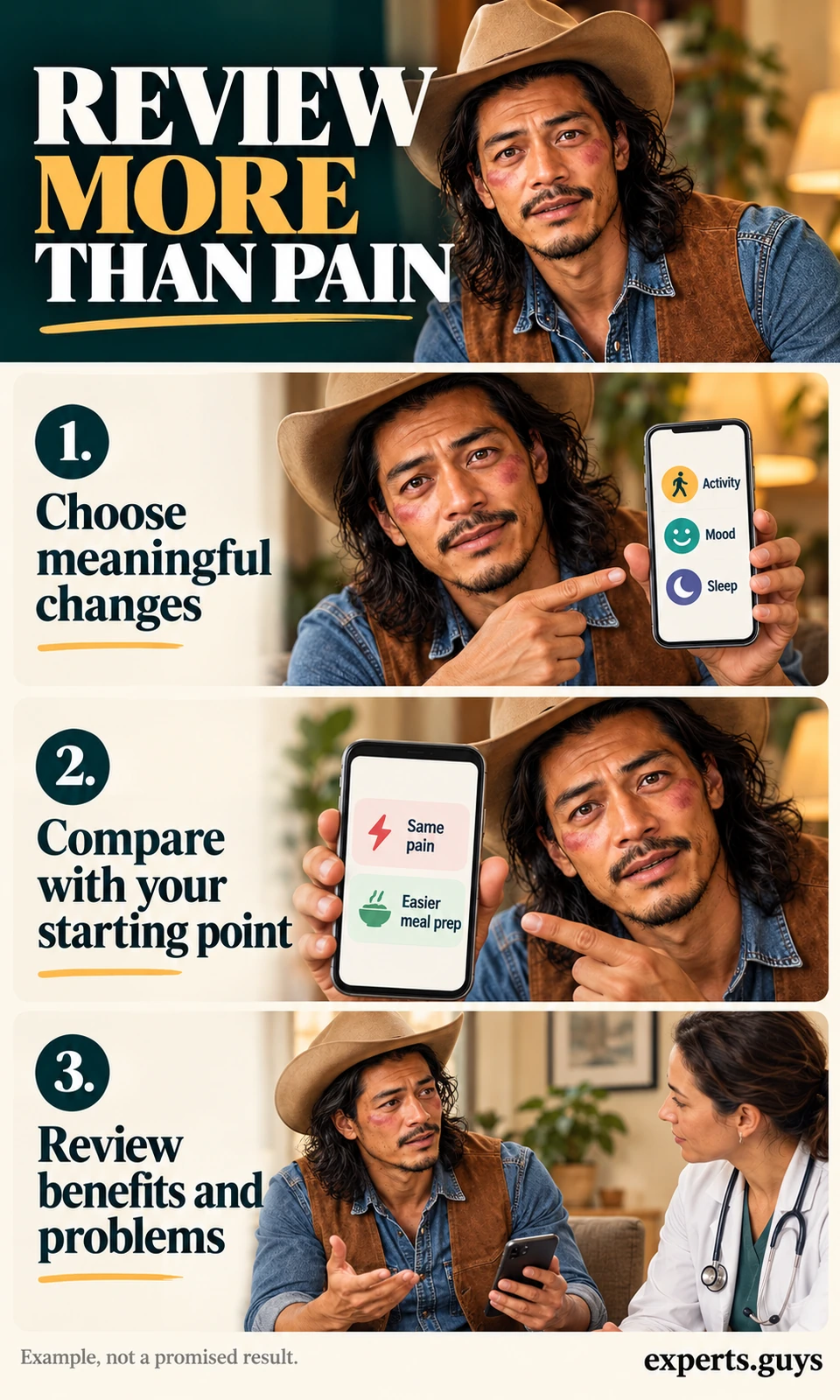
Illustrative example: the pain feels similar, but seated preparation makes meals more manageable; meanwhile, loss of interest remains unchanged. That mixed result can support keeping a useful adaptation while reviewing depression care. The mistake is treating any remaining pain as failure, or easier activity as proof that depression has resolved; if comparison is too demanding, bring one example of what changed.
Frequently asked questions
Does being offered therapy mean the pain is all in my head?
No. Psychological care can address the effects of pain on behaviour, emotions and daily life while physical assessment and treatment continue. Ask what the therapy is intended to help with and how progress will be reviewed.
Can an antidepressant be prescribed for pain when someone is not depressed?
Yes, some antidepressants are used for certain pain conditions. That does not establish a depression diagnosis, and the choice depends on the pain condition, risks and other treatment. Ask the prescriber which problem the medicine targets.
What if my scans are normal but pain is still limiting my life?
Explain the limitation and ask what the findings do and do not rule out. A normal scan does not mean the pain is unreal. New symptoms or a changed pattern may need reassessment even after earlier tests.
Do I need to wait until my pain improves to seek help for depression?
No. Persistent low mood or loss of interest can be assessed while pain care continues. The two care plans should account for each other, including treatment effects and practical barriers.
Your next step
Choose the method that matches the problem you face today: an activity barrier, a changed symptom, a treatment trade-off, or a missing care contact. Complete that one step and use what it reveals to guide the next conversation or adjustment. You do not have to solve pain and depression in a single effort.










