




Psychotic depression is depression accompanied by delusions, hallucinations, or both. New symptoms that affect someone’s sense of reality need prompt professional assessment, even when the person seems calm. This guide explains what to notice, how to get help and what treatment discussions should cover.
- New voices, visions or strongly held unusual beliefs: contact a clinician or mental health team urgently; do not wait for a two-week threshold.
- Difficulty explaining what is happening: a trusted person can describe the changes and help arrange care.
- Already receiving treatment: report new or worsening symptoms to the treating team; do not change medication yourself.
What makes psychotic depression different from negative thoughts?
The distinction is a change in belief or perception, not simply how upsetting a thought feels. Rumination repeats worries or self-criticism; psychosis can involve an experience perceived as real or a conviction that remains fixed despite contrary evidence. A clinician considers the whole picture, including culture, context, distress and functioning.
| Experience | Illustrative example | What it tells you |
|---|---|---|
| Rumination | “I keep replaying that mistake.” | Repetition alone does not establish psychosis. |
| Hallucination | Hearing a voice when no external speaker is present. | A perception needs assessment in context; it has several possible causes. |
| Delusion | Being firmly convinced of having caused a disaster despite clear evidence otherwise. | The conviction and context matter, not whether someone uses dramatic language. |
Depression can involve low mood, loss of pleasure, guilt, disturbed sleep and changes in appetite or movement. When psychotic symptoms accompany it, their themes may echo guilt, punishment, poverty or illness, although the content does not always match the mood. The NHS explanation of psychotic depression describes this combination and the need for treatment.
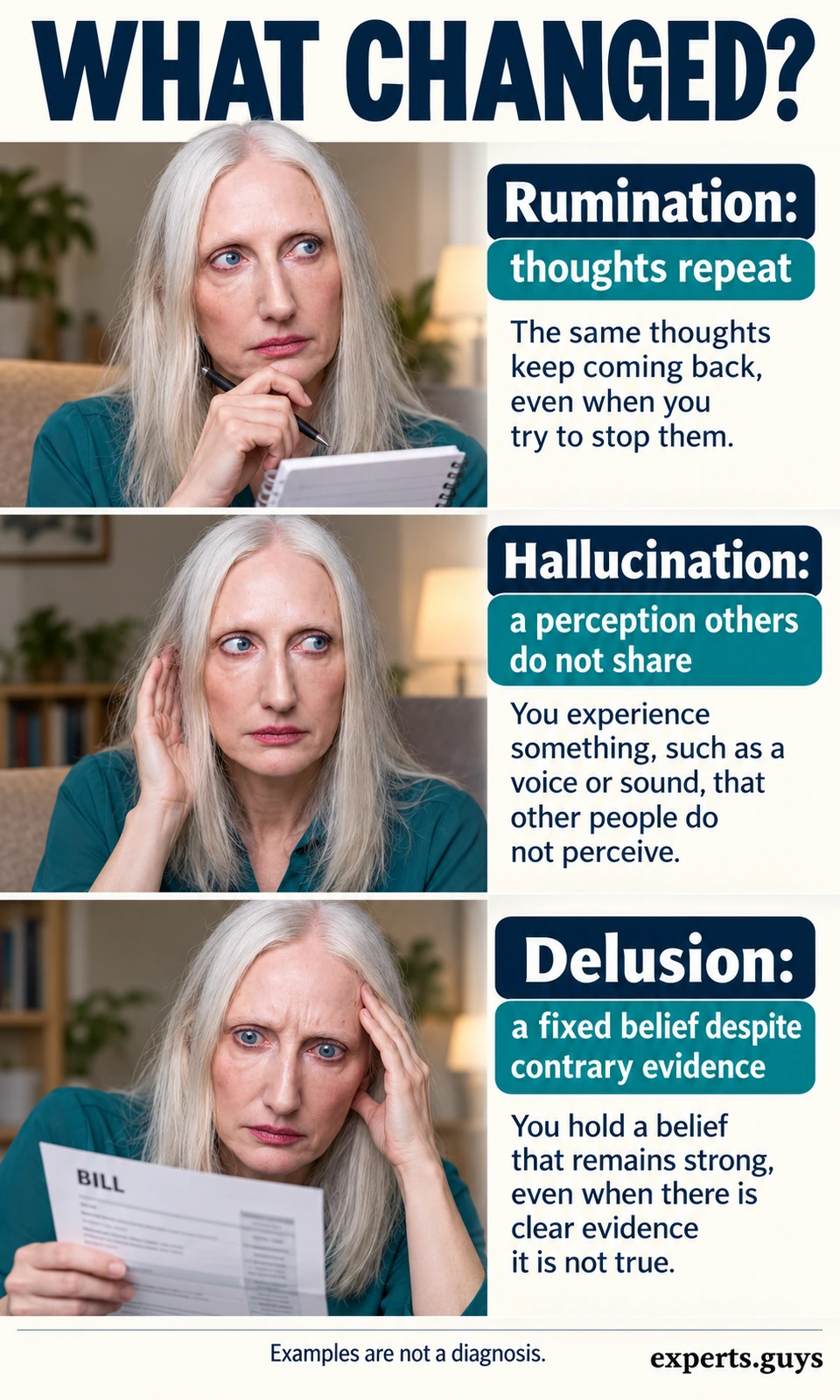
A statement such as “I feel dead inside” can be a metaphor rather than a delusion. Likewise, an intrusive thought, a vivid memory or a belief shared within a cultural or spiritual tradition is not automatically psychosis. Ask for assessment rather than testing someone by debating their belief.
Psychotic depression is not another name for schizophrenia, and it does not imply a “split personality.” Clinicians ask whether psychotic experiences occur only during depressive episodes and whether there has ever been mania or hypomania. The broader types of depression guide explains neighboring diagnoses without replacing that assessment.
The exact reason some depressive episodes include psychosis is not fully understood. A simple “chemical imbalance” explanation cannot establish an individual diagnosis or select their treatment. If the main difficulty is repeated self-critical thinking, the separate guide to depressive rumination and overthinking covers that problem; its exercises should not be used to argue someone out of a delusion.
When should I get help, and how can a supporter respond?
New or worsening psychotic symptoms warrant urgent contact with a healthcare professional. A person may not recognize that their experiences are symptoms, so a supporter’s observations can be important. Waiting for certainty about the diagnosis can delay useful care.
Treat sudden confusion as a medical emergency, especially when someone becomes disoriented or cannot attend to a conversation. Delirium can arise from physical illness, medicines or other medical problems and may include hallucinations. Do not assume a previous depression diagnosis explains an abrupt change.
How do I contact care?
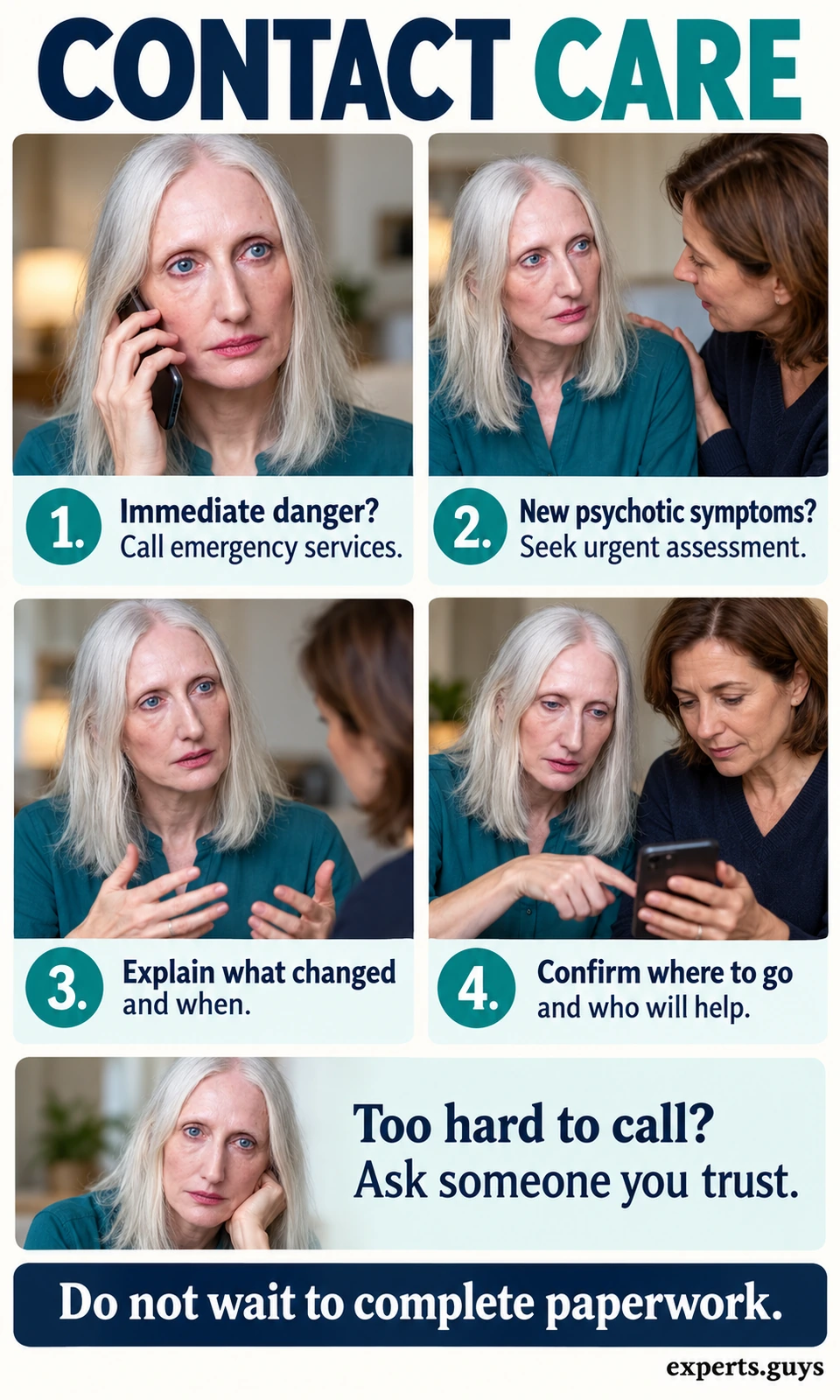
- Check the immediate situation. If there is immediate danger, severe physical deterioration or sudden confusion, use emergency services now.
- Contact a care service urgently. Use the existing mental health team, a clinician or the local urgent mental health service for new psychotic symptoms.
- Describe observable changes. Explain what was heard or believed, when it began, and any problems with safety, sleep, food or drinking.
- Confirm the next step. Ask where to go, how soon to attend and who can help the person get there safely. If speaking is difficult, ask a trusted person to call with you.
An illustrative opening is: “My relative has been very depressed and is now hearing a voice when nobody else is speaking. This began yesterday, and they have barely been drinking. What assessment do they need now?” A successful call ends with a clear next action; it does not require you to name the disorder correctly.
What can I say without making things worse?
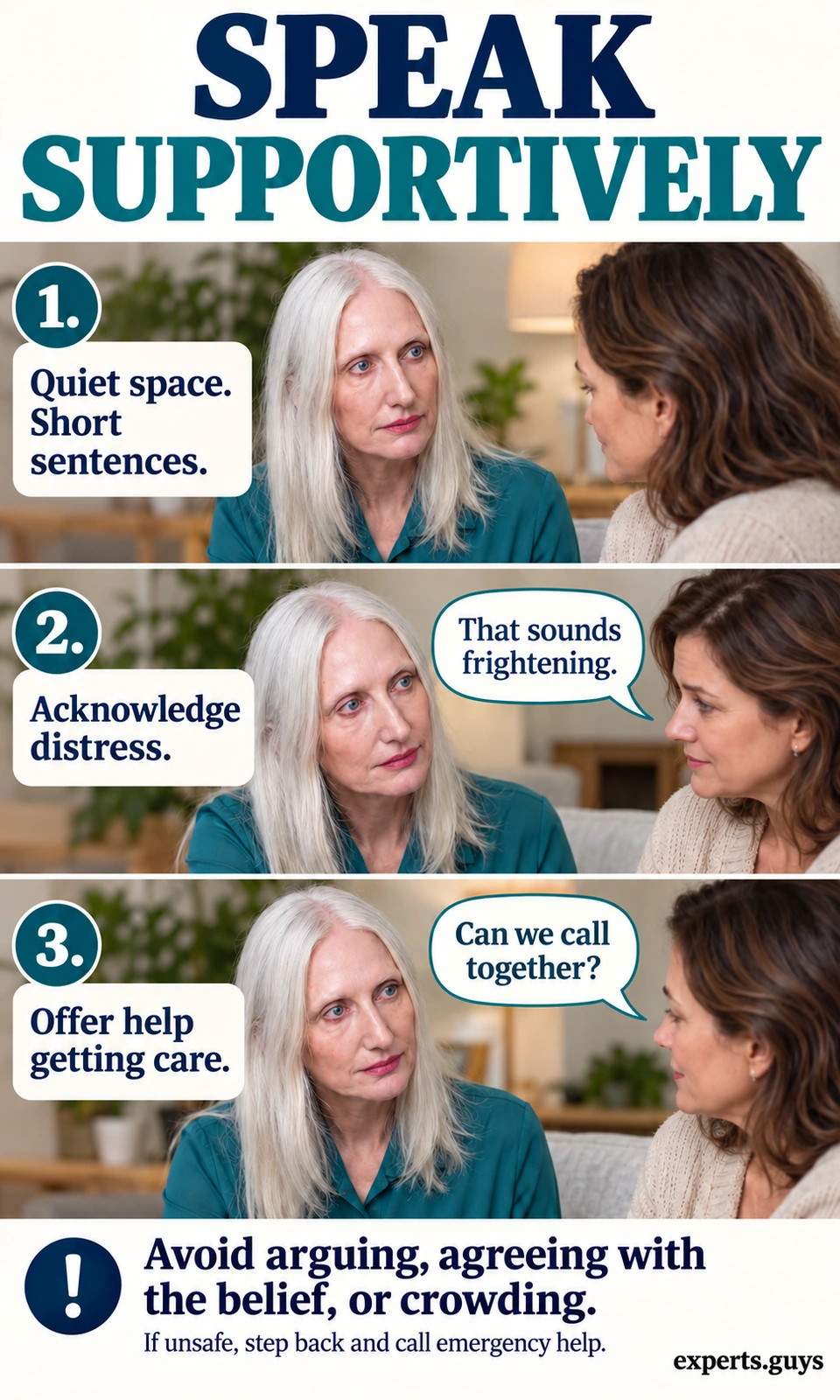
Keep the conversation private, calm and brief, with enough personal space. Acknowledge how distressing the experience feels without confirming that the belief is true or insisting that the person prove it. NSW Health’s communication guidance supports short sentences, respectful listening and avoiding confrontation.
An illustrative response is: “That sounds frightening. I am not experiencing it, but I can see that you are distressed. Can we call someone together?” If a longer conversation is too much, offer one small action, such as sitting nearby while a trusted person calls; if the situation becomes unsafe, step back and get emergency help.
Someone may refuse a conversation or disagree that they need treatment. You can still contact a healthcare service to explain your concerns and ask what options apply locally, without promising secrecy about immediate danger. Whether assessment can proceed without consent depends on clinical assessment and local law, not a family member’s diagnosis.
What should an assessment check, and what information helps?
Assessment checks the depressive episode, the psychotic experiences, physical health, safety and the timeline between symptoms. It also considers medicines, substance use, sleep loss and a history of unusually elevated or activated moods. NIMH’s overview of psychosis explains why several conditions and exposures can produce similar experiences.
There is no home quiz or single blood test that confirms psychotic depression. Examination or laboratory tests may help investigate other causes, while the interview establishes the pattern over time. The care team may seek a supporter’s account, with appropriate consent and confidentiality safeguards.
Prepare a short factual note
- Experience: write the person’s own words about what they heard, saw or believed, without adding a diagnosis.
- Timing: record when the change began and whether similar experiences happened when their mood was different.
- Daily effects: note changes in sleep, food, fluids, self-care and immediate safety.
- Relevant background: bring a medicine list, substance-use information and any history of very little sleep with unusually high energy, rapid speech or risky behavior.
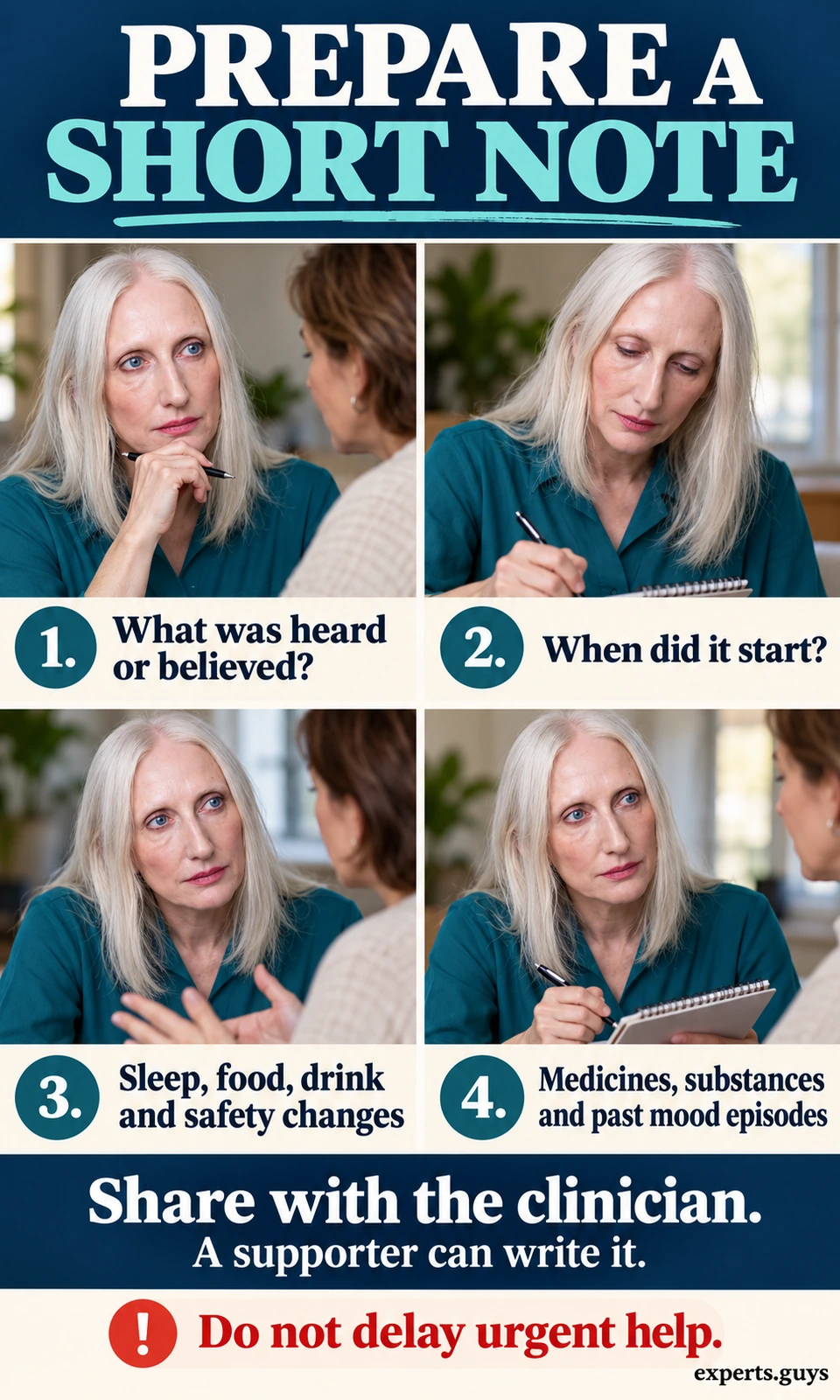
For example, a supporter might write: “On Monday, she said a voice was accusing her while the room was quiet; by Tuesday she was avoiding meals.” That describes an observation without declaring its cause. If writing feels impossible, share one example aloud or let a trusted person write it; never delay urgent help to complete the note.
Tell the clinician if psychotic experiences have occurred outside depressive episodes. Also mention past periods of elevated or irritable mood with increased activity, because bipolar depression calls for a different treatment discussion. The goal is an accurate timeline, not choosing a label from a list.
What does treatment involve, and how is recovery reviewed?
Treatment usually needs specialist mental health input and a plan that addresses both depression and psychotic symptoms. Medication, psychological care and practical support can have different roles rather than competing with one another. The intensity of care depends on safety, physical health, functioning and available support.
| Part of care | Purpose | Discussion to have |
|---|---|---|
| Antidepressant plus antipsychotic | Addresses depressive and psychotic symptoms. | Expected benefits, side effects, monitoring and alternatives. |
| Electroconvulsive therapy (ECT) | May be considered for severe depression when rapid improvement is needed or other treatment has failed. | Why it is recommended, consent, anesthesia and memory-related risks. |
| Psychological and social support | Helps with understanding, recovery and practical needs. | When therapy is workable and what support is needed at home. |
| Hospital or intensive community care | Provides closer assessment and support when needed. | Which setting can meet current safety and physical-health needs. |
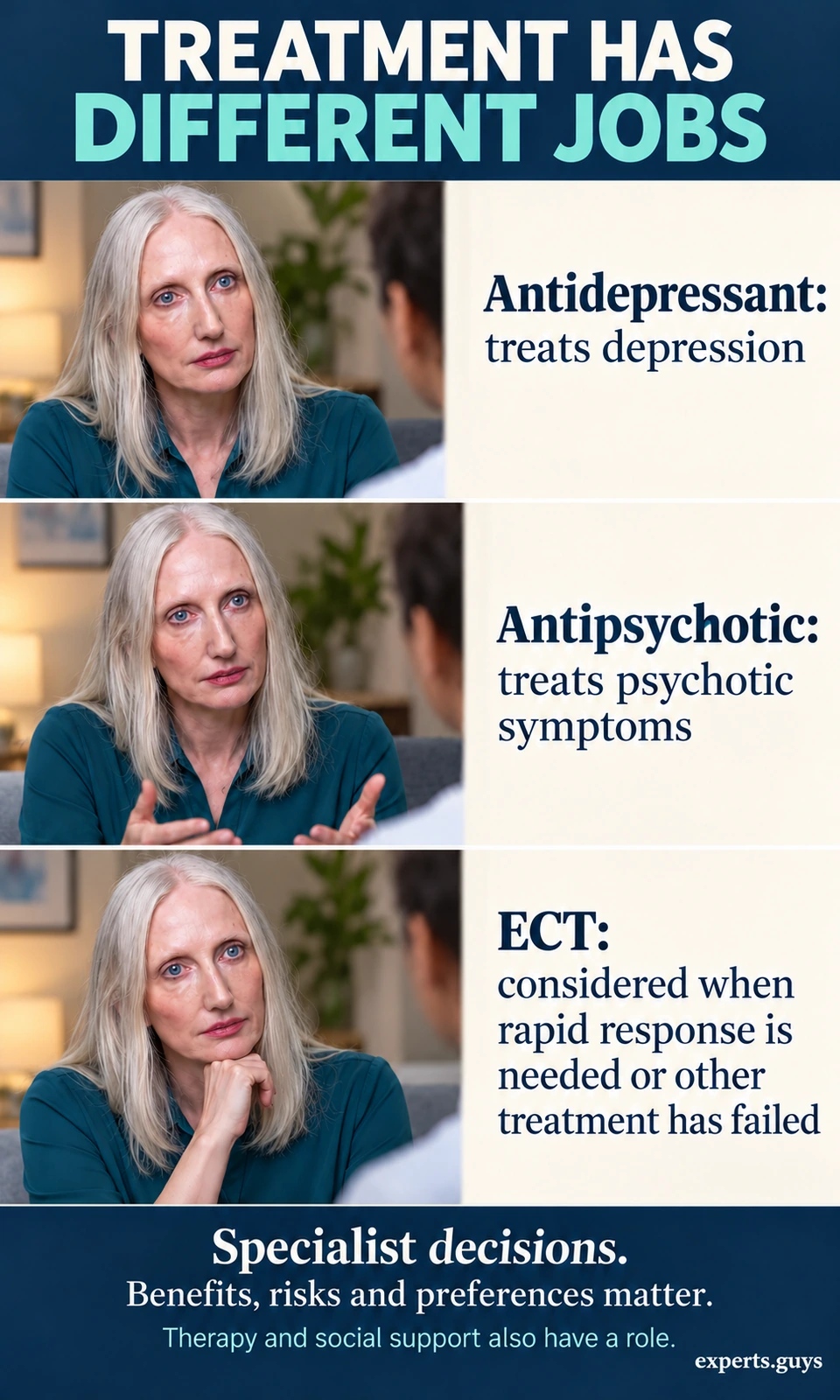
NICE guidance on psychotic depression recommends specialist referral and consideration of an antidepressant with an antipsychotic. This is not a medication shopping list: choices depend on the person’s history, preferences and risks. If someone does not want an antipsychotic, the specialist should discuss that choice and an appropriate treatment and monitoring plan.
ECT is a clinical treatment performed under anesthesia, not a punishment or a sign that recovery is hopeless. Its benefits must be weighed against risks, including cognitive and memory effects, through an informed treatment discussion. A severe episode that threatens physical health may require a faster response than waiting for routine treatment changes.
How do I make the follow-up useful?
- Describe both symptom groups and daily function. Mention voices or beliefs as well as mood, sleep, drinking, meals and ordinary activities.
- Report difficulties honestly. Explain side effects, missed doses, cost or access problems without changing the prescription yourself.
- Agree the next checkpoint. Ask which physical checks are needed, when the next appointment is, and who to contact if symptoms worsen.
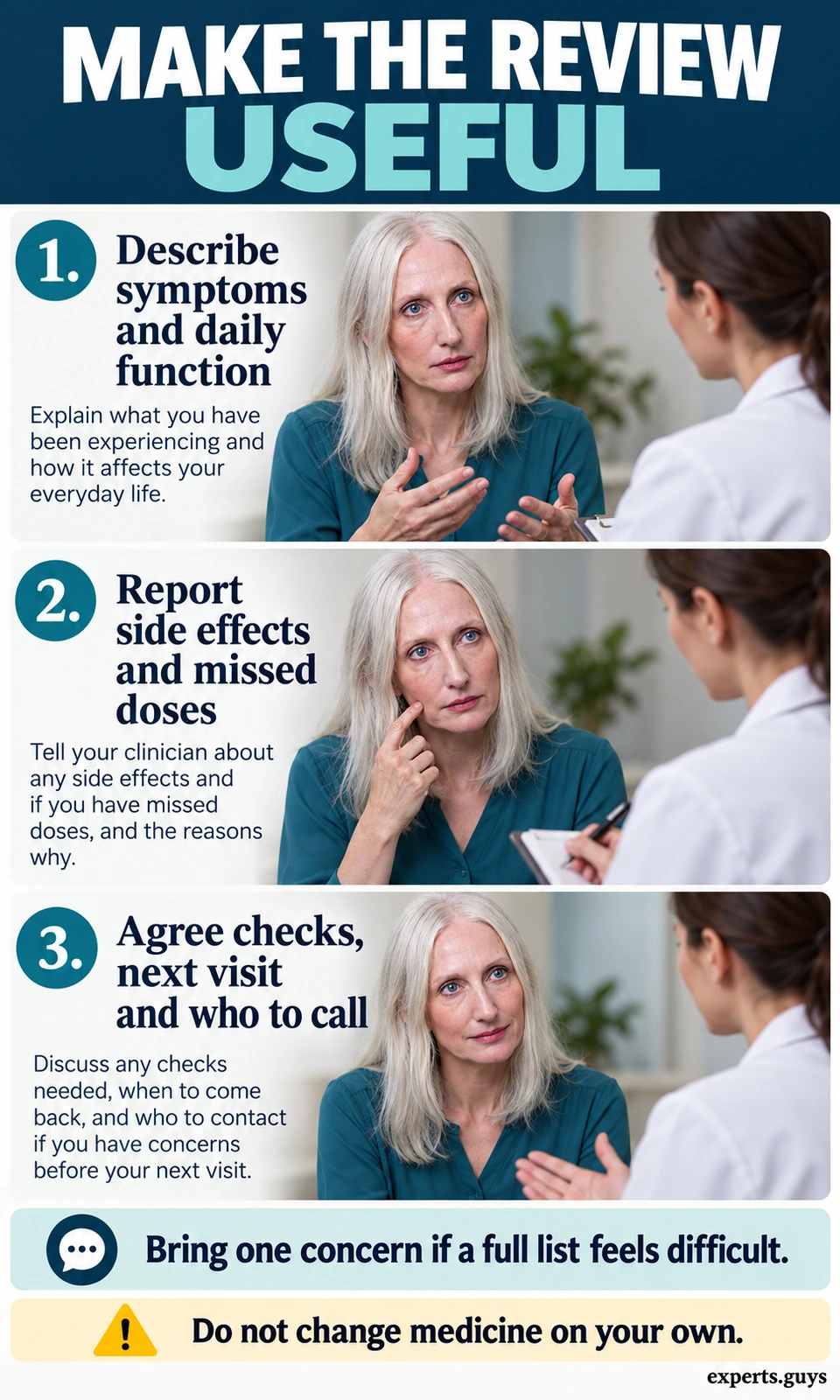
If preparing for the visit is difficult, take one concrete concern: “I am sleeping better, but the voice is still there,” or “I am too sleepy to manage the morning.” These are illustrative conversation starters, not evidence that a particular medicine is right or wrong. Completion means the concern was heard and the next action is clear.
Feeling better does not automatically mean medication should stop. In the STOP-PD II randomized trial, adults who had improved on sertraline and olanzapine had fewer relapses over 36 weeks when olanzapine continued, but weight gain was a trade-off. That finding concerns a selected group and one regimen; it does not set everyone’s treatment duration or predict an individual outcome.
What belongs in a relapse response?
- Identify personal early changes with the care team. Use the previous episode’s pattern, such as returning unusual beliefs or a marked change in sleep and functioning.
- Write down the contact route. Include the treating service, an out-of-hours backup and a trusted supporter who can help.
- Agree when to act. Ask the clinician which changes mean calling promptly and which require emergency help; do not substitute an online score.
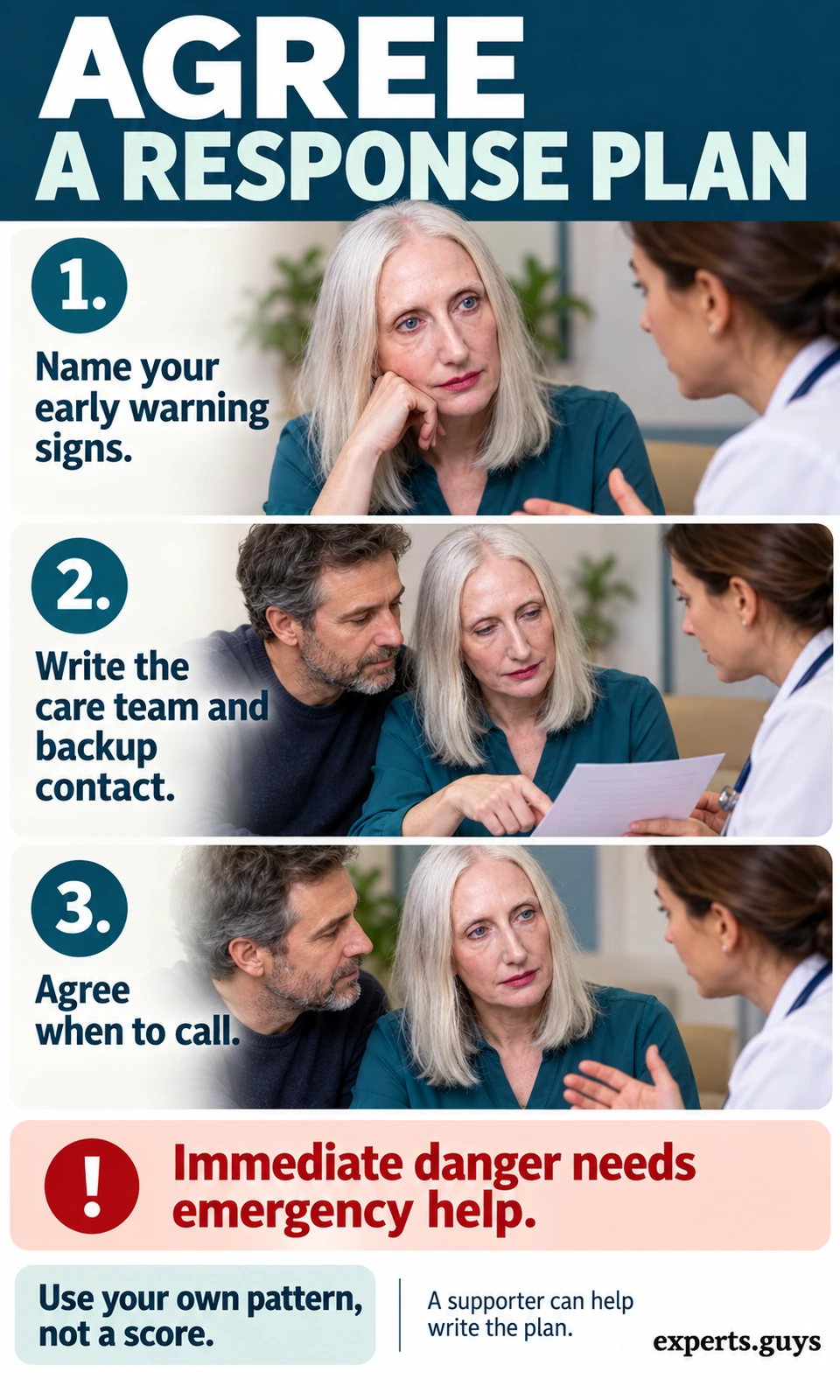
A supporter can help write this plan while the person is well enough to participate. Keep it somewhere easy to find and review it when contacts or treatment change. Recovery can be uneven, so an agreed response is more useful than judging progress from one good or difficult day.
Frequently asked questions
Can psychotic depression happen without hearing voices?
Yes. Delusions can occur without hallucinations, and hallucinations do not have to be auditory. The diagnosis depends on clinical assessment of the depressive episode and the psychotic symptoms.
Does being prescribed an antipsychotic mean I have schizophrenia?
No. Antipsychotic medicines are used for several conditions, including depression with psychotic symptoms. Ask your prescriber which symptom the medicine is intended to treat and how its benefits and risks will be reviewed.
Can a person seem organized and still need assessment?
Yes. A person may speak clearly or complete some ordinary tasks while experiencing distressing voices or strongly held beliefs. Calm behavior alone cannot establish that someone is safe or rule out psychosis.
Will everyone need to stay in hospital?
No. The appropriate setting depends on risk, physical health, daily functioning and the support available. A hospital stay may be necessary when assessment or treatment cannot be provided safely elsewhere.
Can exercise or positive thinking replace treatment?
No. Everyday routines can support recovery, but they do not replace assessment and treatment for psychotic depression. Avoid pressuring someone to prove a belief wrong or to recover through willpower.
Your next action
- If symptoms are new: make the urgent care contact described above.
- If you are supporting someone: share one factual observation and offer to call together.
- If treatment is underway: bring one unresolved symptom or side effect to the next review.
Educational information, not a diagnosis or an individual treatment plan. Images are AI-created illustrations, not documented patients.









