
COVID-19 can complicate neuroinflammatory diseases through infection, temporary worsening of existing symptoms, treatment decisions and disrupted care. A new problem after infection does not automatically mean a relapse or new inflammation in the nervous system. The useful first step is to separate urgent changes from symptoms that need a focused discussion with your care team.
This guide is for adults with an established condition such as multiple sclerosis (MS) or neuromyelitis optica spectrum disorder (NMOSD), and people trying to understand neurological symptoms after COVID. These are different clinical situations, even when fatigue, tingling or difficulty concentrating sound similar. The steps below help you prepare for care; they do not identify the cause of your symptoms.
Which symptom changes need action first?
Sudden weakness, speech trouble or loss of vision needs emergency assessment, even if you have had COVID or already live with a neurological condition. Do not assume a familiar diagnosis explains a new event. The CDC stroke warning signs explain why sudden changes should not wait for a routine appointment.
Other changes may need a prompt call rather than an emergency response, but their timing and effect on daily function matter. A worsening symptom during fever can have a different explanation from a new deficit after recovery. Use the table to organize the next conversation, not to rule out serious illness.
| What changed? | Why the distinction matters | Next action |
|---|---|---|
| Sudden one-sided weakness, speech difficulty, vision loss or severe unexplained headache | A time-sensitive neurological emergency is possible. | Call your local emergency service now; do not drive yourself. |
| New or worsening neurological symptoms over hours or days | An infection, relapse or another problem may need examination. | Contact your neurology team promptly; seek urgent assessment for significant deterioration. |
| Familiar MS symptoms worsen during fever or infection | Temporary symptom worsening can resemble a relapse. | Tell your team about both the infection and the neurological change. |
| Fatigue or concentration problems persist after infection | Long COVID is one possibility, but other causes can coexist. | Arrange assessment and describe the change in function. |
| A planned infusion, test or appointment is now uncertain | The right decision depends on the treatment and current illness. | Contact the treating service before altering the plan. |
Act on sudden neurological changes
- Call the local emergency number for a sudden stroke-like change. Describe the symptom and when it began, or when the person was last known to be well.
- Follow the dispatcher’s instructions. Do not drive yourself or delay the call to complete an online form.
- If someone is with you, ask them to stay and help communicate. Symptoms that improve still need urgent attention.

Trouble breathing, persistent chest pain, a first seizure or new severe confusion also needs emergency help. For less sudden but important changes, describe what you can no longer do safely, rather than only naming a symptom. For example, new difficulty walking across a room is more informative than “my legs feel strange.”
How do infection, relapse and long COVID differ?
The difference is the underlying process, not simply how unpleasant a symptom feels. In MS, an infection or increased temperature can temporarily worsen old neurological symptoms without establishing a new inflammatory attack. A true relapse requires clinical assessment and exclusion of other explanations.
The NICE MS guideline defines a relapse using new or worsening symptoms lasting more than 24 hours, without infection or another cause, after at least a month of stability. Those are clinical diagnostic criteria, not instructions to wait 24 hours before seeking help. They should not be applied as a self-test for NMOSD or another disease.
| Term | What it describes | What it does not establish |
|---|---|---|
| Infection-related worsening / pseudo-relapse in MS | Old symptoms temporarily become more noticeable during a trigger such as infection. | That every worsening symptom is harmless or that a relapse is impossible. |
| Relapse | New inflammatory disease activity judged by the clinical team. | A diagnosis that can be made from symptom duration alone. |
| Long COVID | A chronic condition after SARS-CoV-2 infection, with symptoms that may persist or fluctuate. | That every symptom is caused by inflammation or that another diagnosis has been excluded. |
| Neuroinflammation | Inflammation involving the nervous system, a biological process with several possible causes. | A synonym for brain fog, depression or fatigue. |
NMOSD particularly involves the optic nerves and spinal cord, and can produce vision, limb and bladder problems. New eye pain with visual change, weakness or bladder difficulty deserves prompt assessment rather than comparison with an MS checklist. The NHS explanation of NMOSD describes why specialist testing and disease-specific treatment matter.
Build a short digital timeline
A short timeline makes the change easier to evaluate; it is useful because symptom onset, test timing and your usual baseline answer different questions. Use a phone note or the summary below, with approximate dates clearly marked when you are unsure. You do not need a continuous diary or an hourly symptom score.
- Enter the day and approximate time the current symptoms started, plus the COVID test date if known. Keep those dates separate.
- Describe the change as new, familiar but worse, or uncertain. Add one daily task affected, such as reading a message or walking to the bathroom.
- Include whether fever or another infection symptom was present, and send the concise summary through the care team’s usual channel.
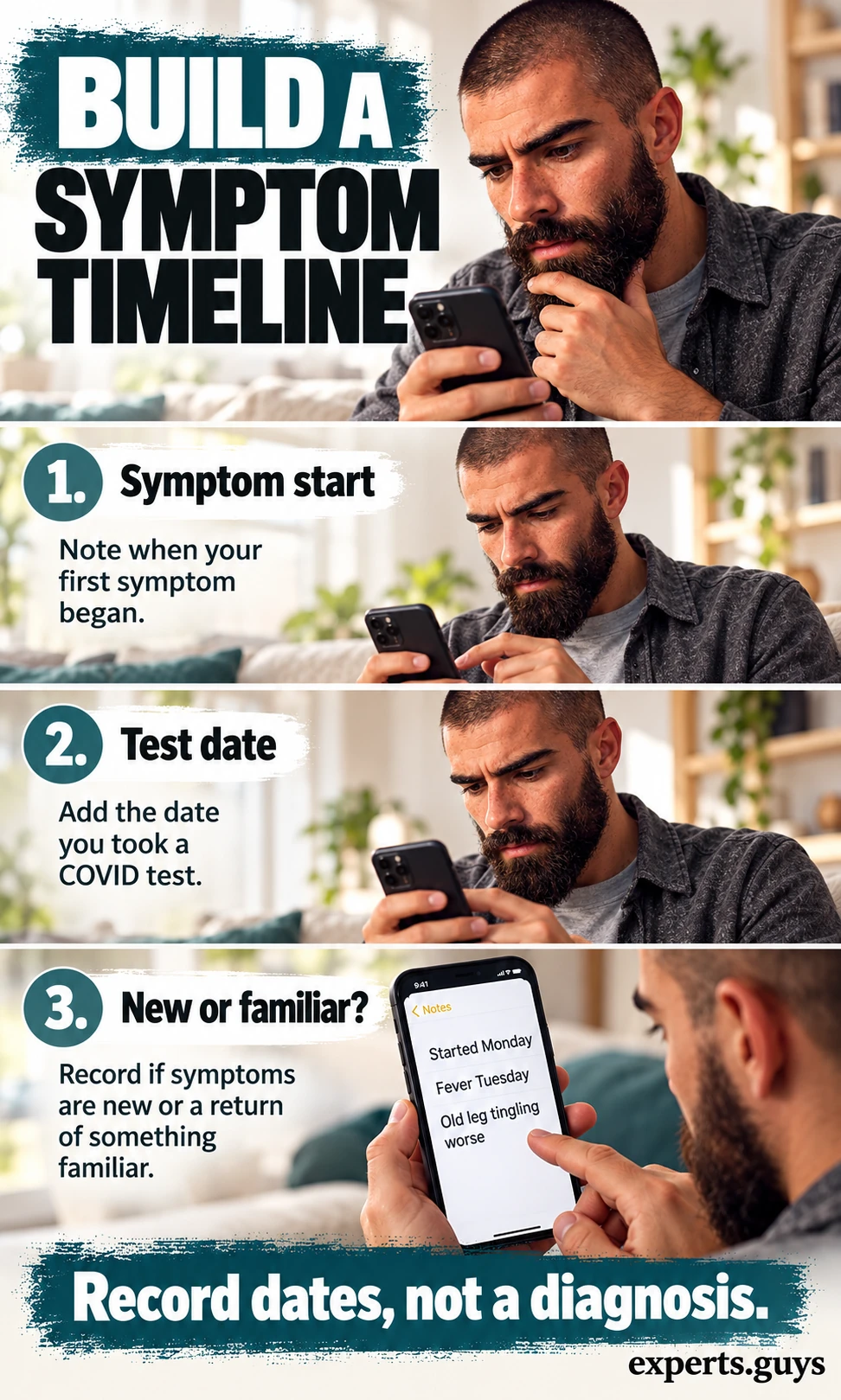
Illustrative example: “Cough started Monday; positive test Tuesday; familiar leg tingling became worse Wednesday during fever.” This communicates a sequence without calling it a relapse. If typing is difficult, dictate one short message or ask a trusted person to help; the goal is a usable account, not a perfect record.
Research offers possible explanations for some persistent symptoms, but it cannot identify your mechanism from a checklist. A study of blood-brain barrier disruption in long COVID found abnormalities associated with cognitive impairment in studied participants. That does not show that every episode of brain fog has the same cause or justify self-treatment with anti-inflammatory medicines.
The CDC description of long COVID notes that routine test results can be normal and that no single approved laboratory test establishes the diagnosis. Normal results do not make symptoms imaginary, but persistent symptoms still need a clinical assessment. If low mood also affects concentration, our separate guide to depression and memory problems covers that overlap without replacing a neurological evaluation.
How should COVID affect treatment and ongoing care?
A neuroinflammatory diagnosis alone does not determine COVID risk or tell you whether to postpone treatment. Age, other illnesses, disability and the particular immune treatment can change the discussion. The safest useful action is to give the treating team accurate timing and medicine details before a decision is due.
In a cohort study of people with MS and COVID-19, anti-CD20 treatment was associated with more severe COVID in the relapsing-remitting MS group. This is an observational association, and older study periods do not give a personal risk estimate for today. It supports an individualized discussion, not stopping a disease-modifying treatment on your own.
Ask early about COVID treatment
If you may be at higher risk of severe COVID, contact your care team promptly when symptoms begin or a test becomes positive. Treatment eligibility depends on your circumstances and local guidance. Some outpatient medicines have short starting windows, so counting from the positive test alone can lose useful time.
- Find the symptom-start date and tell the service about your neurological diagnosis and immune treatment.
- Ask whether you need assessment for COVID treatment now, including which service can provide it.
- Provide your medication list for an interaction check; do not start, stop or substitute a medicine yourself.
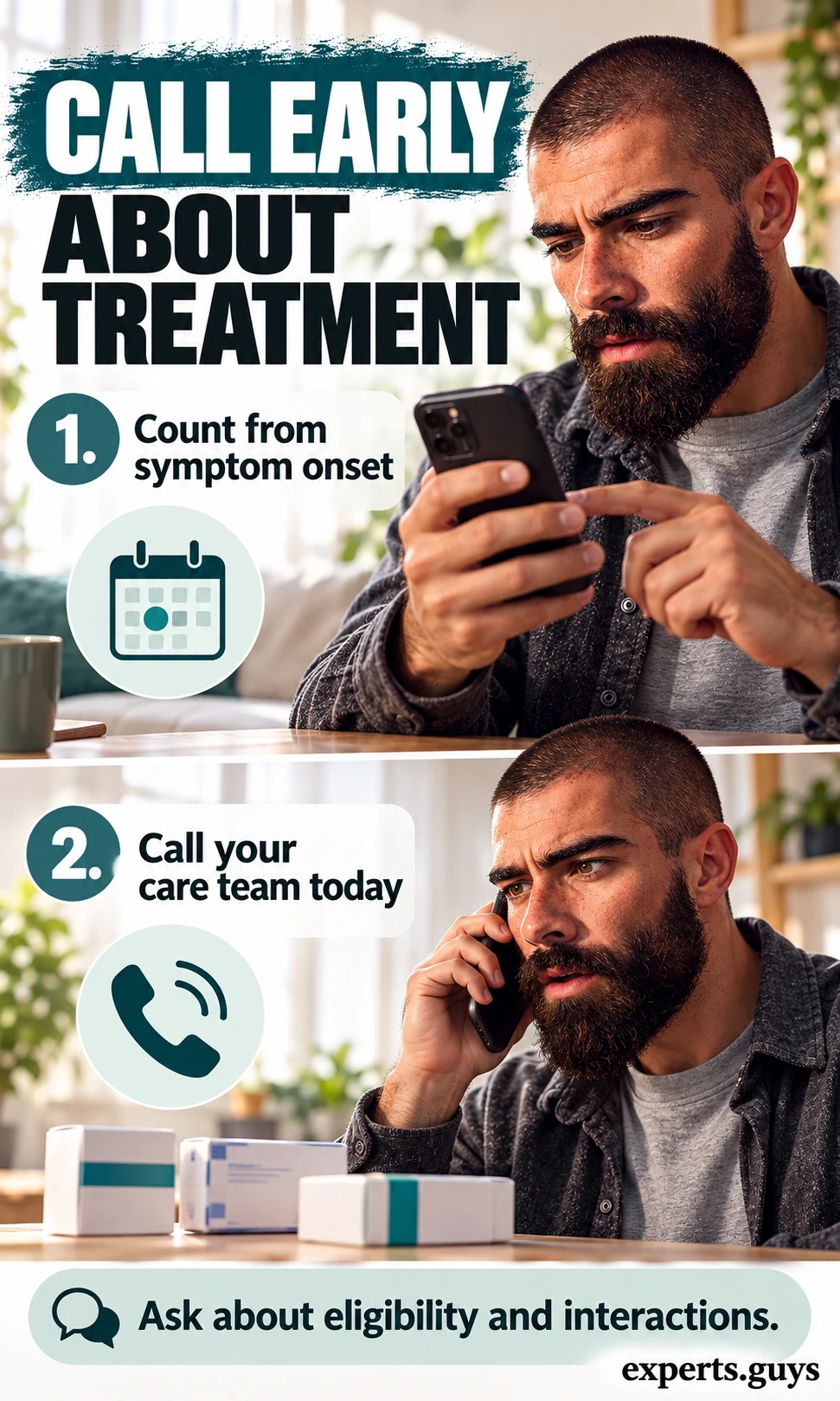
As a United States example, CDC outpatient treatment guidance lists starting nirmatrelvir/ritonavir within five days and remdesivir within seven days of symptom onset. Eligibility, interactions, kidney or liver considerations and local availability still need review. If you are outside those windows, seek advice about current symptoms rather than assuming no care is available.
Prepare the medicine details that change the decision
A medicine name alone may not tell the team where you are in a treatment cycle. Dose timing can matter when discussing infection, an upcoming infusion or vaccination, and non-prescription products can matter for interactions. Gather the details you have rather than guessing missing doses or dates.
- Open your prescription list or photograph the labels on the current containers. Include prescription medicines, over-the-counter products and supplements.
- Add the last dose and next scheduled dose of your neurological treatment; mark anything uncertain.
- Ask the prescribing team or pharmacist to confirm the plan. If they change it, request the exact restart or follow-up instructions.
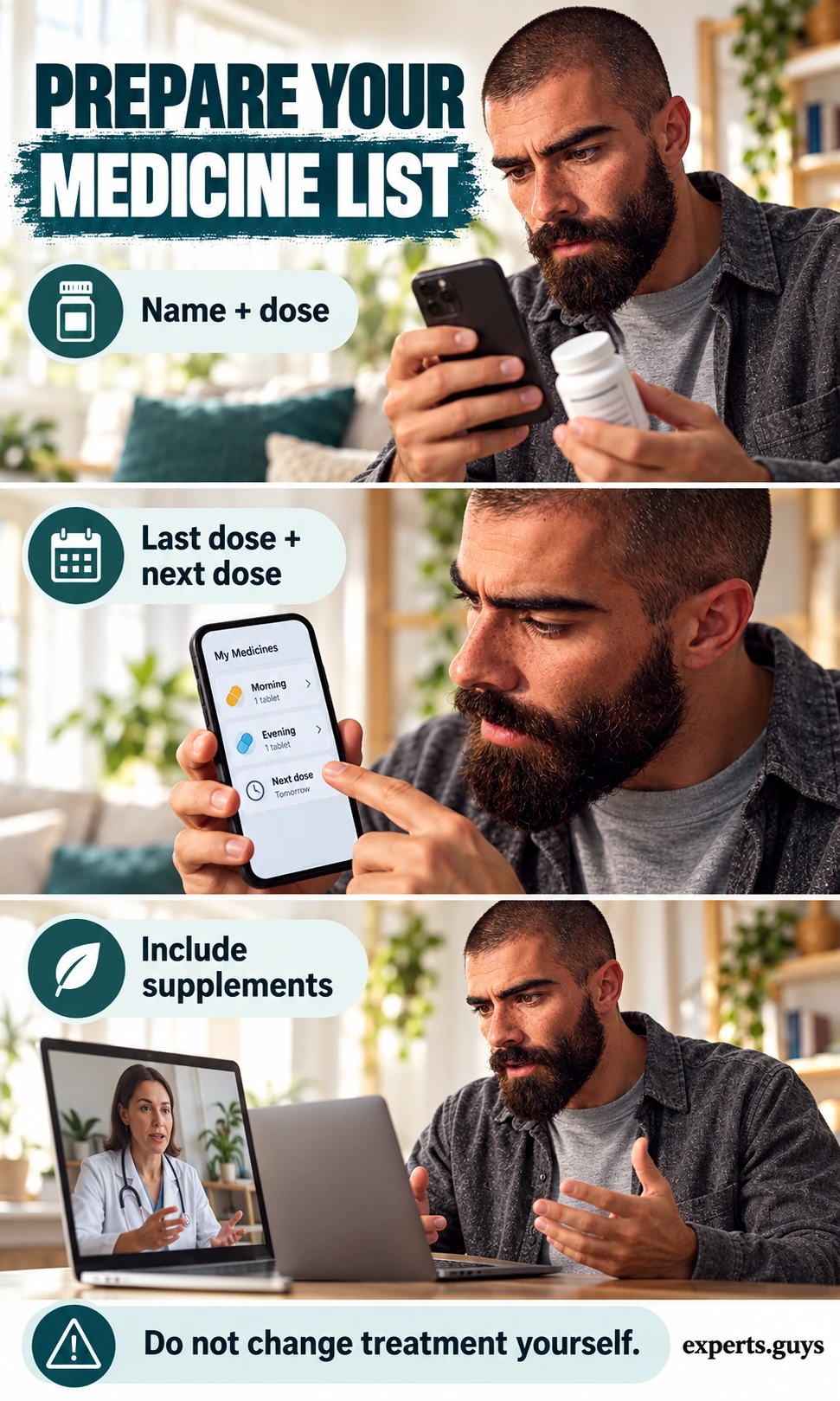
Common mistake: using advice about one drug to change a different treatment. For example, a message about an infusion does not automatically apply to daily tablets. A lower-effort option is to send clear label photographs first and let the service tell you which missing details are essential.
Reconnect a missed part of care
The pandemic’s impact includes access to care as well as infection itself. If a scan, infusion, rehabilitation visit or review was missed, the practical question is which gap still matters now. A video visit can help with discussion, but the clinical team may need an in-person examination or testing to assess a new change.
- Check your patient portal and calendar for the last completed visit and any appointment that was cancelled or never rebooked.
- Contact the relevant service with the missed item and your current difficulty; ask what should be prioritized and which visits need to be in person.
- Confirm the date, location or video link, and any preparation. If no booking arrives, follow up through the service’s stated route.
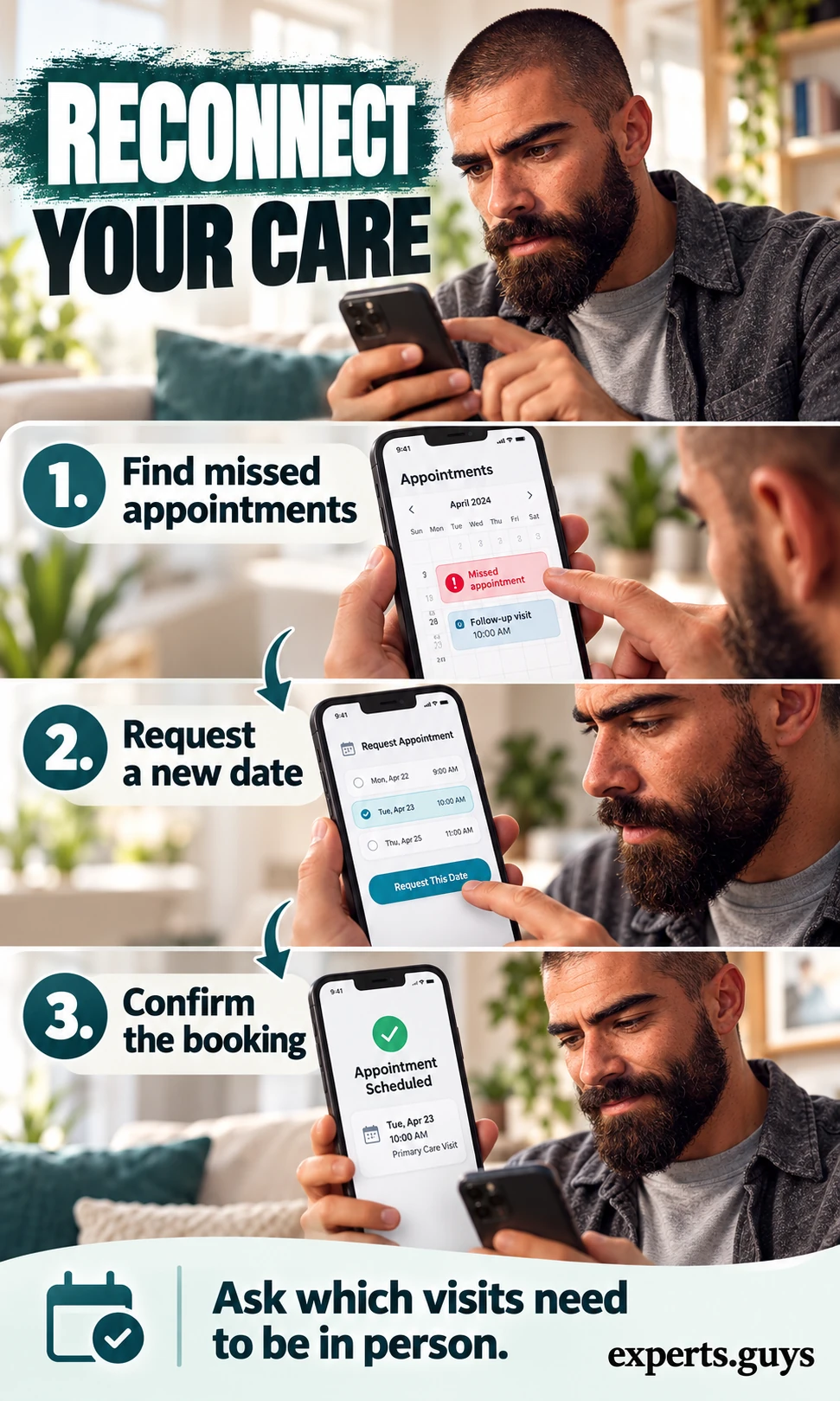
Illustrative example: “My review was cancelled, and I now need help arranging the next treatment discussion.” Completion means receiving a confirmed appointment or an explicit interim plan, not merely sending a portal message. If digital access is difficult, make a telephone request or ask a trusted person to help with your permission.
What helps when symptoms persist after infection?
Persistent symptoms need a plan matched to the actual limitation, not a promise to “reset” the immune system. Sleep, medication effects, other illnesses and post-infection symptoms may overlap. Start with the problem that most interferes with daily life and ask what assessment or support would change it.
Notice delayed worsening without testing your limits
Some people experience a delayed increase in symptoms after physical or mental activity, called post-exertional malaise. The CDC clinical guidance describes worsening that commonly begins 12–48 hours later and may last longer. Feeling able to finish a task is therefore not enough to show that the activity level was sustainable.
- Choose an ordinary necessary task within your current ability; do not add exertion to test yourself. Break it into smaller parts and pause before exhaustion.
- Notice how you feel afterward and over the next day or two, using a brief phone note if it helps identify a repeated pattern.
- If a task repeatedly precedes a crash, reduce or adapt it and discuss the pattern with your care team. Do not follow a fixed exercise increase or push through worsening symptoms.
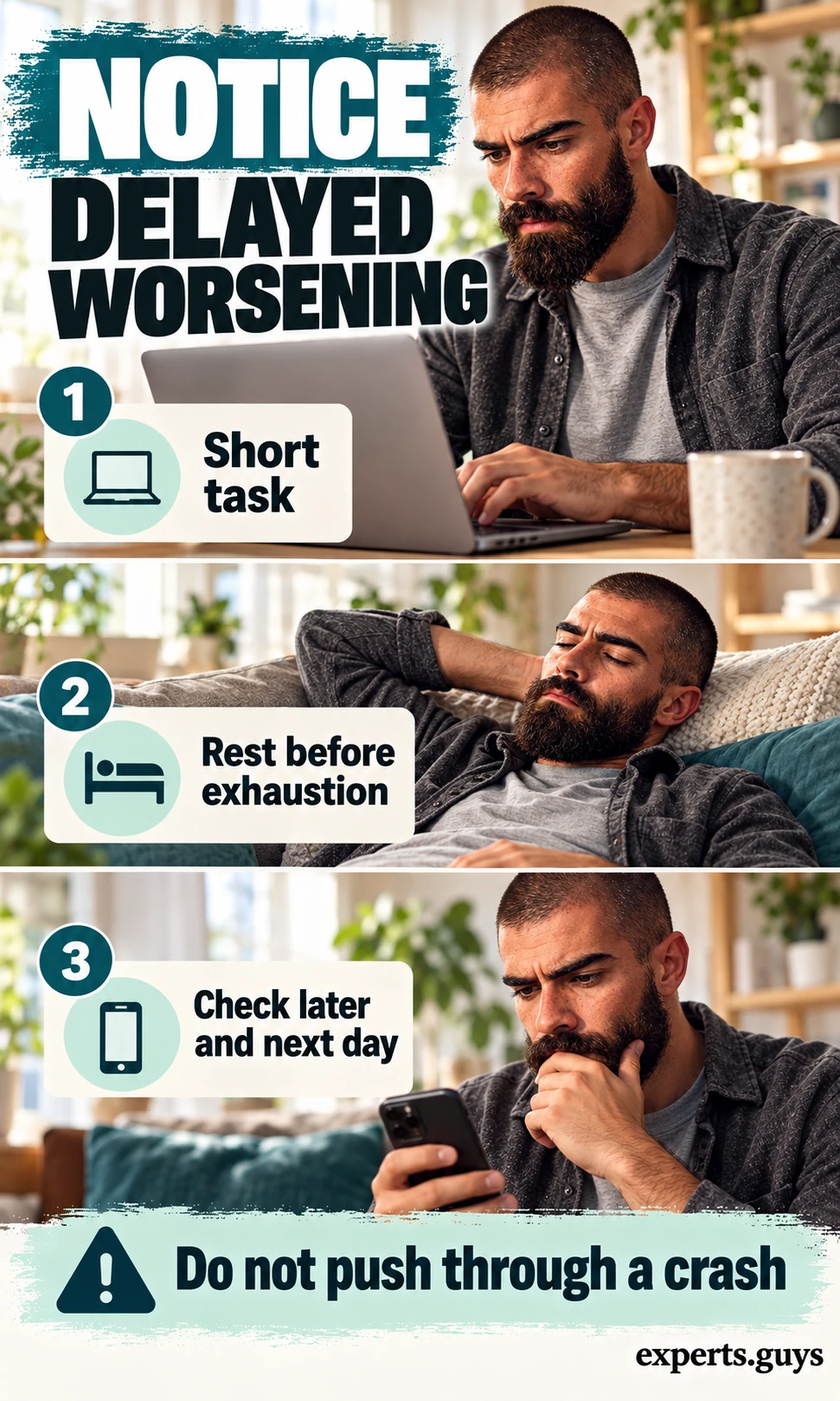
Illustrative example: a short email session feels manageable, but the next day brings a marked symptom increase. The useful result is recognizing that delayed pattern and asking for an activity plan that respects it, rather than proving you can sit at the computer longer. An easier version is to have someone help complete the essential task while you rest.
Finish the visit with an agreed next step
Prepare one concrete description of changed function and the question it creates. “I cannot follow a short phone call as before” is more useful than an unexplained severity score. The aim is to leave knowing what happens next and which changes should bring the review forward.
- Share your onset timeline, medicine list and most important change in function. Keep uncertain details labelled as uncertain.
- Ask which possibilities need assessment and whether any examination, test or referral would change management.
- Check the digital visit summary: what is the next action, who arranges it and when should you contact the team again? Request clarification if the plan is unclear.
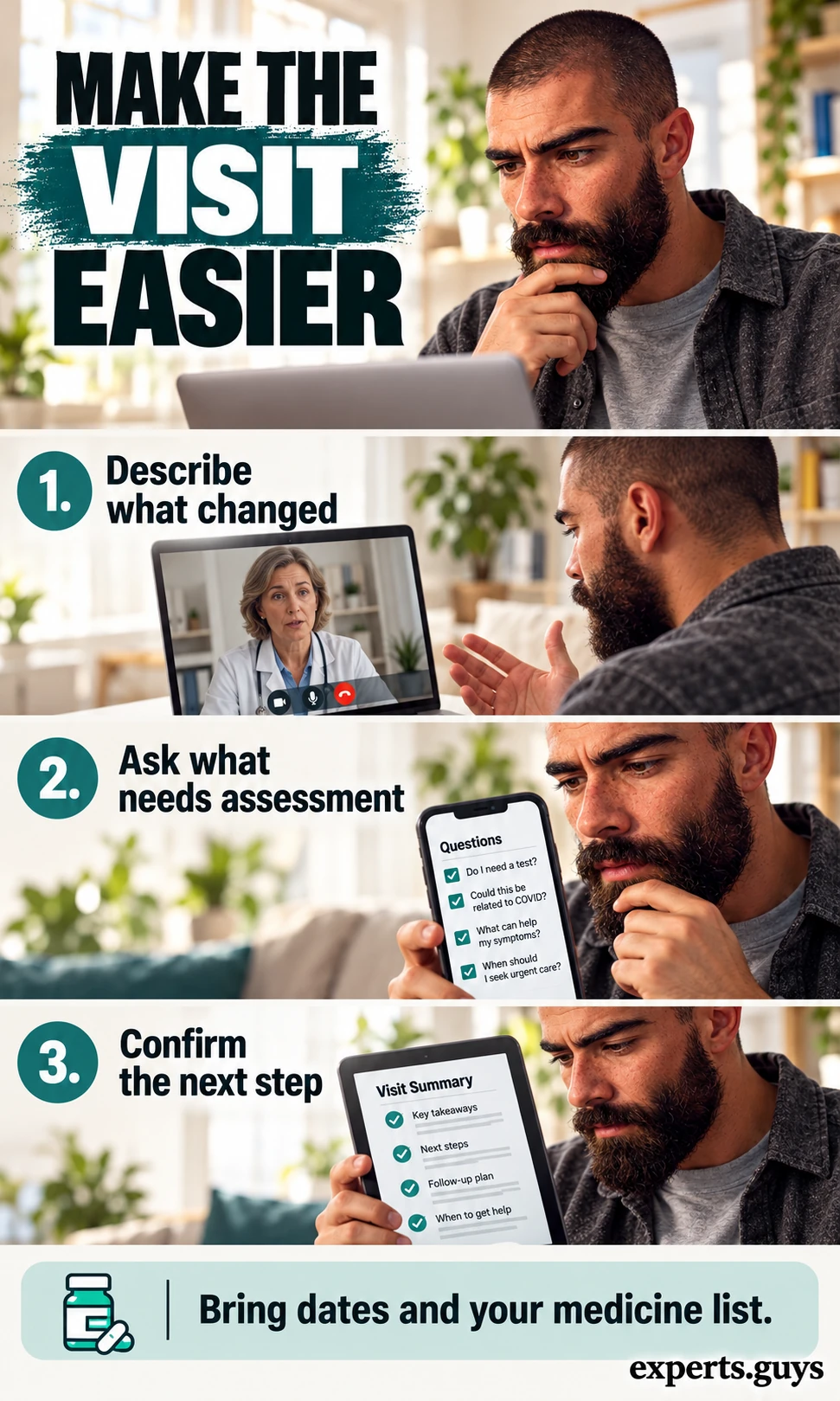
Use the visit summary below to assemble those details, then review it before copying or printing. It does not interpret symptoms or send a message to a clinician. Leave identifying information out if you are using a shared device, and clear the form when you finish.
Neurology Visit Summary
Bring the timing, changed function and medicine questions together in one clear summary.

Do not use this for an emergency. Sudden weakness, speech trouble, vision loss, severe confusion, a first seizure or severe breathing difficulty needs immediate medical help. This summary does not diagnose, assess urgency or recommend medicines.
This component sends no entries to a server and uses no browser storage. Copy or print only if you want to keep a record. Avoid names, identification numbers and other identifying details.
Your visit summary
Review these details, then contact your usual care team. A summary does not replace an assessment or confirm that waiting is safe.
Ongoing illness can also affect mood, relationships and confidence. Those concerns deserve attention alongside physical assessment; they should not be used to dismiss a new neurological symptom. Our guide to depression and chronic illness covers that separate care need.
Frequently asked questions
Do I need a positive COVID test to discuss long COVID?
No. A clinician can consider the illness history, exposure, symptoms and examination even when a positive test is unavailable. Say what is known and what is uncertain; do not delay an appointment while trying to reconstruct proof of infection.
Will everyone need an MRI?
No. A clinician chooses investigations according to the symptoms, examination and question being assessed. An MRI can help in some neurological conditions, but it is not a universal test for all post-COVID symptoms.
Should I change vaccine or infusion timing myself?
No. Ask the treating service to review the timing for your particular medicine and the current local recommendations. Do not copy another person’s schedule or postpone a prescribed dose without an agreed plan.
Can I use this summary instead of an urgent call?
No. It is an optional preparation aid. Sudden neurological changes, severe breathing difficulty or another emergency need immediate help, not completion of a form.
What to take from this
Separate the timing of infection from the pattern of neurological change, and give urgent symptoms priority. Keep treatment decisions with the prescribing team while making the information they need easy to find. A short digital timeline, accurate medicine details and a confirmed follow-up action are useful outcomes even before the cause is fully understood.