Depression genetics research finds statistical relationships between many DNA differences and depression-related outcomes. These findings can help researchers investigate biology and possible treatment directions. They do not reveal one universal depression gene, diagnose a reader or establish which medicine an individual should take.
The most useful way to read a new finding is to follow its chain of reasoning: what was measured, who was studied, what the association means and what further work is required before it can guide care. This article focuses on that research chain. Family history and everyday heredity concerns belong in the separate guide to whether depression is genetic or environmental.
Start with the study design
A genome-wide association study, usually shortened to GWAS, compares genetic variation across many people in relation to a defined outcome. The National Human Genome Research Institute’s GWAS fact sheet explains the approach. It is a method for finding associations worth investigating, not a direct observation of a complete causal pathway.
The outcome definition matters. A clinical diagnosis, health record and questionnaire can identify overlapping but different groups. Pooling large datasets can increase the ability to detect small statistical signals while also requiring careful interpretation of what the combined label represents. More participants do not make the underlying definition irrelevant.
A large trans-ancestry study published in Cell in 2025 reported 697 associations across 635 loci. These are useful examples of the scale of modern research, not interchangeable counts of “depression genes.” The paper’s wording, units and methods should survive the journey from abstract to headline.
Its publisher summary also describes analyses that implicate biological features and potential pharmacological directions. Those findings suggest research avenues; they do not mean a new treatment has been shown safe and effective for a particular patient. Discovery and clinical use remain separate steps.
A good first reading therefore translates the nouns before accepting the conclusion. Is the article reporting a variant, a region, a prioritised gene or a proposed pathway? If a headline changes one into another, the claim may become stronger than the study supports. You can notice that change without understanding every statistical detail.
| Term | Plain-language meaning | What it does not mean |
|---|---|---|
| Associated variant | A DNA difference statistically related to the studied outcome | A variant that determines someone’s future |
| Locus | A region of the genome containing an association signal | One proven causal gene |
| Prioritised gene | A candidate highlighted using additional analyses | A confirmed single explanation of depression |
| Cell-type or pathway finding | A clue about where further biological research may be useful | A scan of the reader’s own brain |
| Polygenic score | A combined statistical score based on many variants | A diagnosis or a universal absolute-risk percentage |
| Potential drug target | A hypothesis for treatment investigation | An approved indication or a reason to self-medicate |
An association is a clue about a relationship
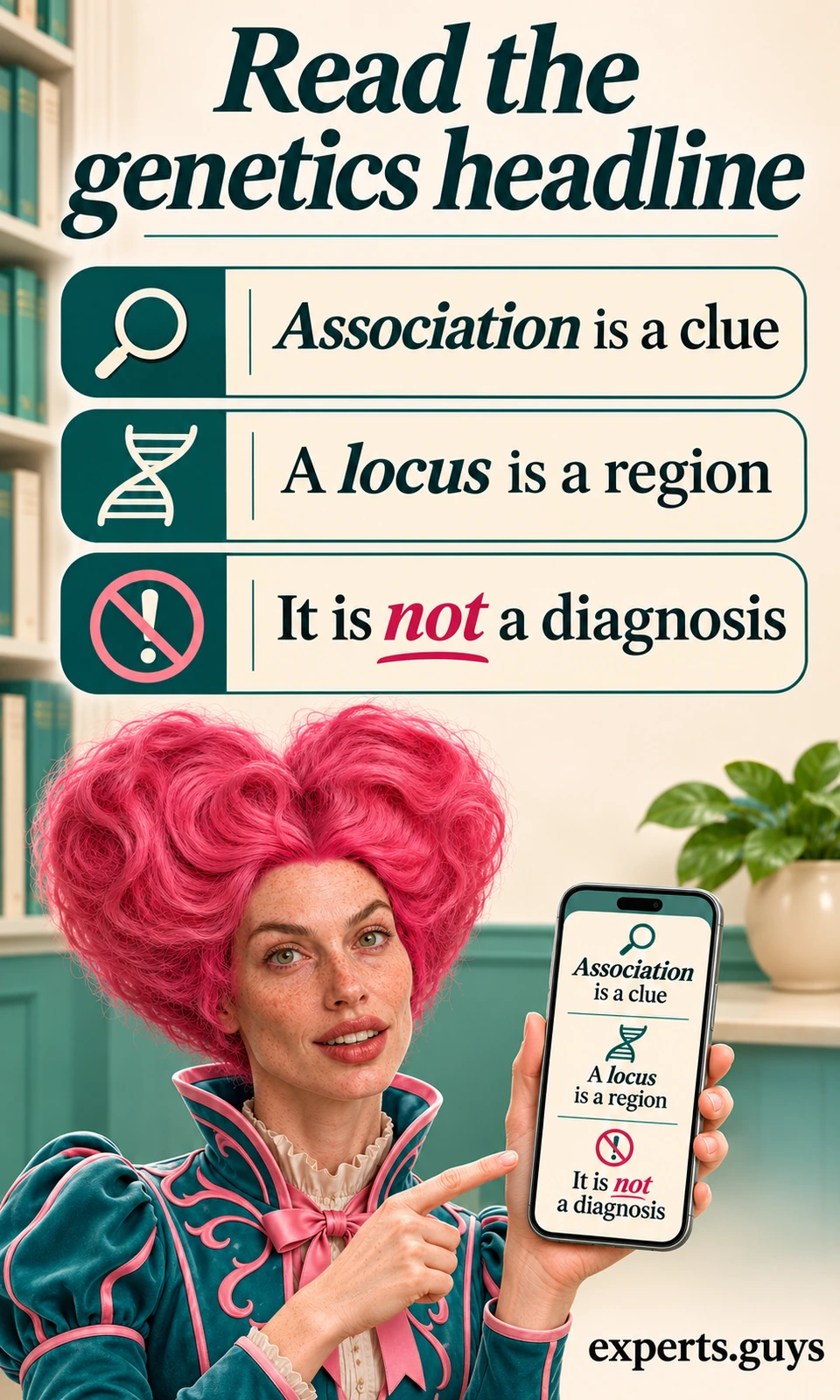
An associated marker is a DNA difference whose frequency or pattern relates statistically to the studied outcome. The marker may help locate relevant biology without itself being the sole causal change. Nearby inherited variation can complicate the path from a signal to a specific mechanism.
A locus is a genomic region. Identifying that region does not necessarily tell researchers which gene or regulatory process is responsible. Additional analyses can narrow or prioritise possibilities, but “prioritised” should not quietly become “proven” in a popular explanation.
Likewise, a finding concerning a cell type or pathway can help organise experiments. It is not a reading of the cells in an individual reader’s brain, and it does not show that every person with depression has the same biological change. A statistical pattern across participants has a different scope.
This is why “researchers have found my cause” is usually too large a step. The study may not have tested your circumstances, may not support individual inference and may not establish causation. A finding can still be valuable while leaving those questions unanswered.
For a practical reading exercise, take a headline and identify the unit being counted. If the paper reports loci while the headline reports genes, return to the abstract and check what additional evidence connects them. If that connection is absent, retain the narrower term rather than filling the gap with an assumption.
The same care applies to “biological explanation.” Research can strengthen understanding of a contribution without replacing all other levels of explanation. The depression theories comparison considers how different models ask different questions. Genetic evidence does not erase circumstances or turn support into an irrelevant afterthought.
Check who was studied before applying the result
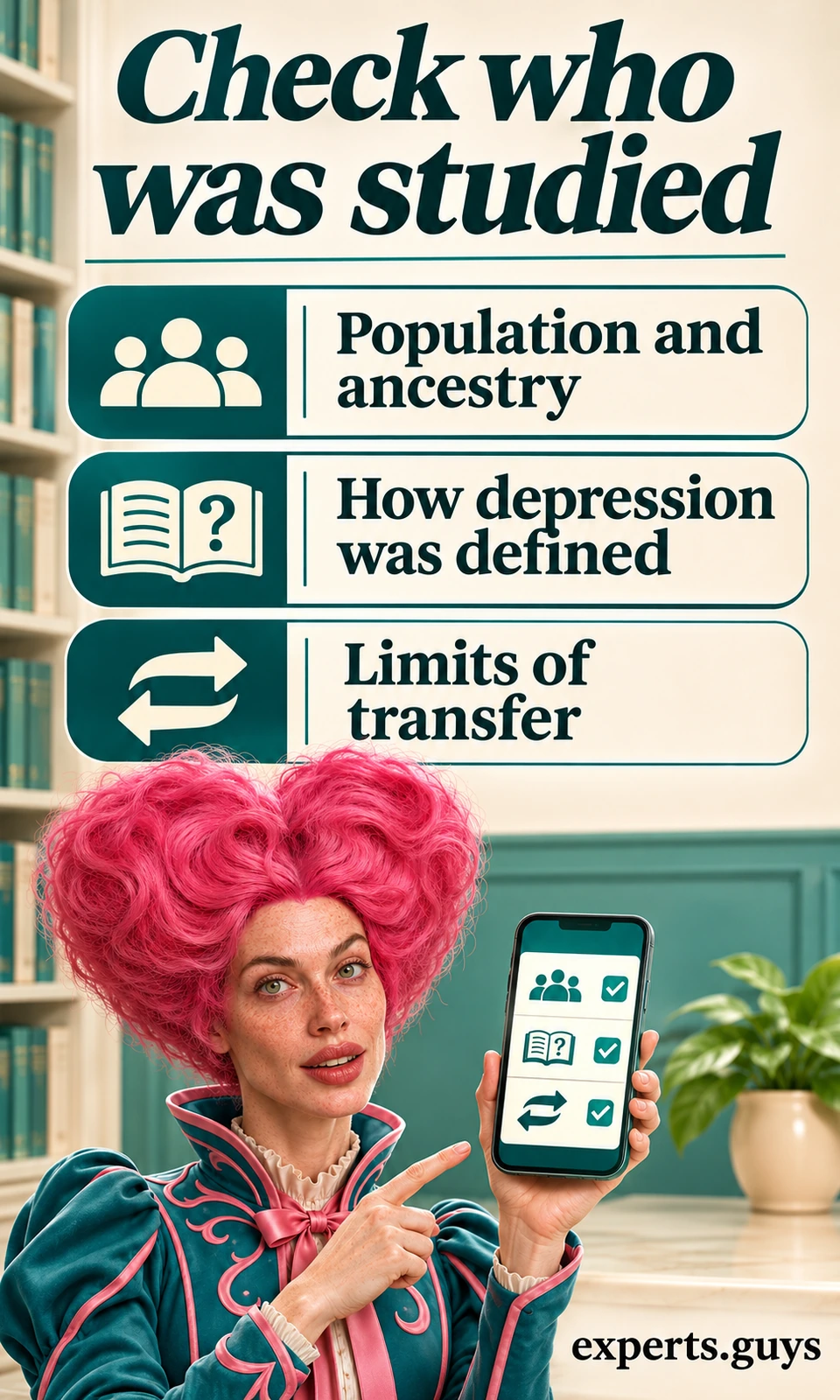
Population and ancestry affect how a genetic finding or score can be interpreted. “Trans-ancestry” describes a study design involving more than one ancestry context; it does not mean every world population is represented equally or that every proposed prediction performs equally well for everyone.
NHGRI’s polygenic risk score explainer discusses the consequences of uneven representation in genomic research. A score combines information across variants, but its meaning depends on the study data and the use being proposed. It should not be read as a universal absolute probability with a guaranteed timeframe.
A study of polygenic score portability across ancestry further illustrates that performance can vary even within broad population labels. The practical lesson is to ask about validation in the relevant setting, rather than assuming that one demographic label settles every question of applicability.
Follow discovery through to a clinical claim
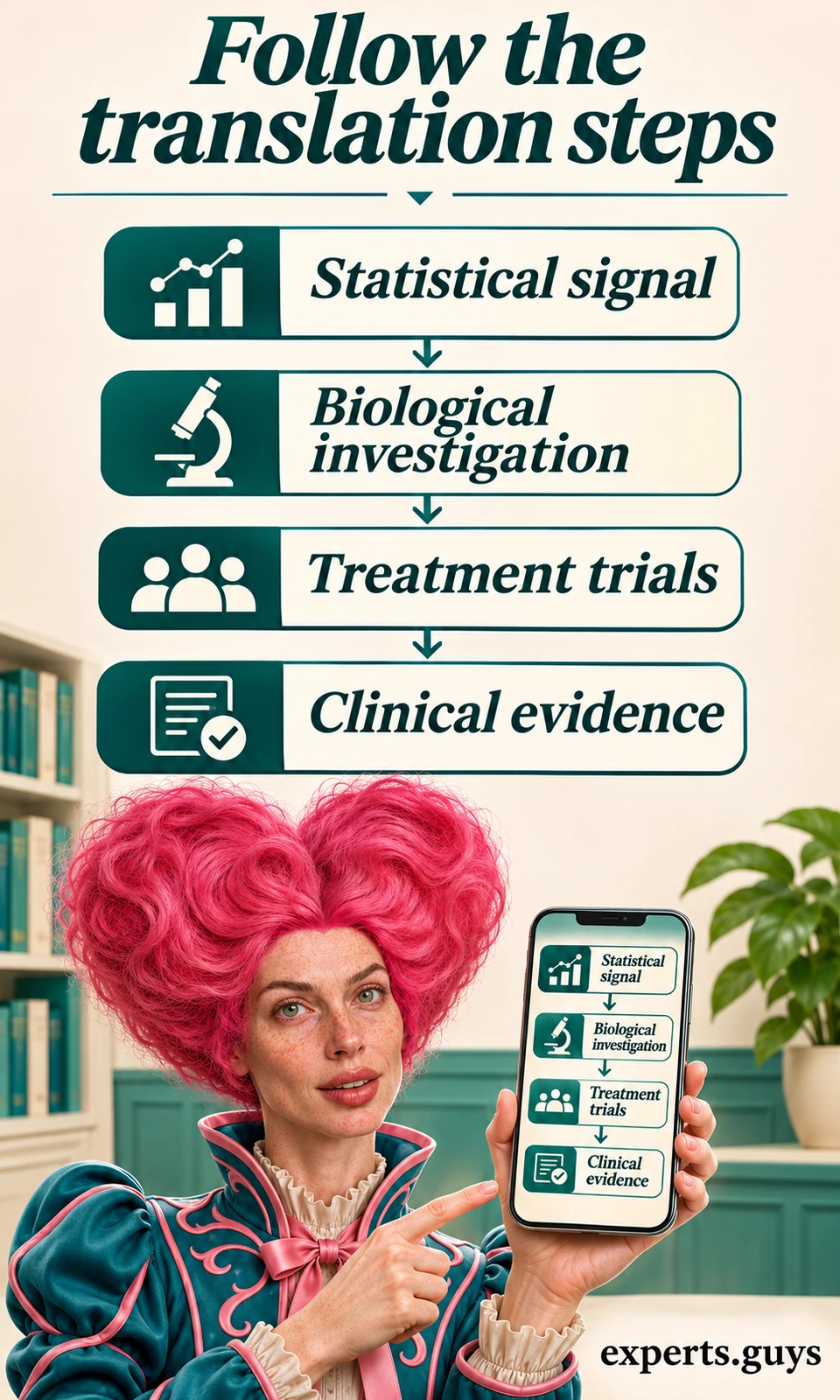
A statistical signal can guide biological investigation. That work may help identify a candidate mechanism or treatment target. A proposed treatment then needs appropriate clinical evidence about benefits, harms and the people for whom it is useful. None of those steps should be skipped because the first finding is exciting.
Drug-target or pharmacotherapy analyses in a genetics paper can generate hypotheses about existing or future medicines. They do not establish a new approved use, dose or patient-selection rule. A reader should not start a product, change a prescription or buy a genetic service simply because a paper mentions a promising pathway.
The distinction also protects useful research from unfair expectations. An association study does not fail because it cannot immediately select a medicine for you. Its contribution may be to narrow the questions that subsequent studies should investigate. The problem arises when that research contribution is sold as a clinical capability it has not yet established.
Ask whether the finding changes a validated decision
NIMH’s Looking at My Genes resource explains limits of genetic testing for common mental disorders. A commercial report is not equivalent to an established clinical decision tool. Before treating any result as actionable, ask what specific decision it supports and what evidence validates that use.
Keep different test claims separate too. A claim about inherited susceptibility is different from a claim about processing a particular medicine, and neither automatically identifies the best treatment or diagnoses depression. The advertised purpose, actual measurement and established use need to match.
- Identify the exact research finding and the outcome it concerns.
- Check the study population and relevant validation limits.
- Separate association, biological interpretation and treatment evidence.
- Ask which established care decision the result would change.
- Avoid converting a research score into a personal diagnosis or medication instruction.
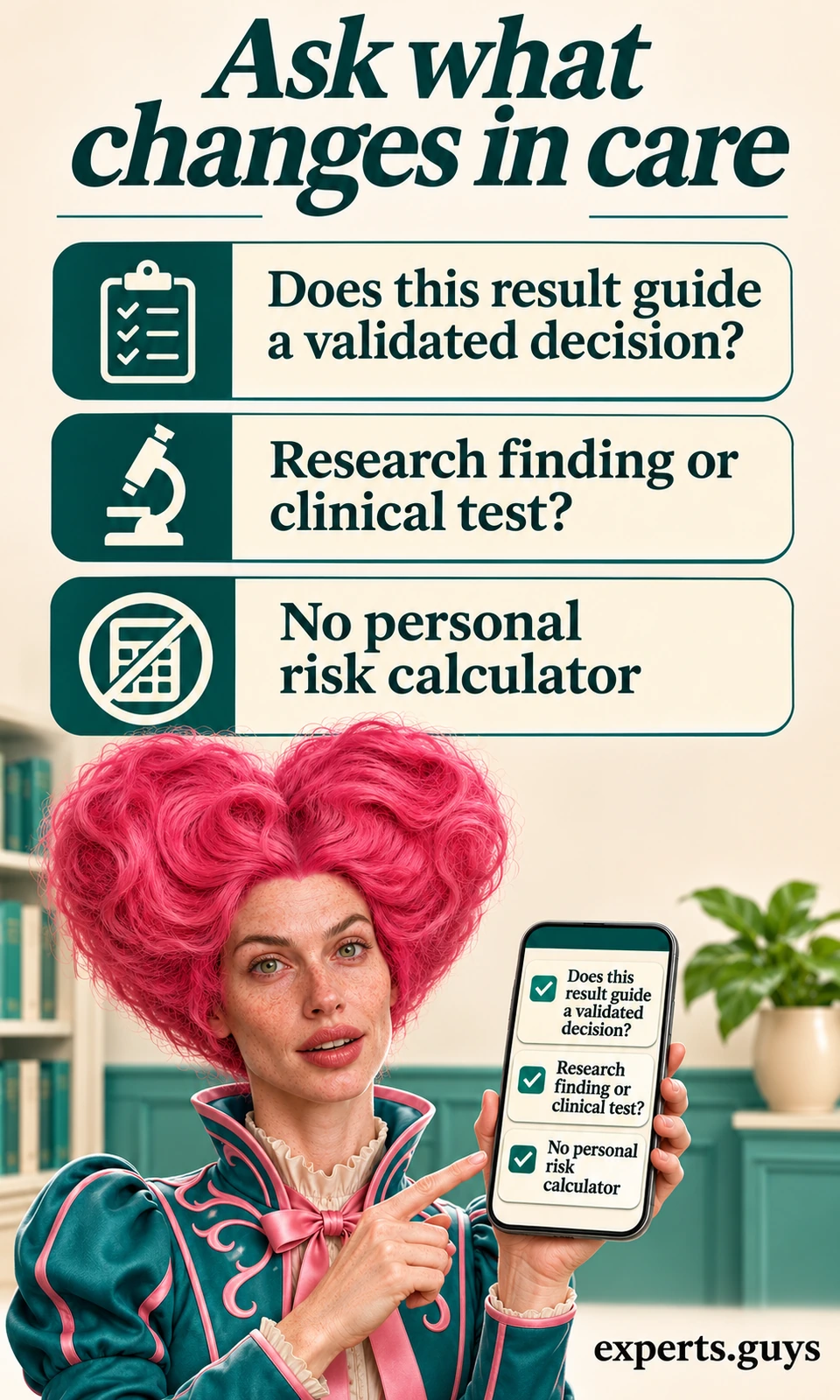
For example, “Does this finding change anything in my current plan?” is a better question than “Which depression gene do I have?” If the answer is that the finding is currently a research clue, that is still an informative answer. It tells you where the science stands without pretending that your future is fixed.
The MedlinePlus Genetics depression overview places genetic contribution within a complex condition. No score in this guide predicts your individual outcome, and no calculator is supplied because the research described does not validate such a personal tool. Useful clinical support does not need to wait for that kind of prediction.
Frequently asked questions
Have researchers found the depression gene?
Common depression is not explained by one universal gene. Large studies identify many associations, which need further interpretation and investigation.
Are hundreds of associations the same as hundreds of causal genes?
No. An association, a genomic region and a gene are different units. Further analysis may prioritise candidates without proving a single causal explanation.
Does a polygenic score diagnose depression?
No. A research score is not a clinical diagnosis. Its interpretation depends on the model, population and validation for a particular use.
Does a genetic finding identify the best antidepressant?
A discovery study does not automatically establish a treatment choice for an individual. A proposed clinical use needs its own validation and appropriate interpretation.
What if genetic risk sounds frightening?
A population research finding is not a prediction that your future is fixed. Focus on what the result actually measures and whether it changes a validated care decision.
Summary
Read a genetics finding in its own units: association, locus, candidate gene, pathway or score. Check the study population and the steps still needed for clinical use. The best question is what the finding reliably tells us now—not how to turn a research headline into a personal verdict.