
For many people, the word spirituality immediately brings religion to mind. While faith traditions continue to provide meaning for millions of people around the world, modern spirituality has become much broader than attending religious services or following a specific belief system. Increasing numbers of people describe themselves as spiritual because they are searching for purpose, inner peace, personal values, stronger relationships, or a deeper understanding of life without necessarily identifying with a particular religion.
Modern life has created new opportunities as well as new challenges for spiritual growth. Technology keeps us constantly connected, yet many people feel emotionally isolated. Social media allows us to communicate instantly, yet it often leaves little room for genuine reflection. Busy careers, financial responsibilities, and endless notifications compete for our attention every day, making it surprisingly difficult to pause and consider what truly matters.
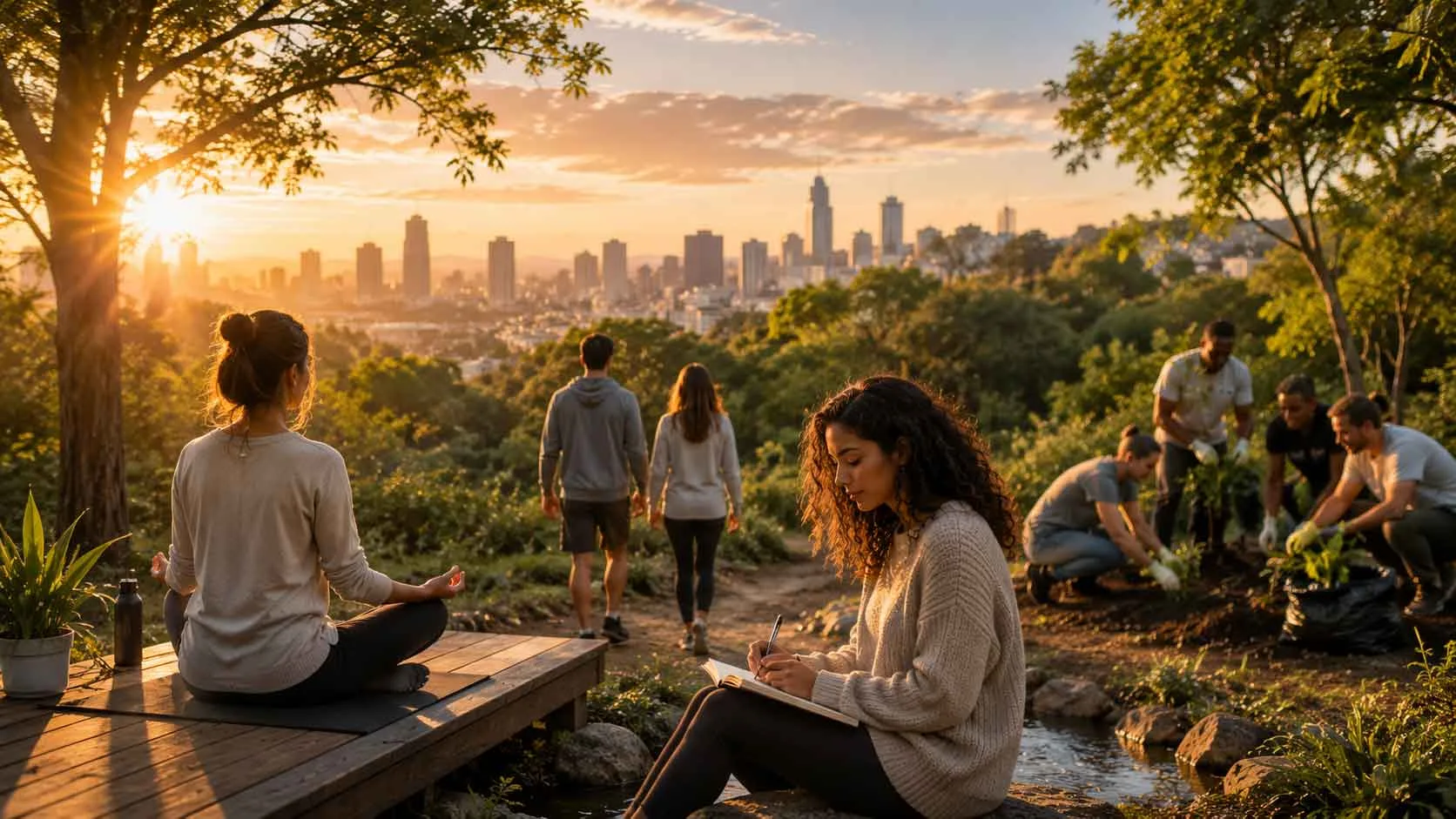
Expressing spirituality today often looks very different from previous generations. Instead of following a single path, many people develop their own meaningful practices through quiet reflection, spending time in nature, helping others, creative expression, mindfulness, gratitude, meaningful conversations, or simply living according to deeply held values. None of these activities require perfection, and they do not belong exclusively to any particular culture or belief. Rather, they represent different ways people seek connection with something larger than immediate daily concerns.
Psychologists increasingly recognise that spirituality can contribute to overall wellbeing when it encourages hope, resilience, compassion, healthy relationships, and a greater sense of purpose. At the same time, healthy spirituality is not about escaping reality or ignoring life’s difficulties. Instead, it often helps people face uncertainty with greater emotional balance while remaining connected to family, community, and personal responsibility.
Perhaps the most important lesson about spirituality in the modern world is that there is no universal formula. Two people may both experience profound spiritual fulfilment while following completely different practices. One person may find meaning through prayer, another through volunteering, another through raising children with kindness, while someone else discovers it during quiet walks in nature or through artistic creativity. The common thread is not the activity itself, but the intention behind it and the values it helps strengthen over time.
Rather than asking whether your approach is the “correct” form of spirituality, a more useful question may be whether your daily choices help you become more compassionate, more resilient, more grateful, and more connected with yourself and the people around you. Those qualities often provide a practical foundation for spiritual growth regardless of personal beliefs or cultural background.
In this guide, we will explore how spirituality is expressed in today’s world, why it continues to matter despite rapid technological change, practical ways to develop meaningful daily habits, common misconceptions that prevent people from exploring spirituality, and how to build a personal practice that feels authentic rather than forced. The goal is not to tell you what to believe, but to help you discover thoughtful ways to cultivate meaning, purpose, and inner balance within your own life.

What Spirituality Means in Today’s World
For centuries, spirituality was closely associated with organised religion, sacred traditions, and formal places of worship. While these continue to play an important role for many individuals, modern spirituality has expanded beyond those boundaries. Today, people often describe spirituality as the ongoing search for meaning, purpose, connection, and inner growth that shapes how they understand themselves and relate to the world around them.
Unlike trends that change with culture or technology, the human desire to find meaning appears throughout history. Every generation has asked similar questions: Why am I here? What gives life purpose? How should I respond to suffering? What kind of person do I want to become? For some people, these questions expand into a wider reflection on our place in the universe and whether individual life can be understood separately from the larger world around us. Modern spirituality does not remove these questions. Instead, it encourages people to explore them in ways that reflect their own experiences, values, relationships, and beliefs.
One of the biggest misconceptions is that spirituality requires extraordinary experiences. In reality, many people express spirituality through ordinary moments that gradually shape their character. Caring for family members, showing compassion to strangers, acting with honesty, appreciating nature, creating art, practising gratitude, volunteering within the community, or quietly reflecting at the end of the day can all become meaningful spiritual expressions when they are rooted in intention rather than routine.
Spirituality also differs from simply feeling positive. Happiness often changes with circumstances, but spirituality usually involves maintaining a sense of purpose even during uncertainty. Someone facing illness, financial hardship, grief, or major life changes may still experience spiritual strength because their values continue to guide their decisions despite difficult emotions.
Another important characteristic of modern spirituality is personal responsibility. Rather than expecting immediate answers or quick solutions, many people gradually develop habits that strengthen emotional resilience over months and years. Reflection, forgiveness, patience, curiosity, compassion, and gratitude become daily practices instead of occasional experiences. These small behaviours often create lasting changes that influence relationships, work, mental wellbeing, and overall life satisfaction.
Technology has also changed how people learn about spirituality. Books, podcasts, online communities, educational videos, and virtual discussion groups allow people to explore different traditions and philosophies more easily than ever before. This wider access creates opportunities to learn from diverse perspectives, but it also requires careful thinking. Not every popular idea shared online is reliable or beneficial. Healthy spiritual development encourages thoughtful reflection, respectful dialogue, and evidence-informed decision making rather than unquestioningly following trends or influencers.
Ultimately, spirituality is less about adopting a particular label and more about developing qualities that influence everyday life. A spiritual practice that never changes how someone treats other people has limited value. Genuine spiritual growth often becomes visible through increased kindness, greater emotional maturity, stronger resilience, healthier relationships, willingness to learn, and a deeper appreciation for both life’s challenges and its moments of joy.
Spirituality vs Religion
| Spirituality | Religion |
|---|---|
| Often centred on personal meaning and purpose | Usually follows shared beliefs, traditions, and teachings |
| May be individual or community-based | Often practised within an organised community |
| Can include many different personal practices | Usually follows established rituals and customs |
| Flexible and highly personal | Guided by specific doctrines or scriptures |
| Focuses on personal growth and connection | Combines personal faith with collective worship and tradition |
Neither approach is inherently better than the other. Many people find deep spirituality through religious faith, while others develop meaningful spiritual lives outside organised religion. Some experience both simultaneously. The important consideration is whether the practice encourages compassion, integrity, responsibility, hope, and genuine care for others rather than fear, isolation, or superiority.
The modern world offers countless opportunities to explore spirituality, but it also reminds us that meaningful growth rarely happens overnight. People who are uncertain where to begin may benefit from exploring practical forms of spiritual help that support reflection, connection, guidance, and values-based action. Over time, spirituality often develops through thousands of small decisions that gradually shape how we think, respond to adversity, care for others, and live according to the values we believe matter most.
Why Modern Life Makes Spirituality Feel More Difficult

Many people assume spirituality becomes easier as knowledge and technology improve. In reality, modern life often creates conditions that make spiritual growth more challenging than ever before. Although we have greater access to information, communication, and educational resources, we also face constant distractions that compete for our attention from the moment we wake until we fall asleep.
One of the greatest challenges is the pace of modern living. Work responsibilities, financial commitments, family obligations, and digital communication rarely stop. Smartphones ensure that emails, messages, news, and social media updates remain available every hour of the day. While these technologies provide convenience, they also reduce opportunities for quiet reflection. When every spare moment is filled with notifications or entertainment, many people never experience the silence that allows deeper questions about purpose, gratitude, and personal values to emerge.
Another difficulty comes from information overload. Previous generations often learned about spirituality through family traditions, local communities, or religious institutions. Today, people are exposed to thousands of opinions online. Podcasts, influencers, videos, books, and social media all present different ideas about personal growth, manifestation, meditation, healing, and consciousness. Some provide thoughtful guidance, while others promote unrealistic promises or oversimplified solutions. Without critical thinking, it becomes difficult to distinguish genuine wisdom from persuasive marketing.
Modern society also places significant emphasis on achievement. Career success, financial stability, physical appearance, and public recognition frequently become measures of personal worth. While ambition is not inherently harmful, constantly comparing ourselves with others can gradually shift attention away from deeper questions about character, purpose, relationships, and long-term fulfilment. Many people discover only after reaching certain goals that external success alone does not automatically create lasting peace or satisfaction. The same conflict can appear in working life, where the search for meaningful work may involve purpose, contribution, identity, and personal values rather than simply feeling comfortable or successful.
Loneliness presents another important challenge. Despite being more digitally connected than any previous generation, many people report feeling emotionally isolated. Online conversations often replace meaningful face-to-face relationships, while busy schedules reduce opportunities for genuine community. Spiritual wellbeing frequently develops through shared experiences, honest conversations, mutual encouragement, and serving others. When these relationships weaken, people may struggle to find encouragement during difficult periods.
Uncertainty has also become a defining feature of modern life. Economic changes, global events, rapidly evolving technology, healthcare concerns, and changing social expectations can leave people feeling overwhelmed. Spirituality does not eliminate uncertainty, but it can provide a framework for responding to uncertainty with resilience rather than constant fear. Developing personal values, healthy perspectives, and supportive relationships often becomes more valuable when circumstances cannot be fully controlled.
Another modern challenge is the expectation of immediate results. Technology has trained many of us to expect instant answers, immediate entertainment, and rapid progress. Spiritual growth rarely follows this pattern. Qualities such as patience, forgiveness, compassion, emotional maturity, and inner peace usually develop gradually through repeated practice rather than dramatic breakthroughs. This slow process can feel uncomfortable in a culture that often rewards speed over depth.
Signs Your Spiritual Wellbeing May Need More Attention
Spiritual wellbeing is not measured by how often someone meditates, prays, or attends religious services. Instead, it often becomes visible through the way people respond to everyday life. Some common signs that it may be time to pause and reflect include:
- Feeling successful on the outside but consistently empty or disconnected inside.
- Losing sight of personal values while constantly chasing achievements.
- Finding it difficult to experience gratitude even during positive moments.
- Feeling emotionally isolated despite frequent social interaction.
- Reacting to challenges with constant fear, hopelessness, or frustration.
- Rarely making time for quiet reflection or meaningful conversations.
- Feeling uncertain about personal direction or long-term purpose.
- Constantly comparing yourself with others instead of focusing on personal growth.
Experiencing one or more of these signs does not necessarily indicate a serious problem. They often serve as gentle reminders that everyday life has become so busy that important emotional and spiritual needs have been pushed aside. Recognising these patterns is not about self-criticism; it is the first step towards rebuilding healthier habits that support long-term wellbeing.
One encouraging aspect of spirituality is that meaningful progress does not require dramatic life changes. Small, consistent actions often have greater long-term impact than occasional moments of intense motivation. Setting aside a few quiet minutes each day, expressing gratitude, reconnecting with supportive people, spending time outdoors, helping someone in need, or reflecting honestly on personal values can gradually strengthen a person’s sense of purpose and inner stability over time.
Practical Ways to Express Spirituality in Everyday Life
One of the biggest misconceptions about spirituality is that it requires dramatic lifestyle changes or extraordinary experiences. In reality, many people discover that the strongest spiritual habits are built through ordinary moments repeated consistently over time. Spirituality becomes less about what happens occasionally and more about how everyday decisions reflect personal values, compassion, gratitude, and purpose.
The modern world offers countless opportunities to express spirituality naturally without separating it from work, family, education, or daily responsibilities. Whether someone follows a religious tradition, identifies as spiritual but not religious, or is simply exploring questions about meaning, the goal is often the same: living intentionally instead of reacting automatically.
Practice Mindful Presence Instead of Constant Distraction
Modern life rewards multitasking, yet our attention is often divided between phones, meetings, notifications, and endless streams of information. Many people move through entire days without fully experiencing the conversations, meals, or environments around them.
Mindful presence does not require sitting quietly for an hour every morning. It can begin with small moments of awareness.
Examples include:
- Taking a few slow breaths before starting work.
- Paying full attention during conversations.
- Appreciating the sights and sounds of nature during a walk.
- Eating meals without scrolling through a phone.
- Pausing before reacting emotionally during stressful situations.
These simple habits encourage greater awareness of both internal thoughts and the surrounding world. Over time, they create space for reflection rather than constant reaction.
Live According to Your Core Values
Many people search for purpose without first identifying the principles that guide their decisions. Spiritual growth often becomes clearer when values move beyond abstract ideas and begin influencing daily behaviour.
Ask yourself questions such as:
- What qualities do I admire most in other people?
- What kind of person do I hope to become?
- How do I want family, friends, and colleagues to describe me?
- What decisions would reflect integrity even if nobody noticed?
Values such as kindness, honesty, humility, patience, courage, generosity, forgiveness, and responsibility become practical expressions of spirituality when they influence everyday choices rather than remaining personal ideals.
Spend Time in Nature
Across many cultures, nature has long been recognised as a place for reflection, healing, and perspective. Modern psychological research also suggests that spending time outdoors may reduce stress, improve mood, and increase feelings of connection with the surrounding environment.
Nature reminds people that life follows rhythms much larger than daily schedules. Watching a sunrise, listening to rainfall, walking through forests, observing the ocean, or caring for a garden often creates opportunities to slow down and appreciate life’s complexity without constant distraction.
The goal is not simply spending time outside but allowing yourself to become fully present within that environment.
Express Gratitude Consistently
Gratitude is one of the simplest spiritual practices because it shifts attention from what is missing toward what continues to provide strength and meaning.
This does not mean ignoring hardship or pretending difficult experiences do not exist. Instead, gratitude encourages a balanced perspective by recognising both challenges and sources of hope.
Many people develop gratitude through simple habits such as:
- Writing three meaningful moments each evening.
- Thanking people directly instead of assuming they already know.
- Reflecting on personal progress rather than only future goals.
- Appreciating ordinary experiences that are easily overlooked.
Over time, gratitude becomes less about forced optimism and more about developing a realistic awareness of life’s positive and difficult experiences together.
Build Meaningful Relationships
Healthy spirituality rarely develops in complete isolation. Even people who value quiet reflection often grow through supportive relationships that encourage honesty, accountability, empathy, and mutual care.
Meaningful relationships are built through consistent actions rather than occasional conversations.
This may include:
- Listening without immediately offering solutions.
- Showing compassion during another person’s difficult season.
- Being willing to apologise when mistakes occur.
- Celebrating other people’s successes without comparison.
- Offering practical help when someone faces unexpected challenges.
These everyday interactions often become powerful expressions of spirituality because they strengthen both individual wellbeing and community.
Serve Others Without Expecting Recognition
Helping others has been encouraged by many philosophical and religious traditions because it shifts attention beyond personal concerns. Acts of service do not need to be dramatic or public to have lasting significance.
Examples include:
- Volunteering within the local community.
- Supporting neighbours during difficult periods.
- Mentoring younger colleagues.
- Donating time, skills, or resources.
- Performing quiet acts of kindness without expecting praise.
Research consistently suggests that helping others can improve emotional wellbeing while strengthening a person’s sense of purpose and social connection.
Create Space for Reflection
Reflection allows people to examine experiences instead of simply moving from one responsibility to another. Without reflection, it becomes difficult to recognise personal growth, repeating patterns, or changing priorities.
Reflection can take many forms:
- Writing in a personal journal.
- Prayer.
- Meditation.
- Quiet breathing.
- Reading meaningful literature.
- Asking thoughtful questions after significant life events.
The purpose is not finding immediate answers to every question. Instead, reflection helps people understand themselves more clearly and make future decisions with greater intention.
Remember That Spirituality Is Measured by Everyday Character
Perhaps the clearest expression of spirituality is not found in any single practice but in the gradual development of character over time.
A person may meditate every morning yet still treat others with impatience or dishonesty. Conversely, someone who quietly demonstrates compassion, integrity, generosity, humility, and responsibility every day may be expressing deep spiritual maturity without ever describing themselves as spiritual.
Ultimately, modern spirituality is less about adopting a particular identity and more about becoming the kind of person whose actions consistently reflect the values they believe matter most. Genuine spiritual growth often becomes visible not through extraordinary experiences but through ordinary decisions repeated with kindness, wisdom, and purpose throughout everyday life.
Can You Be Spiritual Without Following a Religion?
One of the most frequently asked questions about modern spirituality is whether it is possible to live a spiritual life without belonging to a particular religion. The answer is not simply yes or no because spirituality and religion are related concepts, but they are not identical. Many people experience both together, while others identify strongly with one but not the other.
Religion usually provides an established framework of beliefs, teachings, traditions, places of worship, and community practices that have developed over generations. Spirituality, on the other hand, often focuses on an individual’s search for meaning, purpose, inner growth, compassion, and connection. For many people, religious faith naturally becomes the way they express spirituality. Others develop spiritual values through personal reflection, philosophy, nature, community service, or mindfulness without formally belonging to a religious organisation.
Neither path automatically leads to greater wisdom or fulfilment. What matters more is whether the beliefs and practices encourage honesty, humility, compassion, responsibility, respect for others, and a willingness to continue learning throughout life.
Modern society has also changed the way people explore these questions. Greater access to education, travel, and digital communication has exposed individuals to a wide variety of cultures and belief systems. Rather than accepting a single perspective without question, many people spend years exploring different philosophies before developing practices that feel authentic and meaningful.
At the same time, freedom to explore brings responsibility. Not every popular spiritual trend shared online is trustworthy or beneficial. Healthy spirituality encourages thoughtful reflection, critical thinking, and respect for evidence rather than promising instant transformation or guaranteed answers to life’s biggest questions.
Why Some People Choose Spirituality Outside Organised Religion
There are many reasons why someone may pursue spirituality without formally participating in organised religion. Some individuals grew up in religious families but later developed different personal beliefs. Others may never have belonged to a religious community yet still feel a strong desire to understand purpose, morality, relationships, and personal growth.
Common reasons include:
- A desire for greater personal reflection.
- Exploring philosophical or cultural traditions.
- Looking for meaning during major life changes.
- Seeking emotional resilience during difficult periods.
- Feeling connected with nature or creativity.
- Wanting greater alignment between personal values and daily actions.
These motivations vary greatly between individuals, and none automatically define a person’s character or worldview.
How Religion and Spirituality Often Work Together
Although discussions sometimes present religion and spirituality as opposites, they frequently complement one another. Many religious traditions encourage practices that strengthen spiritual wellbeing, including prayer, meditation, gratitude, generosity, forgiveness, service, community involvement, and regular reflection.
For millions of people around the world, religious participation provides both personal spiritual development and a supportive community during times of celebration, uncertainty, grief, and major life transitions. Readers who prefer a faith-centred path may also explore practical ways to grow spiritually closer to God through prayer, reflection, service, and consistent daily habits. Shared rituals and traditions can strengthen relationships while offering a consistent framework for personal growth.
Likewise, individuals who identify as spiritual but not religious often adopt many of these same qualities even if they practise them differently. Compassion, integrity, humility, generosity, patience, and kindness remain valuable regardless of whether they develop through religious teachings, philosophical reflection, or personal experience.
Can Everyday Life Become a Spiritual Practice?
One of the defining characteristics of modern spirituality is the recognition that meaningful growth does not only occur during special occasions. Everyday activities can become expressions of spirituality when approached with intention and awareness.
Examples include:
- Raising children with patience and compassion.
- Caring for ageing family members.
- Working honestly and responsibly.
- Helping neighbours without expecting recognition.
- Protecting the natural environment.
- Showing forgiveness during conflict.
- Choosing gratitude despite difficult circumstances.
- Treating every person with dignity and respect.
These actions may appear ordinary, yet repeated consistently over many years they often shape both personal character and the lives of those around us.
Avoid Turning Spirituality Into Performance
One challenge created by modern digital culture is the temptation to present spirituality as something to display rather than something to practise. Inspirational quotations, carefully edited photographs, and public declarations of personal growth may receive attention online, but they do not necessarily reflect genuine spiritual development.
Healthy spirituality usually grows quietly through consistent habits rather than public recognition. It becomes visible through the way someone responds to disappointment, treats people who cannot offer anything in return, accepts responsibility for mistakes, and continues learning throughout life.
The most meaningful spiritual practices are often the ones that nobody else sees. Quiet acts of kindness, thoughtful reflection, honest conversations, responsible decisions, and consistent compassion rarely attract headlines, yet they often have the greatest long-term influence on both personal wellbeing and the wellbeing of others.
Authentic Spirituality Respects Different Journeys
No two people experience spirituality in exactly the same way. Personal history, culture, family traditions, education, life experiences, and individual beliefs all influence how someone understands purpose and meaning.
Authentic spirituality recognises this diversity without assuming that one person’s journey invalidates another’s. Instead of encouraging comparison, it invites curiosity, respectful dialogue, humility, and a willingness to continue growing. Whether spirituality is expressed through religious faith, quiet reflection, meaningful relationships, community service, creativity, or time spent in nature, its greatest value often lies in helping people become more compassionate, responsible, resilient, and deeply connected with both themselves and the people around them.
Does Spirituality Actually Improve Your Mental and Physical Wellbeing?
One of the biggest assumptions people make about spirituality is that its benefits only matter after death or within religious life. Modern psychological research paints a far more interesting picture. While spirituality should never replace appropriate medical care or professional mental health support, researchers have spent decades exploring whether a meaningful spiritual life influences how people cope with stress, recover from adversity, maintain relationships, and experience long-term wellbeing.
The surprising finding is not that spirituality magically removes life’s problems. It does not. People with strong spiritual lives still experience grief, illness, anxiety, disappointment, and uncertainty. The difference often lies in how they interpret those experiences and whether they possess internal resources that help them continue moving forward.
Perhaps the better question is not, “Does spirituality eliminate suffering?” but “Does spirituality change the way people respond to suffering?” Those are two very different questions, and confusing them has led many people to misunderstand what healthy spirituality actually offers.
A Meaningful Life Is Not Always the Same as a Comfortable Life
Modern culture often encourages the pursuit of comfort above almost everything else. Better technology, greater convenience, faster results, and fewer inconveniences appear to promise happier lives. Yet despite unprecedented levels of convenience, many societies continue reporting increasing levels of loneliness, stress, burnout, and emotional exhaustion.
This raises an uncomfortable question.
If comfort alone created fulfilment, why do so many people who have achieved comfort still describe feeling empty? Research into the science of happiness also suggests that wellbeing involves more than pleasure or convenience, with relationships, purpose, habits, and interpretation all influencing how people experience life.
Spirituality challenges the assumption that happiness comes only from reducing discomfort. Instead, it encourages people to develop meaning alongside comfort. Someone caring for an elderly parent, raising children, volunteering within the community, or rebuilding life after illness may experience enormous challenges while simultaneously describing their lives as deeply meaningful. This tension becomes even more important when considering whether suffering can have meaning without romanticising pain or pretending that every difficult experience produces growth.
Purpose does not remove hardship, but it often changes the weight people give to hardship.
Spirituality Can Strengthen Psychological Resilience
Resilience is often misunderstood as being emotionally strong enough never to struggle. In reality, resilience describes the ability to adapt, recover, and continue functioning despite difficult circumstances.
Healthy spiritual practices may support resilience by encouraging people to:
- Develop hope during uncertain periods.
- Focus on values rather than temporary emotions.
- Build supportive relationships instead of facing challenges alone.
- Accept that some situations cannot be controlled while recognising those that can.
- Maintain perspective during major life transitions.
This does not guarantee emotional wellbeing, nor does it mean spiritual people never experience depression, anxiety, or trauma. Rather, spirituality may become one of several protective factors that help individuals recover more effectively when combined with appropriate healthcare, supportive relationships, and practical coping strategies.
Your Daily Attention Shapes Your Inner World
Most people believe their thoughts simply happen to them. Modern neuroscience suggests something more interesting. Repeated attention gradually strengthens particular patterns of thinking over time.
If every day begins with alarming news, endless comparison on social media, workplace pressure, and constant digital interruptions, those experiences naturally influence emotional wellbeing. Likewise, regularly practising gratitude, reflection, meaningful conversation, acts of kindness, or quiet contemplation repeatedly directs attention towards different aspects of life.
The important point is not that positive thinking solves every problem. It does not.
The challenge is recognising that where attention repeatedly goes, habits often follow. Where habits develop, character gradually forms.
Spirituality therefore becomes less about isolated moments of inspiration and more about consistently choosing where your attention lives.
Relationships Often Reveal Spiritual Growth Better Than Personal Feelings
Many people judge their spirituality by asking a simple question:
“Do I feel spiritually fulfilled?”
Although feelings matter, they change constantly. A stronger measure may be found somewhere else.
Ask instead:
- Am I becoming more patient with difficult people?
- Do I apologise more easily than I did five years ago?
- Have I become more compassionate without becoming less honest?
- Do people feel emotionally safe around me?
- When life becomes stressful, do I protect my values or abandon them?
These questions move spirituality away from private emotion and towards observable character. Genuine spiritual growth often becomes visible in relationships long before it becomes visible in personal feelings.
The Hidden Risk of Using Spirituality to Escape Reality
Not every form of spirituality is healthy.
One of the least discussed dangers is using spiritual language to avoid difficult realities instead of facing them. Some people attempt to explain away emotional pain, relationship conflict, financial problems, or physical illness by believing that spiritual practices alone will solve every challenge.
Healthy spirituality generally encourages the opposite.
It invites honest self-examination, responsible decision-making, professional healthcare when appropriate, healthy relationships, and practical action alongside hope and reflection. Seeking medical treatment, attending counselling, asking trusted mentors for advice, or improving unhealthy habits are not signs of weak spirituality. They are often examples of wisdom in action.
The Most Important Benefit May Be One You Never Notice
People often look for dramatic moments that prove their spirituality is working. Yet the greatest benefits are frequently so gradual that they become almost invisible.
Perhaps you become slightly more patient during disagreements.
Perhaps gratitude begins appearing more naturally.
Perhaps fear no longer controls every major decision.
Perhaps forgiveness becomes possible months earlier than before.
Perhaps you notice beauty in ordinary moments that once passed unnoticed.
None of these changes generate headlines, yet together they quietly reshape a person’s relationships, emotional wellbeing, and overall quality of life. Genuine spiritual growth rarely transforms life overnight. More often, it transforms thousands of ordinary moments until, one day, you realise that the person responding to today’s challenges is not the same person you were several years ago.
That may be the clearest expression of spirituality in the modern world: not becoming someone entirely different, but gradually becoming more fully aligned with the values, compassion, wisdom, and purpose you have been trying to cultivate all along.
How to Build a Spiritual Practice That Lasts Instead of One That Fades Away
Many people begin exploring spirituality after a major life event. It might be the loss of someone they love, a health scare, the birth of a child, career burnout, or simply reaching a point where external success no longer answers deeper questions about purpose. During these moments, motivation is often high, and it feels natural to promise that life will be different from now on.
Yet several weeks later, everyday routines return. Work becomes busy again. Family responsibilities increase. Notifications reclaim attention. Gradually, the practices that once felt meaningful begin disappearing until spirituality becomes something people think about rather than something they actively live.
This pattern raises an important question.
Does spiritual growth disappear because people lose faith, or because they build practices that depend too heavily on motivation?
Motivation changes every day. Sustainable habits depend on systems.
Start Smaller Than You Think Is Necessary
One reason spiritual routines fail is that people expect dramatic transformation immediately. They create ambitious plans involving long daily meditation sessions, extensive reading schedules, complicated journals, or unrealistic commitments that become impossible to maintain alongside normal responsibilities.
Ironically, the smallest habits often survive the longest.
Five minutes of quiet reflection every morning may be more valuable than an hour of meditation that happens only once every few weeks.
Writing one sentence of gratitude each evening is often more sustainable than waiting until there is enough time to write several pages.
Reading a few meaningful paragraphs consistently usually produces greater long-term understanding than finishing an entire book during a weekend and never returning to the subject.Reading a few meaningful paragraphs consistently usually produces greater long-term understanding than finishing an entire book during a weekend and never returning to the subject. Readers who prefer learning through books can explore a carefully selected range of spirituality self-help books, but the value comes from applying useful ideas rather than simply collecting more titles.
The goal is not intensity.
The goal is consistency.
Connect Spiritual Habits to Existing Daily Routines
One of the easiest ways to maintain new habits is to attach them to activities that already happen automatically.
For example:
| Existing Routine | Spiritual Practice |
|---|---|
| Morning coffee | Spend two quiet minutes setting an intention for the day. |
| Lunch break | Practise gratitude for one meaningful experience from the morning. |
| Evening walk | Reflect on one lesson learned during the day. |
| Before sleeping | Write one sentence about how your actions reflected your personal values. |
| Weekly family meal | Share one positive experience or act of kindness from the week. |
This approach reduces the need for willpower because the reminder already exists within your normal schedule.
Measure Growth by Character Rather Than Feelings
One of the greatest mistakes people make is judging every spiritual practice by how they feel immediately afterwards.
Some days meditation feels peaceful.
Some days prayer feels difficult.
Some days reflection raises uncomfortable questions instead of providing comforting answers.
None of these experiences automatically indicate progress or failure.
Instead of asking:
“Did today’s practice make me feel inspired?”
consider asking:
- Am I becoming more patient than I was last year?
- Have my relationships become healthier?
- Do I respond to disappointment with greater emotional balance?
- Am I making decisions that reflect my stated values?
- Have I become more compassionate towards people who disagree with me?
These questions focus on long-term transformation rather than temporary emotion.
Leave Space for Questions You Cannot Yet Answer
One characteristic shared by many mature spiritual traditions is humility. They recognise that some questions require years of reflection rather than immediate certainty.
Modern culture often rewards having quick opinions about everything. Spiritual growth frequently encourages the opposite.
It teaches people to become comfortable saying:
- “I don’t know yet.”
- “I need to think more carefully about this.”
- “My understanding has changed over time.”
- “There may be perspectives I haven’t considered.”
Surprisingly, admitting uncertainty does not weaken spirituality. It often strengthens it by creating room for curiosity, learning, and personal growth.
Your Spiritual Practice Should Improve Everyday Life
Perhaps the simplest test of any spiritual practice is not how impressive it appears but whether it improves ordinary life.
Ask yourself:
- Does it make me kinder towards my family?
- Does it help me manage stress more wisely?
- Does it encourage healthier relationships?
- Does it increase honesty rather than self-deception?
- Does it make me more willing to help others?
- Does it encourage responsibility rather than avoidance?
If the answer gradually becomes “yes,” then your practice is likely contributing something meaningful regardless of the specific methods you use.
If the answer remains consistently “no,” it may be worth reconsidering whether the practice has become routine instead of transformational.
Spiritual Growth Is a Lifelong Journey, Not a Destination
Many people imagine reaching a point where they have finally “figured spirituality out.” In reality, those with the deepest wisdom often describe themselves as lifelong learners.
Every stage of life introduces different questions.
Young adulthood may focus on identity and purpose.
Parenthood may emphasise responsibility and sacrifice.
Career transitions may challenge values and priorities.
Later life often encourages reflection, gratitude, legacy, and acceptance.
Because life continually changes, spiritual growth also continues evolving. There is no graduation ceremony where someone becomes permanently complete.
Perhaps that is one of spirituality’s greatest lessons.
It is not about becoming a perfect person who never struggles again.
It is about becoming someone who continues growing with humility, compassion, wisdom, and integrity regardless of what each new stage of life brings.
As you finish this guide, the most valuable question may not be “Which spiritual practice should I start?” Instead, ask yourself:
“What is one small change I can make this week that would help my everyday actions better reflect the kind of person I genuinely want to become?”
That single question often marks the point where spirituality moves beyond interesting ideas and begins influencing real life.
Professional Perspective
Spirituality is often discussed as though it belongs only to religion, philosophy, or personal belief. In practice, professionals working across psychology, healthcare, education, social work, and community wellbeing frequently recognise that questions about meaning, purpose, hope, identity, and human connection influence how people respond to life’s challenges.
One important distinction deserves emphasis. Healthy spirituality should never be viewed as a substitute for evidence-based medical care, mental health treatment, or professional counselling when these services are needed. Someone experiencing depression, anxiety disorders, trauma, severe grief, or persistent emotional distress deserves appropriate assessment and treatment from qualified professionals. Spiritual practices may complement recovery for some individuals, but they should not delay seeking necessary healthcare.
Another common misunderstanding is the belief that spirituality is measured by certainty. Many people assume that spiritually mature individuals possess answers to every difficult question. In reality, maturity often appears through humility rather than certainty. The willingness to continue learning, admit uncertainty, reconsider assumptions, and approach others with compassion usually reflects healthier long-term development than believing every answer has already been found.
From a professional perspective, one observation appears repeatedly across many areas of wellbeing. People who experience lasting fulfilment rarely rely on a single source of meaning. Instead, they gradually build several foundations that support one another.
These foundations often include:
- Meaningful relationships that provide encouragement and belonging.
- Personal values that guide difficult decisions.
- Healthy physical habits that support emotional wellbeing.
- Opportunities to contribute to something larger than themselves.
- Regular moments of reflection that encourage learning rather than constant distraction.
- A realistic sense of hope that acknowledges both challenges and possibilities.
When these foundations develop together, people often become better equipped to navigate uncertainty without expecting life to become free from difficulty.
Another lesson worth considering is that spirituality is usually demonstrated more clearly through behaviour than belief. Two people may describe themselves using the same spiritual language while living very different lives. Compassion, integrity, patience, generosity, honesty, forgiveness, responsibility, and respect for others provide far more meaningful evidence of spiritual development than labels alone.
This perspective also encourages balance. Healthy spirituality should enrich everyday life rather than replace it. Caring for family, maintaining physical health, fulfilling work responsibilities, supporting friends, participating in the community, and seeking professional help when necessary are not distractions from spirituality. For many people, they become some of its most authentic expressions.
Finally, spiritual growth should not be viewed as a competition. There is no universal timeline, no perfect routine, and no single practice that guarantees fulfilment for everyone. Every person’s experiences, culture, beliefs, relationships, and life circumstances are different. Comparing one journey with another often creates unnecessary frustration while distracting from the personal growth taking place within your own life.
Perhaps the most valuable question is not whether your spirituality resembles someone else’s. Instead, ask yourself whether your daily choices are gradually making you more compassionate, more resilient, more grateful, more responsible, and more willing to contribute positively to the lives of others.
If the answer becomes increasingly yes over time, your spiritual journey is likely moving in a healthy direction, regardless of the specific path you choose to follow.
Key Takeaways
- Spirituality is not limited to religious practice; it can be expressed through purpose, compassion, gratitude, meaningful relationships, and intentional living.
- Modern life often creates distractions that make reflection more difficult, making small daily habits increasingly valuable.
- Healthy spirituality supports wellbeing by strengthening resilience, hope, and personal values rather than eliminating life’s challenges.
- Character often reveals spiritual growth more clearly than feelings, labels, or public appearances.
- Sustainable spiritual practices are usually simple, consistent, and integrated into everyday routines.
- Authentic spirituality encourages curiosity, humility, responsibility, and respect for different life journeys.
- Spiritual practices should complement, not replace, appropriate medical care or mental health support when professional help is needed.
- The goal of spirituality is not perfection but continual growth towards becoming a more compassionate, balanced, and purposeful person.
Conclusion
The modern world offers more opportunities than ever to explore spirituality, yet it also presents more distractions than any previous generation. Information is available instantly, opinions are endless, and countless voices promise simple answers to life’s deepest questions. Amid this constant noise, spirituality reminds us that meaningful growth rarely depends on finding one perfect method. More often, it develops through the quiet decisions we make every day about how we think, how we treat others, and what we choose to value.
Perhaps the greatest misconception is believing that spirituality begins with extraordinary experiences. In reality, it often begins with ordinary moments that gradually shape character over many years. A patient conversation, an act of forgiveness, a walk through nature, an honest reflection before bed, a willingness to apologise, or choosing gratitude during difficult circumstances may appear insignificant in isolation. Together, however, they create habits that influence relationships, resilience, emotional wellbeing, and personal purpose.
It is also worth remembering that spirituality is not about escaping reality. Healthy spiritual growth helps people engage with reality more honestly, respond to challenges more wisely, and remain connected with the people and responsibilities that matter most. Seeking support when needed, caring for physical and mental health, and continuing to learn throughout life are all consistent with a mature and balanced spiritual life.
Rather than searching for a perfect spiritual routine, consider beginning with one meaningful question:
What small action could I take this week that would help my everyday behaviour better reflect the person I genuinely hope to become?
The answer will be different for every individual, and that is entirely appropriate. Spirituality is deeply personal, but its influence often becomes visible in universal qualities that almost everyone recognises: kindness, integrity, humility, courage, gratitude, wisdom, and genuine care for others.
When those qualities grow steadily over time, spirituality moves beyond ideas and becomes something that quietly shapes not only your own life, but also the lives of the people around you.
Frequently Asked Questions
What does spirituality mean in the modern world?
Modern spirituality generally refers to a person’s search for meaning, purpose, connection, personal values, and inner growth. For many people, it includes religious faith. For others, it may be expressed through gratitude, compassion, reflection, service, creativity, meaningful relationships, nature, or living according to deeply held values.
Can someone be spiritual without following a religion?
Yes. Many people identify as spiritual without belonging to an organised religion, while others experience spirituality through religious belief and community. Neither path is automatically better. A healthy spiritual life is more clearly reflected through compassion, integrity, responsibility, humility, personal growth, and respect for others.
How can I express spirituality in everyday life?
Everyday spirituality may include practising gratitude, spending time in nature, helping others, reflecting through journaling or prayer, meditating, building meaningful relationships, acting honestly, showing forgiveness, and making decisions that align with your personal values.
What is the difference between spirituality and religion?
Religion usually provides an organised system of beliefs, teachings, rituals, traditions, and community worship. Spirituality often focuses more broadly on personal meaning, purpose, connection, inner growth, and values. Many people experience religion and spirituality together, while others identify more strongly with one than the other.
Does spirituality improve mental wellbeing?
Healthy spiritual practices may support hope, resilience, emotional balance, social connection, and a stronger sense of purpose. However, spirituality should complement rather than replace professional medical care, counselling, or mental health treatment when these services are needed.
Can spirituality help during difficult times?
Spirituality may help people respond to grief, uncertainty, illness, relationship difficulties, career changes, and other challenges by strengthening hope, perspective, supportive relationships, and values-based decision making. It does not remove hardship, but it may change how a person understands and responds to it.
How do I start developing a spiritual practice?
Begin with one small practice that fits naturally into your routine. This might include five minutes of quiet reflection, writing one gratitude note each evening, walking in nature, reading meaningful material, praying, meditating, volunteering, or reviewing whether your daily actions reflect your personal values.
How can I tell whether my spiritual practice is healthy?
A healthy spiritual practice should gradually support compassion, responsibility, humility, honesty, emotional resilience, healthy relationships, and respect for different beliefs. Be cautious of practices or groups that rely on fear, shame, secrecy, financial pressure, guaranteed outcomes, isolation, or discouraging appropriate healthcare.
Can spirituality replace counselling or medical treatment?
No. Spiritual practices may support overall wellbeing, but they should not replace qualified medical treatment, psychological care, counselling, or emergency services. Seeking professional help is often a responsible part of caring for both emotional and physical health.
How long does spiritual growth take?
Spiritual growth usually develops gradually rather than through one dramatic experience. Small habits repeated over months and years can influence patience, gratitude, forgiveness, resilience, relationships, and decision making. Progress is often easier to recognise by changes in everyday character than by temporary feelings.