
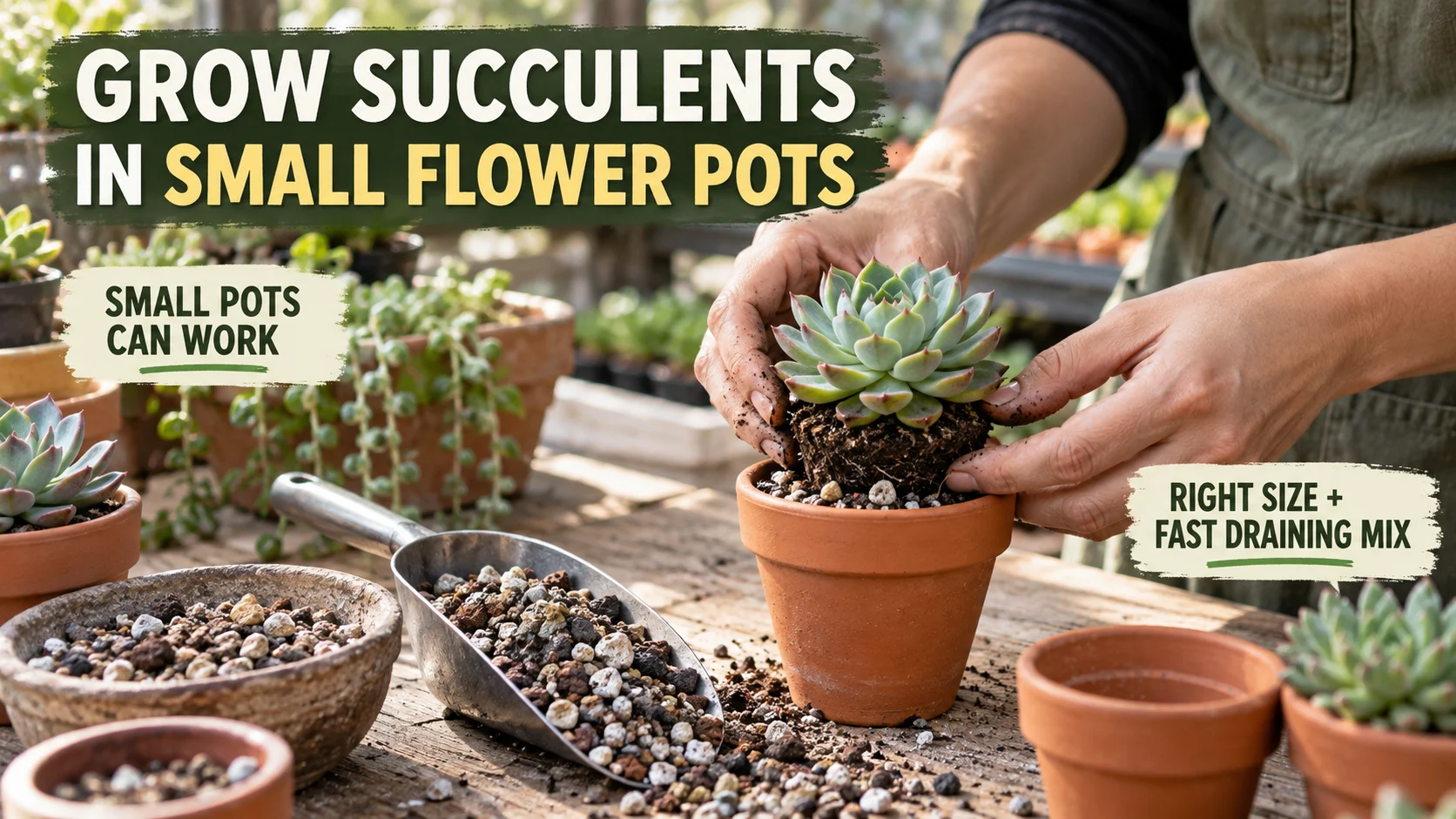

Yes, you can grow succulents in small flower pots, and many species actually do very well in them. The pot only works, though, when it matches the root zone, drains well, and is paired with a gritty mix and enough light. A tiny decorative container does not automatically make succulent care easier, and a much bigger pot is not automatically better either.
The practical goal is simple. You want a pot that is just large enough to support the plant, hold a healthy root system, and dry at a pace the succulent can handle. When a small pot succeeds, it usually succeeds because the whole setup works together: pot size, drainage hole, pot depth, soil mix, watering habit, and light exposure.
Fast answer: when small pots work best
- Small rosette succulents often do well in snug pots with fast-draining mix.
- A drainage hole matters more than decorative style.
- Shallow containers usually suit many compact succulents better than deep containers.
- Water by dryness, not by calendar.
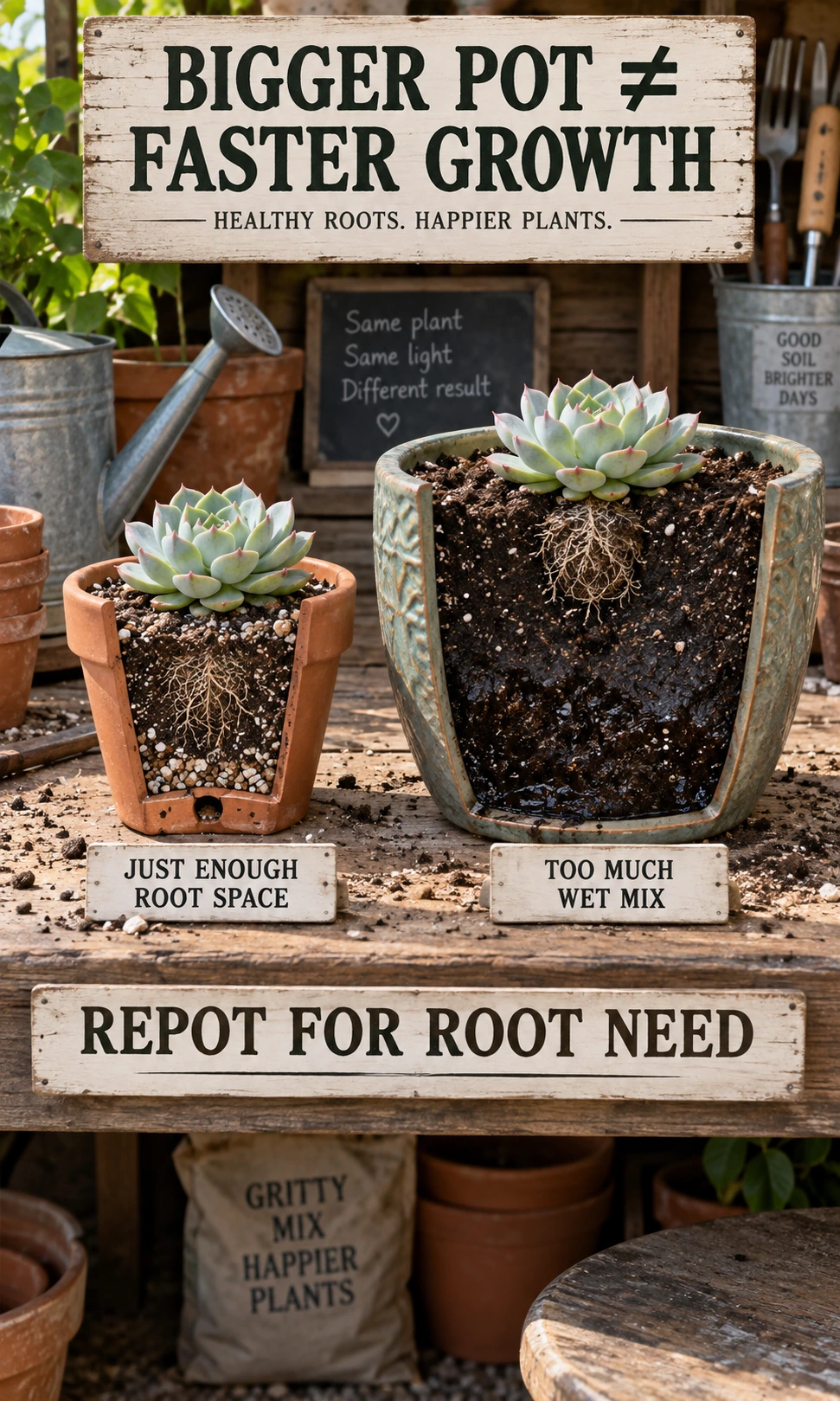
- Repot because the plant needs more root room or stability, not because you want to force faster growth.
What size small flower pot is usually right?
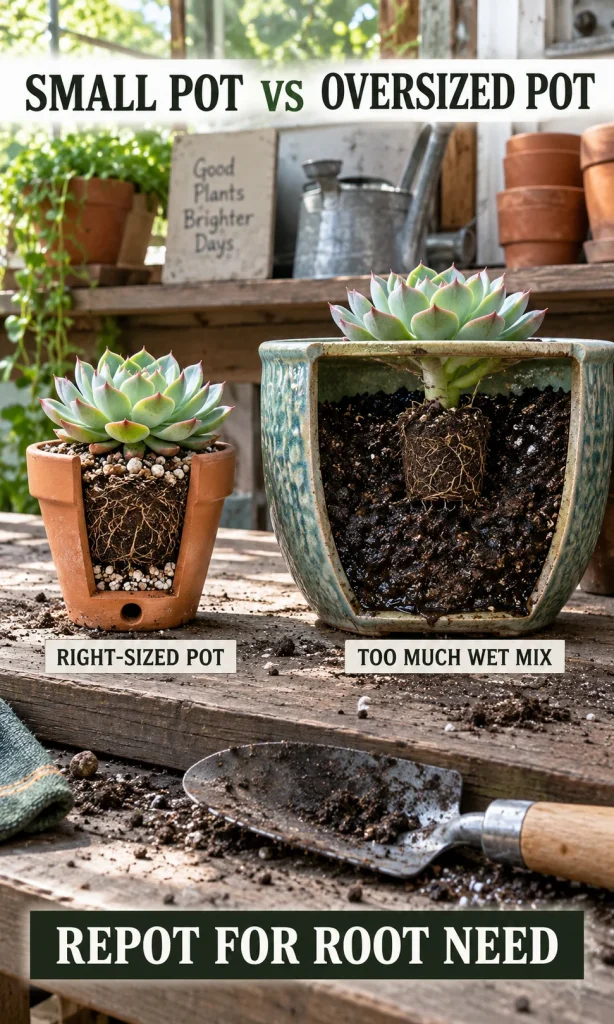
A small pot is usually “right” when it is only modestly wider than the root ball or the plant’s working footprint. For a compact succulent, that often means the pot is a little wider than the plant’s base rather than dramatically larger. This gives the roots some room while keeping the mix from staying wet around a tiny root system for too long.
Depth matters as much as width. Many common succulents do not need a deep reservoir of wet potting soil below them. A shallow, fast-draining pot often behaves better because the mix dries more evenly and the plant does not sit above a damp lower layer it never fully uses.
Small pot vs oversized pot
| Setup | What usually happens | What it means |
|---|---|---|
| Small but appropriate pot | Quicker drying, better root-zone control, easier to judge watering | Often the better choice for compact succulents |
| Very cramped pot | Roots circle tightly, growth slows, plant becomes unstable | Repot one size up |
| Dramatically oversized pot | Too much unused mix, slower drying, higher moisture risk | Repot down or water much more carefully |
| No-drain decorative pot | Water is harder to manage and hidden moisture lingers | Use as cachepot only or switch containers |
Succulent Pot Fit Check
Use this experience to judge whether a small flower pot is helping your succulent stay compact and healthy, or quietly making light, drainage and root-zone problems harder to manage.
What this helps you decide
Small flower pots can be excellent succulent homes, but only when the pot width, depth, drainage, soil mix and light all match the plant. This experience scores your current setup, shows the likely limiting factor, and opens an A4 report you can save or print.
What “good” usually looks like
A small succulent does best when the pot is only modestly larger than the root zone, the mix drains quickly, light is strong enough to prevent stretching, and watering follows soil dryness rather than a rigid calendar. Bigger is not automatically better.
1. Tell us about the plant and the pot
Use inches for quick sizing. Exact perfection is not required; this works best as a practical judgment check.
2. Check the growing conditions
Small containers respond quickly to the wrong mix, weak light and habitual overwatering.
3. Add your area for optional nearby help
If the result points to root problems, repotting needs or a setup problem you want help with, this creates one-click searches for the right local category. It does not invent businesses or ratings.
4. Compare up to three nearby options
Paste the best candidates you find on Google Search or Maps, then compare fit, specialization, estimates, ratings and the questions you still want answered.
| Candidate | Rating / reviews | Fit notes, credentials, estimate terms, warranties, questions |
|---|---|---|
Best succulent types for small flower pots
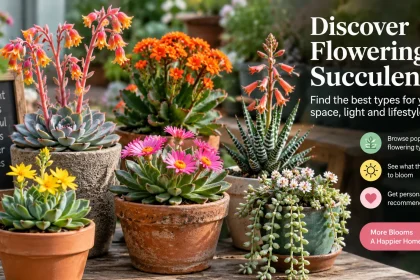
Compact rosette succulents are usually the easiest place to start. Echeveria, Haworthia, many small Crassula types, and other slow-to-moderate growers often look good and stay manageable in small containers for quite a while. The plant does not need to become large to look finished, so the scale stays pleasing without forcing a big repot too soon.
Trailing types can also work in small containers, especially if the hanging growth is the main visual goal. The one caution is that some trailing plants can become top-heavy or outgrow their root space faster than a compact rosette. A beautiful trailing succulent may still need a wider pot later even if the original small pot looked perfect at the beginning.
How to set up a small flower pot for succulent success
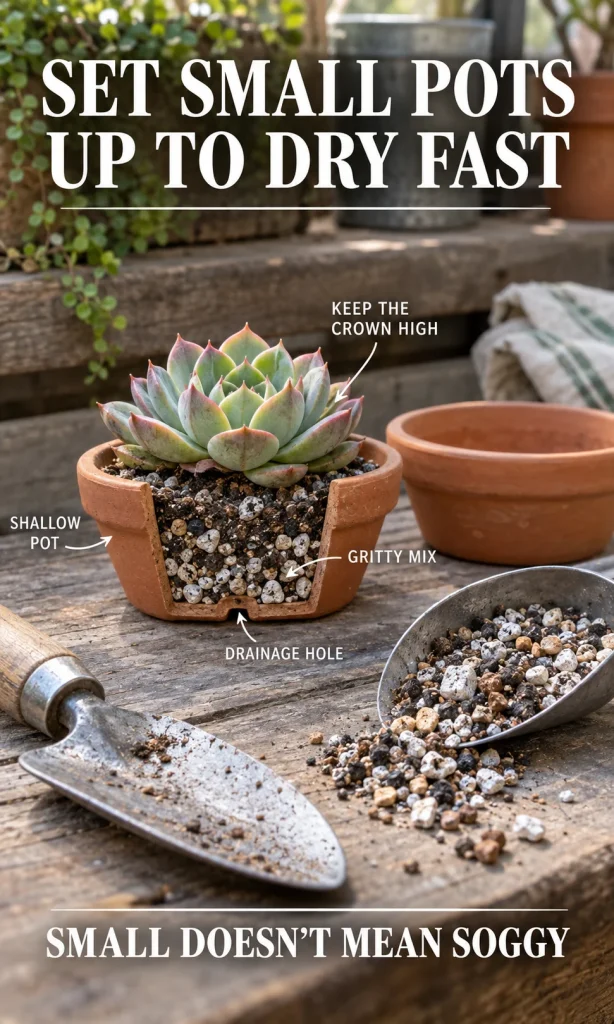
Start with the container itself. A pot with a drainage hole removes the biggest source of guesswork. Terracotta is popular because it breathes and can speed drying, but other materials can work too if the pot size, soil and watering habit are correct.
Then choose a gritty mix. A good succulent mix should not behave like moisture-retentive indoor plant soil. Mineral content helps air move through the root zone, and that matters even more in a small container where a tiny watering mistake can affect most of the pot very quickly.
Finally, place the plant high enough so the crown is not buried. Crowns that stay damp can create preventable stress. Keep the top clean, use the right depth, and make sure excess water has a clear way out of the container.
How often should you water a succulent in a small pot?
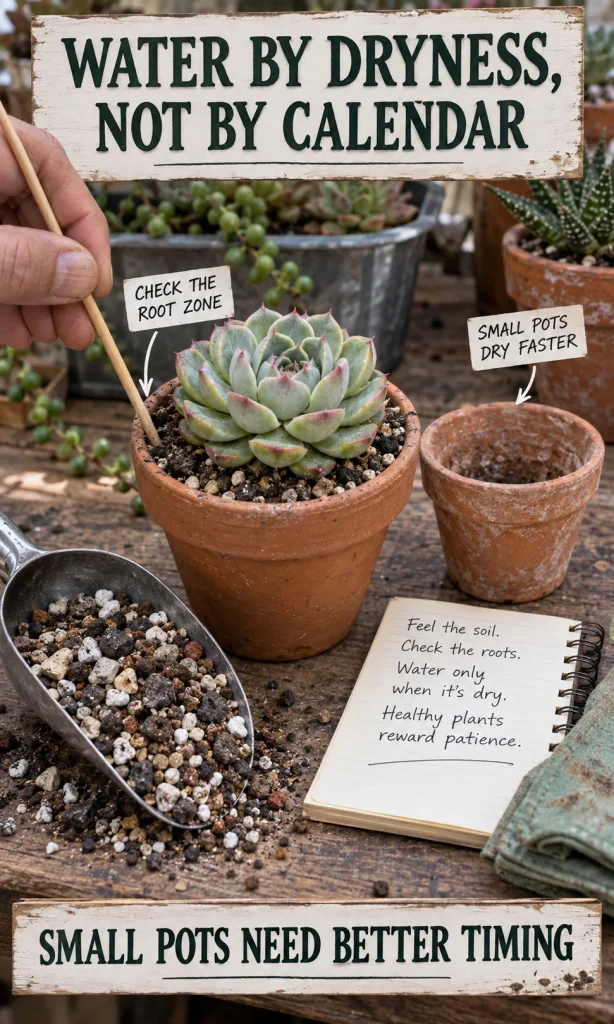
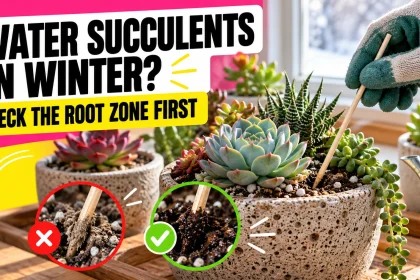
Usually more by observation than by schedule. A small pot can dry faster than a large one, but that does not mean it needs automatic weekly watering. Light, temperature, pot material, soil structure and plant type all change the timing.
The safer habit is to check dryness first. In a small, gritty pot under strong light, the plant may need checking sooner. In a deeper or less-draining setup, the lower root zone may stay wet longer than the surface suggests, so the same calendar rhythm can become a problem very quickly.
Signs the small pot is working well
- The plant stays compact and firm.
- Leaves look proportionate rather than stretched.
- The mix dries at a manageable pace.
- The plant is stable in the container.
- Roots are present but not packed into a tight knot.
Signs the pot needs to change
- Roots circle tightly or push the plant upward.
- The plant dries out too fast even when the mix and light are otherwise appropriate.
- The pot tips easily because the top growth now outweighs the base.
- The lower root zone stays wet too long because the pot is too big or too deep for the plant.
- The plant is stretching from poor light and the size problem is distracting from the real cause.
Professional perspective
Small pots are not a trick for keeping succulents healthy. They are simply one part of a balanced setup. If the drainage hole is missing, the mix is dense, or the light is weak, the small pot will not rescue the plant. It can even make the margin for error narrower.
That is why the best small-pot setups often look very simple. The pot is only slightly bigger than necessary, the mix is fast draining, the plant gets enough light to stay compact, and watering follows the condition of the root zone rather than a fixed routine. The plant looks calm because the environment is calm.
Watering confidence framework
- Check the mix, not just the surface.
- Ask whether the plant is getting enough light to use water efficiently.
- Consider whether the pot is deeper or wider than the plant really needs.
- Repot only when roots, stability or drying behavior justify the move.
- Correct the main limiting factor before adding fertilizer or changing several variables at once.
Key takeaways
Succulents can absolutely grow well in small flower pots. In fact, many look and perform best when the pot is only modestly larger than the root system, the mix is gritty, the drainage is reliable, and light is strong enough to keep growth compact.
If the plant is struggling, do not assume the answer is always a bigger pot. Sometimes the real issue is weak light, a dense mix, a missing drainage hole, or a root zone that never dries properly. Repot for root need, not for speed.
FAQ
Can succulents stay in small flower pots long term?
Yes, many compact succulents can stay in small flower pots for a long time if the root zone is still appropriate, the plant is stable, and the mix drains well.
Do succulents grow faster in bigger pots?
Not automatically. A much bigger pot can hold too much unused mix around a small root system, which can slow drying and increase moisture risk.
Are terracotta pots best for small succulents?