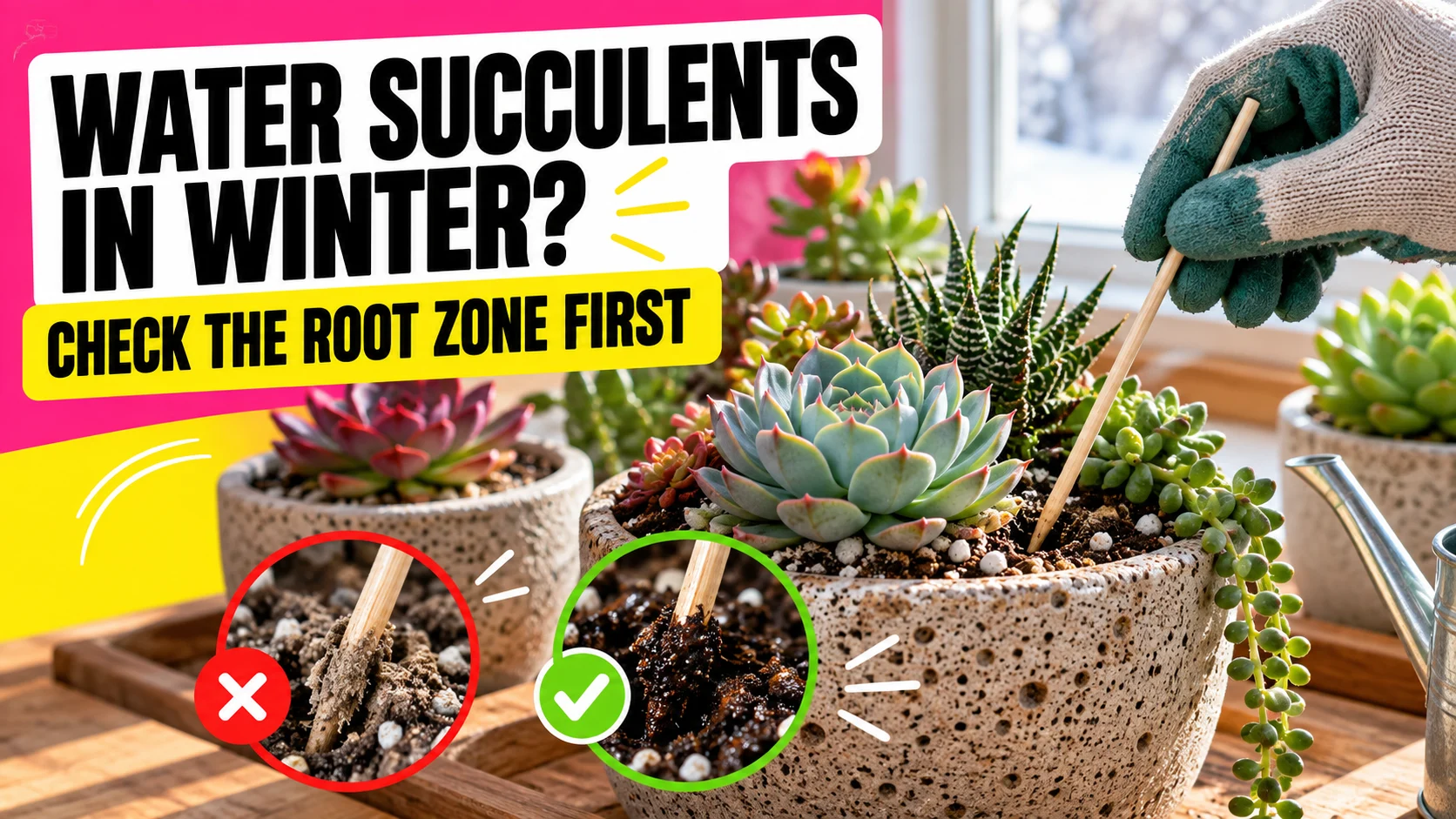

In winter, check most indoor succulents rather than watering them on a fixed schedule: let the potting mix dry through, then water when the plant begins to show mild thirst. A warm, bright room, a cool windowsill, and a winter-growing species can produce very different answers, so the date alone cannot tell you when to water.
For many desert-type succulents in low winter light, the safest next step is simply to wait if the leaves are still firm. If they begin to wrinkle while the mix is dry throughout the pot, give a thorough watering and let the excess escape. This is a useful starting rule for echeveria, jade, haworthia, and many aloes, but check the identity of your plant before treating every succulent alike.
Winter watering rules at a glance
- Dry soil is necessary, not an automatic instruction to water. Check for a lighter pot and mild leaf thinning or wrinkling before watering a resting plant.
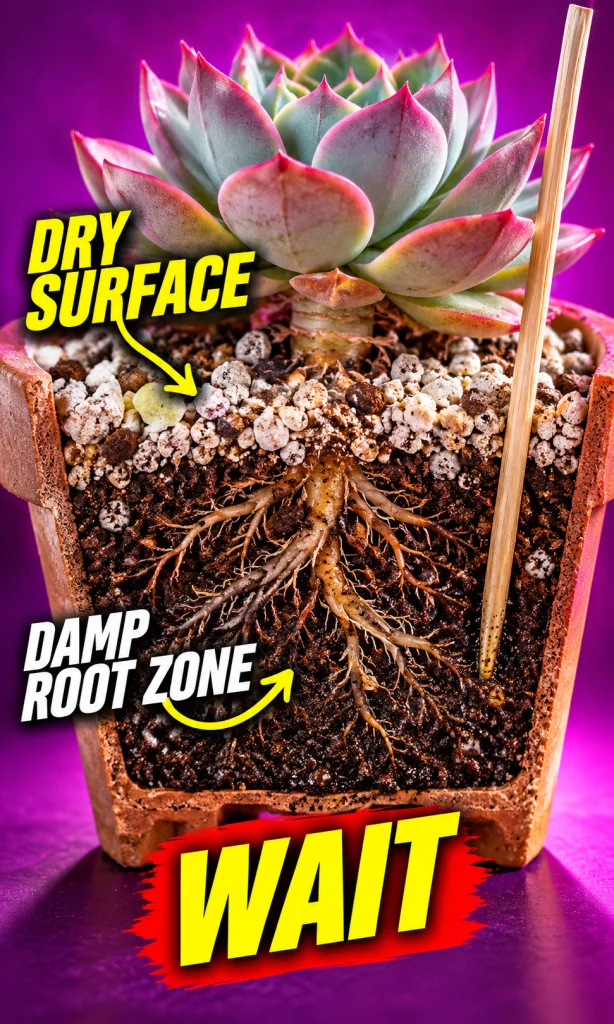
- Test deeper than the surface. A dry top layer can hide damp mix around the roots.
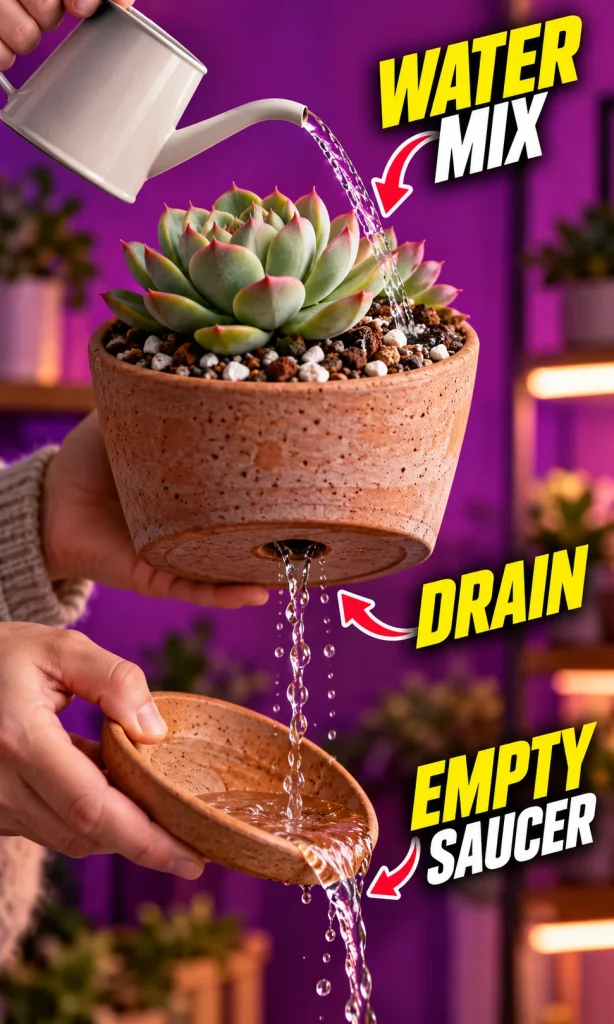
- When it is time, water thoroughly. Use a pot with drainage holes and empty the saucer or outer cachepot.
- Watch active growth. A winter-growing succulent may need checks more often than a resting desert cactus.
- Keep cold roots from staying wet. A chilled pot in low light can take much longer to dry.
The practical rule is “dry mix plus plant demand,” not “dry mix plus a certain number of days.” In a warm, bright home that decision may arrive within weeks; in a cool room it may take much longer. If the pot is still heavy or a skewer comes out damp, leave the watering can alone.
Winter succulent watering table: when to check again
Use these intervals to inspect the plant, never as automatic watering dates. They are practical starting points, not research-backed thresholds for every species or pot. Confirm that the mix is dry at depth and compare the plant with its usual appearance.
| Winter setting | Check the pot about | Watering decision |
|---|---|---|
| Warm room, strong window or grow light | Every 1–2 weeks | Water only after the mix is dry through and mild thirst appears; a small pot may need attention sooner. |
| Warm room, weak natural light | Every 2–3 weeks | Wait longer if the leaves stay plump; warmth does not cancel out low light. |
| Cool, frost-free room; plant resting | Every 3–4 weeks | Water minimally, if at all, until clear shriveling develops; keep roots from remaining cold and wet. |
| Known winter-growing succulent in active growth | About weekly | Follow the identified species and potting mix; water when suitably dry, rather than treating it as dormant. |
For example, a small terracotta pot under an effective grow light can dry faster than a large glazed pot by a cold window, even if both are in the same room. Start by checking both plants, then adjust the next check according to how quickly their pots actually dry. If a pot is still damp at the next check, extend the interval and look at its light, drainage, and container size.
Try the Winter Watering Check: enter what you observed to get a next step, without a false numerical “plant health” score.
Winter Watering Check
Look at the roots, leaves, and growing conditions before deciding whether to water.
No fixed schedule Indoor potsChoose what you can actually observe. If you are unsure about the soil, test deeper before using the result.
This is a care guide for established indoor desert-type succulents. Identify special species and seek plant-specific advice for outdoor, newly rooted, or recently damaged plants.
How to tell whether a succulent needs water
Test the mix near the root zone
Push a clean wooden skewer near the edge of the pot toward the lower root zone without damaging the plant. Leave it briefly, then look and feel for cool damp particles adhering to the wood. A fingertip only at the top is less useful in a deep pot, and a decorative gravel topdressing can make the surface especially misleading.
A pot that feels substantially lighter than it did just after a thorough watering provides a second clue. Learn the difference by lifting the same pot after watering and again as it dries, rather than comparing it with another pot made from a different material. A simple inexpensive moisture probe may help as a cross-check, but a single reading in a gritty mix is not a guarantee that the whole root zone is dry.
Read the plant, then reconcile the signs
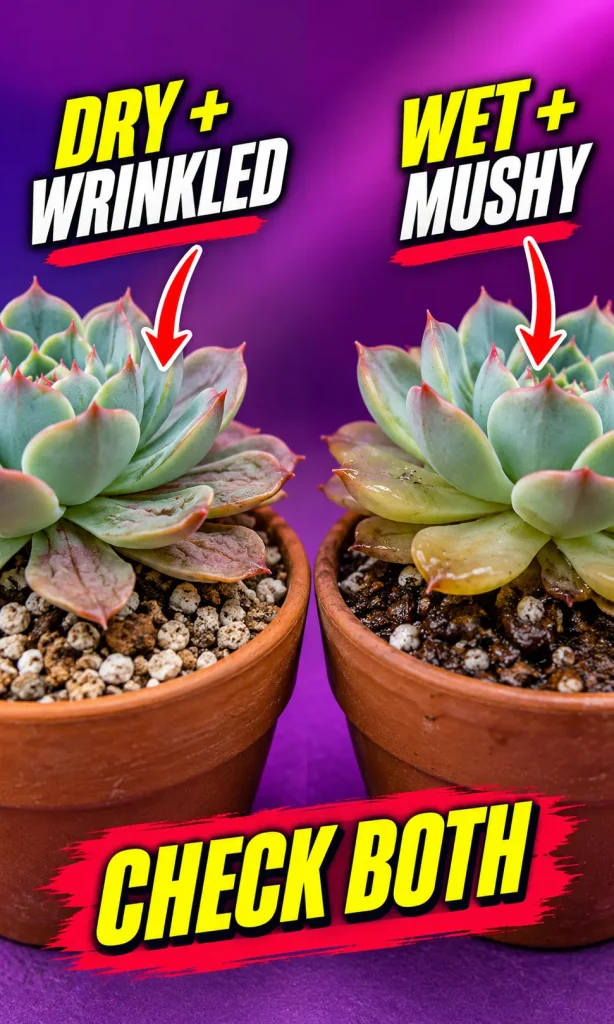
Healthy leaves that remain firm and full suggest that a resting succulent can continue using stored water. Slight overall thinning, fine wrinkles, or a softer feel on several established leaves can indicate that it is time to water if the mix is also dry. Some older bottom leaves naturally dry out and drop, so one shriveled leaf alone is weak evidence.
Yellow or translucent leaves that feel mushy, a soft stem at the base, foul-smelling wet mix, or a plant that wobbles because roots have failed call for a different response. Stop watering and inspect the roots and drainage; adding water to a compromised root system can make the problem worse. A severely dried plant can also be limp, which is why leaf feel and the condition of the mix must be read together.
If the surface looks dry but the lower mix remains damp, see soil looks dry on top but wet underneath. If the plant is declining before obvious leaf color changes, use the early signs of root rot below the soil to guide an inspection.
How to water a succulent in winter
- Check the plant and the full pot. Confirm that the mix has dried through, the container drains, and the plant needs water. If roots are wet or the stem is soft, investigate before watering.
- Water the potting mix evenly. Use room-temperature water and pour slowly until some leaves the drainage holes. Keep pooled water out of the center of a tight rosette, especially where cool air limits drying.
- Let it drain fully. Empty the saucer or decorative outer pot after drainage. If the mix has become so dry that water runs straight around it, water slowly in stages or briefly soak the pot from below, then remove it and drain thoroughly.
- Reset your observation. Note the pot’s heavier feel and check again later. Do not follow one deep watering with small daily top-ups; the mix should have a chance to dry before the next watering.
A drainage hole and airy succulent mix make this method easier to manage. A decorative pot with no outlet traps the water you cannot see, while an oversized or dense potting mix can remain wet around a small root system. The answer is to correct the setup, rather than trying to measure tiny “safe” sips of water indefinitely.
Why winter growth changes the answer
“Succulents sleep in winter” is a useful shorthand for many desert types grown in lower light, but it is not a rule for the whole group. Some aeoniums are active in the cooler part of the year, and a particular aloe or other species may also keep growing under favorable conditions. New leaves, an extending rosette, and use of water in bright light are more informative than the month on a calendar.
Do not assign every aeonium or aloe a fixed two-week cycle. Identify the species if you can, notice whether it is actually producing growth, and follow the cultivation guidance for that plant. Even an active winter grower needs drainage; a cold room with weak light can slow water use despite the species’ usual seasonal pattern.
Holiday or Christmas cacti are another exception to blanket desert-succulent advice. They come from a different habitat, often flower during the shorter-day season, and need a different moisture pattern. Keep them out of the desert-type table above and follow species-specific guidance instead.
Common winter mistakes that keep roots wet
Using a summer reminder: A weekly phone alert can remind you to inspect, but it should never force a watering. Shorter days usually mean slower use of water and slower drying. Change the purpose of the reminder from “water” to “check.”
Watering because heated air feels dry: Human skin and succulent roots respond to different conditions. A heated room may be dry, but the lower half of a large pot can still be wet. Test the container instead of using room humidity as a proxy for soil moisture.
Misting instead of watering roots: A fine spray rarely reaches the entire root zone, and droplets can remain trapped between rosette leaves in cool conditions. When watering is warranted, soak the mix and drain it. Reserve leaf-cleaning methods for an appropriate plant and drying environment.
Moving a freshly watered plant into the cold: Water use and evaporation slow in a chilly position, particularly next to cold glass. Keep a tender succulent frost-free and give a wet pot a chance to drain and dry in suitable light. If frost is expected outdoors, protect or move tender species rather than watering preemptively.
Special cases: pot size, new plants, and outdoors
Small pots with open drainage and coarse mix often dry more quickly than large glazed planters. A deep pot may feel dry near the rim yet hold moisture well below the roots, so test at more than one depth when uncertainty matters. If the mix stays damp for weeks, check the drainage opening, pot size, room light, and mix before changing the frequency.
After buying a plant, do not assume the nursery watered it on the day you took it home. Lift the inner pot from any decorative sleeve and examine the mix before deciding. After repotting, care depends on root damage and the species: keep the plant in appropriate light and follow the grower’s transplant guidance rather than imposing a universal “water immediately” or “wait exactly one week” rule.
Cold-hardy sempervivums and some sedums established outdoors generally do not need routine supplemental winter watering. Winter rainfall, drainage, and freeze–thaw exposure are the larger concerns; tender echeverias and aeoniums may need frost protection. The indoor schedule in this article does not apply to an exposed outdoor pot.
Frequently asked questions
How often should I water indoor succulents in winter?
Inspect the pot every week or two in a bright, warm room and less often in cool or dim conditions, but only water when the mix is dry through and the plant shows a need. Many plants go several weeks between winter waterings. Pot size, light, temperature, and species can change the interval substantially.
Can I stop watering succulents completely in winter?
Some resting succulents in cool, frost-free conditions need little or no water for a period, provided they are not excessively shriveling. Others remain active or sit in warm, bright rooms and may need occasional watering. Check the actual plant rather than committing to a season-long ban.
What is the difference between overwatering and underwatering signs?
A dry pot with gradually wrinkling, thinner leaves points toward thirst. Persistently wet mix with yellow, translucent, mushy leaves or a soft stem suggests excess moisture and possible root damage. Leaf softness alone does not settle the question, so check the root zone and stem before acting.
Should I water succulents before a cold snap?
Do not water a tender succulent just because cold weather is forecast. Protect it from frost and avoid leaving its roots cold and wet. Outdoor hardy species and newly planted specimens have different needs, so use local climate and species guidance for those situations.
Do all succulents go dormant in winter?
No. Many desert-type succulents slow down in winter’s lower light, while some aeoniums and other species can grow in cooler seasons. Christmas cacti also have different winter care. Identify the plant and observe new growth before using dormancy to decide how often to check it.
How long can a succulent go without water in winter?
There is no dependable maximum for every plant: size, stored water, root health, potting mix, and winter conditions vary. A resting, plump plant may go many weeks; an active plant in a small warm pot may not. Watch for gradual shriveling while confirming the mix is dry.
Your next watering decision
Check the plant’s identity and its winter growth first, then test below the soil surface and lift the pot. If the mix is damp or the leaves remain firm, wait and check again; if the pot is dry through and several leaves show mild thirst, water the mix thoroughly and let it drain. If you find mushy tissue or a soft stem, investigate the roots before adding more water.
Keep the decision repeatable: note where the plant sits, how the pot feels after watering, and how long it actually takes to dry. That observation will be more useful next winter than any generic number of days. For the wider pattern behind slow-drying pots, read how long soil should stay wet after watering.