


Artificial Intelligence, Smart Glasses, and Holograms Will Change the Workplace

The Future of Work – How AI-equipped robots, smart glasses, and augmented reality will affect the workplace are the hot topics of the future. Augmented and virtual reality technologies will change how people work, and smart glasses will allow workers to access them from anywhere. Holograms will let workers communicate with co-workers without leaving the workplace. They’ll be able to run manufacturing and produce products remotely, even without a human presence.
Hyper reality
Today, smart glasses and holograms are commonplace in consumer settings, but in the future, augmented reality and artificial intelligence-equipped robots will be essential workplace tools. Augmented reality is also perfect for knowledge transfer and training in industrial settings. A worker can watch an in-context video to better understand how to perform a specific task. Designers can create next-generation interfaces for this emerging technology. Skylight-powered AR glasses are currently used by Boeing technicians to wire airplanes. The glasses use sight and voice to guide technicians to the right place and control an app on their glasses. Boeing’s use of Skylight reduced production time by 25% and error rates to zero.
Wearable hardware will enable hands-free working. These will also eliminate the need for physical controllers. Using these tools may even reduce the need for a human receptionist. Holograms can be a useful addition to the work environment, but the challenge of standardization is still a concern. Nonetheless, the future of work will be bright with augmented reality.
Augmented reality
Wearable technology such as AR-equipped robots, smart glasses, and holograms will enable hand-free working and improve productivity. It could potentially decrease the cost of training, service, assembly, and design. It could also make humans redundant. For designers, it could create a challenge of standardization. The future of work will be shaped by these innovations, so businesses should prepare for a disruptive shift.
Applied to manufacturing, augmented reality can be used to teach workers via in-context video. Designers in the e-learning space are already working on next-generation AR interfaces. For instance, Boeing is currently testing AR glasses powered by Skylight to help technicians wire planes. The technologist wears the smart glasses and talks to the app, guiding him or her in the process. The new technology has reduced production times by 25% and the error rate has dropped to zero.
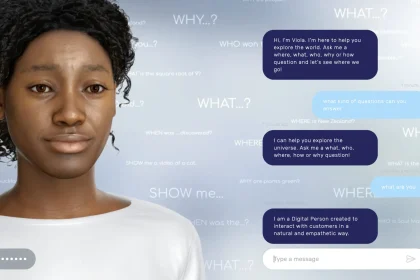
Combined with advanced interactive surfaces, augmented reality can project virtual 3-D representations of colleagues. This allows employees to collaborate and conduct work without physically being in the same space. Imagine the possibilities – employees could remotely attend meetings, run through presentations, or engage with stakeholders face-to-face. With augmented reality, the workplace is no longer a lonely place. There’s no need to take on more work if they can do it remotely, thereby increasing their productivity.
AR technology is also a major challenge. It requires specialization. Early suppliers of AR technology were limited, so companies built their own internal capabilities. Today, best-of-breed vendors are starting to emerge. In-house AR efforts will be difficult to compete with these companies. With such a huge demand, firms will need to invest heavily in hiring digital talent to keep up.
Holograms
As the pace of technology advances, the workplace will continue to evolve. Nearly half of employees believe that smart glasses, desk-based robots, drones, and holograms will change the way we work in the next 20 years. As more workers gain access to AR and holograms, they could even replace human co-workers. Some employees even predict that they will use holograms in the workplace.
Augmented reality (AR) is already transforming the way engineers work. It enables engineers to work on 3-D holograms of their vehicles, allowing them to see every detail without ever having to build a physical prototype. Using AR, engineers can walk through a life-sized hologram to check out their designs, and even peer inside. With AR, the world is literally in their hands.
AI-equipped robots
The Future of Work: Artificial intelligence, smart glasses, and holograms will all affect how we live and work. Wearable technology like smart glasses will enable workers to access augmented and virtual reality environments and communicate with co-workers via hologram. Robots with artificial intelligence will replace humans in many roles. A driverless car will become a reality thanks to design innovations.
AR-enabled smart glasses are a great way to enable hands-free working. AR glasses work on gestures and voice commands and can be used to manipulate 3D projections of objects. However, designers and engineers will face challenges in standardization, especially in gesture-based fields. As voice commands and gestures become more common, they may signal the end of physical controllers.
Wearable technology
As augmented reality (AR) technology advances, workers will be able to work without ever looking up from their laptop. Wearable tech, such as smart glasses, will allow them to step into an augmented or virtual environment and interact with their co-workers through holograms. Moreover, AI-equipped robots will eventually take over the manufacturing process. In addition to these benefits, smart glasses will enable workers to work hands-free, reducing the need for physical controllers.
AR will also help in knowledge transfer and training in industrial settings. For example, AR-enabled glasses will let the worker watch a video while doing a task. This next-generation interface can be designed by designers. For instance, Boeing is already using AR glasses powered by Skylight to train technicians wiring airplanes. Using a voice-activated application and sight-guided instructions, technicians can easily operate the Skylight and reduce production time by 25%. Moreover, error rates will fall to zero.