
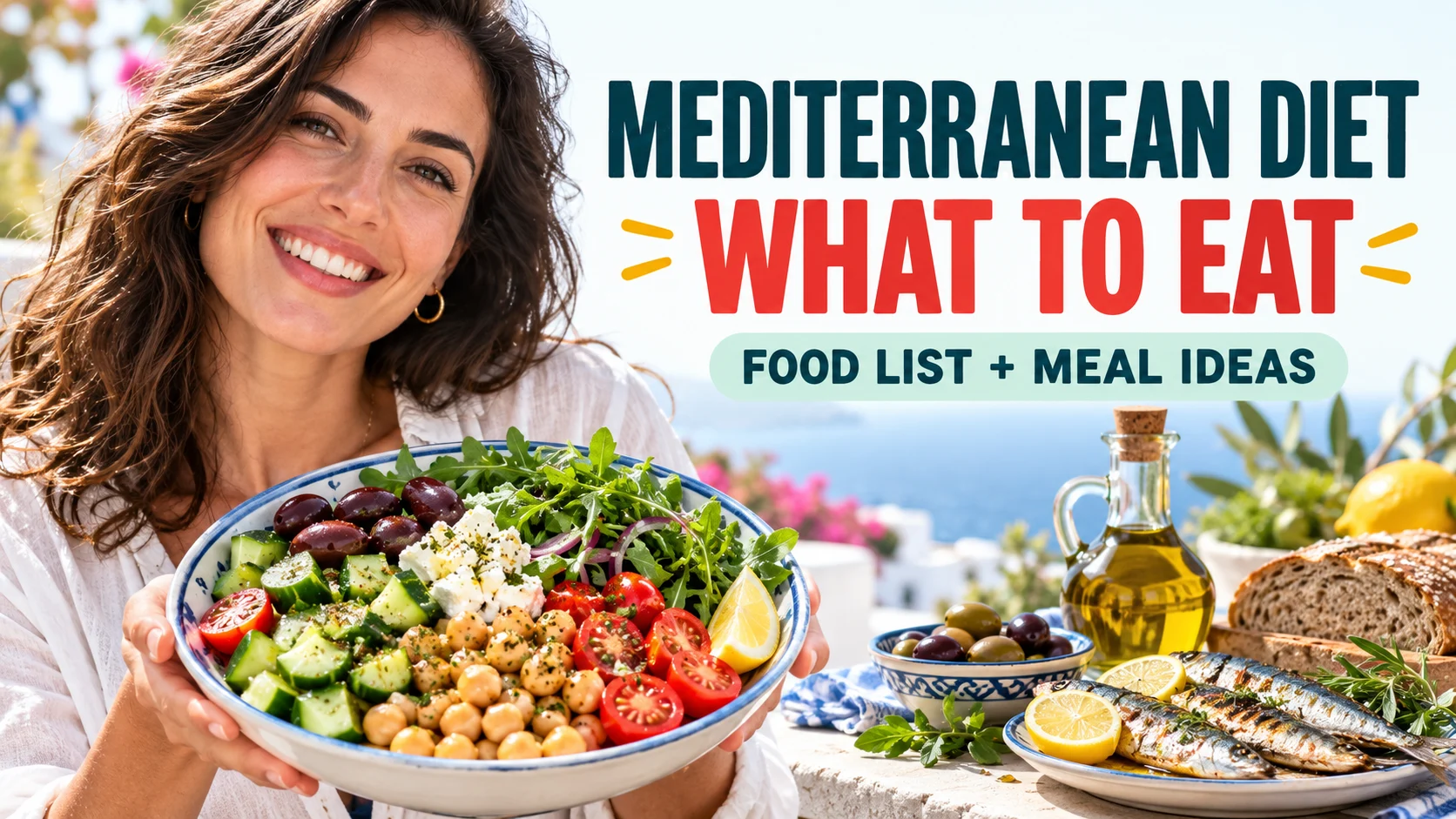

The Mediterranean diet is built around vegetables, fruit, beans, whole grains, nuts, and olive oil, with fish and seafood regularly and smaller amounts of poultry, eggs, and dairy. It has no universal forbidden-food list or required wine, so the useful question is what makes up most of your meals over a week. Use the food table, grocery list, and flexible seven-day plan below to start with ordinary ingredients.
Greek cooking is one expression of this wider pattern, not a separate set of rigid rules. A Greek-leaning week might include lentil soup, chickpeas, horta or other cooked greens, tomatoes, yogurt, feta, olive oil, herbs, and seafood; other Mediterranean regions use different ingredients to achieve a similar balance. The American Heart Association’s overview of Mediterranean-style eating emphasizes the overall pattern, rather than a single food or fixed menu.
What to eat: the quick reference
| Place in the week | Food groups | Practical example |
|---|---|---|
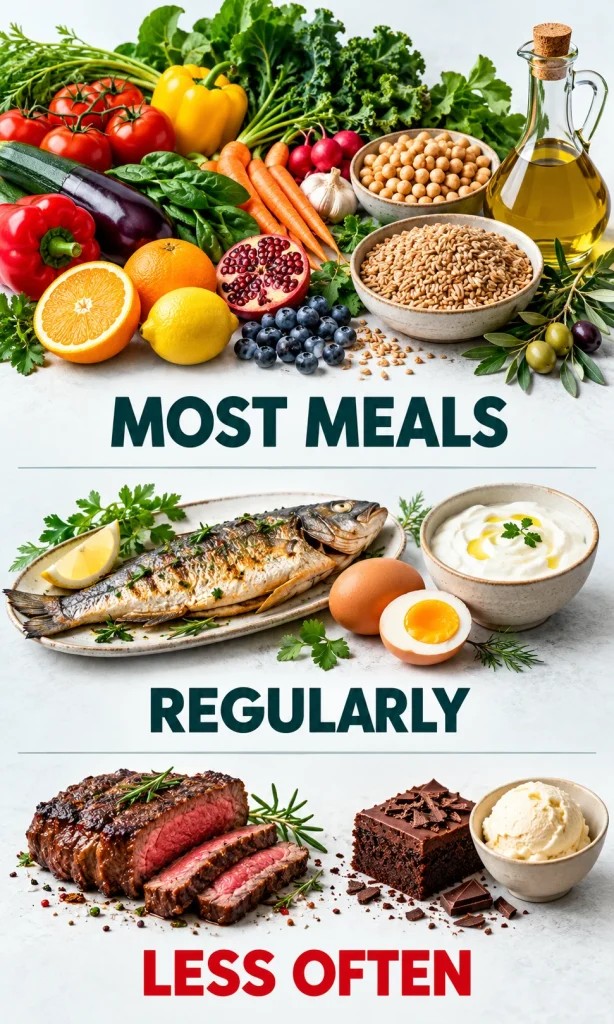
| Build most meals around | Vegetables, fruit, whole grains, legumes, olive oil, herbs; nuts and seeds in modest portions | Chickpea and tomato bowl with greens, whole-grain bread, and olive oil |
| Include regularly | Fish and seafood; yogurt and cheese in moderate portions; eggs and poultry as preferred | Fish with vegetables twice during the week; yogurt with fruit on other days |
| Have less often | Red meat, processed meat, sweets, sugary drinks, and refined-grain snacks | Use beans or fish for some meals that would otherwise center on meat |
| Choose deliberately | Water, unsweetened tea, and coffee as tolerated; wine is optional | Water with meals; never start drinking alcohol for a presumed benefit |
This is a frequency guide, not a prescription for exact servings or calories. Oldways’ Mediterranean Diet Pyramid places plant foods and olive oil at the base, fish and seafood at least twice weekly, and red meat and sweets less frequently. Adjust quantities to appetite, activity, and any clinical advice you already follow.
Complete Mediterranean diet food list
Vegetables and fruit
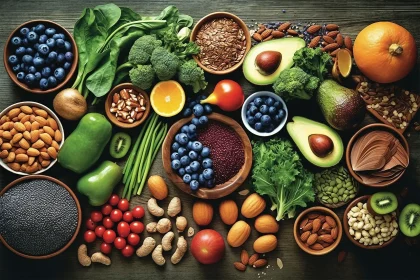
Choose a variety of colors and preparation methods: tomatoes, cucumber, peppers, eggplant, zucchini, broccoli, leafy greens, carrots, onions, and seasonal vegetables all fit. Fresh, frozen, and canned vegetables can work; rinse canned options when sodium is a concern and choose products without heavy sauces. Fruit can be fresh, frozen, or packed without added syrup: berries, oranges, apples, pears, grapes, figs, and melon are examples rather than a required checklist.
Build the plate with vegetables first, then add legumes, fish, eggs, or another protein and a whole grain or starchy vegetable. Potatoes are not banned; a roasted potato alongside fish and a large salad is a different meal from fries with processed meat. Whole fruit is an everyday dessert option, while juice and sweetened fruit products are easier to consume in large amounts without the same fiber.
Whole grains and starchy foods
Oats, barley, bulgur, farro, brown rice, whole-wheat bread, and whole-wheat pasta are useful staples. Look for whole grain as a leading ingredient when buying bread or pasta, and pick the grain you will actually cook. A small amount of regular pasta can still belong in a Mediterranean-style meal, especially with beans, vegetables, and olive oil; whole-grain versions make fiber easier to include.
Beans, lentils, nuts, and seeds
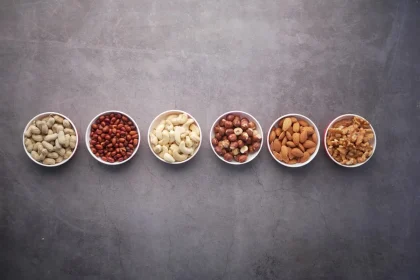
Chickpeas, white beans, black beans, lentils, and split peas can anchor inexpensive lunches and dinners. Canned beans are a time saver, and dried legumes are often economical when cooked in a batch. Almonds, walnuts, pistachios, pumpkin seeds, sesame, and tahini add texture and fat; a small handful or spoonful is more useful than treating nuts as an unlimited snack.
Fats and flavorings
Extra-virgin olive oil is a familiar primary oil for dressing vegetables and everyday cooking. Olives, avocado, and nuts also fit, though none needs to be added to every meal. Lemon, vinegar, garlic, oregano, dill, parsley, mint, cumin, and paprika create flavor without relying entirely on salt; compare labels on olives, feta, and packaged sauces if sodium matters for you.
Fish, poultry, eggs, and dairy
Sardines, salmon, trout, mackerel, tuna, mussels, and other locally available seafood can all be used. The fish need not be expensive: canned sardines or salmon and frozen fillets are practical alternatives. Eggs, chicken, and turkey offer variety, while plain yogurt and cheeses such as feta can be included in moderate amounts instead of becoming the bulk of the plate.
Vegetarian meals fit comfortably here: pair lentils or beans with grains, vegetables, and olive oil, then vary nuts, seeds, eggs, or dairy according to preference. People avoiding fish entirely can still follow a Mediterranean-style food pattern, though they may need individual advice about nutrients such as omega-3 fats. Food allergies and medical diets take priority over any sample menu.
Mediterranean Meal Studio
Choose a style and see a reusable meal outline and shopping basket.
Make it yours
Meal ideas are examples. Adjust portions and substitutions for your household, allergies and medical needs.
Your starting week
Grocery basket
Which foods should you limit?
“Limit” describes the usual pattern, not a moral judgment about a meal. Make processed meats, sugary drinks, confectionery, pastries, and highly refined snack foods less routine; use red meat less often than beans, fish, or poultry. A store-bought food is not automatically a poor choice: canned beans, frozen vegetables, plain yogurt, and whole-grain bread can be useful convenience foods.
- Processed meat: replace some bacon, sausage, or deli-meat meals with beans, eggs, fish, or home-cooked poultry.
- Sweetened drinks: start with water, sparkling water, or unsweetened tea; keep sweet drinks occasional.
- Refined snacks: use fruit and nuts, yogurt, or whole-grain toast when a snack is needed.
- Large amounts of cheese or oil: both can fit, but build the meal around plants and use these for flavor.
Alcohol is not a required Mediterranean-diet food. The American Heart Association advises people not to start drinking for health benefits; if you drink, follow medical advice and applicable limits. During pregnancy or when alcohol interacts with medication or a health condition, avoid or discuss it with your clinician.
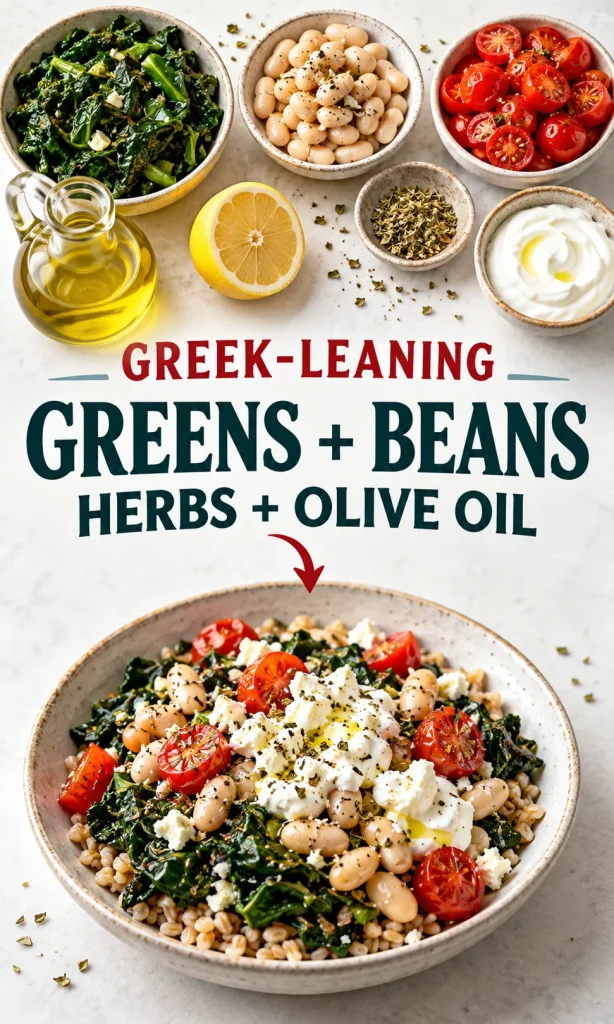
Mediterranean versus Greek diet: what changes?
| Feature | Wider Mediterranean pattern | Greek-leaning example |
|---|---|---|
| Plant base | Vegetables, fruit, legumes, grains, nuts | Horta or other greens, tomato salad, lentil soup, chickpeas |
| Main fat | Olive oil is common | Olive oil in vegetables, beans, and salads |
| Dairy and flavor | Yogurt or cheese in moderate portions, regional herbs | Plain Greek yogurt, feta, oregano, dill, lemon |
| Typical meals | Varies across many countries | Fasolada, lentil soup, baked fish, vegetable dishes |
“Greek diet” is often used online as shorthand for familiar Greek foods, but contemporary Greek eating varies and no one menu represents every household. The distinction matters when shopping: feta and yogurt can make a meal taste Greek, yet the plant base remains the main point. You can use local seasonal produce and affordable beans without making the pattern less valid.
A practical grocery list for a week
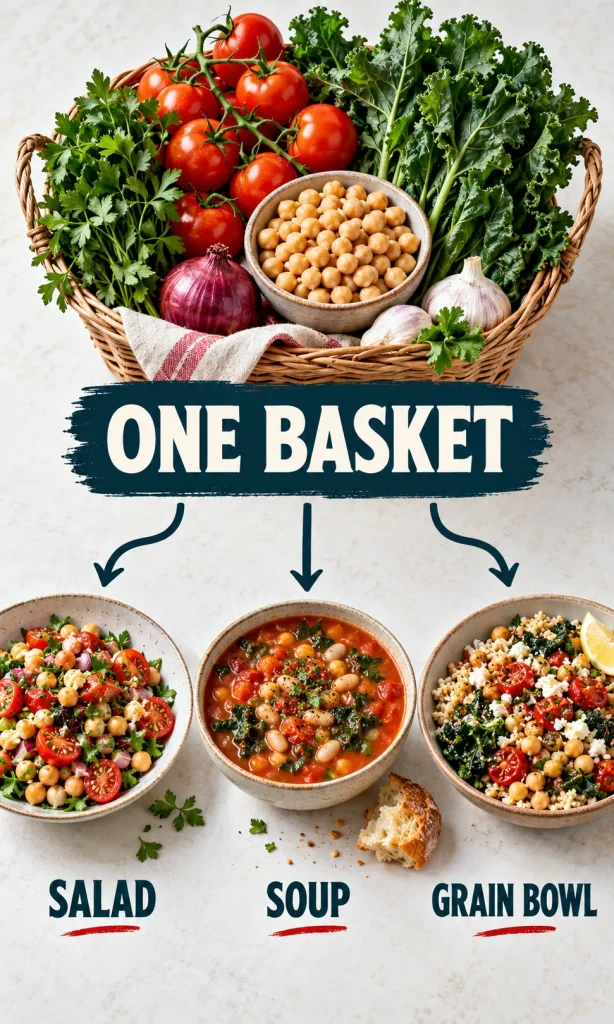
This starting basket suits roughly two adults for seven days when portions are adjusted and leftovers are used. It is a flexible shopping guide, not a nutrient-complete prescription or a promise that every household will use the same quantity. Check your pantry first, and swap any item for a similar food you enjoy.
- Produce: 2 bags leafy greens; 6–8 tomatoes; 2 cucumbers; 3 peppers; 2 onions; 1 head broccoli or a frozen equivalent; 2 lemons; 7–10 pieces of fruit; fresh or dried herbs.
- Legumes: 4 cans of chickpeas, lentils, or beans combined, or dried equivalents.
- Grains: oats; one loaf whole-grain bread; brown rice, bulgur, or whole-wheat pasta.
- Protein: two fish meals using fresh, frozen, or canned fish; eggs; poultry if desired; extra beans for vegetarian meals.
- Dairy and alternatives: plain yogurt; a small pack of feta or another cheese, if desired.
- Pantry: olive oil; unsalted nuts or seeds; canned tomatoes; garlic; vinegar; pepper; oregano or another preferred spice.
For a lower-cost shop, buy one or two seasonal vegetables and add frozen greens or broccoli. Canned tomatoes, beans, oats, and frozen fish reduce waste and make it easier to repeat meals. If fish is unaffordable this week, use legumes and return to seafood when it fits the budget; do not let a single expensive ingredient prevent the whole change.
For a more Greek-leaning basket, add a second tin of white beans, dill, oregano, plain Greek yogurt, and a modest amount of feta. Use the same vegetables across a chopped salad, a bean pot, and a fish dinner. That overlap is deliberate: a grocery list is useful only when its ingredients turn into meals before they spoil.
When reading labels, prioritize the job the food will do rather than treating every packaged item alike. A can of plain chickpeas makes lunch faster, whereas a ready-made grain bowl with a sweet dressing may need vegetables or protein to make it satisfying. If you need to compare food groups on the plate, see MyPlate explained; the Mediterranean pattern can be assembled from the same familiar building blocks.
Seven days of realistic Mediterranean meals
The plan below is a set of examples for general adults, with leftovers built in. Serve enough for your needs, add water, and adjust for allergies, medical conditions, pregnancy, or individual energy requirements. Snacks are optional; use fruit, plain yogurt, vegetables with hummus, or a small handful of nuts when hungry.
| Day | Breakfast | Lunch | Dinner |
|---|---|---|---|
| 1 | Oats, yogurt, berries, walnuts | Chickpea, cucumber, tomato, and herb salad | Baked fish, greens, and brown rice |
| 2 | Whole-grain toast, egg, tomato | Leftover fish and greens bowl | Lentil and vegetable soup with bread |
| 3 | Plain yogurt, fruit, seeds | Lentil soup and side salad | Whole-wheat pasta, tomato, white beans, spinach |
| 4 | Overnight oats with fruit | Pasta leftovers with cucumber salad | Chicken or chickpeas with roasted vegetables and bulgur |
| 5 | Egg and greens on toast | Bulgur, chickpeas, peppers, and lemon | Sardines or grilled fish with potatoes and vegetables |
| 6 | Yogurt, oats, sliced pear | Leftover fish or bean salad | Greek-style white bean and tomato pot with greens |
| 7 | Whole-grain toast with nut butter and fruit | Bean-pot leftovers and chopped salad | Vegetable omelet, salad, and whole-grain bread |
Cook one pot of grains and one pot of soup early in the week, then wash and store vegetables where you can see them. Refrigerate cooked leftovers promptly and follow local food-safety guidance for storage and reheating, especially for fish and poultry. If a day becomes busy, a can of beans with chopped tomato, olive oil, and bread still follows the central pattern.
There is intentionally no calorie target in the table. The same combination of fish, rice, and vegetables can be served in different quantities to meet different needs, and the menu does not determine a person’s blood glucose response or weight outcome. For protein swaps beyond these examples, see foods with protein examples, then select familiar foods that fit your preferences.
How to start without overhauling your kitchen
Start with two substitutions: cook with olive oil in place of some butter, and make one bean-based dinner in place of a meat-centered meal. Next, add vegetables to lunch and choose fish for a dinner you already know how to make. This gradual approach keeps the change practical and leaves room for your culture, budget, and food preferences.
Eating out works the same way. Look for a vegetable side, beans, grilled fish or poultry, and a grain; ask for sauces on the side if you want to choose how much to use. A restaurant meal does not need to be Greek or Italian to meet the pattern, and one dessert does not erase a week of nourishing meals.
Two mistakes make the diet harder than necessary. First, treating “Mediterranean” as permission to add large quantities of oil, cheese, and nuts to an otherwise unchanged diet can make portions unbalanced. Second, buying an elaborate menu full of unfamiliar foods leads to waste; repeat simple meals and add variety gradually. If you manage diabetes, kidney disease, a food allergy, or another condition that changes your food choices, ask your clinician or dietitian to adapt the plan.
Make the pattern resilient to travel and busy weeks. Keep one shelf-stable dinner on hand, such as pasta, canned tomatoes, and beans; buy bagged salad or frozen vegetables when time is short. At a café, a sandwich with vegetables and a side of fruit can be a reasonable choice, even if it has no “Mediterranean” branding. Consistency across ordinary days counts more than a perfect weekend menu.
Questions readers ask
Can I eat pasta on the Mediterranean diet?
Yes. Whole-wheat pasta is a convenient way to add whole grains, while regular pasta can also fit occasionally. Pair it with vegetables, beans, seafood, olive oil, and a portion appropriate for you rather than making pasta with a heavy sauce the entire meal.
Is red wine required?
No. Wine is optional, and you should not begin drinking for presumed health benefits. Water is an excellent default beverage, and alcohol may be inappropriate during pregnancy, with certain medicines, or for other health reasons.
How much olive oil should I use?
There is no single amount that suits everyone. Use olive oil as a main cooking or dressing fat and choose a quantity that fits your appetite and overall energy needs. Adding extra oil on top of an unchanged diet is not necessary to follow the pattern.
Can this diet help with weight loss?
It may support weight management when your overall intake fits your needs, but the food label alone does not guarantee weight loss. Nuts, oil, bread, and cheese can all belong; portions and the rest of the eating pattern still matter. A dietitian can help adapt the approach to a specific goal.
Do I need organic food or expensive fish?
No. Conventional, frozen, and canned produce can make a practical shopping basket. Canned sardines, salmon, and beans are useful lower-cost options; compare sodium and added ingredients where relevant.
Is the Greek diet different from the Mediterranean diet?
Traditional Greek eating is one regional expression of a broader Mediterranean pattern. Greek-style meals often feature legumes, vegetables, olive oil, herbs, yogurt, and modest amounts of feta, but no single Greek menu is required. The overall mix of foods matters more than their national label.
A good first week
Choose three dependable meals, buy enough vegetables and beans to repeat them, and include fish if you eat it and it fits your budget. The most useful Mediterranean diet food list is the one that turns into meals you enjoy, with plant foods doing most of the work. Adjust the plan around your needs rather than chasing a perfect checklist.