


“Superfood” is a useful shorthand for nutrient-dense foods, but it is not a scientific or regulated food category. The strongest approach is to build a varied eating pattern from vegetables, fruit, whole grains, beans, nuts, seeds, fish or other quality proteins, and mostly unsaturated fats instead of expecting one ingredient to carry the whole diet.
That distinction matters because the benefit comes from the pattern you repeat. Harvard’s Nutrition Source discussion of superfoods notes that the term has no scientifically based definition, while the American Heart Association’s 2026 dietary guidance emphasizes variety, whole grains, healthy protein sources, unsaturated fats, and less sodium, added sugar, and ultra-processed food.
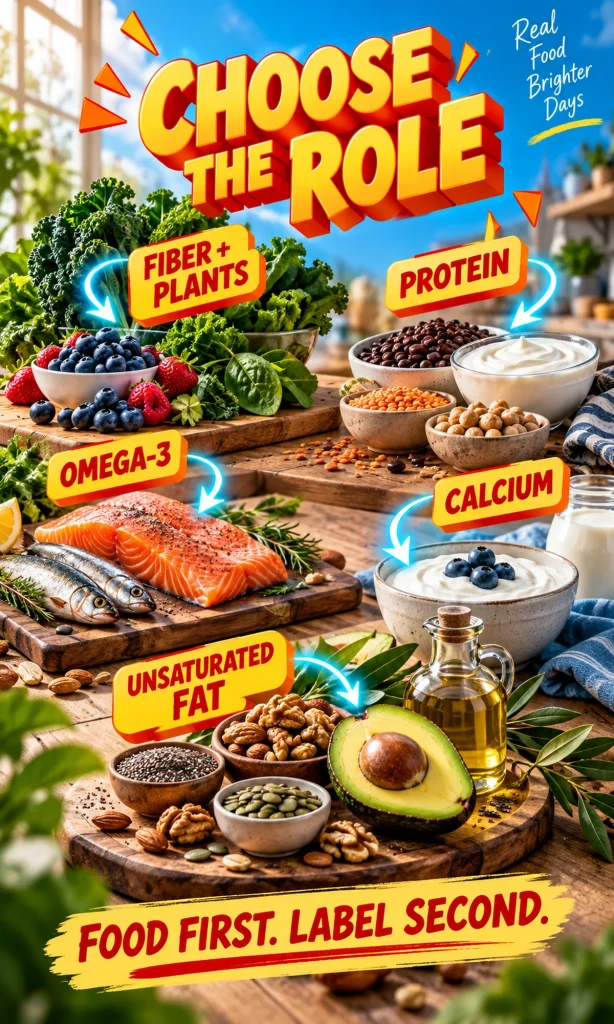
A practical way to use the idea is to choose foods for the nutrition role they fill: fiber and plant variety, protein, omega-3 fats, calcium, whole-grain carbohydrate, or unsaturated fat. Once those roles are covered across the day and week, an expensive powder or exotic berry becomes optional rather than essential.
What counts as a superfood?
There is no official threshold that turns a food into a “superfood.” In everyday nutrition writing, the label usually points to a food that provides useful vitamins, minerals, fiber, unsaturated fats, protein, or plant compounds in a relatively nutrient-dense package.
That means ordinary foods can qualify just as well as trendier ones. Beans, oats, frozen berries, cabbage, canned salmon, plain yogurt, tomatoes, peanuts, and olive oil can all contribute strongly to a balanced diet without carrying a premium marketing label.
- Use the label as a shortcut, not a rule. A food does not become healthier because the package calls it “super.”
- Look for the role. Ask whether the food adds vegetables or fruit, fiber, protein, whole grains, calcium, omega-3 fats, or unsaturated fat.
- Rotate choices. Different foods bring different nutrients, textures, and plant compounds.
- Keep affordability in the equation. Frozen, canned, dried, and store-brand foods can make a nutrient-dense pattern easier to repeat.
10 practical examples of superfoods
These are useful examples because each one fills a clear nutrition role and can fit normal meals without requiring a specialty product. They are not a ranking, and no single item is mandatory.
| Food | Useful role | Easy way to use it |
|---|---|---|
| Berries | Fruit, fiber, colorful plant compounds | Oats, yogurt, smoothies, snacks |
| Dark leafy greens | Vegetable variety, folate, carotenoids, vitamin K | Soups, stir-fries, salads, eggs |
| Broccoli, cabbage and other cruciferous vegetables | Fiber and vegetable variety | Roasted sides, slaws, soups, bowls |
| Beans and lentils | Plant protein, fiber, folate and minerals | Curries, soups, salads, wraps |
| Oats and other whole grains | Whole-grain carbohydrate and fiber | Breakfast, grain bowls, baking |
| Nuts and seeds | Unsaturated fats, protein, minerals and fiber | Snacks, cereals, salads, sauces |
| Fatty fish | Protein and long-chain omega-3 fats | Main meals, bowls, salads, toast |
| Plain yogurt or fortified soy yogurt | Protein and calcium | Breakfast, dips, sauces, snacks |
| Olive oil and avocado | Mostly unsaturated fat | Dressings, toppings, meal components |
| Tomatoes | Colorful produce, vitamin C and carotenoids | Sauces, salads, soups, stews |
The American Heart Association’s nutrient-dense food guidance uses a similar pattern: plenty of vegetables and fruit, whole grains, legumes and nuts, fish and seafood, and other appropriate protein sources, while limiting foods high in sodium, added sugars, and saturated fat.
Superfood Mix Studio
Choose a meal, eating pattern and priority. Get four practical foods plus flexible swaps.
Build your mix
General food ideas only - not medical nutrition advice. Allergies, pregnancy, kidney disease, medications or prescribed diets can change what is appropriate.
Breakfast: plant variety
Easy swaps
Build meals around roles, not hype
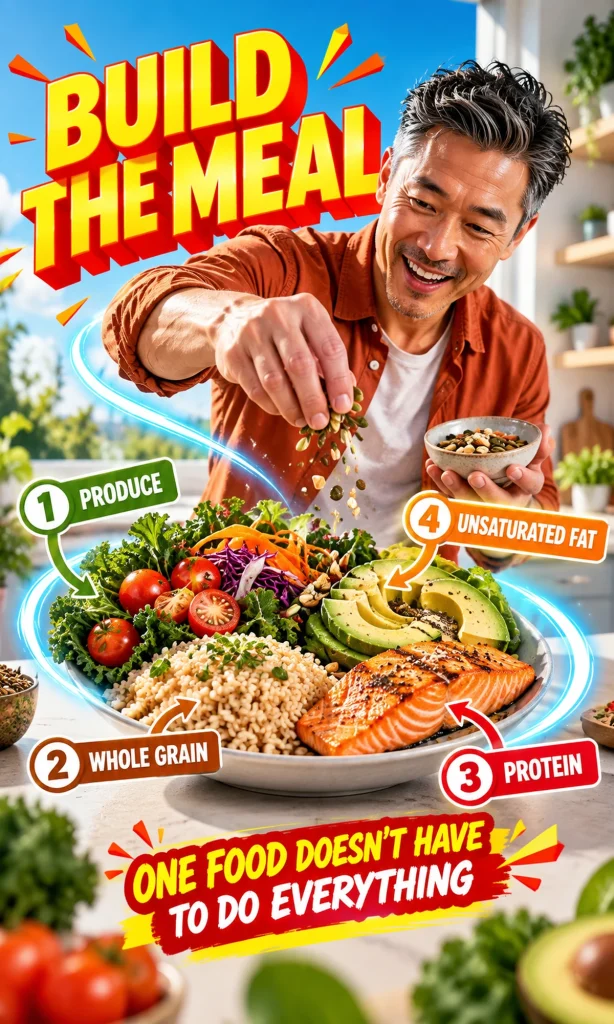
A useful meal does not need ten “superfoods” at once. It needs complementary roles: produce for plant variety, a protein source, a high-fiber carbohydrate when appropriate, and a source of mostly unsaturated fat.
For a simple visual model, the site’s MyPlate explained guide can help with meal structure. The point is not to make every plate identical; it is to stop asking one food to provide everything.
Three combinations that work better than a single hero food
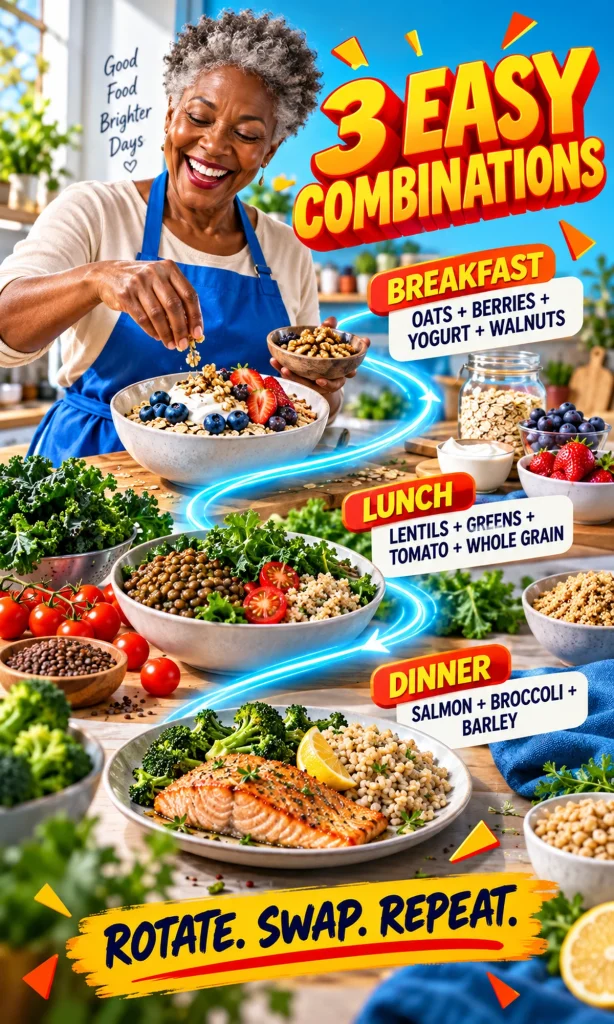
Breakfast: oats + berries + plain yogurt or fortified soy yogurt + walnuts. This gives you a whole grain, fruit, protein, calcium, and unsaturated fat without relying on one ingredient.
Lunch: lentils + leafy greens + tomatoes + a whole grain + olive-oil dressing. It is plant-forward, fiber-rich, and easy to adapt to whatever vegetables and grains are available.
Dinner: salmon + broccoli + barley or brown rice + olive oil or avocado. This combines fish with vegetables, a whole grain, and unsaturated fat instead of treating the fish as the entire nutritional strategy.
Fresh, frozen, canned or dried?
You do not need fresh-only produce to eat well. The American Heart Association notes that fresh, frozen, canned, and dried produce can all fit a healthy pattern; for packaged versions, compare labels for added sugars, sodium, and sauces that change the overall product.
That makes frozen berries, frozen spinach, canned beans, canned tomatoes, and canned fish especially useful for a realistic pantry. They reduce waste, shorten preparation time, and make it easier to repeat a nutrient-dense pattern on busy days.
What to check on packaged “superfoods”
A front-of-pack claim is not the same thing as a nutrition profile. The FDA’s Nutrition Facts guidance recommends checking serving information and the nutrient amounts on the label, while its added sugars guidance explains how added sugars are listed separately from naturally occurring sugars.
For granola, flavored yogurt, snack bars, juices, powders, and packaged “superfood” mixes, compare the actual product rather than the marketing language. A long list of fashionable ingredients does not automatically make a product a better fit if it also brings a large amount of added sugar, sodium, or saturated fat.
If labels are confusing, use the site’s food-label guide as a quick reference. You can also review healthy eating myths about food and nutrition when a claim sounds more dramatic than the evidence.
Common mistakes with superfoods
- Buying novelty instead of solving a real gap. If your breakfast is low in fiber, oats or berries may help more than an expensive powder.
- Using one food to compensate for the rest of the diet. Adding berries to a highly processed pattern does not erase the pattern.
- Ignoring protein, calcium or other specific needs. Use the site’s guides to foods with protein and calcium-rich foods when you need a more targeted role.
- Assuming “natural” means healthier. Check the ingredient list and Nutrition Facts panel instead of relying on front-of-pack language.
- Overcomplicating food pairing. If you want to understand when combinations genuinely matter, see the guide to synergistic food pairing.
When a generic superfood list is not enough
Food allergies, digestive disorders, kidney disease, pregnancy, certain medications, and medically prescribed diets can change which foods and portions are appropriate. In those situations, individualized guidance from a clinician or registered dietitian should take priority over a general list.
For everyone else, the practical target is simpler: choose nutrient-dense foods you enjoy, can afford, and can repeat. The site’s daily diet tips for eating healthy can help turn individual foods into a broader routine.
The bottom line
The best “superfoods” are usually ordinary foods with a clear nutritional job. Berries, greens, cruciferous vegetables, beans, whole grains, nuts, seeds, fish, yogurt or fortified soy alternatives, olive oil, avocado, and tomatoes are all useful examples when they fit into a varied eating pattern.
Choose a few foods that solve real gaps in your meals, rotate them through the week, and let variety do the work. That is more practical – and more evidence-aligned – than trying to build a diet around a single miracle ingredient.
Frequently asked questions
What is the healthiest superfood?
There is no single healthiest superfood. The best choice depends on what your overall diet lacks, and a varied eating pattern usually provides more value than repeatedly relying on one food.
Are frozen superfoods as good as fresh?
Frozen fruit and vegetables can be excellent choices. They are convenient and can reduce waste; compare labels and choose versions without unnecessary added sugar, sodium, or heavy sauces when possible.
Are superfood powders necessary?
No. Powders can be convenient, but a healthy diet does not require them. Whole foods usually make it easier to get fiber, texture, satiety, and a broader mix of nutrients from meals.
How many superfoods should I eat every day?
There is no required number. A better target is variety across vegetables, fruit, whole grains, protein sources, and mostly unsaturated fats across the day and week.
Can one superfood make up for an unhealthy diet?
No. One nutritious food can improve a meal, but the overall pattern still matters. Build the pattern first, then use individual nutrient-dense foods to strengthen it.