



Caffeine is a stimulant that can cause jitteriness, a racing heartbeat and anxiety-like feelings, particularly when the dose exceeds what you tolerate. It can also worsen sleep and make existing anxiety harder to manage, but symptoms after coffee do not by themselves prove an anxiety disorder. Start by checking the actual caffeine amount, when you consume it and whether several sources are adding together.
First check whether this is a routine adjustment or an urgent problem
If you feel mildly shaky or overstimulated after an ordinary drink, stop adding caffeine and give yourself a quieter setting while the effects settle. Do not use another stimulant to push through the discomfort. The useful next step is to understand the exposure, not to repeatedly check your pulse or challenge yourself with another coffee to prove what caused it.
New chest pain, fainting, severe breathlessness, confusion, seizures or a sustained very fast or irregular heartbeat require urgent medical assessment. Do not label these symptoms “just anxiety,” especially after a large or concentrated caffeine exposure. Contact local emergency services or poison advice as appropriate. A drink-label comparison is not a substitute for care in that situation.
For everyday decisions, distinguish the beverage from the stimulant dose. A large coffee, an energy drink and a supplement can deliver very different amounts even when each is described as one item. The flavor, price and size of the cup are poor substitutes for a dose estimate. Start with the label or the seller's published information wherever it is available.
Why the dose is easier to miss than you think
The FDA's caffeine guidance notes wide variation in caffeine amounts and lists anxiety, jitters, sleep disruption and palpitations among possible signs of too much. Its commonly cited 400 mg daily figure concerns most healthy adults; it is not a target or a guarantee that a sensitive person will feel comfortable below it.
Check the serving unit before reading the headline number. A product might state caffeine per serving while the container holds more than one serving. If a fictional label says 80 mg per serving and two servings per container, drinking the whole container supplies 160 mg. That is an arithmetic example, not a claim about a particular brand or a recommended amount.
For a café drink, ask about the specific size and preparation. “One coffee” may describe different numbers of espresso shots or different brewed volumes. A small concentrated drink is not automatically lower in total caffeine than a larger weak drink, and appearance alone cannot settle the comparison. If reliable information is unavailable, acknowledge the uncertainty rather than treating a generic internet estimate as exact.
Keep this check practical. You do not need a permanent intake spreadsheet. Read the product you actually use, understand whether the amount applies to the serving or whole container, and decide whether the portion fits the change you want to make. If the number cannot be found, choosing a clearly labeled alternative can make the next decision simpler.

Count the sources that sit outside the coffee habit
People often focus on the morning coffee and overlook tea, cola, energy drinks, pre-workout products, chocolate or medicines that contain caffeine. The amounts differ, and some may be small, but the relevant question is the combined exposure. Replacing one coffee with an energy drink can preserve or increase the caffeine you meant to reduce.
Look at the ordinary sequence of your day rather than treating each drink as an isolated event. A morning coffee, a tea with lunch and an afternoon energy drink may each feel routine. Together they create a different exposure from the morning coffee alone. A product taken for another purpose can add caffeine without being mentally counted as a drink.
Separate certainty from estimates. A labeled packaged drink may give a usable amount, while brewed coffee and tea can vary with preparation. Do not add uncertain figures and then present the total as a laboratory measurement. An approximate picture can still reveal the most useful change, such as removing an extra source that was added only to compensate for poor sleep.
The Australian government-supported Healthdirect guide to caffeine identifies food, drink and some medicine sources and advises checking ingredients. If a medicine contains caffeine, do not change the medicine casually to alter your intake. A pharmacist can help distinguish the medicine's purpose from an optional beverage habit.

Stimulation can resemble anxiety without explaining everything
Caffeine's effects can overlap with sensations people associate with anxiety: restlessness, a more noticeable heartbeat, difficulty settling and disrupted sleep. That overlap is one reason the experience can be confusing. Feeling bodily activation after a drink does not tell you whether caffeine is the only cause, whether worry is amplifying the sensation or whether another health problem is involved.
Timing is a clue. If discomfort repeatedly appears after a larger serving or an added energy drink, caffeine is a plausible contributor. But a sequence of events is not a diagnosis. Stressful mornings, missed meals, poor sleep, illness and other substances may occur at the same time. The aim is to make a sensible low-risk adjustment, not to construct a perfect explanation from one episode.
Avoid two unhelpful extremes. “Coffee never affects me” can dismiss a changed response after a stronger preparation or new medicine. “Every uncomfortable sensation must be caffeine” can overlook a persistent anxiety problem or a physical condition. A more accurate position is that caffeine is one modifiable exposure worth considering while keeping other explanations open.
If symptoms persist when caffeine exposure is low or absent, occur independently of drinks, or interfere with ordinary life, seek an appropriate assessment. Bring a description of the actual difficulty and the products involved. You do not need to provoke another episode to make the problem legitimate, and you do not need to arrive with a self-assigned diagnosis.

What research on panic does and does not establish
Research using caffeine challenges helps explain why a blanket statement about “a cup of coffee” is unreliable. A systematic review of caffeine challenges in people with panic disorder found substantial panic responses in studies using high doses, generally 400–750 mg. The restricted dose range prevented a meaningful conclusion about how risk changes at smaller amounts. Those results should not be presented as the odds of panic after every ordinary cup.
A randomized crossover study published in 2025 tested 150 mg in 29 participants with panic disorder and 53 healthy controls with low habitual caffeine intake. It did not find the hypothesized increase in subjective anxiety, although other measures of arousal and behavior changed. One study with a specific sample does not establish a universally symptom-free dose; it demonstrates why dose, population and outcome matter.
The practical interpretation is restrained. High-dose challenge findings are a reason to take caffeine exposure seriously, particularly when panic is already a concern. They are not a reason to tell every person with panic disorder that any trace of caffeine will inevitably trigger an attack. Equally, a lower-dose study cannot overrule an individual's repeated uncomfortable response.
Do not reproduce a challenge experiment at home. Taking a large dose to find out whether you are “really sensitive” adds risk and is unnecessary for an ordinary beverage decision. If panic symptoms are recurring, the useful task is assessment and a manageable discussion of caffeine, sleep and other factors, rather than proving the mechanism through self-provocation.
Why the 400 mg figure cannot answer your personal question
Population guidance and personal comfort answer different questions. The first asks about safety concerns across a defined group under specified conditions. The second asks whether your current intake leaves you shaky, unsettled or unable to sleep. A number used for the first purpose should not be converted into a promise about the second.
The European Food Safety Authority's caffeine assessment distinguishes daily intake, single doses, pregnancy and sleep effects. Its adult conclusions are not a license to take the entire daily amount at once. Nor should adult guidance be applied unchanged to children, teenagers, pregnancy or people with conditions and medicines that alter the decision.
If an amount below a general reference level makes you uncomfortable, you do not need to keep drinking until you reach the reference. Conversely, feeling tolerant does not make progressively larger doses a good experiment. The useful amount is one that fits your circumstances without unwanted effects; for some people, that may mean avoiding caffeine.
| Statement | Better interpretation | Practical decision |
|---|---|---|
| I am below 400 mg | A general adult figure does not guarantee personal comfort | Respond to unwanted effects rather than chasing the limit |
| It is only one cup | Cup size and preparation do not define a fixed dose | Check the specific drink |
| It is decaf | Some caffeine may remain | Check the product when minimizing exposure |
| It is natural | Caffeine from plants is still caffeine | Count the dose, not the marketing |
| I can fall asleep | Sleep quality can still be affected | Consider timing as well as sleep onset |
| I felt worse after cutting down | Withdrawal may temporarily complicate the change | Reduce gradually and assess the wider pattern |
Make the first reduction easy to repeat
For a regular user with routine symptoms, a gradual reduction is usually more manageable than abruptly removing every source. Healthdirect's reduction advice includes reducing over time and using decaffeinated alternatives. There is no single schedule in this article because starting intake, withdrawal sensitivity, medicines and daily responsibilities differ.
Choose one part of the habit to change first. That might be a smaller serving of the usual drink, replacing part of a familiar preparation with decaf, or removing an optional extra drink. Keep the change understandable enough that you can repeat it without measuring every sensation. If you use a medicine affected by caffeine, check with the relevant pharmacist or prescriber before making a major change.
Set up the alternative at the point where the old drink normally appears. Put the smaller cup where you make breakfast, keep a suitable decaf product beside the kettle, or choose a caffeine-free option before the afternoon purchase. This removes a practical obstacle. The method changes what is available in the routine rather than relying on willpower when you are already tired.
The common mistake is compensating elsewhere. A smaller morning coffee followed by a stronger afternoon drink may erase the intended reduction. Check the substitution, not just the first cup. A lower-effort version is to change one predictable purchased item to a clearly labeled lower-caffeine alternative rather than rebuilding every drink habit at once.
Completion means that you made a manageable reduction and did not unknowingly replace it from another source. It does not require feeling perfectly calm that day. If the change causes significant difficulty or your baseline intake is very high, obtain individualized advice rather than forcing an aggressive schedule around driving, dangerous work or other responsibilities that require alertness.

Expect withdrawal to complicate the first impression
Regular caffeine use can lead to withdrawal symptoms when intake is reduced. Headache, tiredness, irritability and trouble concentrating can make the first stage feel worse even when the overall change is sensible. This is one reason a single difficult day does not tell you whether caffeine was helping or harming your longer-term functioning.
The distinction is practical rather than a home diagnostic test. Symptoms after a reduction may fit withdrawal, but they can also have other causes. Do not dismiss severe, unusual or persistent symptoms simply because you changed coffee. If the problem is substantial, seek advice and describe the change in exposure along with the actual symptoms.
Avoid responding to every dip in energy with an unpredictable large dose. That can create a cycle of uncomfortable stimulation followed by another abrupt reduction. A consistent, gradual approach is easier to understand than repeatedly stopping, restarting and overshooting. If you cannot make the change without significant disruption, the right next step may be a personalized plan rather than a stricter rule.
The practical goal is not to win a caffeine-free challenge. It is to find an exposure and routine that work better for you. Someone may decide that a small morning drink is acceptable; another may prefer no caffeine. Both decisions should be based on the person's circumstances, not on a moral distinction between disciplined and undisciplined drinkers.
Protect sleep by changing timing as well as quantity
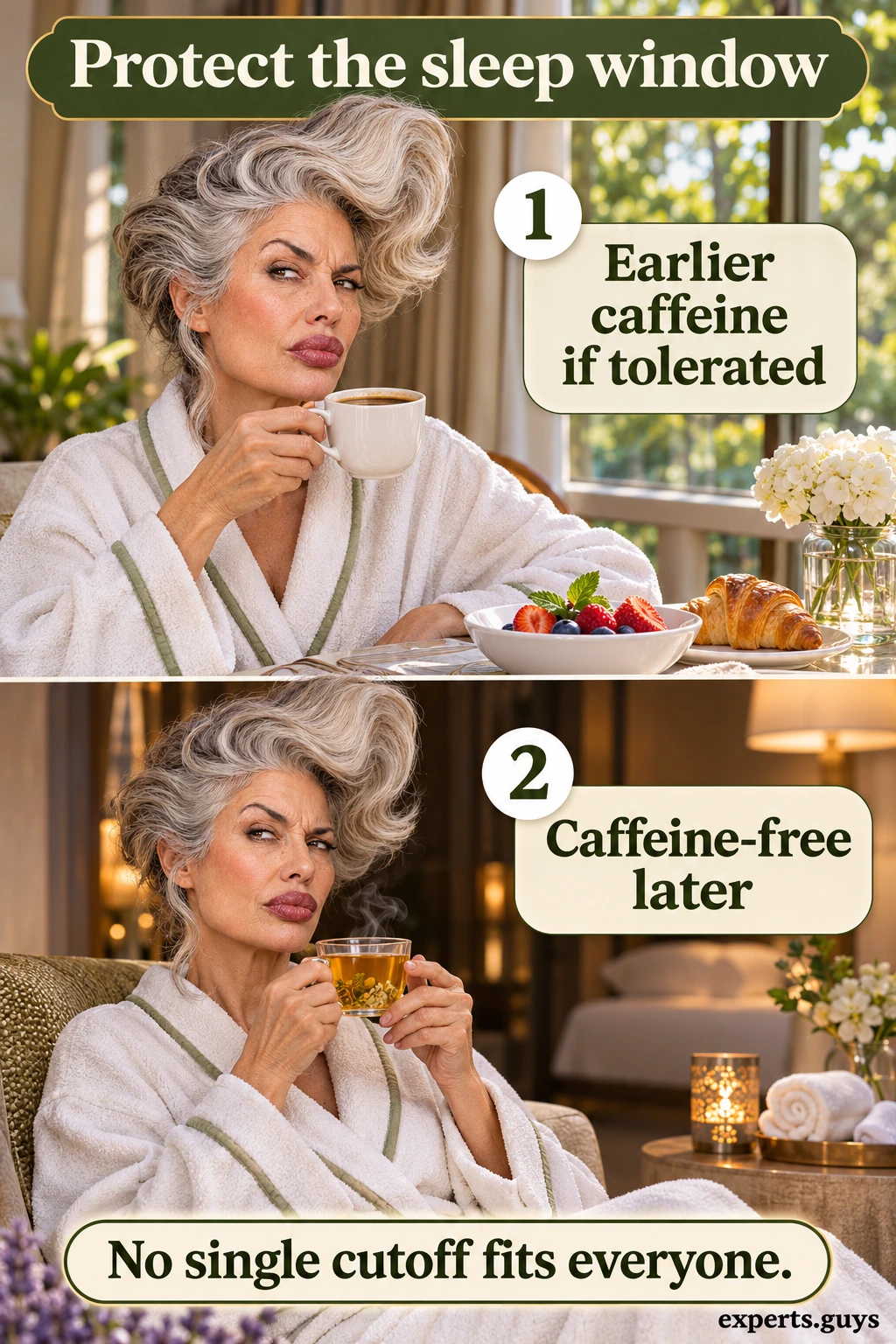
Caffeine can affect the night even when the immediate sensation is not dramatic. A person may feel that an afternoon drink has worn off because the jitteriness has stopped, yet still have difficulty settling or sleep less well. The relevant question is not only when you feel stimulated, but whether the pattern of use fits the sleep you need.
A randomized crossover trial of dose and timing found different sleep effects for 100 mg and 400 mg under its study conditions, with the larger dose affecting aspects of sleep even when consumed well before bedtime. The study does not establish a universal cutoff for every person, but it supports treating dose and timing together rather than using one fixed rule for all drinks.
For an ordinary adjustment, move optional caffeine away from the period before your intended sleep and choose a caffeine-free later drink. Shift workers should think about their actual sleep window, not a conventional evening clock time. Do not assume that a morning cutoff used by someone else fits a night shift or a different bedtime.
Keep the replacement routine pleasant enough to use. You may want the warmth, the break from work or the social pause more than the stimulant itself. A suitable alternative can preserve that function. If you continue to sleep poorly after making a reasonable change, investigate the broader sleep problem instead of moving the cutoff earlier indefinitely and assuming caffeine must explain everything.
Decaf, tea and energy drinks need separate decisions
Decaf is a useful option for many reductions, but it does not mean zero caffeine. If you are trying to minimize exposure closely, check the actual product and serving. Drinking several large decaf servings can be a different decision from one modest cup. The point is not to make decaf frightening; it is to avoid treating a label category as an exact dose.
Tea is not a fixed low-caffeine replacement either. The type, amount, preparation and serving size affect the drink. A switch may reduce exposure, but the result should be checked rather than assumed. Likewise, “herbal” needs an ingredient check: some blends contain caffeinated plants or are mixed with tea. Choose an option clearly identified as caffeine-free when that is the purpose.
Energy drinks deserve attention because a packaged amount can be easy to consume quickly and may be added to an existing coffee habit. Read the whole-container information and avoid assuming that the term “energy” describes a need the product can safely solve. Fatigue may call for rest, food, a change in workload or assessment, rather than another stimulant.
Do not use alcohol to counter caffeine-related discomfort or caffeine to make alcohol use safer. The NSW Health caffeine information discusses risks associated with large amounts and other substances. Feeling more awake does not make intoxication disappear. Keep the beverage decision separate from attempts to cancel one drug's effects with another.

Medicines and personal circumstances can change the plan
Ask about interactions when you take regular medicines, particularly if the caffeine habit changes substantially. The question should name the actual medicine and the proposed change: “I usually drink several coffees and want to reduce them. Does that affect this prescription?” This is more useful than a vague question about whether coffee is healthy.
For example, NHS Specialist Pharmacy Service guidance on clozapine identifies caffeine changes as relevant to medicine management. That does not mean every prescription has the same interaction. Do not generalize from one drug to every antidepressant or antipsychotic. Use a pharmacist or the prescribing team to check the exact product and keep prescribed treatment stable unless instructed otherwise.
Pregnancy, breastfeeding, younger age and health conditions can require different limits or advice. A general adult article cannot provide a personalized allowance for each situation. If you are in one of these groups, use the appropriate current guidance and your care team's advice rather than treating the 400 mg reference as automatically applicable.
The broader point is that “I used to tolerate this” does not answer every future situation. A different drink, a changed routine, poorer sleep or a medicine change can make the old rule less useful. Recheck the exposure when the response changes instead of assuming that your tolerance is a fixed personal trait.
A worked example: remove the extra source first
Consider an illustrative adult who enjoys a morning coffee, drinks an energy drink after lunch and has another coffee late in the day to stay focused. They have begun feeling unsettled and sleeping poorly. There is no urgent symptom and no medicine interaction requiring a supervised change. The question is how to make a manageable reduction without turning the day into a complicated experiment.
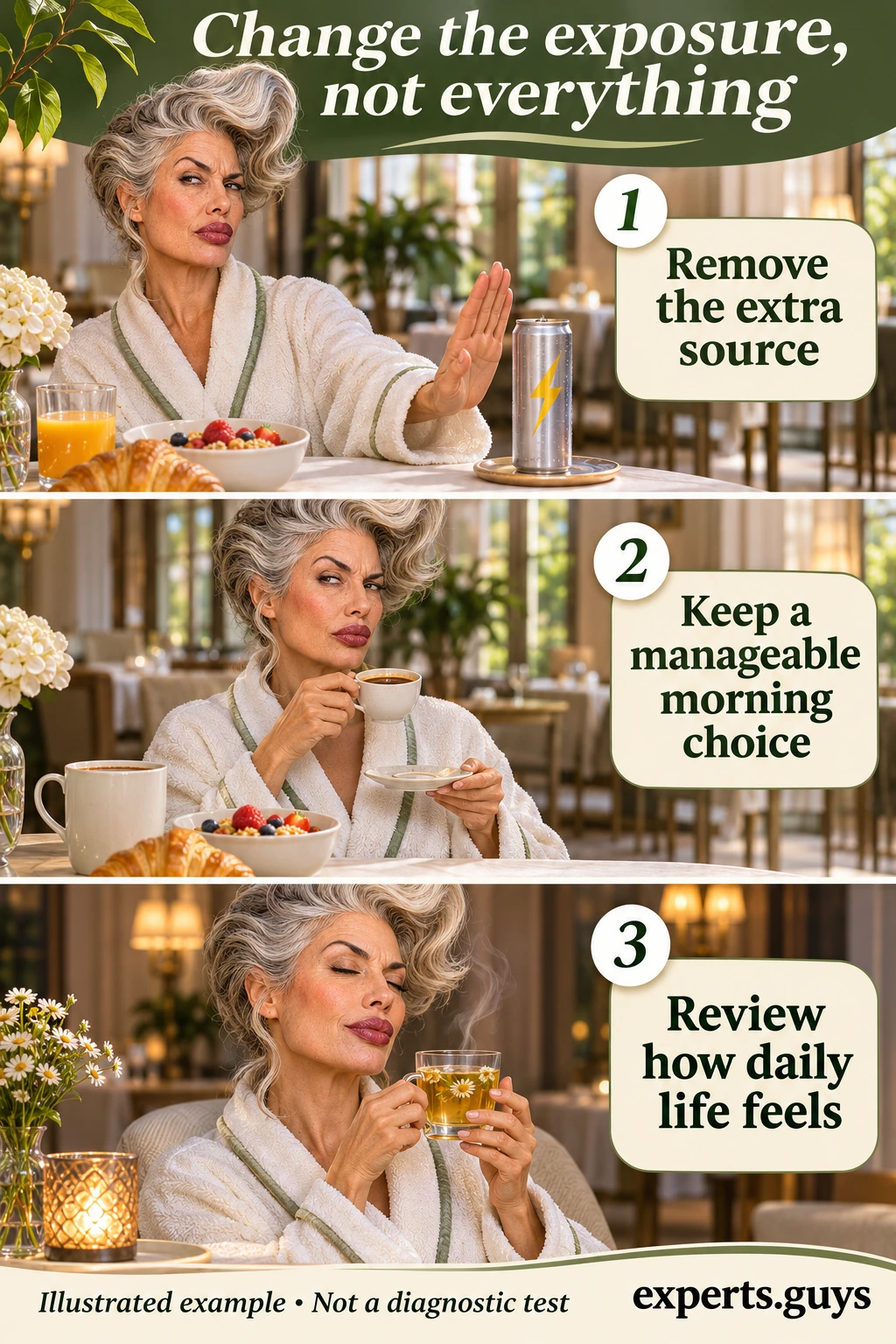
First, identify the drink added for compensation rather than enjoyment: the energy drink or late coffee may have appeared when sleep became worse. Check its label or seller information. Choose one manageable reduction, keep the alternative available, and avoid replacing it with a larger morning serving. If abruptly removing that item would be a large change from a high habitual intake, make a smaller gradual step instead.
Next, preserve the useful part of the routine. If the afternoon drink provides a break, keep the break with a suitable caffeine-free drink. If the morning coffee is the preferred ritual, a smaller serving or decaf mixture may preserve it while lowering exposure. The method is practical substitution, not a claim that any particular drink treats anxiety.
Finally, consider the wider pattern after the adjustment has had a reasonable chance to settle, including any withdrawal. Is sleep easier? Are ordinary tasks less interrupted by jitters? Are symptoms occurring even without caffeine? You do not need repeated body checks or a diary to notice meaningful daily differences. Persistent or worsening difficulties deserve assessment rather than endless beverage changes.
Keep anxiety and depression questions in their proper place
Caffeine is one exposure, while anxiety and depression are broader clinical subjects. Research about coffee consumption and population-level depression risk does not establish that coffee treats an individual's low mood. It also does not cancel an uncomfortable stimulant response in someone who already feels anxious. Different research questions should not be combined into a simple “coffee is good” or “coffee is bad” verdict.
This page focuses on the practical dose-and-timing decision. If your main difficulty is persistent low mood or worry across many settings, the guide to CBT for depression and anxiety explains a different treatment-related question. Caffeine reduction can be one consideration without becoming the whole explanation or the only form of help.
Avoid giving yourself a strict personal rule based on someone else's tolerance. A friend may drink coffee comfortably while you prefer decaf. That difference does not establish weakness, anxiety disorder or superior health. It means the same product can fit people differently, and the useful decision is the one that reduces unwanted effects in your own circumstances.
Make the change work away from home
A routine that works in your kitchen can become less clear at a café, workplace or hotel buffet. The cup may be larger, the preparation unfamiliar and the refill easy to overlook. Before ordering, choose the part you want to keep: a small familiar drink, a warm caffeine-free option or the social break itself. This makes the decision easier than trying to calculate an uncertain total while standing in a queue.
Ask a concrete question when information is available. “How much caffeine is in this size?” is more useful than “Is this strong?” Strength may refer to taste, roast or concentration rather than total caffeine. If the answer is uncertain, choose a smaller or clearly labeled alternative rather than treating the uncertainty as evidence that the amount must be low.
Free refills deserve the same attention as a new purchase. A mug that is topped up several times is not one unchanged serving simply because the container stays the same. You do not need to count every sip; you can make a simpler boundary by choosing one prepared portion and switching to an appropriate alternative afterward.
For travel or shift work, preserve the purpose of the timing change. A different clock time does not erase the need for sleep. Think about the next planned rest period and avoid using repeated caffeine to cover every disruption in the schedule. If you are too tired to drive or perform dangerous work safely, another drink is not a dependable solution to that immediate safety problem.
Judge improvement by daily function rather than constant checking
An ordinary beverage adjustment should make life simpler, not turn every sensation into a test. Useful changes might include fewer interruptions from jitters, less difficulty settling at night or being able to complete a routine without repeatedly worrying about the next drink. These are practical observations, not proof that you have identified the only cause of anxiety.
Avoid checking your pulse, searching symptoms or asking for reassurance after every sip. Those actions can make the day revolve around the question without providing a reliable diagnosis. If concern about bodily sensations is itself becoming difficult to manage, discuss that problem directly rather than continuing to refine the caffeine calculation indefinitely.
It is also reasonable to stop experimenting when the next step is clear. If a particular optional drink repeatedly makes you uncomfortable, choosing another drink may be enough for that decision. You do not have to establish a precise personal threshold. If the symptoms remain troublesome despite a manageable reduction, widen the assessment instead of making the restriction progressively more elaborate.
The aim is a sustainable choice with honest limits. A simpler routine can reduce one contributor while leaving stress, sleep, physical health or an anxiety condition to be addressed separately. Improvement and uncertainty can coexist: you can recognize that a change helped without claiming it explains everything.
Questions about caffeine-related anxiety
Can caffeine make me anxious below 400 mg?
Yes. General adult guidance does not guarantee that every person will feel comfortable below that amount. Sensitivity, serving size, timing, sleep, medicines and health circumstances can change the response.
Does feeling shaky after coffee mean I have an anxiety disorder?
No. Stimulation can overlap with anxiety symptoms, and other explanations remain possible. Seek assessment if symptoms persist, recur independently of caffeine or significantly interfere with daily life.
Should I take a large dose to test my sensitivity?
No. High-dose self-challenges are unnecessary and can be harmful. Make a sensible lower-exposure choice and seek individualized advice when symptoms or the starting intake make the decision complicated.
Why do I feel tired after reducing caffeine?
Withdrawal can include tiredness, headache and concentration difficulties. Reduce gradually where appropriate, and do not assume severe or persistent symptoms are withdrawal without considering other causes.
Will drinking water flush caffeine out immediately?
No. Normal hydration is reasonable, but water is not an instant reversal method. Do not force excessive fluids or use another substance to cancel the effects. Urgent symptoms require medical assessment.
Make the smallest change that answers the real problem
Check the actual serving, include the other sources, and choose a manageable reduction or timing change that fits your routine. Keep the conclusion proportionate: improvement can suggest that caffeine was contributing, while persistent symptoms call for a wider assessment. You do not need a perfect intake number or a dramatic caffeine-free challenge to make a more comfortable everyday choice.










