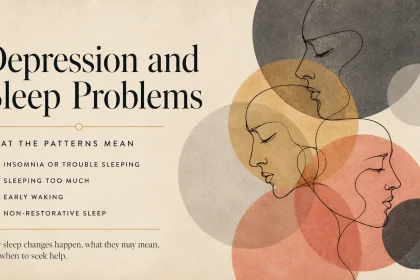
Depressive disorders involve persistent low, empty or irritable mood, or loss of interest, with symptoms that cause distress or interfere with daily life. The diagnosis depends on the full pattern, including duration, other symptoms and possible alternative explanations. You can ask for help before you know which label fits.
What makes depression different from a difficult week?
A clinician looks beyond whether you feel sad today. Sleep, appetite, concentration, energy and the ability to manage ordinary responsibilities help explain the change. A diagnosis is not a judgment about effort, character or how grateful someone should feel.
Useful examples are concrete: leaving meals unfinished, withdrawing from friends or needing much longer to complete familiar work. Compare these changes with your usual baseline rather than with another person’s life. Continuing to work does not make the difficulties irrelevant.
Timing helps organize the conversation, but a calendar does not diagnose depression. Major depression generally involves an episode lasting at least two weeks; persistent depressive disorder involves a much longer course, generally at least two years in adults. These are parts of clinical criteria, not waiting periods before seeking care, as the NIMH depression guide explains.
- Mood and interest: feeling persistently low, empty or irritable, or losing interest in activities.
- Body and thinking: changes in sleep, appetite, energy or concentration.
- Daily life: difficulty keeping up with work, relationships or self-care.
- Safety: thoughts of death or self-harm need direct support; an online checklist cannot assess immediate danger.
Disorders and patterns are not interchangeable labels
“Depression” is an everyday umbrella term, while clinical classification distinguishes disorders, episode features and the circumstances in which symptoms occur. A label such as seasonal depression describes a pattern; it does not make every winter slump a separate disorder. This distinction prevents a symptom description from becoming an unsupported self-diagnosis.
The MSD Manual’s classification overview separates major and persistent depressive disorders from PMDD, substance- or medication-induced depression, depression due to another medical condition, and other specified or unspecified presentations. The table is an orientation for adults, not a complete diagnostic manual. Childhood conditions, including disruptive mood dysregulation disorder, need age-specific assessment.
| Term | What the term helps distinguish |
|---|---|
| Major depressive disorder | Depressive episodes with a defined symptom pattern and meaningful distress or impairment. |
| Persistent depressive disorder | A longer-lasting depressive course; duration alone does not establish the diagnosis. |
| Premenstrual dysphoric disorder (PMDD) | A recurring menstrual-cycle-related symptom pattern requiring careful assessment. |
| Substance-/medication-induced depressive disorder | Symptoms clinically attributed to a substance or medicine, rather than timing alone. |
| Depressive disorder due to another medical condition | A clinical determination that another condition directly accounts for the disturbance. |
| Other specified or unspecified depressive disorder | Clinically significant symptoms that do not fit, or cannot yet be fully classified within, another category. |
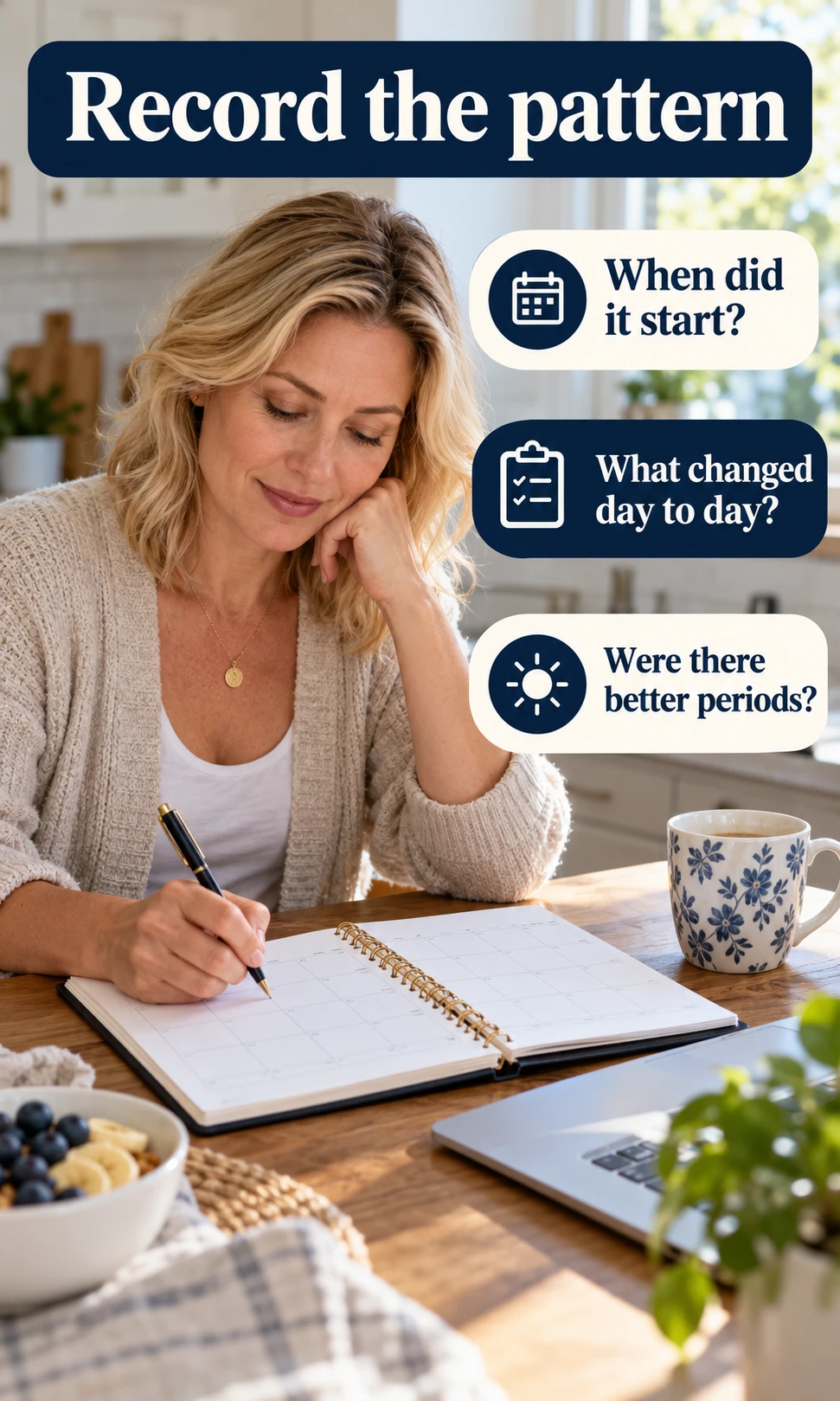
A long history deserves its own explanation rather than being squeezed into “the last fortnight.” Record approximate onset and periods of improvement, including what remained difficult. The guide to recording a long low-mood history develops this more specific appointment task.
Seasonal, perinatal and menstrual patterns need context
A repeating seasonal pattern is more informative than feeling worse during one stressful winter. NIMH’s seasonal depression guidance describes episodes returning in particular seasons, including less common summer patterns. Tell the clinician whether difficulties also occur at other times; do not choose a treatment from the season alone.
Perinatal depression occurs during pregnancy or after childbirth and can affect everyday functioning and caregiving. Severe or persistent changes deserve assessment rather than being dismissed as expected exhaustion. The NIMH perinatal guide distinguishes this from brief baby blues and identifies postpartum psychosis as an emergency.
For symptoms that seem tied to the menstrual cycle, record when they start, improve and recur. The clinician needs to distinguish a cycle-specific disorder from another condition that worsens before a period. Our menstrual-cycle symptom diary supports that separate recording task without turning timing into a diagnosis.
Why the wider history matters
Depressive episodes also occur in bipolar disorder, which is classified separately from depressive disorders. Mention periods of unusually elevated or irritable mood with increased energy or activity, particularly when less sleep was needed. The NIMH bipolar overview explains this broader mood pattern; ordinary happiness or one sleepless night is not enough to label it. Our depression, anxiety and bipolar comparison explains the related distinctions.
Tell the clinician about medicines, supplements, alcohol or other substances, physical symptoms and major recent changes. Their relevance depends on the history and assessment; a new medicine followed by low mood does not prove causation. Do not abruptly stop a prescription or assume substance-use treatment must be completed before depression can be addressed.
Fatigue, poor concentration and low mood can overlap with physical conditions. If that is your concern, bring the symptoms together rather than deciding which single explanation must be true. The article on anemia and depression addresses this narrower overlap; tests should follow clinical judgment, not a universal online blood-test list.

When the next step should be urgent
An appointment record is useful only when it does not delay care. If there is immediate danger, an inability to stay safe, or severe confusion or loss of contact with reality, seek urgent help. New hallucinations, delusions or severe confusion after childbirth require emergency assessment.
| Situation | Next action |
|---|---|
| Immediate danger or unable to stay safe | Contact local emergency services or go to the nearest emergency department. Ask a trusted person to stay with you if possible. |
| Suicidal thoughts or distress needing immediate support | Contact a crisis service now. In the US, call or text 988; elsewhere use your local crisis service. Use emergency care if safety is uncertain. |
| Persistent, worsening or disruptive symptoms | Arrange a primary-care or mental-health appointment. Explain changes in self-care and daily responsibilities. |
| Unsure how to describe the concern | Bring a short account of the timing, daily changes and what you want help with. A diagnostic label is not required. |
Treatment starts with a shared decision
Depression treatment can include psychotherapy, medication or both, with other options considered when clinically appropriate. Discuss what matters to you: sleep, relationships, side effects, cost and the ability to attend appointments. A treatment conversation should include how progress will be reviewed and who to contact if symptoms worsen.
A useful question is, “What change are we looking for, and when should we review it?” Ask about medicine changes with the prescriber rather than adjusting them from an article. If previous treatment did not help, bring what was tried and what happened so the next decision starts from that history.
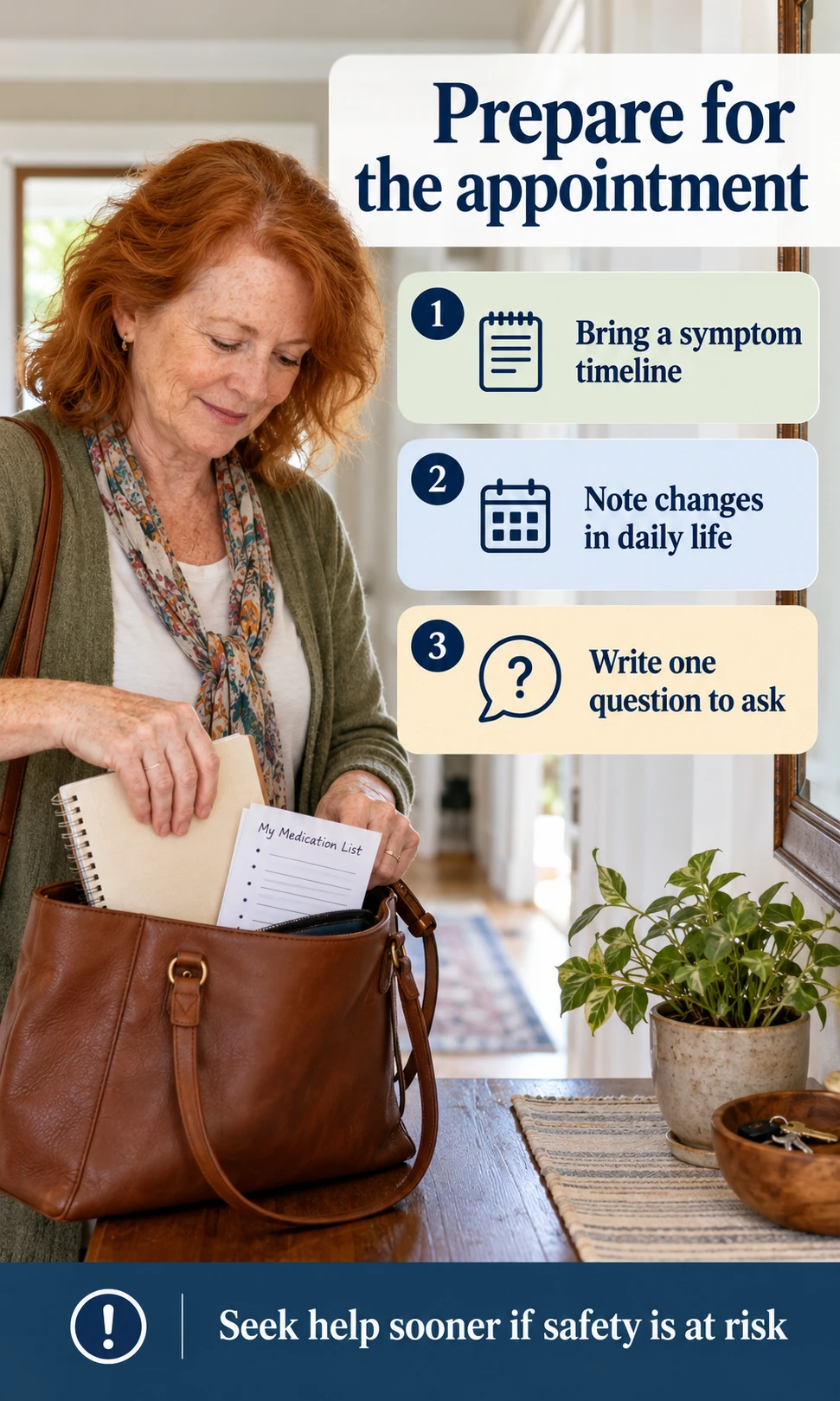
Create a short appointment record
Mood Conversation Studio turns a few observations into a one-page appointment record. Choose the closest description, leave uncertain details unknown and add one question you want answered. The result summarizes what you entered; it does not identify a disorder, estimate risk or recommend a medicine.

Mood Conversation Studio
Bring the timing, daily changes and questions together.
No diagnosis or scoreOne-page recordInformation and appointment preparation only. This does not diagnose depression, assess safety or recommend treatment. Do not delay care to complete a record.
Entries stay in this page’s memory only; refreshing loses them. This experience does not send or store your notes. Printed records contain sensitive information. Search links send only the location and provider category you choose to Google.
Waiting for the interactive controls. If they remain unavailable, use paper: onset, daily effects, relevant history and one question for your clinician.
Your appointment record
Entries changed. Create the record again before printing.
Discussion prompts
These prompts follow your selected topics. They are editorial conversation aids, not clinical findings. Nothing selected does not mean nothing needs assessment.
Arrange a primary-care/GP or mental-health appointment for persistent, worsening or disruptive changes. Bring this record and any clinic forms. Seek help sooner when safety or self-care is at risk.
Find and compare appointment options
Start with a primary-care clinician/GP for a broad assessment. A licensed mental-health clinician can assess mood concerns and provide therapy; a psychiatrist can review complex presentations and medication. For pregnancy-related concerns, ask about perinatal mental-health experience.
Compare 3–5 real options yourself: professional registration, relevant experience, waiting time, fees/insurance and follow-up arrangements. Search results do not verify suitability, availability or credentials.
Frequently asked questions
Are depressive disorders the same as bipolar disorder?
No. Bipolar disorder can include depressive episodes, but a history of mania or hypomania changes the assessment. Tell a clinician about unusually high or irritable mood, increased activity and a reduced need for sleep.
Does two weeks of low mood prove major depression?
No. Duration is only one part of the assessment. Other symptoms, their effect on daily life and alternative explanations also matter, and you can seek help sooner.
Can depression be present if I still go to work?
Yes. Showing up does not describe how much effort it takes or what happens outside work. Bring concrete examples of changes in relationships, self-care and ordinary tasks.
What does an unspecified depression diagnosis mean?
It can describe clinically significant depressive symptoms when the available information does not support a more specific classification. Ask the clinician what the label means in your case and what follow-up is planned.
Can I use this record instead of a clinical assessment?
No. It is a conversation aid, not a diagnostic questionnaire or safety assessment. Use the clinic’s own forms when requested and bring additional information if the short record leaves something out.
Do I need an exact start date before asking for help?
No. An approximate period or a remembered event is useful, and “start unknown” is acceptable. Do not postpone care to reconstruct a perfect timeline.
Bring the pattern, not a verdict
The most useful next step is a clear account of what changed and how it affects your life. Bring the notes you have, including uncertainty, and ask for an assessment that considers mood history and physical health together. You do not need to settle the diagnosis yourself before receiving support.