Depression and back pain can reinforce each other: ongoing pain can disrupt sleep and daily life, while low mood can make pain and activity harder to manage. That does not mean depression explains every back symptom or that the pain is imaginary. Start with warning signs, then choose one manageable activity adjustment while arranging assessment when symptoms persist or interfere with life.
When should back pain and low mood be assessed?
Use urgency, duration and loss of function to decide the next step. A history of depression should never be used to dismiss a new physical symptom. The back-pain warning signs and care guidance distinguish emergencies from symptoms needing a timely appointment.
| What has changed? | Next step |
|---|---|
| Emergency signs listed above | Seek emergency care now; do not try an exercise first. |
| Fever, feeling unwell, or severe pain that starts suddenly or worsens quickly | Obtain urgent same-day medical assessment. |
| Unexplained weight loss, unusual night pain, or pain preventing ordinary activities | Arrange medical review; explain these specific changes when booking. |
| Back pain not improving over a few weeks, or ongoing difficulty coping | Book an assessment rather than repeatedly replacing one self-help routine with another. |
| Low mood or loss of interest most days for two weeks, or earlier if severe | Ask for a mental-health assessment alongside the back assessment. Two weeks is not a waiting requirement. |
Check for a change that needs care
This check is an urgency decision, not a home diagnosis. Compare the current episode with what is usual for you, especially after an injury or when leg symptoms are new. If you cannot judge whether a warning sign applies, use an urgent clinical advice service instead of choosing the least urgent category.
- Check what is new: consider bladder, bowel, groin sensation, both-leg symptoms and the other warning signs above.
- Choose the care route: emergency symptoms take priority over activity advice; rapidly worsening pain or fever needs assessment today.
- Say the change plainly: for example, “My back hurts and I have new difficulty passing urine.” Do not describe it only as a bad pain day.
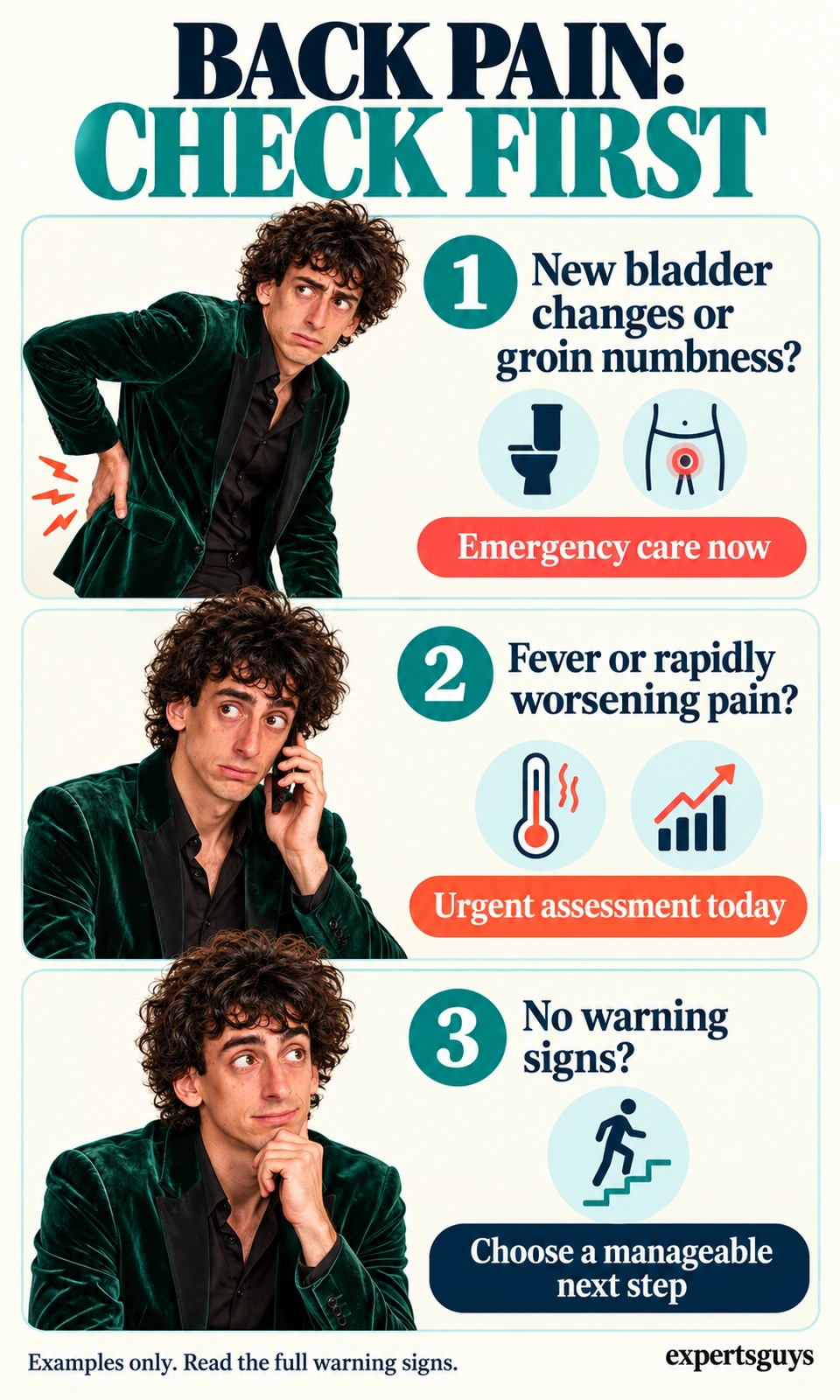
A common mistake is waiting for pain to become unbearable before seeking help. A change in sensation or bladder control can matter even when pain is not the strongest symptom. If speaking is difficult, ask someone you trust to help make the call and describe the new change.
Why can back pain and depression make each other harder to manage?
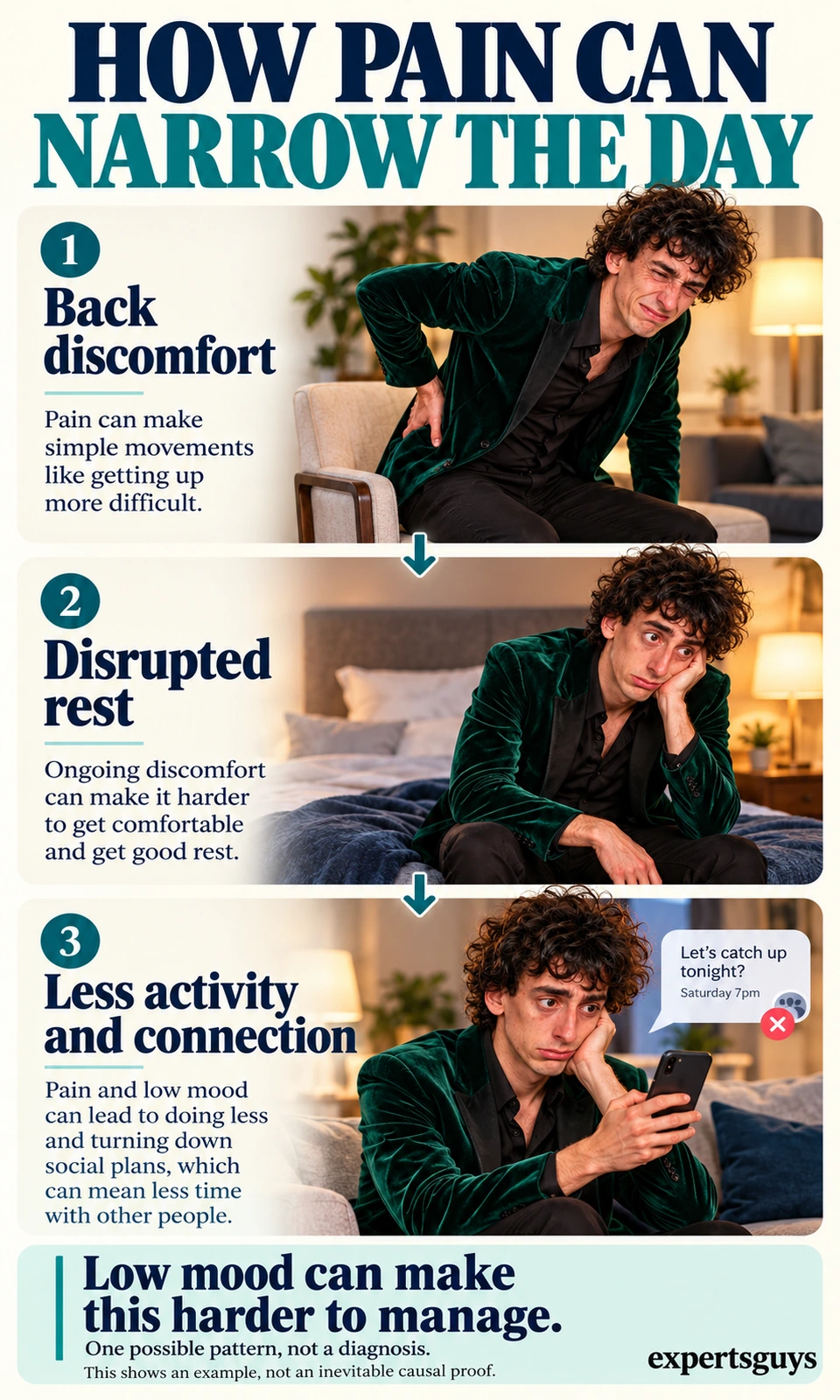
Persistent back pain can remove ordinary sources of satisfaction: comfortable sleep, predictable work, exercise and time with friends. Depression can add fatigue, reduced interest and difficulty initiating activity. Together, those pressures may narrow the day until avoiding pain also means losing contact with things that matter.
This is an interacting pattern rather than proof of a single cause. Pain processing, distress, sleep and activity can influence one another, and a separate back problem can still be present. The wider physical symptoms of depression guide explains why bodily symptoms should be interpreted in context.
Back pain without an identified specific cause is often called nonspecific back pain. That label does not mean there is no pain or that a scan has proved a psychological cause. The useful question becomes which combination of assessment, movement support and mental-health care best fits the person’s symptoms and limitations.
Poor sleep can make this pattern harder to live with, but a sleep problem deserves its own assessment when it persists. Pain may interrupt sleep, while depression may change sleep timing or quality in a different way. Use the separate guide to depression and sleep problems for that distinction rather than assuming all waking is caused by your back.
How can you keep everyday activities manageable?
For familiar back discomfort without warning signs, the aim is a tolerable amount of ordinary activity, not a test of willpower. Choose the adjustment that matches the task currently causing difficulty. The examples below are practical adaptations, not prescribed exercise doses, and should fit any restrictions already given by your clinician.
Break the task before it breaks your day
Pacing suits a task you repeatedly overdo on better days and then avoid on worse days. Prepare a smaller endpoint and an easy place to pause before starting. This reduces the all-or-nothing demand; it does not guarantee that pain will disappear.
- Choose one part: prepare one place setting instead of the entire room, or handle one light item instead of the whole load.
- Pause before overload: use your familiar tolerance or a clinician-agreed limit, rather than working until you must stop.
- Reassess before repeating: resume a small part only if the first part was manageable; leave the rest or ask for help.
For example, preparing a gathering might mean setting out two cups, sitting briefly, then deciding whether another small task is realistic. The common mistake is using the pause to plan an even bigger catch-up effort. If the first part is already too much, reduce it further or delegate it; success is a repeatable task, not a cleared to-do list.
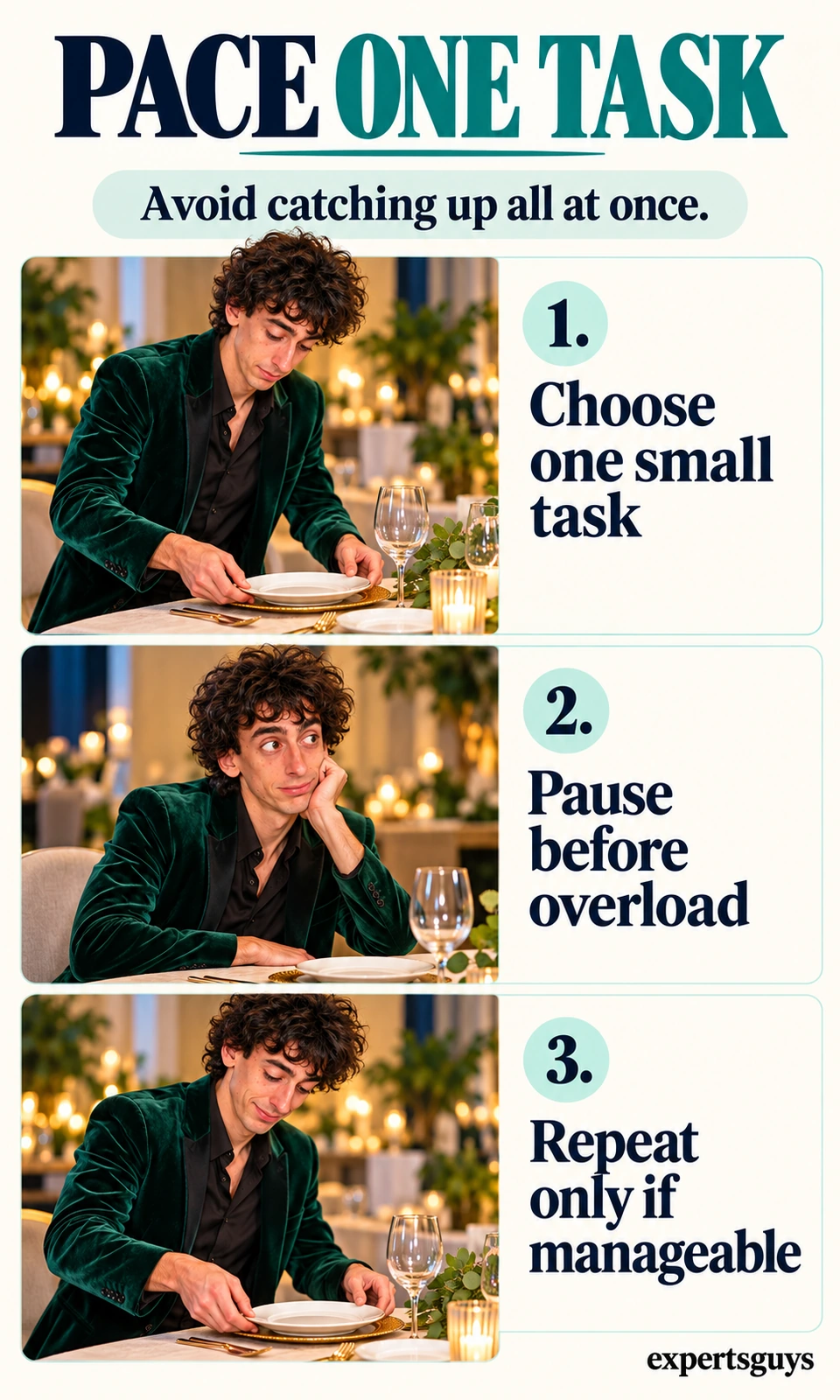
The pacing guidance from a specialist orthopaedic hospital supports balancing manageable activity and rest. Here, the party-preparation example applies that principle to an ordinary situation. It is not a trial-tested schedule or a reason to push through new symptoms.
Change position instead of chasing perfect posture
If a long spell of sitting or standing aggravates familiar discomfort, try variety rather than holding a rigid “correct” position. Prepare a stable chair and clear the space beside it. The point is to find workable positions and transitions, not to straighten your spine by force.
- Sit in a comfortable supported position, with your feet resting securely.
- When ready, change to standing using your usual safe method and support if needed.
- Take a few easy steps if comfortable, or settle into another supported position.
At a reception, this might mean sitting for a conversation and standing briefly before the next one. Avoid turning it into a rule that you must stand despite worsening symptoms. If standing is difficult, make a smaller seated adjustment and ask for tailored advice; the useful result is less time fixed in an aggravating position.

Make the walk smaller, not more demanding
A familiar short walk can be a way to retain movement when low mood makes a full outing feel impossible. Choose a flat, uncluttered route with somewhere to pause and use any walking aid already prescribed. A hallway may be more workable than a long outdoor loop on a difficult day.
- Choose a route you can shorten immediately, rather than one with a long return journey.
- Start below the amount that usually brings a substantial flare, without setting a universal minute or step target.
- Notice the response during the walk and later; keep the next attempt similar only if it remains manageable.
For example, walk to the end of a short corridor and return to a nearby chair rather than committing to a trip around the block. A smaller route or help from a companion may make participation possible. Stop for worsening pain or new symptoms, use the urgent-care guidance when applicable, and seek assessment if even small activity changes are repeatedly difficult.

Change the visit, not the relationship
When a social plan involves prolonged standing, the useful adjustment may be a seat, a shorter stay or different transport. Arrange the physical conditions before the visit so you are not deciding under pressure. The aim is connection within your capacity, not forcing yourself to appear cheerful.
- Ask the host whether a comfortable seat is available and whether you can change position.
- Choose the part of the event you most want to attend and an easy way to leave.
- Explain the limit simply and leave before the plan becomes an endurance test.
An example message is: “I would like to come for the first part, but I need a seat and may leave early because of my back.” If travel is too demanding, a brief call offers another way to stay connected. Judge the plan by whether it preserved contact at a manageable cost; do not label a shorter visit as failure.

These adjustments address physical demands around activities you value. They are not a substitute for a structured depression treatment. If withdrawal is becoming a broader pattern across your life, behavioral activation for depression explains the separate therapeutic approach.
How should care address both pain and mood?
Both concerns belong in the same care plan, even when different professionals help with them. Back assessment may lead to rehabilitation or other treatment, while depression care may involve psychological treatment, medication or both. Treating mood does not remove the need to assess the back, and improving movement does not automatically treat depression.
A randomized trial of people with depression and persistent musculoskeletal pain found benefit from coordinated antidepressant management and pain self-management compared with usual care. That supports addressing both concerns, but it does not establish that one medicine or routine is right for everyone with back pain. The trial included back, hip and knee pain, and its combined intervention cannot be reduced to a promise about a single ingredient.
Ask what each medicine is meant to treat
A medication review is useful when prescriptions, over-the-counter products or supplements come from different sources. Prepare the actual labels or clear phone photographs, including the dose you currently take. This lets a pharmacist or prescriber check the whole picture rather than one product in isolation.
- Include pain medicines, mood medicines, sleep products and supplements, even items used only occasionally.
- Ask which symptom each product targets and whether the combination raises interaction or side-effect concerns.
- Confirm what to do if problems occur and when the plan will be reviewed; do not change doses yourself.
For example, tell the pharmacist that a newly added pain product coincided with more dizziness, rather than deciding which medicine caused it. If collecting all labels is difficult, bring the available packs and explain what is missing. Finish with a clear next contact or review point; a medicine being called an antidepressant does not by itself explain why it was prescribed.

Explain the sequence, not just the pain score
Prepare a short phone note or voice memo that puts back symptoms and mood changes on one timeline. The useful distinction is what happened first, what changed next and what now limits daily life. Timing helps the conversation but does not prove that one symptom caused the other.
- Add approximate onset for back discomfort and low mood separately, including any injury or medicine change.
- Name one lost function: for example, standing through a shift, reaching a bus stop or sitting through a visit; mention new leg or sensory symptoms.
- Ask for a joined-up decision: what needs assessment, what activity is suitable now, and who will review pain and mood together.
An illustrative brief is: “My back discomfort began after a demanding week at work. I started avoiding evening plans, then noticed low mood and loss of interest most days. I can manage a short visit but struggle with prolonged standing; I want help assessing my back and mood together.” Replace this with your own sequence, and use urgent care rather than a routine appointment if warning signs develop.
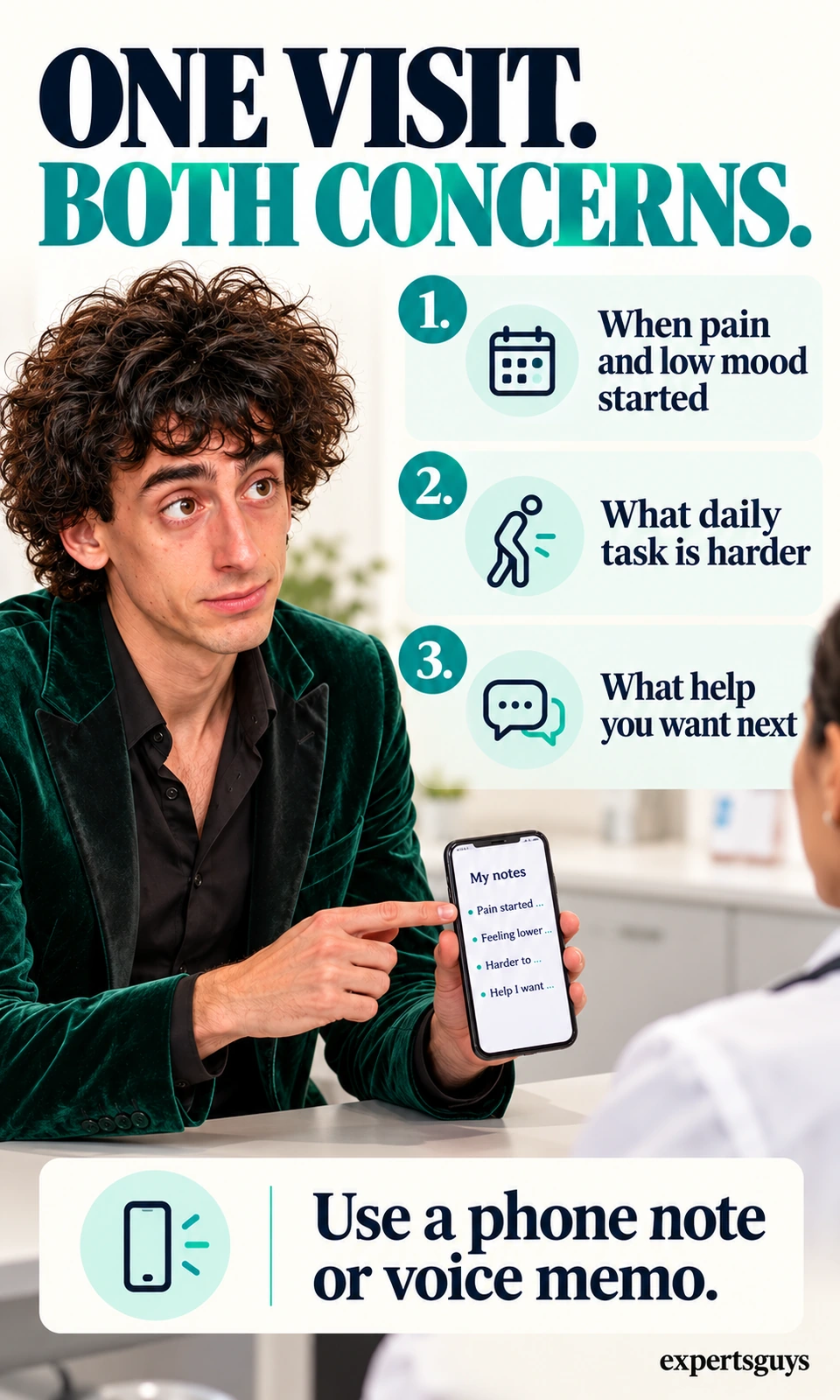
Do not spend the appointment defending whether the pain is physical or emotional. Explain the limitation and ask what the next decision depends on. If you need help choosing a psychological service, the separate mental health counseling guide covers qualifications and practical access.
Judge the plan by function and recovery
A useful review asks whether a valued task became more workable and what happened afterward. Pain intensity matters, but a single number does not show whether you can participate or how long recovery takes. Choose one task so the check supports a decision rather than becoming an exhausting diary.
- Choose a specific task already relevant to your day, such as a short seated visit.
- Afterward and later, compare how manageable it was and whether symptoms settled or became substantially worse.
- Repeat a tolerable plan, simplify an over-demanding one, or arrange reassessment when function keeps declining or symptoms change.
For example, attending part of a gathering and recovering in your usual way may be a useful result even if some discomfort remains. Needing markedly longer recovery suggests the plan should be smaller or reviewed, not that you should punish yourself with more activity. If checking repeatedly increases worry, make one brief phone-based comparison at the agreed review point instead of watching symptoms all day.

Frequently asked questions
Can a normal scan prove that depression caused my back pain?
No. A scan answers particular structural questions and cannot establish depression as the cause of pain. Your history, examination, symptoms and function still matter, including changes that were not present at an earlier assessment.
Does being offered psychological treatment mean the pain is imaginary?
No. Psychological treatment can help with the distress, avoidance and practical difficulties that accompany persistent pain. It can be part of a broader care plan while physical symptoms continue to be assessed and treated.
Should I stop an antidepressant if my back pain has not improved?
Do not stop or change a prescribed medicine on that basis alone. Ask the prescriber what it was intended to treat, how benefit will be assessed and how to manage side effects or a lack of benefit. A safe change may require a planned taper or an alternative treatment.
Do I need to wait two weeks before asking for help with low mood?
No. Two weeks is relevant to the assessment of depressive episodes, not a requirement to delay help. Seek support sooner when symptoms are severe, daily functioning is deteriorating or you have concerns about safety.
What to do next
Check for warning signs, then choose the smallest activity adjustment that fits today’s difficulty. Arrange assessment when pain or low mood persists, limits ordinary life or changes in a concerning way. Bring both concerns into the same conversation and review progress through function, recovery and symptoms together.