
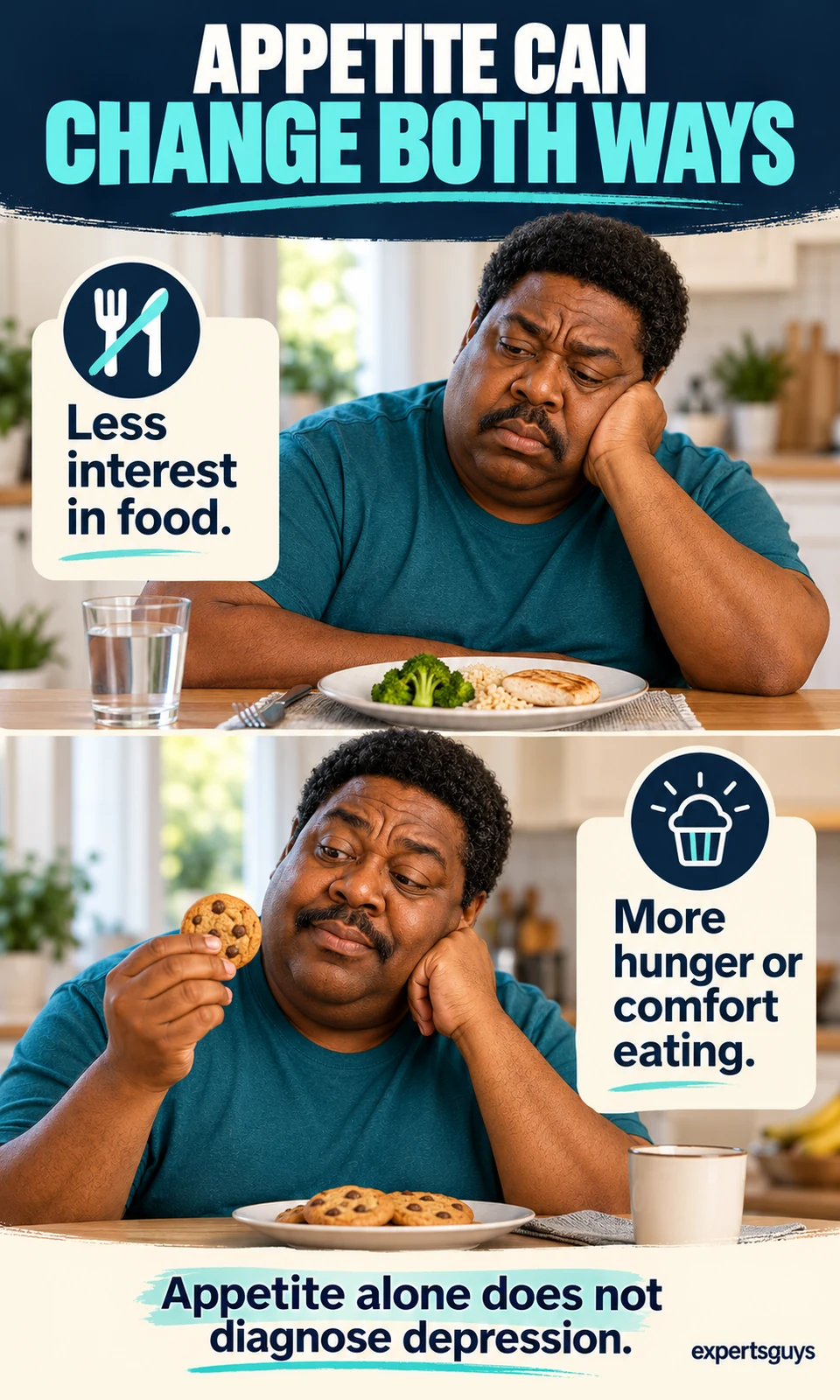
Depression can reduce your appetite, increase it, or make eating feel irregular and difficult. The useful next step is to notice what has changed, make food easier to manage, and get help if your intake, weight or daily functioning is affected. Appetite changes alone cannot tell you whether you have depression.
A change in hunger is different from a change in the ability to eat. You might feel hungry but lack the energy to prepare food, or finish meals without enjoying them. Those differences matter because support needs to address the barrier you actually face.
Why can depression make you eat less or more?
Both reduced and increased appetite can occur with depression. Appetite and weight changes are recognized symptoms, alongside changes in mood, interest, energy and sleep. Some people have no noticeable appetite change at all.
Appetite involves the desire to eat, the anticipated pleasure of food and signals about the body’s needs. Depression may affect these experiences differently in different people, so a single explanation such as “too much cortisol” is not enough. A person’s eating pattern also reflects food access, routines, physical health and medication.
Research comparing unmedicated adults with depression found different responses to food pictures in brain regions involved in reward and awareness of bodily signals. These group-level brain-imaging findings help explain why opposite appetite changes can accompany the same diagnosis. They do not prove what causes an individual’s symptoms, provide an appetite-based diagnosis or identify a treatment by themselves.
Daily barriers can be more useful to recognize than a proposed brain mechanism. Shopping, choosing a meal and cleaning up may feel too demanding even when hunger is present. For someone else, eating offers temporary comfort while low mood continues.
Start with the change from your usual pattern, rather than judging a single meal or your body size. More appetite does not automatically mean binge eating, and a smaller appetite does not automatically mean an eating disorder. Persistent distress, physical symptoms or loss of control need their own assessment.
| What has changed? | What it may feel like | First useful response |
|---|---|---|
| Less appetite | Food seems unappealing; a usual portion feels daunting. | Try a manageable familiar meal; seek assessment if intake stays low. |
| Less capacity to prepare food | You feel hungry but shopping or cooking feels impossible. | Use ready-to-eat food or ask for practical help. |
| More appetite or comfort eating | You feel hungrier or reach for food when distressed. | Keep regular eating opportunities and discuss persistent changes. |
| Loss of control | You feel unable to stop or control eating and feel distressed. | Ask about eating-disorder assessment; avoid compensatory restriction. |
The table sorts possible barriers; it does not assign diagnoses. More than one row may fit, and the pattern can change from day to day. Choose the practical response that reduces the immediate difficulty while arranging care when needed.
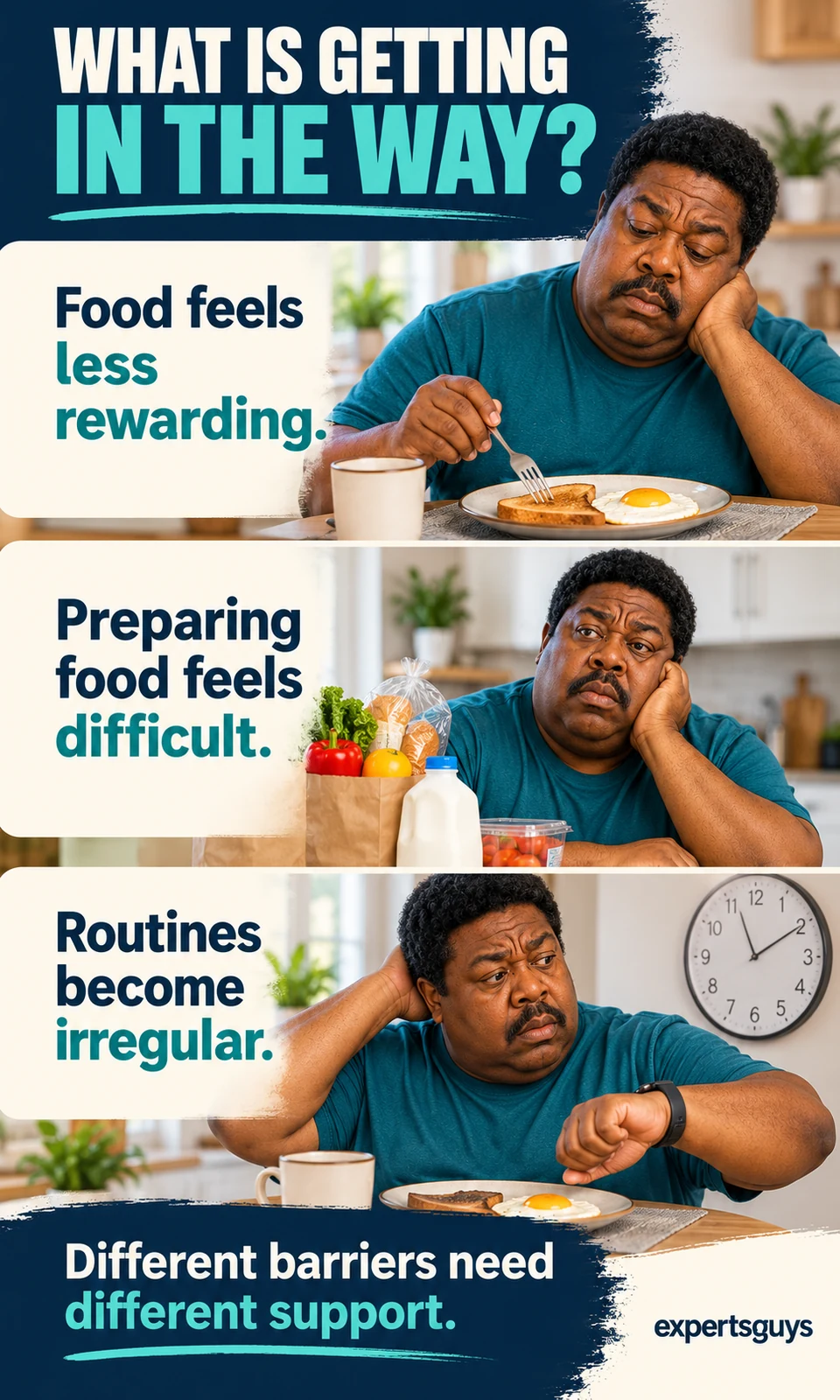
Food interest, effort and routine are different problems
When familiar activities stop feeling enjoyable, food may also lose some of its appeal. When energy or concentration is low, the sequence involved in making a meal can become the larger obstacle. Separating “I do not want food” from “I cannot get food ready” makes the next action more specific.
A disrupted routine can leave long gaps between eating opportunities without a deliberate decision to skip meals. Changes in sleeping and waking can make familiar mealtimes harder to keep. If that is part of the picture, the guide to depression and sleep problems explains why the wider pattern deserves attention.
What can you try when appetite or energy is low?
Make the next eating opportunity easier before trying to overhaul your diet. A smaller familiar serving, an accessible snack or help with preparation can reduce the effort required to begin. These are ways to support intake, not treatments for depression or a complete nutrition plan.
If you have eaten very little or nothing for several days, contact a clinician promptly rather than attempting a large catch-up meal on your own. Nutrition-support guidance identifies little or no intake for more than five days as a reason for clinical assessment and cautious introduction of nutrition. This is not a waiting period: seek help earlier if you are unwell, losing weight or struggling with fluids.
The examples below suit adults who can safely eat and drink and are not already following a conflicting care plan. Swallowing problems, diabetes, fluid restrictions, food allergies and eating-disorder treatment can change what is appropriate. Ask your clinician or dietitian to adapt the approach rather than replacing their instructions.
Start with a manageable familiar meal

A smaller serving may feel less overwhelming than a full plate, while including a protein food helps make the eating opportunity more nourishing. Food-first guidance for a small appetite supports smaller, more frequent meals and practical foods when preparation is difficult. The toast-and-egg example here is an editorial demonstration, not a prescribed portion or a full day’s food.
- Choose a familiar food. Put bread, rice or another food you tolerate within easy reach.
- Add an easy protein. For example, pair toast with a cooked egg, cheese or a suitable bean spread.
- Sit down with a manageable serving. Allow time to eat, with the option of more food when you can manage it.
- Keep the next opportunity available. A small serving now is a beginning, not a reason to stop eating for the day.
Illustrative example: A person who cannot face a large lunch tries toast with an egg, then keeps a familiar snack available for later. A lower-effort version is ready-to-eat food that needs no cooking. Completion means making food available and trying the eating opportunity; if very little is manageable repeatedly, ask for help rather than treating tiny amounts as sufficient nutrition.
Give eating a regular place in the day
Use a familiar daily event to make the next meal easier to remember. Choose an eating time that fits your waking routine, put a simple option nearby, and use a gentle reminder if useful. Regular opportunities reduce reliance on a hunger signal that may feel weak or inconsistent.
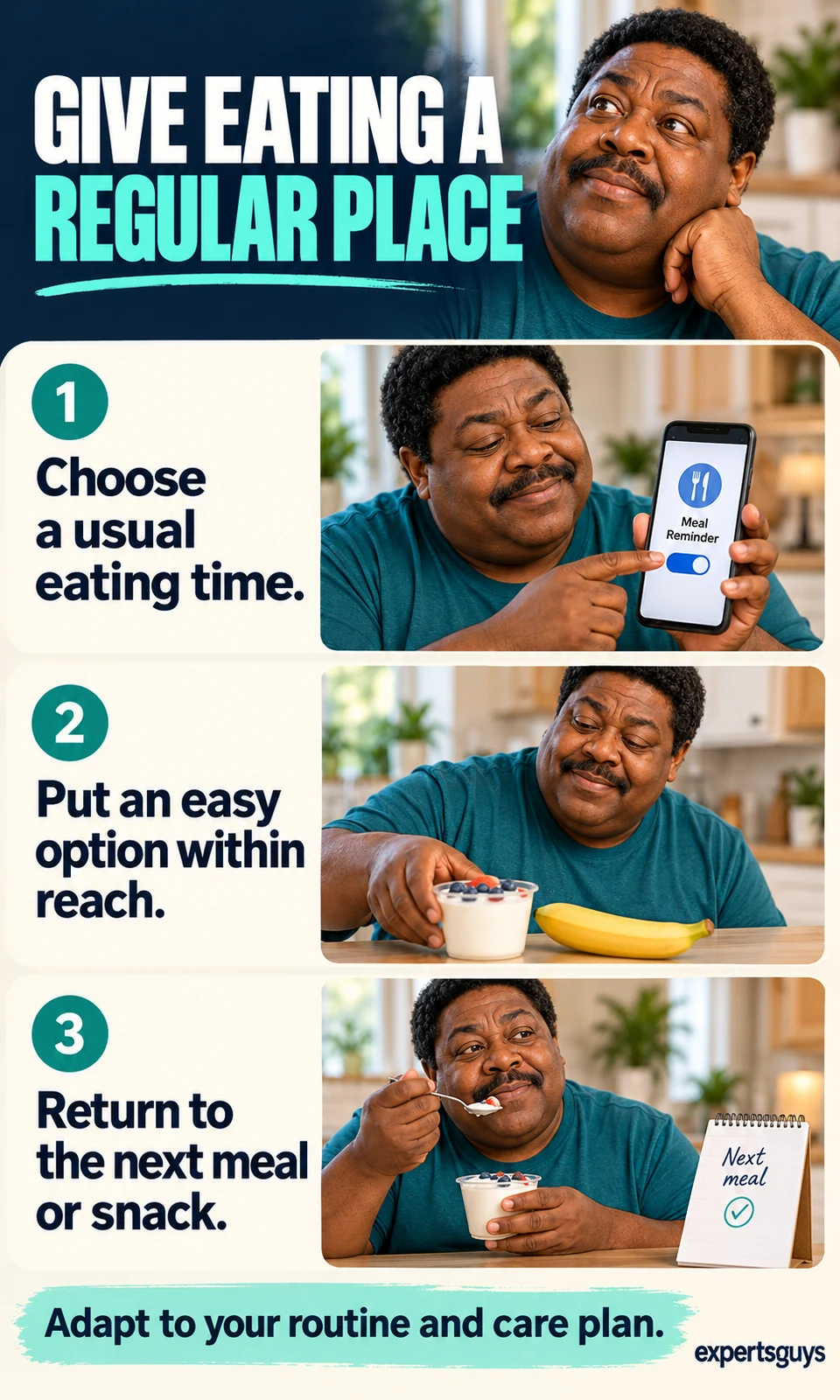
- Choose the next usual meal or snack time, allowing for work or shift patterns.
- Make an easy option available before that time, or ask someone to help.
- When the reminder comes, sit down and try the food; adjust the amount to what is manageable.
- Return to the next planned meal or snack, even if this attempt was difficult.
Illustrative example: After getting dressed, a person puts yogurt and a banana on the table rather than waiting to feel hungry. The lower-effort version is one reminder for the next eating opportunity, not a whole schedule. Completing that step is useful even if appetite has not improved, but continuing difficulty needs assessment.
Remove preparation when cooking is the obstacle
Choose food with fewer preparation steps when fatigue is the main barrier. Take a ready-to-eat option from the cupboard or refrigerator, open it at the table, and add more food as able. If shopping is the obstacle, ask a trusted person for one concrete task, such as bringing groceries or sitting with you while you eat.
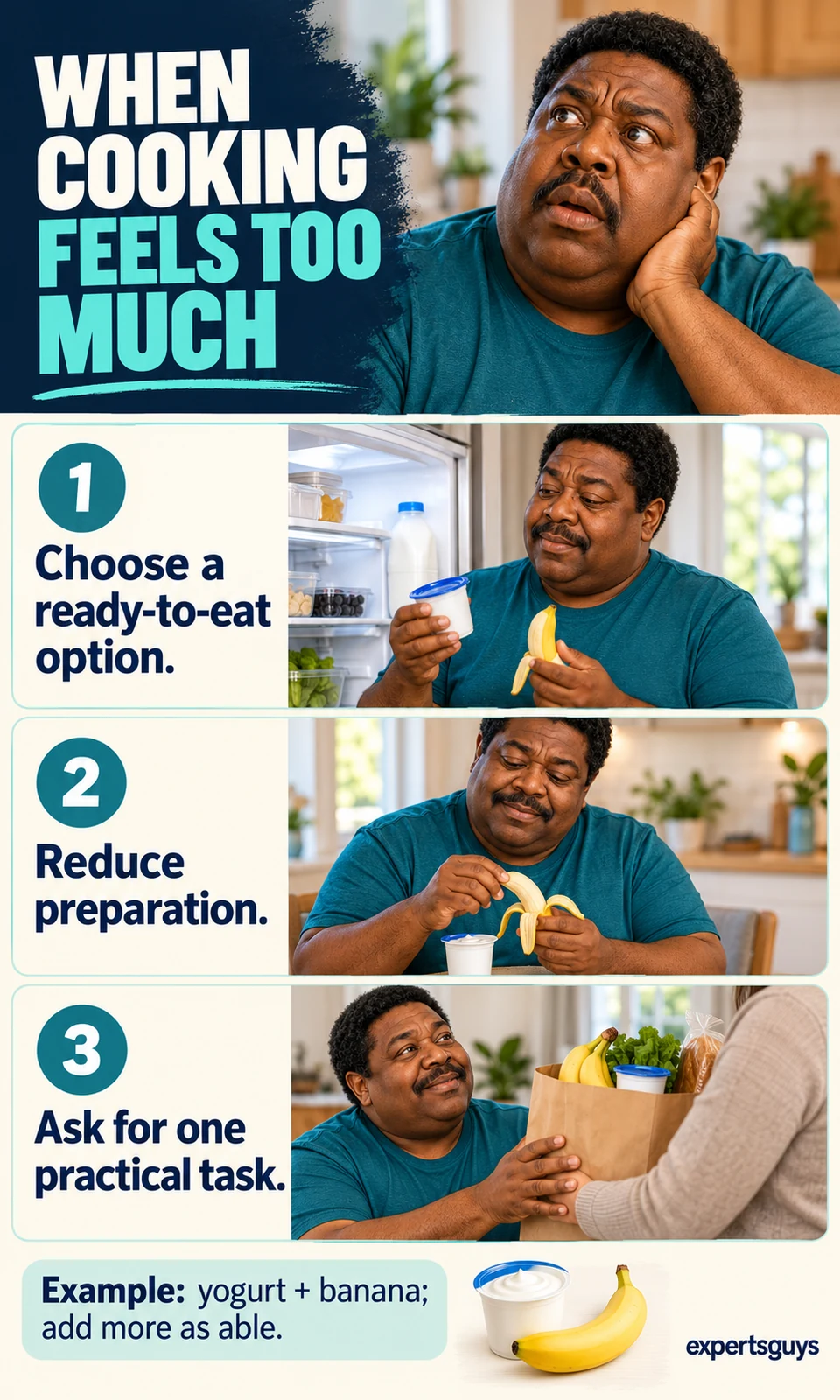
Illustrative example: Yogurt and a banana offer a starting option without using the stove. The lower-effort version is asking someone to bring an appropriate ready meal and a drink. Completion means reducing the preparation barrier; if you still cannot eat enough, a clinician or dietitian can help identify what support is missing.
Keep drinks accessible as well as food, following any existing fluid restriction. If nausea makes drinking difficult, small sips may be easier while you arrange advice when needed. Fluids should not become a substitute for food, and persistent nausea or inability to keep fluids down needs medical attention.
What helps when depression comes with more appetite?
Keep regular meals and snacks rather than responding to increased appetite by skipping the next meal. Hunger, emotions and disrupted routines can overlap, and punishment does not clarify which one is driving the change. Persistent appetite or weight changes are worth discussing with a clinician, including whether medication is contributing.
| Situation | Useful response | Avoid |
|---|---|---|
| Hungrier after missed meals | Return to regular meals and snacks. | Skipping more food to compensate. |
| Eating when distressed | Notice the feeling and consider what support would help alongside food. | Calling yourself weak or banning foods as punishment. |
| Repeated loss of control | Ask a clinician about eating-disorder support. | Assuming willpower or a strict diet is the answer. |
Noticing an emotion is information, not a test you must pass before eating. You can be hungry and distressed at the same time, so emotional discomfort does not cancel a need for food. Support might include talking with someone you trust while keeping your usual eating opportunities.
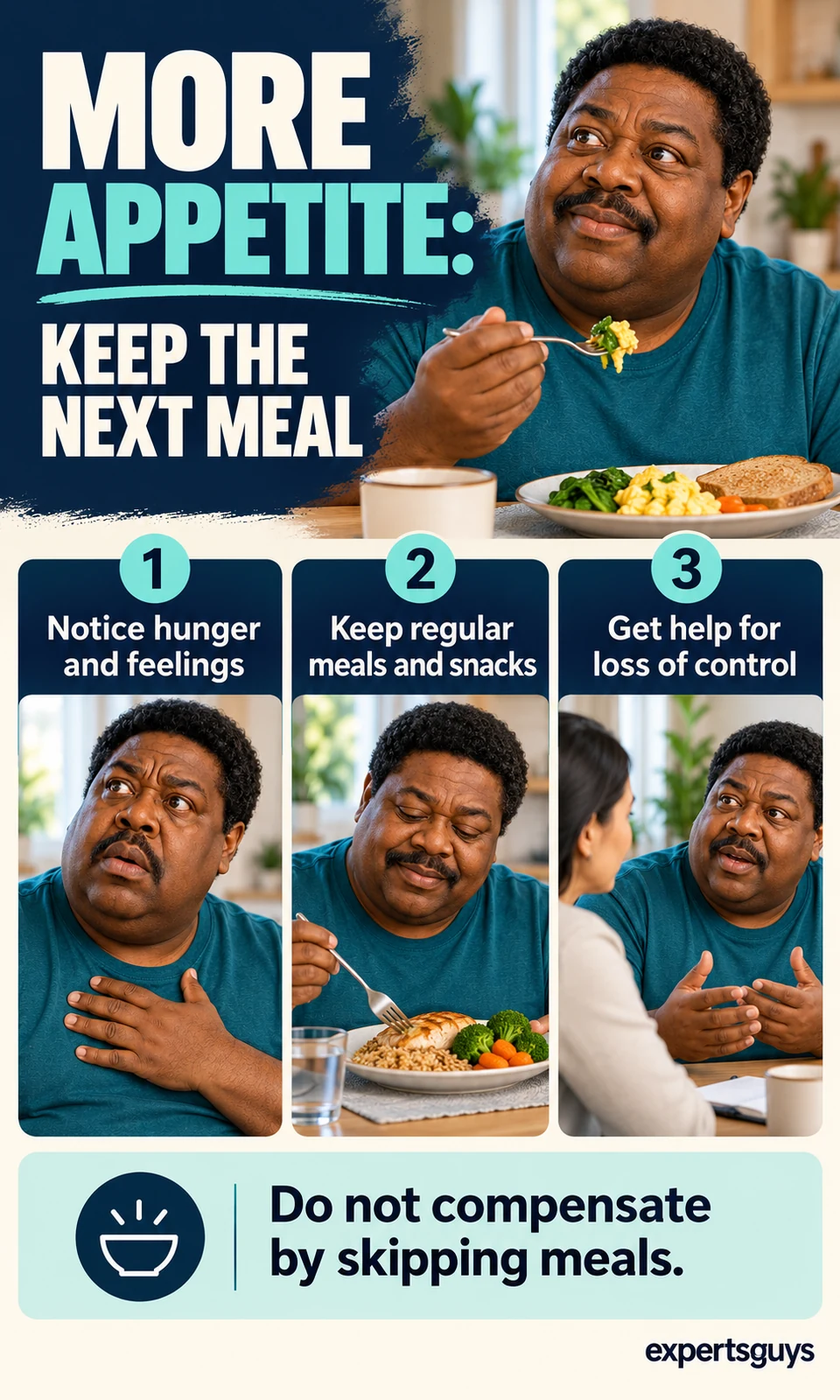
- Name what you notice. For example: “I am hungry,” “I feel upset,” or “both.”
- Keep the next meal or snack. Do not use fasting, purging or punishing exercise to compensate.
- Ask for support when control feels difficult. Describe the experience directly to a clinician rather than waiting for it to become more severe.
Illustrative example: After eating more than expected during a difficult evening, a person keeps breakfast the next day and tells a clinician that eating sometimes feels out of control. A lower-effort step is asking a trusted person to help arrange that conversation. Completion means taking a supportive action, not suppressing appetite or achieving a particular weight.
Repeated episodes involving large amounts of food and a sense of lost control can be signs of binge eating disorder, but only an assessment can establish a diagnosis. Loss of control and distress matter even when another person cannot see a problem. Depression and an eating disorder can coexist, so neither should be dismissed as merely a symptom of the other.
For people receiving treatment for binge eating disorder, regular eating and avoiding dieting during treatment are part of recommended care. That guidance should not be turned into an individual treatment plan without assessment. The aim here is to support a steadier pattern and appropriate care, not to impose a calorie target or weight-loss goal.
When should you seek care, and what should you tell a clinician?
Arrange an assessment when appetite changes persist, worsen, cause unintended weight change or interfere with everyday life. Low mood or loss of interest lasting most days for about two weeks also deserves attention, but that duration is not a rule for delaying care. A clinician considers the overall pattern, physical health and medications rather than appetite alone.
Appetite loss can also accompany infections, digestive problems, pain, dental difficulties and other illnesses. Increased hunger or weight change can have explanations outside depression too. New symptoms should be evaluated on their own merits, particularly when the pattern is sudden or accompanied by other physical changes.
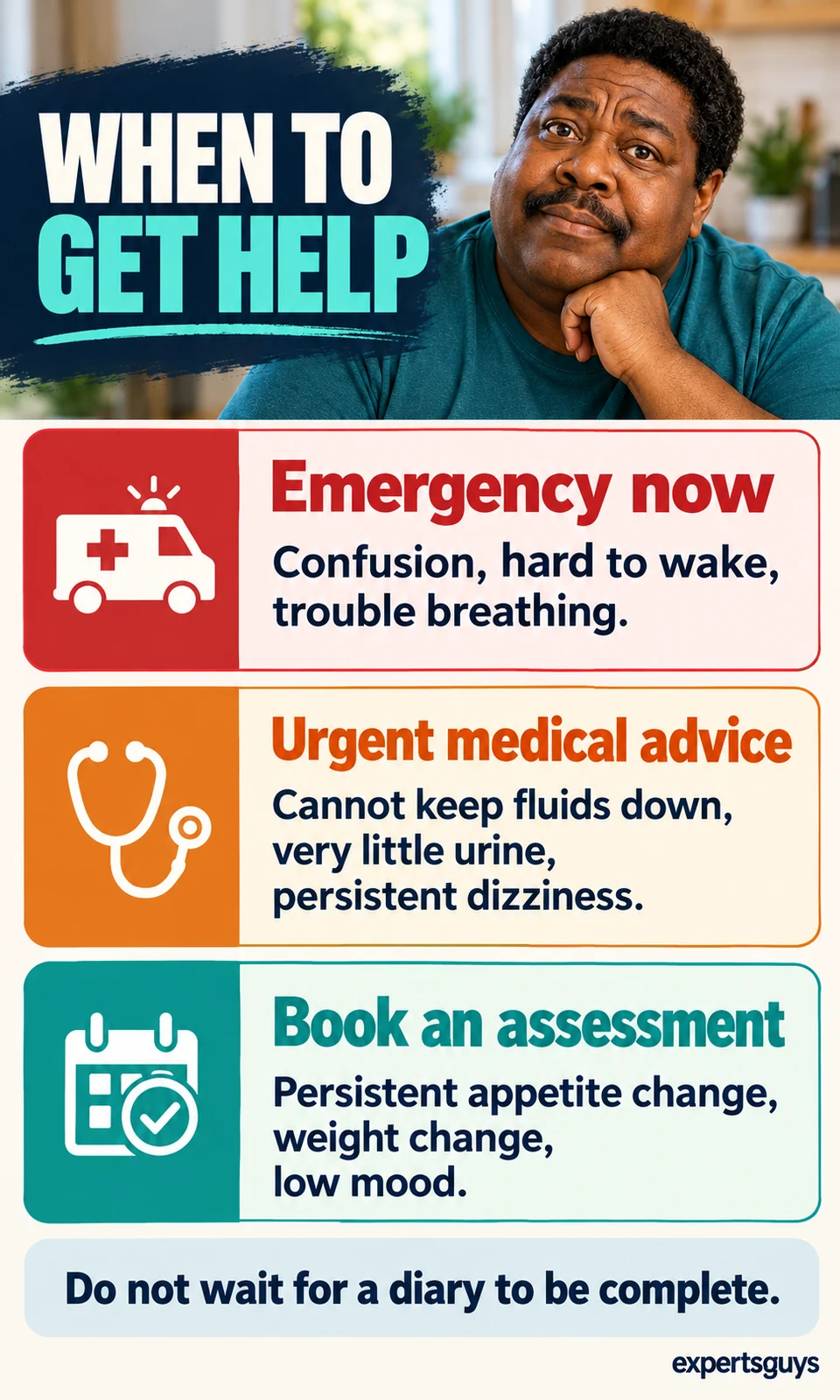
| Situation | Action |
|---|---|
| Confusion, difficulty waking, trouble breathing, or immediate danger to yourself | Contact local emergency services or go to an emergency department now. |
| Unable to keep fluids down, very little urine, persistent dizziness on standing, or very little food for several days | Seek urgent medical advice; do not try to solve this with a meal schedule alone. |
| Persistent appetite change, unintended weight change, low mood or eating that feels out of control | Book a primary-care or appropriate mental-health assessment. |
Dehydration can become serious, especially when drinking is difficult or support is needed to obtain fluids. The emergency signs in the table require immediate help regardless of whether depression is present. If you are unsure how urgently you need care, contact a local urgent medical service for guidance.
Bring a few useful facts, not a perfect diary
Prepare a short description of when eating changed, what food and drink you can manage, and any medication changes. Mention nausea, swallowing difficulty, pain, weight change or episodes of lost control if present. These details help the clinician decide what needs assessment; they are not a self-diagnosis.
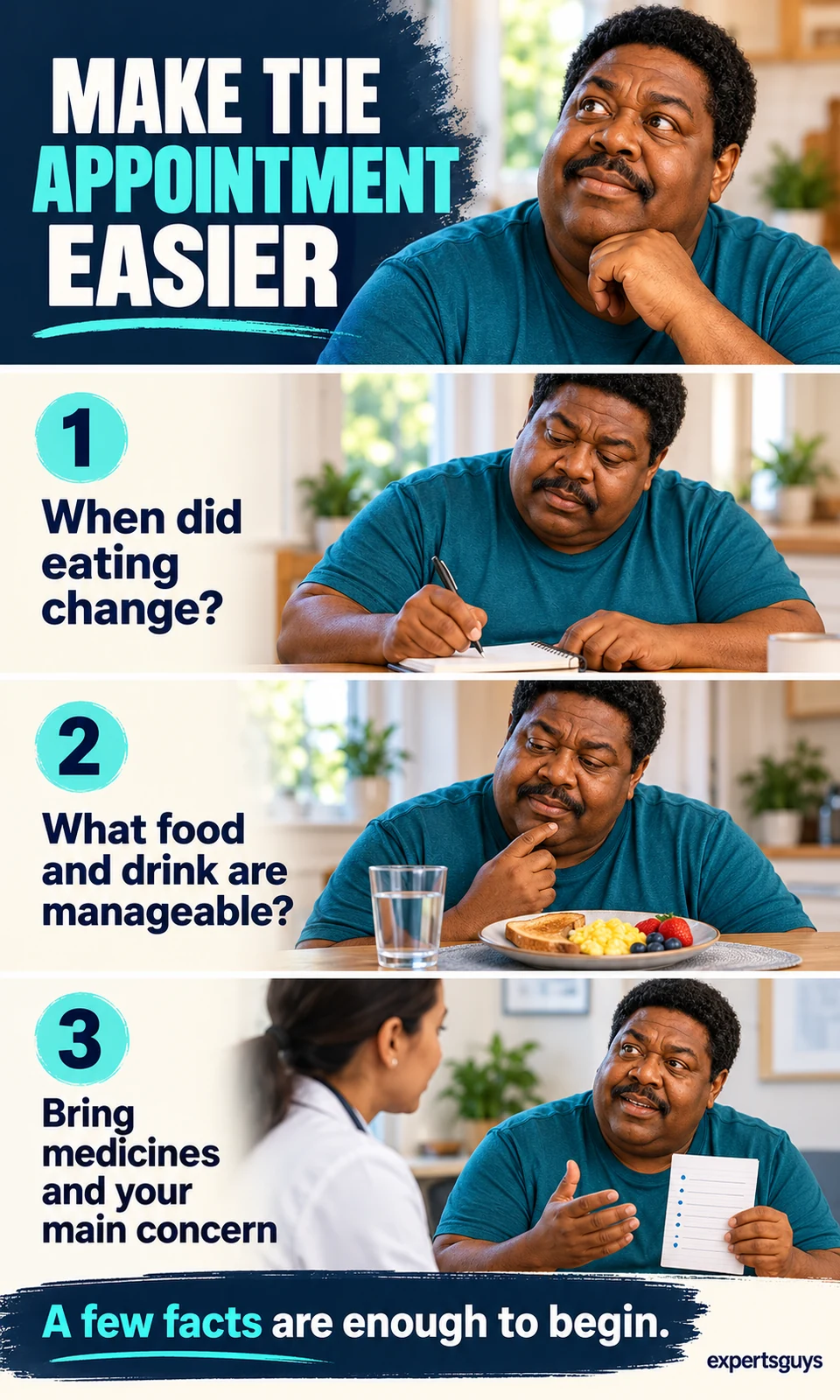
- Write an approximate start date or say that you are unsure.
- Give one or two examples of what eating and drinking have been like.
- Bring a medicine list, including supplements, and mention recent changes.
- State the concern you most want help with, such as “I cannot manage meals” or “Eating feels out of control.”
Illustrative example: “For the past week I have struggled with lunch and feel nauseated; this started after a medication change.” If writing is difficult, a spoken account or help from a trusted person is enough to begin. The skipped-meal appointment log can organize uncertain or missed eating occasions, but completing it must never delay care.
Some antidepressants can affect appetite, weight or nausea, while effective depression treatment may also improve eating. Tell the prescriber what changed and when rather than stopping or adjusting medication yourself. A primary-care clinician can assess physical causes and nutritional risk, while a mental-health professional and dietitian may provide additional support.
Frequently asked questions
Can you have depression without any appetite change?
Yes. Appetite change is one possible symptom, not a requirement that everyone experiences. Assessment considers mood, interest, other symptoms, duration and how daily life is affected.
Does appetite returning mean depression has gone?
No. Eating may improve while other symptoms remain, and recovery does not follow one fixed order. Continue your care plan and discuss the wider pattern with your clinician.
Can supplements replace depression treatment?
No supplement should be assumed to replace an assessment or evidence-based treatment. A clinician may recommend nutrition support for a specific need, but that is different from treating depression. Check supplements with a pharmacist or clinician because some interact with medicines.
Your next step
Choose the barrier that best describes today: low appetite, low energy, an irregular routine or eating that feels out of control. Make one appropriate eating opportunity easier, and arrange care if the problem persists or your health is affected. Seek urgent help for the warning signs above rather than waiting for a self-help approach to work.