




Caffeine is a stimulant that can change alertness, sleep and how you feel, but drinking coffee does not by itself establish a cause of clinical depression. Caffeine can make some people feel worse through anxiety or disrupted sleep, while cutting back abruptly can cause temporary low mood. The useful first distinction is whether symptoms followed a dose, a reduction, or a longer pattern that needs assessment.
Do not wait for a caffeine experiment if you feel unsafe. If you may act on thoughts of harming yourself or cannot stay safe, contact local emergency services or go to the nearest emergency department; ask someone you trust to stay with you if possible. Severe new chest pain, fainting or a seizure after caffeine also needs urgent medical attention.
- After caffeine: look for a connection with jitteriness, anxiety or disrupted sleep.
- After less caffeine: headache, sleepiness and a flat mood may be withdrawal.
- Across much of the day: persistent loss of interest, low mood or difficulty functioning deserves attention beyond the coffee cup.
Can caffeine cause depression, or just make you feel worse?
Feeling low is a symptom; a depressive disorder is a clinical assessment of a broader pattern. Caffeine-related discomfort can coexist with depression, and a person can have withdrawal while also needing treatment for a mood disorder. These explanations are not mutually exclusive.
| Pattern | What it can suggest | What it cannot establish |
|---|---|---|
| Wired or anxious after a drink | The dose may exceed your tolerance. | That caffeine caused a depressive disorder. |
| Headache and low energy after a missed or smaller usual dose | Withdrawal is plausible. | That all low mood is withdrawal. |
| Low mood or lost interest continues despite a steadier routine | Another contributor or depressive illness needs consideration. | A diagnosis from timing alone. |
Caffeine blocks adenosine receptors, interfering with a signal involved in sleep pressure. Feeling more awake is not the same as resolving the cause of tiredness. A lift after coffee may reflect stimulation, relief from withdrawal, expectations around the ritual, or several of these together; it is not a test showing that coffee treats depression.
A useful example is the difference between feeling shaky after a strong coffee and feeling heavy-headed after skipping the usual morning drink. Both can disrupt your day, but they point toward different changes to consider. If the tiredness has a wider pattern, the distinction between depression-related fatigue and ordinary tiredness becomes more relevant than the number of cups alone.

What does research on coffee and depression actually show?
Some observational research has found lower rates of depression among coffee drinkers. A prospective study of 50,739 US women found an association between caffeinated coffee intake and lower subsequent depression risk. The participants were not randomly assigned to drink coffee, so the result does not establish that starting coffee prevents depression or that increasing the dose will improve an individual person’s mood.
Coffee drinking travels with other characteristics: sleep habits, health, work patterns, smoking and reasons for avoiding caffeine can differ between groups. Statistical adjustment helps, but cannot make an observational comparison equivalent to a treatment trial. The practical consequence is straightforward: do not raise your caffeine intake to copy a population association, particularly if it already affects your sleep or anxiety.
Why sleep can make the connection confusing
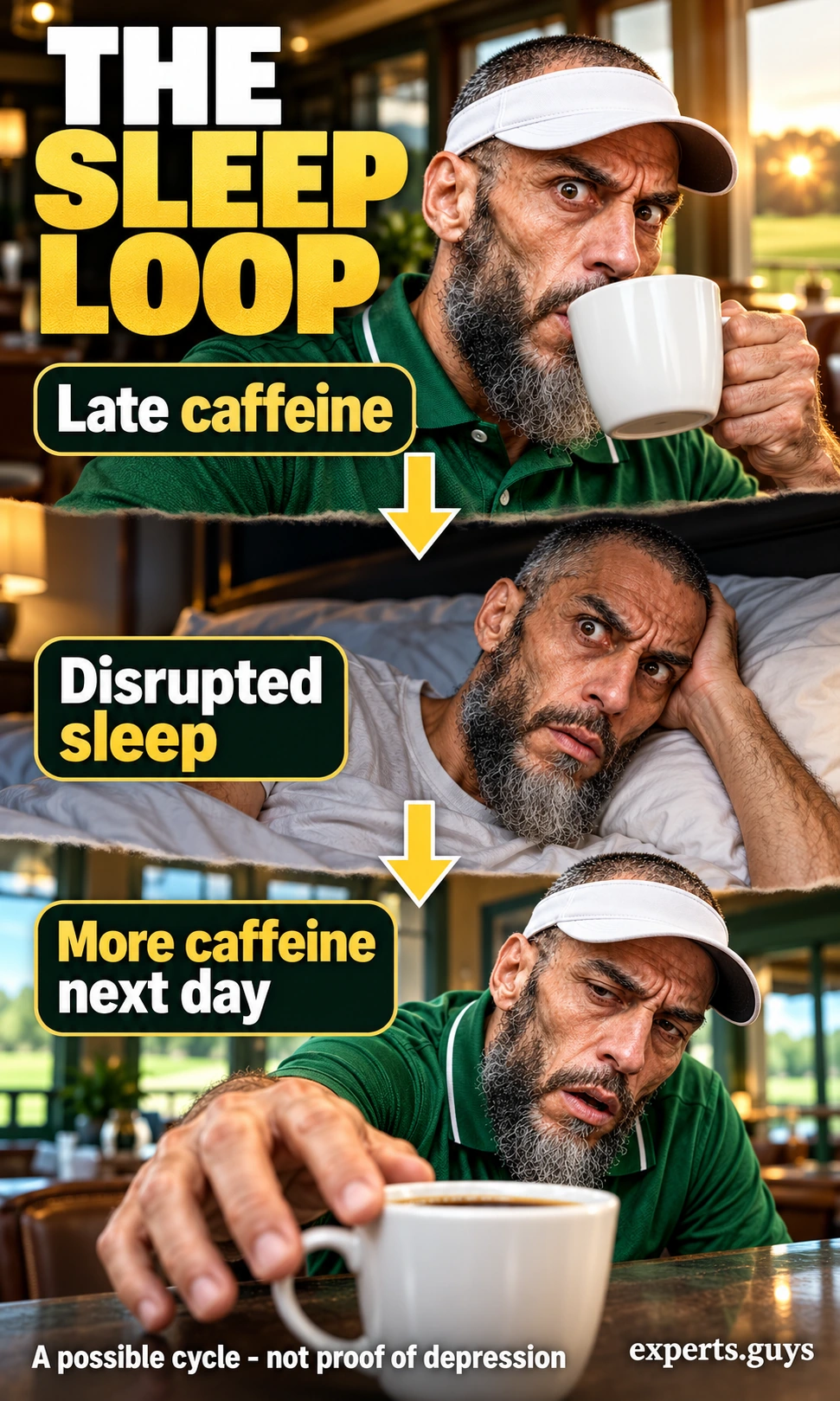
A late drink can keep alertness up while making the next sleep period less restorative. The following day, more coffee may seem necessary. That possible cycle explains how caffeine can contribute to feeling worse without requiring the claim that it directly creates depression. It also explains why simply feeling able to fall asleep does not settle every question about sleep quality.
In a small controlled sleep study using 400 mg of caffeine, sleep disruption occurred even when the dose was taken six hours before bed. That was a substantial dose, not a universal result for every cup. Dose, sensitivity and timing all matter; six hours is not a guaranteed safe cutoff for everyone. The broader patterns belong in the guide to depression and sleep problems.
Why can cutting back cause low mood?
With regular exposure, the nervous system adapts to caffeine. A sudden reduction can leave you temporarily sleepy, irritable, less able to concentrate or low in mood. Headache is a common accompanying clue. This is a physiological withdrawal response, not evidence that your brain needs coffee to be emotionally healthy.
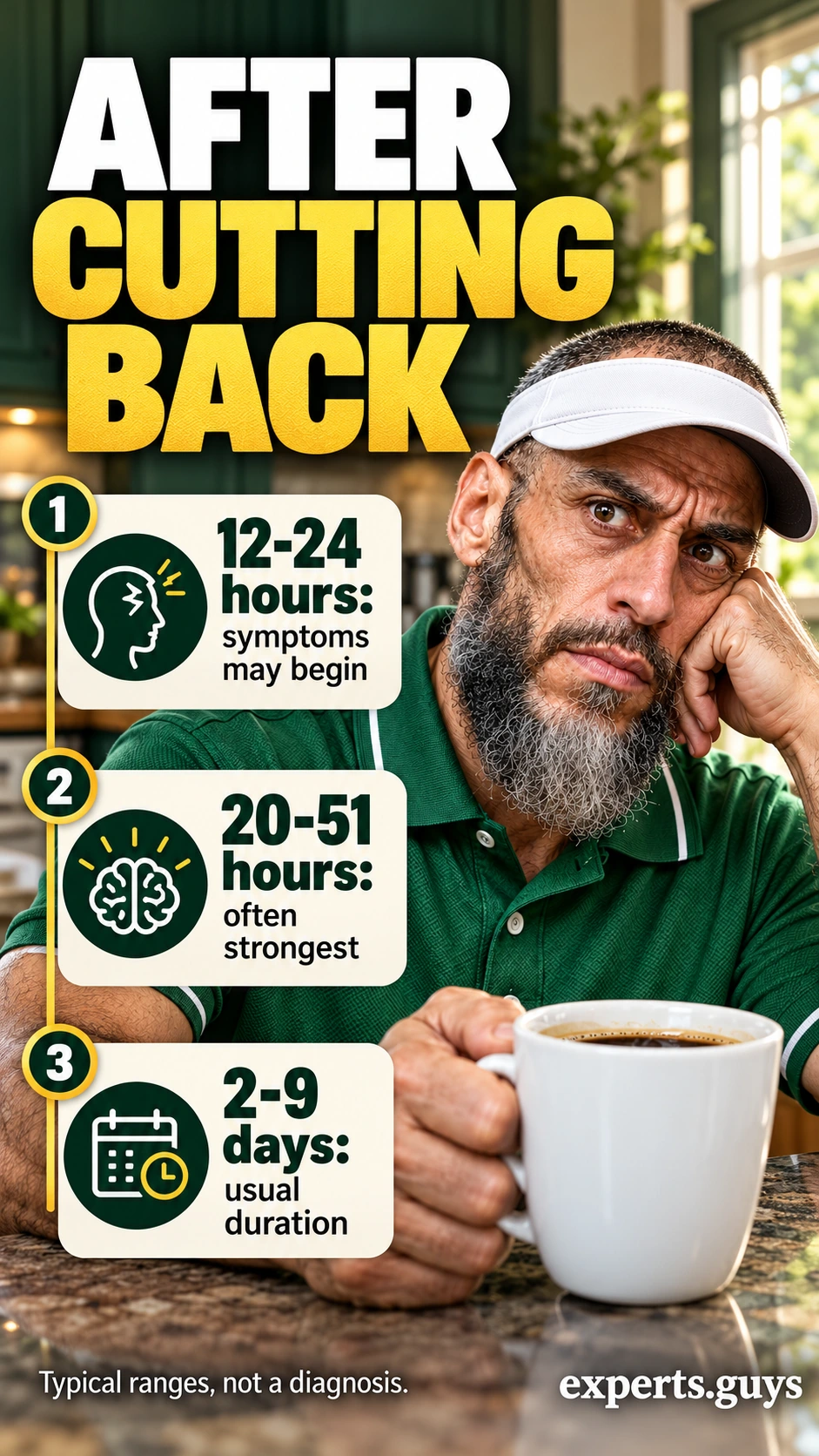
The established withdrawal literature describes symptoms starting about 12-24 hours after stopping, often peaking around 20-51 hours and usually lasting 2-9 days. Those are typical ranges, not a countdown that proves what is happening. A sizeable reduction, not only complete cessation, can bring on symptoms; the amount previously used and the individual response affect the experience.
Does dependence mean addiction?
Physical dependence means the body has adapted enough that reducing a substance produces withdrawal. Addiction is a broader everyday term and should not be inferred from one morning headache. Repeated difficulty reducing caffeine despite unwanted effects and continuing use that causes meaningful problems are more useful reasons to seek help than attaching a label to a daily cup.
Withdrawal relief can keep the pattern going: a person skips coffee, feels worse, drinks it again and concludes that coffee is essential. Relief is real, but it does not reveal whether a depressive disorder is present. A randomized trial of a gradual caffeine-reduction programme supports structured reduction for problematic use; it did not establish a treatment for depression, and people with severe untreated depression were excluded.
What if the first few days feel worse?
An uncomfortable first day after a large cut does not prove that lower caffeine will be worse in the longer term. Equally, not every unpleasant symptom should be assigned to withdrawal. New, severe, unusual or worsening symptoms need assessment; persistent low mood should not be repeatedly explained away by extending a self-imposed withdrawal deadline.
If you are already sleeping poorly, temporarily feeling less stimulated may make the underlying tiredness more noticeable. Avoid using a hazardous task, a long drive or a demanding sports session as a test of whether you can push through it. Reduce the demands of the situation when alertness is impaired; a stimulant is not a reliable substitute for being fit to perform the task.
How can you reduce caffeine without turning it into a tracking project?
The practical goal is a repeatable lower-caffeine serving, not perfect measurement of every feeling. Start with the drink you can reliably change and keep its preparation understandable. The following examples suit adults making ordinary beverage changes; pregnancy, breastfeeding, interacting medicines and significant health conditions need individualized advice before using a generic reduction approach.
Check the amount in the whole drink
Before changing a packaged drink, find whether the caffeine amount refers to a serving or the entire container. This avoids a common mistake: believing that one can equals one labelled serving. You need the container and its label, not a notebook or an app; use accessible manufacturer information or ask for help if the print is unreadable.
- Find the caffeine amount and its unit, usually milligrams (mg).
- Find the serving size and how many servings the container holds.
- Multiply by the servings you actually consume. An illustrative label with 80 mg per serving and two servings per can means 160 mg if you drink the whole can.
If the label already gives caffeine per can, do not multiply it again. If no amount is available, the absence of a number does not mean there is no caffeine; ask the maker or choose a product with clearer information. For café drinks, the shot count and recipe can matter more than the cup name. The task is complete when you know what the stated amount refers to, or have recognized that it remains uncertain.

Make a measured regular-to-decaf swap
For someone who drinks the same brewed coffee most days, a partial substitution can make gradual reduction concrete. Use regular and decaf prepared in a consistent way, a suitable measuring vessel and a stable counter. Let hot liquids cool to a safe handling temperature; sit at a stable table or ask someone to pour if fatigue or tremor makes handling difficult.
- For an illustrative 240 mL serving, measure 180 mL of your usual brewed regular coffee.
- Add 60 mL of ready-brewed decaf, bringing the drink back to 240 mL. Do not add decaf on top of a full regular serving.
- Use that smaller proportion of regular coffee consistently before considering another reduction. Choose a pace you can tolerate rather than forcing a fixed deadline.
This replaces one quarter of the regular coffee volume, not necessarily one quarter of its caffeine exactly: decaf still contains some caffeine, and concentrations vary. For example, if 240 mL of the regular brew contains 120 mg and the same amount of decaf contains 8 mg, this mixture contains about 92 mg: 0.75 × 120 plus 0.25 × 8. These are hypothetical inputs for the calculation, not measurements of your coffee.
The easier version is to ask for a partly decaffeinated version of your familiar drink and clarify the shot mix or recipe. The useful result is a drink made with less regular coffee, not an immediate improvement in mood. If symptoms become difficult, make the next change smaller or allow more time at the current amount; seek individualized guidance if repeated attempts are unmanageable. Do not compensate with extra cups or stronger brewing.

Change the late cup without adding another dose
If your main problem is a late caffeinated drink followed by poor sleep, change what is available at that moment. Choose a genuinely caffeine-free replacement you already tolerate, such as plain water or a product clearly labelled caffeine-free; decaf and ordinary black or green tea are different choices. Keep the replacement beside the familiar cup so the routine does not depend on remembering a new rule when tired.
- Identify the later drink that falls closest to your intended sleep period. For shift work, use your actual sleep time rather than the clock label “evening.”
- Set the replacement at the drink station, and move the caffeinated option away from the immediate preparation spot.
- Prepare the planned replacement when that drink normally happens. If the removed dose is substantial and you are dependent, use gradual substitution rather than making an abrupt large cut.
A hypothetical example is a person who regularly drinks coffee after dinner and lies awake later. Preparing a caffeine-free drink in the same mug changes the exposure while keeping the familiar pause. A ready-to-drink option is easier when brewing is too much effort. Completion means the late drink contains less or no caffeine as intended; better sleep is a possible outcome, not a promise or a depression test.

Why a reasonable swap may not work
Caffeine changes can fail at the preparation stage even when the intention is sound. A smaller latte with an added espresso shot may retain a similar dose, and a switch from coffee to strong tea may still leave a meaningful amount. Solve the preparation mismatch before concluding that every lower-caffeine option has failed.
| Mistake | Why it matters | Correction |
|---|---|---|
| Adding decaf to a full regular drink | The original caffeine remains. | Replace part of the regular portion. |
| Making fewer but stronger drinks | Cup count falls while dose may not. | Keep the recipe or shot count comparable. |
| Replacing coffee with tea or an energy drink | The substitute can still contain caffeine. | Check the actual product and portion. |
| Using a caffeine-containing headache medicine without realizing it | It adds another source during the reduction. | Ask a pharmacist about ingredients; do not alter prescribed treatment yourself. |

The FDA’s caffeine guidance describes 400 mg a day as an amount not generally associated with negative effects for most adults. It is not a daily target, an individual guarantee, or a threshold below which sleep and anxiety cannot be affected. Include relevant beverages, supplements and medicines when considering exposure; do not apply adult guidance to children.
When should low mood be assessed beyond caffeine?
Arrange an assessment if low mood, loss of interest or reduced functioning persists, worsens, predates the caffeine change, or does not settle as expected. Major depression involves a broader symptom pattern, generally present most of the day, nearly every day, for at least two weeks. That duration helps clinicians assess a diagnosis; it is not an instruction to wait two weeks before getting help.
Difficulty eating, working or managing basic needs is a reason to seek help sooner. So are markedly unusual changes such as very little sleep with unusually high energy, or experiences that make it hard to judge what is real. A primary care clinician can consider mood, sleep, physical illness and medication effects together. The distinction between clinical depression and the everyday use of “depression” explains why a symptom label alone is insufficient.

You can explain the sequence aloud: what your usual drink was, what changed, when symptoms appeared, and what you can no longer do normally. Bring product packaging if the ingredients are unclear. Keep prescribed treatment unchanged unless your prescriber advises otherwise; reducing coffee is not a substitute for depression care, and caffeine changes may need coordination with medication advice.
Frequently asked questions
Does feeling better after coffee rule out depression?
No. A temporary lift can reflect stimulation or relief from withdrawal. It does not determine why you were feeling low, and it does not rule out a depressive disorder.
Can decaf still affect a caffeine-sensitive person?
Yes. Decaf contains less caffeine, but is not necessarily caffeine-free. If very small amounts cause unwanted effects, check the product and discuss suitable alternatives rather than assuming every decaf drink is equivalent.
Should I wait an hour after waking before drinking coffee?
There is no universal one-hour rule required to prevent depression. Your total exposure, sleep pattern and response are more useful considerations than treating a morning delay as a proven mood intervention.
Is stopping coffee the same as stopping antidepressants?
No. These are different substances with different effects and clinical considerations. Do not reduce or stop prescribed medication as part of a coffee experiment; discuss medication changes with the prescriber.
Can I judge the change from one bad afternoon?
One afternoon cannot separate caffeine effects from sleep loss, withdrawal, stress or an underlying condition. Use the preparation and timing distinctions in this article, and seek assessment for persistent, severe or worsening symptoms rather than repeatedly testing yourself with caffeine.
Your next-step checklist
- Match the concern to its timing: after caffeine, after reducing it, or across a longer period.
- For a manageable beverage change, check one serving and prepare a consistent partial swap.
- Avoid unintentionally replacing the missing caffeine with extra shots, tea, supplements or medicines.
- Let symptoms and functioning guide the need for care; do not make a better mood the condition for counting a practical step as completed.









