
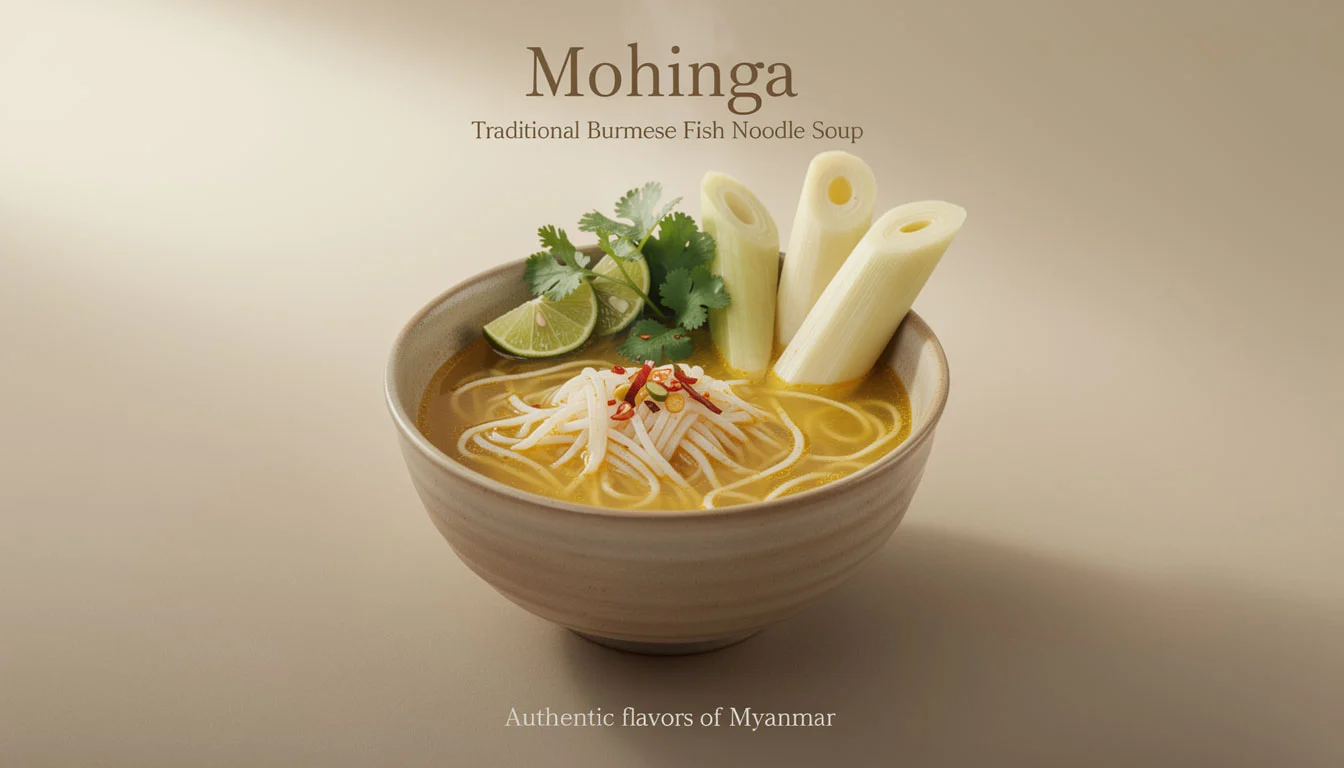

Introduction – Why Mohinga Matters
Mohinga is more than a recipe.
It is a daily food habit, a cultural identifier, and a shared comfort across Myanmar households.
Unlike many Southeast Asian noodle soups that are tied to restaurants or special occasions, mohinga is eaten at all hours. Morning breakfasts, street stalls, family kitchens, and festivals all serve variations of the same core dish.
At its heart, mohinga is a fish-based noodle soup thickened naturally, seasoned gently, and built for balance rather than intensity. It does not rely on heat or heavy spice. Instead, it reflects how Burmese cooking prioritizes depth, familiarity, and nourishment.
This article explains mohinga clearly, step by step, without over-romanticizing or simplifying it into a generic “fish noodle soup.”
What Is Mohinga?
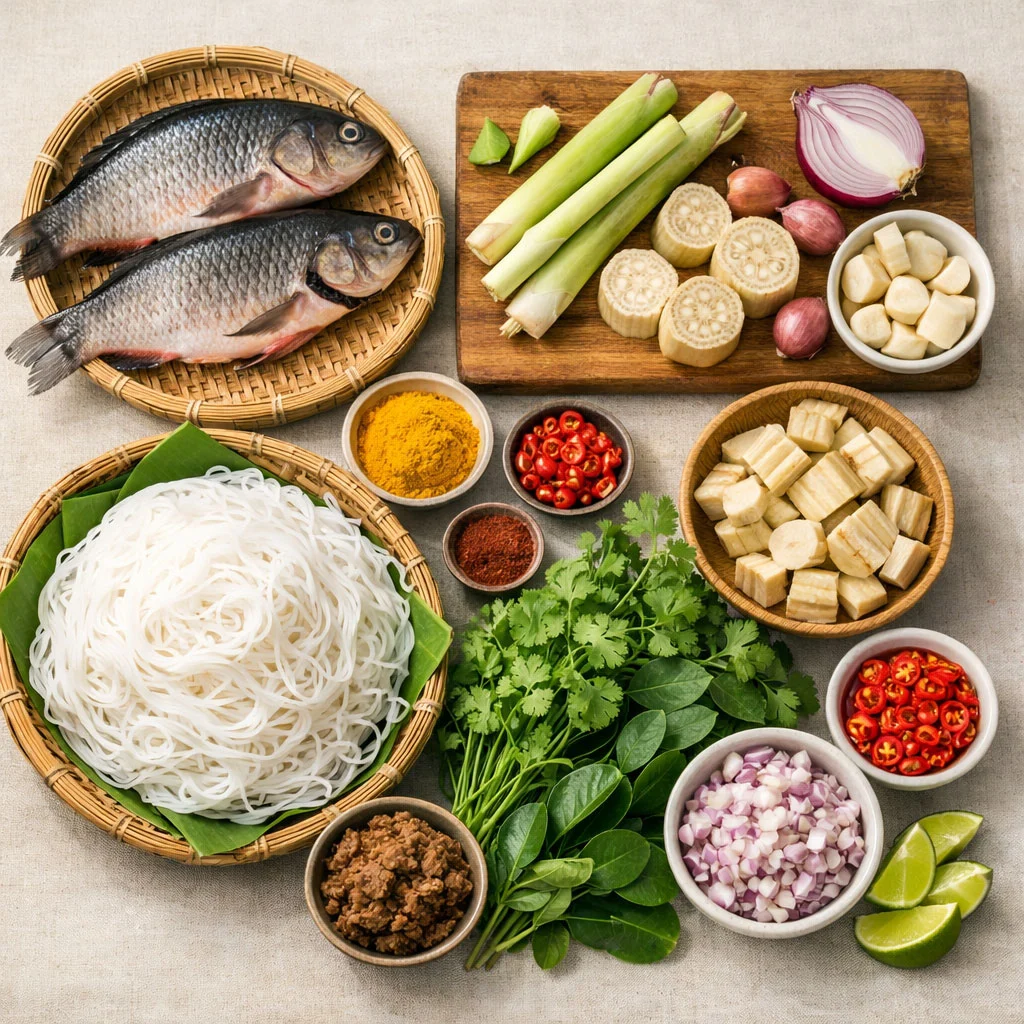
Mohinga is a traditional Burmese noodle soup made from:
- Freshwater fish cooked into a light broth
- Rice noodles as the base
- Natural thickeners such as banana stem or toasted rice flour
- Mild aromatics like garlic, onion, and lemongrass
- Optional toppings depending on region and household
It is widely recognized as Myanmar’s national dish, not because it is ceremonial, but because it is everyday food.
The flavor profile is savory and rounded, with a gentle fish richness rather than sharp seafood notes. The broth is usually golden in color and lightly thickened, allowing it to coat the noodles without feeling heavy.
How Mohinga Is Traditionally Eaten
Mohinga is most commonly eaten in the morning, though this is more tradition than rule.
In many Burmese towns, mohinga sellers begin serving before sunrise. Office workers, students, and families eat it as a first meal of the day, similar to how congee or noodle soups are eaten in other parts of Asia.
That said, mohinga is not restricted to breakfast. Home-cooked versions are often prepared for lunch or shared during gatherings, especially when made in larger pots.
The Core Ingredients Explained
Fish as the Base
Mohinga traditionally uses freshwater fish, often catfish, because of its soft flesh and ability to break down smoothly into the broth.
The fish is cooked, flaked, and gently incorporated so that the broth gains body without becoming cloudy or overpowering.
Rice Noodles
Thin rice noodles are most common. They absorb the broth easily and keep the dish light.
Unlike wheat-based noodles, rice noodles align with the mild, balanced nature of mohinga.
Natural Thickeners
Rather than using starch-heavy methods, traditional mohinga thickens the broth using banana stem or toasted rice flour.
This creates a subtle texture that sits between soup and stew without feeling dense.
Mohinga belongs to a wider family of traditional Southeast Asian soups that rely on balance and daily practicality rather than heavy seasoning.
How Mohinga Is Cooked – Process Explained
Mohinga is not cooked by layering strong flavors.
It is built through controlled extraction.
Each step is designed to pull flavor gently from the fish and aromatics, without masking the base.
Step 1 – Preparing the Fish Broth
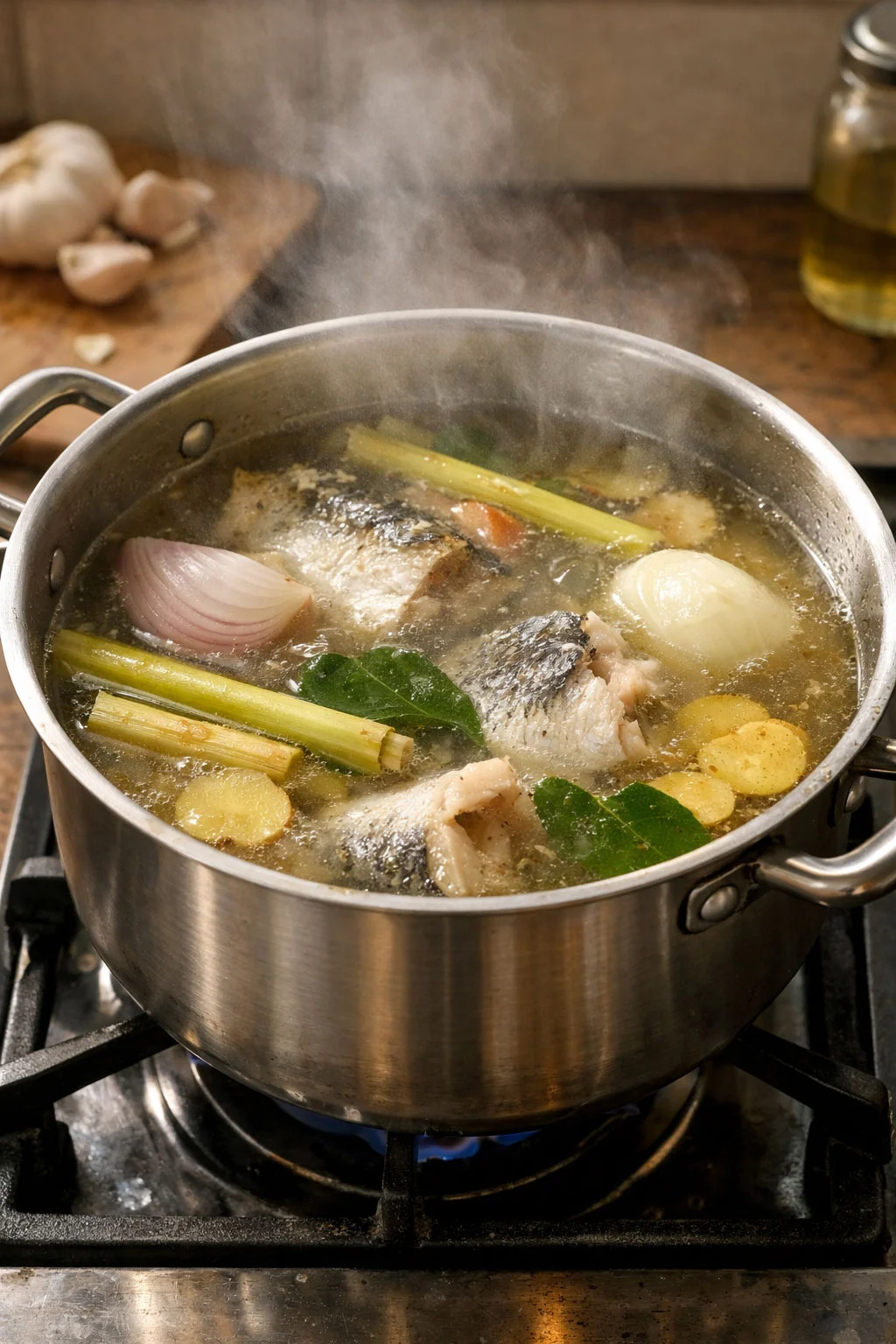
Freshwater fish is simmered slowly with aromatics such as onion, garlic, and lemongrass. The goal is not to boil aggressively but to allow the fish to soften and release its flavor into the liquid.
Once cooked, the fish is removed, deboned, and flaked. Some of the fish is returned to the broth to enrich it, while the rest may be reserved for topping.
This method keeps the broth clear yet full-bodied.
Step 2 – Thickening the Broth Naturally
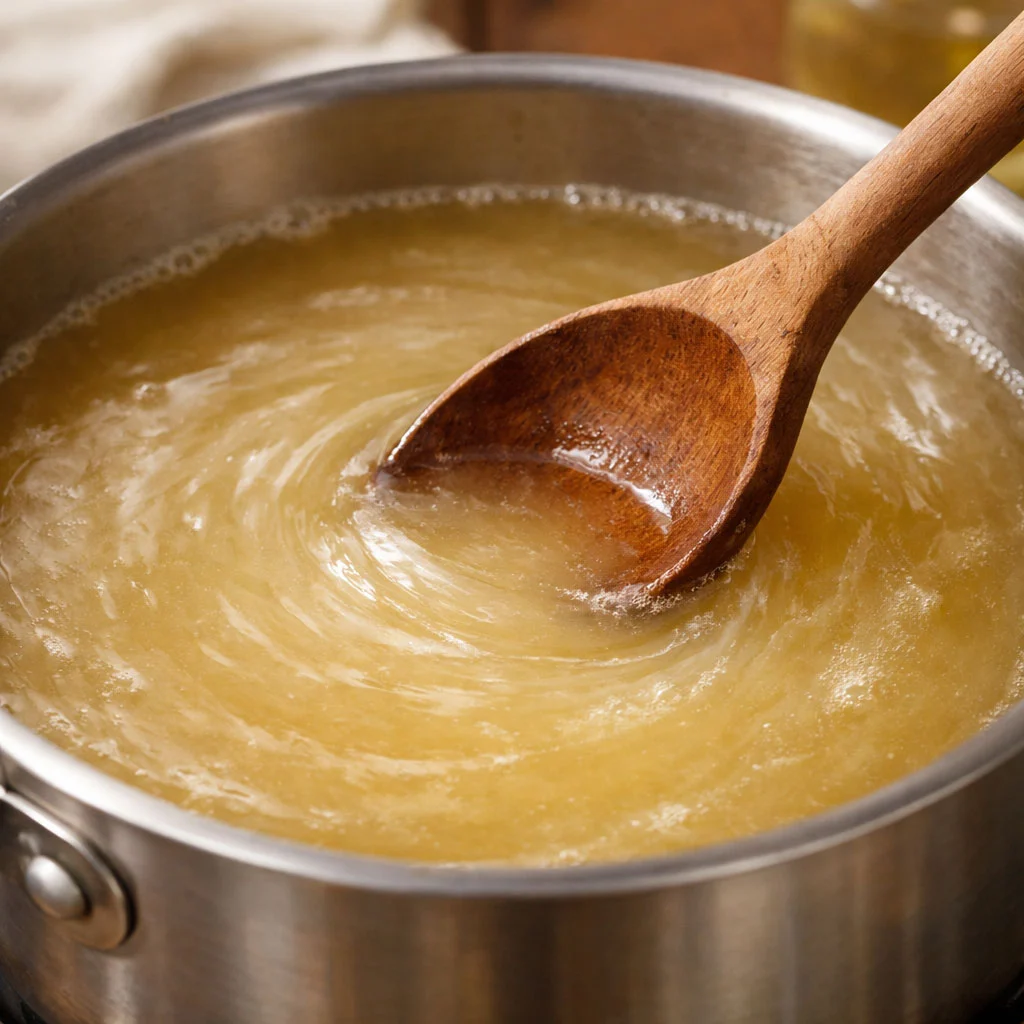
Traditional mohinga does not rely on heavy starches.
Instead, toasted rice flour or finely chopped banana stem is added gradually. This thickens the broth subtly, creating a texture that clings to noodles without becoming pasty.
This step requires patience. The broth should remain pourable and smooth.
Step 3 – Seasoning With Balance
Seasoning in mohinga is restrained.
Fish sauce, salt, and sometimes fermented elements are added in small amounts. The aim is to support the fish flavor, not dominate it.
Spice heat is minimal. Mohinga is not meant to burn the palate. It is meant to comfort.
Why Mohinga Tastes Gentle, Not Bland
Many first-time eaters expect mohinga to be bold like other Southeast Asian soups. That expectation often leads to misunderstanding.
Mohinga’s flavor works through:
- Mild fish richness
- Soft aromatics
- Light oil presence
- Natural umami from fish breakdown
This creates a soup that feels nourishing rather than exciting. It is food designed for repetition.
This approach reflects balanced everyday cooking, where meals are designed to be eaten frequently without overwhelming the body.
Common Regional Variations of Mohinga

Mohinga is not a fixed recipe. It adapts based on geography, availability, and household preference.
Coastal Areas
- Fish flavor is slightly stronger
- Broth may be thinner
- Fewer toppings
Inland Regions
- Thicker broth
- More aromatics
- Greater use of banana stem
Urban Home Versions
- Simplified ingredients
- Easier substitutions
- Less fermentation
These variations do not change the identity of mohinga. They reflect practicality.
Typical Toppings and Why They Matter
Toppings are optional but meaningful.
Common additions include:
- Boiled eggs
- Crispy fritters
- Fresh herbs
- Lime or citrus
These are not meant to transform the soup. They offer contrast.
Crunch, acidity, and freshness balance the soft noodles and broth.
Serving Mohinga at Home
Mohinga is best served immediately after cooking.
The noodles are placed in the bowl first, followed by hot broth, then toppings. This sequence ensures the noodles absorb flavor without over-softening.
Leftover broth can be stored separately and reheated gently.
Common Mistakes When Making Mohinga
Mohinga often goes wrong not because of missing ingredients, but because of incorrect expectations.
Mistake 1 – Overpowering the Fish Flavor
Using strong spices or chili-heavy pastes overwhelms the natural broth. Mohinga is meant to be gentle and rounded, not sharp.
Mistake 2 – Making the Broth Too Thick
A heavy, porridge-like texture breaks the balance. The broth should lightly coat noodles, not weigh them down.
Mistake 3 – Using Oily Cooking Methods
Excess oil masks subtle flavors. Traditional mohinga uses restraint, not richness.
Mistake 4 – Treating It Like a Restaurant Dish
Mohinga is everyday food. Overcomplication moves it away from its purpose.
Storage and Reheating
Mohinga stores best when components are separated.
- Broth: Can be refrigerated for 2-3 days
- Noodles: Store separately to avoid over-softening
- Toppings: Add fresh when serving
When reheating, warm the broth slowly. Avoid boiling, as it changes texture and aroma.
Why Mohinga Remains Relevant Today
In a time when food trends push intensity and novelty, mohinga survives by doing the opposite.
It offers:
- Familiarity
- Digestibility
- Cultural continuity
- Practical nutrition
Mohinga does not chase attention. It earns loyalty.
This is why it remains a daily dish rather than a nostalgic one.
Mohinga is not about impressing guests. It is about feeding people every day.
Mohinga is not defined by technique or complexity.
It is defined by repetition.
The reason it remains Myanmar’s most recognized dish is not because it changed with time, but because it did not need to.
Mohinga Ingredients (Serves 4)
Main Ingredients
- Freshwater fish (catfish preferred) – 600 g
- Rice noodles (thin) – 400 g
- Water or light fish stock – 2 liters
Aromatics
- Onion (finely chopped) – 2 medium
- Garlic (minced) – 5 cloves
- Lemongrass (bruised) – 2 stalks
Thickening Ingredients (choose one)
- Banana stem (finely chopped) – 1 cup
OR - Toasted rice flour – 3 tablespoons
Seasoning
- Fish sauce – 2 to 3 tablespoons
- Salt – to taste
Optional Toppings (per serving)
- Hard-boiled egg – 1
- Crispy fritters – 2 to 3 small pieces
- Fresh coriander or herbs – small handful
- Lime wedge – optional
Step-by-Step Cooking Instructions
Step 1 – Cook the Fish
Place the fish, water (or fish stock), lemongrass, and half of the chopped onion into a large pot.
Simmer gently for 20 minutes. Do not boil aggressively.
Once cooked, remove the fish, debone carefully, and flake the flesh. Set aside.