
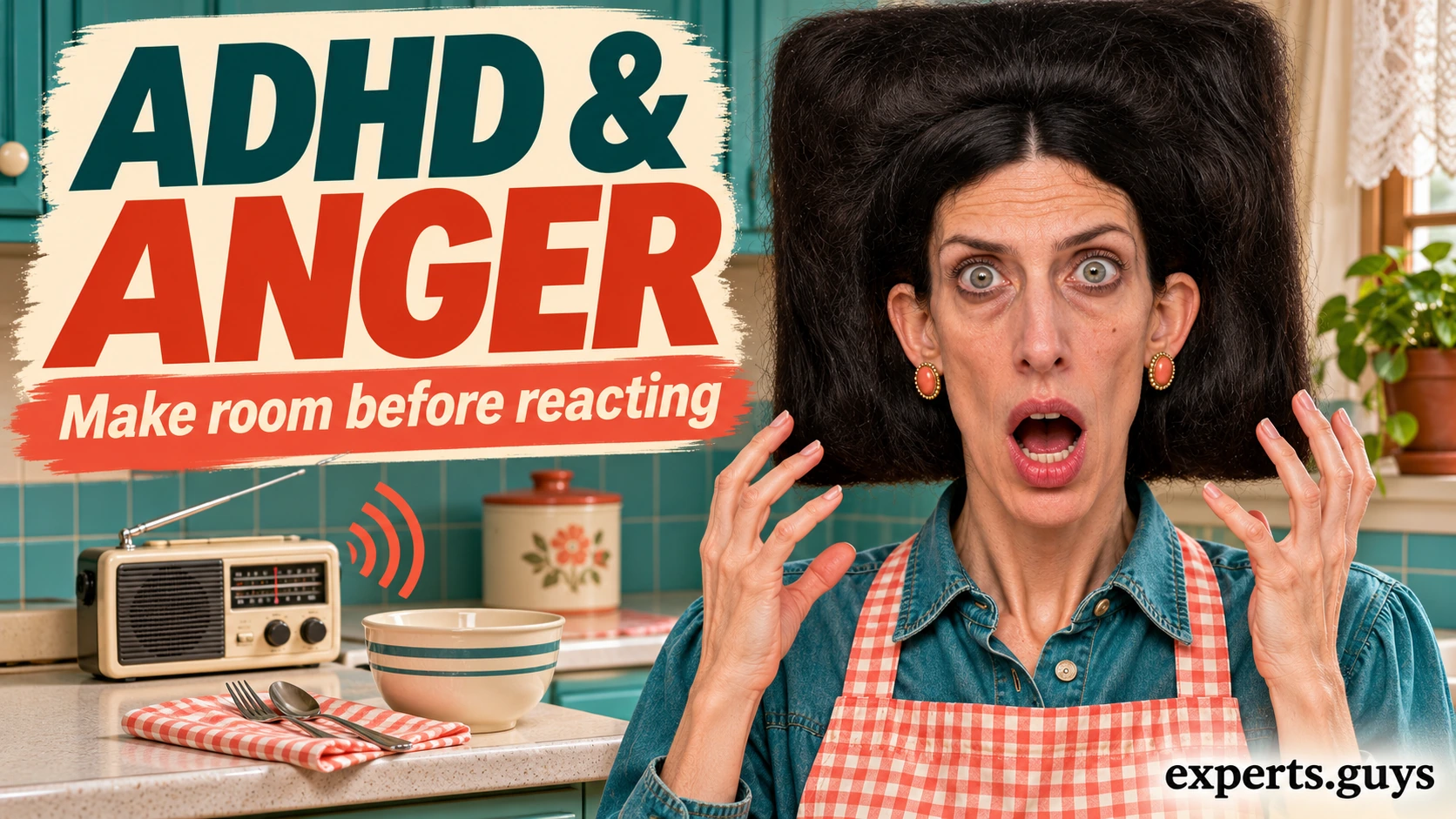
ADHD can make it harder to pause before reacting, shift attention and manage frustration, so an everyday interruption may lead to a sharp response. Anger alone does not establish ADHD, and ADHD does not excuse intimidation or harm. When interruptions are the problem, the practical starting point is to put the current task into a safe, easy-to-resume state before answering.
Start here: If you are safe but overloaded, use the task-parking demonstration below. If anger is new, persistent, worsening or accompanied by a major change in sleep or energy, read the assessment section as well. If anyone is at immediate risk of harm, prioritize distance and urgent local help over practicing a household technique.
Why can a small interruption cause a big reaction?
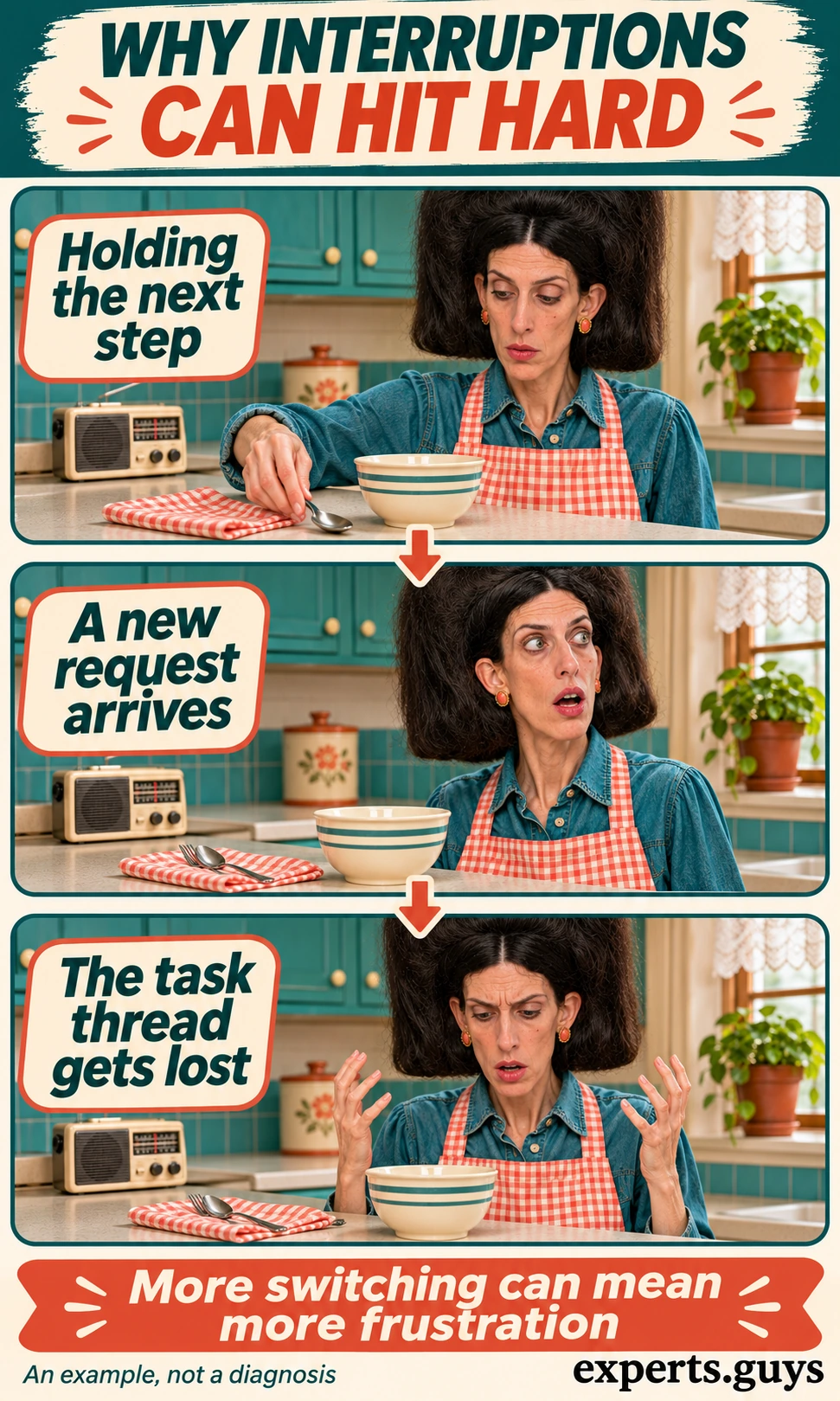
The size of a request and the effort needed to respond are different things. Someone asks where a plate belongs while you are preparing breakfast; you must stop the hand movement, retain your place, understand the question and choose an answer. When that transition is difficult, an ordinary request can arrive at an awkward point rather than being unusually unreasonable.
One possible problem is losing the task thread. You may have been holding several unfinished details in mind, and the new request competes with them. The frustration can be about having to reconstruct what you were doing, even when the words that come out sound directed at the person who interrupted. This is a useful explanation to investigate, not a way to establish someone’s motives from outside.
Is anger a core ADHD symptom?
ADHD is identified through a persistent developmental pattern of attention and/or hyperactivity-impulsivity difficulties that interfere with life. Some adults also experience irritability or low frustration tolerance, as described in the NIMH ADHD overview. Emotional regulation difficulties vary between people, and a bad reaction by itself cannot tell you whether ADHD is involved.
Consider the kitchen sequence as an example, not a claim about every person with ADHD. The useful question is whether interruptions repeatedly make you lose your place and respond sharply. If that is the recurring obstacle, changing the transition gives you something concrete to try without first needing to decide what every feeling means.
Why can criticism feel harder during a task?
A comment about the unfinished task can add another demand: you are now trying to explain yourself while remembering what comes next. Treat “I feel criticized” as your experience rather than proof that the other person intended an insult. Equally, a genuine insult does not become acceptable because you have ADHD. The immediate transition and the substance of the disagreement may need separate conversations.
Does this mean every angry evening is ADHD?
No. Sleep loss, an unpleasant environment, relationship conflict and other health concerns can exist alongside ADHD or without it. When anger is a change from your usual pattern, avoid explaining it away with an existing diagnosis. The distinction between a longstanding difficulty and a new decline is explored in depression versus ADHD executive dysfunction.
What can you change before answering an interruption?
Change the point where the task and the conversation compete. The lead skill here is task parking: end the current movement safely and leave a visible cue for the next step before turning to answer. This is an everyday adaptation, not a validated anger-treatment protocol, and it is intended for manageable frustration rather than a dangerous confrontation.
Use a low-risk practice example such as setting out a bowl and spoon. Do not rehearse while carrying hot liquid, using a knife, driving or supervising something that cannot safely be interrupted. A safe transition is the first condition; completing the entire chore is not. If a request is genuinely urgent, address the urgent need as soon as the immediate hazard is secured.
The best adjustment depends on the actual obstacle. Someone who loses their place needs a resumable stopping point; someone who cannot hear over a radio needs less competing sound. Someone who is too upset to continue a conversation may need an agreed handover and pause. Choose the relevant row rather than trying every technique during the same disagreement.
| What is getting in the way? | Useful next action | What counts as completion? |
|---|---|---|
| “I will forget what I was doing.” | Park a safe task before turning to answer. | The current movement ends and the next step remains visible. |
| “I cannot hear one request over the noise.” | Reduce one optional sound. | The request is easier to hear; safety signals remain audible. |
| “I need space, but someone depends on me.” | Arrange an explicit handover before leaving. | Another capable adult accepts the responsibility, or essential care stays covered. |
| “I already snapped.” | Repair the response once conversation is safe. | You acknowledge the behavior and explain one concrete change. |
| “This is new, escalating or frightening.” | Seek an appropriate assessment or urgent support. | The concern reaches someone able to assess it; no self-diagnosis is required. |
How do you park a task without abandoning it?
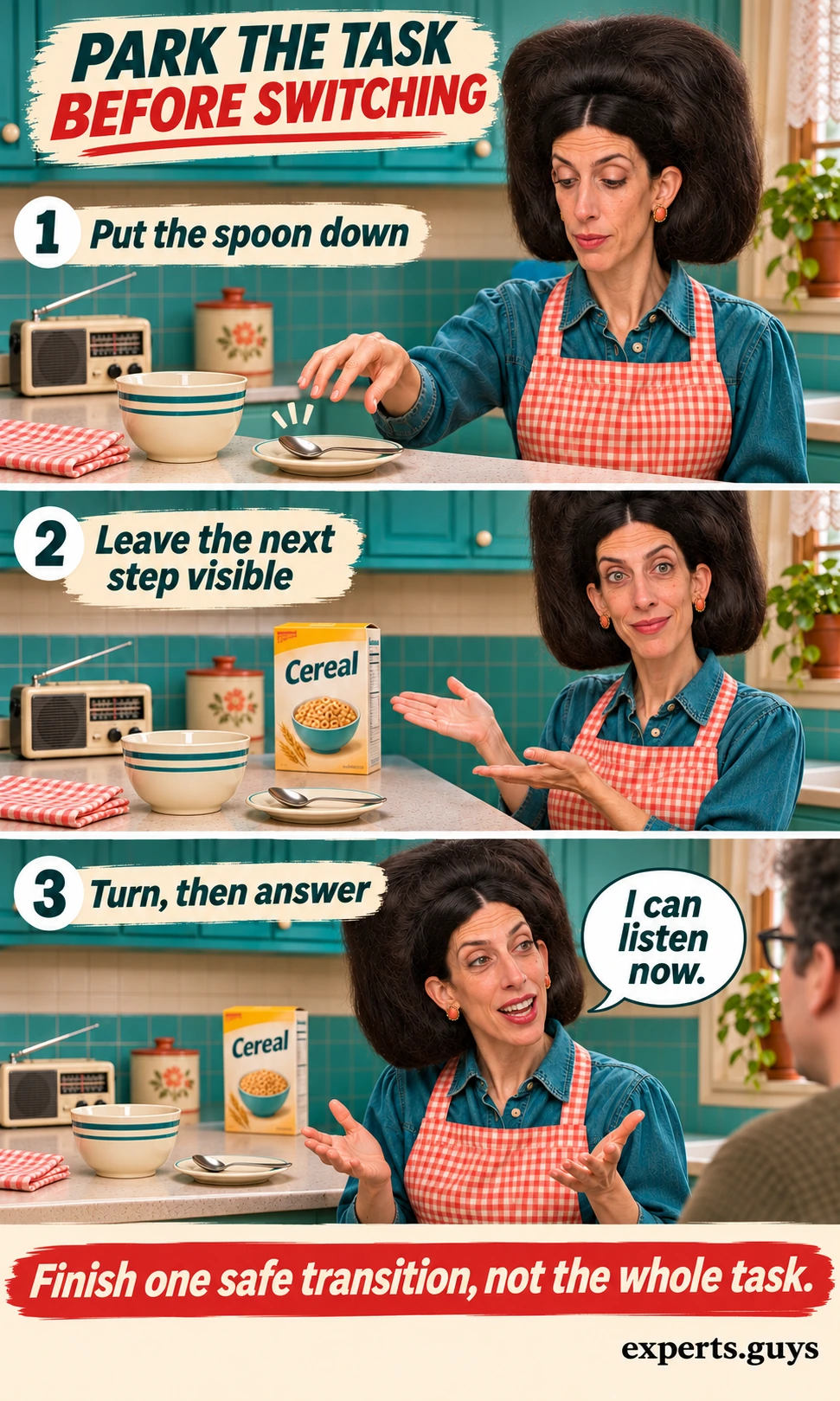
In the cold-breakfast example, the spoon goes onto a saucer, the empty bowl and closed cereal box stay together, and your hands become free before you turn. The visible arrangement preserves the next step without a diary, phone note or spoken checklist. Use the task’s own safe objects; do not scatter extra reminders across the counter.
A brief sentence can protect the transition: “Let me put this down, then I can listen.” Say it as a request for a safe stopping point, not an order that others must remain silent. If the other person needs an immediate answer, make the safe stop as small as possible. You are negotiating attention, not making yourself unavailable.
For a seated version, keep the bowl and saucer comfortably within reach and turn only as far as feels comfortable. If turning is difficult, ask the speaker to come into your line of sight. Do not stretch, twist or carry objects to demonstrate the method; the important action is releasing the task safely before taking on the conversation.
Practice when the household is calm so that the sequence is familiar before frustration builds. The checkpoint is observable: the spoon is down, the next step is visible and you can attend to one request. You may still feel irritated. A safer transition can be useful even when the emotion has not disappeared.
- Put the active object down safely. For this practice, place the spoon on a saucer.
- Preserve the next safe step. Keep the empty bowl and closed cereal box together.
- Turn with empty hands and listen. Answer one request before deciding whether to resume.
What if heat, a child or essential care is involved?
A visible task cue is never permission to leave a hazard or dependent person unattended. Turn off heat only when doing so is safe, or arrange for a capable adult to take over and confirm they have done so. With a child who needs supervision, remain present unless a responsible adult has explicitly accepted the handover. The cold-food example avoids these complications for practice; real responsibilities still govern what you can pause.
What helps when the surroundings keep adding demands?
Environmental changes can reduce an avoidable demand without requiring anyone to debate whether your irritation is justified. NICE ADHD guidance includes individualized modifications to noise and distractions. The radio example below applies that general principle; it does not establish that changing the room will treat anger or resolve an underlying disagreement.
How do you reduce competing sound safely?
Choose one optional sound that is competing with a conversation, such as a radio. Lower its volume, then face the speaker and ask for one request at a time. Keep alarms, cooking signals and anyone needing care audible. If you do not control the sound, ask for it to be lowered or use a quieter nearby position only if responsibilities remain covered.
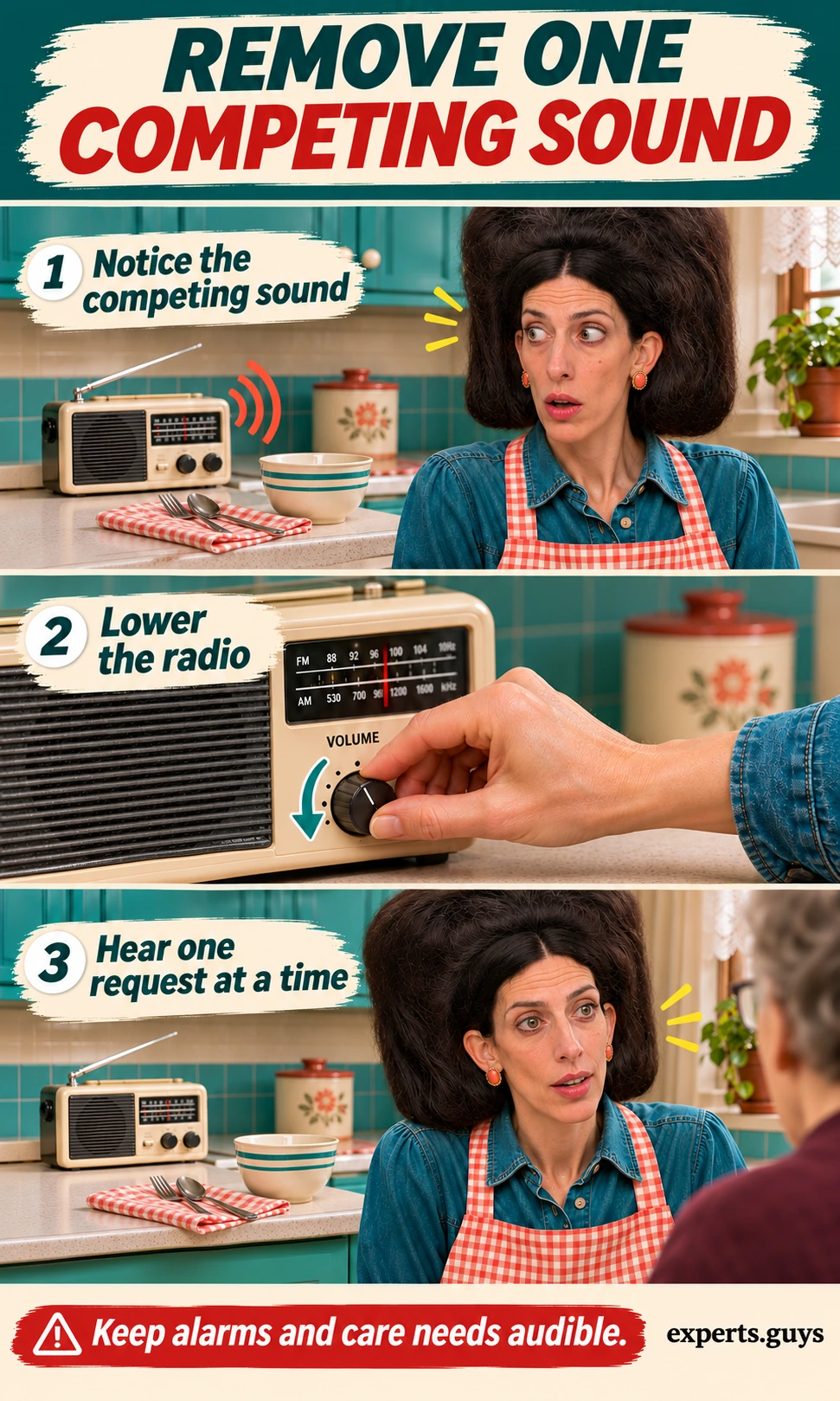
Check the practical result: can you hear and understand the request more easily? If not, reducing the radio may not address the main obstacle. Avoid continuing to rearrange the room while the other person is waiting for an answer. The adjustment should make communication easier, not turn into another unfinished household project.
How can you take space without leaving someone stranded?
Ask for a specific handover rather than announcing that you are leaving. For example: “Can you set the table while I pause?” Wait for an actual yes and agree when you will check back; “in ten minutes” is an example of an agreement, not a medically required calming time. If you still cannot talk safely at that point, explain that you need more time and agree a new check-in rather than disappearing.
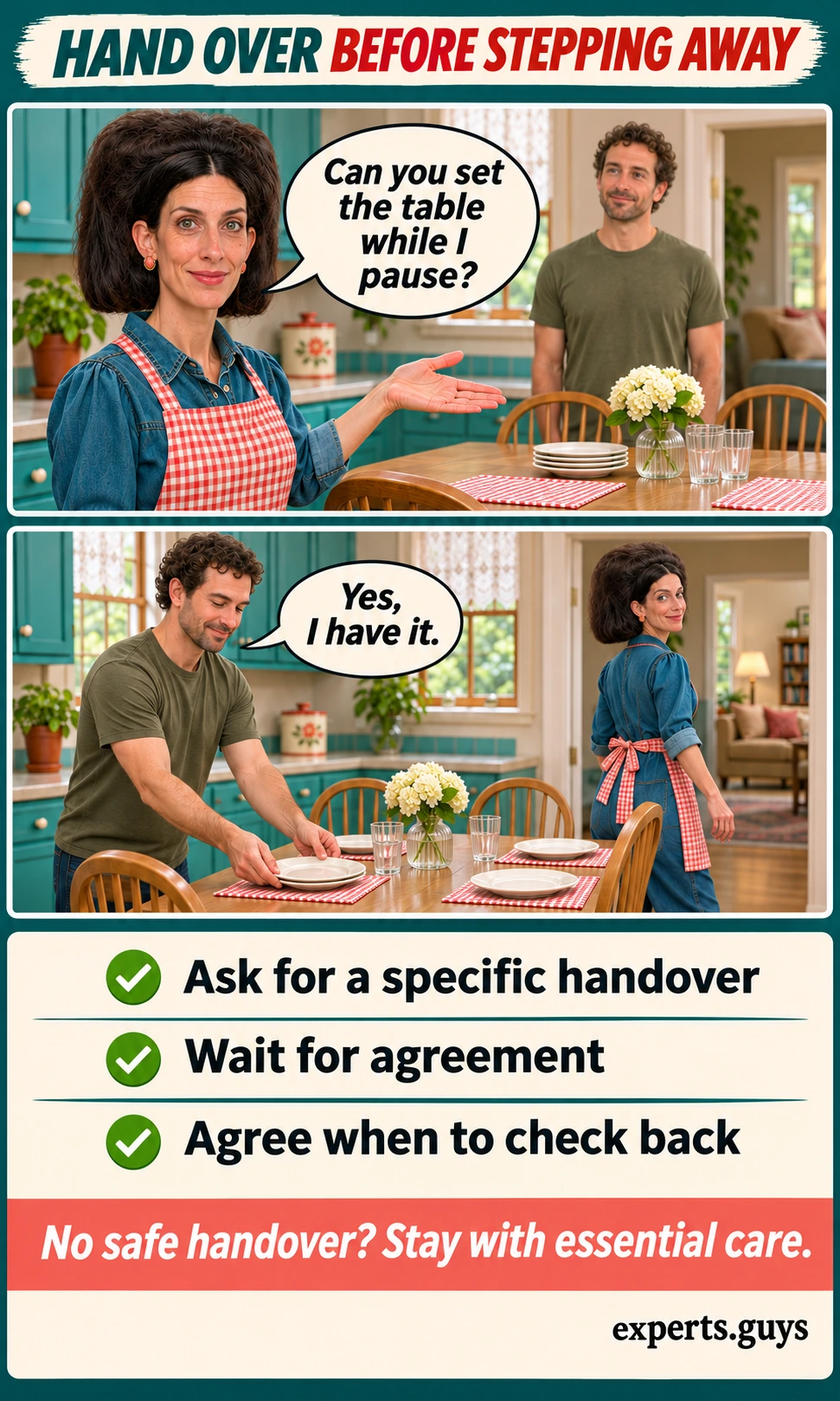
If no one can take over essential care, stay with the necessary responsibility and reduce optional demands around it. A pause may mean postponing the argument while continuing supervision, not leaving the room. Partners should not be made responsible for regulating another adult’s emotions, and a request for space must not involve threats, blocking a doorway or pursuing someone who wants distance.
What if the same arrangement keeps failing?
Look for the point where the agreement breaks down. Perhaps the stopping point is too complicated, the new request contains several instructions, or nobody knows whether the other person has taken over. Make that one part clearer during a calm conversation. If repeated attempts still leave people frightened, harmed or unable to function, household adjustments are not enough support.
Use the optional selector below to find the matching demonstration. It is a navigation aid, not a symptom test, and you do not need it to practice any of the skills.
Choose your next step
Find the demonstration that matches the obstacle in front of you.
For everyday, manageable frustration. No diagnosis, score or saved answers.
Safety comes first. If anyone may be harmed, create safe distance and obtain urgent local help. Do not use this selector to decide whether a situation is safe.
Please choose the obstacle that fits your situation.
Need more support?
New, persistent or worsening anger deserves a conversation with a clinician. A primary care clinician or an appropriately qualified ADHD professional can assess the wider pattern.
Ask about adult ADHD experience, professional registration in your country, coexisting mood or sleep concerns, and follow-up arrangements. Compare these points across providers; this page does not rate or endorse clinicians.
Finding mental-health supportHow do you repair a sharp response and decide on more help?
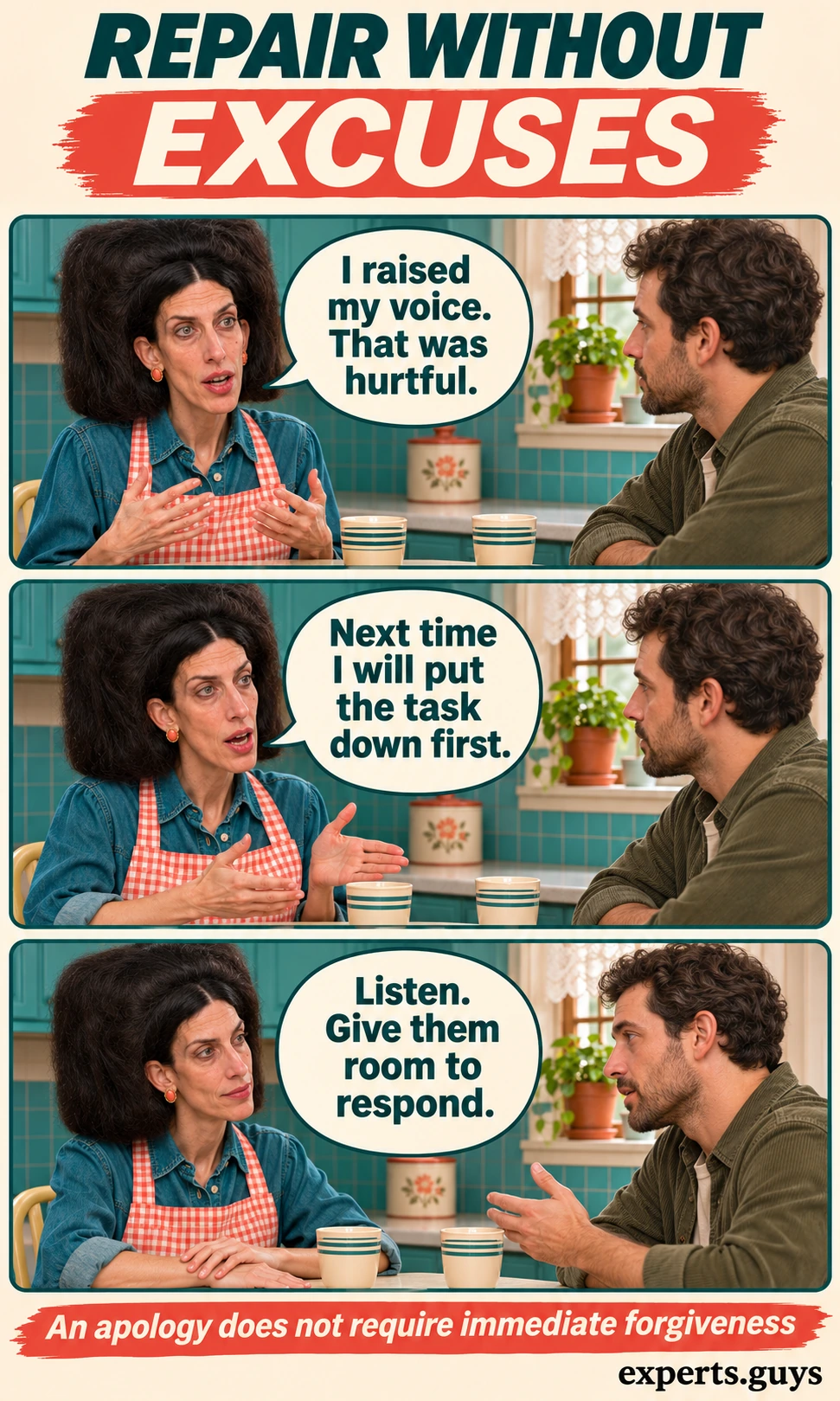
Repair starts with the behavior the other person experienced. “I raised my voice” is more useful than arguing about whether you were truly angry. ADHD can be relevant to planning prevention, but it should not carry the apology: the person who was hurt does not need to accept an explanation before their experience matters.
What does an accountable repair sound like?
When both people can speak safely, acknowledge the action and its effect: “I raised my voice. That was hurtful.” State the specific change you intend to make: “Next time I will put the task down first.” Then stop talking long enough to hear their response. Avoid adding “but you interrupted me,” asking for reassurance or treating an apology as a demand for immediate forgiveness.
Follow-through makes the difference between a useful repair and a repeated promise. The next relevant opportunity is to make the agreed safe transition before responding. If you miss it again, acknowledge that directly and revisit what support is needed. Repeated intimidation, controlling behavior or physical harm cannot be addressed by better wording alone; the affected person’s safety and independent support come first.
When should you look beyond ADHD?
Seek assessment when anger is newly persistent, repeatedly harms relationships, interferes with daily functioning or seems out of proportion to your usual behavior. A clinician can consider sleep, medication effects, substance use, physical health and coexisting mental-health conditions. An ADHD label does not rule out another contributor, and someone without a diagnosis should not infer one from anger.
A marked period of unusually high or irritable energy, much less need for sleep or risky behavior needs particular attention. NIMH guidance on bipolar disorder describes mood episodes involving broader changes in energy, activity and functioning. These clues warrant assessment rather than a home comparison test; ADHD and mood conditions can also coexist.
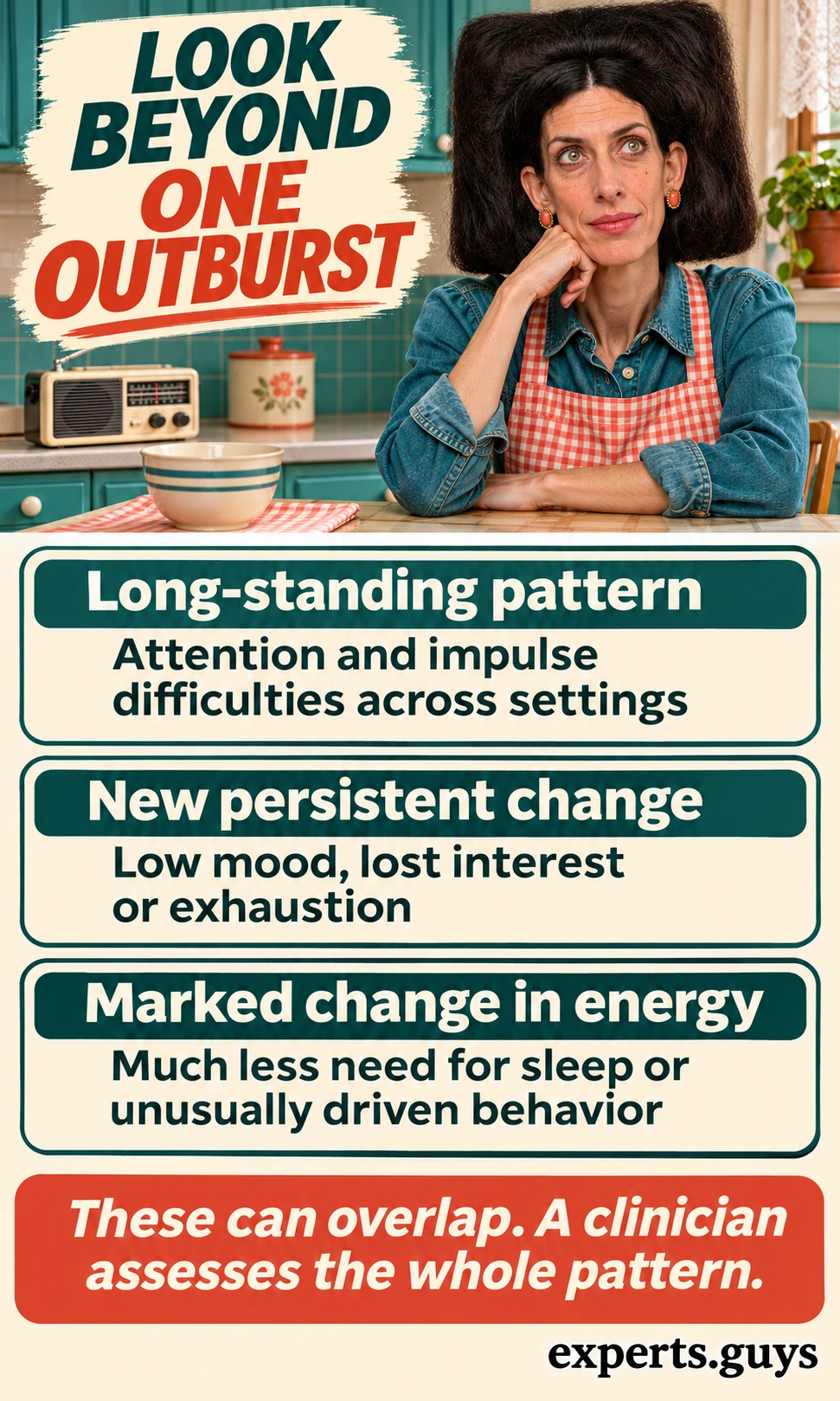
Persistent low mood, loss of interest and reduced functioning point to a different question from a single interrupted task. The related guide to anger and irritability in depression covers that broader pattern. Keep the task-transition method for the specific problem it addresses instead of expecting it to explain every kind of irritability.
Can treatment help with the bigger pattern?
The NIMH adult ADHD guide describes medication and psychotherapy among established treatment options. If anger remains troublesome during treatment, tell your prescriber or therapist what happens, how it affects life and whether its timing changed after a medication change. Do not change doses or add medication on your own to control an outburst.
You do not need to produce a diary before seeking care. Describe a recent concrete example verbally: the task, the interruption, your response and the consequences. If remembering the sequence is difficult, a trusted person can contribute observations with your agreement. The goal is an accurate clinical conversation, not a perfect record or a score from an online questionnaire.
When safety cannot wait: If you fear you may hurt someone, stop the confrontation, put down anything you are holding and create safe distance without blocking anyone’s exit. Arrange urgent local medical or emergency help if danger is immediate. Do not ask someone at risk to remain nearby to coach you through the techniques, and do not delay help to finish this article.
Frequently asked questions
Does getting angry mean my ADHD is severe?
No. The intensity of one reaction does not establish ADHD severity. Assessment considers the wider pattern of symptoms, impairment, circumstances and other possible contributors.
Should my partner avoid interrupting me altogether?
No. A workable household needs communication, including urgent requests. Agree a safe stopping point for non-urgent interruptions and make essential needs clear; neither person should have to remain silent to prevent an outburst.
What if I feel angry but never shout?
Quiet anger can still be distressing. Consider whether it affects your attention, relationships or willingness to participate in daily life. You do not need a visible outburst for a persistent problem to deserve support.
Can I use this method at work?
The principle can transfer to low-risk tasks: reach a safe stopping point before changing attention. Follow workplace safety procedures and agreed accommodations. Do not delay urgent operational instructions or leave machinery to practice a household example.
Will task parking work every time?
No. It addresses a particular source of friction, not every cause of anger. If it makes the transition easier, that is a useful result; if it does not, reassess the obstacle instead of assuming you failed to calm down correctly.
Your next step
Choose one ordinary, low-risk transition to practice when you are calm. Put the object down, keep the next safe step visible and turn to listen. Judge the attempt by whether the transition became more manageable; repeated or concerning anger still deserves attention beyond that single skill.