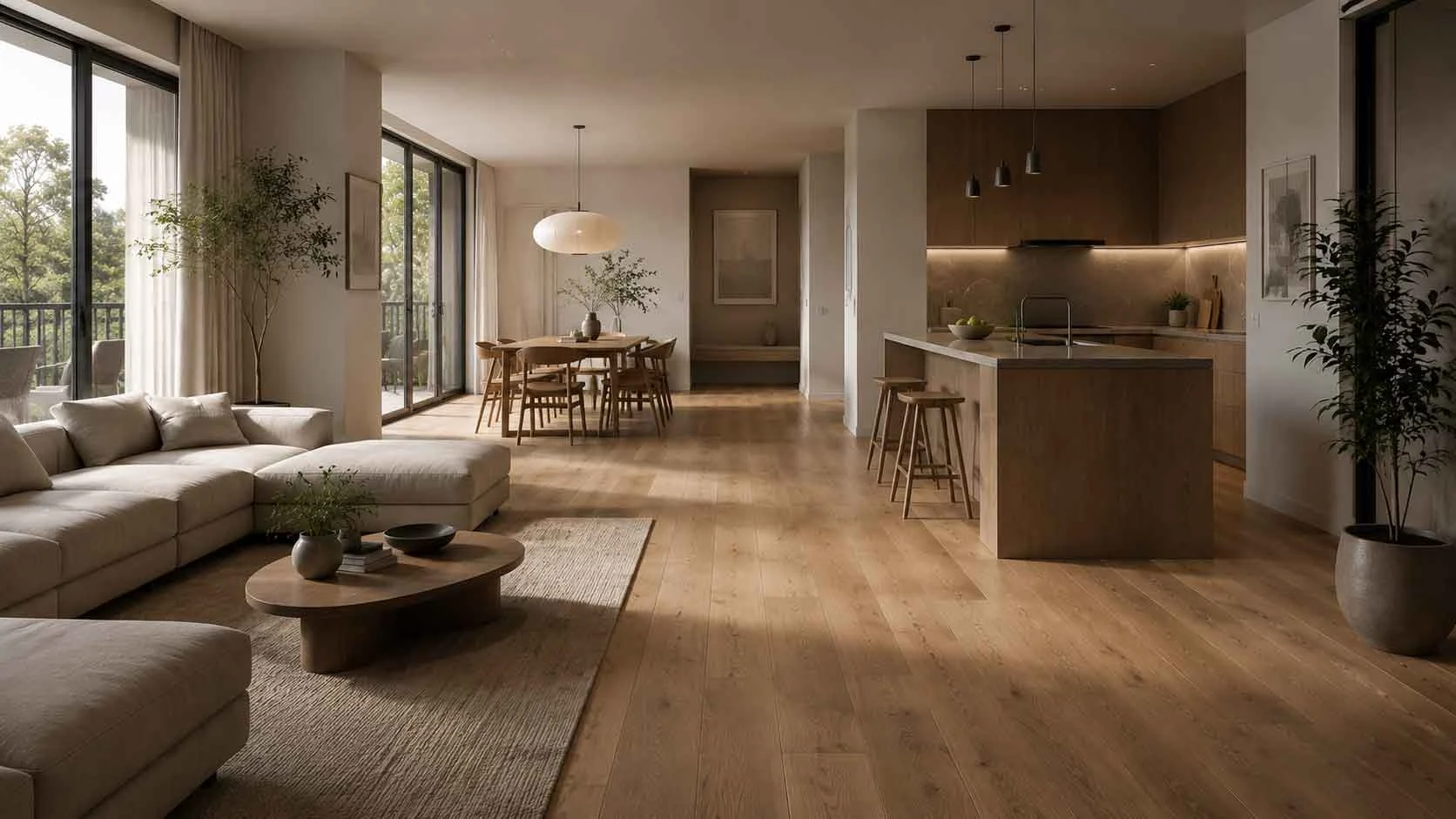

Modern flooring is no longer just about covering a surface.
Today’s flooring systems affect how light travels through a room, how movement feels inside a space, how heat is distributed underfoot, and even how emotionally calm or visually heavy an interior appears.
In many homes, flooring has become one of the largest environmental design decisions because it visually connects every room together. A poorly selected floor can make a modern apartment feel fragmented, while the right flooring system creates continuity, softness, and spatial harmony.
As interior design evolves toward calmer and more functional environments, flooring trends are shifting away from purely decorative choices toward performance-driven materials that support lifestyle behavior, visual flow, and long-term adaptability.
Why Flooring Now Influences More Than Appearance
Flooring is one of the largest uninterrupted surfaces inside any apartment.
Unlike furniture or wall décor, flooring continuously interacts with lighting reflections, foot traffic, furniture balance, cleaning patterns, acoustics, and environmental warmth. Because of this, flooring directly affects how spacious or compressed a room feels.
In modern interiors, many homeowners are moving away from highly reflective finishes and overly busy textures because these surfaces visually interrupt movement continuity. Softer textures and more natural material transitions now dominate modern residential design.
A closely related environmental shift can also be seen in broader interior material evolution, especially in how flooring systems integrate with lighting and movement behavior throughout the home.
1. Warm Natural Wood Tones Are Replacing Cold Gray Floors
For several years, cool gray flooring dominated modern interiors.
However, many homeowners eventually discovered that cold gray surfaces often created emotionally flat environments, especially in apartments with limited natural sunlight. Gray flooring also tends to amplify visual coldness when paired with white walls and dark furniture.
Modern flooring trends are now shifting toward warmer wood-inspired tones such as:
- light oak
- nude beige wood
- honey walnut
- soft natural ash
- muted caramel timber
These warmer surfaces help interiors feel:
- visually softer
- more welcoming
- less sterile
- emotionally balanced
Warm flooring also improves compatibility with Japandi, warm minimalist, Scandinavian, and organic modern interior styles.
Many homeowners now prefer softer flooring because calmer environmental styles such as Japandi minimalist interior design rely heavily on warm textures, visual breathing space, and softer lighting behavior throughout the apartment.
2. Matte Finishes Are Becoming More Popular Than Glossy Surfaces
Glossy flooring once symbolized luxury because reflective surfaces created a polished appearance.
Today, however, excessive reflection is often associated with visual fatigue.
Highly reflective flooring can:
- reveal scratches easily
- exaggerate dust visibility
- create lighting glare
- disrupt visual calmness
- make smaller apartments feel overly harsh
Matte and low-sheen finishes are now preferred because they diffuse light more naturally across the floor surface.
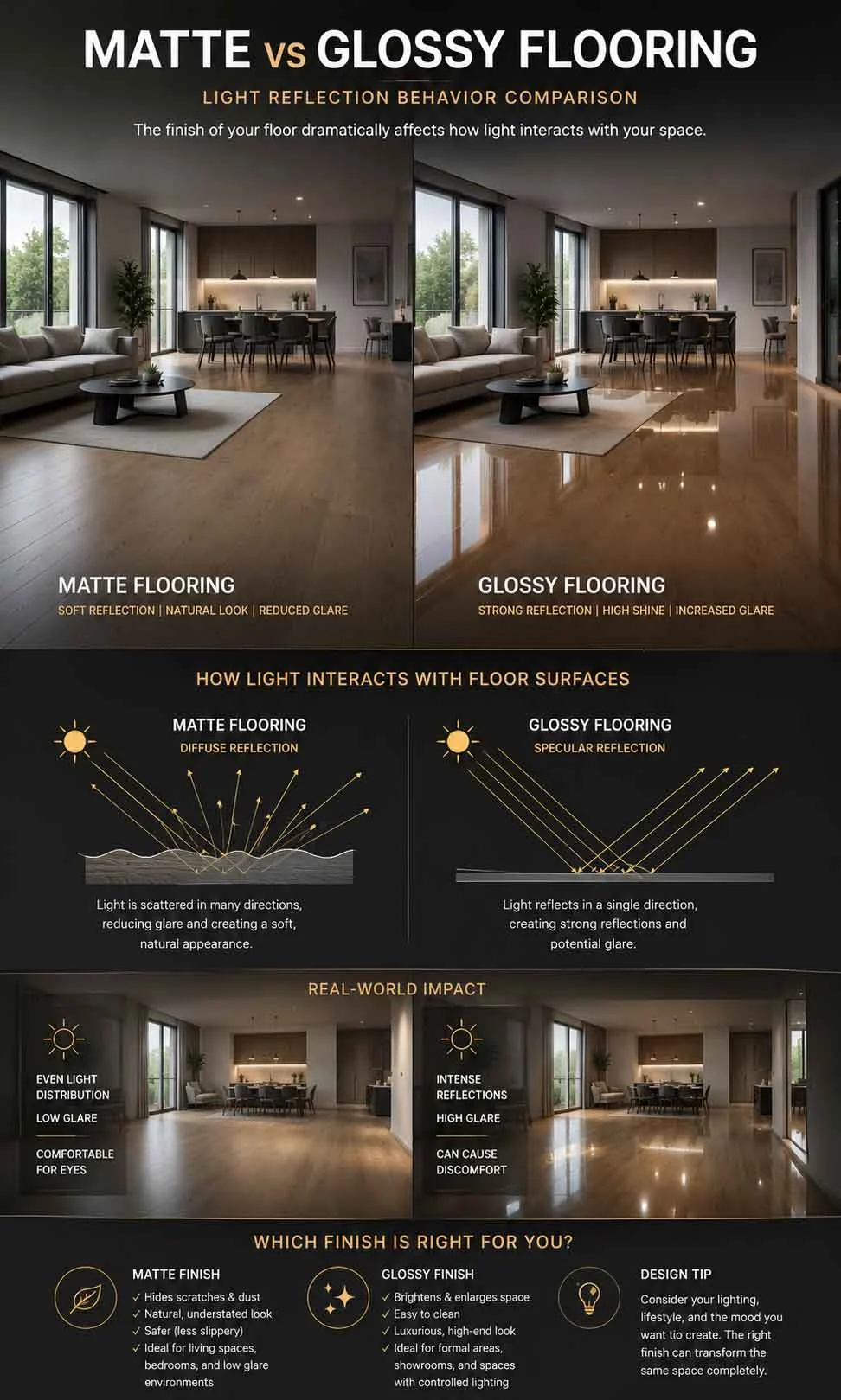
This creates:
- softer environmental reflections
- smoother movement perception
- improved visual comfort
- reduced maintenance visibility
Matte flooring also works better with indirect lighting systems commonly used in modern interiors.
3. Large Format Flooring Creates Better Spatial Continuity
Large format flooring has become increasingly popular because it reduces visual interruption.
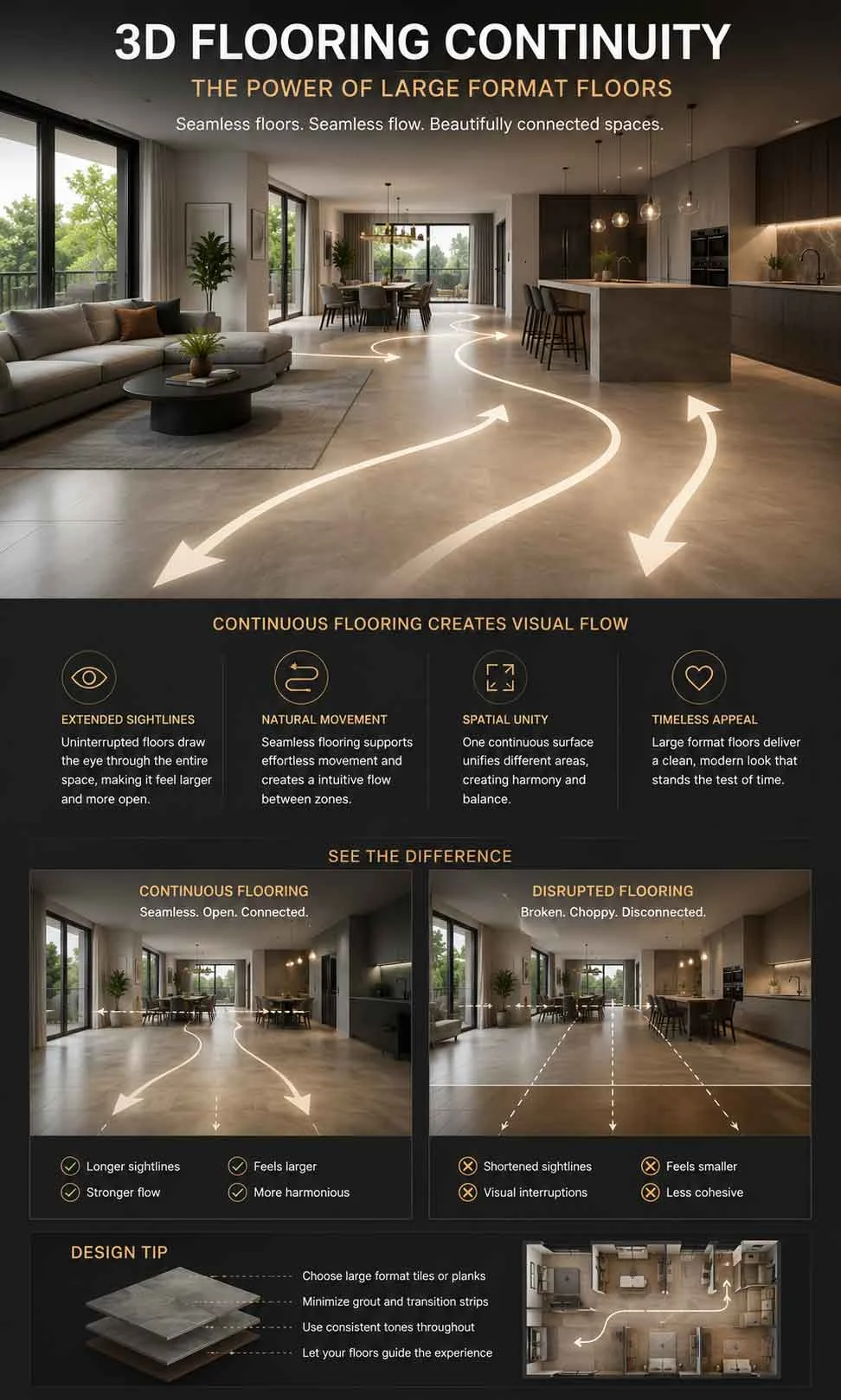
When flooring contains too many grout lines, seams, or pattern breaks, the eye continuously stops while scanning the environment. This can make smaller homes feel crowded even when the room itself is physically large.
Larger flooring planks and tiles create:
- longer visual movement paths
- cleaner sightlines
- wider environmental perception
- calmer spatial rhythm
This trend is especially visible in:
- modern condominiums
- open-concept apartments
- minimalist interiors
- luxury hospitality-inspired homes
Many designers now intentionally select flooring dimensions based on movement continuity rather than decorative pattern alone.
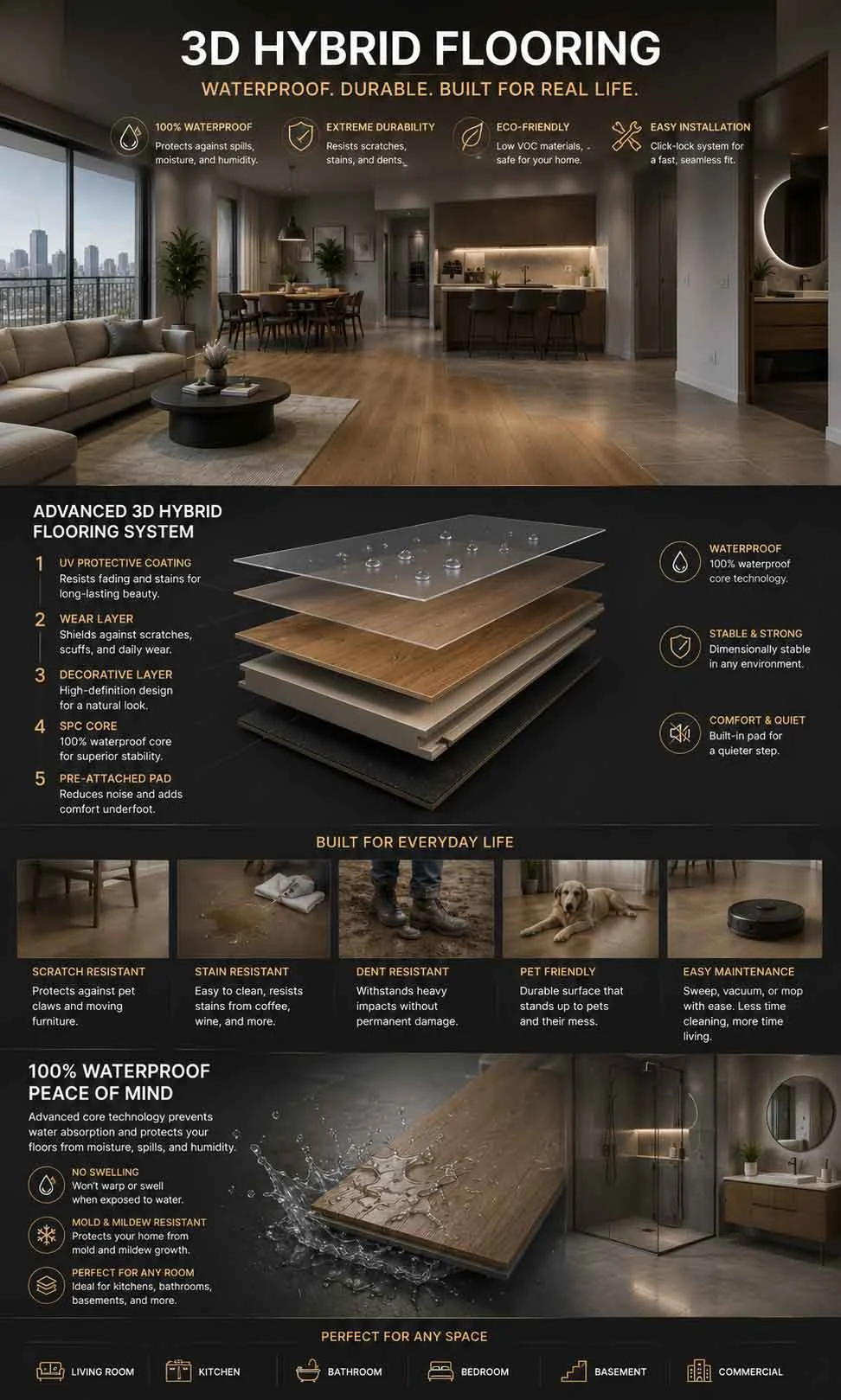
4. Waterproof Hybrid Flooring Is Replacing Traditional Materials
Modern homeowners increasingly prioritize durability alongside aesthetics.
Traditional wood flooring can struggle in environments with:
- humidity fluctuation
- accidental water exposure
- pet activity
- heavy daily usage
As a result, waterproof hybrid flooring systems are becoming more common because they combine:
- wood-like appearance
- moisture resistance
- scratch durability
- easier maintenance
- softer acoustic performance
Hybrid flooring also supports modern lifestyle flexibility because it performs consistently across kitchens, living rooms, and bedrooms without major visual transitions.
This helps modern interiors feel more unified instead of fragmented room by room.
5. Flooring Is Becoming Part of Emotional Interior Design
One of the biggest modern shifts is that flooring is no longer treated as a purely technical material selection.
Designers now evaluate flooring based on emotional environmental behavior.
For example:
- lighter floors increase perceived openness
- warm tones improve psychological softness
- muted textures reduce sensory noise
- continuous flooring improves calmness
- natural grain patterns create organic rhythm
In many modern apartments, flooring quietly controls the emotional atmosphere more than decorative accessories do.
Many memorable interiors today feel distinctive not because of excessive decoration, but because environmental behavior such as lighting, texture, spacing, and flooring rhythm work together naturally. Related: Why some interiors feel unique without looking overdesigned.
Because flooring covers such a large portion of the environment, it becomes a foundational layer that influences how people psychologically experience the home every day.
How Modern Flooring Trends Connect With Lighting
Flooring and lighting now work together as a combined environmental system.
A floor does not simply “exist” beneath lighting. Instead, it reflects, absorbs, diffuses, and distributes light throughout the space.
For example:
- glossy floors intensify direct lighting
- matte surfaces soften reflections
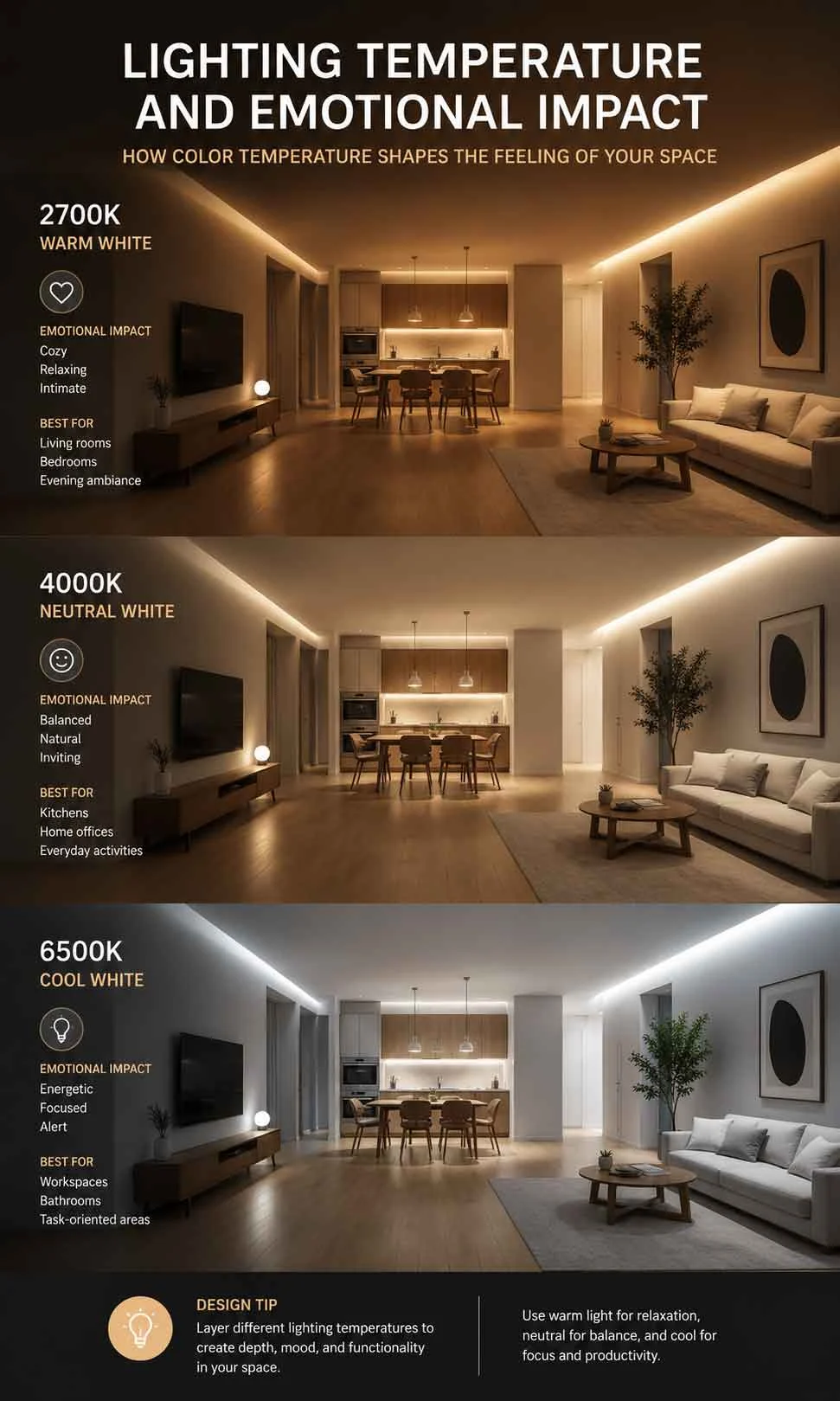
- warm wood tones create golden light diffusion
- pale flooring increases brightness perception
- darker flooring absorbs environmental light
This is why many modern interior projects evaluate flooring and lighting simultaneously instead of separately.
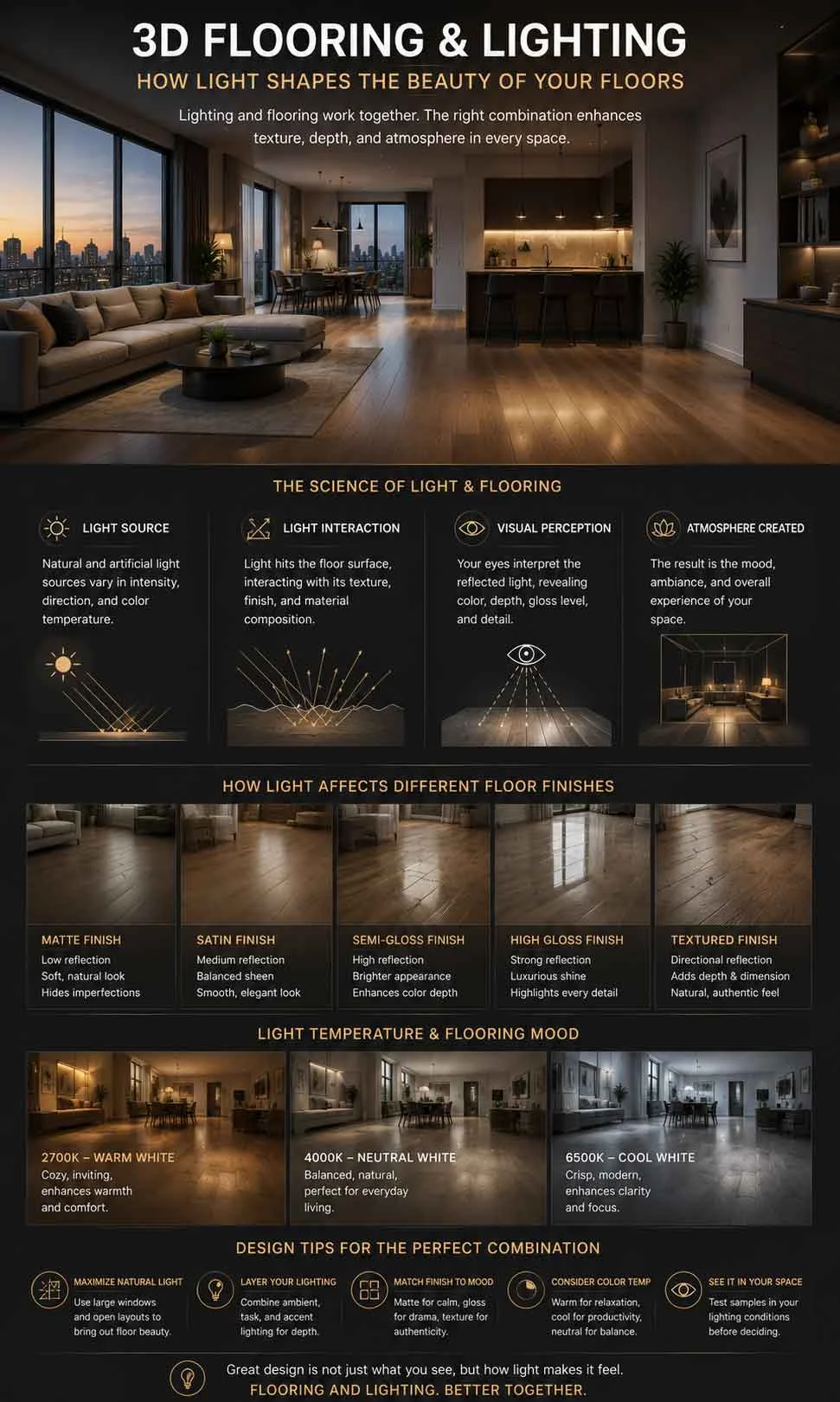
The interaction between these two elements heavily affects how luxurious, calm, or visually exhausting an interior eventually feels.
Flooring Trends Are Moving Toward Environmental Harmony
Modern flooring trends are increasingly driven by environmental behavior rather than temporary aesthetics.
Homeowners now want flooring systems that:
- feel visually calm
- support natural lighting
- simplify maintenance
- improve movement flow
- remain timeless over long periods
Instead of chasing dramatic patterns or highly reflective surfaces, many modern interiors now prioritize subtle continuity, emotional comfort, and environmental balance.
As interior design continues evolving toward softer and more human-centered environments, flooring will likely become even more important as a foundational design layer that shapes the entire emotional experience of a home.
How Flooring Changes Daily Living Behavior
Most homeowners initially choose flooring based on appearance.
However, flooring eventually affects far more practical aspects of everyday life than many people realize. Once installed, flooring continuously influences movement habits, cleaning routines, noise behavior, comfort perception, and even furniture placement decisions.
For example:
- slippery glossy flooring changes walking confidence
- darker floors reveal dust faster
- textured surfaces trap debris differently
- softer flooring reduces acoustic echo
- warmer materials psychologically feel more comfortable
This is why flooring often becomes one of the most emotionally noticeable design decisions after moving into a home.
Unlike decorative furniture that occupies isolated areas, flooring constantly interacts with the body through touch, movement, and environmental perception.
Why Seamless Flooring Is Becoming More Important
Modern interior design increasingly favors visual continuity.
When flooring abruptly changes between rooms, the environment can feel segmented and visually disconnected. Older homes often used different materials for every room, creating constant visual interruptions.
Today, many modern apartments intentionally use one continuous flooring system throughout:
- living room
- dining area
- hallway
- bedrooms
This approach creates:
- smoother movement flow
- larger perceived space
- stronger visual harmony
- cleaner environmental rhythm
Continuous flooring is especially effective in smaller apartments because uninterrupted surfaces visually expand the environment.
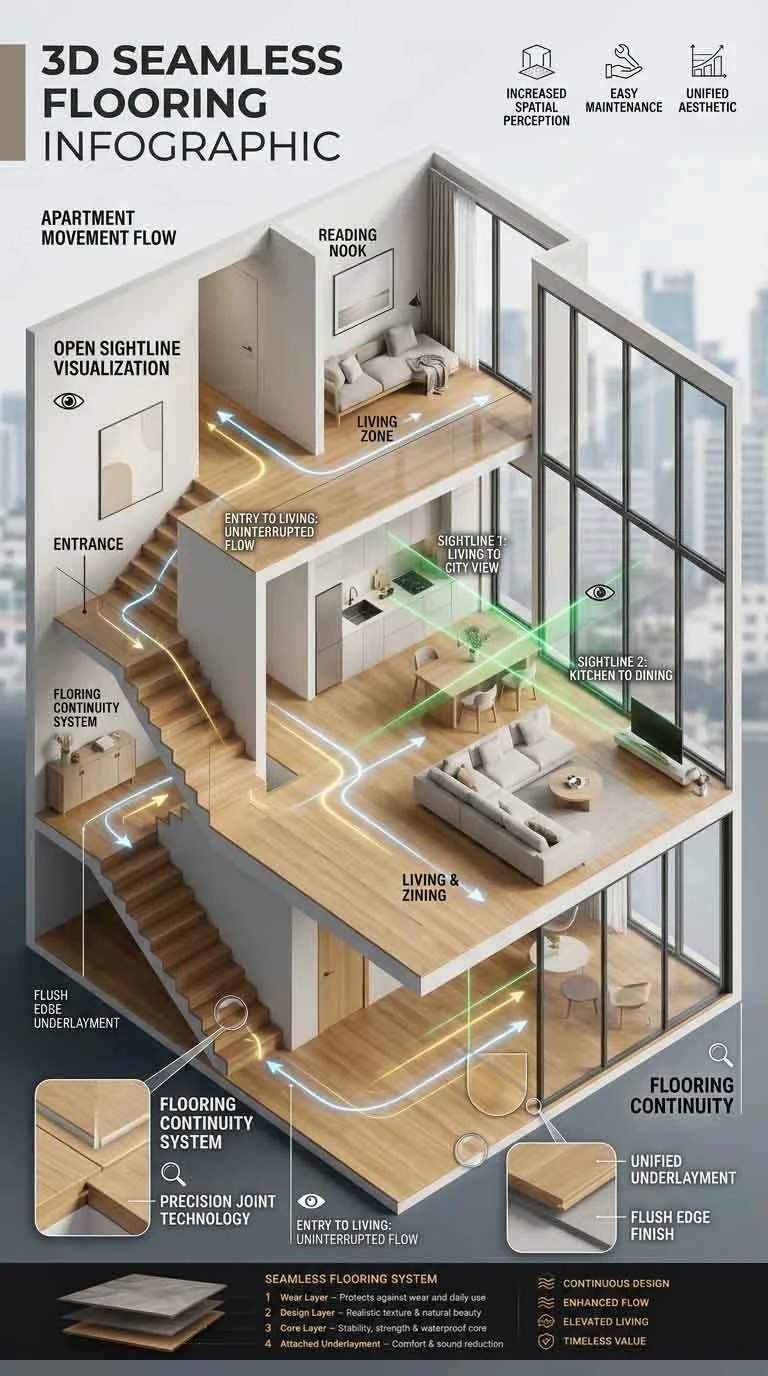
Many designers now avoid excessive material switching unless there is a strong functional reason, such as wet zones inside bathrooms.
The Rise of Soft Organic Flooring Textures
Another major shift in flooring trends is the movement away from highly artificial-looking surfaces.
Older flooring styles often emphasized:
- heavy gloss
- aggressive patterns
- sharp contrast
- artificial stone imitation
- exaggerated wood grains
Modern interiors now favor softer organic textures because they create calmer environments.
Environmental surfaces throughout the home often age differently depending on humidity, airflow, lighting exposure, and material quality. Similar long-term texture behavior can also appear on painted walls over time. Related: Why wall paint becomes powdery.
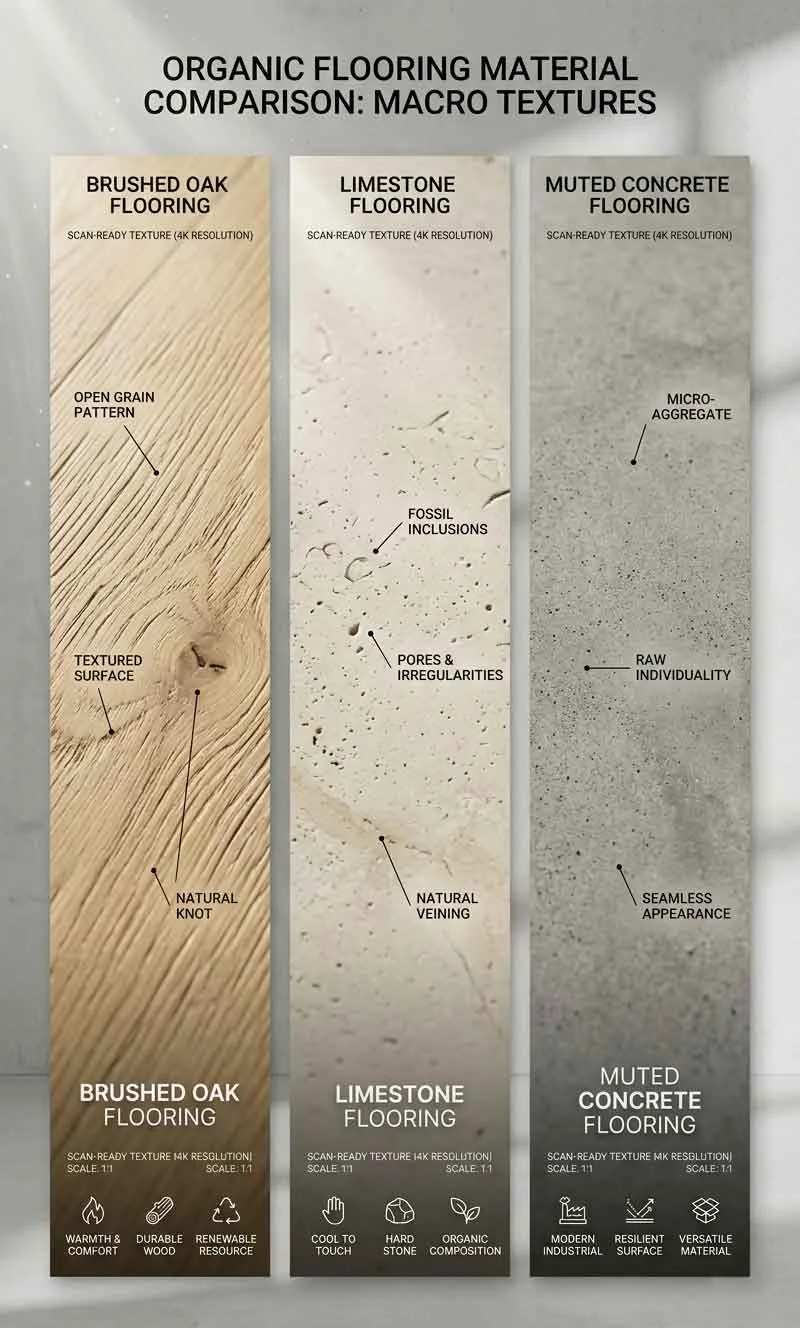
Popular texture directions include:
- subtle timber grain
- brushed matte finishes
- limestone-inspired surfaces
- soft concrete textures
- muted natural stone visuals
These materials reduce visual overstimulation and allow furniture, lighting, and architectural forms to feel more integrated together.
This trend aligns closely with modern Japandi and warm minimalist interiors where environmental calmness becomes more important than visual complexity.
Why Flooring Color Temperature Matters
Flooring color temperature affects the emotional balance of an interior.
Cool-toned flooring can make spaces feel:
- cleaner
- sharper
- more modern
- visually colder
Warm-toned flooring usually creates:
- softer emotional atmosphere
- greater visual comfort
- more welcoming environments
- stronger natural harmony
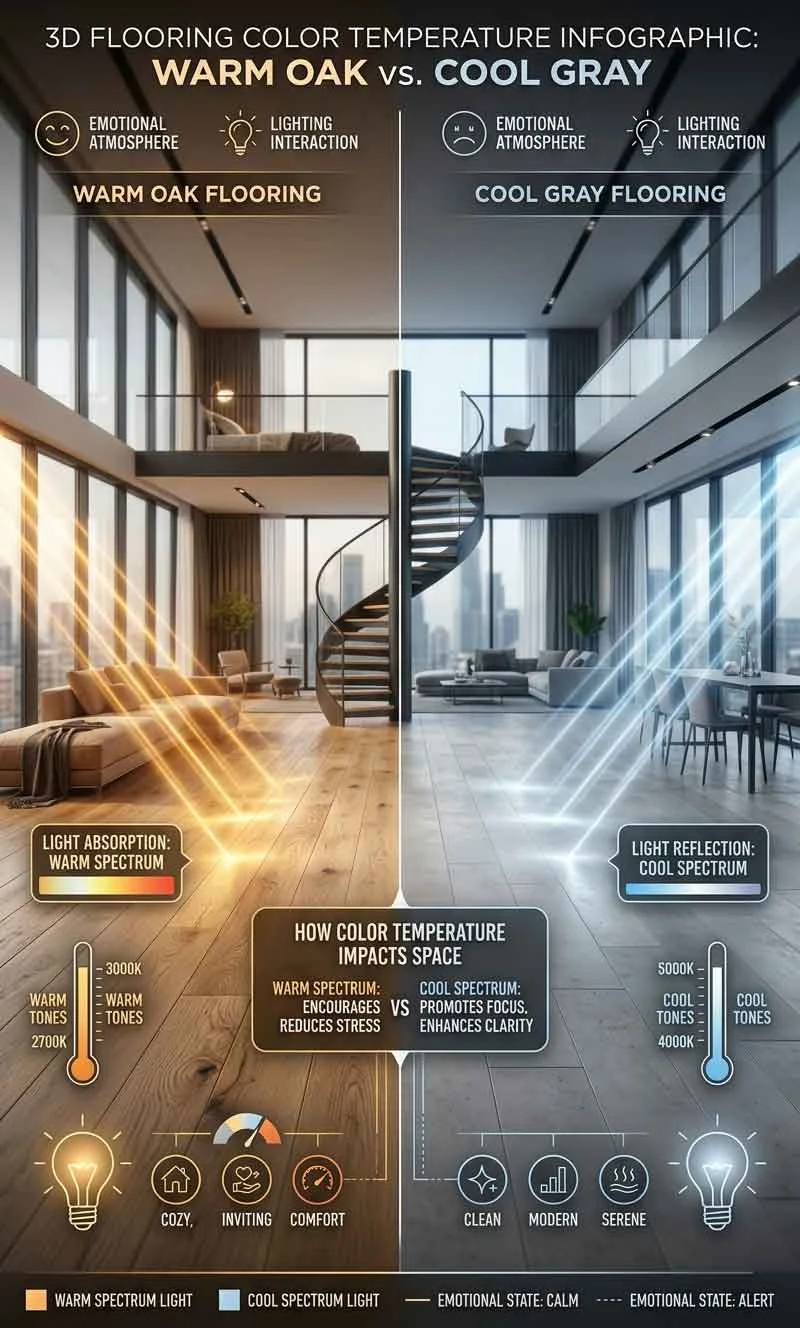
In homes with limited daylight, excessively cool flooring can sometimes make interiors feel emotionally distant or flat.
This is one reason many contemporary homes are moving toward:
- warm oak
- nude beige timber
- light walnut
- creamy stone textures
These flooring colors interact better with warm lighting systems and modern soft-material interiors.
Flooring Durability Is Now Part of Long-Term Design Planning
Modern homeowners increasingly view flooring as a long-term environmental investment rather than a short-term decorative decision.
Replacing flooring is expensive because it affects:
- furniture movement
- renovation downtime
- labor cost
- wall protection
- built-in carpentry transitions
Because of this, many people now prioritize flooring systems that maintain visual stability over many years.
The most desirable flooring today often combines:
- timeless appearance
- low maintenance
- scratch resistance
- water resistance
- flexible interior compatibility
Instead of chasing temporary trends, homeowners increasingly prefer flooring that can adapt to future furniture or renovation changes without feeling outdated quickly.
Why Modern Luxury Interiors Use More Subtle Flooring
Luxury flooring trends have also changed dramatically.
Older luxury interiors often emphasized:
- shiny marble
- highly reflective stone
- bold veining
- dramatic patterns
- glossy granite surfaces
Modern luxury interiors now frequently use quieter flooring systems.
The focus has shifted toward:
- texture quality
- environmental softness
- spatial calmness
- visual breathing space
- material authenticity
In many high-end interiors today, luxury is communicated through restraint rather than visual excess.
Subtle flooring helps:
- natural lighting stand out
- furniture feel more intentional
- architecture appear cleaner
- environments feel emotionally relaxed
This explains why muted oak flooring, matte limestone textures, and soft natural materials are becoming more dominant in premium interior projects.
How Flooring Supports Modern Open-Concept Homes
Open-concept layouts depend heavily on flooring continuity.
Without strong flooring harmony, open spaces can feel chaotic because there are fewer physical walls separating functional zones.
Modern flooring therefore acts as a visual foundation that quietly organizes the environment.
Consistent flooring helps connect:
- kitchen
- dining space
- living room
- hallway circulation
This creates a unified environmental experience where movement feels natural rather than interrupted.
In many modern apartments, flooring effectively becomes the “visual glue” holding the entire interior together.
The Future of Flooring Trends
Future flooring trends will likely continue moving toward:
- softer environmental aesthetics
- durable hybrid systems
- sustainable materials
- emotional comfort
- low-maintenance surfaces
- visually calming textures
As homes become increasingly multifunctional environments for:
- work
- rest
- entertainment
- family interaction
flooring will continue evolving beyond decoration into a foundational environmental system that shapes everyday living behavior.
The future of flooring is no longer only about appearance.
It is about how a home feels, functions, moves, reflects light, absorbs sound, and emotionally supports the people living inside it.
Readers exploring more interior psychology, calming apartment concepts, lighting behavior, material softness, and environmental design ideas can continue browsing the Interior Design section for additional guides.
Frequently Asked Questions
Why are warm wood floors becoming more popular again?
Warm wood flooring helps interiors feel softer, calmer, and more emotionally welcoming. Many homeowners are moving away from cold gray floors because warmer tones create better harmony with natural lighting and modern interior styles.
Why is matte flooring preferred over glossy flooring today?
Matte flooring reduces glare, softens reflections, hides dust more naturally, and creates calmer environmental lighting behavior. Glossy flooring can feel visually harsh during long-term daily exposure.
What is large format flooring?
Large format flooring uses wider planks or larger tiles to reduce visual interruption. Fewer grout lines and seams help apartments feel more spacious, connected, and visually calm.
Why is seamless flooring important in modern homes?
Continuous flooring improves movement flow and environmental continuity. When flooring changes too frequently between rooms, the apartment can feel visually fragmented and psychologically smaller.
What is hybrid flooring?
Hybrid flooring combines the appearance of natural wood with improved moisture resistance, durability, and lower maintenance. It is popular in modern homes because it performs consistently across different living spaces.
Why does flooring affect emotional atmosphere?
Flooring covers a large portion of the environment and constantly interacts with lighting, reflections, texture, and movement flow. Warm and softer flooring materials often create a calmer psychological atmosphere inside homes.
What flooring works best for smaller apartments?
Smaller apartments usually benefit from continuous flooring, lighter tones, matte finishes, large format planks, and low-contrast textures. These choices help create cleaner sightlines and larger perceived space.
Why are organic flooring textures becoming more popular?
Organic textures such as brushed oak, limestone-inspired finishes, and muted stone surfaces create softer environmental behavior. These materials reduce visual noise and help interiors feel calmer and more natural.
Does flooring affect lighting inside a home?
Yes. Flooring changes how light reflects and spreads throughout a room. Glossy floors increase reflection intensity, while matte surfaces diffuse light more softly and evenly.
What flooring trends are expected in the future?
Future flooring trends will likely focus on softer textures, warm natural tones, sustainable materials, waterproof hybrid systems, seamless visual continuity, and emotionally calming environmental design.