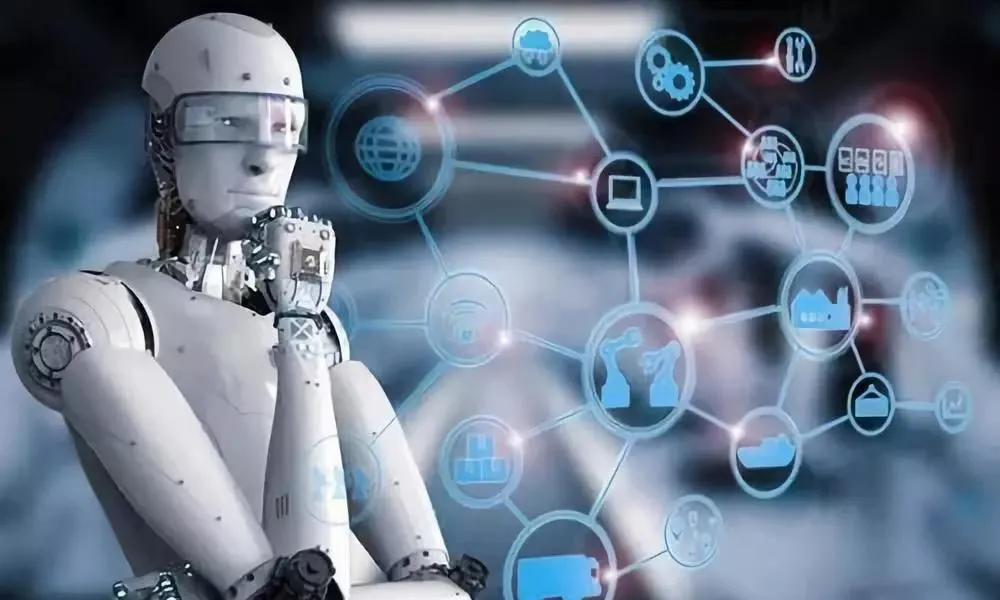

In the sector of healthcare, AI is getting used so as to assist monitor, diagnose, and treat patients. Firms are at all times trying for new methods to make use of technology to help them. All of technology and civilization, art, science, religion, all these are the fruits of human culture. To retrieve them, you’ll want to make use of AI expertise. For example, you will have a deep consciousness of your interactions with Google Search, Alexa, and GP pictures – and the extra exact we use them, the higher we understand them. Reactive AI would not have the power to form or use prior experiences to additional increase their information or self-consciousness in the direction of future situations. After centuries, even millennia, of dreaming about automatons and smart machines, we are now seeing a torrent of real-life functions in the form of self-driving technology, thinking robots and intelligent merchandise that are rapidly approaching what is thought as the Singularity – the second when machines are capable of do every little thing a human being can. Deep learning, picture classification, and object recognition algorithms in the medical discipline can now detect most cancers in MRIs with the same accuracy as highly educated radiologists.
Even if everyone follows the identical strategies, you obtain one of the best leads to a aggressive firm in case you have the most data. At the identical time, new AI algorithms for inferring human psychological states have been proposed with better scalability prospects and extra complicated applications. In the intervening time, this AI hasn’t been developed successfully but because we don’t have the hardware or algorithms that will support it. The more data you can feed it, the extra precise it will likely be. In easy terms, machine learning is a statistical methodology for discovering correlations in past events that can then be used to make predictions about future events. The AI system learns competency by discovering the structure and regularities of the data. It was almost not possible to construct a fraud detection system with 5 hidden levels only a few years in the past. The individuals around us could seem clever and emotional, but how can we all know that they are thinking and feeling creatures if it stays not possible truly to look at the world from their point of view?
Is it something like robots taking over the world? A well known example of such a synthetic intelligence machine is IBM’s open chess program, which defeated world chess champion Garry Kasparov. The Netflix suggestion engine is a good instance of the sort of artificial intelligence. Whenever you open an amazing novel, discover the voice: it is commonly impartial, detached, a view from nowhere that nonetheless is capable of bringing events collectively and offering an overarching structure. Wilson and Meyers (2000) illustrate such a place fairly effectively by indicating its affect on instructional design that “Instructional designers may now consider studying in terms of taking experts’ cognitive structures and mapping that information into the heads of learners. The degree of similarity in cognitive structure between professional and novice was a superb measure of whether or not learning goals were being met.” Nonetheless, the interior illustration of learners can be regarded as a subjective building of integrating incoming info and the present knowledge buildings, which entails a position of constructivism that knowledge can’t exist independently from the knower.
Whether or not we like it or not, we are actually officially dwelling in the age of artificial intelligence. We’re not there yet, but some consultants estimate that we might reach that point in the subsequent five, ten or twenty years, though others assume it will likely be extra like fifty years. In its basic kind, pure intelligence is the ability to logically think via a course of and react appropriately to a situation. Some fundamental properties of powerful AI are the ability to understand, purpose, resolve puzzles, make judgements, plan, study, and communicate independently. When new knowledge is introduced, the models are updated. As a first step towards our objective of growing embodied AI brokers able to infer belief states of collaborative partners in situ, we build and current outcomes on computational models for a number of principle of thoughts duties. These tend to depend on black-field fashions resembling machine learning, neural networks, deep learning (LeCun et al., 2015), or mannequin-primarily based reinforcement studying (Gao et al., 2019). The methods these make use of to fit information and establish patterns are opaque, providing little transparency into the interior processes by which they make these determinations (Calder et al., 2018). Thus, the explanations for which they exhibit sure behaviors are sometimes not easily interpretable (Calder et al., 2018; Rai, 2020). People usually are not capable of replicating the processes machine studying models use to discover patterns in information (Misuraca et al., 2020), nor how these models rationalize their determinations a few system (Bennett and Maruyama, 2021). This has led to the event of recent areas of analysis, resembling “explainable synthetic intelligence” (XAI; Gunning et al., 2019). Here, the goal is to either, guarantee underlying resolution processes are less opaque (Fernandez et al., 2019), or create methods to translate, for instance, ML outputs, into one thing understandable (Chatzimparmpas et al., 2020). In this paper we don’t focus on XAI, but, moderately, talk about the implications of this problem for human-machine teaming and how ASI can help deal with it.