
To reduce flies within 24 hours, remove their likely breeding material, clear the adults you can reach and close obvious entry routes. A quieter room tomorrow is a realistic goal, but complete elimination can take longer because existing immature flies may still emerge.
Start where activity is concentrated: fruit and recycling, a drain, a waste bin or a window. The location narrows your search, but it does not identify the insect by itself. A fly at the sink may have arrived from somewhere else.
| What you notice | Check first | First useful action |
|---|---|---|
| Tiny tan flies around fruit or drinks | Overripe produce, sticky bottles and hidden spills | Remove fermenting material; add a fruit fly trap if needed. |
| Fuzzy, moth-like flies near a drain | Organic film inside accessible drain parts | Brush away the film after confirming that this area is active. |
| Larger gray flies near doors or rubbish | Entry gaps and waste storage | Close the route, contain waste and remove adults. |
| Metallic blue or green flies appearing suddenly | Meat waste or a hidden animal source | Check accessible waste; request an inspection if the source is inaccessible. |
| Slender dark gnats near plant pots | Persistently damp potting mix | Identify the insect before treating the sink; plant-associated gnats need a different approach. |
Use the first day as a source-finding exercise rather than a race to buy stronger products. Traps show that adults are present; they do not prove that eggs or larvae are gone. Choose the actions that match your observations instead of treating every drain and cupboard.
Identify the fly before you buy a trap
A close phone photograph and a quick room check can prevent the most common mismatch: using a fruit fly remedy for an insect that is not a fruit fly. Photograph a resting insect with good light and zoom in on the saved image. Keep its appearance and the location together; neither clue is enough on its own.
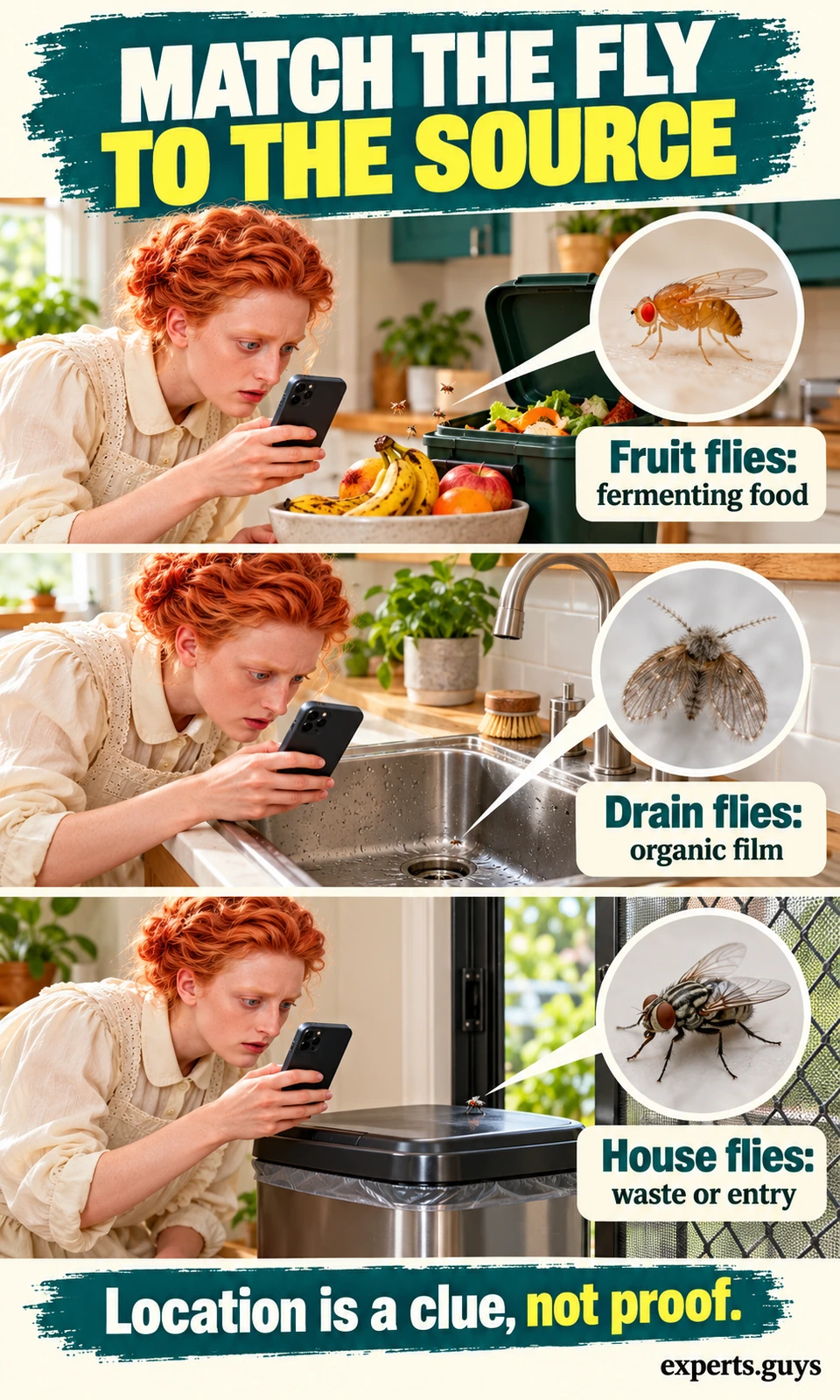
Small tan flies around fermentation, fuzzy flies resting near drains and larger flies entering through doors suggest different starting points. Treat these as working clues, not a confirmed species identification. If the photograph stays unclear, use an insect identification service rather than guessing from the trap it enters.
- Take one close photograph of a resting insect and one wider photograph of the busiest area. Do not handle it with bare fingers.
- Check the fruit area, waste bin, sink and nearest exterior door without moving heavy appliances. Look for residue, moisture or a visible entry gap.
- Save the photographs together on your phone with a short location label, such as “kitchen window.” Use that label for tomorrow’s comparison.
Example: tiny flies around an empty juice bottle make the recycling area a sensible first check, even if some also rest at the sink. The common mistake is treating the sink just because it is nearby. If taking close photographs is difficult, a safely positioned commercial monitoring trap can help an identifier examine the insects; keep it away from food, children and pets.
Remove fermenting food and hidden residue
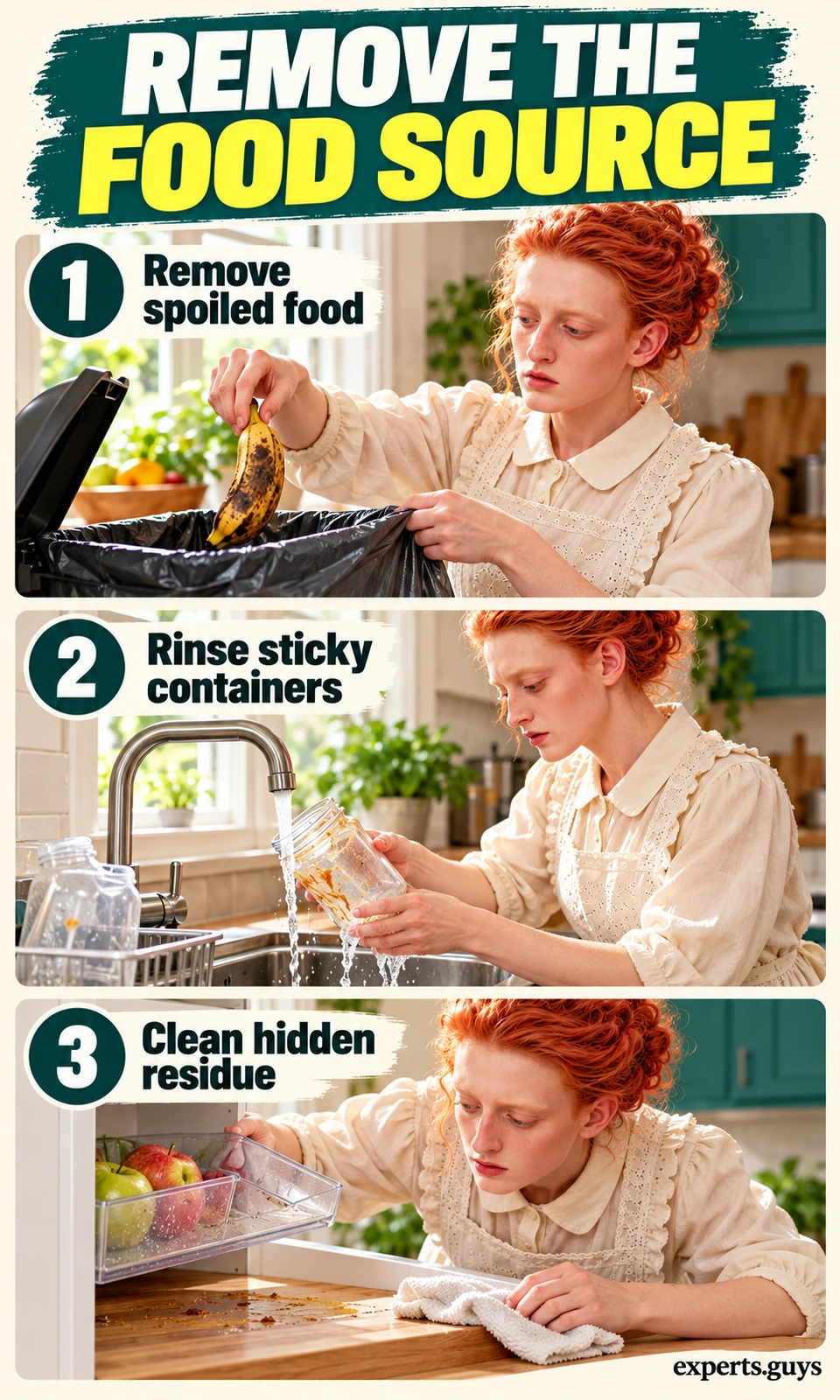
This action fits fruit-associated flies and gives your trap less competing material. Have a rubbish bag, a cloth and a container ready before starting. Cleaning only the countertop can miss the residue beneath a fruit bowl or inside an almost-empty bottle.
- Discard spoiled produce in a sealed bag and remove it from the living area. Refrigerate suitable sound produce or store it in a closed container.
- Rinse and drain recyclable drink containers. Clean accessible sticky spills beneath trays and along cupboard edges.
- Wash reusable cloths or mop heads as appropriate and let them dry. Leave cleaned surfaces free of food residue.
Checkpoint: inspect the places that were hidden before you started, not just the visible worktop. For example, removing one leaking peach also means cleaning its tray and the shelf beneath it. If you cannot reach a spill safely, ask for help moving the appliance; reaching around live equipment or dragging a heavy cooker is not a sensible shortcut.
Reset the waste bin and nearby waste
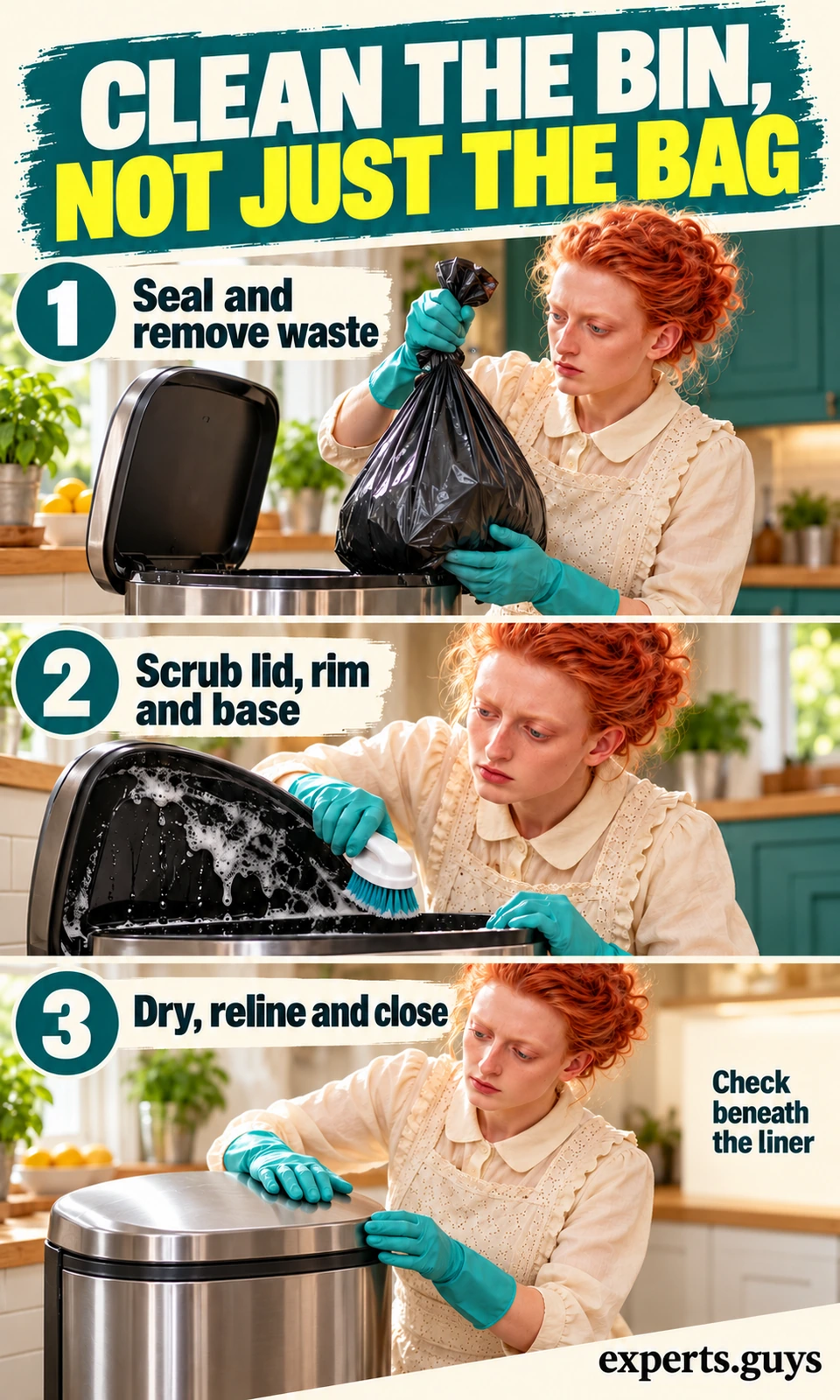
A new liner can sit on top of the same breeding material. Flies associated with waste respond to food residue on the lid, rim and base as well as the bag itself. Use gloves, a brush, ordinary washing detergent and water suitable for the bin material.
- Tie the rubbish bag and transfer it to a secure outdoor or designated communal waste container. Do not leave it beside the kitchen door.
- Wash the lid underside, rim and base with detergent and water, following the container’s care instructions. Remove residue caught under the liner.
- Allow the bin to dry, fit a fresh liner and close the lid fully. Check accessible nearby pet waste or dropped food and dispose of it appropriately.
Example: if flies gather around the same bin after the bag is changed, lift the liner and check underneath. The useful result is a clean container with no trapped scraps and a lid that closes. In an apartment, report an overflowing shared waste area with phone photographs instead of bringing communal waste into your home to sort it.
Brush drain film when drain flies fit the evidence
Drain-fly larvae can develop in the organic film coating wet surfaces. A splash of water may leave that habitat in place. Use this route for an active, accessible drain that fits the insect clues; repeated flies from floors or pipe voids can indicate a problem beyond the visible sink.
- Wear gloves and protect your eyes from splashes. Remove only a stopper or cover designed for routine removal; never reach into a garbage disposal.
- Use a suitable stiff drain brush to scrub accessible film from the drain walls and removable parts. Keep the brush dedicated to drain cleaning.
- Rinse according to the fixture’s care instructions, replace the removable parts and recheck activity. Do not pour pesticides into drains or mix cleaning products.
Example: a clean basin can still have dirty film below the stopper. Cleaning the basin again misses that source. If a corrosive drain chemical has already been used, do not brush into possible residue; follow its label and obtain appropriate help before disturbing it.

A film-free accessible section is a useful checkpoint, but it does not prove the whole drainage system is clear. Stop if you encounter a blockage, sewage backup, a leak or inaccessible parts. Persistent activity associated with those signs calls for a plumber or building maintenance inspection, with pest identification support when needed.
Remove visible adults from dry surfaces
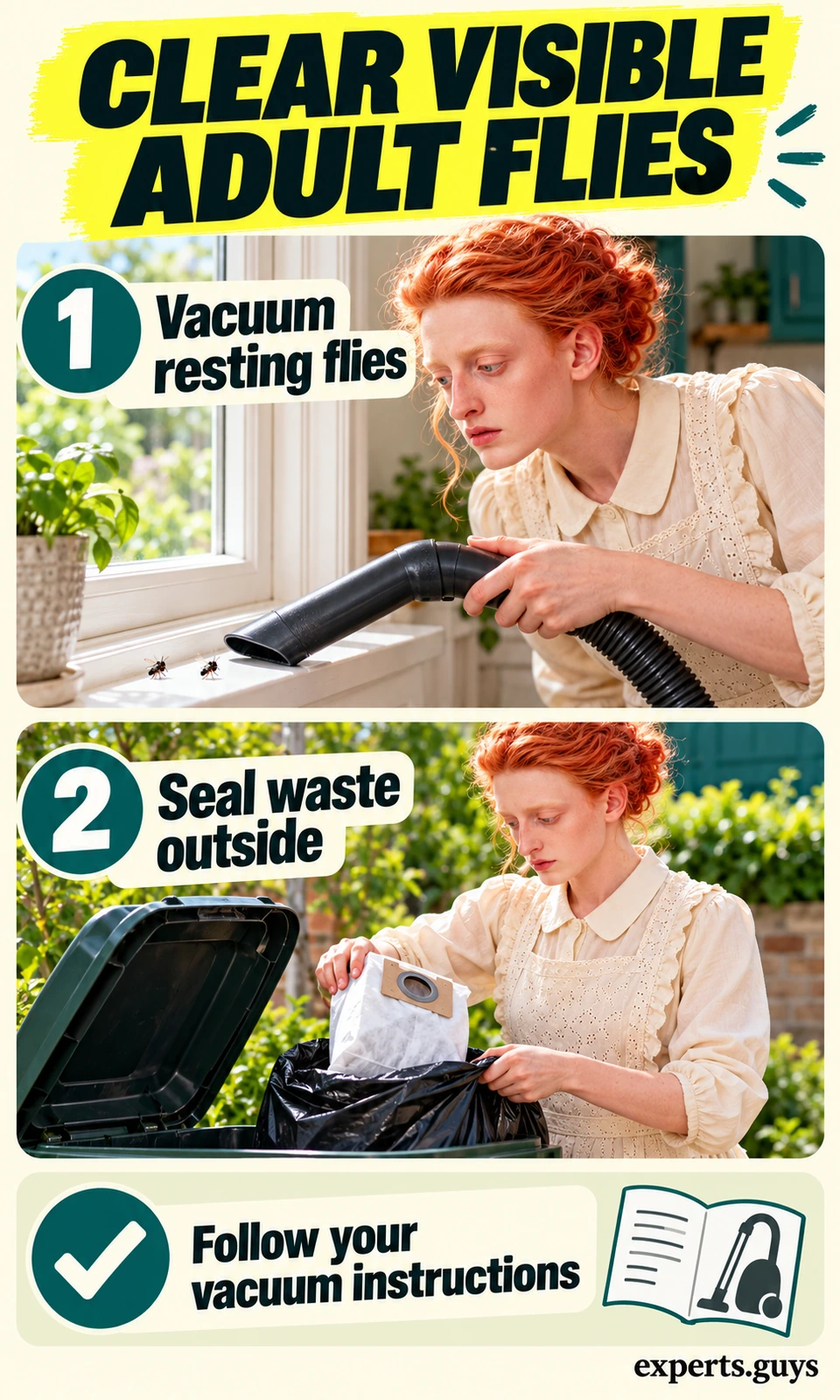
Removing resting adults can make the room more comfortable while you deal with the source. A normal household vacuum with a hose may be useful on accessible dry windows and walls; there is no special “high-voltage” requirement. This is particularly practical for sluggish overwintering flies, which should not automatically be blamed on food waste.
- Move food away and keep the vacuum on a stable floor. Approach resting flies on accessible dry surfaces with the hose.
- Avoid wet sinks, electrical fittings and areas that require climbing on furniture. Follow the vacuum manufacturer’s operating instructions.
- Contain the collected waste promptly. Seal disposable bags, or empty a bagless container outdoors into a closable waste bag as directed by its manufacturer.
Checkpoint: compare the same window after removal and later in the day. If adults repeatedly reappear, continue the source or entry investigation rather than assuming the vacuum failed. When a vacuum is unavailable, an appropriately placed indoor fly trap can provide adult control; use its instructions and keep it away from food preparation.
| Adult-control option | Useful situation | Important limit |
|---|---|---|
| Vacuum on dry surfaces | A few reachable resting flies | Does not remove a hidden breeding source. |
| Covered vinegar trap | Fruit-associated flies after sanitation | Not a universal fly treatment or proof of eradication. |
| Indoor sticky trap | Small numbers in a suitable protected location | Keep away from food and child or pet access; effectiveness varies by fly. |
| UV glue-board unit | A suitable indoor location specified by the manufacturer | Placement and competing light matter; no universal mounting height or 24-hour guarantee. |
Use a fruit fly trap only where it fits
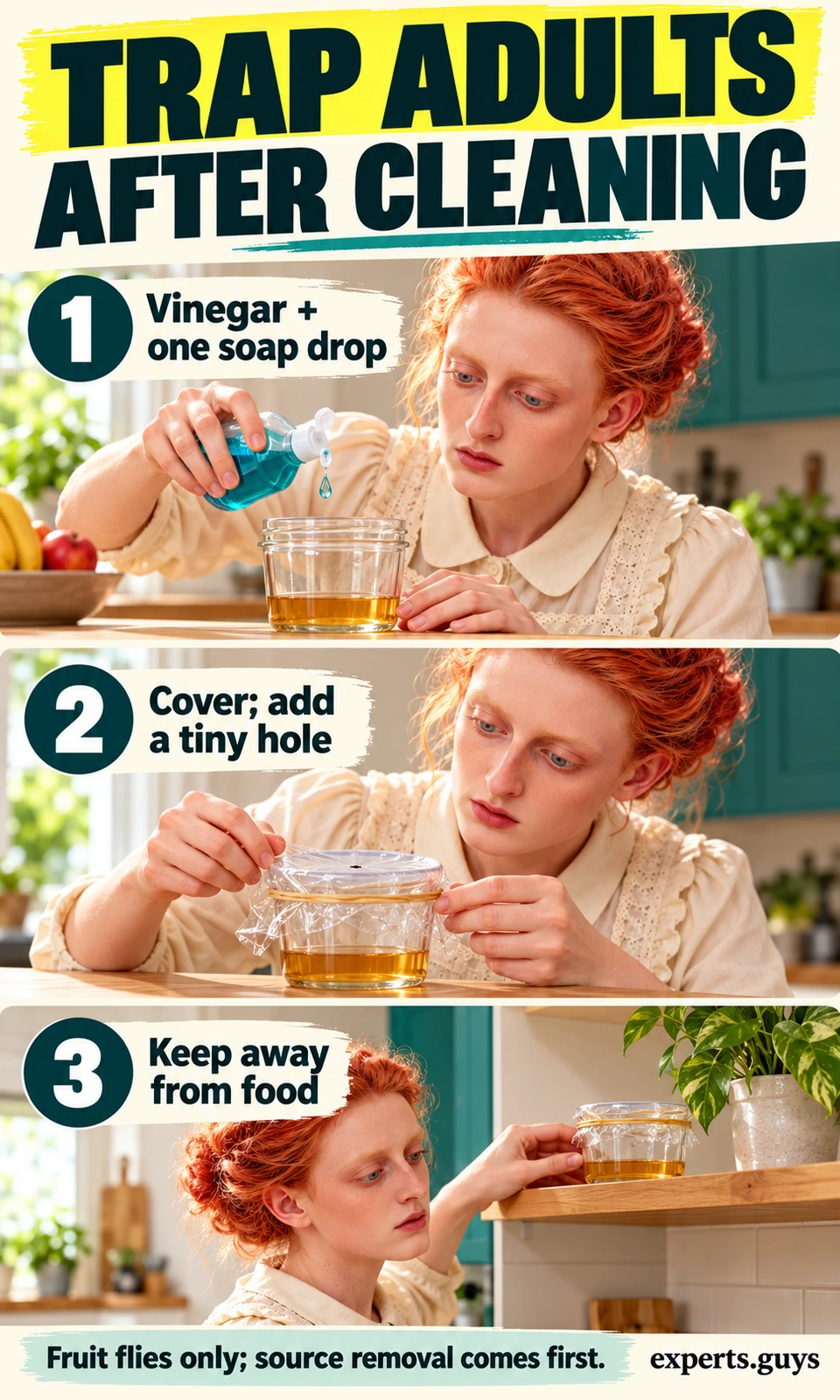
A covered vinegar trap can catch adult fruit flies after fermenting material has been removed. It will not solve every small-fly problem, and it cannot clean the source for you. For a simple setup, use a stable jar, apple cider vinegar, one drop of dish soap, cling film and a rubber band.
- Pour enough vinegar to cover the bottom of the jar and add one drop of dish soap. Do not combine it with bleach or other cleaning chemicals.
- Secure cling film over the opening and make a small entry hole. Keep the jar upright on a stable surface.
- Position it near the former hotspot but away from food preparation and out of reach of children and pets. Inspect it daily, and empty and refresh it if dirty or no longer attracting flies.
Example: use one trap near the cleaned recycling area rather than placing several jars beside food. Catching adults confirms attraction to that trap, not that every breeding site has been removed. If there are no catches, reconsider identification and competing food sources; a commercial fruit fly trap used according to its directions is an alternative.
Close the entry route
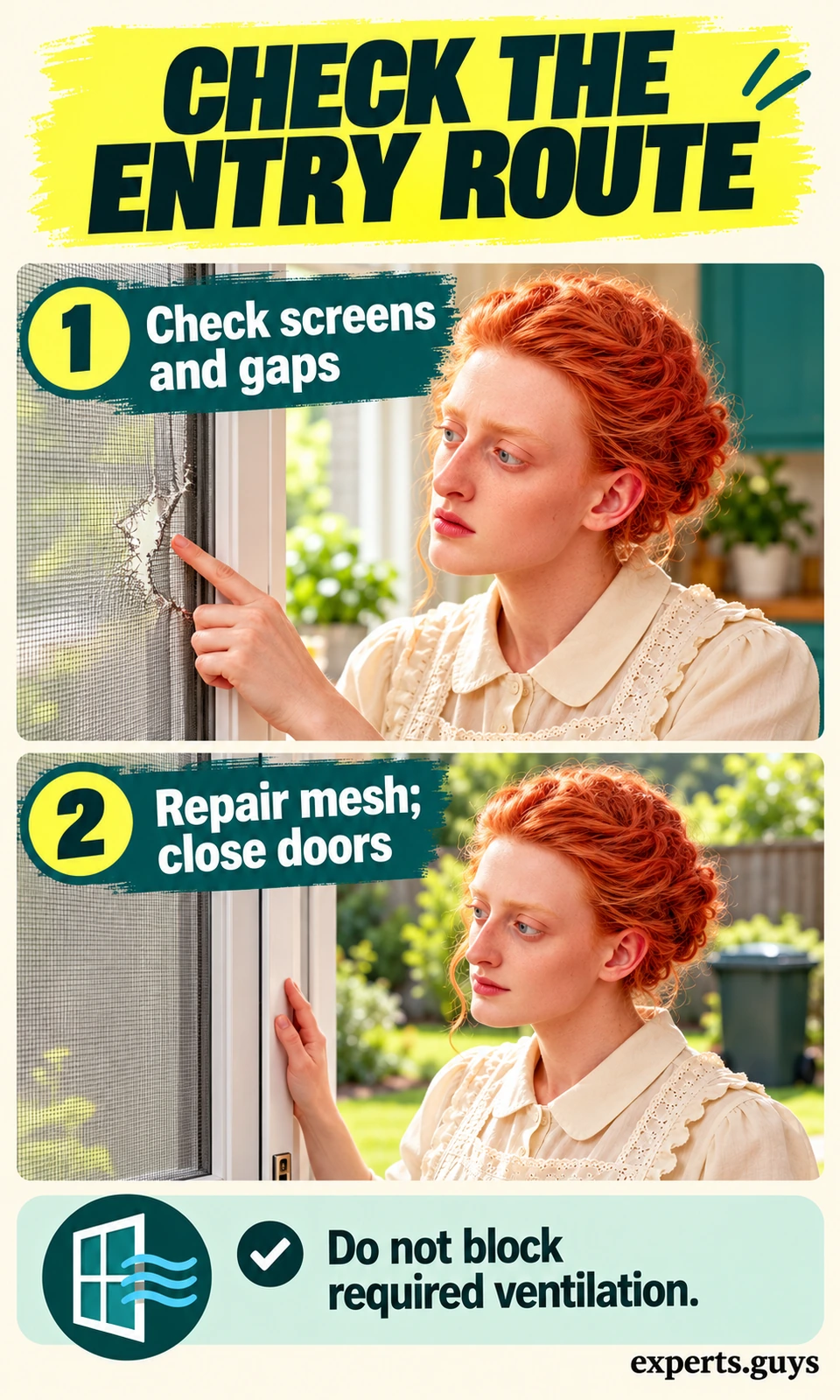
Repeated entry can make good indoor cleaning look ineffective. Inspect door and window screens, especially where activity increases after a door is left open. Outdoor odor-baited traps positioned beside an entrance can also bring fly activity too close to the doorway.
- Check accessible screen edges and mesh for tears, and observe whether the exterior door closes fully. Do not block required ventilation or safety exits.
- Repair a small screen tear with a compatible screen-repair product according to its instructions. Arrange replacement or maintenance if the frame does not fit.
- Keep exterior doors closed when practical and keep closed waste containers away from entrances where the property layout permits.
Checkpoint: a repaired screen must fit at the edges as well as across its centre. For example, new mesh does little if the frame leaves a visible gap. Renters can send photographs of the defect to building maintenance; avoid permanently sealing openings whose function you do not understand.
Check the result on your phone at 24 hours
A next-day comparison helps separate short-term adult removal from an unresolved source. Use the same location, a similar time of day and the same brief observation period. This is a household check, not a scientific count: light, weather and door use can change what you see.
- Open the starting photograph and revisit the same spot. Take a second photograph or add a short voice note about visible activity.
- Record whether you removed a source, changed a trap or repaired an entry route. Keep the notes on your phone with the photographs.
- Choose the next action from the table below. Continue checking over the following days because a single quiet observation does not prove elimination.
Illustrative example: fewer flies at the kitchen window after removing spoiled food is encouraging, but it does not establish which action caused the change. If activity is unchanged, inspect a missed residue area before buying more traps. If tracking feels cumbersome, two labelled phone photographs and one reminder for tomorrow are enough.
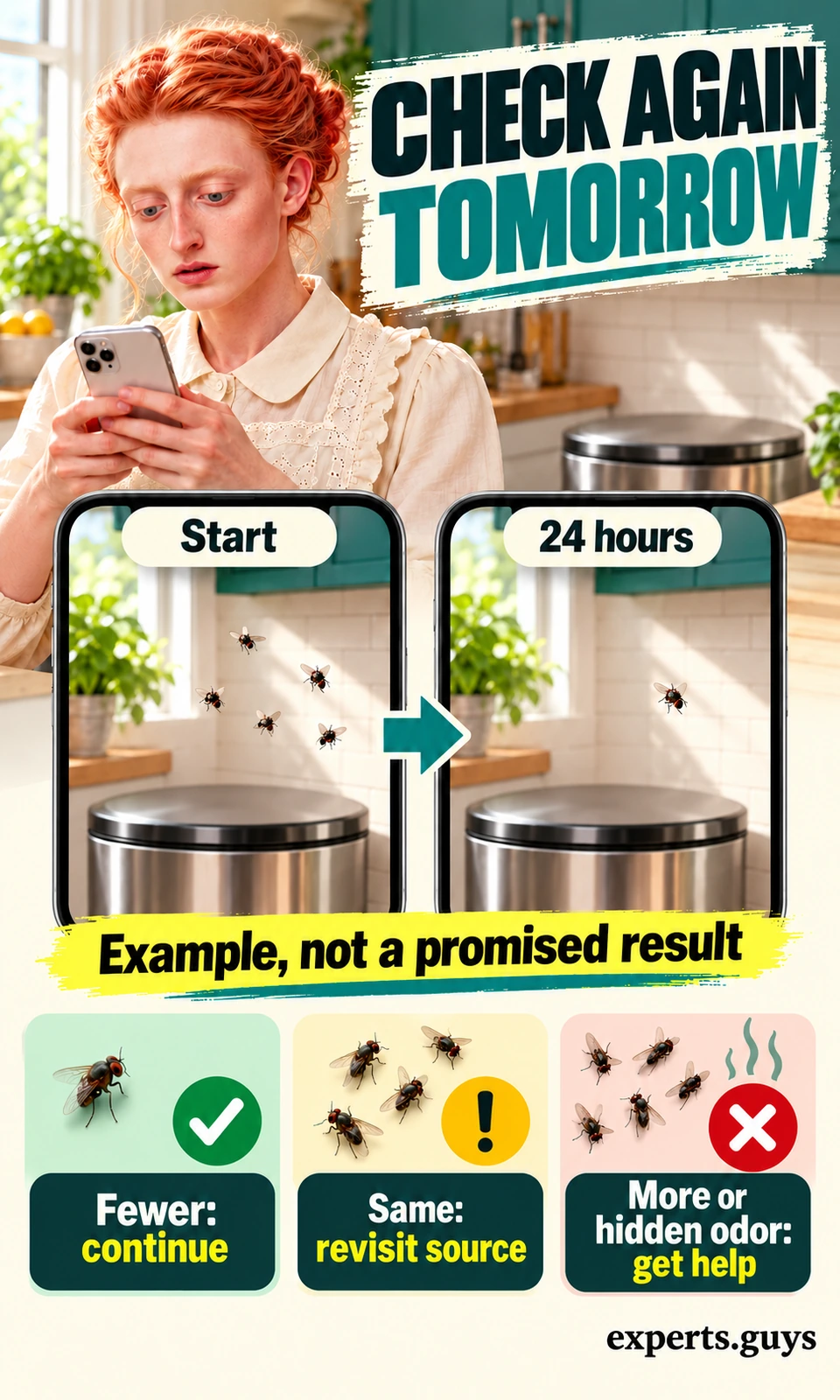
| Next-day finding | What it may mean | Next action |
|---|---|---|
| Fewer flies; source removed | The intervention may be helping | Maintain sanitation and exclusion; check again over the next few days. |
| Similar activity; no source found | Missed source, wrong identification or ongoing entry | Revisit the busiest location and obtain identification if unclear. |
| Many new metallic flies or a persistent hidden odor | Possible concealed animal or waste source | Arrange pest/building inspection; do not open walls yourself. |
| Flies plus sewage smell, backup or a leak | Possible drainage or moisture problem | Stop DIY drain work and contact maintenance or a plumber promptly. |
Why can flies return after you have cleaned?
Adult flies are only one life stage. Eggs, larvae or pupae can remain in material you missed, and adults can enter from outside after a successful cleanup. Return activity therefore asks for a more specific check, not automatically a stronger spray.
Location changes the next decision. Flies around a plant pot call for identification and a plant-care assessment; seasonal sluggish flies at upper windows may be overwintering visitors. A sudden flush of metallic flies points you toward a different source investigation than a few tiny flies around recycling.
What should you skip during the first day?
Skip essential-oil skin applications, unverified salt-and-pepper mixtures and claims that all fruit flies disappear with the season. Avoid insect electrocution devices near food preparation because they can disperse insect material. If you choose a pesticide, use only a product authorized for the insect and site in your location and follow its label; this article does not require pesticide treatment.
Outside help is most useful when it answers a specific unresolved question. Send the insect photograph, activity location, onset and actions already taken to the provider. Ask whether they will identify the insect and investigate the source before proposing a treatment, especially when the suspected source is inaccessible.
Frequently asked questions
Does a clean kitchen mean the flies must come from outside?
No. A small pocket of fermenting residue or drain film can remain in an otherwise clean room. Use the activity location and insect appearance to guide inspection instead of treating cleanliness as proof of the source.
Can I use boiling water instead of brushing a drain?
A quick pour may leave the film that supports larvae, and very hot water may be unsuitable for some fixtures. Clean accessible film mechanically when safe and follow the fixture’s care instructions. Do not mix drain products.
Should I buy a UV fly unit immediately?
Not usually as the first action. Identify the likely source and deal with sanitation or entry first. If a unit is useful afterward, follow its placement and servicing instructions and avoid food-contamination risks.
Does one fly tomorrow mean the whole process failed?
No. One adult may have emerged from material that was already present or entered through a door. Look for a pattern over several checks, and investigate continuing or increasing activity rather than treating one sighting as a verdict.
Your next decision
Choose the source route that fits the insect, remove what supports it and use adult control for immediate relief. Tomorrow, compare the same place and decide whether to continue, recheck or arrange a targeted inspection. The useful first-day outcome is a clearer source and less activity—not an unsupported promise that every fly will be gone.