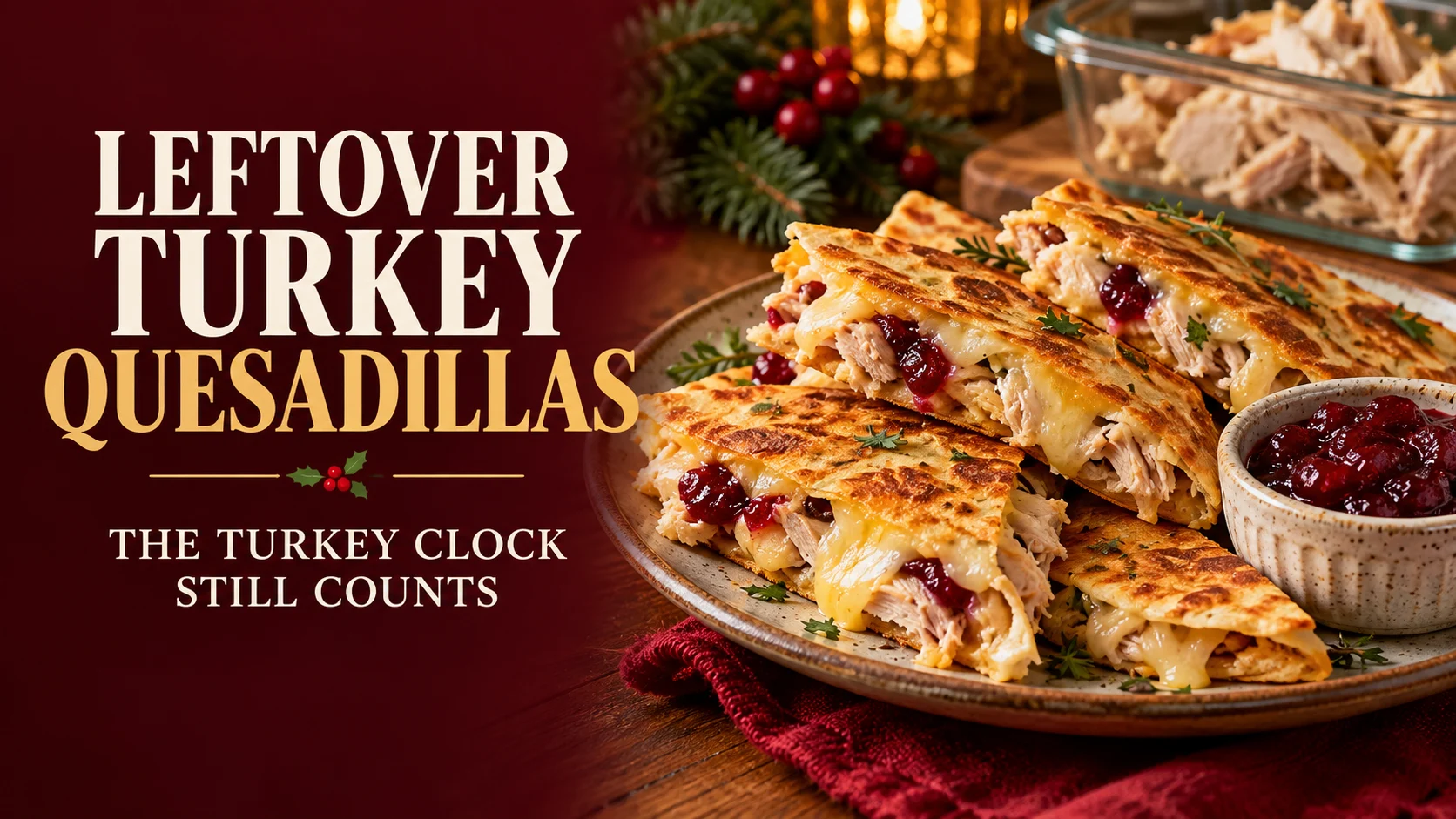
Leftover turkey quesadillas belong within the turkey’s original 3–4-day refrigerator window, provided they were handled promptly and kept at 40°F / 4°C or below. Turning an older roast into a fresh quesadilla does not give it another four days. Start with the turkey’s cooking date, then check its storage history before deciding what to keep.
How long do leftover turkey quesadillas last?
The home refrigerator guidance for cooked poultry is 3–4 days. Apply that window to the oldest perishable filling rather than counting from the day you folded the tortilla. This is a practical conservative approach for leftover cooking, not a quesadilla-specific shelf-life study.
For example, turkey cooked on Christmas Day and used in quesadillas three days later is already near the end of its refrigerated window. Eat the quesadillas promptly if the handling history is sound; do not label them for another three or four days. If the cooking time or refrigeration history is uncertain, avoid guessing from how the food looks.
- Start the label with the original turkey cooking date and time, if known.
- Check that the refrigerator stayed at 40°F / 4°C or below.
- Include preparation, serving and repeat trips to the counter when considering time out of refrigeration.
- Treat mold, slime or an unusual odor as a reason to discard, but never use a normal smell as proof of safety.
Cooked wedges and assembled quesadillas need different handling
An assembled but unbrowned quesadilla containing cooked turkey is still a dish made from leftovers. The turkey does not become newly cooked simply because you toast the outside later. Prepare fillings separately, refrigerate them promptly, and assemble close to serving when crispness matters.
For overnight preparation, use cold fillings that are still comfortably within their storage window and keep wet sauces separate. Cooking the assembled quesadilla the next morning may improve convenience, but it cannot repair earlier temperature abuse. This guidance does not cover raw poultry fillings, which require their own safe cooking procedure.
Safety and eating quality are separate decisions. A tortilla can become soft well before the meat’s storage window ends, while a crisp wedge can contain food with an unsafe history. Use the following comparison to choose the handling method, rather than inventing a different safety deadline for each sauce.
| What you have | What to do |
|---|---|
| Cooked turkey-and-cheese wedges | Refrigerate promptly in shallow containers; retain the original turkey date. |
| Assembled with cooked turkey, not yet browned | Prefer assembly near serving. Overnight preparation is a quality choice, not extra storage time. |
| Cranberry sauce, salsa or sour cream inside | Expect a softer tortilla. Keep additional sauce separate; retain the oldest filling’s storage limit. |
| Unknown cooking date or doubtful refrigeration | Do not assign a new deadline. Discard when safe handling cannot be established. |
| Food left out too long | Discard rather than trying to rescue it by reheating or freezing. |
The turkey date matters more than the assembly date
A useful container label records two events: when the turkey was cooked and when the quesadillas were assembled. The second entry helps you remember preparation, but the first controls this conservative leftover decision. Follow a shorter applicable instruction if another filling already has an earlier limit.
Freezing introduces a different storage history, so a simple refrigerator-date calculation should not be used for previously frozen or thawed food. Record the freezing and thawing dates separately and consult guidance for that history. The storage check below is deliberately limited to never-frozen, cooked-turkey fillings.
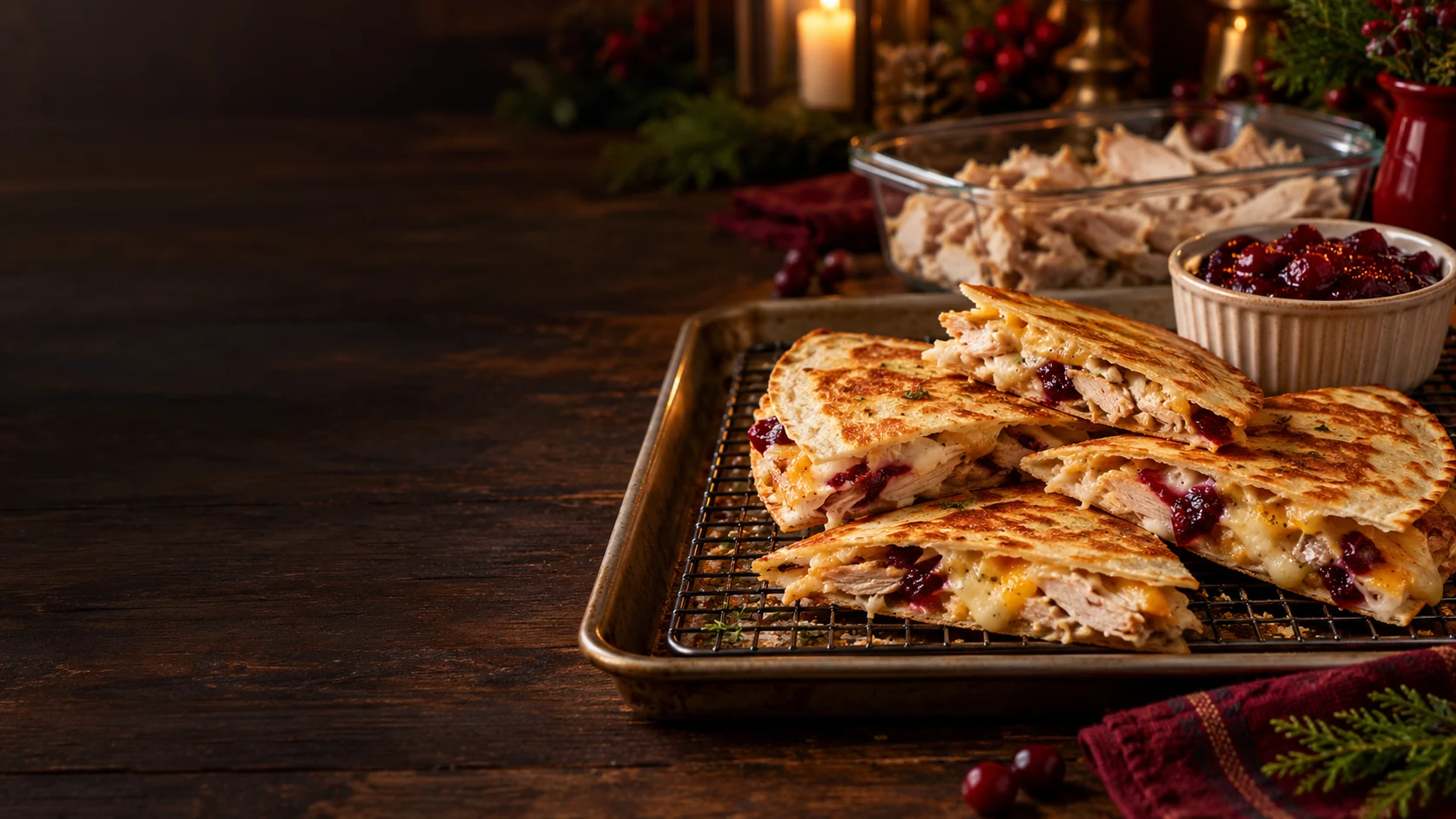
The illustrations explain handling principles; they are not photographs of a tested batch. No day-one or day-three cooking observations are claimed here. A measured home trial could compare tortilla bend, sauce bleed and reheating texture, but it would not establish microbiological safety.
What makes Christmas quesadillas soggy?
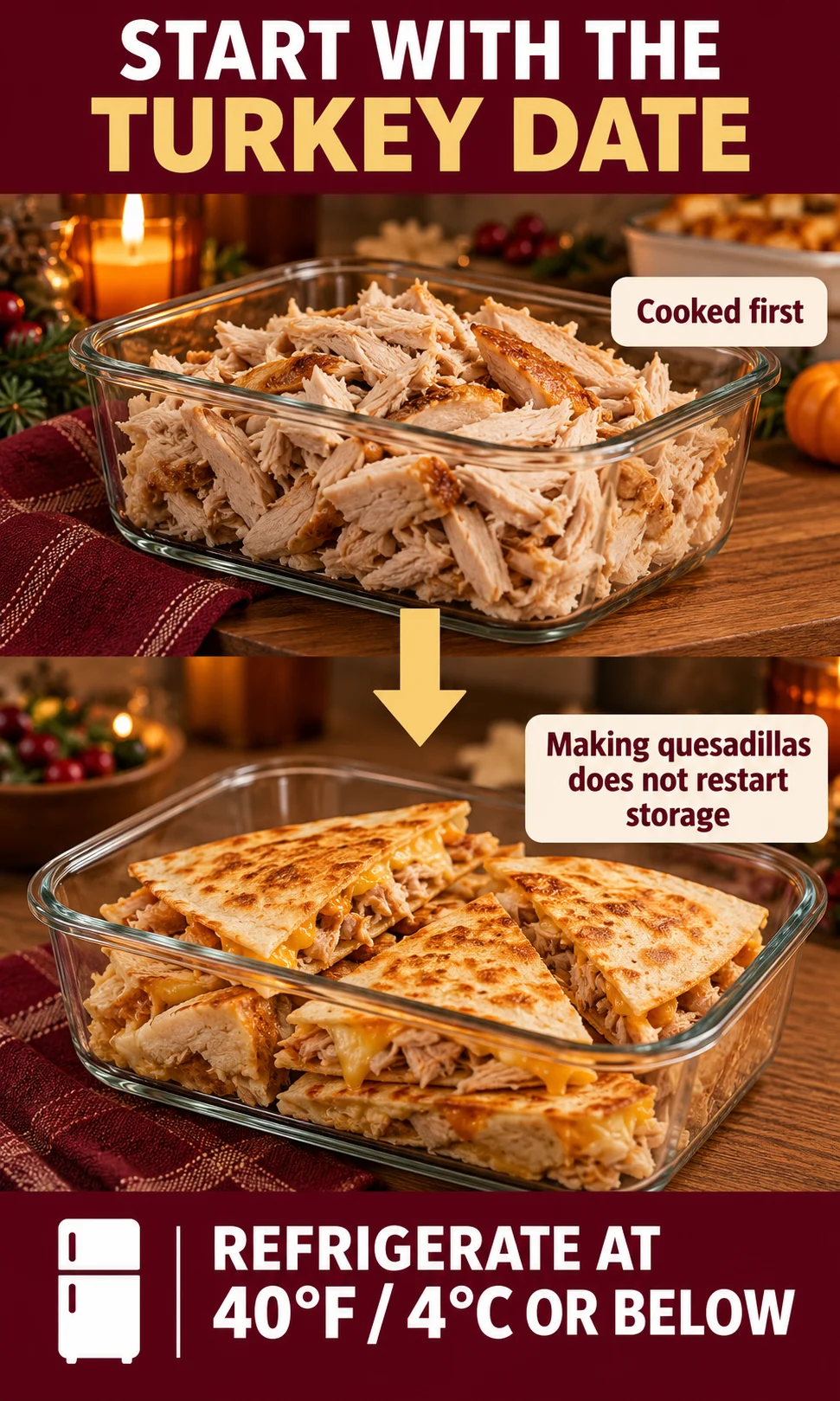
Cranberry sauce can move moisture into the tortilla during storage, and heated fillings release steam into the folded pocket. A thick layer of sauce, damp cooked vegetables or a generously filled tortilla makes it harder for the outside to remain crisp. These are texture explanations, not grounds for assigning an unsupported shorter safety date.
Both whole-berry sauce and smooth cranberry jelly can soften a tortilla; their names alone do not tell you how much moisture a particular batch will release. Spread only a thin layer if you want sauce inside, or serve it alongside the hot wedges. Drain wet cooked vegetables and avoid adding extra liquid to the filling.
- Keep cranberry sauce, salsa and sour cream in separate containers where practical.
- Use thin, even layers so the turkey can heat through without scorching the tortilla.
- Drain cooked Brussels sprouts or other vegetables; avoid storing a wet stack of assembled tortillas.
- Reheat only the portion you need and add fresh toppings after heating.
Soft cheeses such as Brie change the richness and texture of the filling, but they do not provide a reliable storage clock. Choose the amount for the result you want and keep the layer manageable. There is no side-by-side cheese test behind this article, so it does not rank one cheese as the best-performing option.
How to cool and pack the wedges
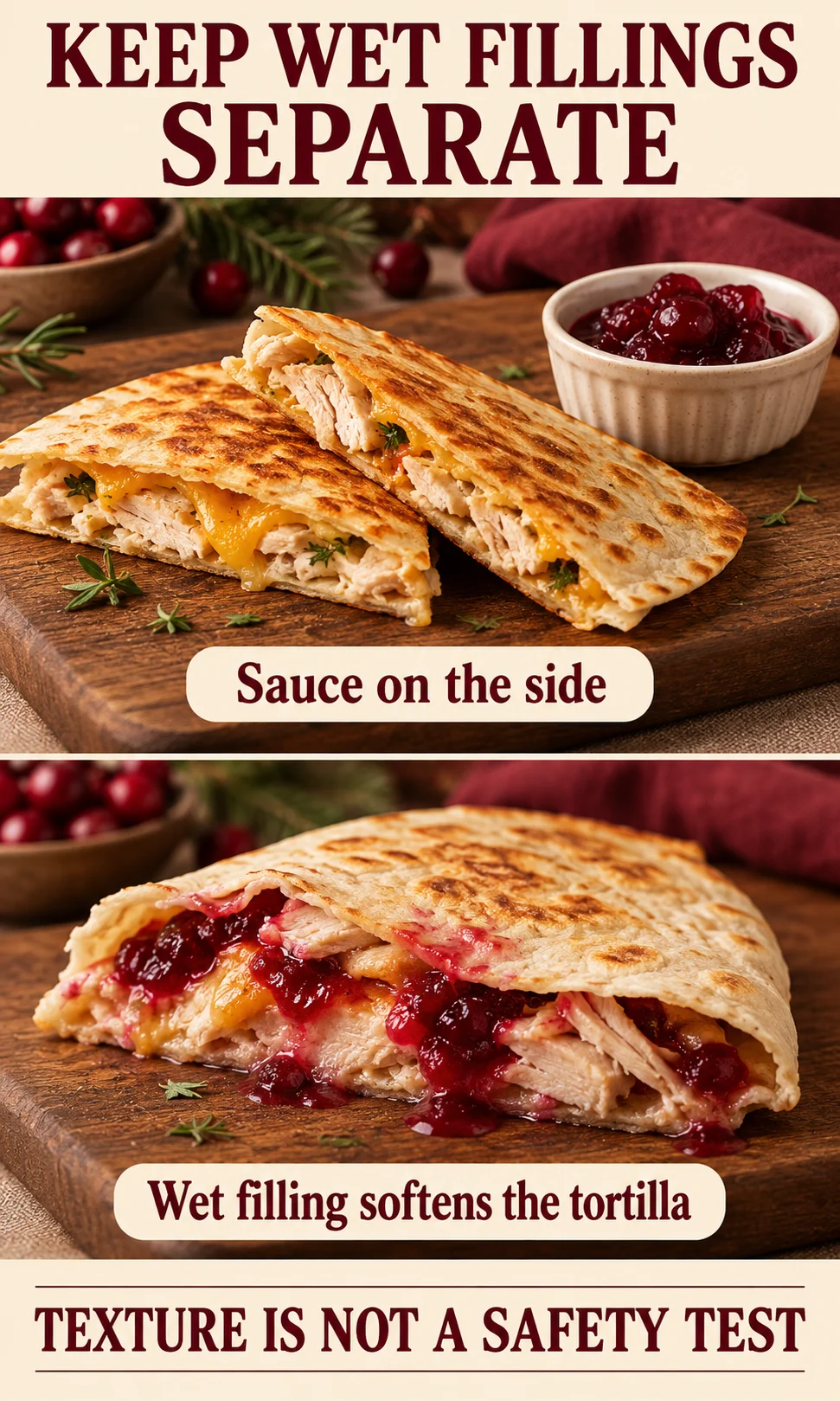
Divide leftovers into shallow containers and refrigerate promptly, following safe cooling and refrigeration guidance. Do not leave a tray out until it reaches room temperature, and do not use rack cooling as permission to wait. A brief rest while cutting and packing can release surface steam, but refrigerator cooling is the priority.
Arrange wedges without a dense hot pile so heat can escape more readily. Once chilled, parchment between layers can help stop them sticking together; it cannot prevent a wet filling from soaking the tortilla. Cover the refrigerated portions appropriately and label the turkey date before the holiday cleanup makes it easy to forget.
Reheat the filling, then restore the crisp outside
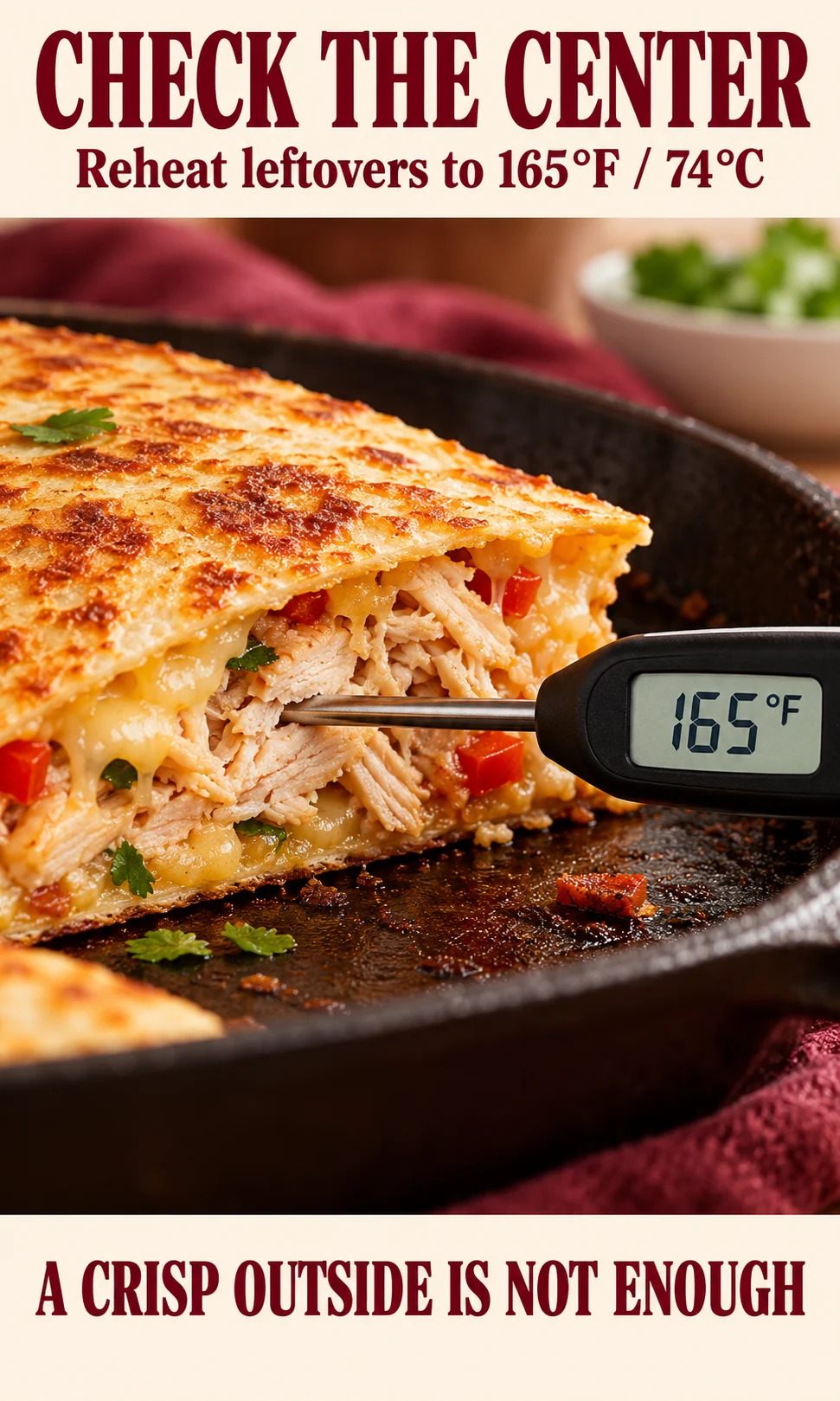
Reheated leftovers should reach 165°F / 74°C, as specified in USDA’s food-safety guidance. Insert a suitable thermometer through the cut edge into the thickest turkey filling and check more than one spot. Browning, melted cheese and steam from the surface do not replace that measurement.
| Method | Practical checkpoint |
|---|---|
| Skillet | Use moderate heat and turn as needed. If the outside browns too quickly, reduce heat; a brief cover may help heat the center, then uncover to crisp. |
| Oven or air fryer | Keep wedges in a single layer with room for airflow. Check the filling with a thermometer instead of relying on a fixed timer. |
| Microwave | Useful for warming, but the tortilla may soften. Rotate or rearrange for even heating, follow standing instructions and verify the filling temperature. |
There is no dependable universal reheating time because thickness, starting temperature and appliance output vary. A thin refrigerated wedge behaves differently from a thick frozen one. Use time only to decide when to check, and continue heating until the center reaches the required temperature.
Can you freeze leftover turkey quesadillas?
Freeze suitable portions before the refrigerated storage window runs out, while their handling history is still sound. Pack smaller portions with the turkey cooking date and freezing date so you can thaw only what you need. Freezing pauses growth; it does not turn an already doubtful batch into a good one.
For this dish, planning to use frozen portions within 2–3 months is a practical quality target, not a tested quesadilla expiration date. Continuously frozen food at 0°F / −18°C has a different safety basis from refrigerated food, as the cold-storage guidance explains. Wet sauces and soft fillings may change texture after thawing, so keep sauces separate where convenient.
Party serving: short batches beat a tray left out
Bring out small batches and keep the rest refrigerated, or use equipment that actually maintains safe hot holding. A warm oven setting alone does not establish the food’s temperature; verify hot-held food remains at least 140°F / 60°C. Extended holding can still dry or soften the tortilla, even when temperature control is satisfactory.
Discard perishable leftovers left at room temperature for more than two hours, or more than one hour when the surroundings exceed 90°F / 32°C. The time-and-temperature guidance applies to the food’s handling history, not just the last tray you served. If you cannot establish that history, choose fresh food rather than trying to compensate with more heat.
Check your batch before keeping it
The Turkey Quesadilla Storage Studio uses your original cooking time and handling answers to suggest a conservative next action. It applies a 72-hour planning target within the general 3–4-day guidance and stops recommending storage at the four-day boundary. It cannot detect contamination, assess thawed food or certify that a particular batch is safe.
Keep the history with the food
Turkey Quesadilla
Storage Studio
Check the storage history. Choose the next step.
This is conservative home-food guidance, not a safety certification. For never-frozen fillings made with cooked turkey only. A normal smell cannot establish safety.
Your batch history
Start with the turkey history
Complete the fields to see a conservative next action. No safety result is assumed.
Planning target: 72 hours from original cooking, within general 3–4-day guidance. At 96 hours this check recommends discard. At the counter limit it stops recommending storage conservatively. Earlier ingredient limits still apply.
Guidance and limits
Results use your entries and the device clock. They cannot measure bacteria, prove safe cooling or handle raw meat, restaurant service, thawed food or unknown storage. Inputs are not saved or sent to a server.
Cold storage guidance · Safe handling · Reheating and hot holding
Frequently asked questions
How long do cooked quesadillas last in the fridge?
For quesadillas made with leftover cooked turkey, use the turkey’s original 3–4-day window under proper refrigeration. A shorter applicable limit for another perishable filling also matters. Cooking or assembling the tortilla does not justify a new four-day label.
Can I eat a turkey quesadilla on day five if it smells fine?
Discard it rather than relying on smell. Harmful bacteria may not change the food’s odor, taste or appearance. A normal-looking tortilla is not evidence that the storage history was acceptable.
Can I assemble Christmas quesadillas the night before?
You can prepare an overnight batch with cold, properly stored cooked fillings, provided their existing storage windows still allow it. Keep sauces separate for better texture. Overnight assembly is a convenience choice, not an extension of the turkey’s life.
Does freezing make an old quesadilla safe?
No. Freeze portions while they are still suitable to keep, rather than after their storage limit or after doubtful handling. Label both the original cooking date and the freezing date.
Why did my reheated quesadilla go soggy?
Moisture from the filling and steam trapped inside the tortilla can soften it. Wet sauce, a thick filling and microwave reheating can contribute. Serve sauce separately and use controlled dry heat for crispness, while checking the turkey filling reaches 165°F / 74°C.
Does cranberry sauce shorten the safety window?
Cranberry sauce can reduce texture quality, but this article does not assign it a new universal safety deadline. Use the oldest perishable ingredient’s applicable storage limit and sound temperature control. Do not assume cranberry’s acidity makes a turkey filling safe to keep longer.
Keep, use now, freeze or discard
Keep only portions with a known cooking date, prompt cooling and reliable refrigeration. Use older eligible portions promptly; freeze younger portions that will not be eaten in time, and discard food with a doubtful history or spoilage signs. For more everyday cooking topics, browse the food collection, while keeping this page’s storage rules with your holiday leftovers.