

Persistent depressive disorder, also called dysthymia, describes a lasting depressive pattern; NIMH explains that symptoms usually continue for at least two years. That duration is part of clinical assessment, not a reason to postpone help when low mood affects everyday life. Use the information below to understand the terminology and prepare a clearer conversation with a clinician.
What the NIMH description tells you
The NIMH depression guide distinguishes persistent depressive disorder from major depression by its longer course. Its public description uses less severe symptoms to explain a common pattern. That wording should not be read as a promise that the experience is easy to manage.
Duration and impact answer different questions. A person might keep attending work while finding meals, relationships or basic chores increasingly difficult. Describe those effects directly rather than deciding that continued employment means nothing is wrong. For the broader terminology, read the distinction between persistent depressive disorder and chronic depression.
| Wording you may encounter | How to use it |
|---|---|
| Persistent | Describe a longer pattern and changes within it; do not rely on how you feel today alone. |
| Dysthymia or dysthymic disorder | Recognise related terminology in older records and public explanations; ask what the label means in your own care. |
| At least two years | A duration element used in adult assessment, not a waiting period before seeking help. |
| Less severe symptoms | A broad public explanation; everyday impairment and safety still need attention. |
A long history needs context, not perfect recall
Start with the earliest period you remember reliably, such as before a move or around a job change. If the dates are uncertain, write that down. A rough account with honest gaps gives the clinician something to explore without creating an artificial medical history.
Better periods also belong in the conversation. Note what improved, what remained difficult and whether the improvement lasted, using approximate dates when necessary. Do not erase a longer difficulty because you had a good day, and do not erase a genuine improvement to make the story sound consistent.
The fuller low-mood history guide explains how to organise the usual pattern, better stretches and recent changes. Use that record if your main challenge is remembering the course. This page focuses on interpreting public information and selecting questions for care.

What a clinician checks beyond duration
A long period of low mood does not by itself establish persistent depressive disorder. The SAMHSA diagnostic criteria summary includes the mood pattern, additional symptoms, interruptions, distress or impairment, and exclusions. It also distinguishes the shorter duration used for children and adolescents, so adult wording should not be applied mechanically to a young person.
The assessment considers changes in sleep, appetite, energy, concentration, self-esteem and hopefulness. It also asks whether a substance, medication or medical condition could account for symptoms. A history of unusually elevated or irritable mood and increased activity matters because a different mood disorder may need consideration.
Bring examples rather than a score you have calculated yourself. “I avoid messages after work” or “I keep postponing meals” gives a concrete starting point. If sleep is a major concern, the guide to depression and sleep problems can help you describe the pattern without assuming its cause.
| Observation | Useful question |
|---|---|
| Long-standing low mood | What other explanations should we consider alongside a depressive disorder? |
| Changes in daily function | Which difficulties should we address first, and how will we review progress? |
| Periods of unusually high energy or very little sleep | Could these periods change the assessment or treatment discussion? |
| A medicine, supplement or substance change | Could the timing or effects be relevant to the mood pattern? |
| A recent worsening | Should I be assessed sooner, and what support can I use while waiting? |
Read NIMH statistics with their dates attached
The NIMH persistent depressive disorder statistics page is not a current worldwide survey. Its adult prevalence and impairment figures draw on a U.S. household survey conducted in 2001-2003 using DSM-IV assessment. Those details must travel with any figure you quote.
A historical percentage cannot tell you whether you have the condition or what your recovery will look like. Population estimates describe groups studied under particular methods. For an individual care decision, your history, present difficulties and assessment are more useful than comparing yourself with a prevalence chart.

Treatment is a conversation that continues
Care may involve psychological therapy, medication or a combination, with the choice shaped by your needs and clinical circumstances. The NHS treatment overview explains several approaches, including cognitive behavioural therapy and behavioural activation. Availability, professional roles and referral routes vary by country.
Ask what the proposed treatment is intended to change and how follow-up will work. A useful discussion covers the first priority, expected review point, side effects or difficulties to report, and what happens if progress is limited. Avoid treating an initial plan as a commitment to continue unchanged regardless of how you respond.
Medication questions belong with the prescriber, including concerns about side effects or stopping treatment. Do not adjust a medicine on the basis of this article or an interactive summary. The record can help you remember the question; it cannot determine a safe dose or replacement.
- Name one daily activity you would like to become easier.
- Ask how progress will be reviewed and who to contact if symptoms worsen.
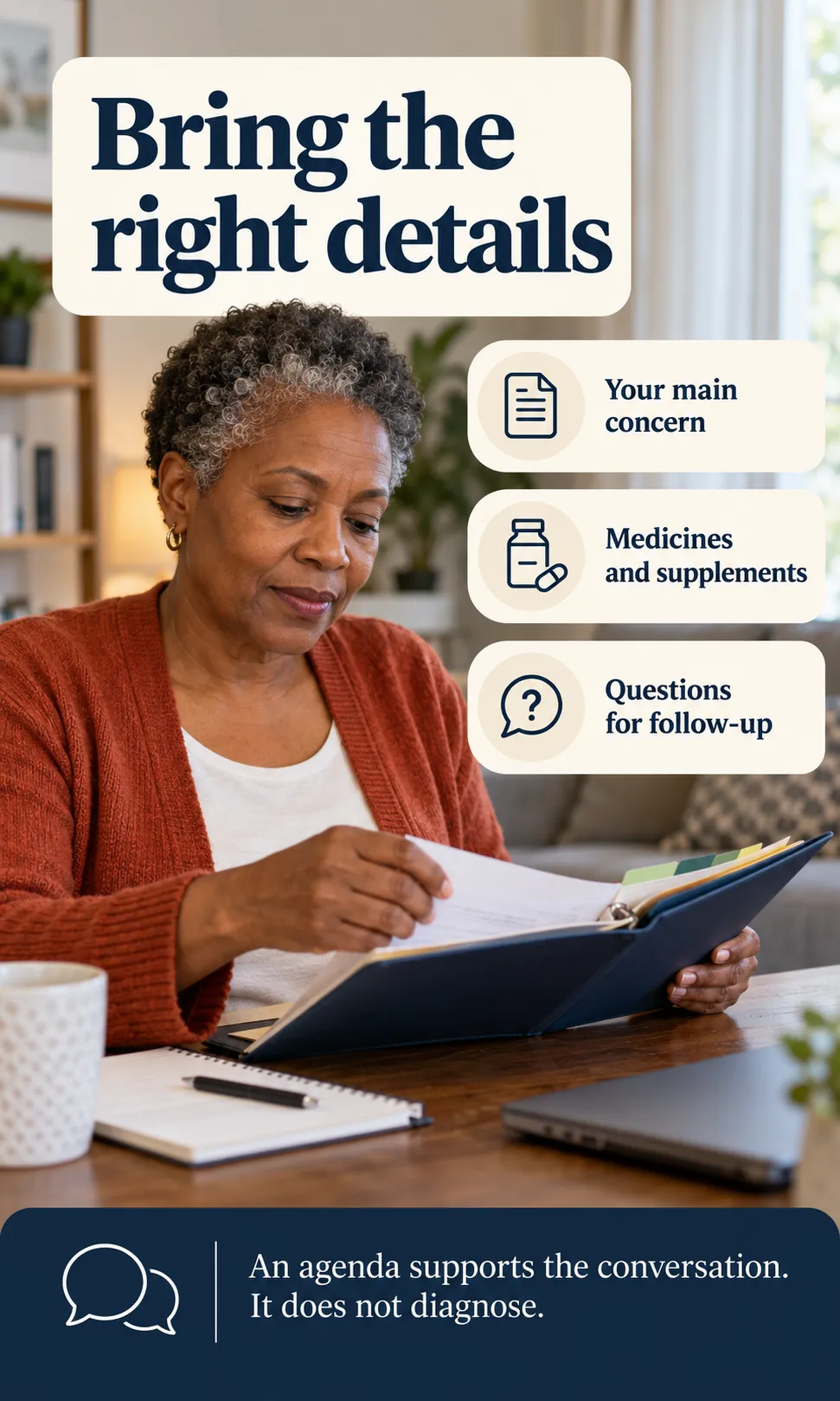
- Bring a list of medicines, supplements and previous treatments.
- Ask about access, cost and support between appointments.
If you want to understand an activity-based approach before asking about it, read behavioural activation for depression. Use it to develop questions about practical support. Trying a routine does not replace an assessment or prove which diagnosis applies.
Prepare your care conversation
Care Conversation Studio turns a few selections into an appointment agenda, with questions matched to your concern. It does not screen for persistent depressive disorder, calculate risk or select treatment. You can use the same prompts on paper if you prefer, and you do not need to finish the experience before seeking help.

Make your next conversation easier
Care Conversation Studio
Choose your concern. Leave with questions for care.
Information and appointment preparation only. This does not diagnose PDD, assess risk or select treatment. Do not delay care to finish it. If you cannot stay safe, contact local emergency services now. In the U.S., call/text 988 for crisis support; elsewhere use your local crisis service.
Selections stay in this open page. This experience does not store or send them. A printed agenda contains personal information; share it only as you choose. The surrounding website may use its own analytics.
If controls do not become available, use paper: note the approximate duration, one daily difficulty and one question. Bring these to a clinician.
Your appointment agenda
Questions to bring
What to bring
- Approximate dates, better periods and recent changes.
- One or two examples of effects on daily life.
- Medicines, supplements and past treatment information.
Find an appropriate starting point
A GP/primary-care clinician or licensed mental-health professional can assess mood concerns. These searches do not verify providers, availability or suitability.
Compare three to five real options: registration, mood-assessment experience, appointment timing, fees/insurance and referral requirements. Confirm details directly.
The preparation follows the practical approach in NIMH’s tips for discussing mental health with a provider: decide what you want to raise, bring relevant information and describe concerns clearly. If you want support remembering the discussion, consider asking a trusted person to accompany you. Keep the final agenda private unless you choose to share it.
When preparation should give way to immediate help
If you have thoughts of suicide, seek crisis support now rather than completing a worksheet. In the United States, call or text 988; outside the United States, use your local crisis service. If you cannot stay safe or there is immediate danger, contact local emergency services or go to an emergency department.
A worsening pattern also deserves a fresh conversation, even if you already have a diagnosis or an appointment scheduled. Tell the service what has changed and ask how soon you should be assessed. Do not use a long-term label to explain away a new difficulty.
Questions about NIMH and persistent depression
Does NIMH diagnose persistent depressive disorder online?
No. Its public information explains conditions and research, but reading a definition does not establish your diagnosis. A clinician needs to assess your own history and circumstances.
Should I wait two years before asking for help?
No. The duration wording is an assessment criterion, not an instruction to endure symptoms without support. Ask for help when low mood persists, causes distress or affects everyday life.
Is dysthymia simply a negative personality?
A familiar mood pattern should not be reduced to a personality judgment. Describe what you experience and how it affects you, then discuss possible explanations with a clinician. Self-blame does not provide a clinical answer.
Can a good week rule out a longer depressive pattern?
A better period is relevant information, but it cannot settle the diagnosis alone. Describe the improvement, its approximate length and anything that remained difficult. Let the clinician interpret the whole course.
Are NIMH’s prevalence figures current global estimates?
No. The persistent depressive disorder statistics page identifies a historical U.S. survey and its methods. Read those limits alongside the figures instead of treating them as a current estimate for every country.
Will the Studio tell me which treatment to use?
No. It creates discussion prompts and a short appointment agenda. Treatment selection, medication changes and urgent-care decisions require appropriate professional advice.
Your next conversation
Choose the concern you most want help with and book an appropriate appointment. Bring a short account of the pattern, one or two everyday examples and your main question. The aim is to make the conversation easier to begin, without needing to settle the diagnosis yourself.