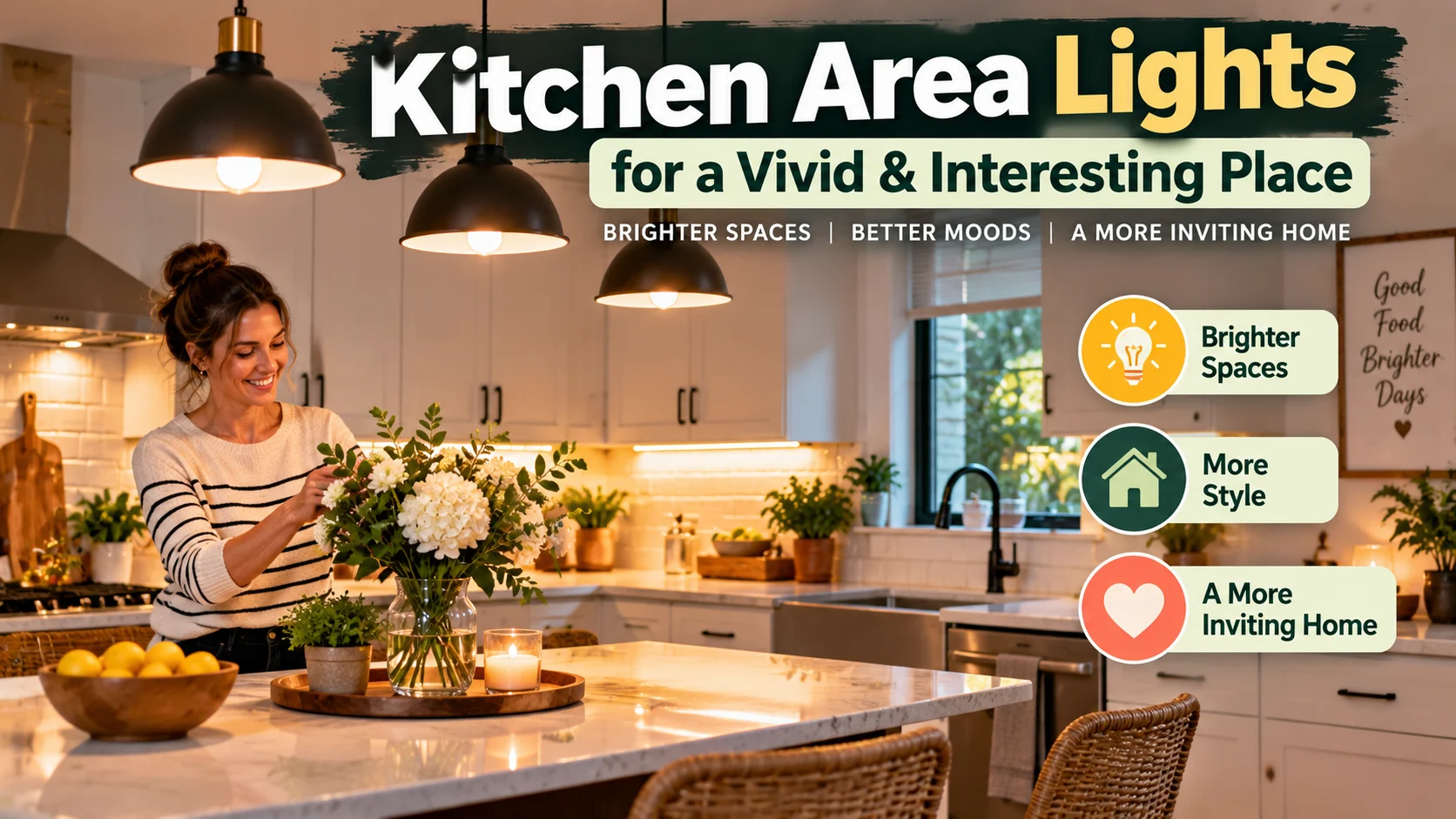

A properly illuminated kitchen requires distinct photometric layering across ambient, task, and accent zones rather than relying on a single central fixture. Eliminating shadow casts on counter prep surfaces requires positioning under-cabinet task lighting to provide 50–70 foot-candles directly over work planes while aligning recessed ambient downlights with counter edges. Color temperature consistency—ideally maintained at 3000K with a minimum Color Rendering Index (CRI) of 90—ensures true food color fidelity and seamless visual cohesion across open-concept architectural spaces.
Kitchen Lighting Decision Studio
Estimate a practical lighting range, build a recessed-light grid, check beam overlap, and see how task and accent layers change the final specification.
Describe the kitchen
Start with room size and the conditions that affect how much light the space absorbs.
Set the fixtures
Use the actual lumen output and beam angle from the recessed fixture you are considering.
Your planning result
The range below is deliberately shown as guidance rather than false precision.
Balanced target for a 192 sq ft kitchen with medium finishes and a 9 ft ceiling.
Layer allocation
Grid and beam check
The selected beam should overlap adequately at counter height for this approximate spacing.
Use the recessed grid for ambient coverage; do not rely on ceiling downlights alone for countertop task lighting.
Find local lighting help
For complex ceilings, remodel wiring, premium fixtures, or high-stakes visual tasks, compare qualified local professionals.
Photometric Layering Architecture: Balancing Ambient, Task, and Accent Light
Achieving functional balance in a kitchen layout depends on isolated control over three distinct illumination layers. Combining these layers on dedicated control zones prevents glare while providing high visual acuity during food prep and softer illumination during dining or entertainment.
1. Task Illumination Layer
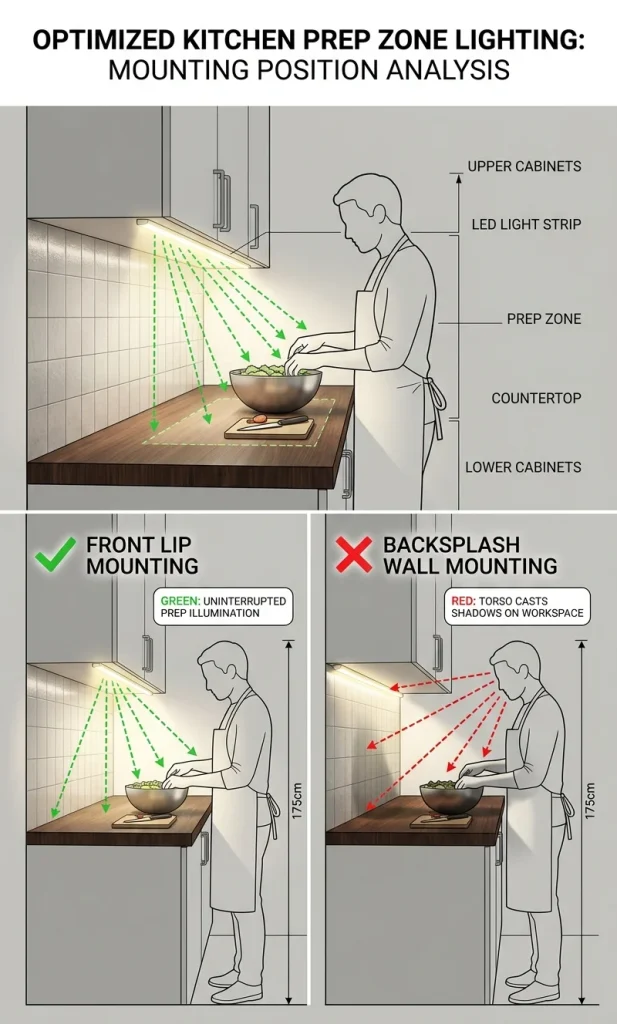
Task lighting delivers direct illumination to prep counters, sinks, and cooktops. Under-cabinet LED linear channels or puck lights must deliver 500 to 700 lumens per linear foot directly onto the work surface. Positioning the light strip near the front lip of upper cabinets—rather than flush against the backsplash—eliminates harsh specular reflections on quartz or polished stone countertops and prevents the cook’s body from casting shadows over the cutting area.
2. Ambient Illumination Layer
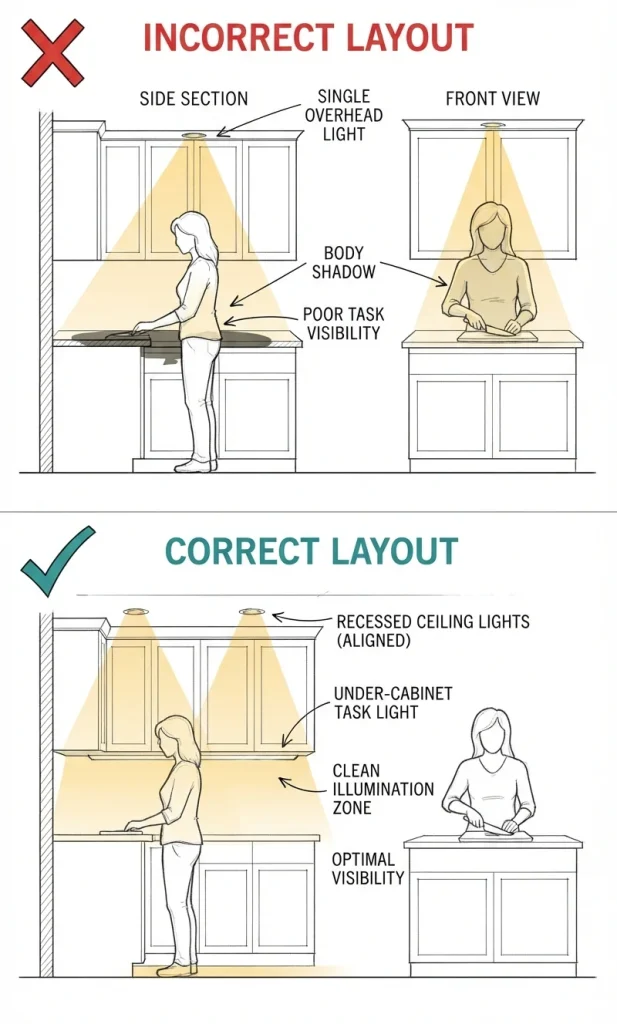
Ambient lighting provides general room illumination, filling shadows and establishing overall room brightness. Recessed downlights should be spaced based on ceiling height (typically 4 to 5 feet apart for standard 8-to-9-foot ceilings) and aligned roughly 24 to 30 inches out from walls to center directly above counter edges. Centralizing recessed lights in walkways rather than aligning them over work planes causes users to cast their own shadow over prep counters.
3. Accent and Decorative Layer
Pendant lights over islands and in-cabinet architectural strips provide focal hierarchy and visual depth. Island pendants should hang 30 to 36 inches above the countertop surface, spaced roughly 24 to 30 inches apart from center-to-center, ensuring clear sightlines across the space without creating direct line-of-sight bulb glare.
Spectral Quality Metrics: Kelvin Temperature and Color Rendering Index (CRI)
Selecting fixtures based solely on lumen output often leads to washed-out finishes or unnatural food appearance. Spectral quality metrics evaluate color temperature harmony and color accuracy.
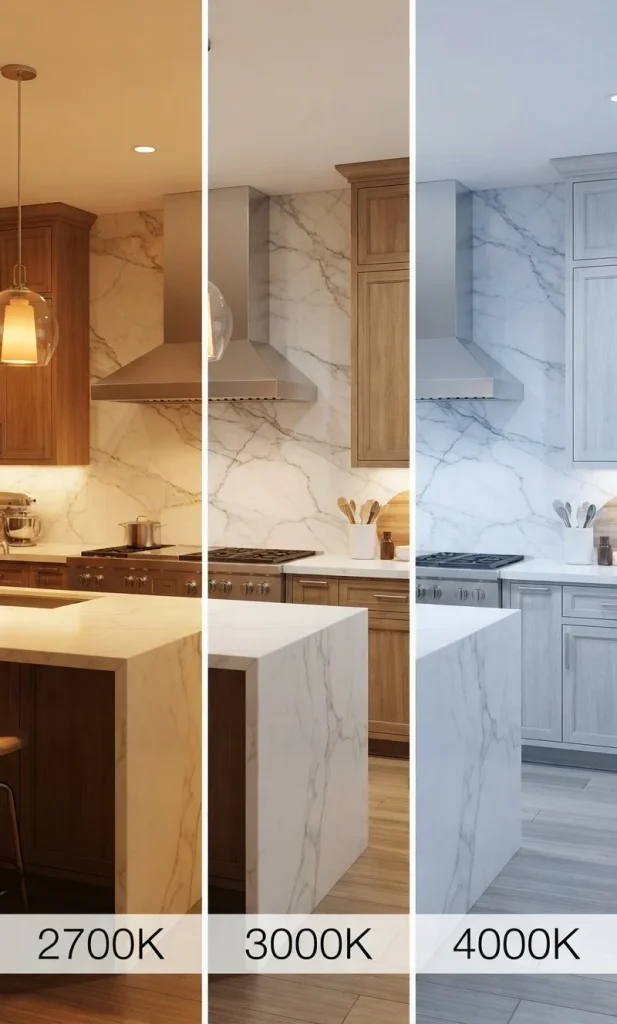
- 2700K (Warm White): Emphasizes rich wood grains and traditional cabinetry but can cause white quartz surfaces to appear yellowish.
- 3000K (Soft White Neutral): The industry standard for modern kitchens. Delivers crisp clarity for food prep while maintaining inviting warmth across metallic hardware and stone countertops.
- 4000K (Cool White): High visual clarity for commercial environments, but can make residential kitchens feel clinical and overly sterile.
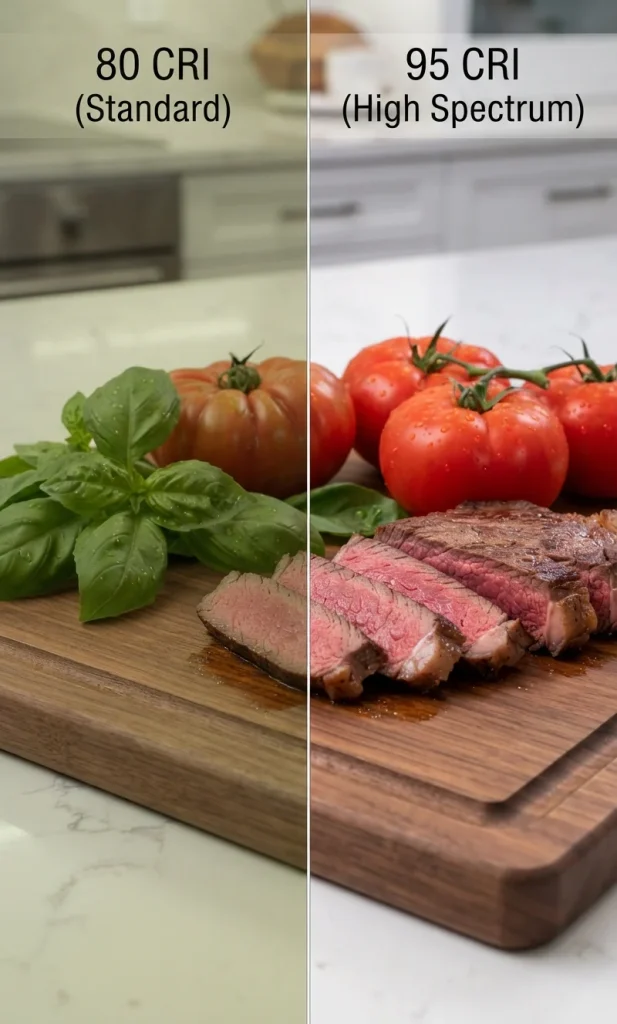
The Color Rendering Index (CRI) measures how accurately a light source reveals item colors compared to natural daylight (100 CRI). Standard builder-grade LED lights often rate around 80 CRI, which dulls red meats, fresh produce, and natural stone depth. Residential kitchen specifications require a minimum of 90 CRI (with R9 red spectrum scores above 50) to render organic food tones accurately and preserve architectural finish depth.
Technical Specification Matrix for Kitchen Lighting Zones
The Technical Specification Matrix for Kitchen Lighting Zones appears in the generated article text shown in your screenshot (located right after the Kelvin Temperature and CRI section).
Here is the exact matrix breakdown from that document:
Core Takeaways from the Matrix
- Task Lighting: Needs the highest illumination level (50–70 FC) and direct front-lip placement to eliminate shadows on prep work.
- Ambient Downlights: Positioned 24 inches off the wall directly over counter edges rather than in the middle of walkways.
- Color Consistency: Keeping ambient, task, and accent lighting around 3000K ensures a cohesive color temperature throughout the kitchen.
Interactive Kitchen Photometric Layout Engine
Calculate target lumen output, recessed downlight spacing, and fixture layering for your kitchen dimensions using the interactive tool below.
LuminaSpec Kitchen Layout Engine
Calculate exact lumen density, target foot-candles, and recessed downlight spacing grids across ambient, task, and accent layers.
Recommended Lumens Allocation by Layer
Frequently Asked Questions
Why should recessed lights be placed 24 inches from the wall instead of in the center of the walkway?
Standard base cabinets are 24 inches deep. Mounting recessed lights 24 inches off the wall aligns the beam directly over the front edge of the counter, ensuring light falls directly on your work surface instead of casting your body shadow across the counter.
What Kelvin color temperature is best for kitchen lighting?
A consistent temperature of 3000K (Warm White) is recommended across ambient, task, and accent fixtures. It provides a clean, energetic light for food prep while maintaining a warm, inviting atmosphere for open-concept homes.
Why is a high Color Rendering Index (CRI 90+) important in kitchens?
High CRI fixtures accurately render colors. A minimum of 90+ CRI with strong R9 red spectrum support ensures ingredients look vibrant, meats show proper doneness, and natural stone counter tones appear true to life.
Where should under-cabinet LED strips be installed?
Mount under-cabinet LED channels near the front lip of the upper cabinets facing downward. Placement near the back wall causes excessive reflection on the backsplash and leaves the front counter edge in shadow.