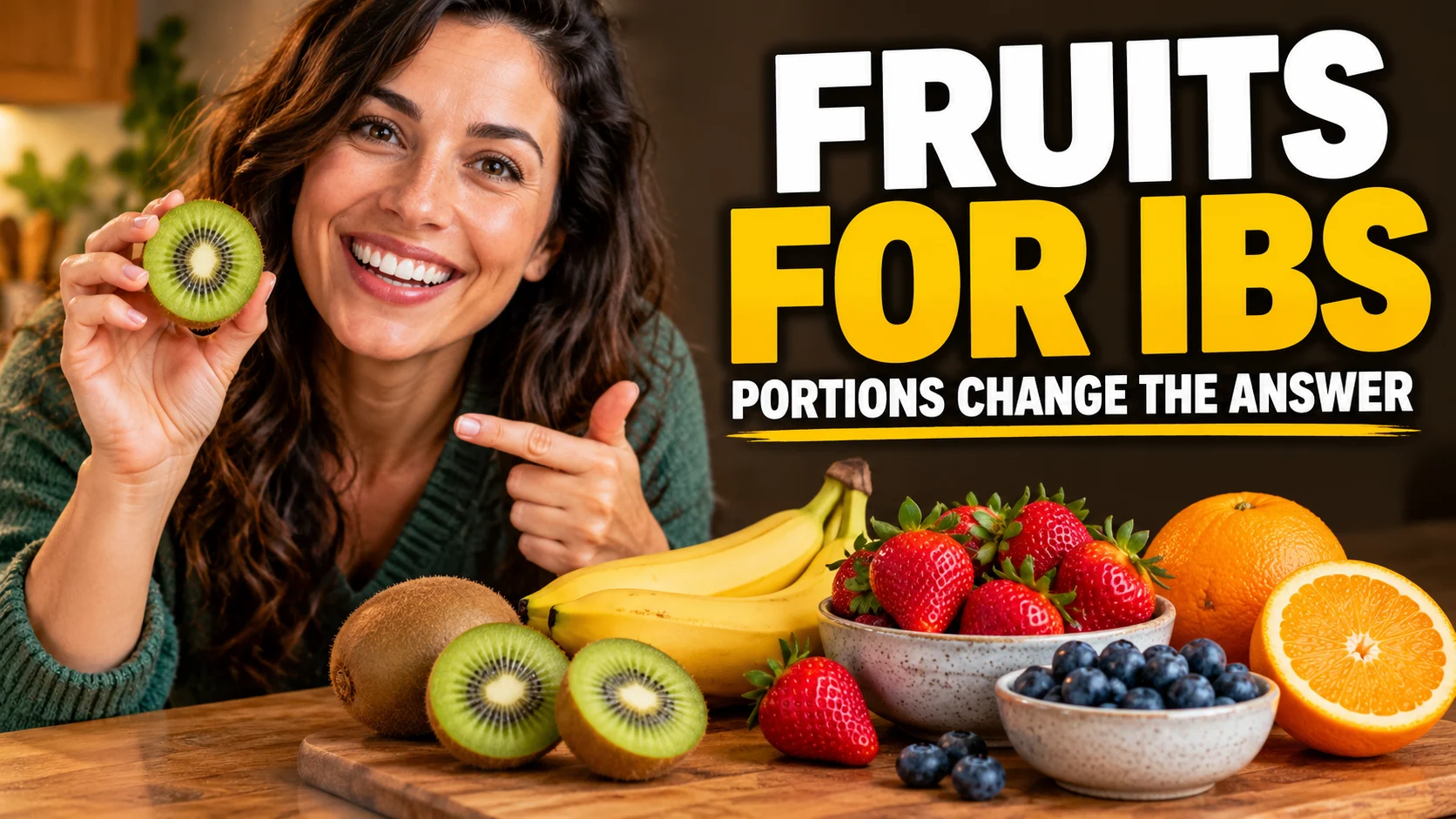

Kiwi, firm banana, citrus, berries, and several tropical fruits can fit an IBS diet, but the fruit and the serving size both matter. If constipation is your main symptom, two green kiwifruits a day have clinical evidence; if diarrhea is prominent, start with a smaller amount and judge your own response.
A low-FODMAP label describes a tested quantity, not permission to eat unlimited fruit. Use the current Monash University FODMAP Diet app for the exact variety and weight you buy, then change one food at a time so a reaction is interpretable.
The short list: fruit choices for IBS
These are practical starting points during a low-FODMAP trial, not a permanent list of permitted and forbidden fruit. Monash lists kiwi, firm banana, orange, mandarin, blueberries, strawberries, pineapple, papaya, and passion fruit among common low-FODMAP options at appropriate servings. The same fruit may move into a higher FODMAP range at a larger serving, and preparation or ripeness can matter.
| Fruit | How to begin | Decision cue |
|---|---|---|
| Green or gold kiwi | Try one; if tolerated, consider two medium fruit as a daily IBS-C trial. | Strongest fruit-specific constipation evidence is for two green kiwis daily. |
| Firm banana | Choose firm fruit; verify its size in the app. | Do not transfer the firm-banana serving to very ripe banana. |
| Orange or mandarin | Start with one app-checked serving of whole fruit. | Whole fruit makes portion control easier than juice. |
| Strawberries or blueberries | Measure one current app-checked portion. | A large bowl or smoothie may combine several servings. |
| Pineapple, papaya, passion fruit | Check the specific app entry before serving. | Useful variety; none is a proven IBS treatment. |
| Apple, pear, mango, watermelon, stone fruit | Often harder during restriction; use the app for any smaller green serving. | Excess fructose or polyols can trigger symptoms in susceptible people. |
There is no universal “safe” fruit for every person with IBS. A low-FODMAP serving can still feel uncomfortable because of total meal size, other ingredients, fiber change, or individual sensitivity, while some people tolerate foods that are high in FODMAPs on a test list.
Kiwi for IBS-C: what two a day can and cannot do
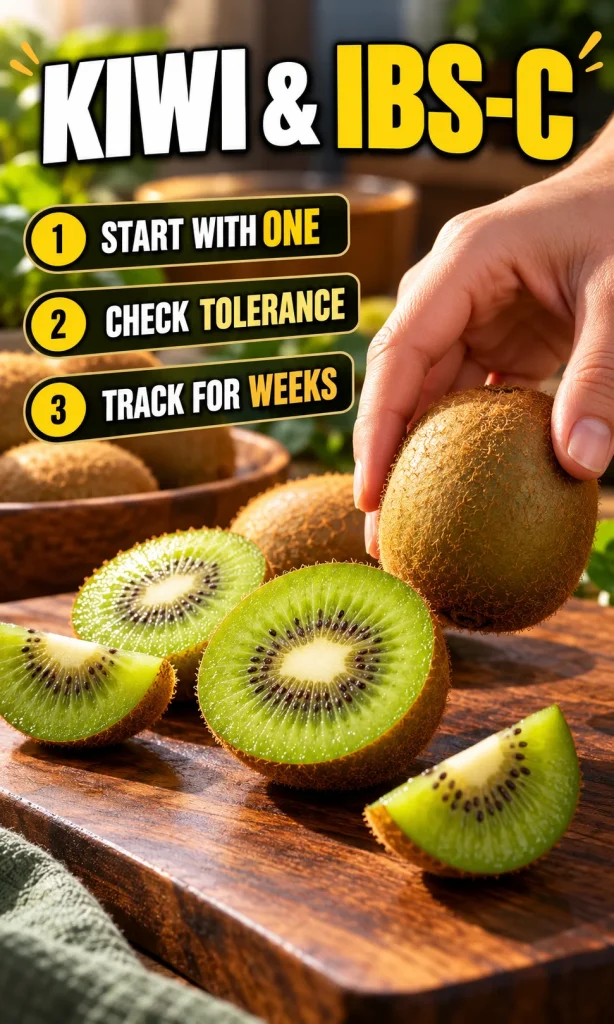
In an international randomized trial, people with IBS-C or functional constipation consumed either two green kiwifruits daily or psyllium during treatment periods. The kiwifruit period increased complete spontaneous bowel movements and improved gastrointestinal comfort; the result supports a practical constipation option, although it does not mean kiwi outperforms every IBS treatment or helps every subtype. Monash has described two medium green or gold kiwifruits as a low-FODMAP serving, while the strongest two-fruit clinical trial used green kiwi.
If you are prone to bloating, start with one kiwi and increase only if comfortable. For a fair IBS-C trial, keep other major diet changes steady and record stool frequency, ease of passage, pain, and bloating over several weeks; the clinical result is not a same-day promise. Peeling is fine, and there is no established special time of day that makes the fruit work better.
IBS-C versus IBS-D: use the subtype as a trial guide
Constipation and diarrhea call for different observations, but the subtype alone cannot predict whether a specific fruit will cause symptoms. For IBS-C, kiwi is a reasonable first experiment alongside enough fluid and a broader fiber plan; increasing fruit and fiber abruptly may add gas. For IBS-D, begin with a modest amount of a familiar, app-checked fruit and watch stool looseness, urgency, and pain before increasing.
| Pattern | First experiment | What to monitor |
|---|---|---|
| IBS-C | One green kiwi, then two daily if tolerated | Complete bowel movements, straining, pain, bloating |
| IBS-D | One small, app-checked whole-fruit serving | Urgency, stool form, pain; reduce if stools loosen |
| IBS-M | Use the current dominant symptom as your observation | Both hard and loose stools over time |
These rows are testing strategies, not separate certified fruit lists for each subtype. If bowel symptoms are changing sharply or you have never had the diagnosis assessed, seek clinical advice rather than trying to classify yourself from a fruit reaction.
Portions, ripeness, and fruit stacking

A firm banana and a very ripe banana are not interchangeable in a low-FODMAP trial. Ripening changes the carbohydrate profile, so check the specific banana entry and portion in the app; color alone is an imperfect measuring instrument. The same caution applies to blueberries, strawberries, and tropical fruit: an old fixed cup count copied from a list can be wrong for the current tested entry.
FODMAP stacking refers to the total fermentable carbohydrate in one eating occasion. Monash’s green cutoffs are conservative and often allow several green serves together, so there is no need to count every low-FODMAP ingredient when symptoms are controlled. If a large mixed fruit bowl or smoothie repeatedly causes symptoms, test smaller separate portions or space meals by about two to three hours before removing an entire fruit group.
A simple seven-day fruit experiment
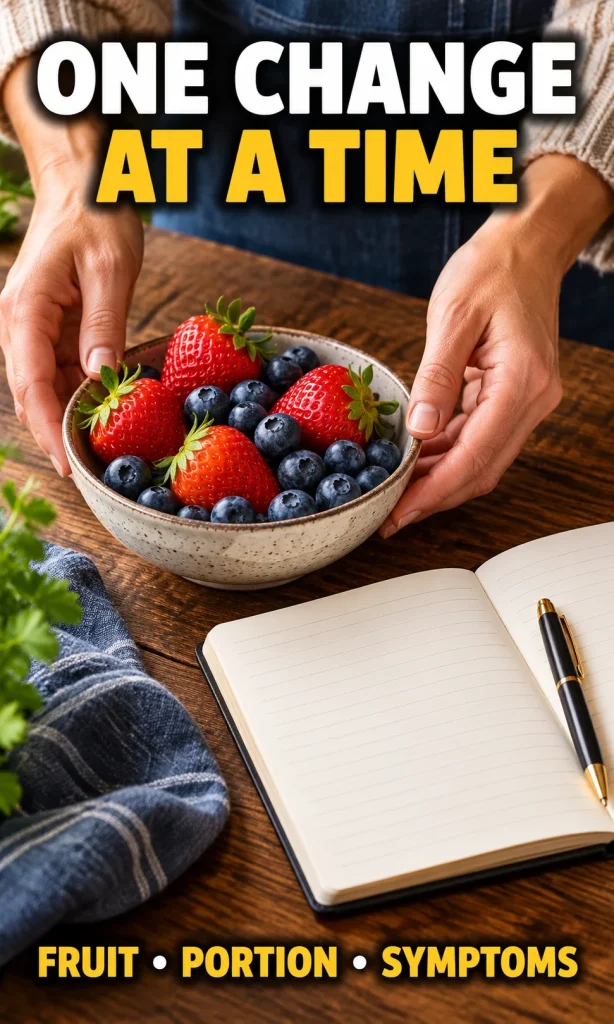
- Choose one whole fruit you want to test and look up its current entry, form, and weight in the Monash app.
- Keep the rest of your eating pattern reasonably steady and record your usual symptom baseline.
- Begin with a conservative portion, especially when increasing fiber, and eat it without several other new foods.
- Record fruit, portion, meal, pain, bloating, stool form, and urgency. Note stressful days or illness that may confuse the pattern.
- If tolerated, repeat and adjust gradually. If symptoms worsen consistently, stop or reduce the portion and discuss persistent problems with a GI dietitian.
The low-FODMAP approach is normally a short restriction phase followed by reintroduction and personalization, preferably with a dietitian. Fruit avoidance for life can unnecessarily narrow fiber and nutrient intake; a symptom diary is useful because the aim is the broadest varied diet you tolerate.
The serving check below organizes a trial and prints a one-page record. It does not calculate laboratory FODMAP exposure or diagnose IBS.
Fruit Serving Check
Choose a fruit and a symptom pattern. Get a cautious trial plan you can take to a dietitian.
Your trial
A portion-aware plan
Make your selections and press “Show my trial plan.” The result explains what to check and what to record.
Educational decision aid. This does not diagnose IBS, certify a serving as low FODMAP, or replace individual medical or dietitian advice. For exact current fruit weights and ripeness, check the Monash University FODMAP Diet app.
When fruit is not the main question
Review the rest of the meal when a seemingly suitable fruit still causes trouble: lactose-containing yogurt, honey, fruit juice, dried fruit, and large smoothie portions can change the outcome. Kiwi can also cause an allergic reaction; mouth itching, hives, swelling, or breathing difficulty calls for stopping the food and seeking appropriate care, with breathing difficulty requiring urgent help. Blood in the stool, unexplained weight loss, anemia, fever, or new and persistent symptoms deserve medical assessment rather than a longer elimination diet.
Frequently asked questions
How many kiwis can I eat with IBS?
Monash has described two medium green or gold kiwifruits as a low-FODMAP serving, and IBS-C trials have tested two green fruits daily. Start with one if you are sensitive to added fiber, then check the current app entry and your own response before making two a daily routine.
Is gold kiwi as effective as green kiwi for IBS constipation?
Both have low-FODMAP serving guidance, and gold kiwifruit has also been studied for constipation. The prominent international IBS-C trial specifically tested two green kiwifruits, so its exact result should not be presented as proof that every gold variety works identically.
Are bananas good for IBS?
Firm banana is a common low-FODMAP option at an appropriate serving, but ripe and firm fruit should be checked separately. Start with the current app portion and observe symptoms; banana is not a guaranteed remedy for diarrhea or constipation.
How much fruit can I eat in a day with IBS?
There is no universal IBS fruit limit. A general healthy-eating example is about two standard fruit serves spread through the day, but the low-FODMAP amount for each fruit and your personal tolerance are separate questions. Check each tested serving and avoid treating several large portions as one.
Can I eat apples or pears if I have IBS?
Apples and pears contain excess fructose and polyols that can be troublesome during low-FODMAP restriction. Their status is not a lifelong ban; after structured reintroduction some people find a smaller amount they tolerate. Check the current app entry rather than assuming all preparations are equivalent.
Sources and next step
Begin with one fruit you actually enjoy, use the tested portion, and observe the symptom that matters to you. For a constipation-focused trial, green kiwifruit has better direct evidence than most fruit-list claims; for continued or severe symptoms, a GI dietitian can help distinguish a portion issue from a broader treatment need.