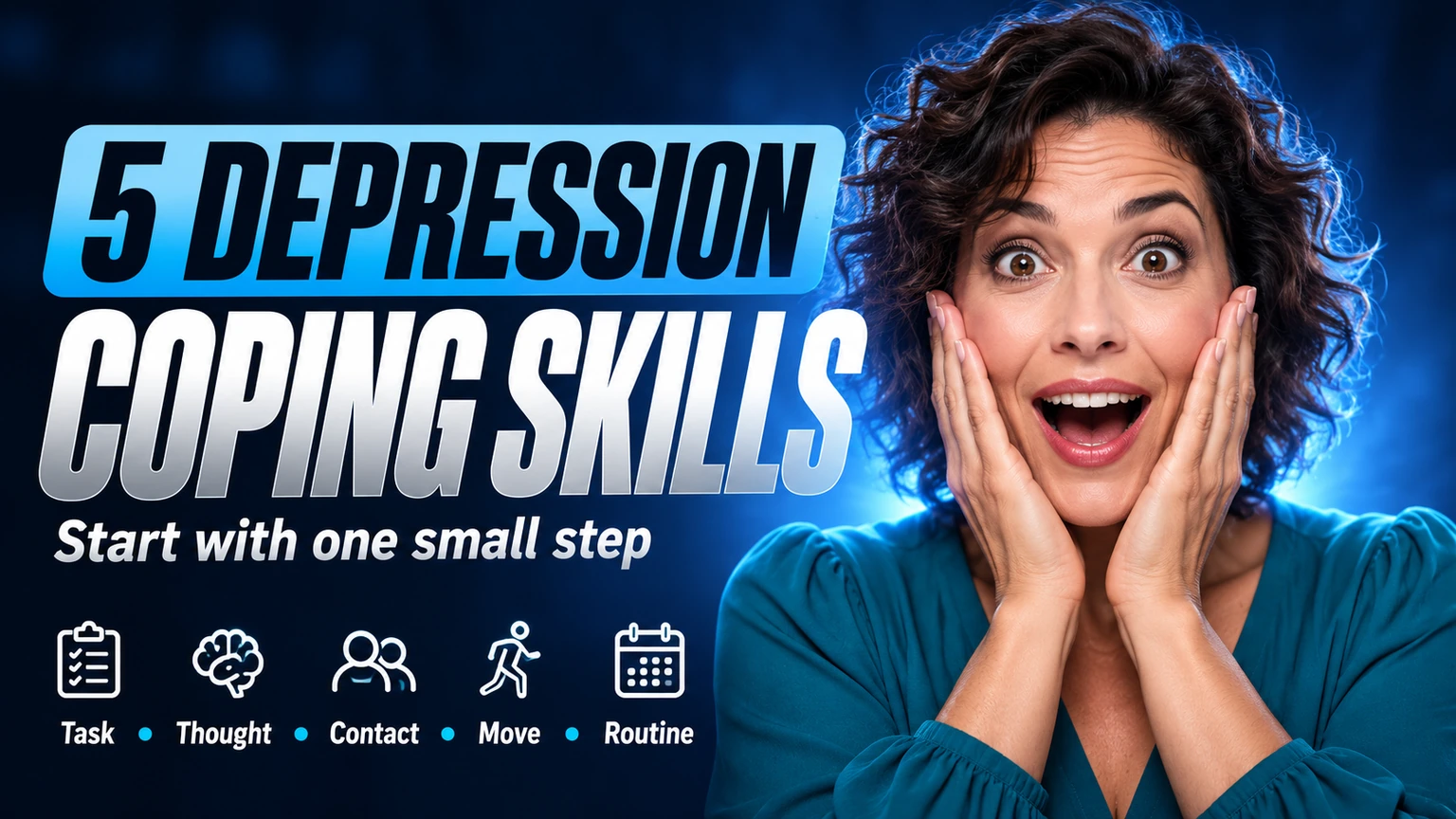

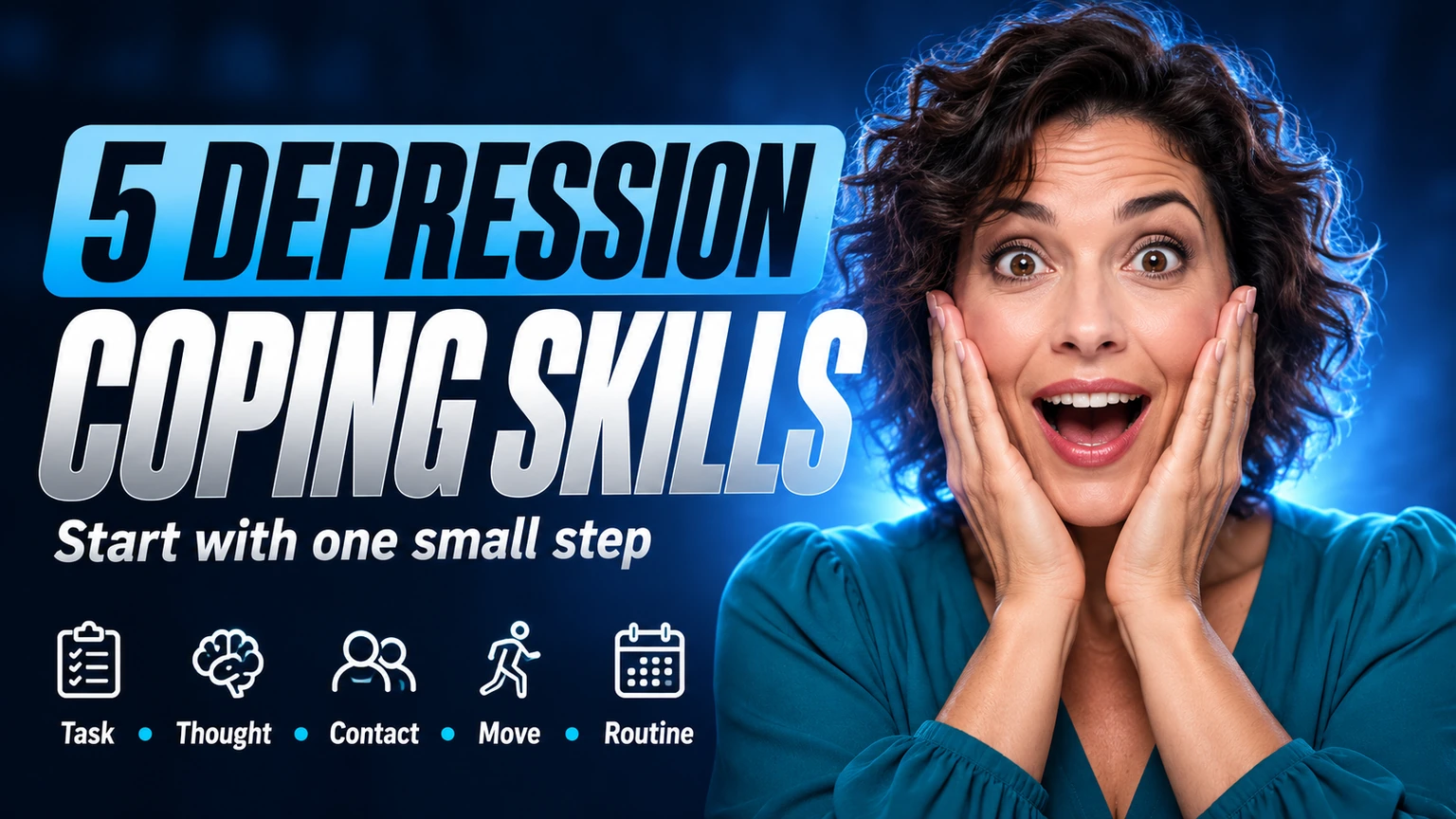
Five useful coping skills for depression are starting a tiny task, trying a balanced thought, making one safe contact, moving within your limits and building a realistic sleep routine. Choose the skill that fits the difficulty in front of you, and start with its smallest version. These skills can support daily life alongside treatment; they do not diagnose depression or replace care.
Which coping skill fits what is difficult today?
| What feels difficult | Try this skill | Smallest first action |
|---|---|---|
| Starting a chore | One tiny task | Separate one cup from the dishes. |
| Harsh judgments about yourself | A balanced thought | Notice one exact thought. |
| Pulling away from people | One small message | Choose one safe person. |
| A workout feels impossible | Gentle movement | Choose an appropriate, safe movement. |
| Days have no regular starting point | A wake-up anchor | Choose a realistic waking time. |
You do not have to complete all five exercises today. Matching the action to a specific obstacle is more useful than adding another long self-care list. If you are unsure, begin with the option that needs the least preparation.
Choose your next step in the Coping Skills Studio
Use the studio to choose an exercise and its easier version, then open a one-page practice card if you want it nearby. The suggestions use your selected difficulty and available energy, rather than a depression score. The full manual instructions remain below, so you can practise without using the studio.
Coping Skills Studio
Choose what feels difficult and get a small step, a worked example and an easier option.
Educational self-help for adults. This is not a diagnosis, treatment recommendation or crisis service. Practising does not prove symptom improvement.
Start with the example below, or choose another difficulty.
One tiny task
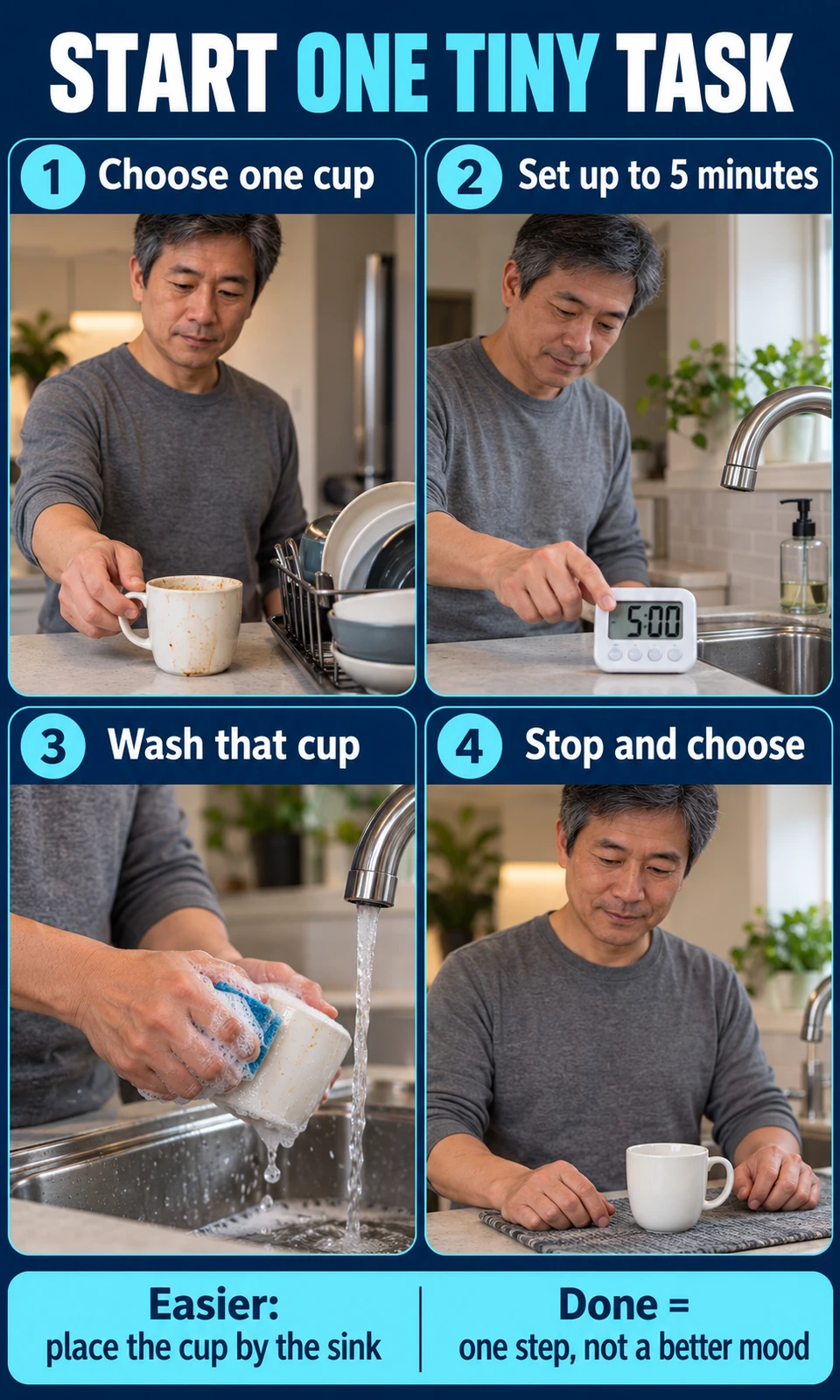
First action: Choose one cup rather than the whole kitchen. Put the other dishes outside the immediate task.
Setup: Choose one object and a timer. Give yourself permission to stop before finishing the whole chore. Five minutes is a ceiling for this example, not a minimum you must endure.
- Choose one cup rather than the whole kitchen. Put the other dishes outside the immediate task.
- Set a timer for up to five minutes, or choose a shorter limit that fits your energy.
- Wash that cup slowly. Stop sooner if you need to.
- When the timer ends, pause. Choose to stop, repeat the same small step later, or ask for help.
Illustrative example: the sink is full, and cleaning it feels impossible. You separate one cup, set a five-minute limit and wash only that cup. The remaining dishes can wait; the completed action is washing one cup.
Easier option: Place one cup beside the sink without washing it.
Completion: You completed the chosen step or practised beginning it. A better mood is not required.
Next: Repeat the same size if it was manageable; make it smaller if it cost too much energy.
Find and compare professional support
For persistent, worsening or disabling symptoms, consider a primary care clinician or licensed mental health professional. For immediate danger, contact your local emergency service. In the United States, call or text 988 for crisis support; call 911 for a life-threatening emergency.
Only click Search nearby if you want to share the location with Google. No location is sent by this studio before you click.
Compare three candidates you find. Check licensing with the local regulator, depression experience, fees, availability and whether the service fits your needs. Ratings alone do not establish suitability.
Your choices and comparison entries stay on this page and are not stored or sent by this component. Leaving or resetting clears them. Site-wide analytics and third-party searches follow their own privacy settings.
One tiny task
First action: Choose one cup rather than the whole kitchen. Put the other dishes outside the immediate task.
Setup: Choose one object and a timer. Give yourself permission to stop before finishing the whole chore. Five minutes is a ceiling for this example, not a minimum you must endure.
- Choose one cup rather than the whole kitchen. Put the other dishes outside the immediate task.
- Set a timer for up to five minutes, or choose a shorter limit that fits your energy.
- Wash that cup slowly. Stop sooner if you need to.
- When the timer ends, pause. Choose to stop, repeat the same small step later, or ask for help.
Illustrative example: the sink is full, and cleaning it feels impossible. You separate one cup, set a five-minute limit and wash only that cup. The remaining dishes can wait; the completed action is washing one cup.
Easier option: Place one cup beside the sink without washing it.
Completion: You completed the chosen step or practised beginning it. A better mood is not required.
Next: Repeat the same size if it was manageable; make it smaller if it cost too much energy.
A balanced thought
First action: Catch the exact thought: “I never get anything done.”
Setup: Pick one thought, not every worry at once. You can do the exercise silently or on a small card. You do not need a diary or a convincingly positive ending.
- Catch the exact thought: “I never get anything done.”
- Check specific facts both for and against it. An unfinished task is one fact; a completed email is another.
- Try a fairer sentence: “Today is hard. I completed one thing.”
- Say the sentence once, then pause. You do not have to argue until you believe it.
Illustrative example: unfinished laundry triggers the thought that you never accomplish anything. You remember that you sent one necessary email, so “never” does not describe the whole day. You try the more accurate sentence once and stop the exercise there.
Easier option: Name it as a thought: “I am having the thought that I never get anything done.”
Completion: You practised noticing and examining one thought, even if it still feels convincing.
Next: Use the same short sequence when that thought returns; seek support if the exercise becomes another way to attack yourself.
One small message
First action: Choose one trusted person. Avoid someone who pressures, belittles or frightens you.
Setup: Choose someone who is usually respectful and safe. Decide on one specific request that fits your energy. A short message can be enough to open contact without telling your whole story.
- Choose one trusted person. Avoid someone who pressures, belittles or frightens you.
- Write one request: “Having a rough day. Could we talk for 5 minutes?”
- Send it when you are ready. You can say that you only need listening, rather than advice.
- Put the phone aside and allow time for a reply. A delayed answer is not evidence about your worth.
Illustrative example: you have ignored a friend’s messages because a long conversation feels impossible. You ask for a five-minute call instead of accepting a whole evening out. Sending that request completes the first-contact step; your friend’s response remains outside your control.
Easier option: Save the message as a draft first, or ask a trusted person to help you send it.
Completion: You prepared or sent the agreed message. Getting a reply is not the completion test.
Next: If there is no reply, contact another safe person or a support service when you need support; do not rely on an unanswered message in a crisis.
Gentle movement
First action: Choose a safe place, such as a clear corridor at home.
Setup: Choose a clear, flat route and comfortable footwear. Use only movement that is suitable for your health and current ability. If activity worsens symptoms, or a clinician has set limits, follow those limits and ask for an individualized option.
- Choose a safe place, such as a clear corridor at home.
- Pick up to two comfortable minutes for this example. You may stop earlier.
- Move at an easy pace without chasing a distance or fitness target.
- Stop and rest. Stop immediately for pain, dizziness or unusual breathlessness.
Illustrative example: changing clothes and going to the gym requires more effort than you can manage. You choose a short walk along a clear corridor, then sit down to rest. The exercise is complete when you have tried the agreed movement within your limits.
Easier option: Try up to 30 seconds of comfortable seated movement, if that is safe for you; otherwise ask for help choosing an adapted activity.
Completion: You practised an appropriate amount of movement. Sweat, distance and improved mood are not required.
Next: Repeat an amount you tolerate; increase only when it remains comfortable and suitable for your health.
A wake-up anchor
First action: Pick a realistic wake time. The illustrated 8:00 time is an example, not a universal recommendation.
Setup: Choose a wake time that fits your sleep needs, work and caring responsibilities. The aim is a practical anchor rather than suddenly adopting an early schedule. Do not deliberately cut sleep to prove that you are following a routine.
- Pick a realistic wake time. The illustrated 8:00 time is an example, not a universal recommendation.
- Set one reminder or ask for an agreed morning prompt.
- Try a similar waking time when practical. Follow any sleep advice already given by your clinician.
- If the time repeatedly does not fit, adjust it without blame. A missed morning is a reason to review the setup.
Illustrative example: your usual waking time drifts across several hours. You choose a realistic time, set one reminder and try it the next morning. If caring duties disrupt the night, you adjust the anchor rather than turning the missed time into a judgment about yourself.
Easier option: Ask someone for a morning prompt, or choose a reminder before expecting consistent follow-through.
Completion: You chose and practised a realistic routine cue. Perfect sleep is not required.
Next: Keep an anchor that fits your circumstances; seek assessment for ongoing insomnia, excessive sleepiness or sleep problems that disrupt daily life.
Five coping skills you can practise
Depression can affect energy, concentration, motivation and the way you judge yourself. A task that looks simple from outside may therefore require several difficult decisions. The exercises below reduce one barrier at a time; their timings and everyday examples are editorial adaptations of established self-help principles, not prescribed treatment doses.
Start one tiny task when everything feels too much
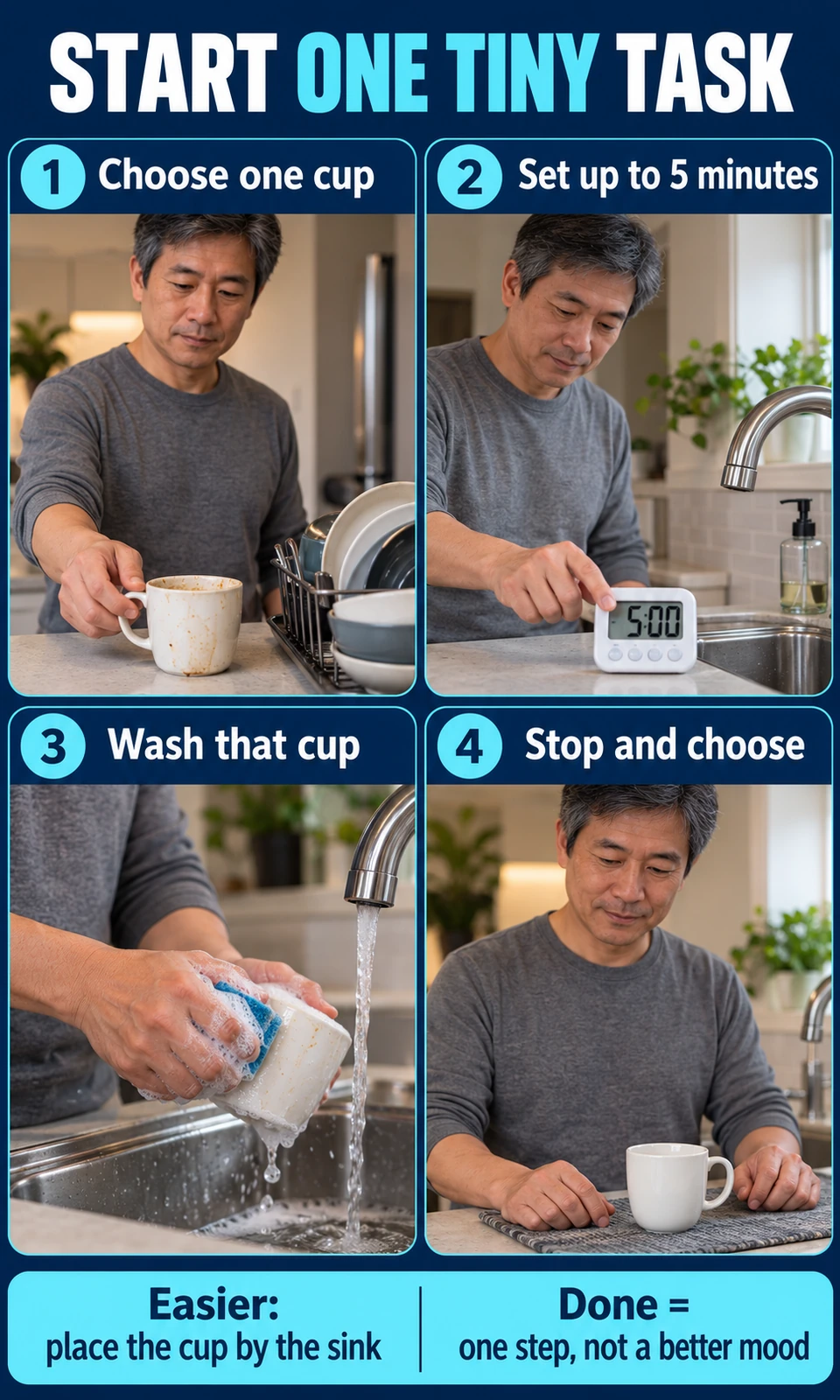
Use this when: A chore feels so large that you cannot begin. Choose one object and a timer. Give yourself permission to stop before finishing the whole chore. Five minutes is a ceiling for this example, not a minimum you must endure.
- Choose one cup rather than the whole kitchen. Put the other dishes outside the immediate task.
- Set a timer for up to five minutes, or choose a shorter limit that fits your energy.
- Wash that cup slowly. Stop sooner if you need to.
- When the timer ends, pause. Choose to stop, repeat the same small step later, or ask for help.
Illustrative example: the sink is full, and cleaning it feels impossible. You separate one cup, set a five-minute limit and wash only that cup. The remaining dishes can wait; the completed action is washing one cup.
A large task can hide several demands: deciding, gathering materials, starting and continuing. Reducing the task changes the amount of effort needed to enter it. This is a small application of activity-based coping, rather than a complete course of behavioral activation therapy. For a more structured approach to activity and avoidance, explore behavioral activation for depression.
The underlying approach is described in short-timer CBT self-help guidance. This worked example makes the approach easier to try in daily life. It is a practice example, rather than a clinical outcome or evidence that the exercise will work for everyone.
Try a balanced thought when self-criticism takes over
Use this when: A difficult moment turns into a sweeping judgment about yourself. Pick one thought, not every worry at once. You can do the exercise silently or on a small card. You do not need a diary or a convincingly positive ending.
- Catch the exact thought: “I never get anything done.”
- Check specific facts both for and against it. An unfinished task is one fact; a completed email is another.
- Try a fairer sentence: “Today is hard. I completed one thing.”
- Say the sentence once, then pause. You do not have to argue until you believe it.
Illustrative example: unfinished laundry triggers the thought that you never accomplish anything. You remember that you sent one necessary email, so “never” does not describe the whole day. You try the more accurate sentence once and stop the exercise there.
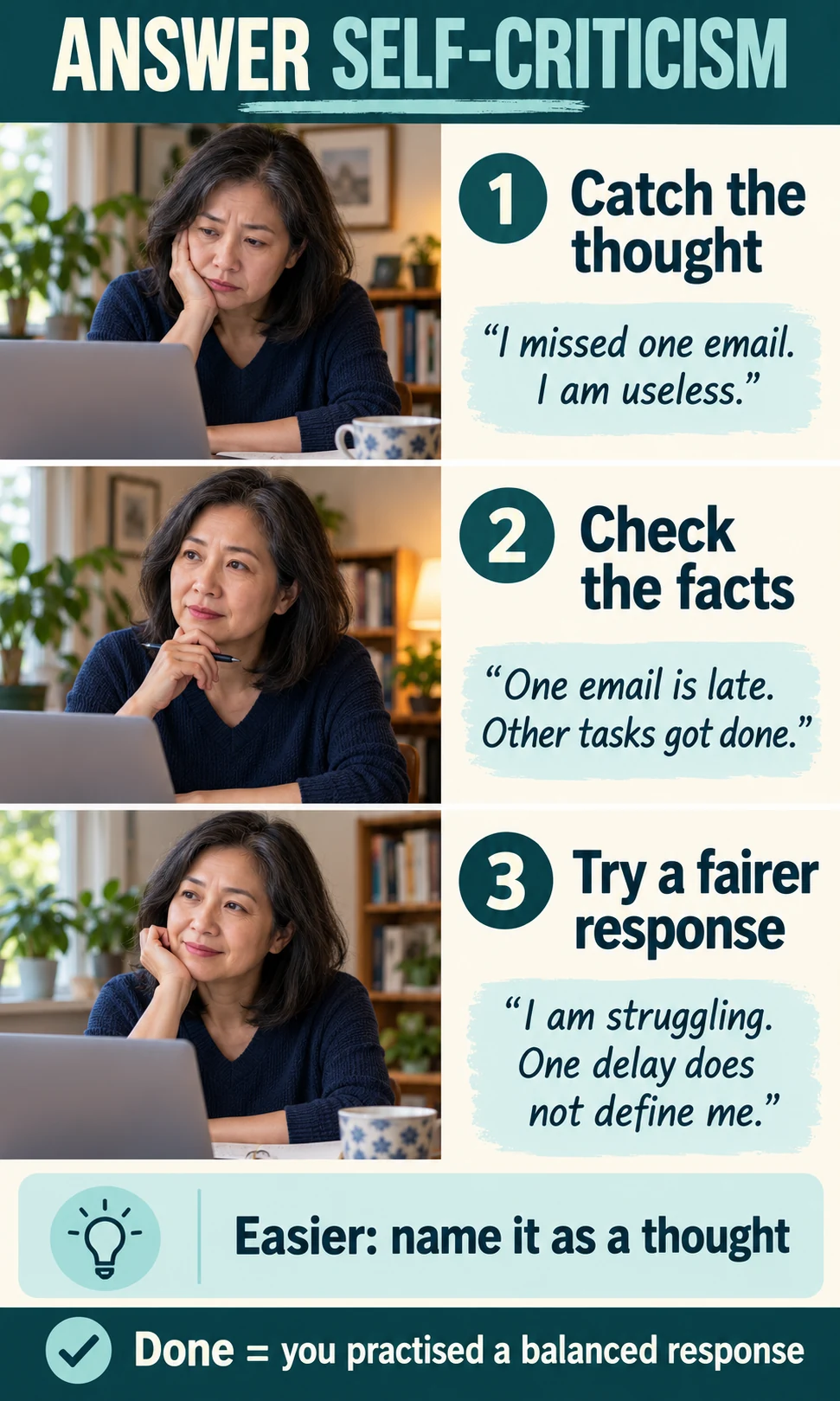
Balanced thinking means improving accuracy, not denying pain. A real setback can coexist with evidence that a global judgment is too harsh. If the problem is unsafe housing, discrimination or abuse, changing your thoughts does not remove the need for practical protection and support. For help recognizing recurring harsh judgments, explore how to stop negative self-talk.
The underlying approach is described in guidance on reframing unhelpful thoughts. This worked example makes the approach easier to try in daily life. It is a practice example, rather than a clinical outcome or evidence that the exercise will work for everyone.
Send one small message when you are pulling away
Use this when: You want support but explaining everything feels exhausting. Choose someone who is usually respectful and safe. Decide on one specific request that fits your energy. A short message can be enough to open contact without telling your whole story.
- Choose one trusted person. Avoid someone who pressures, belittles or frightens you.
- Write one request: “Having a rough day. Could we talk for 5 minutes?”
- Send it when you are ready. You can say that you only need listening, rather than advice.
- Put the phone aside and allow time for a reply. A delayed answer is not evidence about your worth.
Illustrative example: you have ignored a friend’s messages because a long conversation feels impossible. You ask for a five-minute call instead of accepting a whole evening out. Sending that request completes the first-contact step; your friend’s response remains outside your control.
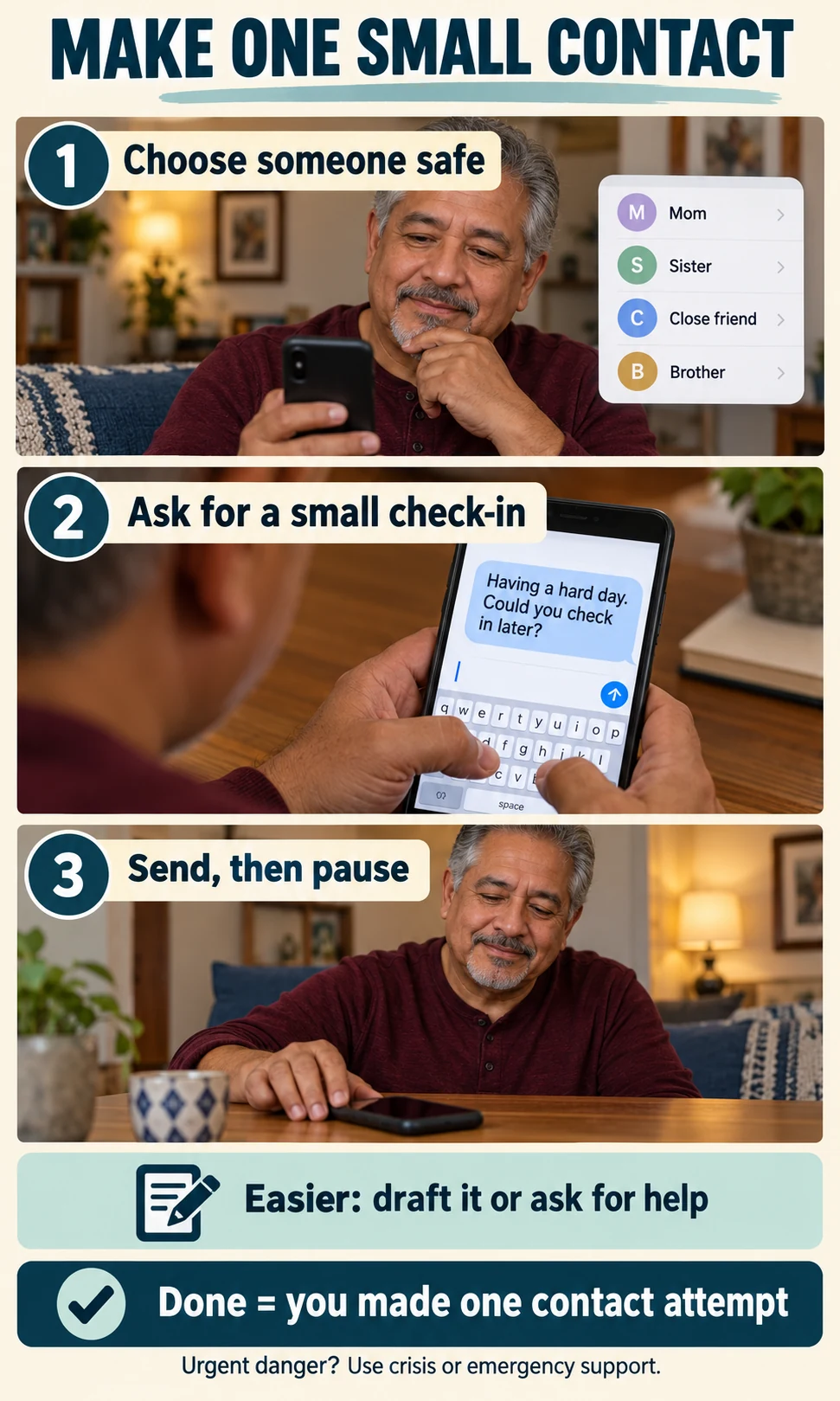
Social withdrawal can remove ordinary opportunities for support. A smaller request can reduce the preparation and performance pressure of a larger social plan. Contact supports coping, but a friend cannot replace professional care when symptoms are severe or persistent. To understand the pattern behind cancelled plans and unanswered messages, explore social withdrawal and depression.
Try gentle movement when a workout feels out of reach
Use this when: You have been inactive, but a full workout feels unrealistic. Choose a clear, flat route and comfortable footwear. Use only movement that is suitable for your health and current ability. If activity worsens symptoms, or a clinician has set limits, follow those limits and ask for an individualized option.
- Choose a safe place, such as a clear corridor at home.
- Pick up to two comfortable minutes for this example. You may stop earlier.
- Move at an easy pace without chasing a distance or fitness target.
- Stop and rest. Stop immediately for pain, dizziness or unusual breathlessness.
Illustrative example: changing clothes and going to the gym requires more effort than you can manage. You choose a short walk along a clear corridor, then sit down to rest. The exercise is complete when you have tried the agreed movement within your limits.
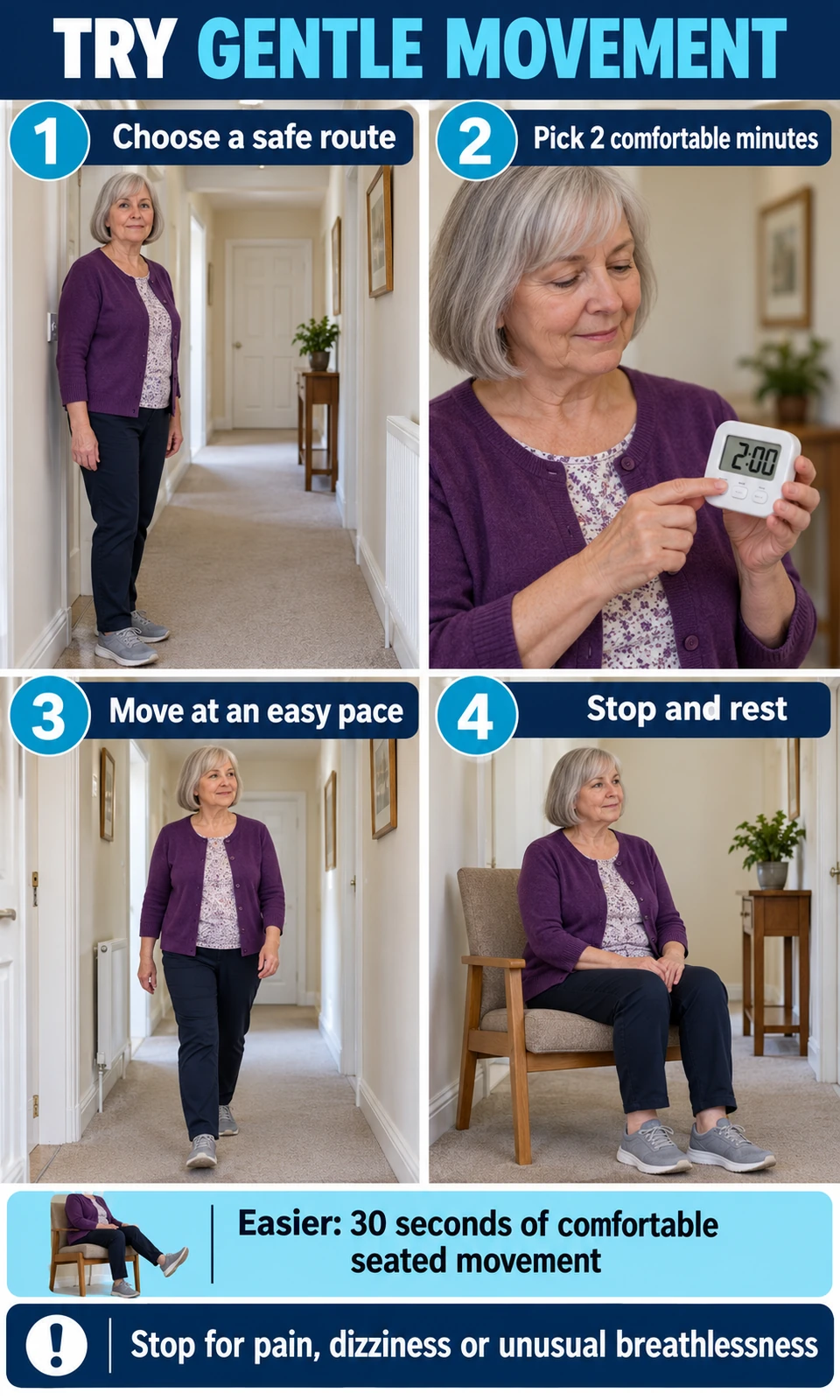
Physical activity can support mental wellbeing and provide a change from prolonged inactivity. Its effects vary, and a short movement break is not equivalent to an exercise treatment program. For chronic illness, disability or symptoms that worsen after exertion, adapting activity matters more than increasing it.
Build a wake-up anchor when your days lose structure
Use this when: Your waking times vary so much that the day has no dependable starting point. Choose a wake time that fits your sleep needs, work and caring responsibilities. The aim is a practical anchor rather than suddenly adopting an early schedule. Do not deliberately cut sleep to prove that you are following a routine.
- Pick a realistic wake time. The illustrated 8:00 time is an example, not a universal recommendation.
- Set one reminder or ask for an agreed morning prompt.
- Try a similar waking time when practical. Follow any sleep advice already given by your clinician.
- If the time repeatedly does not fit, adjust it without blame. A missed morning is a reason to review the setup.
Illustrative example: your usual waking time drifts across several hours. You choose a realistic time, set one reminder and try it the next morning. If caring duties disrupt the night, you adjust the anchor rather than turning the missed time into a judgment about yourself.
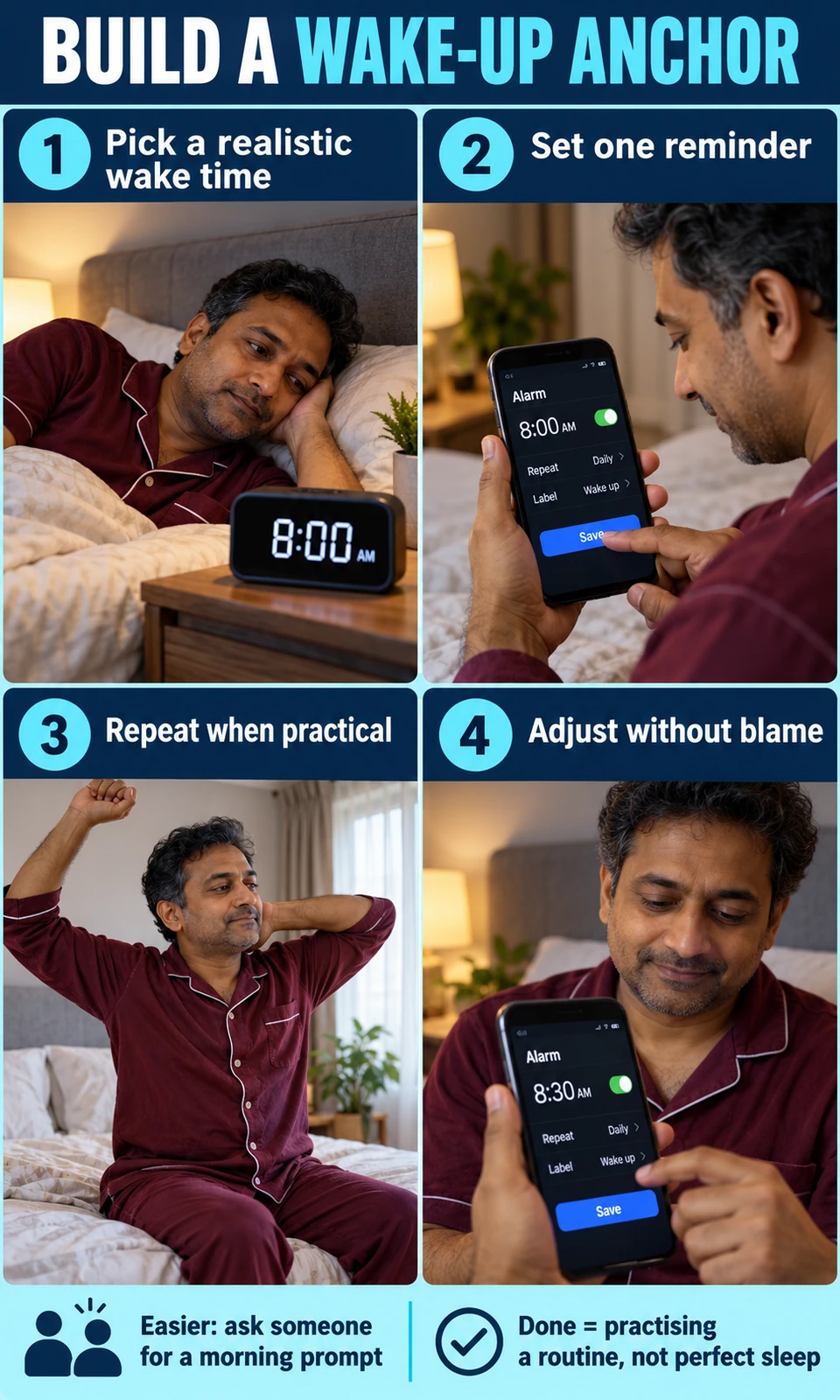
Regular sleeping and waking times can support a sleep routine. Depression and sleep difficulties can also reinforce one another, so an alarm alone may not address the underlying problem. Persistent disruption deserves assessment rather than stricter self-discipline. For context on insomnia, oversleeping and other patterns, explore depression and sleep problems.
What to change when a coping exercise does not help
| What happens | What it may mean | A practical adjustment |
|---|---|---|
| You cannot start | The first step still has too many demands. | Use the easier option or ask someone to help with setup. |
| You complete it but still feel low | Task completion and mood change are different outcomes. | Keep the step only if it is manageable and useful; do not treat it as proof of recovery. |
| The thought exercise becomes an argument | You may be trying to force a conclusion. | Stop at noticing the thought and bring the difficulty to a therapist if needed. |
| Movement worsens symptoms | The activity may not fit your health or current limits. | Stop and seek advice about a suitable adaptation. |
| You miss a chosen time | The setup may conflict with sleep needs or responsibilities. | Revise the waking anchor rather than adding punishment or sleep loss. |
A disappointing attempt does not show that you are lazy or beyond help. It may show that the action needs changing, that support is missing or that symptoms need more treatment. Avoid turning coping practice into a daily test of your worth.
When self-help needs professional support
Arrange an assessment if low mood or loss of interest lasts around two weeks, keeps returning or interferes with work, relationships or caring for yourself. Seek help sooner if symptoms are worsening or you are struggling to meet basic needs. Depression treatment can include psychotherapy, medication or both, with choices based on your circumstances.
A primary care clinician can assess symptoms and possible medical contributors, while a licensed mental health professional can provide structured treatment. If you already receive treatment, discuss ongoing difficulties with your clinician rather than changing medication on your own. Ask prospective providers about qualifications, experience treating depression, costs, access and what they offer between appointments.
Frequently asked questions
What is the best coping skill for depression?
There is no single best skill for everyone. Choose a skill that matches the immediate difficulty, such as a tiny task for trouble starting or a short message for isolation. Persistent or disabling symptoms also need assessment and an appropriate treatment plan.
Can coping skills cure depression?
Coping skills can support daily functioning, but they do not guarantee recovery or replace treatment. Some people need psychotherapy, medication or other clinician-guided care. Needing additional support is not a failure of effort.
What if I have no energy to try an exercise?
Use the easier version, such as placing a cup by the sink or drafting a message. You may also need someone to help with setup. If exhaustion prevents basic care or is worsening, seek medical assessment rather than pushing harder.
Do I need to record my mood every day?
No daily mood diary is required for these exercises. The useful question here is whether the step was manageable and what to change next. A record can be helpful when you and a clinician know which pattern it is intended to clarify.
Should I wait until I feel motivated?
You can sometimes try a very small action before motivation arrives. Keep the action within your energy and health limits, and give yourself permission to stop. The aim is practice, not forcing yourself through significant exhaustion.
How long should I try self-help before seeking care?
Do not use a fixed self-help trial as a reason to delay care. Seek assessment when symptoms persist, worsen or disrupt daily life, and sooner for safety concerns or difficulty meeting basic needs. Self-help can continue alongside appropriate treatment.
Make the next step small enough to use
Choose one skill for the difficulty that is most relevant today. Use the easier option whenever it makes the exercise more workable, and count practising as completion. If symptoms keep narrowing your daily life, let that be a reason to obtain more support rather than a reason to demand more from yourself.