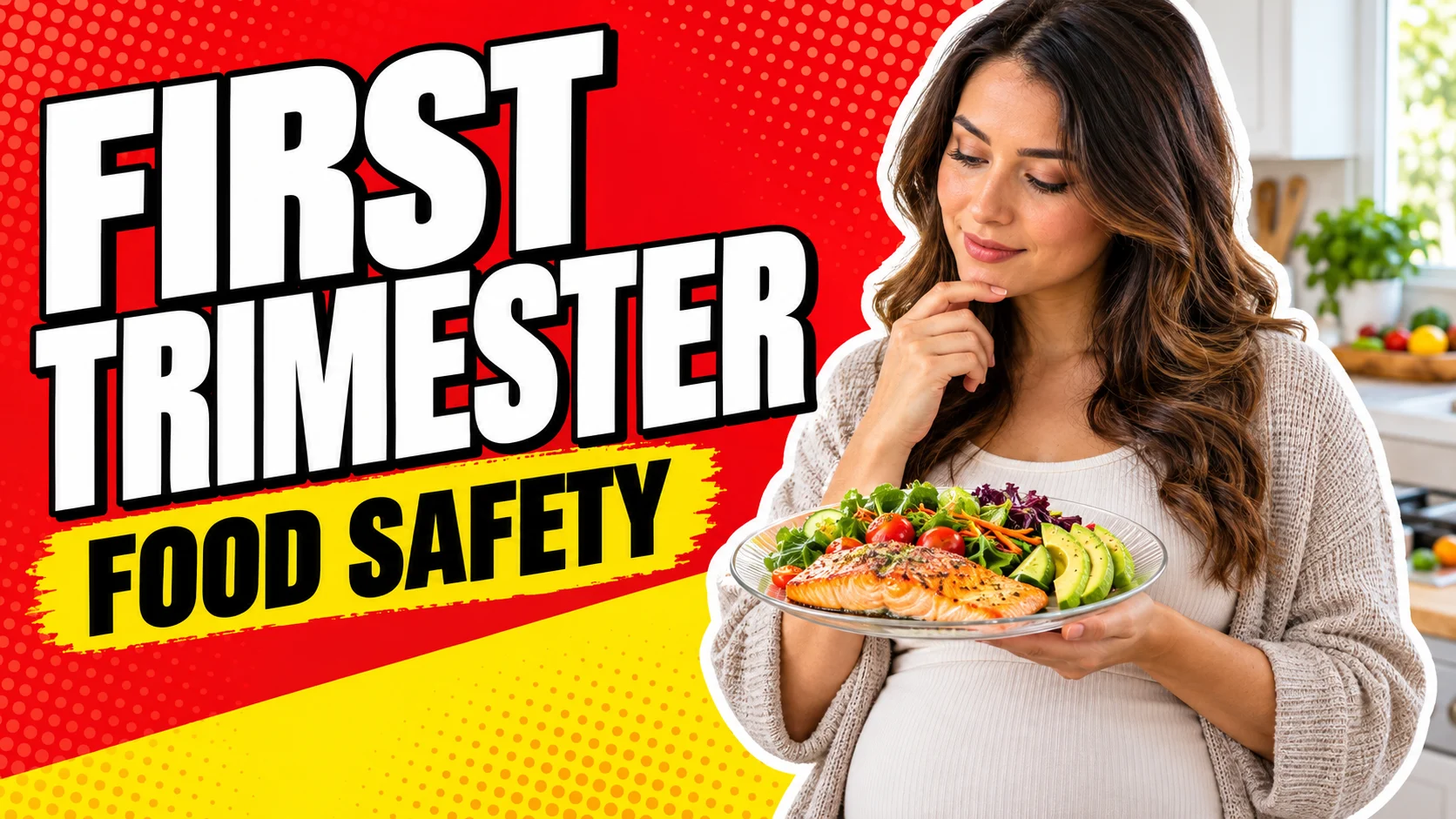

In the first trimester, avoid alcohol, high-mercury fish, raw animal foods, unpasteurized dairy, and a few ready-to-eat foods with a higher risk of foodborne illness. Most everyday foods, including avocado, tomatoes, peppers, and sweet potatoes, are safe when washed, stored, and prepared properly. The same core safety rules continue throughout pregnancy.
Quick answer: avoid, check, or enjoy
The useful question is often how a food was prepared, not simply what it is called. A cooked salmon roll and a raw salmon roll are different decisions; so are a hot deli-meat sandwich and a cold one. Use this table for orientation, then check the details below when a label, source, or cooking method is uncertain.
| Food group | Avoid | Limit or check | Usually suitable |
|---|---|---|---|
| Fish and seafood | Shark, swordfish, king mackerel, marlin, orange roughy, tilefish (Gulf of Mexico), bigeye tuna; raw fish and shellfish | Tuna type and weekly portions; cold-smoked fish unless heated | Thoroughly cooked salmon, sardines, shrimp, and other lower-mercury choices |
| Meat and eggs | Raw or undercooked meat and poultry; raw eggs unless a locally approved lower-risk scheme applies | Cold deli meats, hot dogs, cured meats; recipes with uncooked egg | Fully cooked meat and poultry; eggs cooked thoroughly or pasteurized egg products |
| Dairy and prepared foods | Raw milk and unpasteurized dairy; higher-risk soft cheeses served cold; raw sprouts | Chilled ready-to-eat salads and sandwiches; fresh soft cheeses such as queso fresco | Pasteurized milk and yogurt; hard cheeses; freshly prepared foods served hot |
| Produce and drinks | Alcohol; unwashed produce; unpasteurized juice | Caffeine up to 200 mg/day; herbal products with uncertain ingredients | Well-washed fruit and vegetables, water, pasteurized drinks |
Regional guidance differs. The U.S. FDA/EPA fish chart and the U.K. NHS use different serving systems, and U.K. British Lion egg advice has a specific supply-chain basis. Follow the guidance where you live and any individual advice from your maternity team. A condition such as diabetes, severe nausea, allergy, or foodborne infection may change your plan.
What to avoid, and what to have instead
High-mercury fish
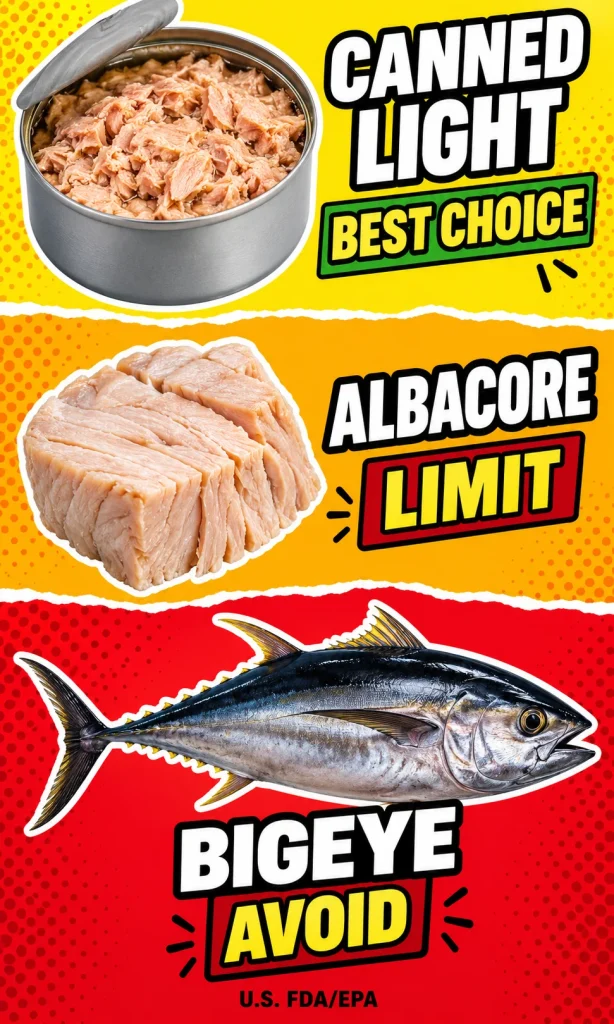
Mercury can affect a developing nervous system, so avoid the FDA/EPA “Choices to Avoid”: shark, swordfish, king mackerel, marlin, orange roughy, tilefish from the Gulf of Mexico, and bigeye tuna. Fish itself is valuable in pregnancy; U.S. guidance recommends 8–12 ounces per week of a variety of lower-mercury fish. Choose properly cooked salmon, sardines, trout, shrimp, or canned light tuna according to the fish chart rather than eliminating all seafood.
Raw fish and shellfish
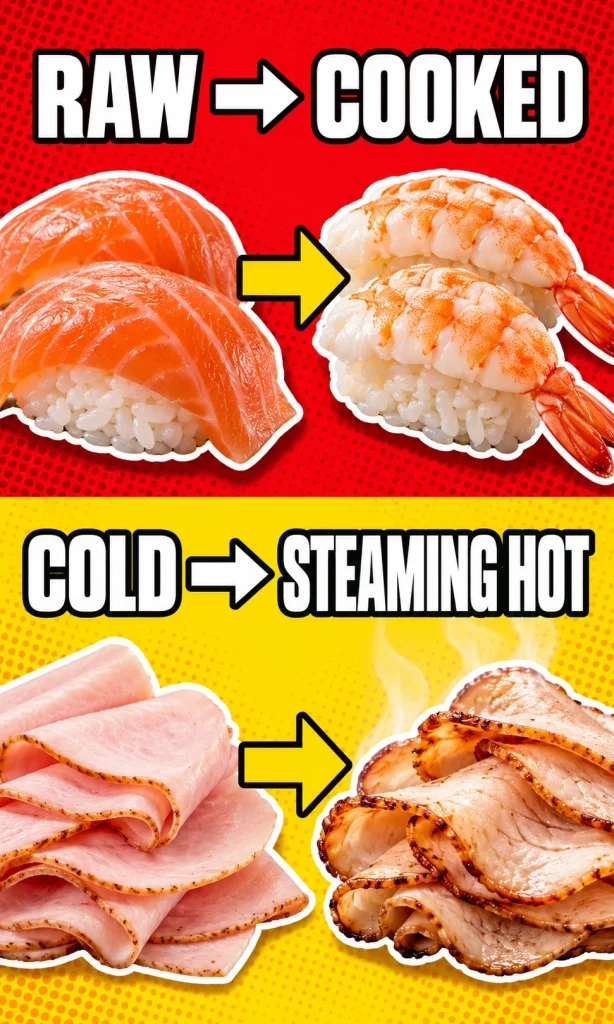
Skip raw sushi and sashimi, oysters, ceviche, and undercooked shellfish because of infection and parasite risks. Freezing fish for sushi does not make every bacterial risk disappear. A roll made with cooked fish or cooked shrimp can be an option if it is prepared hygienically and kept separate from raw ingredients.
Undercooked meat, poultry, and ready-to-eat meats
Cook meat and poultry to safe temperatures, and prevent raw juices from reaching salad or cooked food. Cold deli meat and hot dogs can carry Listeria, which can grow even in a refrigerator; reheat them until steaming hot, 165°F/74°C, immediately before eating. The advice concerns contamination and temperature, so “processed” is not by itself a complete safety category: a thoroughly heated deli sandwich differs from one eaten straight from the pack.
Raw milk, soft cheese, and refrigerated pâté
Avoid raw milk and dairy products made from unpasteurized milk. Soft, mold-ripened or blue cheeses, queso fresco-type fresh cheeses, and deli-sliced cheese need extra care because some can support Listeria even when a label says pasteurized; the simplest swap is a pasteurized hard cheese or a soft cheese heated until steaming. Avoid refrigerated pâté and chilled meat spreads; check local guidance for shelf-stable products.
Raw eggs and uncooked egg mixtures
Raw batter, homemade mayonnaise, mousse, and dressings may contain uncooked egg. Use pasteurized egg products or cook eggs thoroughly, particularly when the egg source is uncertain. U.K. guidance permits raw or lightly cooked hen eggs carrying the British Lion stamp or produced under the Laid in Britain scheme; do not generalize that exception to eggs in other countries or to duck, goose, or quail eggs.
Raw sprouts, unpasteurized juice, and poorly washed produce
Raw alfalfa, mung bean, and other sprouts can carry bacteria inside the seed, where rinsing cannot reliably remove them. Cook sprouts thoroughly, choose pasteurized juices, wash whole produce under running water, and refrigerate cut produce promptly. A prewashed salad or cut fruit is not automatically forbidden, but respect its use-by date, refrigeration needs, and any recall notice.
Alcohol, liver, and high-retinol supplements
There is no established safe amount of alcohol during pregnancy, so choose alcohol-free drinks. Avoid liver and liver products, as well as cod liver oil and supplements containing preformed vitamin A (retinol), because excessive vitamin A can harm development. Ordinary orange vegetables such as sweet potatoes are a different source of vitamin A and do not belong on this avoid list.
What needs a limit or a label check?
Caffeine: count the whole day
Keep caffeine at or below 200 mg a day, counting coffee, tea, cola, energy drinks, chocolate, and some medicines. A large café coffee may contain much more caffeine than a home cup, so check the seller’s estimate instead of counting cups alone. Decaf drinks can make the arithmetic easier; discuss medicines or herbal supplements with a clinician or pharmacist.
Tuna, oily fish, and local fish advisories
In U.S. guidance, canned light tuna is a “Best Choice” and albacore or white tuna is a “Good Choice”: 2–3 adult servings a week of varied Best Choices, or one Good Choice serving and no other fish that week. The NHS instead limits tuna to four medium cans or two steaks a week and oily fish to two portions. These systems are not interchangeable; choose one applicable local chart, especially for locally caught fish subject to regional advisories.
Herbal teas and chilled prepared foods
“Natural” does not establish safety in pregnancy. Check the ingredients in concentrated herbal drinks and supplements; the NHS advises avoiding liquorice-root tea and limiting other herbal teas. Chilled prepared sandwiches, salads, cold-smoked fish, and pre-cut fruit deserve careful refrigeration and date checks, with high-risk items heated as advised locally.
Can I eat these common foods?
| Food | Practical answer | What changes it |
|---|---|---|
| Avocado | Yes | Wash the outside before cutting and refrigerate cut portions. |
| Tomatoes and bell peppers | Yes | Wash thoroughly; refrigerate prepared salads. |
| Sweet potatoes | Yes | Wash and cook; this is not equivalent to a retinol supplement. |
| Pineapple | Yes, as ordinary food | Avoid treating concentrated extracts or supplements as equivalent to fruit. |
| Papaya | Ripe fruit can be eaten as food; avoid unripe or semi-ripe papaya if uncertain | Evidence and local precautionary advice are less consistent here; ask your maternity team about traditional preparations or extracts. |
| Eggs | Yes, with appropriate cooking or pasteurization | Raw or runny eggs depend on local egg-safety guidance. |
| Soft cheese | Depends on the cheese | Milk pasteurization, cheese type, and whether it is heated until steaming all matter. |
| Sushi | Choose cooked fillings | Raw fish and cross-contact are the concerns. |
The old version of this page incorrectly listed tomatoes, peppers, sweet potatoes, and avocado as foods to avoid. None is a blanket pregnancy restriction. Wash produce, handle cut fruit and vegetables safely, and adjust any individual food intolerance or allergy with your clinician.
What can I eat when nausea makes everything difficult?
When nausea is strong, food safety still matters, but an ideal-looking meal may be unrealistic. Try small, frequent amounts of foods you can tolerate: dry toast or crackers, oatmeal, rice, soup served hot, washed fruit, pasteurized yogurt, nut butter, or a fully cooked egg. Drink fluids in small sips and return to varied meals as you are able.
For a simple day, consider oatmeal with pasteurized yogurt and washed berries; a warm lentil or fully cooked chicken lunch; crackers and a banana; then a thoroughly cooked low-mercury fish with rice and cooked vegetables. Vegetarian or vegan meals can use cooked beans, lentils, tofu, nuts, and fortified foods, but discuss vitamin B12, iron, iodine, choline, vitamin D, and omega-3 planning with your maternity team. Folic acid supplements remain important in early pregnancy; food alone may not provide the recommended amount.
Contact your maternity clinician promptly if you cannot keep fluids down, are passing very little urine, feel dizzy, or have ongoing vomiting. Food lists cannot replace care for dehydration or severe pregnancy sickness. Your clinician can help with treatment while protecting nutrition and hydration.
Pregnancy food decisions
First Trimester Food Check
Choose a food and how you plan to serve it. Get a clear next step, then save the A4 kitchen summary.
Your food decision
Make two selections to see the preparation advice. The answer depends on cooking, pasteurization, fish type, and storage.
General guidance for pregnancy. Your maternity team's advice and local food alerts take priority.
If you already ate a food on the avoid list
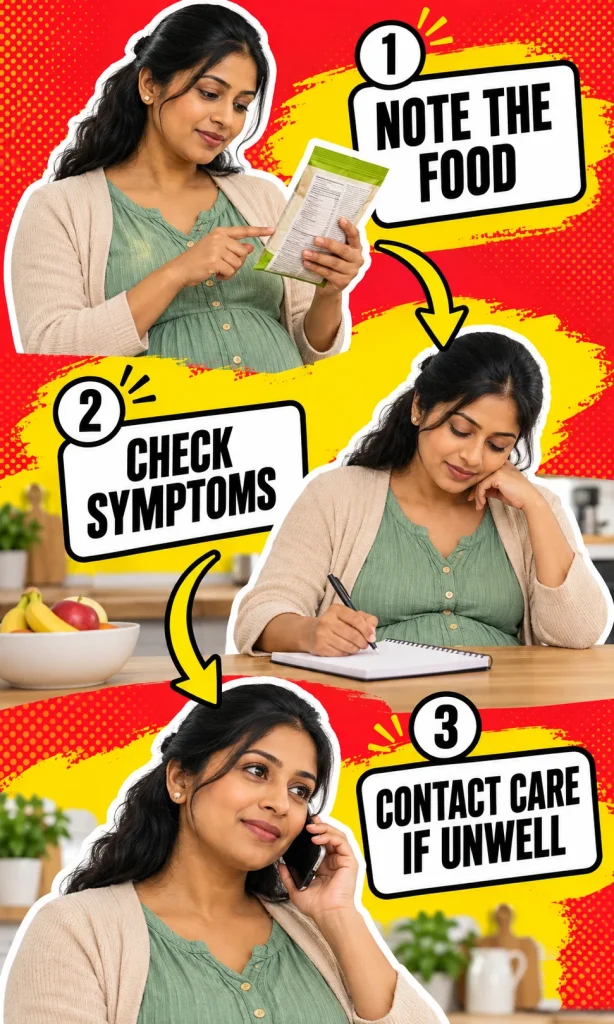
One exposure does not mean an infection occurred or that a pregnancy has been harmed. Note what you ate, when you ate it, whether the item was recalled, and whether you have symptoms; then contact your maternity team if you feel ill or are concerned. Fever, muscle aches, unusual tiredness, vomiting, or diarrhea after a suspect food merit medical advice, particularly with a recalled food or known Listeria exposure.
If you ate a possibly contaminated food and feel well, CDC guidance says most experts do not recommend automatic tests or treatment, even for people at higher risk. A healthcare professional can advise on your specific exposure and local outbreak information. Seek urgent care for severe symptoms or signs of dehydration rather than waiting for a web checklist to decide.
A short shopping and kitchen checklist
- Choose pasteurized dairy and juice; read labels on fresh soft cheeses.
- Select lower-mercury fish and cook seafood thoroughly.
- Heat deli meat, hot dogs, and relevant chilled ready-to-eat foods until steaming hot.
- Cook meat and eggs appropriately; keep raw ingredients separate.
- Wash produce, cook sprouts, chill perishables, and respect recall notices.
- Skip alcohol, liver, and retinol supplements; count caffeine across the day.
These checks apply after the first trimester too. Early pregnancy makes nutrition and nausea especially salient, but there is no switch at week 13 that makes raw shellfish, high-mercury fish, or unpasteurized milk safe. A steady food-safety routine is easier to use than a growing list of supposed forbidden vegetables.
Frequently asked questions
Can I eat sushi in the first trimester?
Choose sushi with thoroughly cooked fish, cooked shellfish, or suitable vegetable fillings from a place that handles ingredients hygienically. Avoid raw fish and shellfish because freezing does not remove every bacterial risk. If the same preparation area handles raw seafood, ask how cross-contact is controlled.
Is deli meat safe if I heat it?
Heat deli meat and hot dogs until steaming hot, about 165°F/74°C, immediately before eating. Keep the hot food away from contaminated utensils or raw ingredients afterward. If it cools in a sandwich later, follow safe holding and refrigeration practice.
How much caffeine can I have?
A common pregnancy limit is no more than 200 mg per day from all sources. Coffee strength and serving size vary considerably, so check a product’s caffeine amount. Include tea, cola, energy drinks, chocolate, and relevant medicines in the daily total.
Are all soft cheeses unsafe?
No. Safety depends on pasteurization, cheese type, storage, and local advice; some fresh or mold-ripened soft cheeses carry extra Listeria concern even when made with pasteurized milk. A pasteurized hard cheese is a simple cold option, while heating higher-risk cheese until steaming can make it suitable. Check the label and the guidance where you live.
Do these rules change after the first trimester?
The main food-safety rules continue throughout pregnancy. Nausea and nutritional priorities can change, but infection risks, mercury exposure, and alcohol concerns do not end at week 13. Keep using local pregnancy guidance and any individualized advice from your maternity team.
Sources and review notes
Food guidance checked against the CDC safer food choices, FDA/EPA fish advice, NHS pregnancy foods guidance, FoodSafety.gov, and CDC Listeria symptom guidance. This article is general information; have its medical claims reviewed by a qualified pregnancy-care professional before publication.