Dysthymia vs Depression: What the Difference Means
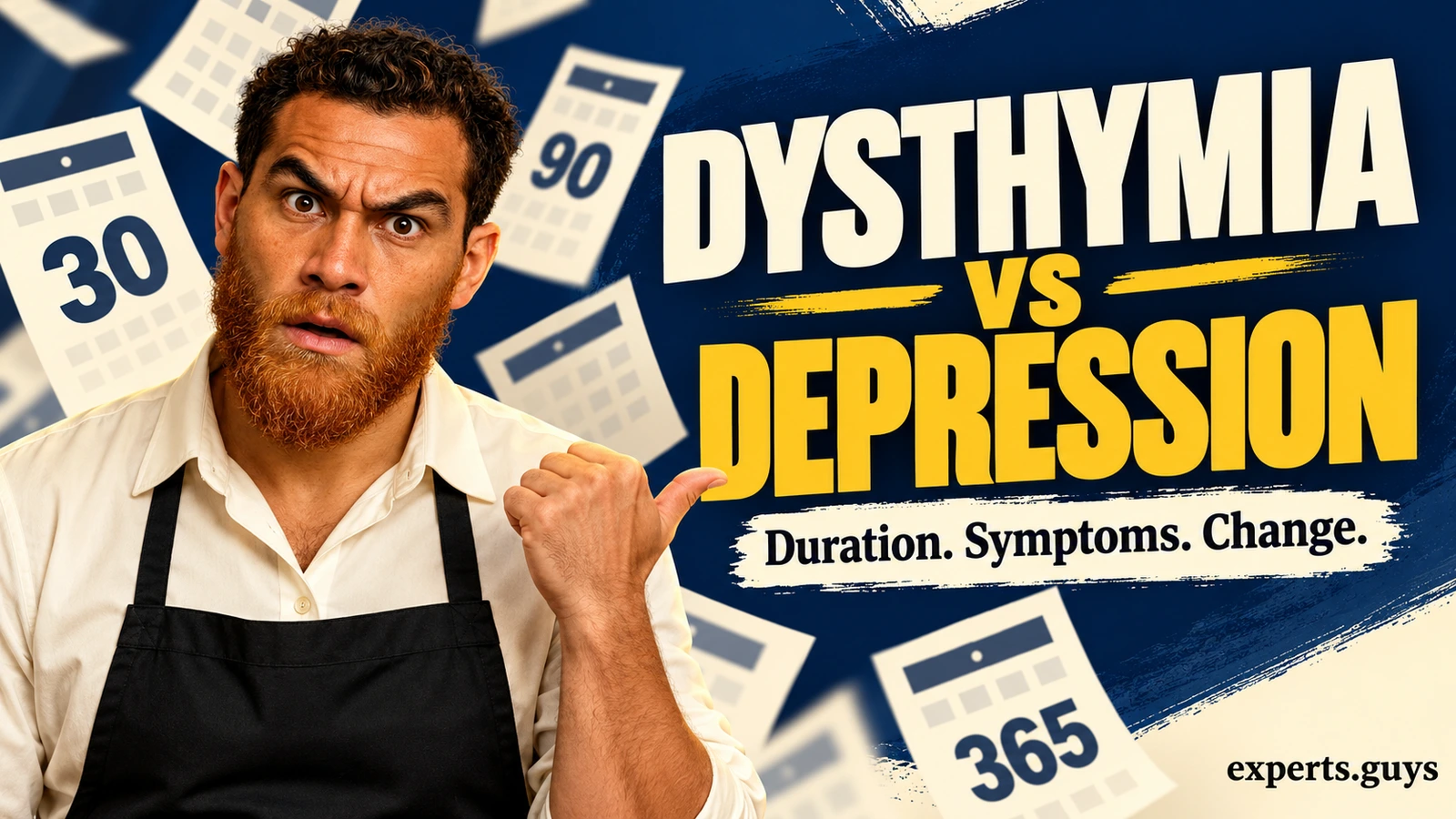
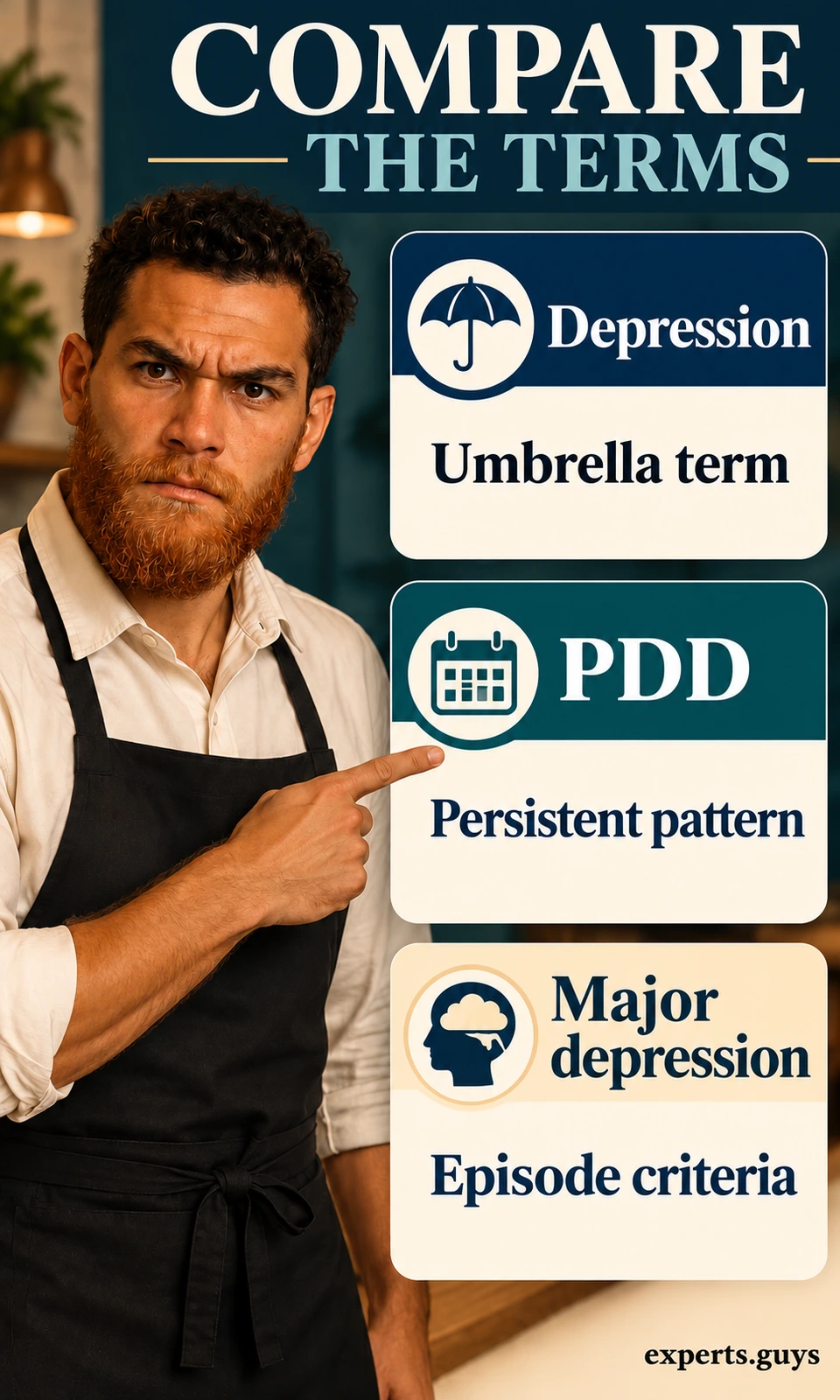
Dysthymia is a term associated with persistent depressive disorder (PDD), which is itself a form of depression; the useful comparison is usually PDD versus major depressive disorder. PDD emphasizes a long-lasting pattern, while major depression requires a particular combination of symptoms during an episode. Duration and current severity both matter, so a familiar low mood should not make a new deterioration seem unimportant.
This guide compares the terms and the decisions they affect, rather than asking you to diagnose yourself. A long history does not automatically mean mild illness, and a short history does not mean you should wait for help. Start with what has changed in your ability to live, work and care for yourself.
What is the difference between dysthymia and major depression?
| Comparison | Persistent depressive disorder (PDD) | Major depressive disorder |
|---|---|---|
| Main emphasis | A sustained depressive pattern. | Qualifying symptoms during a major depressive episode, with the wider history considered. |
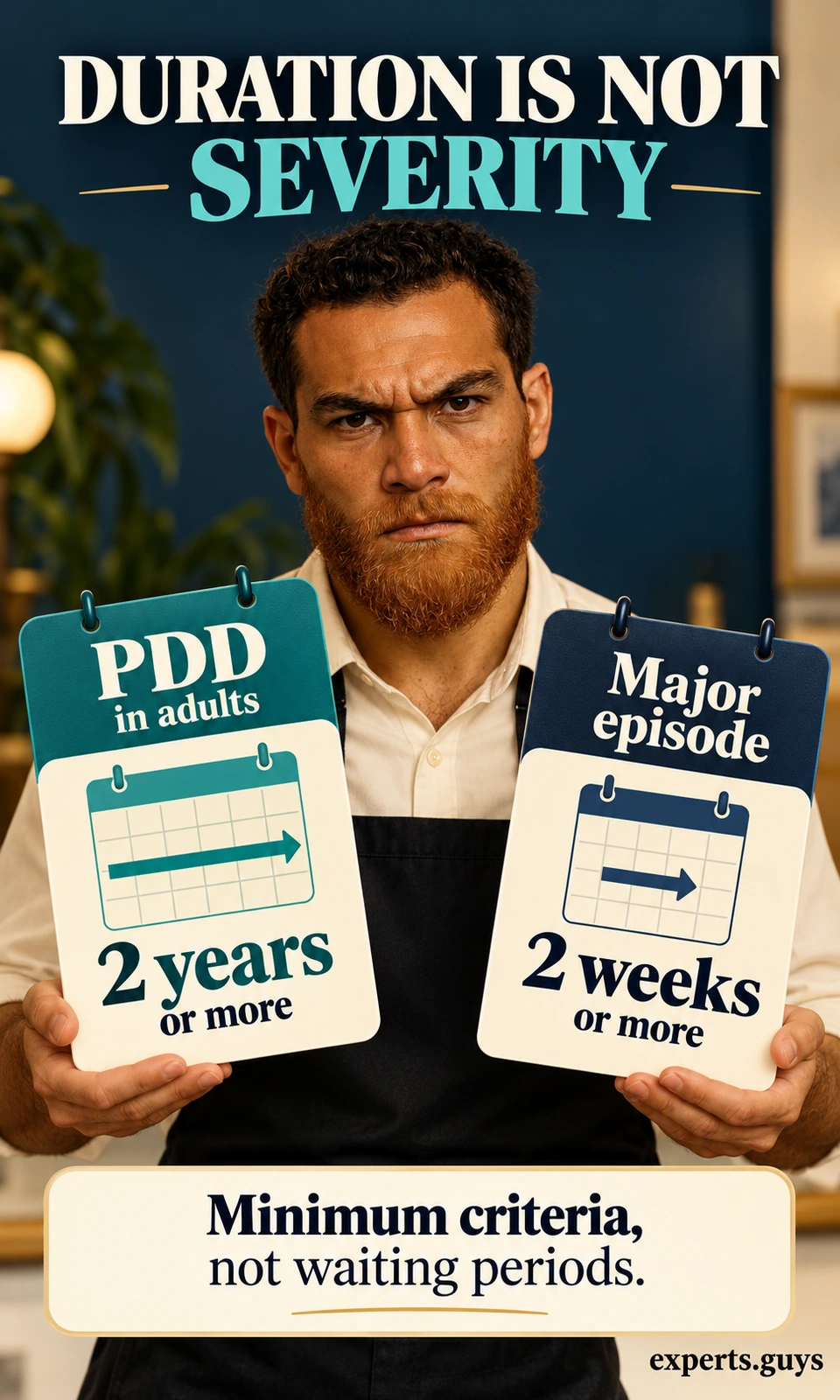
| Adult minimum duration | At least 2 years for the qualifying persistent pattern. | At least 2 weeks for an episode; it can last considerably longer. |
| Severity | Can cause substantial impairment; do not assume mild. | Can vary in severity; the name alone does not determine urgency. |
| Relationship | Can include major depressive episodes. | May occur as a single episode, recur or become persistent. |
| Useful next step | Describe the background pattern and any recent worsening. | Describe the current symptoms, impact and previous episodes. |
The adult PDD pattern involves depressed mood for much of the day on more days than not, plus associated symptoms and clinically meaningful distress or difficulty functioning. Major depressive episodes involve at least five qualifying symptoms within the same two-week period, including depressed mood or loss of interest or pleasure. These are abbreviated descriptions, not complete diagnostic rules; a clinician must also consider other explanations and the wider history.
In DSM terminology, PDD brought together older dysthymic disorder and some chronic major-depression presentations. That makes “PDD is always mild” an unreliable shortcut. The NIMH depression overview explains the broader relationship between depressive conditions and their treatment.
- Compare like with like: ask whether “depression” means a symptom, a broad category or a specific diagnosis.
- Keep two questions separate: how long has the pattern lasted, and how severe is it now?
- Use symptoms as information: familiar experiences on a checklist do not establish a diagnosis.
Does longer-lasting depression mean less severe depression?
No. Duration describes time; severity describes the symptom burden and its effect on life. A person can have a persistent pattern with substantial impairment, while another person can experience a major depressive episode without years of preceding low mood. Neither label reliably tells you how urgently a particular person needs support.
Read the time thresholds correctly
MedlinePlus describes the age-specific duration requirements. For adults, PDD generally requires a qualifying pattern lasting at least two years; for children and adolescents, the duration is at least one year and mood may be irritable. A major depressive episode has a minimum duration of two weeks, but an episode can last much longer. “Two weeks” is not an expected recovery time, and “two years” is not a waiting period before receiving care.
When comparing explanations online, identify whether a number describes a diagnostic minimum, an actual illness history or a treatment review interval. Those numbers answer different questions. If a page implies that help is unavailable before a duration threshold, do not use it to delay an assessment.
Count the cost of functioning, not only completed tasks
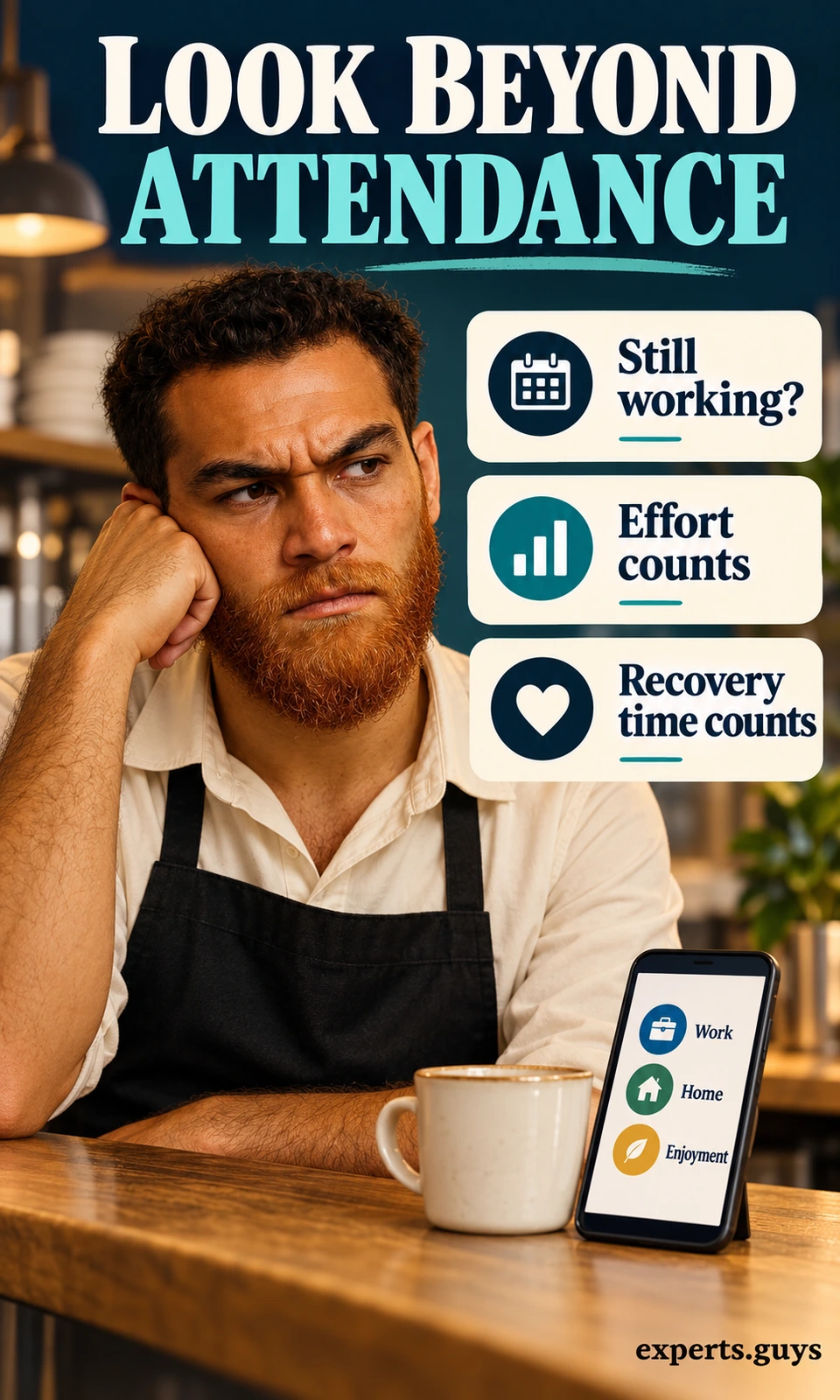
Attendance at work is a poor stand-alone measure of wellbeing. Someone may finish a shift but need much more effort than usual, stop preparing food afterwards or lose interest in relationships. Equally, missing work can have many causes, so the example needs context rather than an automatic psychiatric label.
- Choose one ordinary activity: preparing dinner, replying to messages or completing a shift.
- Compare the effort and after-effects with your own usual functioning, not someone else’s productivity.
- Type or dictate one observable example into a private phone note: “I finish work, but I now skip dinner because starting it feels impossible.”
This is a communication aid, not a symptom scale. If remembering several activities feels overwhelming, use just one recent example or explain it aloud. The useful result is a clearer description of impact; repeatedly monitoring every task can become burdensome and is unnecessary.
Can persistent low mood and a major depressive episode overlap?
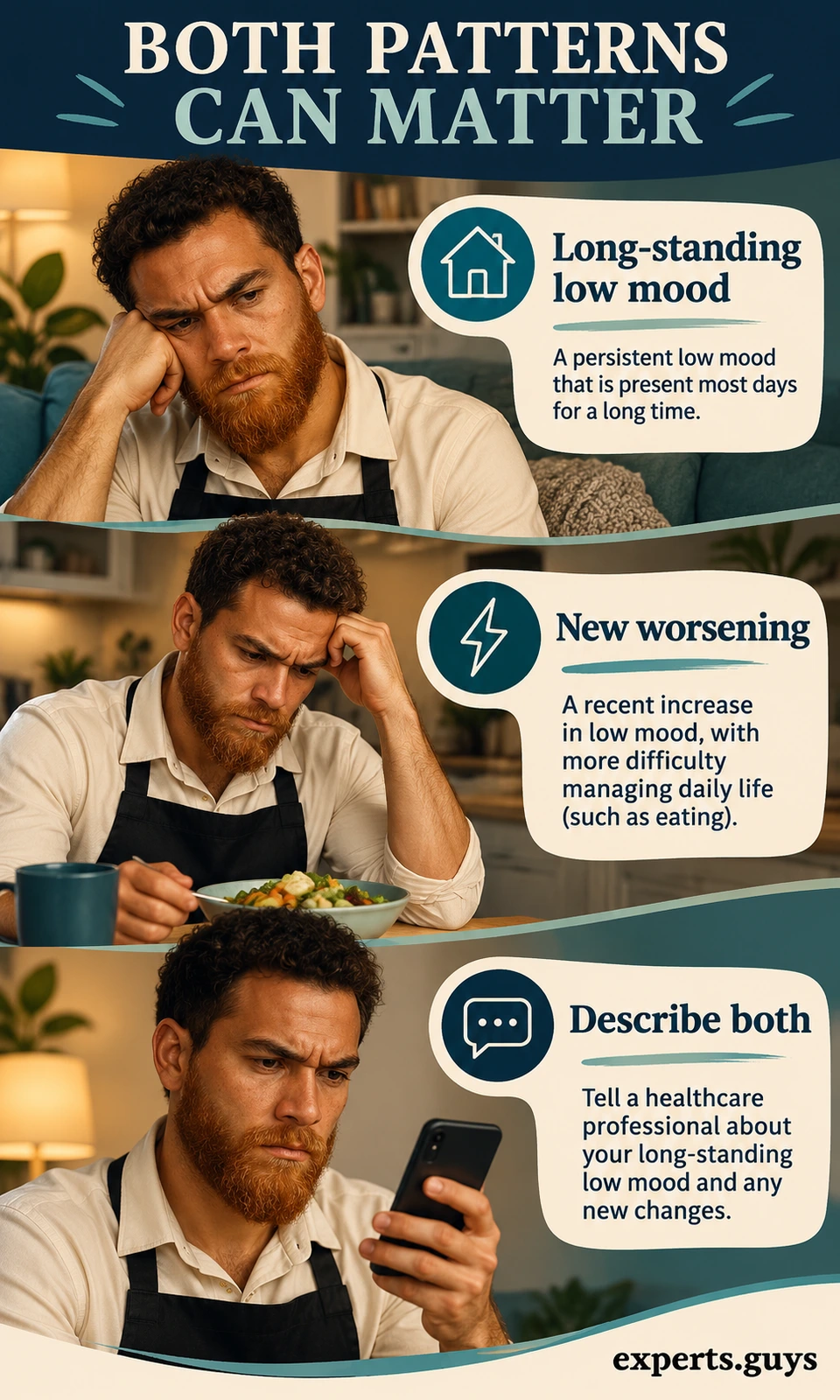
Yes. A longstanding depressive pattern can include periods that meet major-episode criteria, and a sustained major-depression presentation can also be chronic. “Double depression” is sometimes used informally for a major episode superimposed on dysthymia. It is not a test result and does not mean someone has twice the severity of another person.
Consider an illustrative adult who has felt low for years but recently stopped enjoying anything and is struggling to eat regularly. The longstanding pattern and the recent loss of functioning are both relevant. This example cannot determine PDD, major depression or any other diagnosis; it shows why the phrase “I have always been like this” can hide a meaningful change.
- Persistent background: describe the usual difficulties in plain language.
- Recent difference: state what is newly worse or newly present.
- Current needs: say whether eating, drinking, sleep, safety or essential responsibilities are affected.
If you might act on thoughts of suicide or cannot stay safe, contact local emergency services or go to the nearest emergency department now; ask a trusted person to stay with you if possible. New hallucinations, severe confusion, or an inability to maintain food or fluids also need urgent medical assessment. Do not wait to finish a note or meet a duration threshold.
Can a better day rule either condition out?
A pleasant afternoon or an enjoyable event does not by itself describe the overall course of an illness. Clinicians ask about the frequency, persistence and completeness of improvement, alongside associated symptoms. For PDD, extended symptom-free intervals matter, but reconstructing this from memory is not a reliable way to diagnose yourself.
Use your own words if the boundaries are unclear: “I had better days, but I do not remember a sustained period of feeling well.” Avoid turning uncertain memories into exact dates to fit a definition. The separate persistent depressive disorder guide covers preparing a fuller mood history if that is your next task.
What information actually changes the assessment?
A screening score cannot settle PDD versus major depression
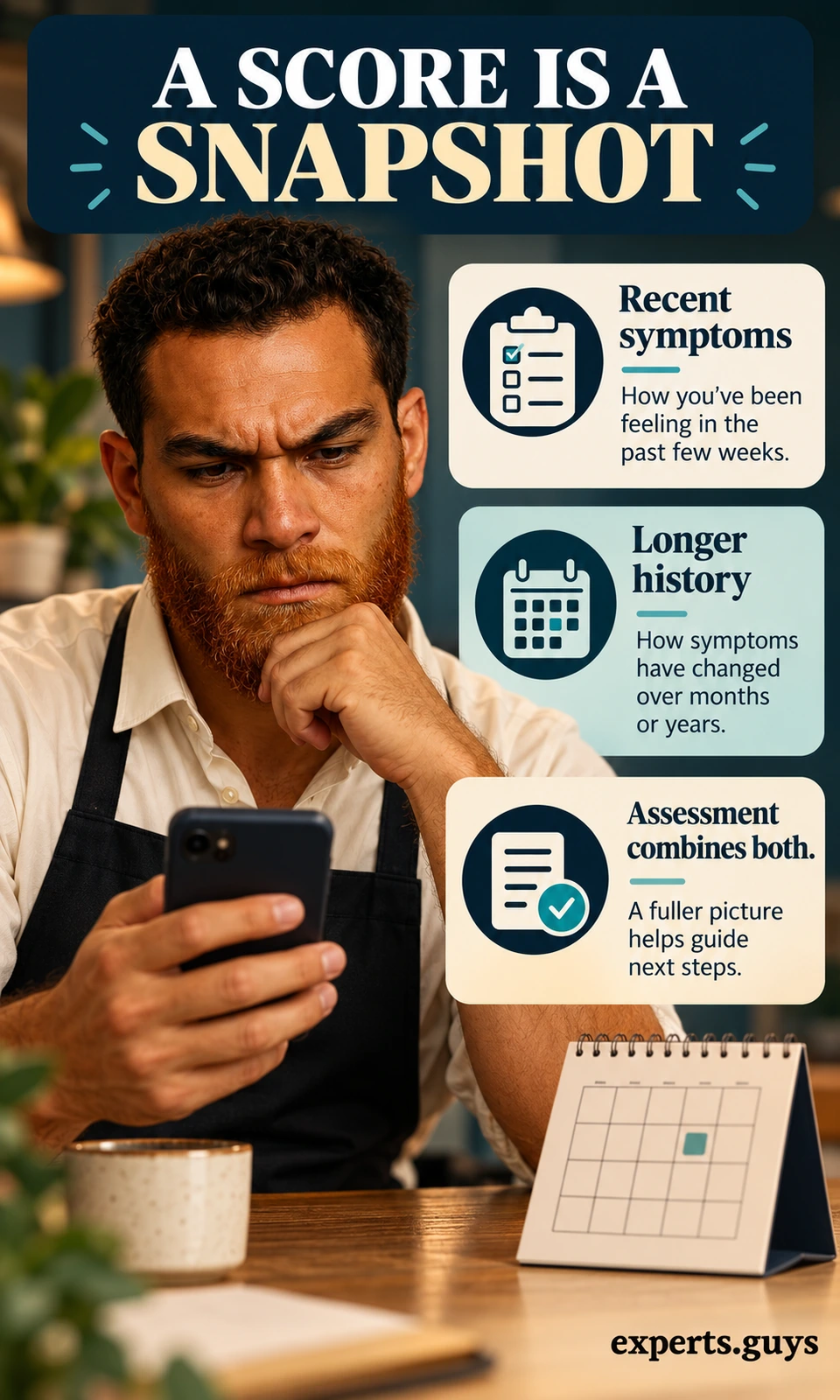
A screening questionnaire often summarizes recent symptoms, while a diagnosis also depends on course, impairment, exclusions and clinical judgment. The same recent score can occur in people with very different histories. A low score on one occasion should not erase persistent distress or a significant change you need to discuss.
If you already completed a questionnaire, bring its name, completion date and result alongside your description of the problem. Treat the score as one part of the conversation rather than translating it into “I definitely have PDD” or “I do not need help.” There is no need to repeat several online quizzes to obtain a preferred label.
Keep clues that do not fit the depression story
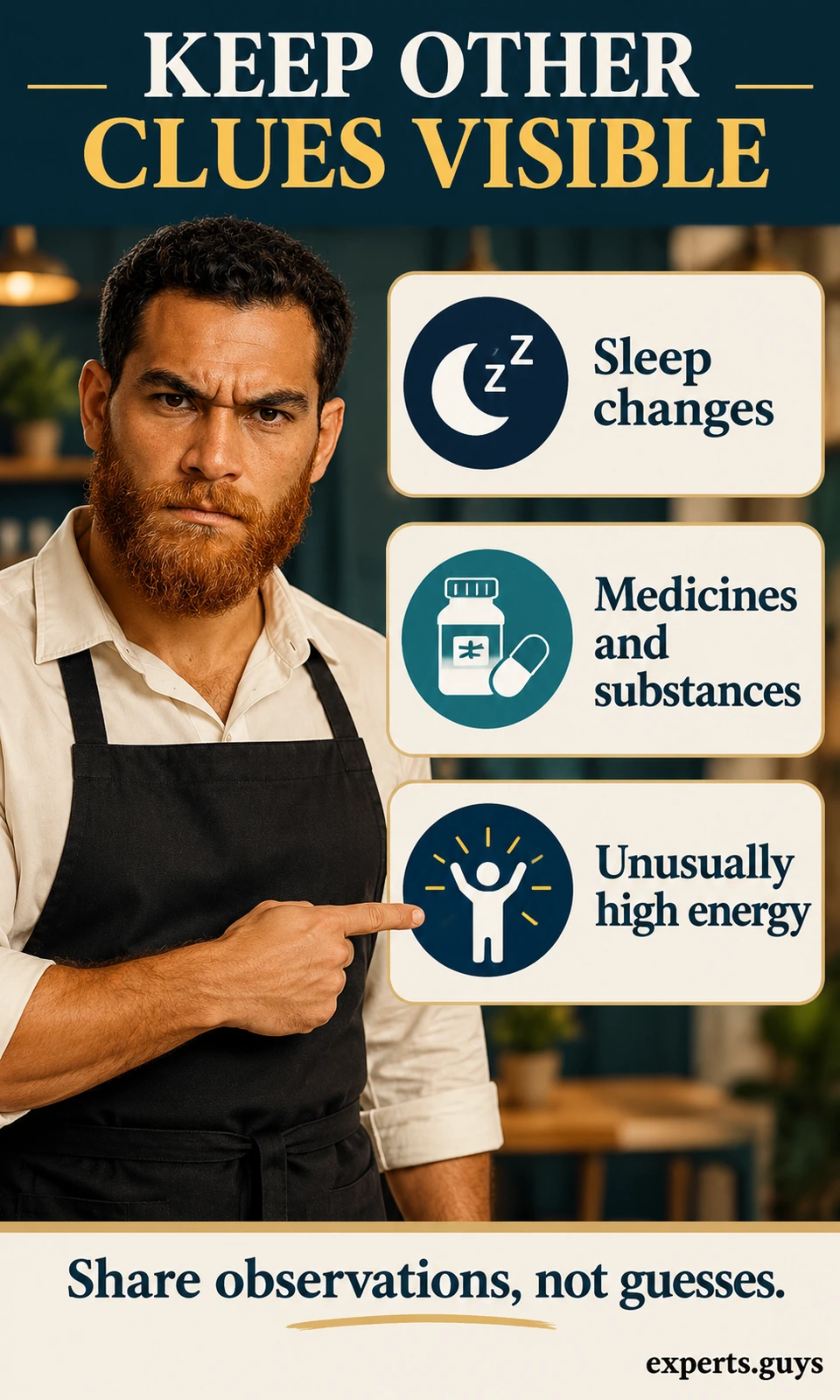
Periods of unusually increased energy or activity, markedly reduced need for sleep, or unusually impulsive behavior are relevant even when the appointment is for low mood. Medicines, alcohol or other substances, physical illness and major changes in circumstances also belong in the discussion. These clues do not identify a cause on their own, but omitting them can leave the assessment incomplete.
A clinician may use examination or targeted tests when another condition is plausible; there is no routine blood test that distinguishes PDD from major depression. Depression also cannot be reduced to a proven chemical imbalance in one individual. Biological, psychological and environmental influences can interact, and the explanation should match what is actually known.
- Show an existing medication list or photographs of the labels if that is easier than recalling names.
- Mention supplements and nonprescription products as well as prescribed medicines.
- Describe unusual sleep or energy changes without deciding what diagnosis they imply.
NICE’s assessment recommendations emphasize history, illness course and functional impact alongside symptoms. This helps explain why an appointment can contain questions that seem unrelated to the label you searched. A more complete account supports a better-informed discussion, not a guaranteed diagnosis.
Turn the comparison into a useful digital visit request
Use your clinic’s secure messaging service, a private phone note or a brief spoken explanation. The purpose is to communicate the reason for an appointment, not submit a complete diary or decide which disorder you have. Do not place sensitive health details in a public comment box or shared work account.
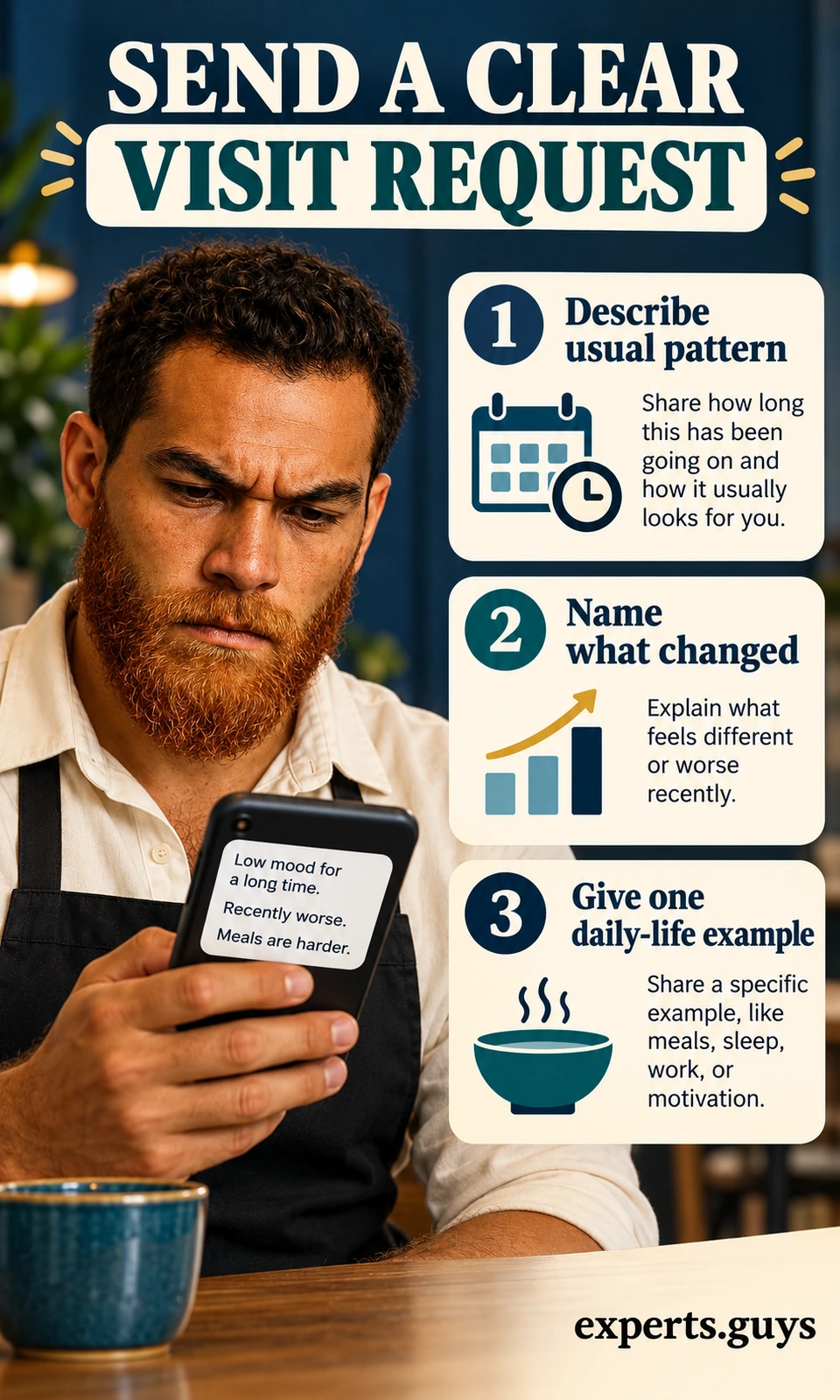
- Begin with the usual pattern: “Low mood has been present for a long time.”
- Add the change: “Recently it has become harder to manage.”
- Give one example and ask for assessment: “Preparing meals is now difficult. I would like an appointment to discuss this.”
Illustrative message: “I have felt low for a long time, but recently I have also lost interest in things I usually enjoy. Preparing meals after work has become difficult. Can I arrange an appointment to discuss both the longstanding pattern and this recent change?”
If typing is difficult, use phone dictation and check the wording, or ask a trusted person to help with your permission. Avoid removing the recent change just to make the message shorter. Check how your clinic handles messages; an unanswered routine request is not an urgent-care pathway.
Does the distinction change treatment?
The diagnosis helps organize care, but treatment is not chosen by duration alone. Psychological treatment, medication or a combination may be considered in light of symptoms, previous response, other health conditions and personal preferences. Persistent symptoms can improve; neither “nothing works for dysthymia” nor “major depression always ends quickly” is a dependable rule.
For a treatment conversation, select the question that matches your main difficulty. Someone whose earlier treatment helped only partly may need to discuss what remains; someone concerned about adverse effects needs a different discussion. Do not start, stop or change prescribed medication or add a supplement based on this comparison.
- If a treatment helped partly: “Which remaining symptoms are we targeting?”
- If a plan feels impractical: “What options fit my work schedule and access needs?”
- If progress is unclear: “What changes should we look for, and when will we review them?”
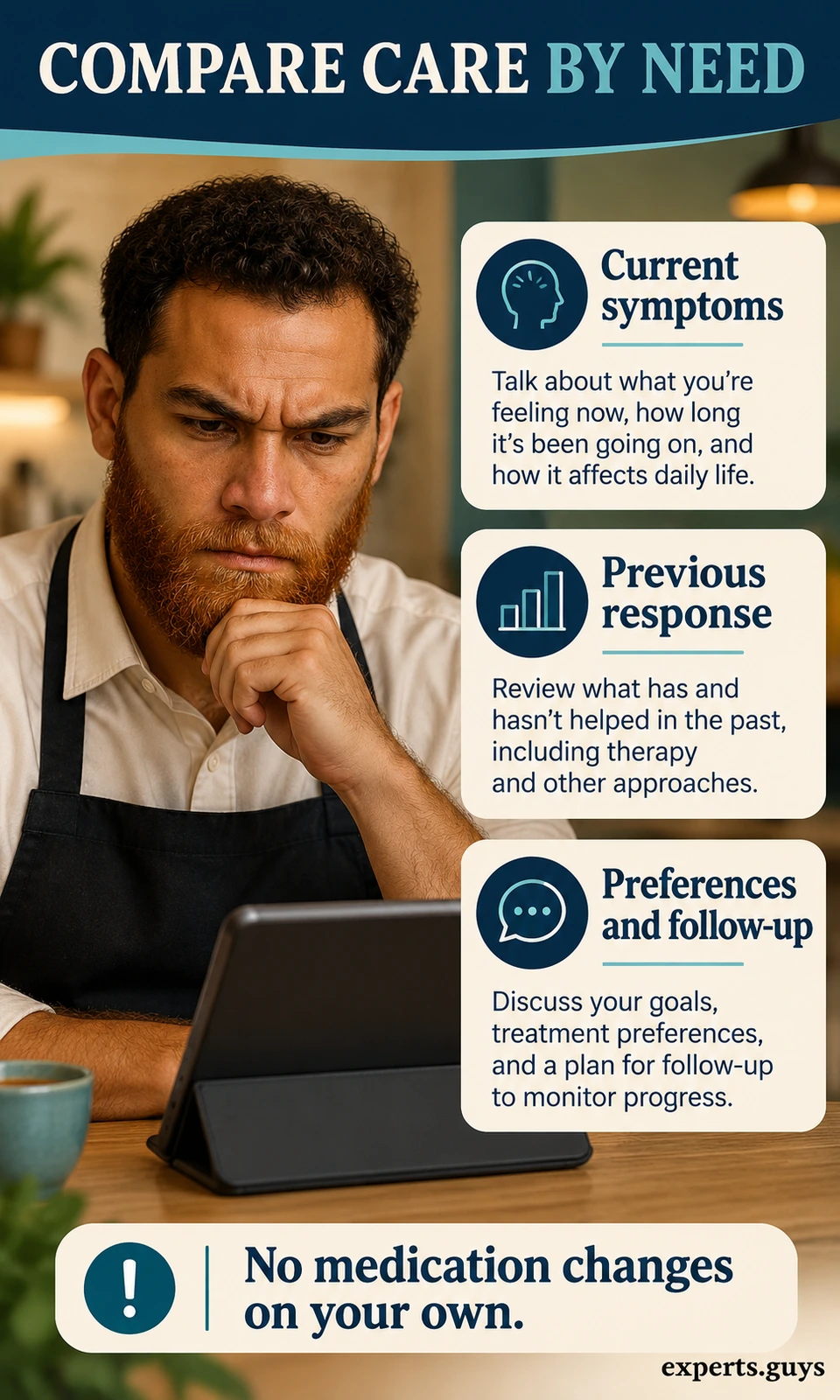
Before the appointment ends, clarify the agreed next action and how to contact the service if symptoms worsen before follow-up. An electronic after-visit summary can help you check that you understood the plan. This is more useful than treating a diagnostic name as a prediction of your future.
Frequently asked questions
Is dysthymia a personality trait?
Dysthymia is a clinical term, not a personality description. A quiet or pessimistic temperament alone does not establish a depressive disorder. Persistent distress or impairment deserves assessment even when it feels familiar.
Why might an older record say dysthymia?
Records may use older terminology or wording from a coding system. That alone does not show that the condition changed. Ask which diagnosis is current; our dysthymia and persistent depressive disorder record guide explains the documentation question.
Is there one treatment that works best for everyone with PDD?
No single treatment is best for every person. Symptoms, previous response, other conditions, access and preferences influence the plan. A shared review of benefits and difficulties helps guide the next step.
Can I ask for help without knowing the diagnosis?
Yes. Describe your experiences and how they affect daily life. You can request an assessment without selecting a disorder name or completing a diary first.
What to do with this comparison
Use the distinction to describe both the length of the problem and its present impact. If you are arranging care, one concrete example and a clear description of recent change are enough to begin. You do not need to decide on PDD or major depression before asking for an assessment.
Images are AI-generated educational illustrations. The recurring character does not represent a patient or reviewer.
Sources and further reading
- NIMH: Depression – depression types, assessment and treatment.
- Merck Manual: Depressive disorders – diagnostic patterns and distinctions.
- NIMH: Talking with a health care provider – communicating symptoms and preparing questions.