
Low mood can appear after quitting alcohol, but it does not mean sobriety was a mistake or that every symptom is a harmless adjustment. If you have been drinking heavily or regularly, check for alcohol withdrawal before trying to manage the feelings yourself. Once medical safety has been addressed, a specific response to drinking urges and one manageable activity can give you somewhere to begin.
Check safety before trying a coping exercise
The immediate decision is whether you need medical help, not how motivated you feel. Alcohol withdrawal guidance distinguishes symptoms that require prompt advice from severe signs needing emergency care. A calm moment or a short symptom checklist cannot establish that stopping at home is safe.
- Emergency signs: a seizure, hallucinations, severe confusion or severe shaking after reducing alcohol need emergency care. Call your local emergency number and do not drive yourself.
- Possible withdrawal: shaking, sweating, nausea or a racing heart after cutting down need prompt medical advice. Severe or rapidly worsening symptoms need emergency assessment.
- Ask for a safe stopping plan: tell the clinician when you last drank, your usual amount and any previous withdrawal. If dependence is possible, get medical advice before stopping abruptly or making further reductions; do not devise your own taper.
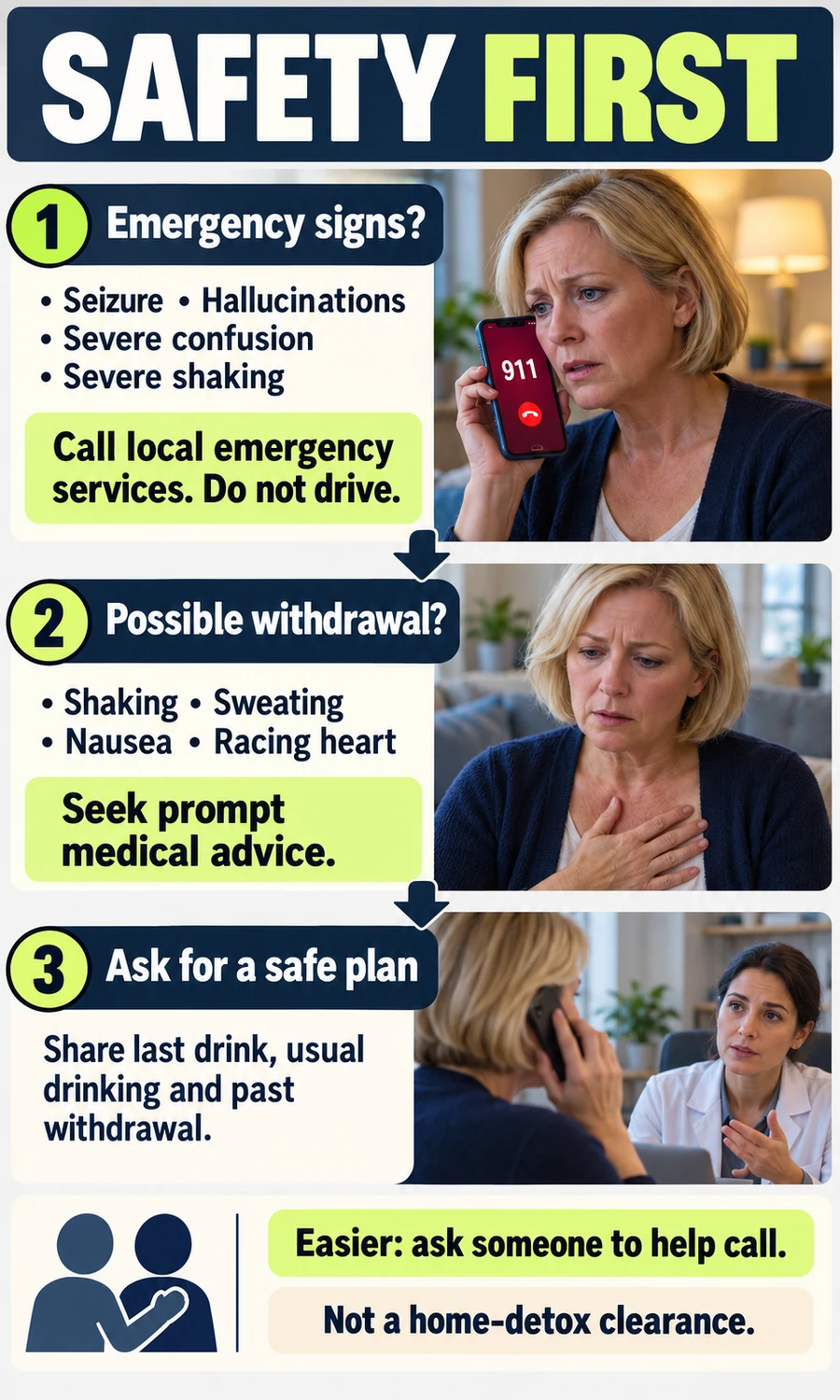
An illustrative example: you stopped yesterday and now feel low, sweaty and shaky. The next action is a medical call rather than testing a coping exercise. If making the call feels overwhelming, ask a trusted person to call with you and help explain what changed.
Suicidal thoughts need immediate crisis support, even when you have no current plan. If you might act on them or cannot stay safe, use emergency services or the nearest emergency department. The exercises below are for daily support after safety has been addressed; they do not treat withdrawal or replace depression care.
Why low mood can become noticeable after quitting
Several problems can overlap: alcohol-related mood symptoms, disrupted sleep, the loss of an established routine and depression that existed before the drinking change. Stopping may make feelings more noticeable, without proving that stopping caused them. The distinction matters because you may need support for alcohol use and mental health together.
Alcohol affects the balance between calming and activating activity in the nervous system. Repeated exposure leads to adaptations, and reducing alcohol can leave those systems unsettled. That explanation does not reveal your withdrawal risk, identify a chemical deficiency or predict when your mood will improve.
There is also an ordinary-life gap. If a drink marked the end of work, an alcohol-free evening can suddenly feel empty; if it helped you avoid a worry, the worry may still be there. Replacing that cue with a workable response is a practical skill, rather than a demand to enjoy everything immediately.
| Pattern | What it changes |
|---|---|
| Symptoms after reducing alcohol | Physical symptoms need medical advice; do not assume they are simply anxiety. |
| Low mood existed before heavy drinking | Tell your clinician: a separate depressive disorder may need treatment alongside alcohol care. |
| Distress during an old drinking routine | A planned coping response may support that moment after safety is addressed. |
| Persistent or disabling low mood | Arrange assessment rather than waiting for a sobriety milestone. |
How long does depression after quitting alcohol last?
There is no reliable personal countdown. A clinical review of alcohol and depressive disorders describes improvement in some alcohol-related depressive symptoms over roughly three to four weeks of abstinence. That is a clinical observation, not a promise or a reason to postpone care.
Early withdrawal is a different issue from longer-lasting low mood. Symptoms can begin within hours of a drinking reduction and may develop while someone is trying to wait it out. A website timeline cannot substitute for a clinician deciding what monitoring or treatment is appropriate.
Low mood or loss of interest most days for about two weeks warrants a conversation about depression, particularly when ordinary activities are affected. Seek help sooner if symptoms are worsening, distress is severe or basic functioning is difficult. Duration alone cannot diagnose the cause, and persistent symptoms should not automatically be labelled post-acute withdrawal.
For the broader assessment questions, see depression and anxiety after quitting drinking. This page focuses on what to practise during a difficult alcohol-free moment. Keep the safety decision separate from whether a daily exercise feels useful.
Two ways to make the next alcohol-free moment manageable
Choose the difficulty you actually face rather than completing both exercises by default. An urge to drink needs a response to the cue; difficulty starting needs a smaller beginning. Use these methods only once medical safety has been addressed, and keep any agreed treatment plan in place.
Handle a drinking urge: recognise, leave, connect
Use this when an old drinking cue or emotional trigger brings up an urge and you are medically stable. The recognise-avoid-cope approach supports identifying triggers, avoiding them when possible and using another response. The short sequence below is an editorial application of that approach, not a withdrawal protocol.
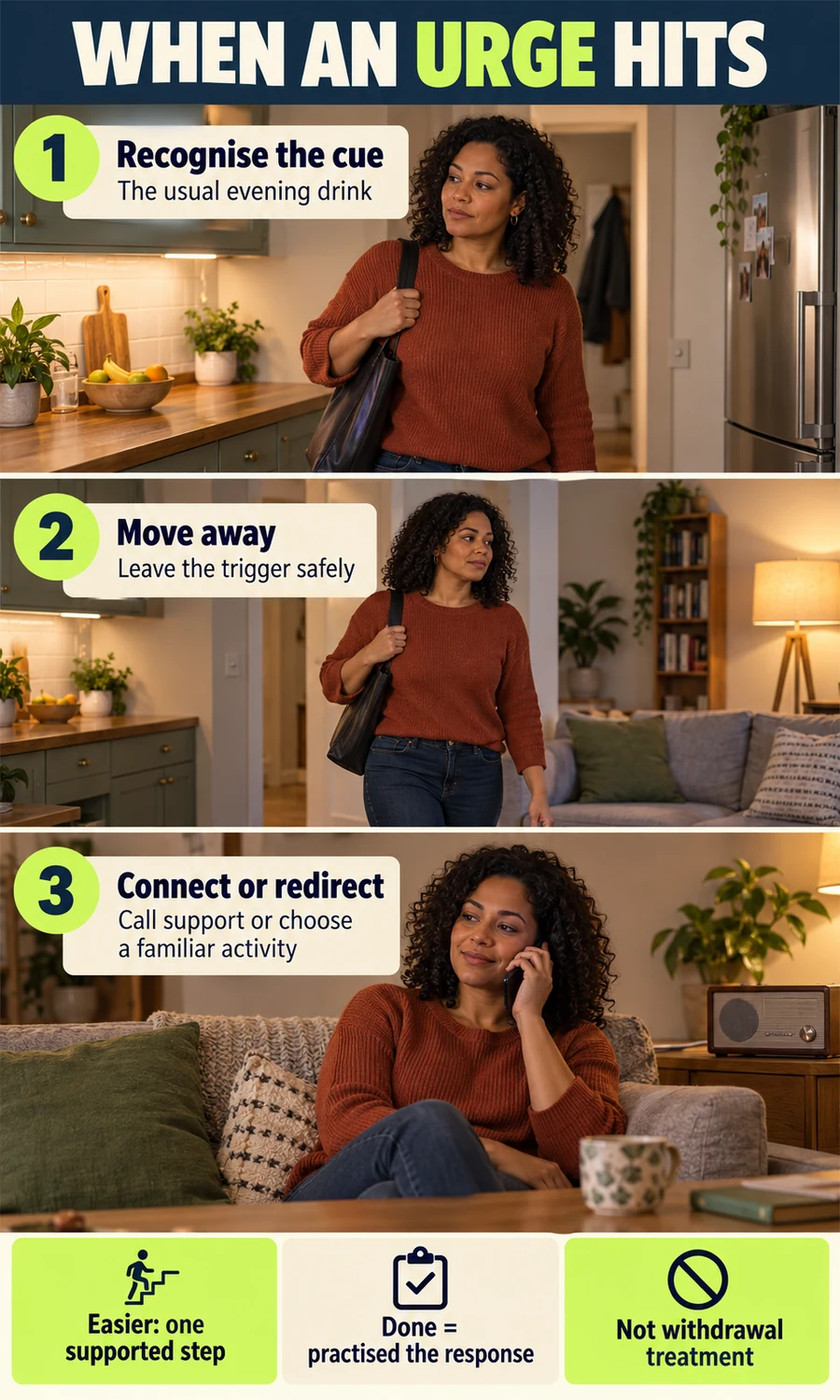
- Recognise: name the immediate cue, such as arriving home or passing a familiar bar. You do not need to analyse your entire history.
- Leave or reduce the cue: move safely to a different room or setting where drinking is less available. Do not drive if you are unwell, impaired or unsafe to do so.
- Connect or redirect: call a supportive person or start a familiar non-drinking activity. Choose something accessible, such as listening to a programme while you sit somewhere else.
- Finish and decide: completion means practising the response. If the urge remains difficult to manage, contact your treatment team or other appropriate support rather than repeating the exercise alone indefinitely.
Illustrative example: the end of work usually means pouring a drink in the kitchen. You name the cue, move to the living room and call someone supportive while putting on a familiar programme. The easier option is asking that person to stay with you for just the first move; an immediate drop in the urge is not required for completion.
Avoid turning the exercise into a test of endurance. If leaving the situation is not practical, use the supported option and discuss a more workable response with your treatment team. New physical symptoms after reducing alcohol move the decision back to medical care, regardless of whether you also feel a craving.
Start one activity: a five-minute beginning
Use this when you are medically stable but a modest daily activity feels too difficult to begin. The short-timer method makes the starting point smaller and leaves you a choice when the timer ends. It is daily support, not a cure for depression or an instruction to push through exhaustion.
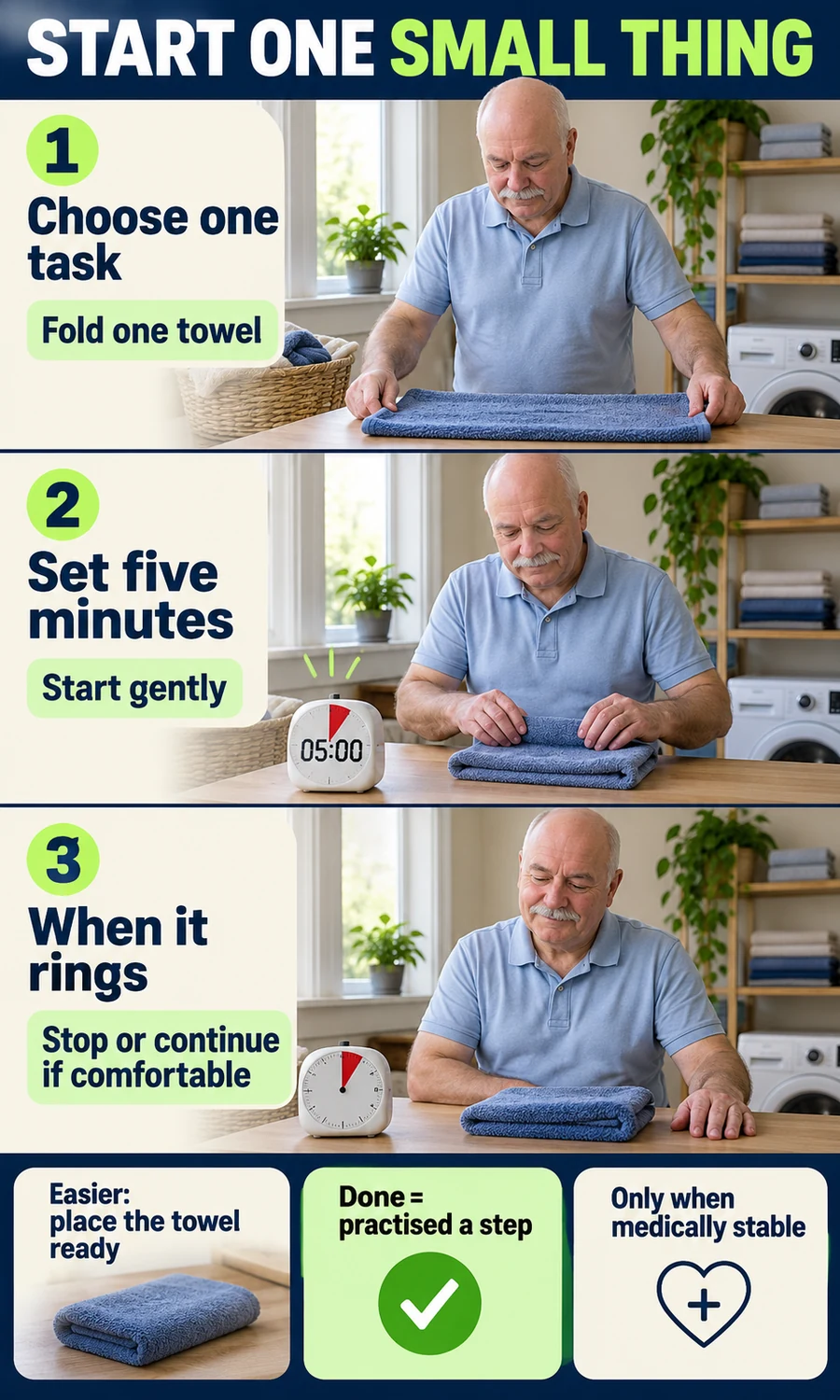
- Choose one small action: fold one towel rather than clear the whole laundry pile. Put the item somewhere accessible.
- Set five minutes: use a phone or kitchen timer and begin gently. Stop sooner if you become unwell or significantly exhausted.
- When it rings: stop, or continue only if comfortable. The timer gives permission to finish the attempt.
- Choose the next step: repeat another day, simplify or ask for support. Success is practising a beginning, not finishing everything or feeling cheerful.
Illustrative example: a laundry pile has been sitting untouched and you keep postponing it. You put one towel on the table, set five minutes and start folding; when the timer rings, you stop with that small task attempted. The easier option is simply placing the towel ready, which still counts as practising a smaller beginning.
Some days the smaller version will be the appropriate one. If even basic activities repeatedly feel impossible, arrange assessment rather than making each task smaller forever. Keep the example proportionate to your energy and any medical advice you have received.
Choose your next step with Sober Next Step
Use the experience below to select the immediate difficulty and see the matching sequence, example and easier option. It asks about safety first and never gives a low-risk clearance, diagnosis or withdrawal score. Your choices stay in this page session; printing makes a separate copy that you control.

A manageable alcohol-free moment
Sober Next Step
Choose one difficulty. Practise one supported action.
Urgent guidance: seizure, hallucinations, severe confusion or severe shaking after reducing alcohol need emergency care. If you might act on suicidal thoughts or cannot stay safe, call local emergency services. Do not drive yourself.
For medically stable adults. This is daily support, not diagnosis, withdrawal treatment or confirmation that home detox is safe. Possible dependence needs a clinician's stopping plan. Answers stay in memory until refresh; printed copies are separate. No analytics are sent.
Your next step appears here
Choose the descriptions that fit. No selection can establish medical safety.
Find appropriate support
For non-emergency searches only. Use any city and country; results and qualifications are not verified. A primary care clinician can assess symptoms and refer to addiction or mental health care.
Compare services you find
Verify alcohol and mental health expertise, licensed credentials, withdrawal supervision, availability, fees and follow-up directly. These notes remain only in this page.
When daily support is not enough
Ask for assessment if mood is worsening, symptoms persist or ordinary responsibilities are becoming hard to manage. Care for co-occurring alcohol and mental health problems can address both rather than forcing you to finish one before discussing the other. Peer support can sit alongside clinical care, but it cannot determine withdrawal safety.
Treatment may include talking therapy and clinician-directed medicines for alcohol use disorder, depression or both, depending on the assessment. Do not borrow sedatives or change prescribed treatment because of advice in an article. Ask the clinician which problem needs attention first and how to get help if symptoms change.
A difficult day does not prove that recovery has failed. If you return to drinking, tell your treatment team and review the support you need; do not hide the change or improvise repeated stop-start detoxification. Understanding what happened is useful when it leads to a safer next action.
Frequently asked questions
Is feeling depressed after quitting alcohol normal?
It can happen, but common does not mean safe to ignore. Withdrawal, alcohol-related mood symptoms and a separate depressive disorder can overlap. Seek advice for physical symptoms, persistent distress or difficulty functioning.
Should I wait a month before seeking help?
No. A recovery timescale is not a waiting rule. Worsening symptoms, possible withdrawal or suicidal thoughts need attention sooner, and you can ask for support at any point.
Can these exercises treat alcohol withdrawal?
No. They are daily coping methods for medically stable adults. A clinician must assess possible withdrawal and decide on treatment and monitoring.
What if I finish an exercise and still feel low?
Completion means practising the action, not producing a mood change. Simplify or repeat a suitable step when comfortable. Persistent or disabling symptoms still deserve assessment.
Is this the same as feeling depressed the day after drinking?
The timing differs, and one evening of drinking does not establish alcohol dependence or a depressive disorder. Our guide to feeling depressed the day after drinking addresses that related question. Physical symptoms and drinking history still matter when deciding what help is needed.
Make the next action specific
- Check withdrawal safety before self-help.
- For a medically stable drinking urge, recognise the cue, move away and connect or redirect.
- For difficulty starting, practise one manageable beginning.
- Get assessment when symptoms persist, worsen or interfere with daily life.