

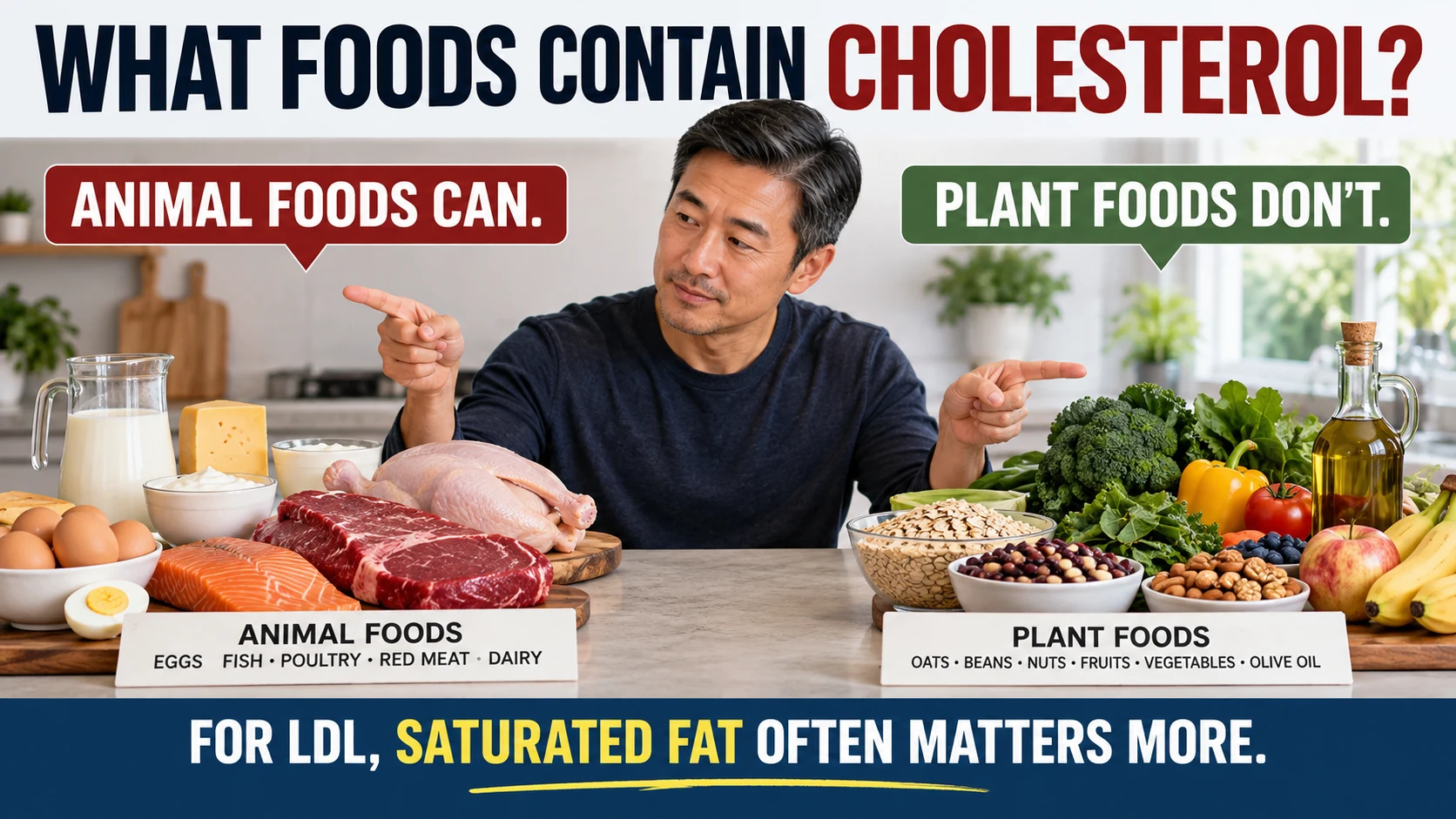

Cholesterol is found naturally in foods that come from animals, including eggs, meat, poultry, seafood and dairy; plant foods do not contain dietary cholesterol. But if your goal is to lower LDL cholesterol, the bigger dietary lever for many people is usually the amount and type of saturated fat in the overall eating pattern, not simply whether one food contains cholesterol.
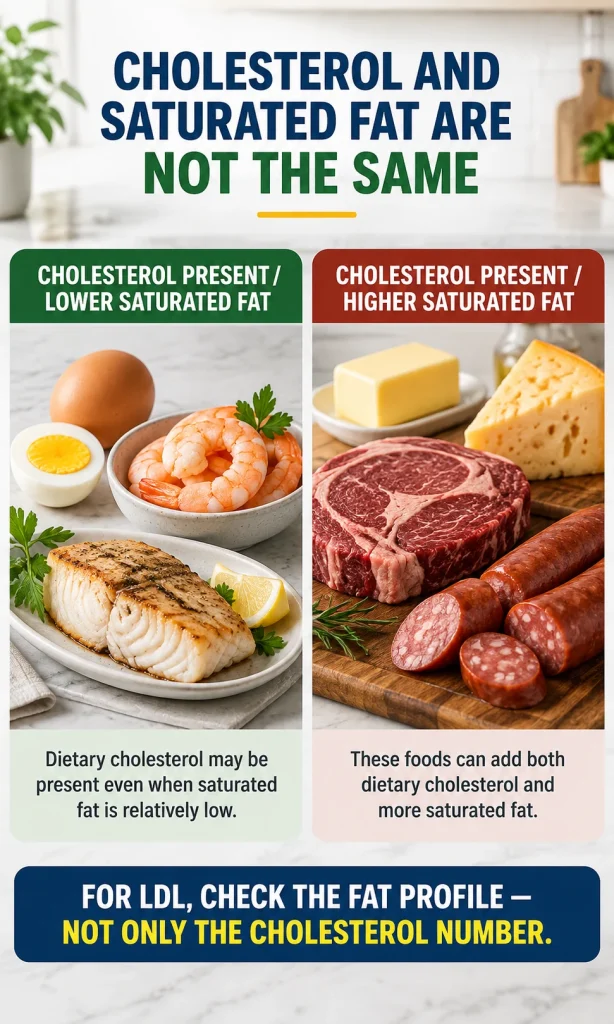
That distinction matters because a food can contain a fair amount of dietary cholesterol without being especially high in saturated fat, while another food can contain no cholesterol at all and still be high in saturated fat. The practical question is therefore not just “Does this food contain cholesterol?” but “What is its whole fat profile, and what is it replacing in my diet?”
Which Foods Contain Cholesterol?
Dietary cholesterol occurs only in foods of animal origin. The American Heart Association’s cholesterol overview lists meat, poultry and dairy among food sources, and the same principle applies to eggs and seafood.
- Eggs: the yolk contains dietary cholesterol; egg whites contain little to none.
- Meat and poultry: all cuts contain some cholesterol, although the saturated-fat content varies widely.
- Fish and shellfish: they contain cholesterol, but many choices are relatively low in saturated fat.
- Dairy foods: milk, yogurt and cheese can contain cholesterol; full-fat versions usually bring more saturated fat than lower-fat versions.
- Organ meats: foods such as liver can be especially concentrated sources of dietary cholesterol.
- Plant foods: fruits, vegetables, grains, beans, lentils, nuts, seeds and plant oils contain no dietary cholesterol.
A useful companion article is our guide to eggs and cholesterol, because eggs are the classic example of why “contains cholesterol” and “raises LDL the most” are not the same question.
Dietary Cholesterol Is Not the Same as Blood Cholesterol
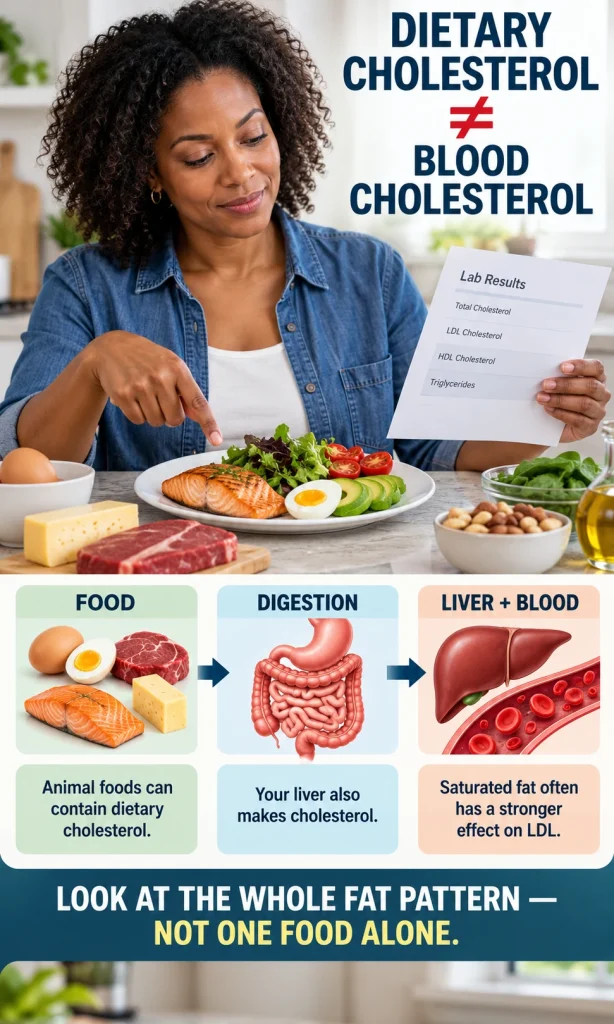
Cholesterol is a normal substance your body uses in cell membranes, hormones and other biological processes. Your liver makes cholesterol on its own, while dietary cholesterol is absorbed from food to varying degrees; the amount your blood levels change in response to food is not identical from one person to another.
LDL and HDL are lipoproteins that carry cholesterol through the bloodstream. Persistently high LDL is clinically important because it is involved in atherosclerotic plaque formation, which is why cholesterol management is based on measured blood lipids and overall cardiovascular risk rather than on a list of “forbidden” foods.
What Raises LDL More: Cholesterol or Saturated Fat?
For many people, saturated fat has a stronger effect on LDL cholesterol than dietary cholesterol. The NHLBI Therapeutic Lifestyle Changes guidance specifically emphasizes lowering saturated fat, while also keeping dietary cholesterol in perspective as part of a heart-healthy pattern.
| Food example | Dietary cholesterol? | Saturated-fat pattern | What matters most |
|---|---|---|---|
| Egg | Yes | Relatively low compared with butter or fatty meat | Look at the rest of the meal and your LDL status |
| Shrimp or many other shellfish | Yes | Often relatively low when simply prepared | Butter, cream and frying fat can change the picture |
| Butter | Yes | High | Replacing it with unsaturated oils can improve the fat profile |
| Fatty or processed meat | Yes | Often high | Frequency, portion and replacement choice matter |
| Olive oil, nuts, beans, oats | No | Mostly unsaturated or very low in fat | Useful replacements; oats and beans also add soluble fiber |
| Coconut or palm oil | No | High | No cholesterol does not automatically mean LDL-friendly |
Why “Plant-Based” Does Not Automatically Mean Low in Saturated Fat
Plant foods contain no dietary cholesterol, but tropical oils are the important exception to the simple “plant equals heart healthy” shortcut. Coconut and palm oils are rich in saturated fat, and the World Health Organization’s healthy-diet guidance recommends limiting saturated fat and replacing it with unsaturated fats or fiber-rich carbohydrate foods.
That is also why reading a label can be more useful than relying on a marketing claim. A vegan pastry made with coconut or palm fat may contain no cholesterol but still deliver a large saturated-fat load, while a piece of fish may contain cholesterol yet fit comfortably into a heart-healthy eating pattern.
How Much Saturated Fat Should You Aim For?
There is no single number that fits every person or every medical situation. WHO recommends reducing saturated fat to 10% of total energy intake and suggests going lower when appropriate; the American Heart Association uses a stricter heart-health target of about 6% of calories for people trying to lower LDL.
Those percentages are best used as guardrails rather than a reason to micromanage every bite. In practice, the biggest gains usually come from identifying the repeat sources of saturated fat – fatty meats, processed meats, butter, full-fat dairy, pastries, certain fried foods and tropical oils – and replacing some of them with unsaturated fats, legumes, whole grains, vegetables, fish and nuts.
What About Eggs?
Eggs contain dietary cholesterol, but they are not a major source of saturated fat on their own. For a person with healthy LDL levels and an otherwise balanced diet, the context of the meal matters: an egg served with oats, vegetables and fruit is a different nutritional pattern from eggs served with bacon, sausage, buttered toast and a rich cream-based drink.
If your LDL is high, if you already have cardiovascular disease, or if your clinician has given you a cholesterol-specific target, it is reasonable to pay attention to both saturated fat and dietary cholesterol rather than assuming dietary cholesterol never matters. The safest approach is to use your actual blood results and treatment plan, not a generic social-media rule.
What About Shellfish?
Shrimp and some other shellfish can be high in dietary cholesterol while remaining relatively low in saturated fat when they are grilled, steamed or otherwise simply prepared. The preparation method changes the meal quickly: butter sauces, creamy dressings and deep-frying can turn a relatively lean seafood choice into a much higher saturated-fat meal.
How Soluble Fiber Helps Lower LDL
Soluble fiber forms a gel-like material in the digestive tract and helps reduce cholesterol absorption. The MedlinePlus guidance on lowering cholesterol with diet highlights oats, beans, lentils and certain fruits as useful sources.
- Oats and barley: easy ways to add soluble fiber at breakfast or in soups.
- Beans, lentils and chickpeas: can replace part of a meat-based meal while adding protein and fiber.
- Apples, citrus, pears and berries: add fiber without dietary cholesterol.
- Nuts and seeds: contribute unsaturated fats and can replace snacks built around butter-rich baked goods.
For broader context on food myths, see our guide to common myths about food and nutrition. The cholesterol question is a good example of why one nutrient rarely tells the whole story.
How to Build an LDL-Lowering Food Pattern
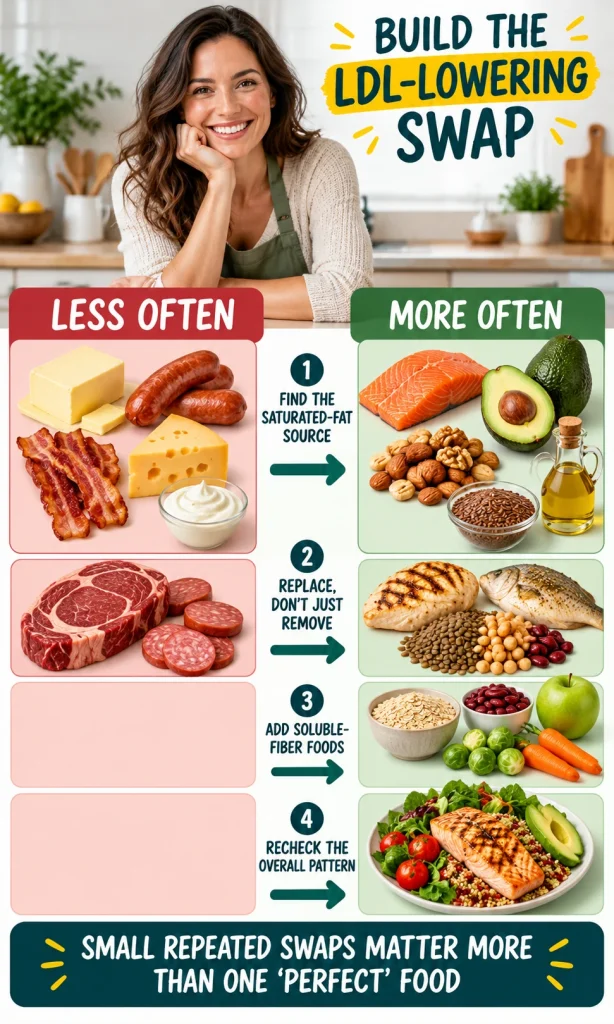
The most useful change is usually a replacement, not a subtraction. Removing butter and replacing it with nothing may make a meal less satisfying; replacing some butter with olive or canola oil changes the fat profile while keeping the meal workable.
- Find your repeat saturated-fat source. Look for the food that appears often, not the special meal you eat twice a year.
- Replace it with a realistic alternative. Use unsaturated oils, fish, beans, nuts, seeds or lower-fat dairy where they fit.
- Add soluble fiber. Oats, barley, legumes and fruit can improve the pattern rather than simply removing foods.
- Keep the pattern enjoyable. A plan you can repeat is more useful than a “perfect” week followed by rebound eating.
- Recheck measured LDL when appropriate. If you are actively treating high LDL, use follow-up blood tests and clinician guidance to judge whether lifestyle changes are enough.
You can also use our guide to foods for heart and lung health when you want to build the full meal pattern rather than focus on cholesterol alone.
When Food Changes May Not Be Enough
High LDL is not always explained by diet. Genetics, thyroid disease, diabetes, kidney disease, some medicines and other factors can affect cholesterol levels, and inherited conditions such as familial hypercholesterolemia can produce very high LDL even in people who eat carefully.
If your LDL is very high, you have a strong family history of early heart disease, or you already have cardiovascular disease, do not treat food changes as a substitute for medical assessment. The American Heart Association’s prevention and treatment guidance notes that lifestyle changes may need to be combined with medication for some people.
Cholesterol Food Reality Check
See whether a food contains dietary cholesterol, what usually matters more for LDL, and what a practical replacement could look like.
Check the food pattern
Choose the closest category. This experience does not estimate your personal LDL or diagnose a condition.
Your result will appear here
Pick a food category, preparation style and goal. The output separates dietary cholesterol from saturated-fat priority so one number does not dominate the decision.
How to Read a Food Label for Cholesterol Goals
Start with saturated fat, then check serving size and the ingredient list. If the food also contains a lot of dietary cholesterol, that is additional information – but do not let a low cholesterol number distract you from a high saturated-fat value.
- Check the serving size before comparing products.
- Compare saturated fat first when your goal is LDL reduction.
- Use dietary cholesterol as a second signal, especially if your clinician has told you to limit it.
- Look for the replacement: olive/canola oil, nuts, seeds, legumes, fish and lower-fat dairy can be useful swaps.
- Remember that “cholesterol-free” does not guarantee low saturated fat.
Processed foods are especially worth checking because the front of the package may not tell you which fat source was used. Our article on processed food and diet quality goes deeper into why processing level and ingredient quality need to be considered separately.
Bottom Line
Cholesterol is found in animal foods, not plant foods, but dietary cholesterol is only one part of the LDL story. For most people trying to improve LDL, the more useful strategy is to reduce repeated sources of saturated fat, replace them with unsaturated fats and fiber-rich foods, and judge progress using the overall eating pattern and actual blood results.
Frequently Asked Questions
Do plant foods contain cholesterol?
No. Dietary cholesterol is found in animal-derived foods. Plant foods can still differ greatly in saturated fat, so “cholesterol-free” is not the same as “best for LDL.”
Are eggs bad for cholesterol?
Eggs contain dietary cholesterol but are relatively low in saturated fat. Their effect depends on your overall diet, LDL level and individual response; people with high LDL may need more specific guidance.
Does shrimp raise cholesterol?
Shrimp contains dietary cholesterol, but it is usually low in saturated fat when simply prepared. Butter, cream sauces and frying fats can change the meal’s saturated-fat profile substantially.
What foods should I reduce first if my LDL is high?
Start with the foods that repeatedly contribute the most saturated fat in your diet, such as fatty or processed meats, butter, full-fat dairy, pastries, some fried foods and coconut or palm fats. Replace rather than simply remove them.
Can coconut oil contain no cholesterol and still raise LDL?
Yes. Coconut oil contains no dietary cholesterol because it is a plant food, but it is high in saturated fat, which can raise LDL cholesterol.
Can diet alone fix high cholesterol?
Sometimes lifestyle changes are enough to improve cholesterol, but not always. Genetics and medical conditions can play a major role, and some people need medication in addition to diet and activity changes.