

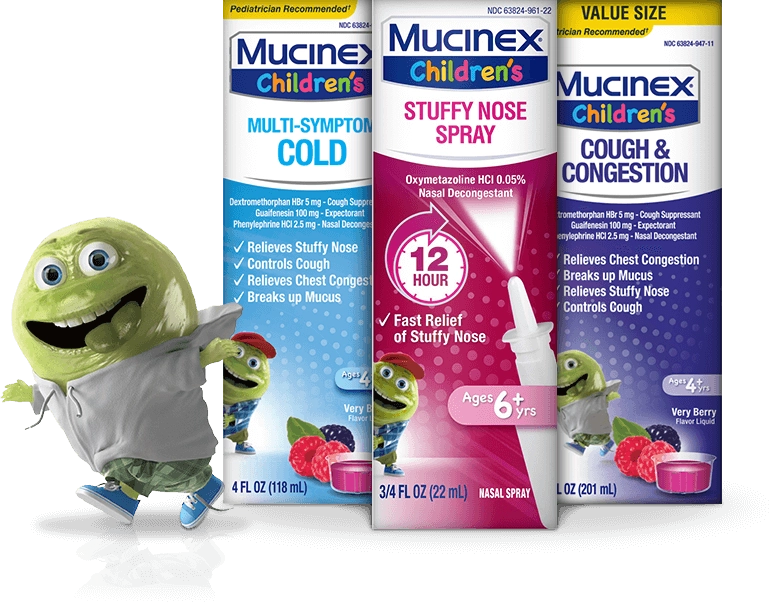

Is Children’s Mucinex Cold Good For Kids?
Is Children’s Mucinex Cold good for your kid? It works fast and is available at your local drugstore. It’s recommended to read the instructions on the bottle, and follow them to the letter.
You should never give your kid any more medicine than they need, and they should be on a regular schedule.
The recommended dose for children under six years is 800 milligrams daily.
The ingredients in Children’s Mucinex Cold are acetaminophen and dextromethorphan.
These two ingredients are both effective at treating a cough.
Acetaminophen is a pain reliever, but it may increase your child’s risk of stomach irritation and diarrhea.
Dextromethorphan is a cough suppressant, and it reduces the cough reflex in children.
Guaifenesin is an expectorant, and it works to loosen chest congestion. Phenylephrine is a decongestant that helps to shrink the blood vessels in nasal passages.
Nasal congestion is caused by dilated blood vessels, and phenylephrine decreases swelling and relieves nasal congestion.
When should you give your child Mucinex Cold?
The dosage is right for your child. Make sure it is appropriate for their age.
If your kid has a cough that’s caused by smoking or asthma, Mucinex Children’s Cold will not help. And remember that Children’s Mucinex is not a cure for a sore throat, but it can help relieve your child’s symptoms.

When should you give your child Mucinex?
The answer depends on the child’s age and severity of the cold. The dosage should not exceed two tablets a day.
Moreover, it’s important to note that it’s important to keep the recommended dose at hand. If your child is older, they should only take the amount of Children’s Mucinex that works best for them.
It is important to note that the active ingredient in Children’s Mucinex Cold is dextromethorphan, a substance that can cause hallucinations.
Although it can be effective in relieving minor symptoms, it’s not recommended for children younger than six.
It can lead to ear infections, sinus infections and pneumonia. Therefore, it’s important to keep the dosage low and monitor the child’s health carefully.
In addition to being an effective medication for a cold, Children’s Mucinex can also be effective as a natural remedy.
Unlike over-the-counter medicines, Children’s Mucinex is a drug that is safe for children. You can take it with the help of your child.
If you have a severe cough, it will be a long time before you’ll notice any side effects. But it will be worth it in the long run.
It contains several active ingredients.
A dextromethorphan-based product has a high concentration of dextromethorphan.
The dextromethorphan in this product helps control coughing and controls the cough reflex.
This ingredient is also helpful for preventing dry cough.
A child’s symptoms can be controlled and even eliminated.
A cough suppressant can relieve the pain in the throat.
This over-the-counter cough and cold medicine is suitable for children.
The chewables and thin-strips contain a variety of ingredients that match the symptoms of a cold. Try to find one that matches your child’s symptoms.
For example, COLD & COUGH matches nasal congestion and cough, while a COCK & Cough product works well for children under two.
There are several products you can buy over-the-counter for children with colds and coughs.
They are available in chewables and thin-strips. Choose one that best suits your child’s symptoms.
Most children should be able to take the COLD & COUGH chewables without side effects. Alternatively, the COLD & COUGH and/or Cough & Cough can be taken as a syrup.
While many parents are concerned about side effects, the best way to avoid these side effects is to follow the directions on the package.
If your child has a cold, it’s important to take medicine for children with the proper dosage.
This medication can cause serious problems if not taken properly or in the right amount. It’s best to use a child’s medicine in a doctor’s office.
Why is Children’s Mucinex Age Restricted?
There are several reasons why Children’s Mucinex is age restricted. For example, aspirin should not be given to children under 18 years of age. And decongestants should not be used in children younger than four years of aged.
Some of the Mucinex products for children contain phenylephrine, a nasal decongestant.
If your child is experiencing chest congestion, you should try other remedies such as a humidifying vaporizer or rubber suction bulb.

While the maximum recommended age for Children’s Mucinex is 12 years and older, it can be taken by anyone, even babies. Children 4 to 11 years old should not take the maximum strength Mucinex D tablet.
If you are concerned about your child’s safety, ask your health care provider about alternatives. It is important to follow the manufacturer’s instructions for proper use. You should also avoid the product if you have any other medical conditions.
If you are unsure about the appropriate dosage for Children’s Mucinex , speak with your doctor.
For example, the liquid form of the medicine is only appropriate for adults.
If your child is under the age of 12, you should choose the oral solution. These solutions may not be as effective as those in liquid form.
However, you should not take more than four tablets in 24 hours. And it’s important to remember that Mucinex DM is only for people over the ages of 12 and older.
If you are under 12 years of age, you should ask your healthcare provider about a different form of Mucinex. The tablets are for adults, but children should not take them if they are younger than 12 years.
In addition, the extended-release tablets are only meant for older people. The liquid form is available for children four to eleven years of age. And if you’re unsure about which one to use, you should ask your pharmacist for a recommendation.
Children’s Mucinex is available as an oral tablet or as a liquid.
The maximum dose for Children’s Mucinex is 12 years of age. It’s safe for children to use the extended-release version of Mucinex DM. And if you’re under the same age as the child, it’s ok for both of them to use it. It’s safe for kids, too. It’s only for the older patients.
Mucinex is available in two forms: DM (dimethylpafenhydrochloride) is an oral tablet for adults. The maximum strength Mucinex tablet has double the active ingredients.
This type of medication is not appropriate for children under the age of 12 years. In case you’re using this medication, consult your doctor for more details. If you’re taking Mucinex for children, you should only take it for a short period of time.
The Proper Children’s Mucinex Cold and Flu Dosage
When giving a Children’s Mucinex, it is important to know the correct dosage.
This medicine contains acetaminophen, which is an anti-inflammatory drug used to treat the symptoms of a common cold. But if your child takes more than the recommended dosage, they may not get the full benefit of the medication.
It is also important to check if your child has any other medical conditions. Side effects of this drug include nervousness, drowsiness, and sleeplessness.
If your child has these symptoms, it is best to discontinue Mucinex and consult with a physician.

The recommended dosage for children’s mucinex is ten milliliters (mL) every four hours.
However, younger children should not take more than five milliliters of the medication in a 24-hour period.
It is also important to remember that a dose can cause liver damage, so a physician is always recommended.
You should never give more than the suggested dosage or more than the recommended.
Make sure to follow the instructions on the packaging carefully and follow your child’s doctor’s prescription.
When choosing Children’s Mucinex cold and flu dose, it is important to keep in mind that some children may not respond to the drug the way you want them to.
To ensure they are getting the most effective treatment, it is best to consult your child’s doctor.
Aside from a cold or the flu, some children can also have other medical conditions, so it is important to seek medical attention as soon as possible.
Although Children’s Mucinex is a popular cold and flu medication, it is important to remember that this product can be harmful if used incorrectly.
For this reason, a physician’s advice is always necessary.
You should never give your child more than the recommended dose. Aside from the side effects, it is also important to know the proper Children’s Mucinex dosage.
This will prevent your child from suffering from any serious complications and will keep them healthy and happy.
In general, Children should take 10 mL of Children’s Mucinex cold and flu medication every four hours. A dose under 6 years old should only be taken once. Do not give your child more than the recommended amount for the same duration.
Those under six years old should avoid taking any medication. A child should never take more than five doses per day. If a child is not feeling well, it could be a sign of a more serious illness.
If your child is suffering from a cold or flu, you should use Children’s Mucinex. It is recommended for ages six and older.
If your child does not show any signs of an illness, he or she should consult a doctor for further information.
And if you think your child is experiencing symptoms, consult with a physician. Advil can lead to severe side effects like drowsiness or dizziness.
Can Mucinex Children’s Cold and Flu Nighttime Make You Sleepy?

Can Mucinex Children’s Cold and Flu Nighttime make you sleepy?
It’s a good question to ask before a child begins taking this medication. This over-the-counter remedy is designed to alleviate cold and flu symptoms in children, including a stuffy nose, fever, cough, and difficulty sleeping.
It’s not a good idea to take Mucinex at bedtime, however, as it may cause drowsiness.
The active ingredient in Mucinex Children’s Cold and Flu Nighttime is melatonin.
It helps relieve cough and chest congestion and thin mucus. It also relieves sneezing, a chronic cough, and a runny nose. If you’re concerned about your child’s sleepiness, talk to your doctor or pharmacist.
The first thing you should know about Mucinex Children’s Cold and Flu Nighttime is that it contains a monoamine oxidase inhibitor (MAOI).
MAOI drugs can make a child sleepy. These medicines are also used to treat Parkinson’s disease, depression, and other psychiatric disorders. Be sure to talk to your doctor before your child takes this product, as they might want to change their medicine.
Another important thing you should know about this medicine is that you shouldn’t give it to your child if they’re on a MAOI medication. If you’re worried about your child’s liver, or have diabetes, or are on a blood thinner, don’t use it.
This medication may cause severe liver damage, so consult your doctor before giving it to your child.
MUCINEX children’s cold and flu nighttime can make you sleepy.
While it is safe to use it as directed, you should consult your doctor if your child has a serious medical condition. If you have a heart problem, it’s important to avoid a combination of MAOIs. The drug can increase the risk of serious liver damage.
The ingredients in MUCINEX Children’s Cold and Flu Nighttime can make you sleepy.
While it’s not recommended for children under 6 years old, it’s safe for children with respiratory problems. This drug is designed for younger kids who need a cold remedy.
A child should not take more than 5 doses of this medicine in a day, and the medicine should be taken only if it’s prescribed by a doctor.
Taking a multi-symptom cold medicine can make you sleepy.
The medication is safe to take if you are taking it for the first time. A few precautions should be kept in mind.
When you’re unsure, talk to your doctor or pharmacist. Most people will experience mild drowsiness after taking this medication, so you don’t want to make it too strong.
What does Children’s Mucinex Dosage cover?
The appropriate Children’s Mucinex dosage will depend on the child’s age. If the child is more than six years old, they should take 50 to 100 mg every four hours.
If the child is under 6 years old, they should take a lower dose during the day and a higher one at night.
If the child is over 6 years old, the dosage should be half the adult’s. Regardless of the age of the child, Children’s Mucinex can be helpful in preventing the common cold symptoms and improving their overall health.
A mucus-thinning treatment that relieves the symptoms of a cold is a popular choice among parents.
This medication can be given to children as young as 4 and is safe to take during pregnancy. However, it is not recommended for children who are under 2 years old.
If the child is pregnant or breast-feeding, they should consult a healthcare professional before taking Mucinex. Using mucinex while pregnant or nursing is not a good idea.
Before giving Mucinex to your child, consult with a healthcare professional.
It is important to note that this product contains dextromethorphan, which can be toxic when taken in large quantities. The product is not recommended for use in children younger than 4 years of age.
It is important to follow the directions carefully, as the dosage may vary slightly. For infants, a Mucinex dosage for children should be 1 tablet a day. During the daytime, the Mucinex Children’s Cough should be taken as a liquid to help prevent coughing.
Mucinex DM is not a good choice if you are taking it with other prescription medicines. This medicine can increase the risk of complications.
It should be taken with caution and should be properly disposed of if left untreated. For babies under four years of age, Mucinex is a safer option.
If you are not sure of the recommended dosage, ask a healthcare provider for advice. You can also take extra fluids and keep the air moist to help your child get over the cold faster.
The maximum Mucinex dosage for children should be at least 2400 mg per day.
The dose should be taken with or without food. Some medicines are absorbed more quickly than others, so it is important to choose the right dose for your child.
When you’re looking for the right dosage for your child, you should be aware of any side effects or possible interactions between the two.
If you’re taking a drug that is meant for children, ensure it’s safe for your child.
The recommended dose for children aged 4 to 6 years is 10mL every four hours.
For children 6 to 12 years of age, the recommended dose is 5 mL every four hours. Those under the age of 6 should not take any medicine while they’re under the age of 6.
They shouldn’t use the dosing cup with other products. It is important to follow the directions on the packaging and the doctor’s orders.