
Coping skills for depression can help you take a manageable action when low energy, harsh thoughts or withdrawal make daily life difficult. Start with one skill that fits today’s problem, rather than trying to complete the whole list. These steps support care and do not replace an assessment or treatment when symptoms persist or worsen.
One-Step Coping Studio
Choose a skill and keep one manageable next step in view.
Practice support only. No diagnosis, risk score or treatment recommendation. Nothing you select is saved or sent.
If you may harm yourself or cannot stay safe, get emergency help now. Do not wait to use this studio.
Choose a skill, then select Show my step. The article contains the full instructions even if scripts are unavailable.
Finding professional support
For persistent or disabling symptoms, a primary care clinician or licensed mental-health professional can assess your needs.
Compare relevant qualifications, depression experience, fees, availability and access. Search results are not endorsements; no provider data is supplied here.
| Current difficulty | Where to start | First decision |
|---|---|---|
| Starting feels impossible | Skills 1-4 | Begin with one small task or manageable activity. |
| Thoughts keep circling | Skills 5-8 | Choose a balanced response, attention shift or solvable action. |
| Basic routines are slipping | Skills 9-12 | Protect one practical need; seek help if intake or care is deteriorating. |
| You need support | Skills 13-15 | Contact someone, request a specific action or arrange assessment. |
Completion means trying the chosen step, making it smaller, or arranging useful support. A mood improvement is not required for the practice to count. The worked examples below are illustrative adaptations of established guidance, not patient outcomes or validated treatment programmes.
How can you start when depression makes action feel impossible?
Start with an action that is small enough for your present energy, rather than waiting for strong motivation. Depression can make initiation, concentration and anticipation of reward harder. Reducing the size of the first action removes some of the preparation and decision burden.
Repeated avoidance may provide immediate relief while leaving fewer opportunities for connection, routine or accomplishment. A small planned action can interrupt that pattern, but it does not guarantee an immediate mood change. This is the practical logic behind behavioral activation, not a claim that productivity cures depression.
The evidence review of behavioral activation included 53 trials with 5,495 adults and suggested a short-term benefit over usual care, with mostly low-to-moderate certainty. Formal therapy involves structured sessions; these everyday examples are not equivalent to completing treatment. Most findings were short-term, so lasting benefit cannot be assumed.
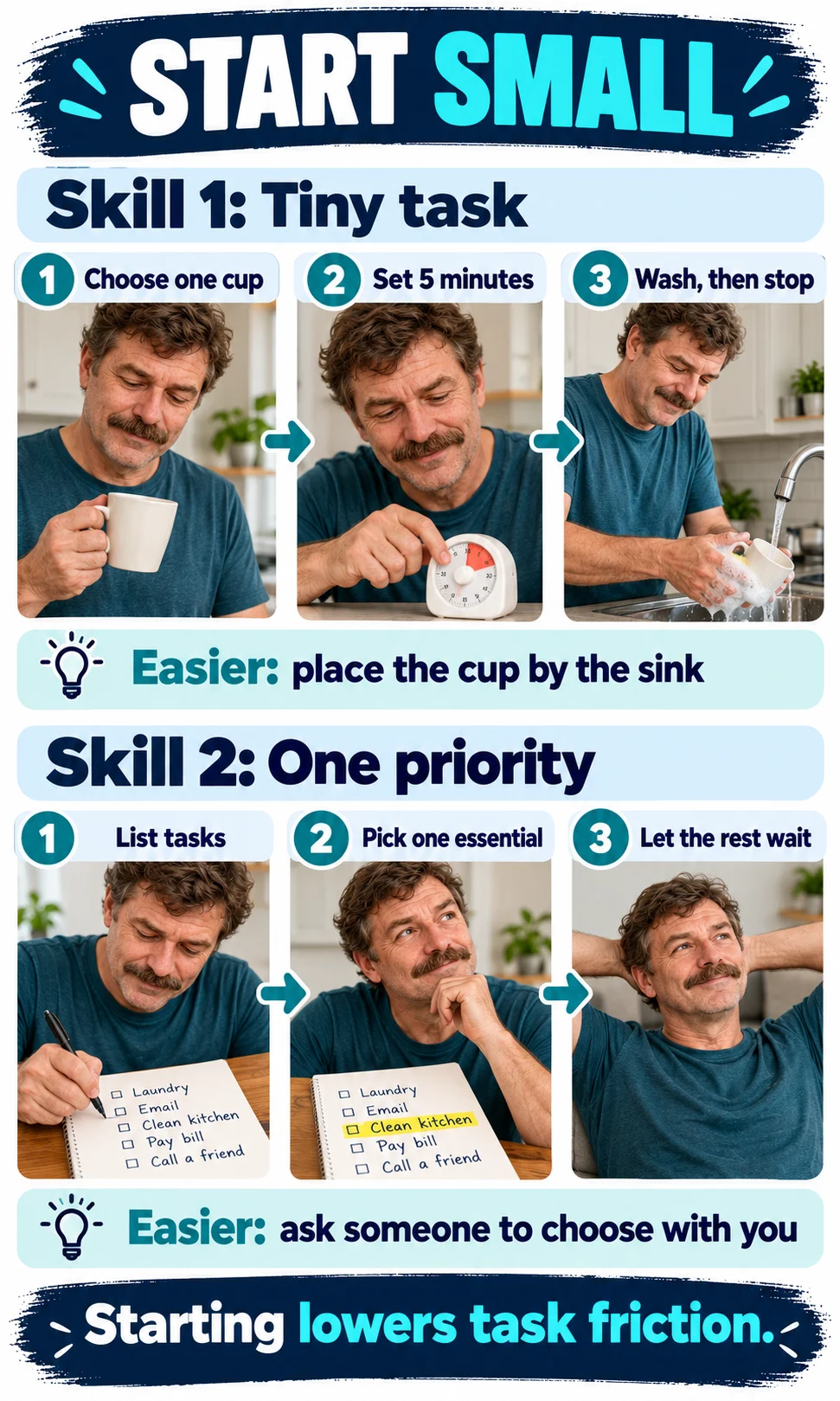
1. Shrink a task to a five-minute start
When it fits: When an ordinary chore feels too large. A cup is washed or positioned for a later attempt; the whole kitchen does not need to be clean.
- Choose one small part, such as washing one cup. Put the cup and washing supplies within reach.
- Set a timer for up to five minutes and begin that part. You can finish sooner.
- Stop at the timer, or when the cup is washed, and decide whether to rest.
Easier option: Place the cup beside the sink without washing it. Next: If this fits, repeat the same small step next time. If starting remains impossible, ask for practical support.
2. Choose one essential priority
When it fits: When everything on your list feels equally urgent. For example, arranging food takes priority over tidying a cupboard. A priority is chosen, even if someone else helps carry it out.
- List the few tasks competing for your attention. A scrap of paper is enough.
- Choose one that protects a basic need or addresses a real deadline.
- Let nonessential tasks wait; ask someone to share an essential task you cannot manage.
Easier option: Ask someone you trust to help select one priority. Next: Keep the next decision small rather than immediately replacing the postponed tasks with new demands.
3. Schedule a small meaningful activity
When it fits: When waiting to feel interested keeps the day empty. You made contact with an interest; pleasure does not have to return immediately.
- Choose an activity that used to matter to you, such as tending a plant.
- Choose a realistic time and put what you need nearby.
- Try a small version, such as watering one plant, without requiring yourself to enjoy it.
Easier option: Listen to one familiar song. Next: Repeat a manageable activity, change an activity that drains you, or discuss persistent loss of pleasure with a clinician.
4. Try gentle movement within your limits
When it fits: When inactivity is becoming your default and movement is medically appropriate. You attempted suitable movement, even if it was brief. A short walk is an example, not a prescribed treatment dose.
- Choose a safe, familiar route and comfortable shoes.
- Walk at an easy pace for a manageable short period, such as a few minutes.
- Pause if you feel unwell; do not push through pain, dizziness or unusual breathlessness.
Easier option: Try comfortable seated movement if that is safe for you. Next: Choose a tolerable amount next time; seek medical advice if symptoms or health conditions make activity uncertain.
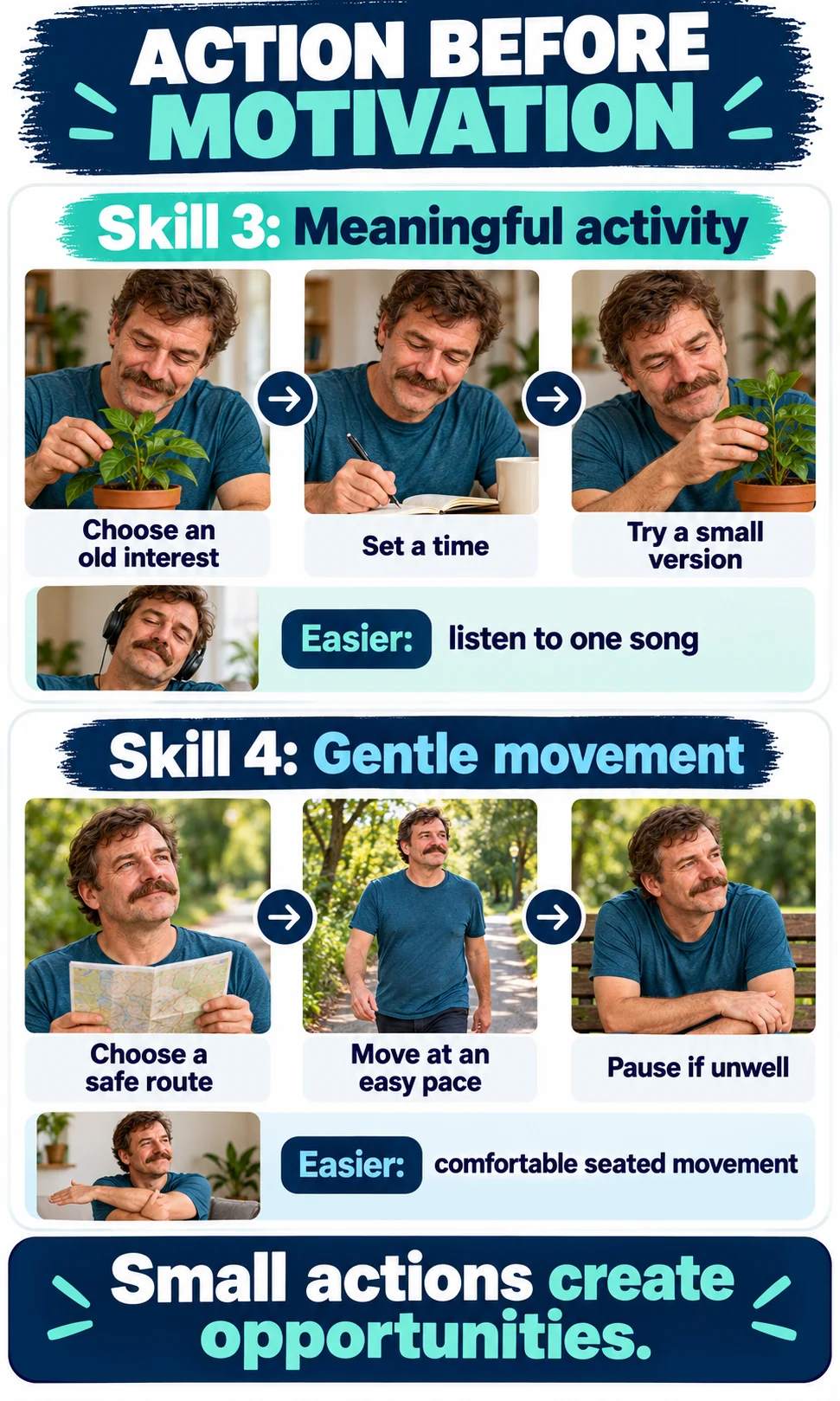
Takeaway: Choose the smallest useful action and stop before the exercise becomes an exhausting test of willpower. For a deeper explanation, read behavioral activation for depression.
What can you do when harsh thoughts and overthinking take over?
Try a balanced response to a specific thought, or redirect attention when thinking has become repetitive. The aim is flexibility, not compulsory optimism. A real loss, unsafe relationship or financial difficulty still needs an appropriate practical response.
A thought such as “I am useless” can turn one difficulty into a global verdict, making another attempt feel less worthwhile. Rumination is different from useful problem solving because repetition can continue without adding information or producing an action. Matching the response to the pattern avoids spending all day debating a thought.
The thought-reframing guidance describes noticing a thought, checking evidence and considering a more balanced interpretation. It also recognises that you may not be able to change the thought, and that this is not failure. For repetitive thinking, depression self-help guidance on rumination describes returning attention to other activities; the towel example below is an editorial adaptation.
A solvable problem needs a practical next step; a repeated hypothetical question may need an attention shift instead. The problem-solving method helps distinguish those situations and compare feasible actions. Neither reframing nor a kind sentence changes an unsafe situation by itself.
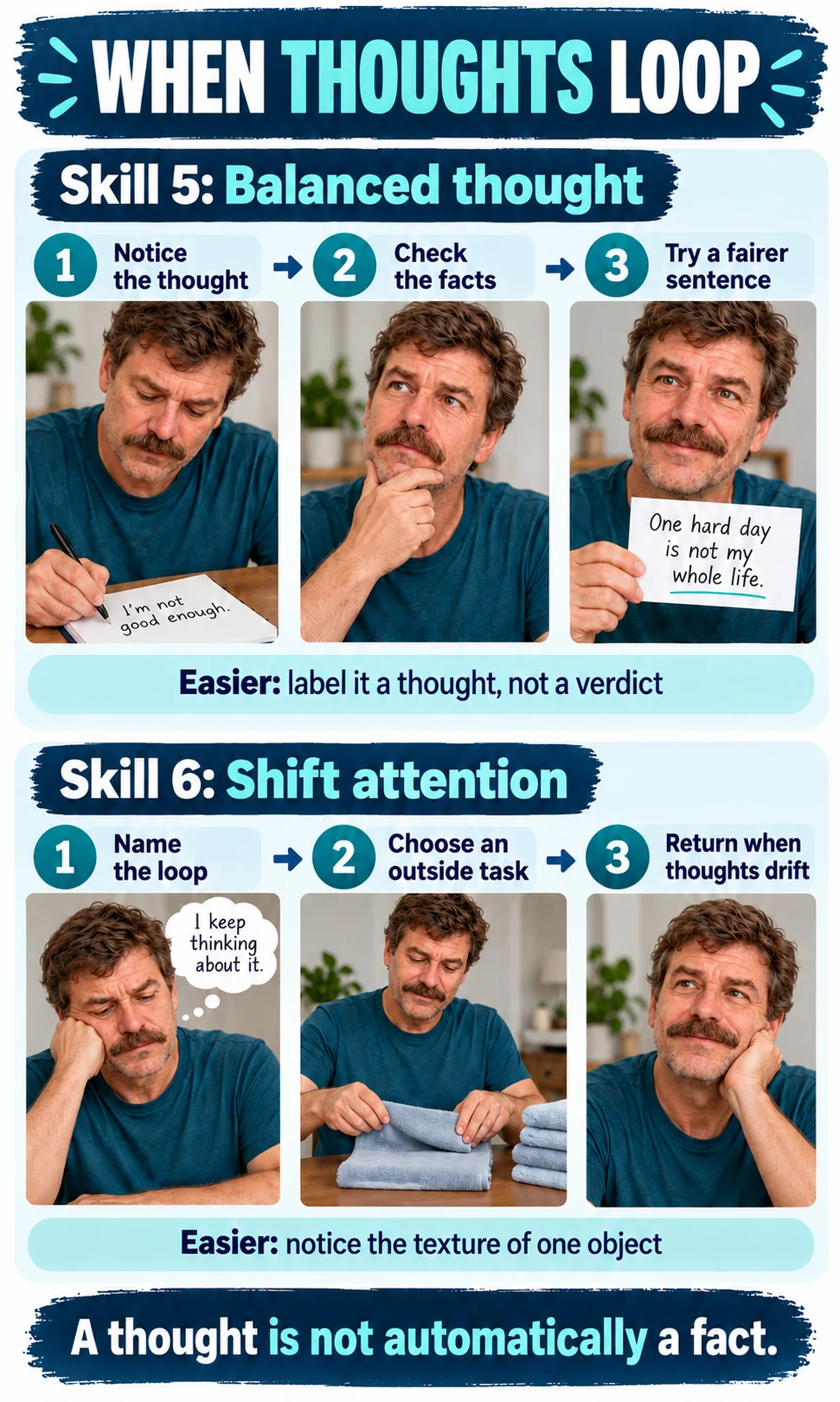
5. Test one harsh thought against the facts
When it fits: When a setback becomes a sweeping judgment about your worth. You practised a more balanced response; you do not have to believe it completely.
- Notice the exact thought, such as "I am not good enough." Write it down if that helps.
- Check what supports it and what it leaves out. A missed task is not evidence about your entire life.
- Try a fairer sentence: "One hard day is not my whole life."
Easier option: Simply label it "a thought, not a verdict" if checking evidence is too tiring. Next: Try once, then return to a suitable activity. Stop the exercise if debating the thought increases distress.
6. Redirect attention when thinking becomes a loop
When it fits: When you revisit the same question without reaching a useful next action. You redirected attention at least once; removing every unwanted thought is not the target.
- Name the pattern: "I am going over the same thing again."
- Choose a simple external task, such as folding one towel, and attend to what your hands are doing.
- When thoughts drift back, gently return attention to the towel rather than arguing with the thought.
Easier option: Notice the texture of one safe object. Next: Use this as a pause. A real problem still deserves practical action, and persistent rumination may need therapy support.
7. Turn one solvable problem into an action
When it fits: When a practical difficulty is buried inside general worry. For example, opening the bill at a chosen time gives you information for the next decision. The bill does not need to be resolved in one sitting.
- Name an issue you can influence, such as a bill you have not opened.
- Compare feasible options, such as checking the amount or asking about payment arrangements.
- Choose one action and when to do it; get help if the consequences or choices are unclear.
Easier option: Ask someone to help identify one workable option. Next: Review whether the action moved the problem forward. Change the plan if it did not.
8. Use a realistic, compassionate sentence
When it fits: When self-blame makes it harder to try again. You responded with less blame; this is not a demand to feel positive.
- Notice the blaming phrase, such as "I should be able to handle this."
- Imagine the tone you would use with a friend facing the same difficulty.
- Say one realistic sentence: "This is hard. I can take one small step."
Easier option: Read that sentence rather than creating your own. Next: Pair the sentence with a suitable existing step from this guide, or pause if you need rest.
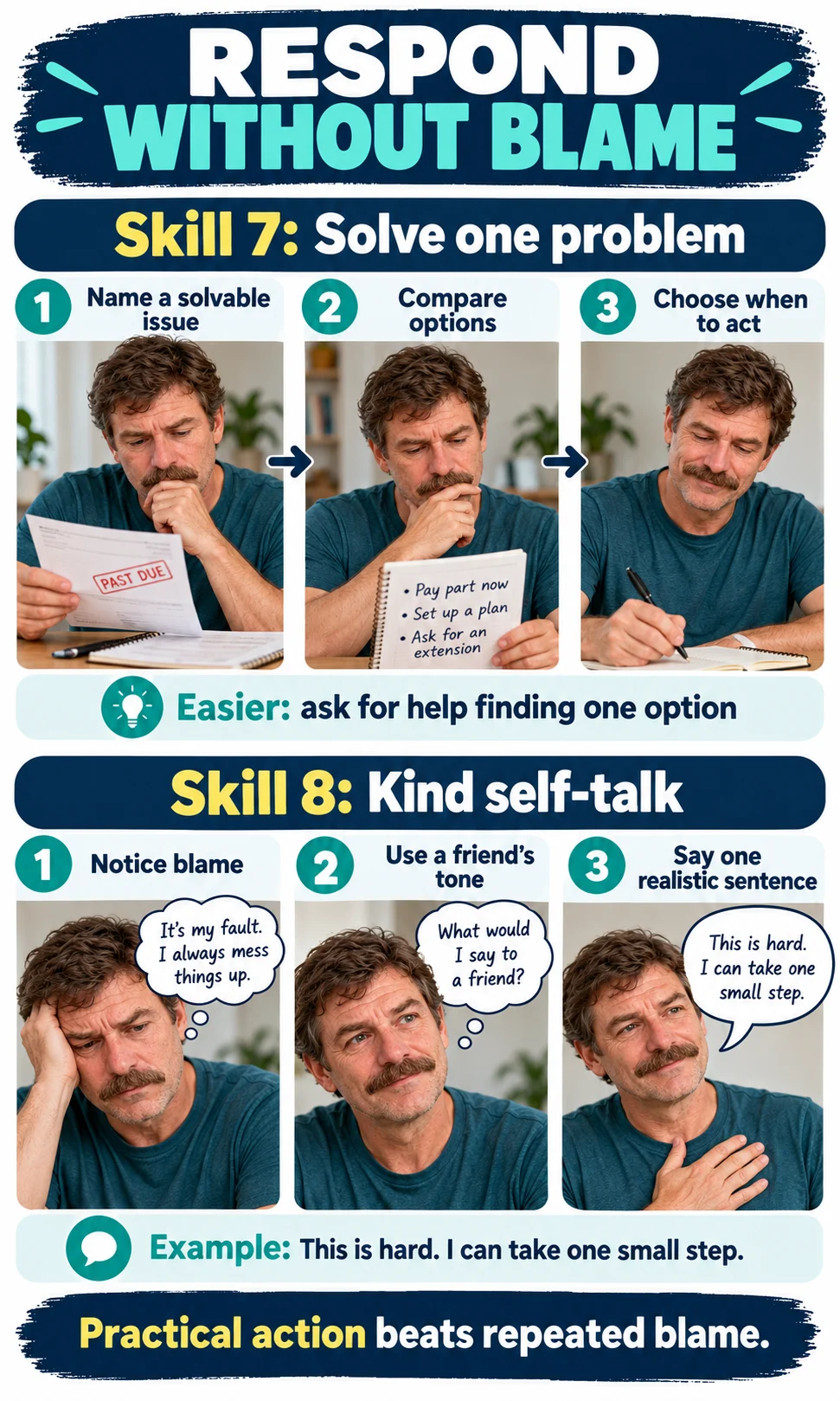
Takeaway: Match your response to the pattern: check a judgment, redirect a loop, or act on a solvable issue. For a deeper explanation, read depressive rumination and overthinking.
Which daily routines support coping without becoming another burden?
Protect a few basic needs: a workable waking time, accessible food, one hygiene step and support around alcohol. These routines can reduce practical strain while you receive appropriate care. They are not a special diet, a detox or a substitute for treatment.
Sleep, appetite and self-care difficulties can make the next day harder to manage, adding friction to already low energy. A predictable cue or supplies placed nearby reduces the number of decisions needed. Routine support addresses that friction without assuming every person can follow the same schedule.
Depression care guidance includes regular sleep, meals, activity and social contact alongside treatment. These are supportive habits, not proof that irregular habits caused your illness. Ongoing sleep or appetite changes warrant assessment; medication effects and other conditions can also require attention.
Alcohol may feel like short-term relief while making coping more difficult. If you drink heavily or experience shaking, sweating or other withdrawal symptoms when you cut down, medical support for alcohol reduction matters before changing your intake. The alternative-drink example below is for planning around a cue, not managing withdrawal.
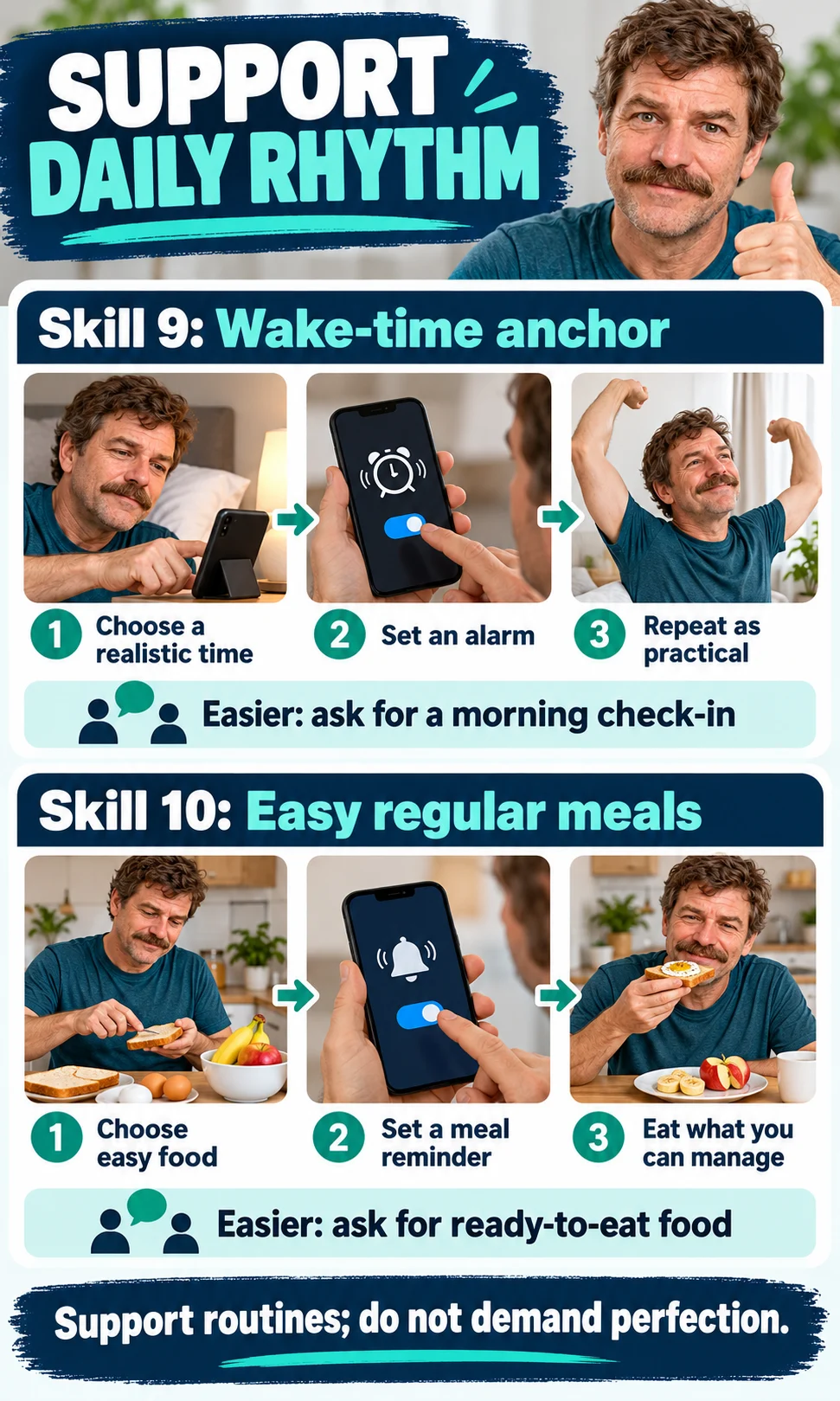
9. Create a realistic wake-time anchor
When it fits: When waking times drift and the day loses structure. You established one routine anchor, rather than attempting to repair every sleep habit overnight.
- Choose a waking time that fits your responsibilities and sleep needs. Shift workers may need a different schedule.
- Set an alarm and make the first morning action simple.
- Repeat the time as practical; discuss ongoing insomnia or excessive sleeping with a clinician.
Easier option: Ask for a supportive morning check-in. Next: Keep the anchor realistic. Do not deliberately deprive yourself of sleep or change prescribed sleep medication.
10. Make regular meals easier to reach
When it fits: When low appetite or effort means meals are repeatedly missed. Food is available and you have attempted a meal; eating perfectly is not the task.
- Choose an easy food combination you can tolerate and access, such as toast, egg and fruit.
- Put a meal reminder near an existing routine if remembering is difficult.
- Eat what you can manage and seek help if poor intake persists.
Easier option: Ask someone for ready-to-eat food; a small manageable portion can be a starting point. Next: Discuss continued appetite or weight changes with a clinician. Inability to eat or drink needs prompt medical assessment.
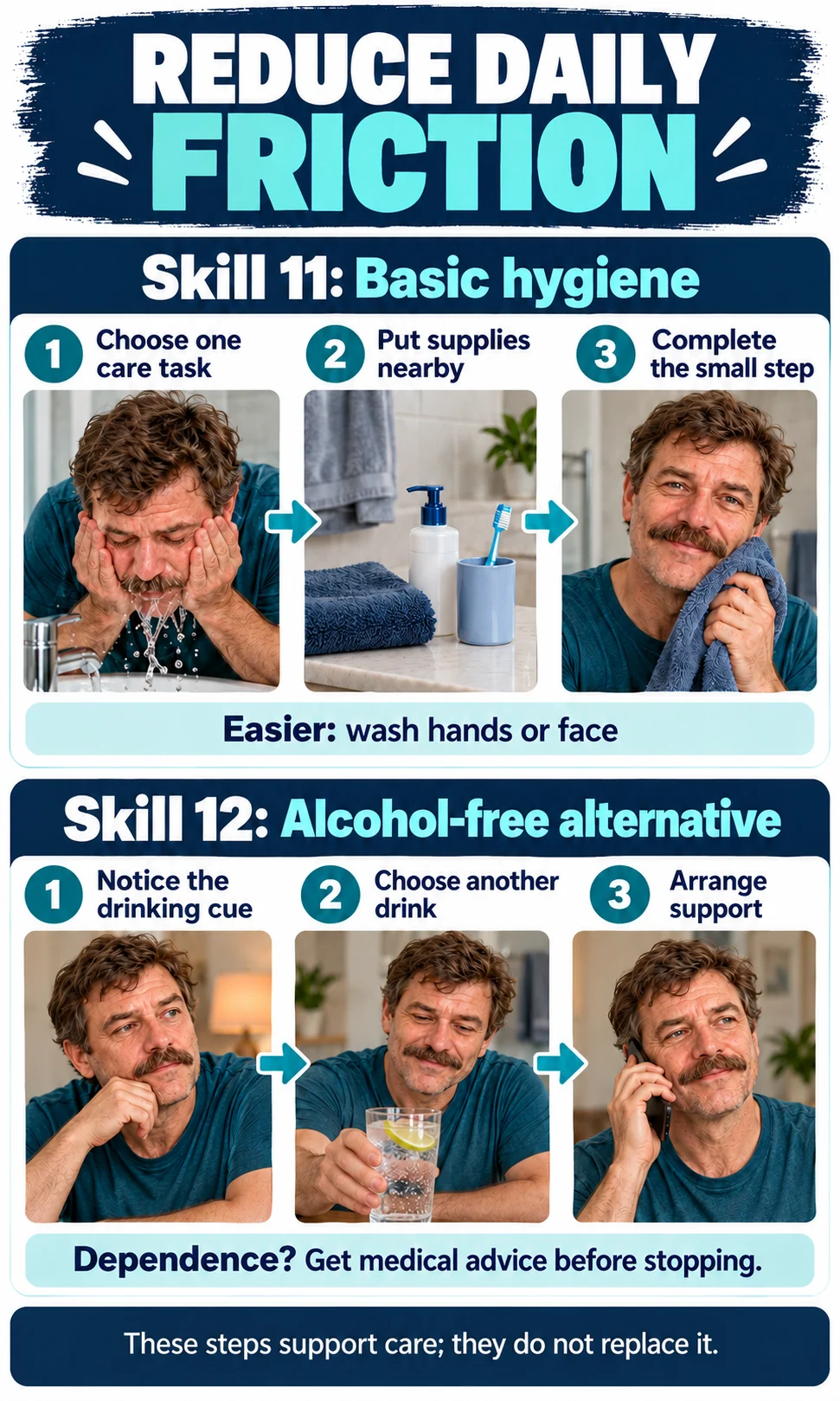
11. Complete one basic hygiene step
When it fits: When personal care has become an overwhelming sequence. One care step is completed; this is an adaptation for a hard day, not a permanent substitute for needed care.
- Choose one care task, such as washing your face.
- Put the needed supplies nearby so preparation is shorter.
- Complete the small task and stop there if that is all you can manage.
Easier option: Wash your hands or wipe your face instead of attempting a full routine. Next: Repeat the manageable step and ask for support if self-care continues to deteriorate.
12. Plan an alternative to using alcohol to cope
When it fits: When a familiar drinking cue follows stress or low mood. You have an alternative and support arranged; this is not an alcohol-withdrawal plan.
- Notice the situation in which you usually reach for a drink.
- Choose an alcohol-free alternative, such as sparkling water, and make it available.
- Arrange support for that situation, such as a check-in with a trusted person.
Easier option: Ask someone to bring an alternative drink or help arrange medical advice. Next: If you may be dependent or have withdrawal symptoms, get medical advice before stopping or sharply reducing alcohol. Withdrawal can be dangerous.
Takeaway: Support one basic need now, and involve a clinician when persistent changes or physical symptoms need assessment. For a deeper explanation, read depression and sleep problems.
When should you reach out, and what kind of help should you ask for?
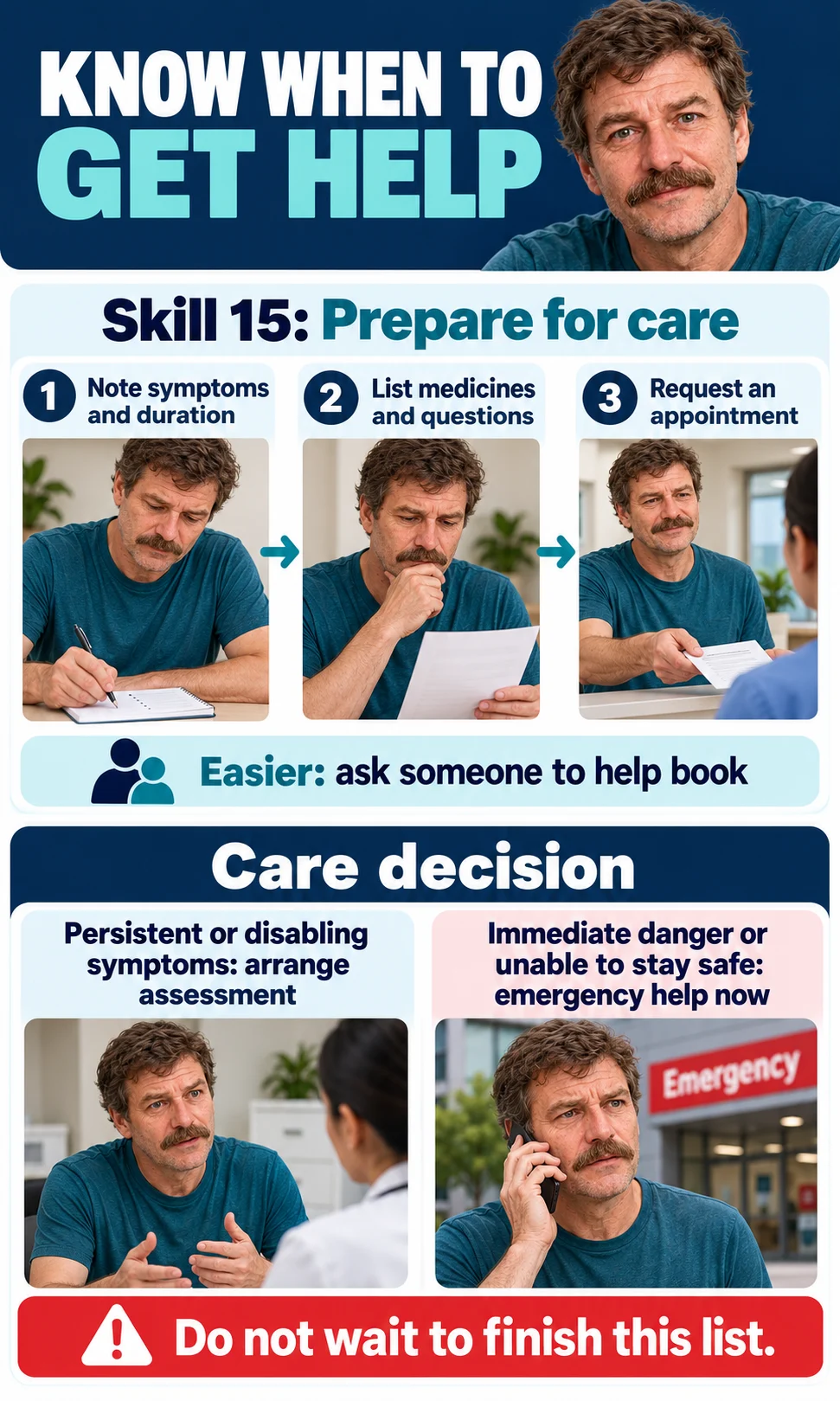
Reach out when you are struggling, and arrange professional assessment when symptoms persist, worsen or interfere with daily life. You do not need to complete all 15 skills before asking for help. Immediate danger or inability to stay safe needs urgent emergency support.
Low energy, shame and withdrawal can make help harder to access just when it is needed. A specific message reduces uncertainty for both you and the person receiving it. Practical support can remove a barrier to food, transport or an appointment, while professional assessment addresses the illness itself.
Guidance on talking about mental health recommends choosing someone you trust and explaining the support you want. That person may be unavailable, so keep another route in mind. Persistent symptoms can merit treatment; a friend is a source of support rather than a replacement for a clinician.
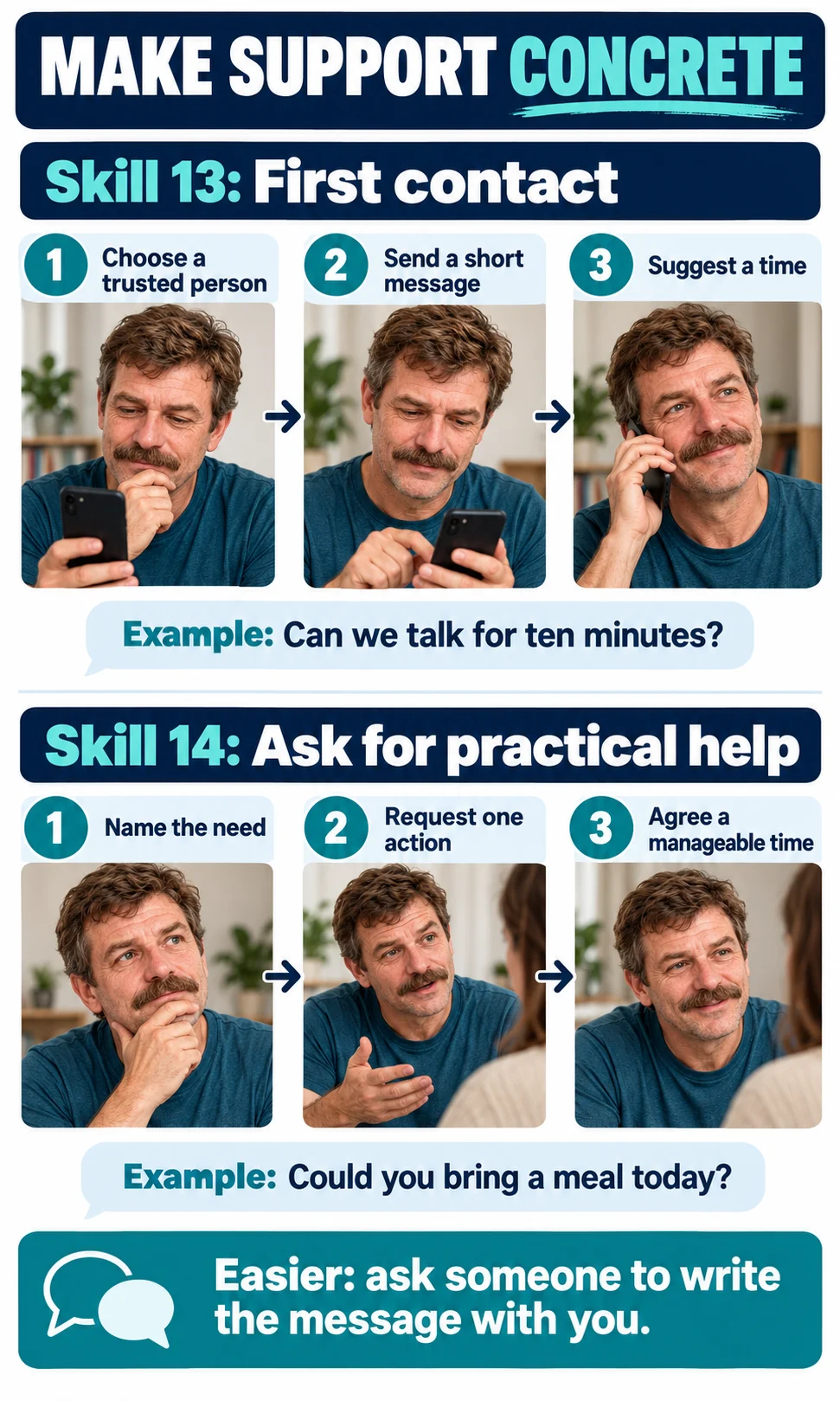
13. Make one low-pressure contact
When it fits: When embarrassment or low energy keeps you isolated. A contact attempt is made; the other person does not have to respond immediately for your effort to count.
- Choose a person you trust and a form of contact you can manage.
- Send a short message: "I have been having a hard time. Can we talk for ten minutes?"
- Suggest a time, or ask when they are available.
Easier option: Ask someone to help write the message. Next: If they cannot help, try another trusted person or a professional support route. Do not rely on a message reply in an emergency.
14. Ask for one specific form of practical help
When it fits: When “let me know if you need anything” is too vague. The need and requested action are clear; the helper is not expected to solve depression.
- Name the immediate need, such as food, transport or help booking care.
- Request one action: "Could you bring a meal today?"
- Agree a manageable time and an alternative if they cannot do it.
Easier option: Ask someone to help phrase the request. Next: Accept a smaller useful offer, ask another person, or contact a suitable service if the need remains unmet.
15. Prepare a short note for a care appointment
When it fits: When concentration or uncertainty makes seeking care hard. You have taken a step toward assessment; a note is useful because it helps the clinician understand your difficulty.
- Note the main symptoms, how long they have lasted and which everyday activities they affect.
- List medicines, supplements and questions; include episodes of unusually high energy or much less need for sleep if relevant.
- Request an appointment and bring the note, or ask someone to help book and accompany you.
Easier option: Tell someone you trust, "I need help arranging an appointment." Next: Do not wait to finish the note if there is immediate danger, worsening symptoms or inability to meet basic needs.
Takeaway: A short contact attempt or appointment request is a useful next action; immediate safety concerns need urgent help. For a deeper explanation, read social withdrawal and depression.
Common questions
Do I need to practise all 15 skills every day?
No. Choose one skill that addresses the difficulty in front of you and reduce its size if needed. A list is a menu, not a daily performance target. Completing a small step can be worthwhile even if your mood is unchanged.
What if an activity I used to enjoy still feels empty?
Loss of pleasure can be part of depression, so an activity may not feel rewarding immediately. Try a manageable version rather than forcing a long session. Tell a clinician if the loss of pleasure persists or your functioning is worsening.
Can these skills replace therapy or antidepressants?
These skills support coping and do not determine which treatment you need. Treatment decisions depend on symptoms, preferences, risks and your medical circumstances. Discuss treatment with a qualified clinician and do not stop prescribed medicine on the basis of a self-help article.
What if I miss a day or cannot start?
Make the step smaller or ask for help with preparation. Missing a day does not establish that the skill cannot help you, and completing it does not establish recovery. If basic tasks remain unmanageable, seek assessment rather than repeatedly increasing your demands on yourself.
Choose one skill that addresses your immediate difficulty and try its easiest useful version. If symptoms continue or everyday functioning is becoming harder, arrange an assessment rather than treating the list as something you must master first. Support can begin while you are still struggling.