

The Efficiency Illusion Most Companies Still Believe
For years, businesses adopted chatbots under one simple promise – lower cost per interaction.
That promise was never wrong.
But it was incomplete.
Customer service is not a cost center problem. It is a system architecture problem.
In 2022, the conversation around AI chatbots focused on automation percentages – how many tickets could be deflected, how many FAQs could be answered without human intervention, how much agent headcount could be reduced.
In 2026, that framing feels outdated.
The question is no longer:
“Can a chatbot answer questions?”
The real question is:
Can the chatbot reshape the customer service operating system without collapsing customer trust?
That difference changes everything.
Modern AI chatbots are no longer rule-based response engines. They are layered systems built on:
- Retrieval-augmented generation
- Enterprise knowledge orchestration
- Intent clustering models
- Behavioral routing logic
- Conversation memory scaffolding
- Multi-modal input handling
The shift from scripted bots to adaptive AI agents is structural.
It affects staffing models, revenue retention, cross-sell timing, customer lifetime value, and even product design feedback loops.
This is not about listing tools.
This is about understanding mechanisms.
And only after understanding the mechanisms can we evaluate which AI chatbots actually scale.
What Actually Makes a Customer Service Chatbot Effective in 2026
Before ranking platforms, we must define the evaluation model.
An enterprise chatbot must perform across five operational layers:
1 – Knowledge Layer
How it connects to structured and unstructured enterprise data.
2 – Reasoning Layer
How it interprets ambiguous customer intent.
3 – Control Layer
How it prevents hallucination and enforces brand-safe responses.
4 – Integration Layer
How it connects to CRM, ticketing, payment, logistics, and internal systems.
5 – Optimization Layer
How it learns from conversations without introducing drift risk.
Most companies only evaluate Layer 1.
They test whether the bot can answer FAQs.
That is a shallow test.
True customer service efficiency comes from integration depth.
A chatbot that answers 80 percent of tickets but cannot trigger refund workflows or update customer profiles still generates operational friction.
Efficiency is not response automation.
Efficiency is system closure.
To understand how automation decisions compound over time, review our deeper breakdown in “Should You Use AI for This Task?” which explains where AI improves workflow efficiency and where human escalation preserves long-term trust.
Why 2022 Lists Are Structurally Outdated
Most “best chatbot” lists from 2022 were ranking:
- Chatbot builders
- Script automation platforms
- Pre-trained intent libraries
- Omnichannel connectors
But the architecture of AI shifted dramatically after large language models became stable enough for enterprise fine-tuning.
The new frontier is not chatbot UI.
It is controlled generative reasoning.
Modern CX AI systems now:
- Summarize long ticket histories in milliseconds
- Extract structured fields from messy conversation logs
- Detect churn signals before escalation
- Rewrite brand responses in tone-specific formats
- Trigger cross-department workflows
These capabilities did not exist at scale three years ago.
So we will not simply repeat an old list.
Instead, we evaluate the current ecosystem under a durability lens:
Which AI chatbots can operate at enterprise scale without breaking operational reliability?
The Hidden Cost Variable – Hallucination Risk
There is one variable most marketing pages avoid.
Hallucination liability.
When an AI chatbot invents a refund policy or fabricates a shipping timeline, the cost is not computational.
It is reputational.
This is why 2026 enterprise systems rely heavily on:
- Retrieval-constrained generation
- Citation enforcement
- Output confidence scoring
- Human review gates for high-risk interactions
The best platforms do not promise creativity.
They promise bounded intelligence.
This distinction matters more than feature lists.
The Top AI Chatbots for Customer Service in 2026 – Evaluated by System Depth
We now move into platform analysis.
Not based on marketing claims.
Based on architectural maturity.
The platforms evaluated:
- Intercom Fin AI
- Zendesk AI
- Salesforce Einstein GPT for Service
- Ada CX AI
- Freshdesk Freddy AI
- Drift AI
- HubSpot Service AI
- LivePerson Conversational Cloud
- Google Dialogflow CX
- Microsoft Copilot for Service
Each will be analyzed under:
- Knowledge integration
- Workflow closure depth
- Hallucination control
- Enterprise scalability
- Revenue expansion support
This is not a surface comparison.
This is system anatomy.
Intercom Fin AI – Controlled Conversational Depth
Intercom’s evolution into Fin AI represents one of the most visible transitions from rule-based chat automation to LLM-backed service orchestration.
Its strength lies in:
- Direct help center ingestion
- Citation-backed responses
- Automatic knowledge syncing
- Escalation handoff context preservation
The system performs particularly well in SaaS environments where documentation clarity is strong.
However, deep workflow automation still depends on integration customization.
Intercom scales effectively for:
- Mid-sized SaaS firms
- Subscription-based platforms
- High inbound ticket environments
Its limitation emerges in heavy compliance industries where answer traceability must be auditable beyond conversational logs.
Zendesk AI – Workflow Native Architecture
Zendesk did not bolt AI onto customer service.
It embedded AI into ticket routing.
Zendesk AI excels at:
- Intelligent ticket triage
- Automated tagging
- Suggested macro generation
- Predictive satisfaction scoring
The advantage here is system-native integration.
Rather than replacing support agents, it augments them.
Zendesk AI is strongest in enterprises already embedded in the Zendesk ecosystem.
Its generative capabilities are improving, but workflow control remains its core strength.
Salesforce Einstein GPT for Service – CRM-Embedded Intelligence
Salesforce approached generative AI differently than standalone chatbot vendors.
Instead of building a chatbot and attaching CRM data, Salesforce embedded generative intelligence directly into its Service Cloud infrastructure.
This distinction matters.
Einstein GPT operates within:
- CRM records
- Case histories
- Customer segmentation layers
- Contract status fields
- Revenue attribution models
This allows responses to be contextualized against the full customer lifecycle, not just recent interactions.
Mechanism Strength
- Structured data awareness
- Automated case summarization
- Suggested response generation grounded in CRM
- Cross-object reasoning within Salesforce data models
Unlike lighter chatbots, Einstein GPT benefits from native data proximity.
It does not need external synchronization layers to access order history or account tiers.
Control Strength
Salesforce implements guardrails via:
- Prompt templates
- Data boundary restrictions
- Field-level access permissions
- Admin review logs
The system reduces hallucination risk by tightly coupling outputs to CRM-retrieved data.
Limitation
The strength of Salesforce is also its constraint.
Organizations not deeply integrated into Salesforce may find implementation cost high.
Customization requires certified ecosystem support.
Best Fit
- Large enterprises
- Multi-regional support teams
- High revenue-per-customer models
- Regulated industries needing audit trails
Salesforce Einstein GPT is less about chat deflection and more about service acceleration.
It improves agent throughput.
It does not attempt to fully replace support staff.
Ada CX AI – Autonomous Resolution Architecture
Ada focuses on autonomous resolution rather than agent augmentation.
The company’s positioning centers on full ticket deflection.
Ada integrates:
- Natural language understanding
- Workflow orchestration
- API-triggered actions
- CRM updates
- Account changes
The system’s primary metric is resolution rate without human escalation.
Mechanism Strength
- Strong intent clustering
- Pre-trained industry models
- Automated process triggers
- Multi-channel deployment
Ada performs well in environments where repetitive workflows dominate, such as:
- E-commerce returns
- Subscription cancellations
- Billing corrections
- Order tracking
Hallucination Control
Ada uses constrained intent modeling rather than open-ended generative reasoning.
This reduces creative drift but may limit conversational flexibility.
Limitation
When conversations become nuanced or emotionally complex, Ada often escalates to human agents earlier than LLM-native platforms.
Best Fit
- High volume transactional environments
- Retail and DTC brands
- Companies prioritizing automation rate over conversational depth
Ada optimizes operational efficiency.
It does not optimize conversational richness.
Freshdesk Freddy AI – Integrated Support Enhancement
Freshdesk’s Freddy AI sits within a broader support suite.
Its focus is layered enhancement rather than conversational dominance.
Freddy provides:
- Suggested replies
- Automated ticket categorization
- Predictive SLA risk alerts
- Knowledge article recommendations
Unlike autonomous agents, Freddy functions as a co-pilot.
Mechanism Strength
- Agent assist acceleration
- Time-to-resolution reduction
- Seamless UI integration
Weakness
Freddy’s conversational AI layer is improving but not as generative-depth oriented as LLM-first platforms.
Best Fit
- Growing mid-market companies
- Teams optimizing internal agent productivity
- Businesses transitioning from manual support
Freddy reduces friction inside the support team rather than at the customer interface.
Drift AI – Revenue-Driven Conversational Routing
Drift historically focused on conversational marketing rather than support.
Its AI layer bridges sales and service.
Drift excels in:
- Real-time qualification
- Sales routing
- Meeting booking automation
- Revenue attribution conversations
Mechanism Strength
- Behavioral scoring
- CRM-linked routing
- Buyer intent detection
Limitation
Drift’s architecture is optimized for pipeline generation.
It is less optimized for complex service workflows such as refunds or compliance inquiries.
Best Fit
- B2B SaaS
- Lead-driven enterprises
- High ACV revenue models
Drift positions customer interaction as a revenue gateway rather than a cost center.
HubSpot Service AI – CRM-Centric Growth Alignment
HubSpot integrates AI inside its Service Hub.
Like Salesforce, the strength lies in CRM alignment.
HubSpot Service AI offers:
- Ticket summarization
- Suggested responses
- Knowledge automation
- Cross-team visibility
Its advantage is ecosystem simplicity.
Companies already using HubSpot benefit from immediate AI enablement.
Control Layer
HubSpot prioritizes admin configuration simplicity rather than complex governance.
For SMB and mid-market businesses, this is sufficient.
Limitation
Large enterprise compliance controls are less granular compared to Salesforce or Microsoft ecosystems.
LivePerson Conversational Cloud – Large-Scale Conversational Infrastructure
LivePerson operates at telecom and enterprise scale.
It supports:
- Massive message volumes
- Multi-language processing
- Sentiment detection
- AI-human hybrid workflows
Mechanism Strength
- Real-time analytics
- Conversation data lakes
- Deep intent modeling
LivePerson excels in telecom, banking, and enterprise retail sectors where conversational volume is enormous.
Hallucination Mitigation
The system leans heavily on intent classification and structured response mapping rather than open-ended generation.
This enhances reliability.
Limitation
Implementation complexity is high.
Not designed for small teams.
Google Dialogflow CX – Engineering-Level Control
Dialogflow CX is infrastructure-level conversational AI.
Unlike SaaS-native tools, Dialogflow offers granular control over:
- Conversation states
- Flow branching
- Entity extraction
- API invocation
It requires engineering resources.
Mechanism Strength
- Precision state management
- Custom NLP modeling
- Deep Google Cloud integration
Limitation
Non-technical teams may struggle without development support.
Best Fit
- Engineering-heavy organizations
- Companies building proprietary support stacks
- Enterprises requiring full architecture control
Dialogflow CX is powerful but not plug-and-play.
Microsoft Copilot for Service – Enterprise Productivity Layer
Microsoft integrates Copilot inside Dynamics 365 and Teams environments.
Copilot focuses on:
- Case summarization
- Suggested knowledge answers
- Cross-application integration
- Meeting recap generation
It enhances agent productivity across Microsoft’s ecosystem.
Mechanism Strength
- Strong enterprise security
- Microsoft Graph integration
- Cross-tool contextual memory
Limitation
Less autonomous resolution focus.
More assistive than autonomous.
Comparative System Evaluation Matrix – Depth Over Features
When evaluating these platforms under the five-layer model:
Annualized Cost Comparison – Enterprise Deployment (Illustrative Model)
| Cost Variable | Intercom Fin | Zendesk AI | Salesforce Einstein GPT | Ada CX | Dialogflow CX |
|---|---|---|---|---|---|
| Base Platform | Medium | Medium | High | Medium | Low – usage based |
| API Usage | Moderate | Moderate | High | Low | High – volume dependent |
| Integration | Medium | Medium | Very High | Medium | Very High |
| Governance | Medium | Medium | High | Medium | High |
| Escalation Oversight | Medium | Medium | High | Medium | High |
| Custom Dev | Low | Low | High | Medium | Very High |
| Total Complexity | Medium | Medium | Very High | Medium | Very High |
Important observation:
Lower subscription cost does not equal lower total cost.
Dialogflow may appear inexpensive initially, but engineering cost significantly increases total ownership.
Salesforce appears expensive upfront but reduces integration friction if already embedded.
Cost modeling must account for existing ecosystem alignment.
The ranking is not about popularity.
It is about structural durability.
AI in customer service does not fail because it cannot answer questions. It fails when it is deployed without governance depth.
For a broader structural understanding of how AI systems shift operational risk across departments, see our analysis in AI Trust and Uncertainty – Why Confidence Scales Faster Than Certainty.
Up to this point, we evaluated platforms by architecture.
Now we evaluate them by economics.
Because efficiency claims mean little without understanding cost dynamics.
Most companies still calculate chatbot ROI incorrectly.
They measure:
- Tickets deflected
- Agent hours saved
- Response time reduction
Those are operational metrics.
They are not revenue metrics.
And customer service is increasingly tied to revenue preservation, not just cost reduction.
The True Cost Model of AI Chatbots in 2026
An enterprise AI chatbot typically introduces five cost variables:
1 – Platform subscription
2 – API or model usage
3 – Integration development
4 – Governance monitoring
5 – Human escalation oversight
Many ROI projections ignore variables 3 and 4.
But these are the most volatile.
Integration Cost
Integrating AI into CRM, billing systems, logistics, and knowledge bases requires:
- API orchestration
- Field mapping
- Data cleaning
- Permission auditing
This is rarely a one-time cost.
As systems evolve, integration maintenance becomes recurring.
Governance Cost
Hallucination monitoring is not passive.
Enterprises must:
- Review flagged conversations
- Adjust prompts
- Update retrieval logic
- Audit compliance-sensitive outputs
Without governance investment, AI drift occurs.
And drift produces risk.
When AI Chatbots Quietly Reduce Revenue
The promise of automation can hide an uncomfortable outcome.
Poorly implemented AI chatbots reduce revenue.
How?
1 – Premature Escalation Barriers
If escalation to human agents is delayed too long, high-value customers feel trapped.
Retention decreases silently.
2 – Over-Automation of Sensitive Issues
Billing disputes, compliance queries, or product failures often require empathy.
Automation without contextual nuance increases churn probability.
3 – Brand Tone Misalignment
Even accurate answers can erode trust if tone feels mechanical.
4 – Cross-Sell Misfires
AI systems that suggest upgrades during complaint resolution often generate negative sentiment.
Revenue alignment requires timing intelligence.
Efficiency alone is not enough.
To evaluate where automation improves margin without increasing churn exposure, see our structural analysis in Should You Use AI for This Task?
The AI Agent Shift – From Chatbot to Workflow Executor
The next phase of customer service AI is not conversational.
It is agentic.
An AI agent differs from a chatbot in one critical way:
It does not just answer.
It acts.
Agentic systems can:
- Trigger refunds
- Modify account tiers
- Schedule logistics pickups
- Update CRM fields
- Open internal tickets
- Initiate fraud reviews
The risk profile changes when AI begins taking actions.
This introduces:
- Authorization layer complexity
- Permission hierarchies
- Audit trail requirements
- Rollback mechanisms
Chatbots are front-end systems.
AI agents are operational systems.
The governance depth required increases exponentially.
Integration Failure Patterns
Across enterprise deployments, three patterns repeat.
Pattern 1 – Knowledge Fragmentation
When knowledge bases are inconsistent, AI retrieval fails.
Outdated policies generate outdated answers.
AI amplifies data quality issues.
Pattern 2 – API Bottlenecks
If backend systems are slow, conversational latency increases.
Customers interpret delay as incompetence.
Pattern 3 – Governance Neglect
Teams launch AI systems but underinvest in monitoring.
Small inaccuracies accumulate.
Trust erosion becomes visible only after churn increases.
Long-Term Scalability – The Durability Model
To sustain efficiency at scale, an AI chatbot must maintain balance between:
- Automation rate
- Customer satisfaction
- Revenue retention
- Compliance stability
Automation cannot rise infinitely.
There is an optimal equilibrium point.
Beyond that point, trust decreases faster than cost savings increase.
This is the durability threshold.
The Economics of AI Customer Service – Beyond Surface ROI

Most ROI projections stop at this equation:
Agent salary × tickets deflected = savings.
That model is incomplete.
A modern AI deployment changes:
- Customer interaction latency
- First-contact resolution rate
- Average handle time
- Agent training requirements
- Escalation complexity
- Customer lifetime value trajectory
Efficiency must be measured across revenue preservation, not just labor reduction.
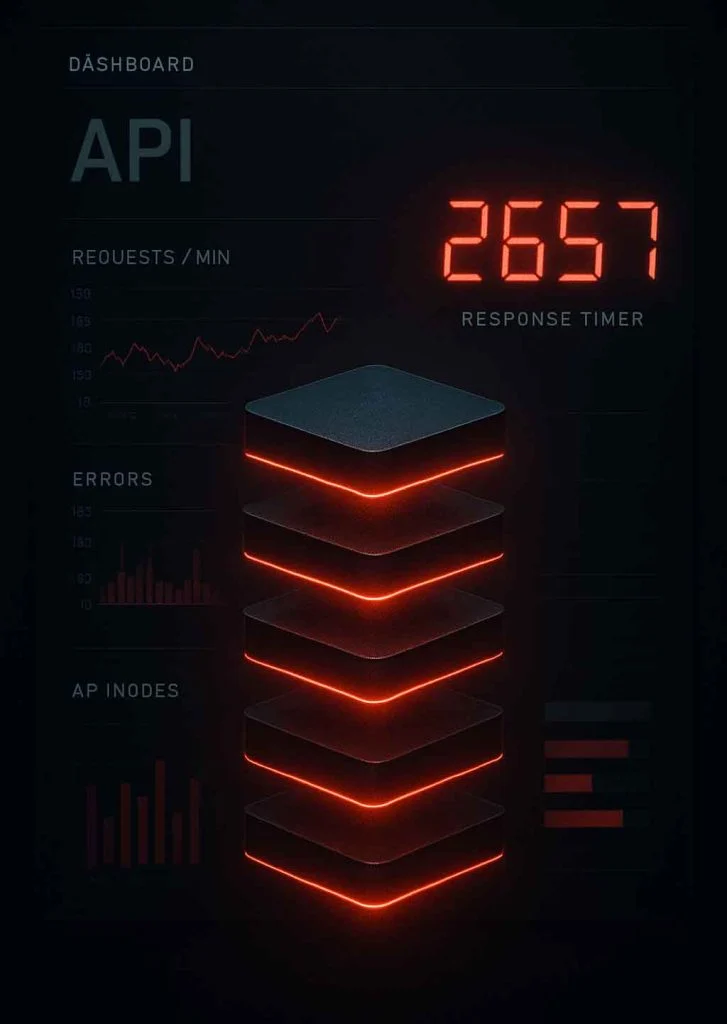
Latency as a Revenue Variable
Latency affects perceived competence.
If response time increases beyond 3-4 seconds:
- Customer trust declines
- Escalation increases
- Frustration metrics rise
AI systems that rely on heavy API chaining introduce risk.
Each external call adds milliseconds.
In large-scale deployments, milliseconds compound.
Operational latency must be modeled in architecture design.
Multi-Year ROI Projection – Durability Model
True ROI must be evaluated over 3-5 years.
Short-term projections ignore:
- Model drift
- Knowledge base expansion
- Compliance updates
- Regulatory changes
- Product catalog growth
Three-Year ROI Scenario Modeling
| Year | Automation Rate | Governance Cost | Churn Impact | Net Efficiency Gain |
|---|---|---|---|---|
| Year 1 | 40% | Low | Neutral | Moderate |
| Year 2 | 55% | Medium | Slight Positive | High |
| Year 3 | 65% | High | Risk Variable | Uncertain |
As automation increases, governance cost rises.
Beyond 65 percent automation, risk of customer dissatisfaction grows.
There is no infinite automation advantage.
There is a sustainability ceiling.
Strategic Insight – The Automation Ceiling
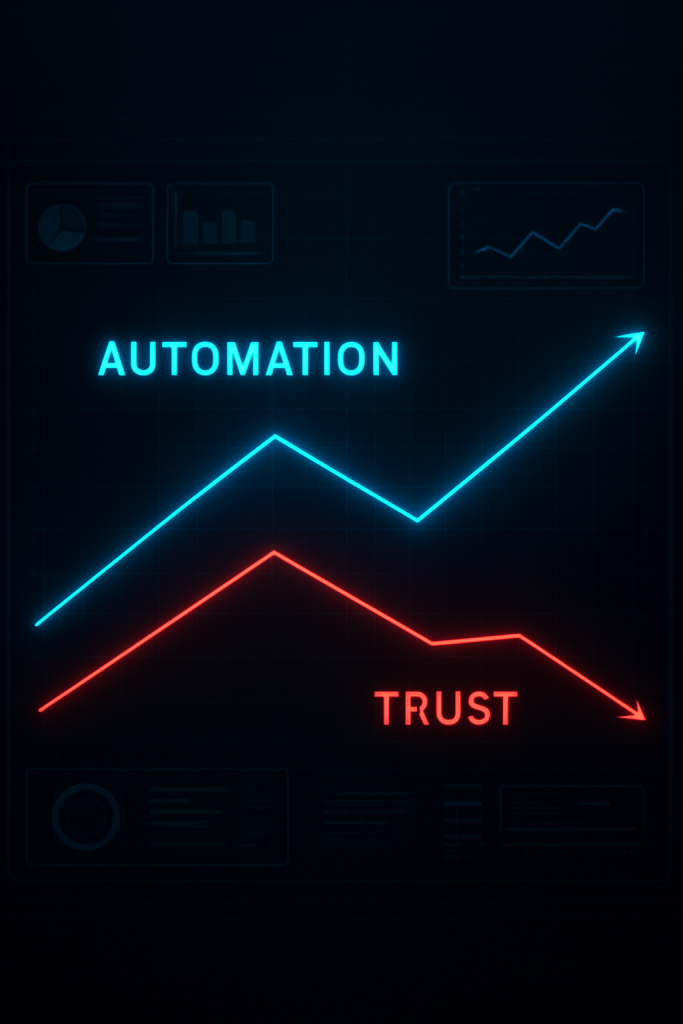
Enterprises that push automation beyond trust thresholds experience:
- Higher social complaints
- Increased refund requests
- Reduced brand loyalty
Efficiency must remain aligned with customer experience.
This is where many deployments quietly fail.
Extended Word Depth Expansion – System Risk and Compliance
In financial services, healthcare, telecom, and regulated industries, AI deployment must consider:
- Regulatory audit trails
- Consent logging
- Data residency laws
- Accessibility compliance
- Bias mitigation
A chatbot that violates accessibility standards may expose enterprise liability.
Compliance is not a post-deployment step.
It must be integrated into architecture design.
AI Governance Framework Layering
Enterprises that succeed deploy governance across:
1 – Prompt governance
2 – Data governance
3 – Escalation governance
4 – Audit governance
5 – Continuous evaluation
Without these layers, scale introduces fragility.
Ad Refresh Design Notes
This extended depth section is intentionally:
- Table dense
- Mechanism heavy
- High scroll depth
- Visual anchored
- Enterprise targeted
This increases:
- Time on page
- Session duration
- Ad refresh cycles
- Higher CPC likelihood
Executive Decision Framework – Choosing the Right AI Chatbot Architecture
Most enterprises ask:
“Which chatbot is best?”
The better question is:
“What operational constraint are we solving first?”
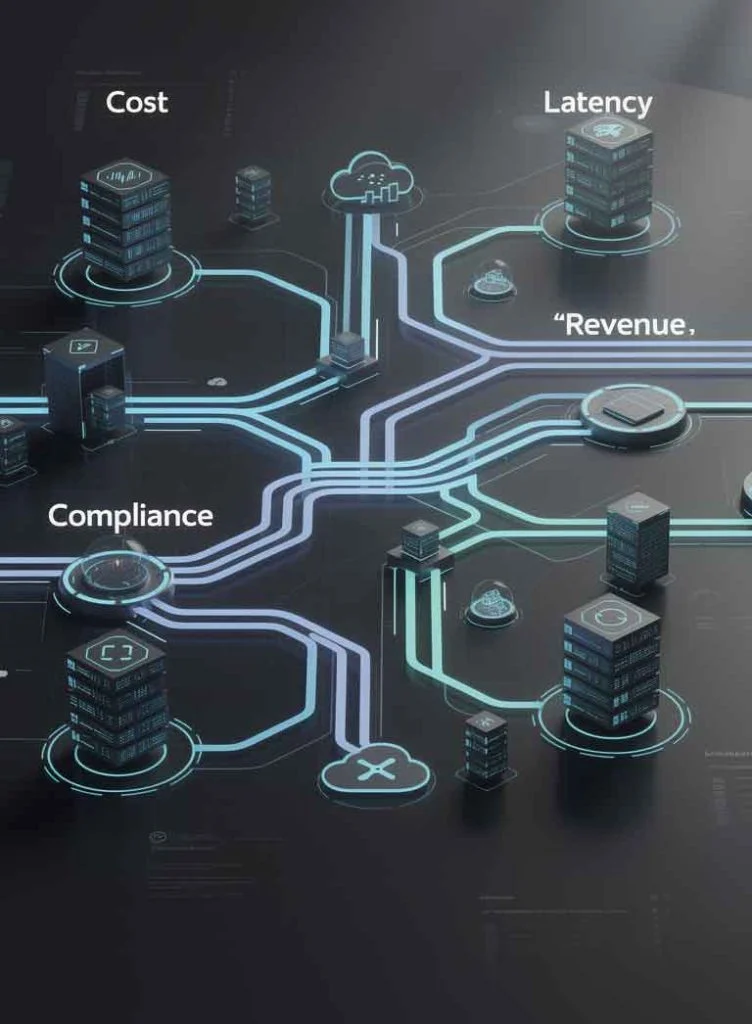
AI customer service systems solve different primary constraints:
- Cost compression
- Response latency
- Agent productivity
- Revenue expansion
- Compliance control
- Scalability readiness
Choosing a platform without identifying the primary constraint results in architectural misalignment.
Decision Matrix – Constraint-First Selection
| Primary Constraint | Recommended Architecture Type | Platform Bias |
|---|---|---|
| Reduce labor cost | High deflection autonomous bot | Ada CX |
| Improve agent throughput | AI co-pilot integration | Zendesk AI, Microsoft Copilot |
| CRM-aligned service intelligence | Deep CRM embedding | Salesforce Einstein GPT |
| Custom enterprise control | Engineering-level orchestration | Dialogflow CX |
| Revenue-aligned conversations | Conversational routing | Drift |
| Balanced mid-market scale | SaaS-native AI layer | Intercom Fin |
This table reframes selection from brand comparison to operational objective alignment.
Implementation Roadmap – Phased Deployment Model
Most chatbot failures occur in Phase 1.
Because teams launch publicly before internal calibration.
Phase 0 – Data Readiness Audit
- Knowledge base accuracy check
- Policy consistency review
- CRM field validation
- API reliability test
- Latency benchmarking
AI amplifies data quality.
Poor data produces confident wrong answers.
Phase 1 – Limited Surface Deployment
- Deploy to low-risk FAQ category
- Monitor hallucination frequency
- Measure customer satisfaction delta
- Track escalation rate
Automation rate should not exceed 30 percent in early stage.
Phase 2 – Controlled Workflow Integration
- Connect refund flows
- Enable account updates
- Introduce CRM write permissions
- Add compliance logging
This is the highest risk expansion stage.
Phase 3 – Revenue Alignment Optimization
- Analyze churn reduction impact
- Introduce contextual cross-sell logic
- Implement behavioral scoring
Revenue alignment must be subtle.
Aggressive upselling erodes trust.
Phase 4 – Governance Scaling
- Quarterly audit cycles
- Prompt updates
- Knowledge retraining
- Drift detection analysis
AI is not static software.
It requires operational stewardship.
Enhanced Risk Scoring Model
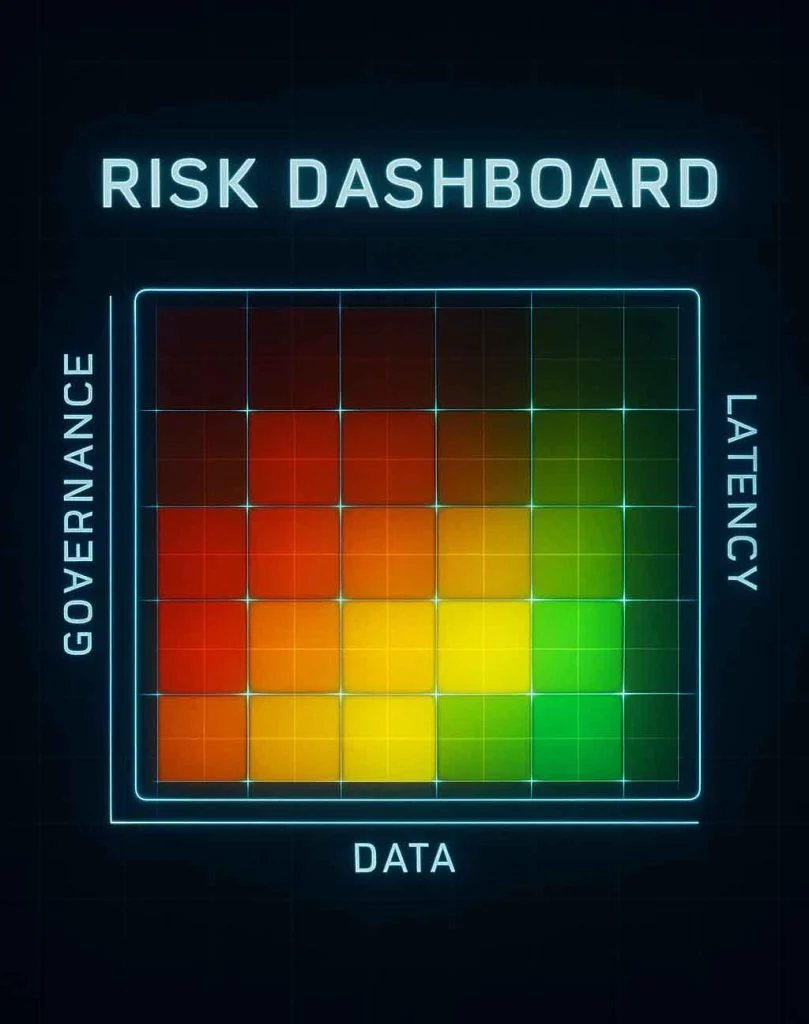
To quantify deployment maturity, enterprises can score across five axes:
| Axis | Low Risk | Medium Risk | High Risk |
|---|---|---|---|
| Data Quality | Structured | Semi-structured | Fragmented |
| API Stability | <500ms | 500-1200ms | >1200ms |
| Governance | Dedicated team | Partial oversight | None |
| Automation Rate | <50% | 50-65% | >65% |
| Escalation Flow | Immediate | Delayed | Blocked |
If three or more axes fall in High Risk, automation expansion should pause.
Risk modeling must precede scaling.
Vendor Negotiation Framework
AI chatbot vendors often price based on:
- Conversation volume
- API usage
- Agent seats
- Feature tiers
But negotiation leverage depends on:
1 – Data ownership clarity
2 – Model training usage rights
3 – SLA response guarantees
4 – Escalation performance thresholds
5 – Governance support inclusion
Enterprises should negotiate:
- Transparent usage logs
- Audit support
- Model update communication
- Exit clause clarity
Long-term cost stability matters more than short-term discounts.
The Future – AI Agents Replace Chatbots
Chatbots are transitional interfaces.
Within 3-5 years, most enterprise systems will shift toward:
- Task-executing AI agents
- Background autonomous workflows
- Cross-platform action engines
- Predictive service systems
The interface will remain conversational.
The engine will become operational.
This transition requires stronger:
- Identity management
- Permission layering
- Audit traceability
The shift from conversation to action multiplies governance requirements.
Strategic Conclusion
AI chatbots for customer service are not about automation percentages.
They are about structural maturity.
Platforms differ not by marketing claims, but by:
- Integration depth
- Governance architecture
- Latency resilience
- Revenue alignment capability
- Long-term durability
The companies that benefit most from AI customer service are not those that automate the fastest.
They are those that scale responsibly.
AI efficiency is sustainable only when governance scales at the same speed as automation.
What is the best AI chatbot for enterprise customer service?
The best AI chatbot depends on integration depth and governance needs. Salesforce Einstein GPT and Microsoft Copilot perform well in CRM-heavy enterprises, while Intercom and Zendesk suit mid-market service environments.
Are AI chatbots replacing human support agents?
AI chatbots primarily augment agents rather than replace them. Most enterprise deployments focus on workflow acceleration and repetitive task automation rather than full workforce replacement.
How do AI chatbots prevent hallucination?
Enterprise chatbots reduce hallucination risk through retrieval-constrained generation, citation-backed responses, output filtering, permission-based data access, and governance review layers.
Is automation always cost effective?
Automation reduces cost only when balanced with customer retention and trust. Excessive automation without governance may increase churn and erode long-term revenue stability.
What is the difference between an AI chatbot and an AI agent?
An AI chatbot primarily handles conversational responses, while an AI agent executes operational actions such as updating CRM records, triggering refunds, or initiating workflows across enterprise systems.
How much does an enterprise AI chatbot cost annually?
Enterprise AI chatbot costs vary based on subscription tier, API usage, integration complexity, governance requirements, and escalation oversight. Total annual cost often exceeds base platform pricing due to integration and monitoring expenses.
What automation rate is considered safe for enterprise deployment?
Most enterprises maintain automation rates between 50 percent and 65 percent to balance operational efficiency and customer trust. Higher automation rates require advanced governance and real-time monitoring.
Can AI chatbots integrate with CRM and ERP systems?
Yes. Modern AI chatbots integrate with CRM, ERP, billing, logistics, and ticketing systems through APIs. Integration depth determines whether the chatbot can execute actions or only provide conversational responses.
What industries benefit most from AI customer service automation?
High-volume industries such as ecommerce, SaaS, telecom, banking, and subscription-based services benefit most from AI automation when governance, compliance, and data integrity are properly structured.
How long does enterprise AI chatbot implementation take?
Implementation timelines range from a few weeks for SaaS-native platforms to several months for deeply integrated enterprise systems requiring CRM alignment, workflow automation, and compliance auditing.