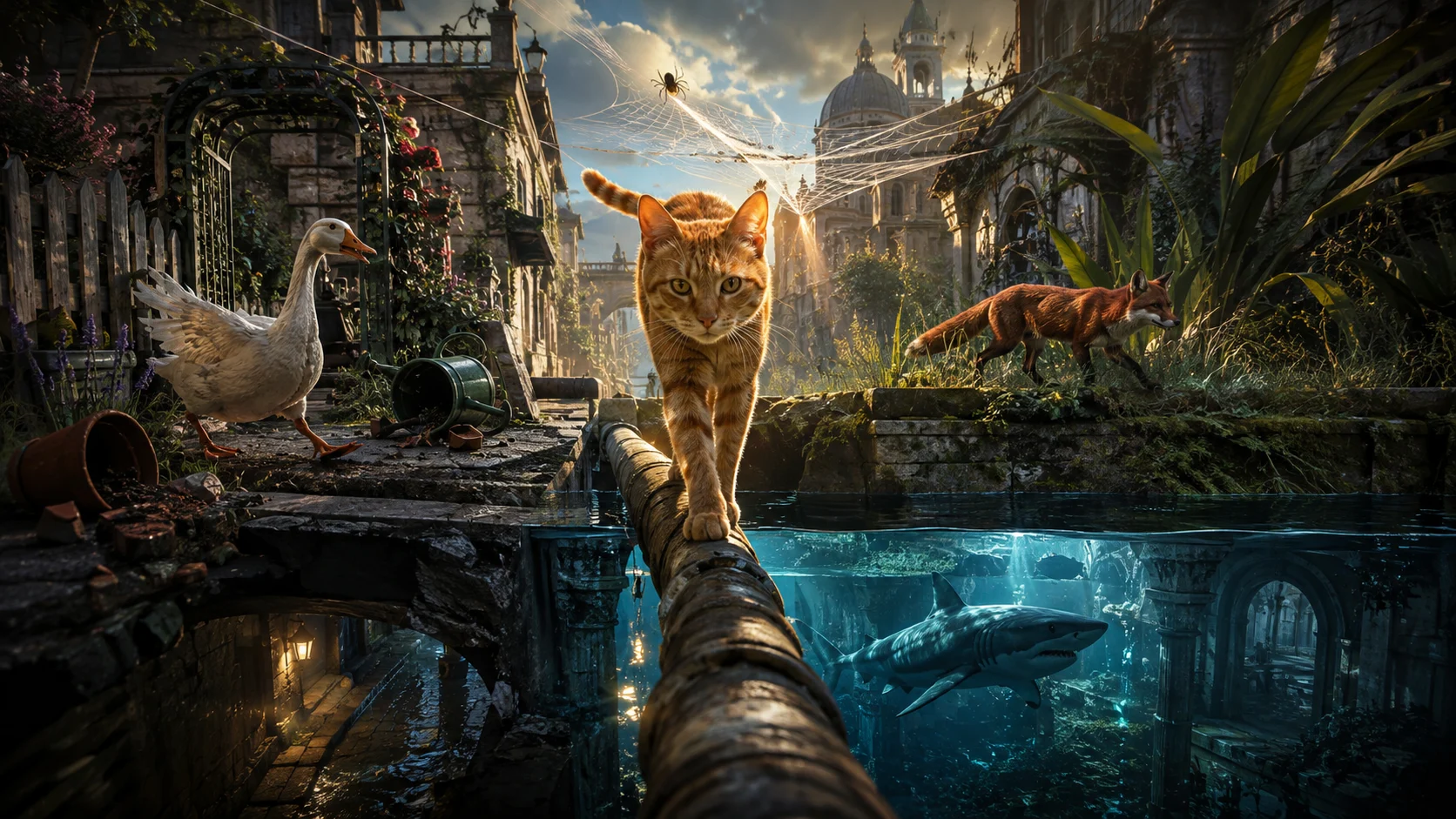

Animal video games become much more interesting when the animal is more than decoration. The strongest examples change how you move through a space, what you notice, what threatens you, and what kinds of actions make sense. A cat slipping beneath a fence produces a different relationship with a city than a human character walking down its pavement, while playing as a shark changes an ocean from scenery into hunting territory. That difference is what separates a memorable animal game from a conventional adventure that simply happens to use an animal-shaped protagonist.
If you specifically want a game where you control the animal, there are excellent choices ranging from atmospheric adventures such as Stray and Spirit of the North to deliberately chaotic games such as Untitled Goose Game and Goat Simulator 3. Other titles push much further into the animal’s role. Endling makes feeding and protecting fox cubs part of the survival problem, while Lost Ember lets animal bodies change the way a landscape can be traversed and understood.
That distinction matters because searches for “animal video game” can describe several different experiences. Some players want realistic movement and behavior, some want an emotional story seen from an animal perspective, and others simply want the freedom to behave like an unusually destructive goose or goat. Ranking the games solely by graphics, review scores, or popularity would flatten those differences, so this guide focuses on what being the animal actually contributes to the experience.
There is also an important boundary around the list. Games can be full of memorable animals without making the player one of them. For example, Animal Crossing: New Horizons surrounds the player with animal residents, while Pokémon Legends: Arceus revolves around observing and capturing creatures. They are relevant to animal-focused gaming, but they serve a different player fantasy, so the main ranking below prioritizes games where controlling the animal is central to the experience.
What Counts as an Animal Video Game Here?
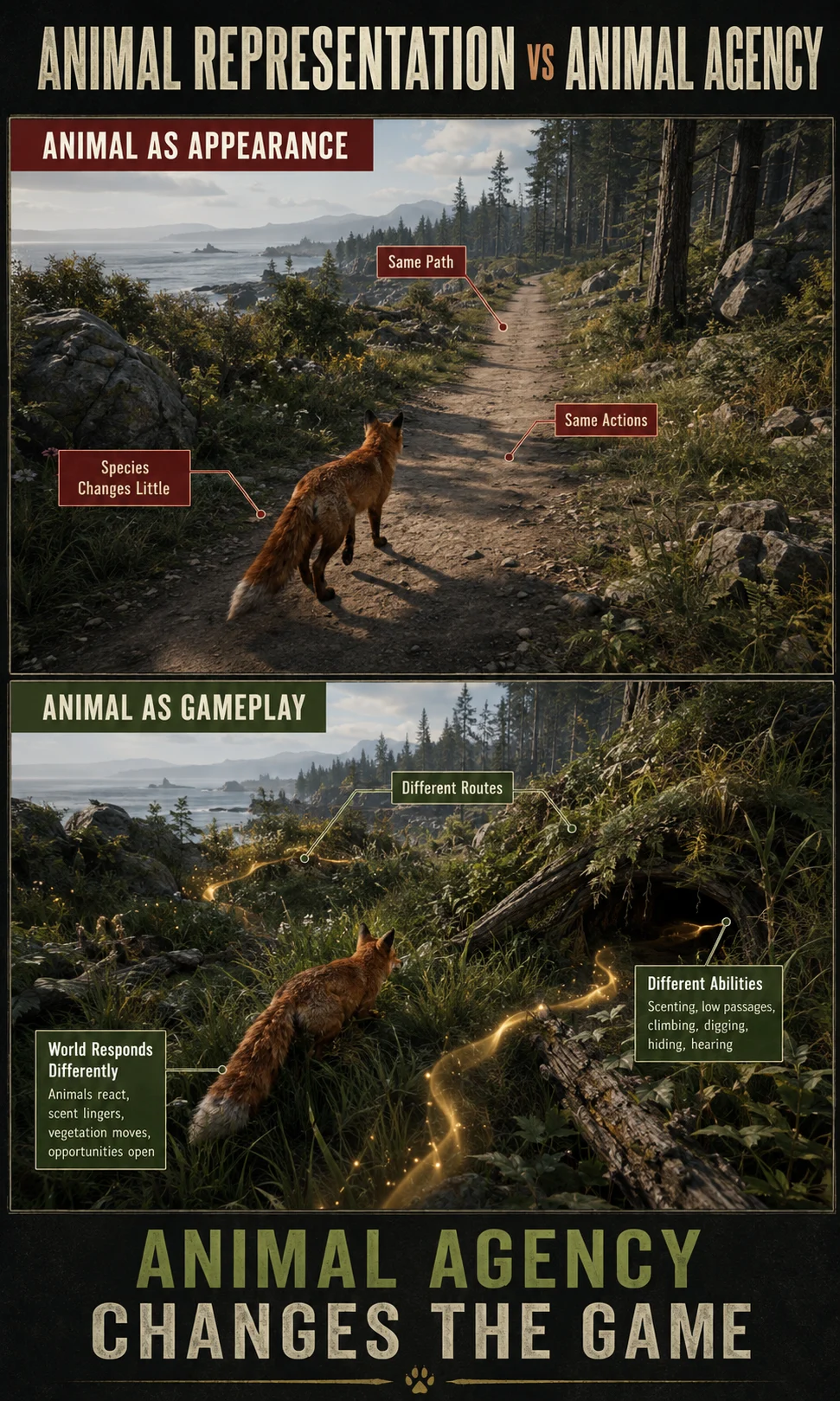
For this guide, an animal video game qualifies when the player’s primary controlled character is recognizably an animal and that identity matters to the experience. The animal can behave realistically, possess exaggerated abilities, exist in a fantasy setting, or even become completely ridiculous. What matters is that playing as the animal changes the relationship between the player and the game world in some meaningful way.
This produces a useful distinction between animal representation and animal agency. Representation simply places an animal on screen. Agency means the game makes the player’s animal identity affect movement, scale, danger, exploration, communication, survival, combat, puzzle solving, or interaction with the environment.
A cat that climbs pipes, squeezes beneath obstacles and attracts reactions from surrounding characters has stronger animal agency than a character model that could be replaced by a human without materially changing the game. A fox that must feed its cubs has stronger animal agency than a fox used only as a visual skin. This idea becomes particularly useful when choosing between games because two titles featuring the same species may create completely different experiences.
Quick Comparison: Which Animal Game Fits You Best?
| Game | You Play As | What the Animal Changes | Best For |
|---|---|---|---|
| Stray | Cat | Scale, climbing, narrow routes and environmental observation | Story-driven exploration |
| Little Kitty, Big City | Cat | Curiosity, climbing, mischief and small-scale exploration | Relaxed sandbox play |
| Untitled Goose Game | Goose | Stealing, distracting, honking and manipulating people | Comedy and light puzzles |
| Lost Ember | Wolf and other animals | Different bodies unlock different ways through the landscape | Atmosphere and perspective switching |
| Endling: Extinction is Forever | Mother fox | Food, cub protection, risk and environmental survival | Emotional survival play |
| Spirit of the North | Red fox | Low viewpoint, movement and quiet environmental interaction | Calm exploration |
| Goat Simulator 3 | Goat | Physical chaos turns the animal into a sandbox tool | Comedy and multiplayer chaos |
| Maneater | Shark | Swimming, hunting, feeding and underwater combat | Action and progression |
| Okami HD | Wolf deity | Animal movement combines with supernatural interaction | Classic action adventure |
| Webbed | Spider | Web creation becomes movement, construction and puzzle solving | Creative platforming |
1. Stray – Best Overall Animal Perspective
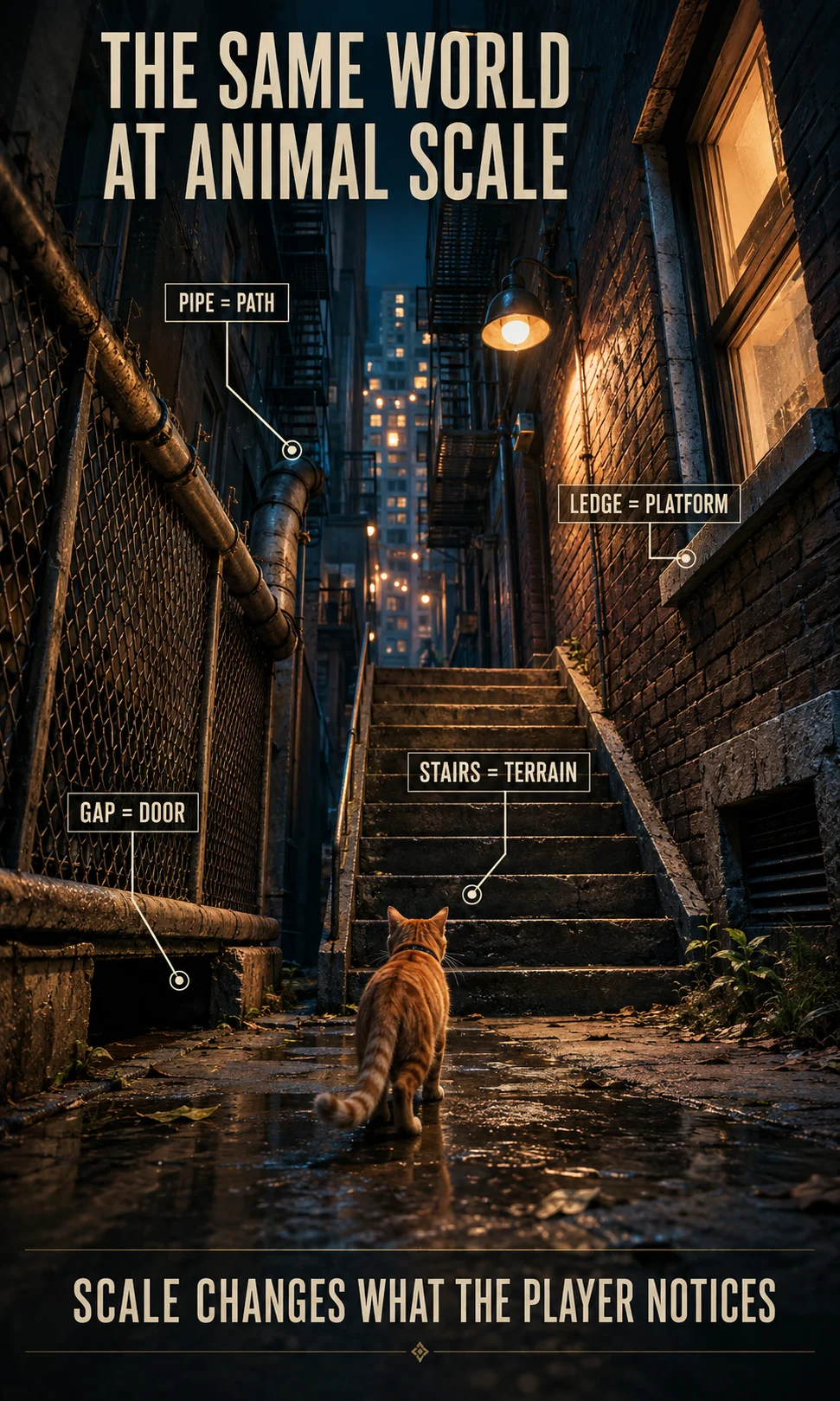
Stray succeeds because controlling a cat changes how an otherwise familiar city is read. Streets that would feel ordinary from human height become enclosed corridors, pipes become pathways, rooftops become natural routes, and tiny openings suddenly matter. The cat’s smaller scale turns environmental observation into part of the navigation system, which gives the animal identity a practical function rather than leaving it as a visual novelty.
The game also understands that the fantasy of being a cat includes behavior that does not need to advance a mission. Scratching surfaces, interacting with objects and moving through places designed for larger inhabitants gives the player room to inhabit the character between major objectives. That quieter layer is one reason Stray works for players who want an animal video game with a strong story while still feeling that the protagonist could not simply be replaced by a person.
2. Little Kitty, Big City – Best Relaxed Cat Sandbox
Little Kitty, Big City approaches the cat fantasy from a much lighter direction. Instead of surrounding the animal with a threatening mystery, it turns an urban neighborhood into a playground filled with small diversions, climbable spaces and characters worth investigating. The appeal comes from being allowed to follow curiosity, which feels appropriate for a game centered on a cat wandering through an environment built at a different scale.
It is particularly suitable for players who find Stray visually appealing but want less tension and more freedom to wander. Progress still provides direction, yet the pleasure of the game comes from seeing what happens when the cat explores somewhere unnecessary, interacts with another creature, or gets distracted on the way to the supposed objective. The city becomes more enjoyable because the game gives the player permission to behave like an inquisitive animal.
3. Untitled Goose Game – Best Animal Game for Mischief
Untitled Goose Game understands that an animal does not need to be heroic to become a great playable character. The goose is disruptive, persistent and completely unconcerned with the plans of the humans around it. Much of the gameplay involves studying people, understanding routines, moving objects and creating opportunities for a carefully timed interruption.
That creates a clever relationship between animal behavior and puzzle design. You rarely solve a problem by pressing a magical ability or defeating an enemy, because the goose’s real tools are its presence, mobility, beak and ability to become extremely inconvenient. Players looking for a funny animal video game can enjoy it immediately, while the underlying systems give the comedy enough structure to keep the experience from becoming a simple collection of jokes.
4. Lost Ember – Best for Experiencing Different Animals
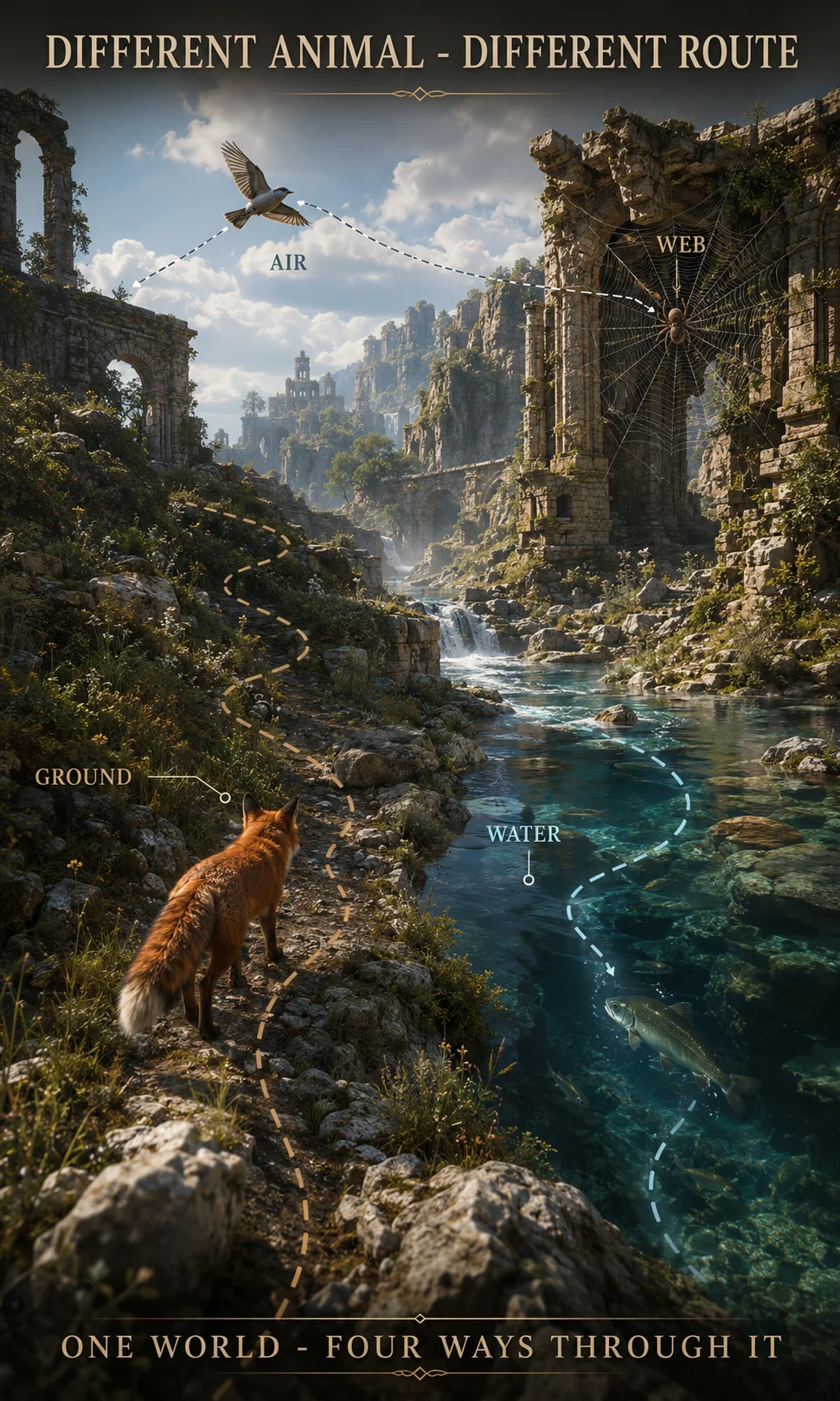
Lost Ember approaches animal control as a way to change perspective repeatedly. Rather than keeping the player inside one species for the entire journey, it allows different animal forms to provide different routes through the environment. A creature that can travel through the air reveals something different about a landscape than one moving close to the ground, while another body may make previously inaccessible terrain feel natural.
This makes Lost Ember particularly useful for understanding why animal agency can add more than cosmetic variety. The environment does not have one universal scale or one ideal path through it. The player’s relationship with the terrain changes as the controlled creature changes, producing the sense that the same world contains several overlapping versions depending on the animal experiencing it.
5. Endling: Extinction Is Forever – Best Animal Survival Story
Endling gives the animal perspective consequences that reach beyond movement. You control a mother fox trying to protect and sustain her cubs in an increasingly hostile environment, so food, safety and movement become connected decisions. Exploring farther can create opportunities, but every detour also takes place inside a survival problem in which the player’s responsibilities extend beyond the controlled character.
The fox therefore matters because the game is structured around vulnerability, parenthood and environmental pressure. The player’s decisions are filtered through what the family needs rather than through the familiar logic of accumulating equipment or becoming progressively unstoppable. For someone looking for an emotional animal game rather than a lighthearted simulator, Endling offers one of the clearest examples of animal identity shaping the entire decision system.
6. Spirit of the North – Best for Quiet Fox Exploration
Spirit of the North is suited to players who enjoy environmental storytelling and prefer space to constant instruction. The red fox travels through large natural landscapes where movement, observation and atmosphere carry much of the experience. Because the protagonist occupies the world at animal height, ruins and terrain feel larger and less immediately readable than they would from the perspective of a conventional human adventurer.
The pace is also important to the fantasy. The game does not need the fox to constantly speak, collect quests from crowds of characters or explain every discovery. That restraint makes the journey feel closer to observing a mysterious landscape through another creature’s presence, which gives Spirit of the North a distinctive place among animal video games built around exploration.
7. Goat Simulator 3 – Best for Pure Animal Chaos
Goat Simulator 3 takes almost the opposite approach to realism. The goat is essentially a device for testing how much disorder the game’s physics, environments and activities can absorb. This is animal agency pushed toward comedy: the fun comes from collisions, strange interactions, improbable movement and deliberately unreasonable situations rather than accurately modeling goat behavior.
That makes the game a good choice when the question is less “What does life feel like as this animal?” and more “How much trouble can this animal cause?” Its multiplayer possibilities also make it appealing for players who would rather share the absurdity than explore alone. If playing together matters more than maintaining a serious animal simulation, the broader collection of video games for couples and shared play provides another route into games designed around a social session.
8. Maneater – Best for Shark Action
Maneater turns the animal fantasy into a progression-driven action game. The player begins as a relatively vulnerable shark and gradually becomes capable of handling more dangerous environments and opponents. Swimming replaces terrestrial traversal, feeding supports progression, and encounters are shaped by the fact that the controlled character belongs beneath the surface rather than standing on the shore.
The exaggerated tone means this should not be mistaken for a realistic shark simulator. Its value comes from taking recognizable elements of shark behavior and building an escalating power fantasy around them. For players who want an animal game with combat, upgrades and a stronger sense of becoming increasingly dangerous, Maneater occupies a space that gentler animal adventures largely avoid.
9. Okami HD – Best Mythological Animal Adventure
Okami HD demonstrates that a playable animal does not need to be presented realistically for its identity to remain meaningful. Amaterasu appears as a white wolf while moving through a world heavily shaped by Japanese mythology and visual symbolism. The animal form combines naturally with running through landscapes, interacting with the environment and carrying supernatural power without making the protagonist feel like a conventional human hero in costume.
Its broader action-adventure structure also makes Okami useful for players who enjoy animal protagonists but still want dungeons, exploration, combat and a lengthy narrative journey. The wolf form contributes personality and movement while the Celestial Brush gives the experience a separate mechanical identity. That combination has helped the game remain distinctive even as animal protagonists have become considerably more common.
10. Webbed – Best Animal Movement Mechanic
Webbed is one of the clearest demonstrations of an animal ability becoming a complete gameplay system. You control a small spider, and the ability to produce webs affects movement, object manipulation, construction and puzzle solving. Instead of receiving a generic grappling hook that happens to belong to an animal character, the player’s method of navigating the world grows directly from something associated with the creature being controlled.
This makes the game valuable beyond its charming presentation. The spider’s identity explains how the player interacts with the environment, which is the strongest version of animal agency used throughout this guide. Players who enjoy discovering what a mechanic can do, experimenting with physical systems and solving movement problems may find Webbed more satisfying than larger games where the animal protagonist has fewer unique ways to influence the world.
Why Some Animal Games Feel More Convincing Than Others
The easiest mistake when judging animal games is to focus entirely on whether the character looks believable. Visual realism can strengthen immersion, yet the more important question is whether the animal changes the player’s decisions. A beautifully animated fox that runs through a conventional human-sized obstacle course may create less animal identity than a stylized spider whose web changes every movement decision.
A useful way to judge this is through an Animal Agency Test. First, ask whether changing the protagonist to a human would change the game. Then consider whether the animal alters movement, perception, available actions, relationships with other characters, vulnerability or access to the environment. Finally, look at whether the surrounding world responds to the animal differently because of what it is.
Games such as Webbed score strongly because the creature’s biology becomes a mechanical system. Endling scores differently because the animal identity changes survival responsibilities and emotional stakes. Stray gains much of its strength from scale, movement and environmental access. These games arrive at the animal fantasy through different design choices, which is why simply searching for the “most realistic” animal game can miss some of the strongest experiences.
Realistic Animal Game or Animal Fantasy? Decide What You Actually Want
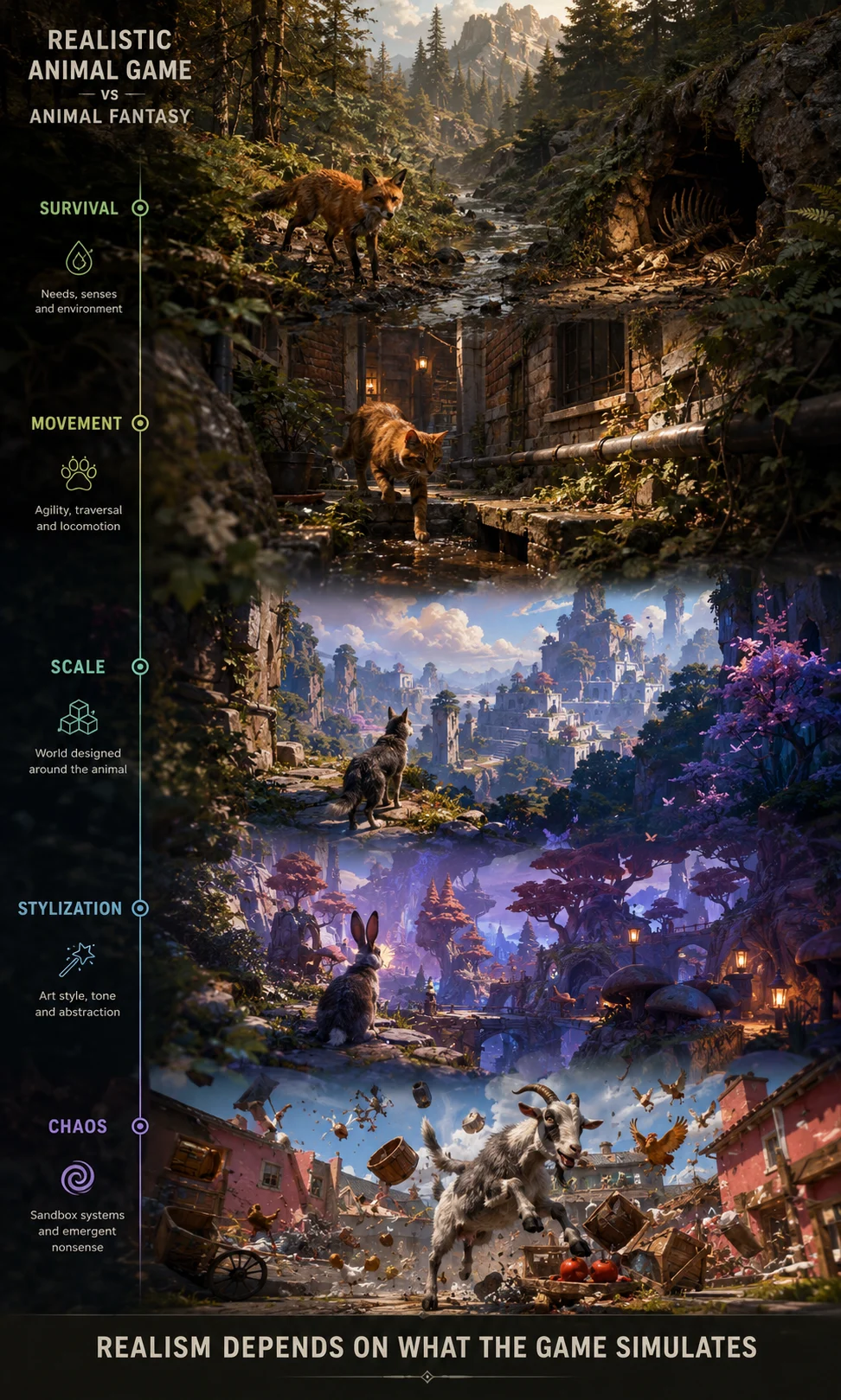
Players asking for realistic animal games often mean several different things without realizing it. One person may want physically believable movement, while another wants an ecosystem where finding food and avoiding danger matter. Someone else may mainly want to see the environment at animal scale. Those are related expectations, but they do not necessarily appear in the same game.
Stray feels convincing through recognizable cat movement and environmental interaction even though its setting is fantastical. Endling creates realism through survival pressure and parental responsibility. Goat Simulator 3 deliberately discards realism and makes exaggeration its entire point. Choosing by the type of animal fantasy therefore produces a better result than choosing by species alone.
Games With Animals Are Different From Games Where You Are the Animal
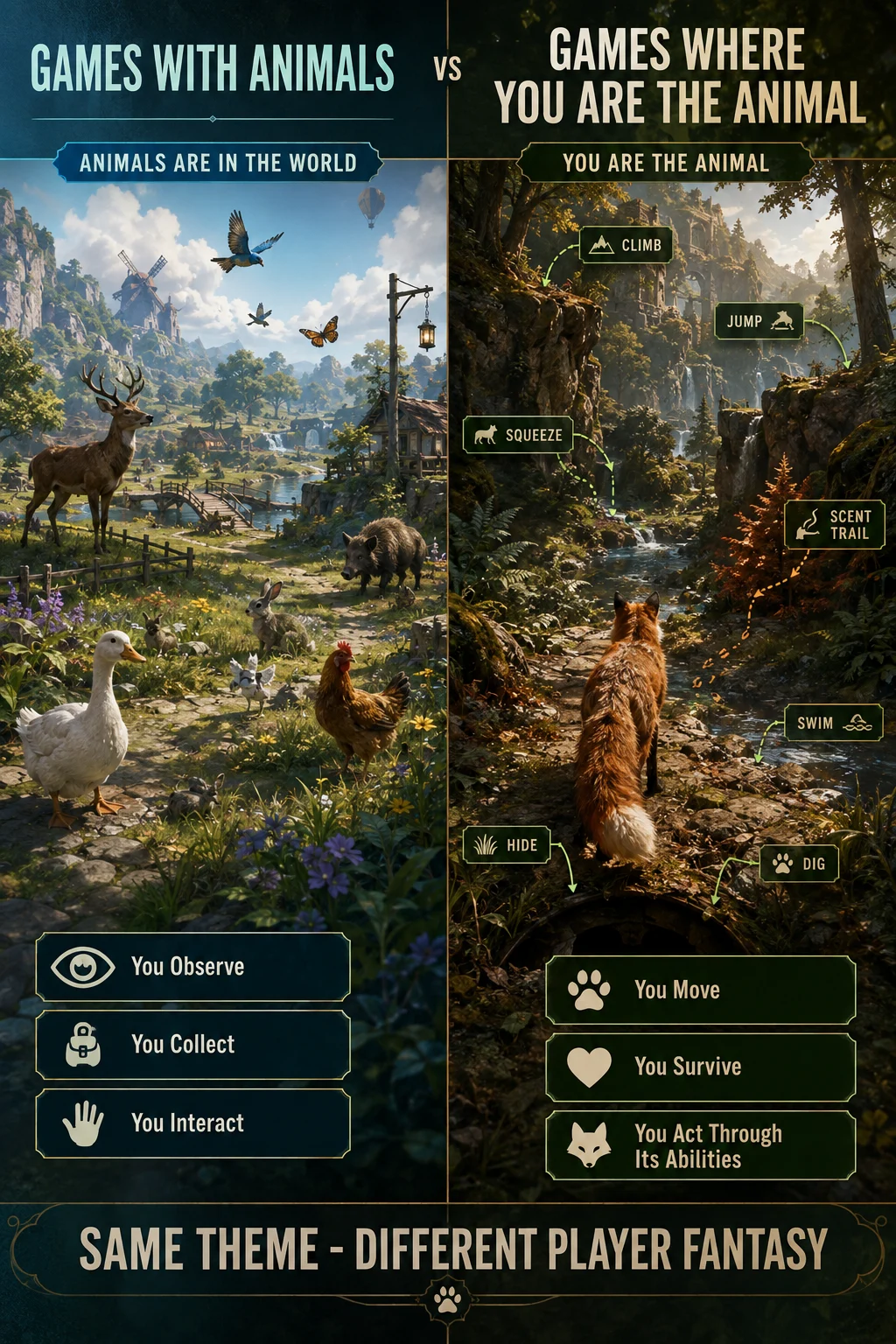
This distinction prevents a surprising amount of confusion. Animal Crossing is one of gaming’s most recognizable animal-centered worlds, yet the player character is human. Pokémon is built around creatures, but its central relationship is still between the trainer and the creatures rather than the player directly inhabiting one of them.
The same issue appears in games where an animal companion is emotionally important. A dog, horse, bird or fantasy creature can become a major part of a story while the player’s movement and decisions continue to originate from a human protagonist. Those games may be excellent choices for someone who loves animals, although they answer a different question from “Which game actually lets me be the animal?”
Anthropomorphic animal characters occupy a middle ground. Characters such as Sonic retain animal identities but operate within highly stylized worlds and often move more like fantasy action heroes than real animals. Players who prefer that character-driven version of animal gaming may be better served by something like Sonic Colors: Ultimate than by a game built around realistic animal scale or survival.
How to Pick the Right Animal Video Game
Choose by the feeling you want, not only the species
Two games featuring cats can create radically different sessions. Stray uses the animal’s scale inside a mysterious story, while Little Kitty, Big City encourages relaxed exploration and playful distraction. Someone searching simply for a “cat game” could enjoy either, but the emotional tone should influence the decision as much as the protagonist.
The same principle applies to fox games. Endling places a fox inside a survival responsibility with meaningful emotional pressure, while Spirit of the North uses a fox to create a quieter and more meditative journey. Choosing the animal first and ignoring the structure of the game can therefore produce a recommendation that looks perfect in screenshots and feels completely wrong after an hour.
Decide how important realistic behavior is
Some players want an animal simulator. Others mainly want a strong game built around an unusual protagonist. Those expectations should be separated before comparing titles because the most entertaining choice may deliberately exaggerate everything that makes the animal recognizable.
If believable behavior matters, look for games where movement, survival, scale and environmental interaction receive serious attention. If entertainment matters more than simulation, something as deliberately absurd as Goat Simulator 3 can satisfy the animal fantasy more effectively because it fully commits to what the player came to do.
Look for mechanics that would disappear if the animal disappeared
This is one of the quickest ways to identify a genuinely strong animal game. Remove the spider from Webbed and its central movement system has to be redesigned. Remove the goose from Untitled Goose Game and much of its social comedy loses its logic. Remove the shark from Maneater and the entire relationship between movement, hunting and environment changes.
That test does not mean every feature must be biologically accurate. It simply asks whether the animal is structurally important. Games that pass this test tend to remain memorable because the player is experiencing the world through mechanics that reinforce the protagonist rather than through an ordinary system wearing an animal skin.
Which Animal Game Should You Start With?
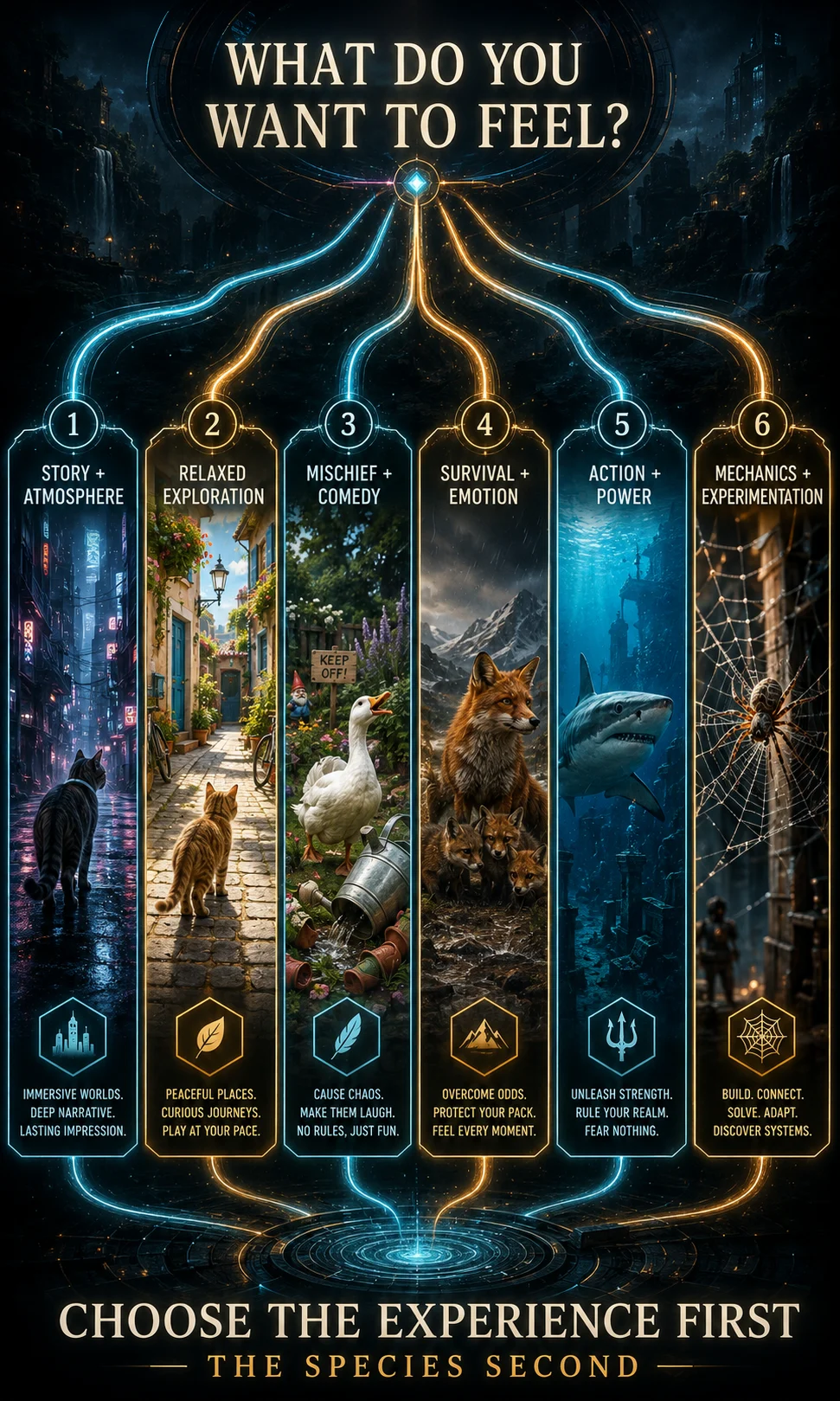
For most players who want one recommendation, Stray is the strongest starting point because its cat perspective influences navigation, observation, interaction and the emotional character of the world while remaining accessible to players who do not normally play simulators. It provides a clear answer to what can make an animal protagonist feel mechanically relevant without demanding a highly specialized style of play.
Choose Little Kitty, Big City when you want a gentler urban sandbox, Untitled Goose Game when you want mischief and puzzle comedy, Endling when you want survival pressure and emotional responsibility, and Lost Ember when the ability to experience a landscape through multiple animals sounds more interesting than controlling one species throughout the whole game.
Players who prefer action have equally distinct options. Maneater turns the shark fantasy into progression and combat, while Okami HD uses a mythological wolf inside a much broader adventure structure. Webbed is the strongest choice when the mechanics themselves matter most, because the spider’s web becomes a flexible system for traversal and problem solving.
The best animal video game is therefore determined by what you expect the animal identity to accomplish. If changing the species would leave the experience almost untouched, the animal is largely presentation. When the species changes how you move, what you fear, what you can reach, how the world responds and which decisions matter, being the animal becomes the reason the game works.
Frequently Asked Questions About Animal Video Games
What video games actually let you play as an animal?
Stray, Little Kitty Big City, Untitled Goose Game, Lost Ember, Endling: Extinction Is Forever, Spirit of the North, Goat Simulator 3, Maneater, Okami HD and Webbed all place an animal directly under the player’s control. They differ considerably in how seriously they treat animal behavior, so the best choice depends on whether you want exploration, survival, comedy, action or a more specialized movement system.
What is a good game where you play as a cat?
Stray is a strong choice if you want a story-driven adventure where cat scale and movement affect exploration. Little Kitty, Big City is better suited to players who want a relaxed sandbox with curiosity, climbing, small quests and playful disruption. Both use a cat protagonist effectively, although they create very different moods.
Are there video games where you play as a fox?
Yes. Endling: Extinction Is Forever lets you control a mother fox responsible for protecting her cubs, while Spirit of the North uses a red fox for atmospheric exploration and environmental puzzles. The first emphasizes survival and responsibility, while the second is generally better suited to players looking for a quieter exploratory experience.
What is the best realistic animal video game?
There is no single realistic animal game because realism can refer to animation, movement, survival, ecology or behavior. Stray creates convincing cat-scale movement and interaction, while Endling places greater emphasis on food, danger and protecting offspring. Players seeking realism should decide which part of animal life they actually want the game to simulate before choosing.
Is Animal Crossing an animal video game?
Animal Crossing is clearly an animal-centered game because animal villagers form most of its community, but it is different from the games in this guide because the player’s own avatar is human. If your goal is specifically to control an animal, games such as Stray, Untitled Goose Game or Spirit of the North provide a more direct version of that experience.
Are there multiplayer games where you can play as animals?
Yes. Some animal games include shared or multiplayer play, although the exact multiplayer format varies by title. Goat Simulator 3 is especially well suited to players who want chaotic shared play, while other animal games are designed primarily around a solitary story or exploration experience. Multiplayer support should therefore be checked for the specific platform and edition before buying.
Final Verdict
Animal video games are at their best when the creature changes more than the protagonist’s appearance. The cat in Stray makes the city feel larger and more vertically connected, the goose in Untitled Goose Game changes ordinary human routines into puzzle systems, the mother fox in Endling turns exploration into a responsibility, and the spider in Webbed turns animal biology into the central movement mechanic.
That variety is why there is no need to reduce the category to one definition of realism. A convincing animal perspective can come from authentic scale, unusual movement, survival needs, environmental access, social reactions or a completely exaggerated power fantasy. What matters is whether the player feels that controlling this particular creature changes how the world must be understood.
For someone entering the category for the first time, Stray remains the most balanced place to begin. Players who already know whether they prefer comedy, survival, relaxation, action or mechanical experimentation can choose more specifically from the comparison above. The strongest choice is the one where the animal’s abilities and limitations match the kind of experience you actually want to have.